• How to Make Panna Cotta with Elderflower, Lilac, Mint & More

    Blank Canvas Panna Cotta

    One of my go-to desserts to cap a celebratory meal is panna cotta. Panna cotta is a traditional Italian dessert dating back to the 1600s. It is prepared with milk that has been lightly heated and combined with gelatin and heavy cream, often with the addition of herbs or spices for flavoring. Come spring we have access to fresh milk and nutrient-dense heavy cream once again, which makes panna cotta a perfect dessert to celebrate the season with.

    This dessert can be made the day before a celebrationโ€”which frees me to be fully present in significant moments. What I love the most about panna cotta is that it is a โ€œblank canvas,โ€ readily receiving the best of what is seasonal, freshly forged, or locally available.

    Ingredients

    • 1 teaspoon mild-flavored oil to lightly grease ramekins
    • 2 1/2 leaves silver gelatin leaves/sheets or 2 1/2 teaspoons powdered gelatin
    • 2 tablespoon of water
    • 1/2 cup milk
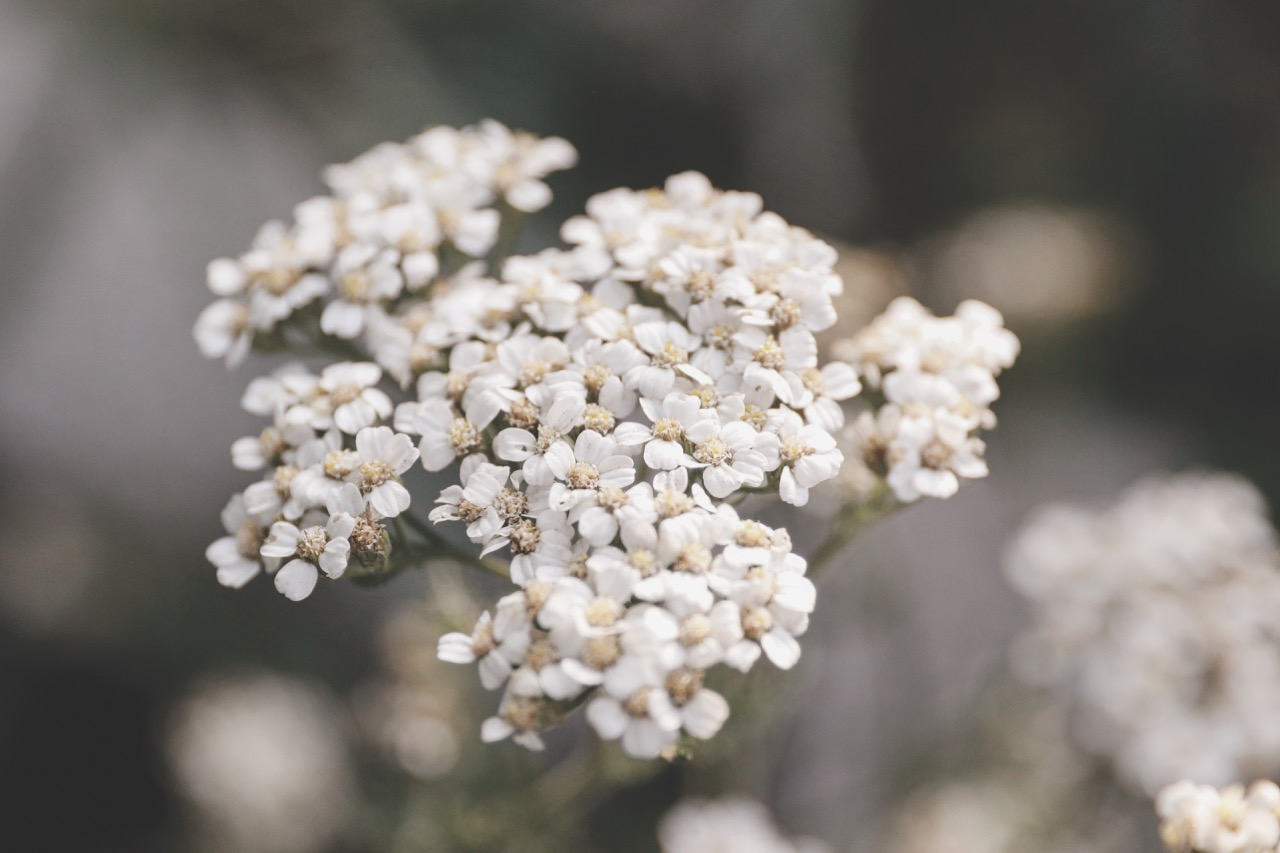
    • 3 tablespoons dried herbs such as elderflower lemongrass, lemon balm, or peppermint (or just add a vanilla bean or 1 teaspoon of vanilla extract)
    • 1/4 cup honey or maple syrup
    • 1 1/2 cups heavy cream

    Instructions

    Directions

    • Lightly grease four 4-oz ramekins. Cut the gelatin leaves into 1/2-inch strips. Add 2 tablespoons of water to a bowl. Add the gelatin sheets to the water (or sprinkle powdered gelatin over the surface of the water). Let sit for 10 minutes.
    • In a small saucepan, gently heat a 1/2 cup of milk and 1/4 cup of honey. Do not let the milk boil. Add 3 tablespoons of the herbs of your choice, then take the saucepan off the heat and cover for 10 minutes.
    • Lightly reheat the milk, turn off the burner and add the gelatin, stirring until dissolved.
    • Add the heavy cream to a large measuring cup with a pouring spout, then pour the milk, herb, and gelatin mixture through a fine mesh strainer into the cream (be sure to press as much of the milk and gelatin out of the herbs as possible).
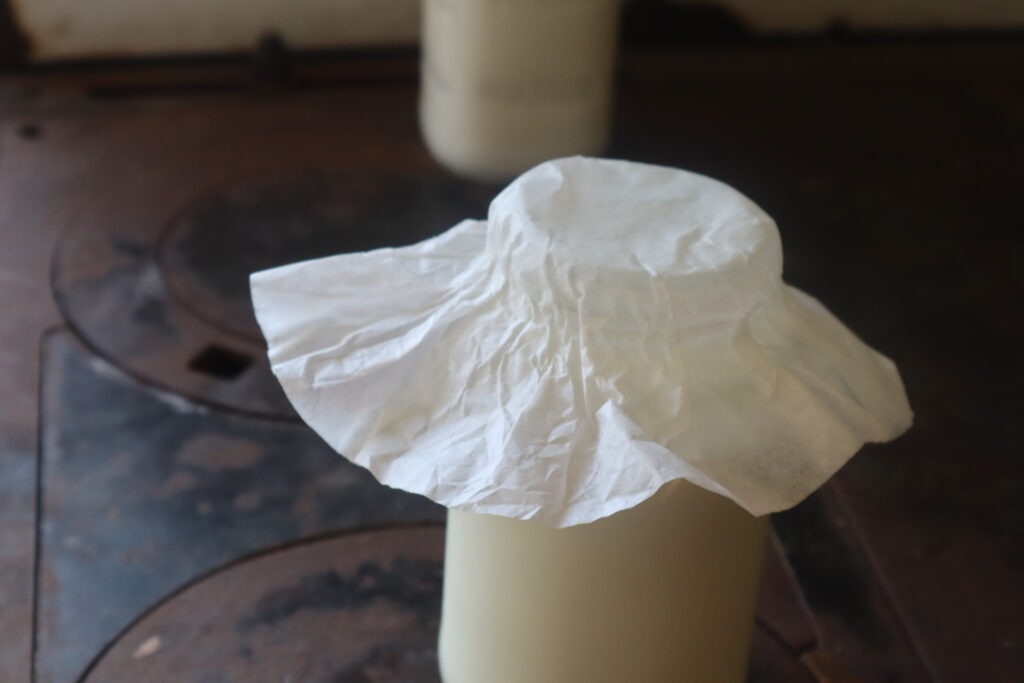
    • Stir the cream and gelatin mixture thoroughly and pour into the greased ramekins. Chill covered for 6 hours or overnight.
    • When you are ready to serve, slide a knife around the edge of the ramekins and unmold them onto a plate. Alternatively, simply serve the panna cotta in the ramekins with any additional garnishes (such as fresh herbs, flowers, or fruits) on top.

    Notes

    Some flavor combinations to try:
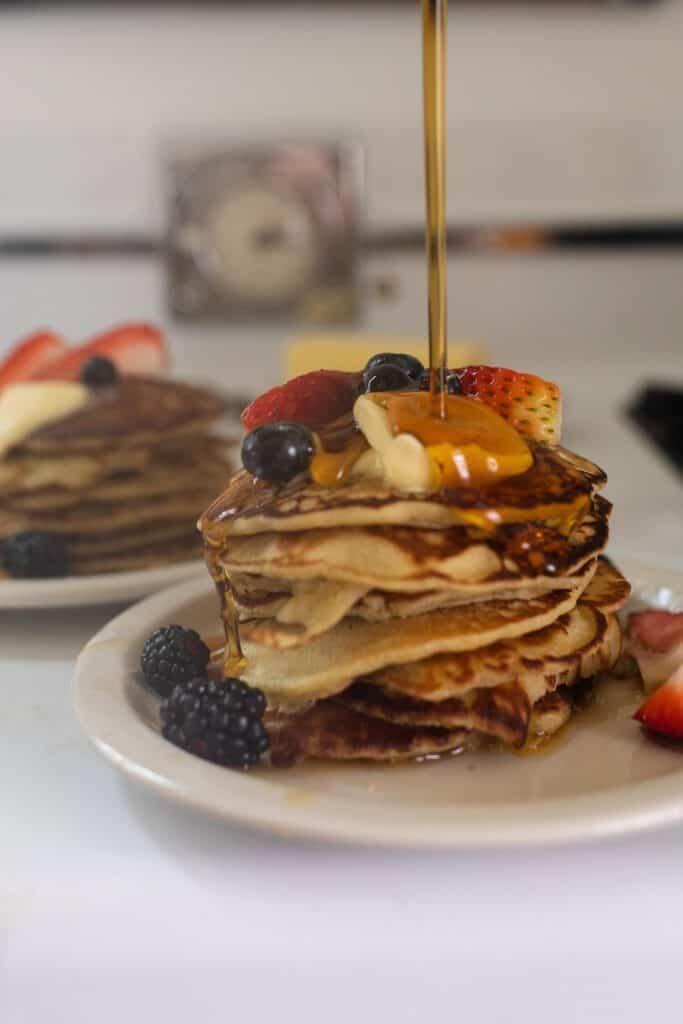
    Elderflower Panna Cotta with Fresh Strawberries
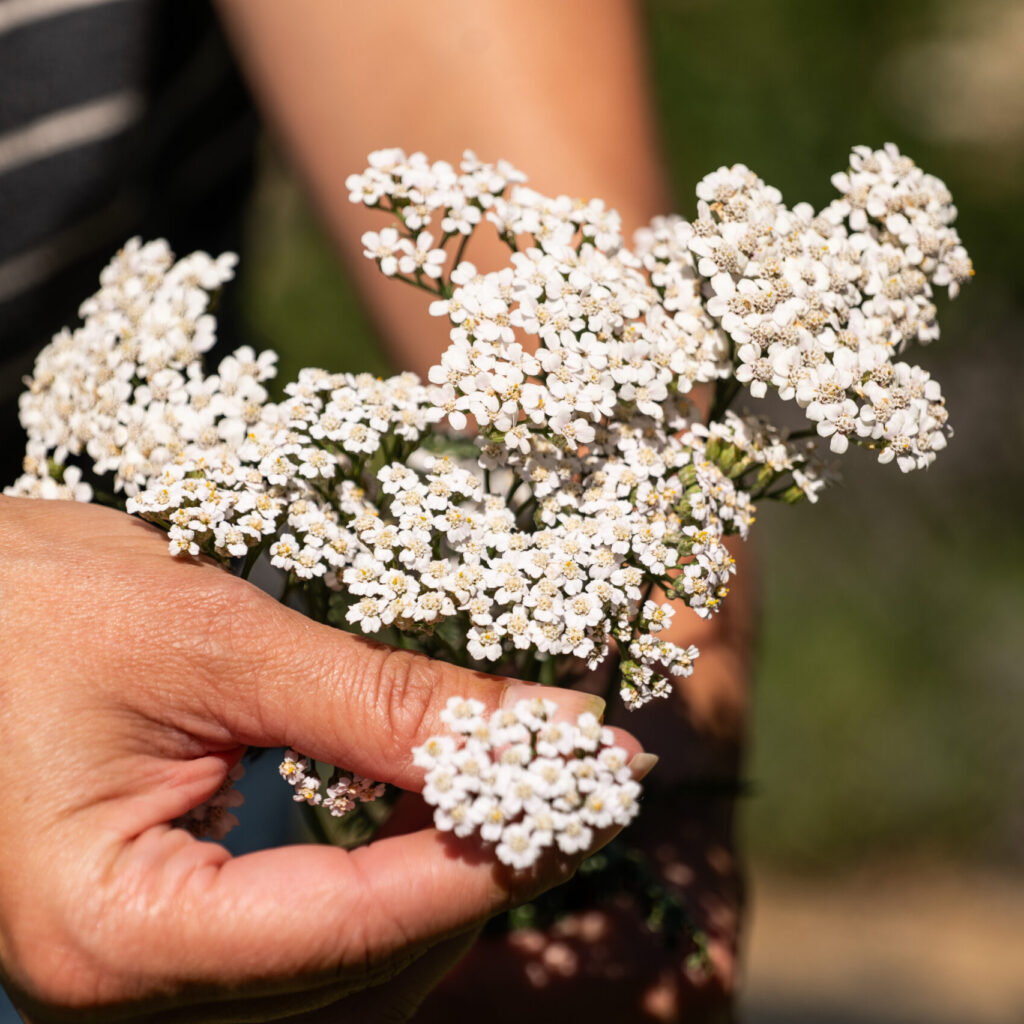
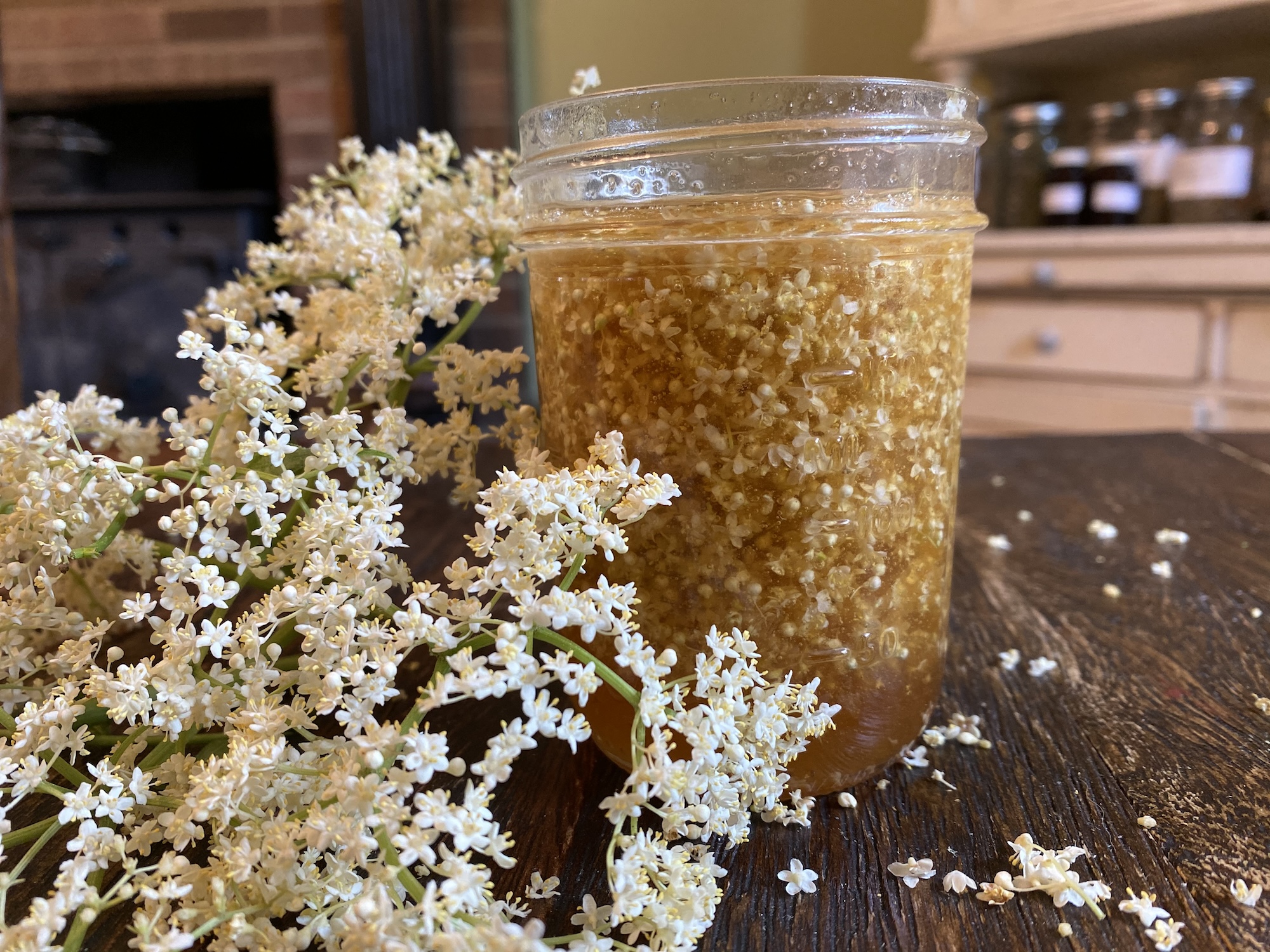
    3 tablespoons dried elderflower (or the flowers of 3 large umbles) steeped with the milk.
    Garnish with chopped fresh strawberries.
    Lilac Panna Cotta
    1/2 cup fresh lilac blossoms and 1/4 of a vanilla bean steeped with the milk.
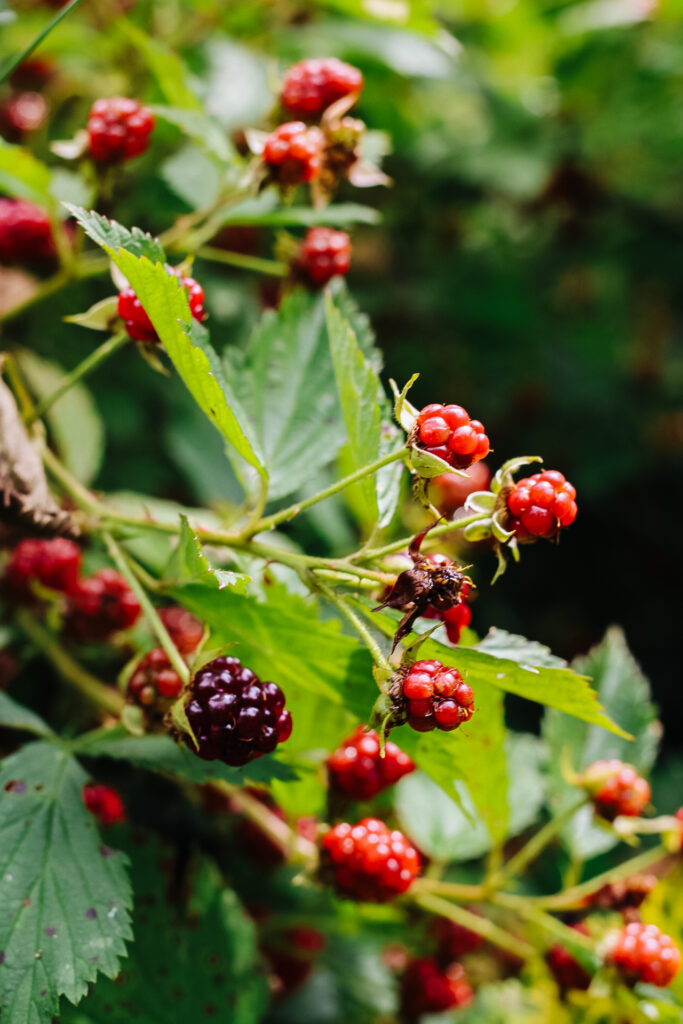
    Garnish with fresh blueberries or blackberries.
    Fresh Mint and Vanilla Panna Cotta with Grated Dark Chocolate
    Steep a large handful of your favorite fresh mint and 1/4 of a vanilla bean in the milk.
    Garnish with crumbled chocolate cookie and fresh mint, or grate dark chocolate on top.
    Lemongrass Panna Cotta with Passionfruit Jam
    3 tablespoons dried lemongrass or 1/2 cup freshly chopped lemongrass, steeped with the milk.
    Serve with a spoonful of passionfruit jam. For extra crunch, add toasted coconut.
    Rosemary Maple Panna Cotta with Toasted Pecans
    Add 2 tablespoons of fresh rosemary to the milk and replace honey with maple syrup.
    Serve with toasted pecans.
    Tried this recipe?Mention @homesteadlivingmagazine or tag #homesteadlivingmagazine!
  • The Hidden Cost of Cheap Food: Why Farming and Food Choices Affect Everything

    Imagine your carโ€™s fuel tank is on Empty. You see a gas station up ahead and pull in. You put the credit card in the reader and the digital display reads โ€œBegin pumping.โ€ You grab the nozzle, compress the handle, and a bunch of black, clumpy, junk pours out.  

    Would you think, โ€œNo problem, thatโ€™s what my carโ€™s fuel filters are for, and if something breaks, I have a good mechanic; Iโ€™m sure he can fix it. Besides, Iโ€™ve already started and itโ€™s too inconvenient to go to another stationโ€? Not a single person reading this would have those kinds of thoughts regarding the purity of the fuel for their car. And yet, when it comes to our bodyโ€™s fuel, these are the notions that so many people seem to accept: Our body has filters, we have a doctor, and itโ€™s just too inconvenient to really care about good food. But just like we wouldnโ€™t stand for junk fuel in our vehicles, we shouldnโ€™t accept subpar fuel when it comes to our bodies.

    What we eat affects our overall health more than just about anything else, which means the kind of nutrition, toxicity, and influence surrounding our food matters a lot. To be sure, nature is forgiving and we can abuse ourselves and the ecology quite a bit before the consequences kick in. We all know someone who smokes cigarettes and lives seemingly hale and hearty to 90 years old. But thatโ€™s the exception, not the rule.

    Furthermore, the way we produce our food affects the health of our environment, our communities, and our responsibility to be good stewards of the land and resources God gave us. This is not a dismissive โ€œwhateverโ€ situation. This is, perhaps, one of the most important issues we face in modern times. Hereโ€™s whyโ€ฆ

     Why Food and Farming Matter

    1. Health

    Both human health and the health of the animals and plants under our care are all related and wrapped up in an interconnected web, and so it matters not just what we eat, but how it was raised.

    The Bionutrient Food Association is leading the way in developing a simple instrument to measure nutrition. The prototype has already been used on carrots and broccoli with astounding results. Measuring many sample carrots, the scientists found that to get the same nutrition from the most poorly grown carrot as you would get from the most optimally grown carrot, you would need to eat 150 carrots. In other words, the best carrot contained 150 times more nutrients than the poorest carrot. As the saying goes, โ€œyou are what you eat,โ€ and so you canโ€™t be any healthier than the health of the food that you eat. Further, your plants and animals canโ€™t be healthier than the diet, habitat, and hygiene in their production protocols.

    One of the most interesting things weโ€™ve found on our farm with our pastured livestock over the years is how much faster the meat cooks than industrial counterparts. The most plausible explanationโ€”so far at leastโ€”is that stress-free animals donโ€™t tighten up their tissues with adrenaline. Is it a stretch to think that animals constantly under stress due to social, dietary, or immunological dysfunction would transmit those maladies to humans who eat them? This is why Iโ€™m a huge proponent of honoring the pigness of the pig: A culture that doesnโ€™t ask how to respect the pigness of the pig will not be inclined to consider how to respect the Tomness of Tom, or the Maryness of Mary.

    A production system addicted to pharmaceuticals and chemicals creates a human health climate addicted to the same. Sir Albert Howardโ€”godfather of modern scientific compostingโ€”wrote in his iconic An Agricultural Testament in 1943 that โ€œartificial fertilizerโ€ (thatโ€™s what he called chemical fertilizer) grew artificial plants that fed artificial animals, which in turn made artificial people who could only be kept alive with artificials. Did he foresee the pharmaceutical industry or what?

    Chemically-grown vegetables are vastly different in terms of nutrition, taste, and texture than vegetables grown in compost. Grass finished beef averages around 300 percent more riboflavin than grain-finished beef. Thatโ€™s important because, among other things, riboflavin calms you down. Ever wonder why so many folks these days are short-tempered and yelling at each other? Perhaps grain-finished beef is at least partially to blame.

    Those of us older than 50 can remember when the phrase โ€œfood allergyโ€ did not exist. When we disrespect food, it fights back by taking a toll on our bodies. The U.S. leads the world in chronic non-infectious morbidity; thatโ€™s not something to cheer about. The reason? We invented McDonaldโ€™s, monosodium glutamate, high fructose corn syrup, and squeezable cheese. If food wonโ€™t rot, it wonโ€™t digest. Authentic cheese should get fuzzy with mold if you leave it on the table for a day or two. In a week, it should sprout legs and walk away. Velveeta sits there for a year. Not what you want in your microbiome.

    1. Ecology

    For the most part, the civilizational and agricultural record is a pattern of soil erosion, landscape dehydration, and eventual scarcity. Ecological destruction did not develop with the invention of the plow, DDT, and glyphosate, but these things have certainly increased the capacity to wreak havoc on our environment faster than at any time in human history.

    Cheap energy plus antibiotics enabled Concentrated Animal Feeding Operations (CAFOs) to replace pastured and more decentralized livestock systems. Historically, you could only confine a certain number of animals in one place because transporting feedstock and manure to and from one place by draft power (horse, mule, ox) was too laborious and expensive. But with petroleum and mechanization, the symbiotic integration of animals, plants, and fertility could be segregated. Centralization and segregation at such a scale turns this perceived blessing into a curse however, as mountains of waste overwhelm the local ecologyโ€™s ability to metabolize it.

    The ancients practically worshiped manure for its ability to enhance soil. As recently as the 1940s, farm boys (and perhaps some girls) routinely forked up manure dropped in the barnyard overnight and wheelbarrowed it into the barn. As part of their chores, they would add straw to the manure to tie down nutrients, reducing vaporization. Today, manure lagoons routinely lead to fish fatalities and neighborsโ€™ asthma.

    Indeed, a dead zone the size of Rhode Island now plagues the Gulf of Mexico, eliminating countless tons of seafood and, subsequently, the jobs connected to harvesting it. Infertile frogs and three-legged salamanders were just the beginning; now we have superbugs and superweeds. No matter what concoction humans invent, nature always adapts with some survivors. Those survivors become nastier and nastier in each generation. Is this the world we want our grandchildren to inherit?

    1. Community

    Most of us claim to want healthy communities. But few things destroy communities as fast as mono-crops, CAFOs, and centralized processing facilities. Vibrant rural neighborhoods turn into political nightmares when industrial corporate outfits come to town; they bring chemicals, odors, and often a workforce from outside the area.

    What does it say about social impact when a business doesnโ€™t or wonโ€™t hire neighbors? The foundation of a healthy community is being neighborly and thinking about the best interests of people who live nearby. Stinking up the neighborhood is not being friendly. Flooding the area with outsiders, regardless of whether they are Americans or not, overwhelms a communityโ€™s culture. In Rockingham County, Virginia, which adjoins the county where I live, roughly one third of public school square footage is devoted to English as a second language instruction.

    That county is the heart of the mid-Atlantic poultry industry, hosting most of the worldโ€™s biggest industrial poultry players. Having lived in Venezuela in my early childhood, nobody is less anti-immigration than I am, but for the taxpayers to shoulder the assimilation cost of thousands and thousands of non-American workers in a community is neither fair nor healthy. It creates resentment and overburdensome social responsibilities. Society picks up the tab for this cost, which becomes a direct subsidy to industrial, cheap food processing.

    1. Philosophical Consistency

    Does God care? I suggest that a God who numbers the hairs of our head and knows when a sparrow falls certainly knows and cares about how we raise cows and how we feed ourselves.  The question is simple: does what lands on my plate jive with the values I espouse? Indeed, does my menu line up with the pew?

    From ourselves to all of Godโ€™s creation around us, our stewardship responsibility as caretakers is to massage it into a decent Return on Investment (ROI) for the Creator. Is erosion a positive ROI for divinity? How about compromised immune systems? How about superweeds and superbugs? How about nutrient deficient carrots and dead zones in the ocean? If you or I owned creation and our caretakers returned it like weโ€™re returning it to God, I propose weโ€™d be unhappy with the caretaker.

    The sun faithfully showers the planet with energy to grow plants, which decompose and feed soil microbes which in turn feed other plants, which go on to feed animals in a wonderfully regenerative cycle. Thatโ€™s the way itโ€™s supposed to work. Perhaps the most humbling thing to consider these days is to realize that 500 years ago North America produced more food and more nutritious food than it does today, even with all the inventions of modern agriculture. It wasnโ€™t all eaten by humans; much of it fed 2 million wolves and 200 million beavers. But the vegetative and animal production surpassed what we have today.

    Chemicals donโ€™t make soil; compost makes soil. Microbes want carbon, not 10-10-10 petroleum-made chemicals. Nature moves toward diversity, not monocultures. Terrestrial plants are meant to grow in complex soil, not hydroponic or aeroponic cheating systems. Animals are meant to move in the fresh air and sunshine, not be confined in cubicles breathing fecal particulate air and never seeing the sunโ€™s rays. If creation is an object lesson of spiritual truth, then our farming and food systems should create more abundance, more forgiveness, more regeneration.

    Yes, what we eat, how we farm, how we interact with the world God gave us does matter. That doesnโ€™t mean we form an earth-cult, or that you canโ€™t enjoy a Wal-Mart cake at your nieceโ€™s birthday party. But it does mean that โ€œas much as lies within us,โ€ live intentionally, and bring every thought and action into captivity and consistency with a plan bigger than us. We can all get behind that kind of mission and responsibility, and we would all be better off for it.

  • How to Turn Foraged Foods Into Everyday Meals

    โ€œIn every walk with nature one receives far more than he seeks.โ€  – John Muir

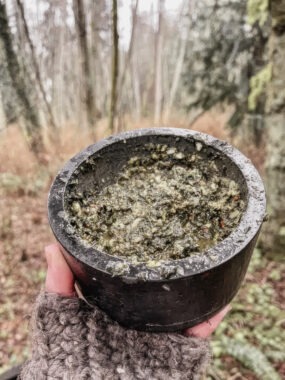
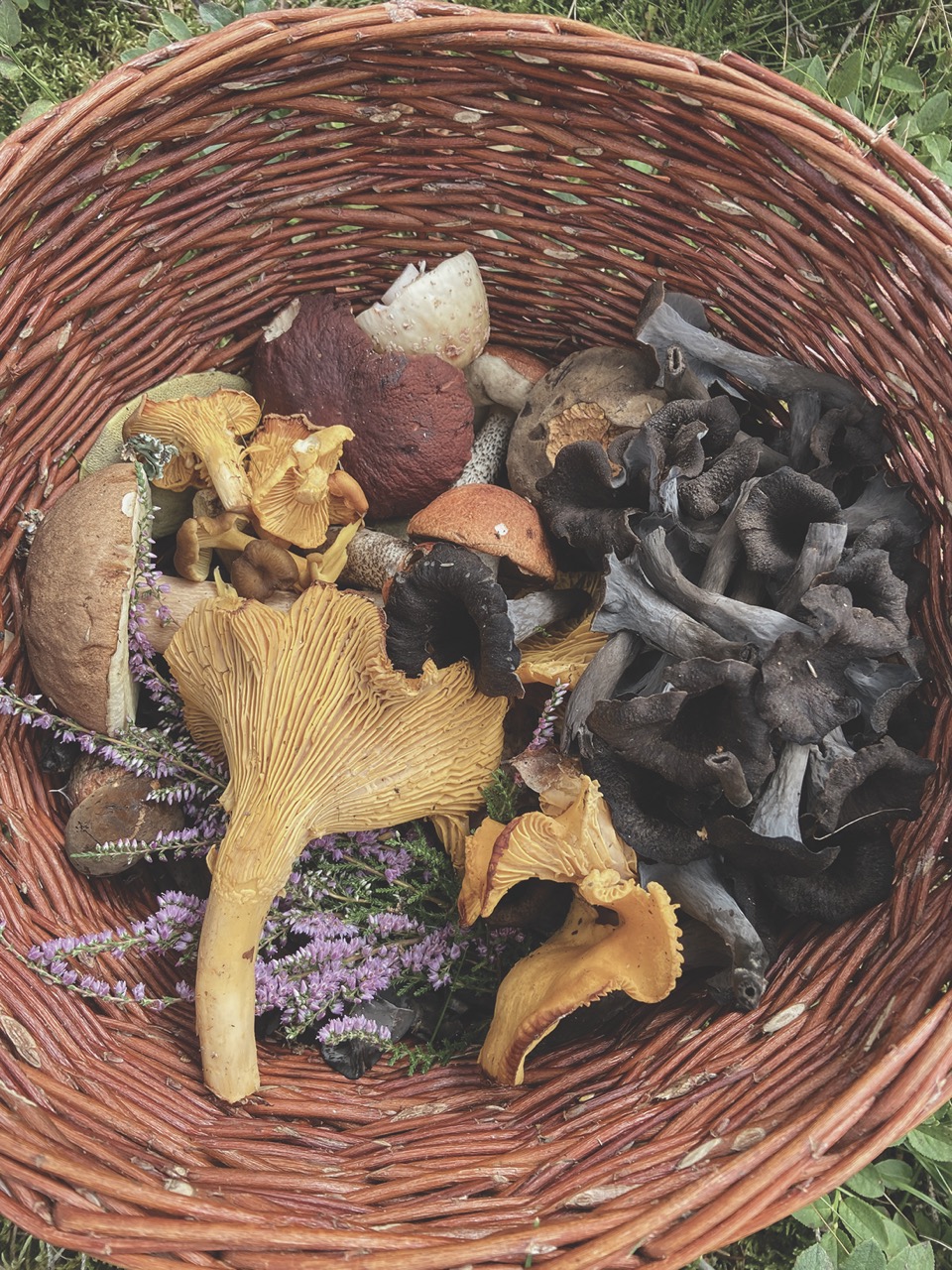
    To learn the names of plants and how to identify them is to step into a rich relational ecosystem. It is to grow in intimate connection with a place; to develop an awareness of seasonality and micro-climates that are not available in any four-walled classroom. Further, learning how to forage, prepare, and incorporate wild foods into your daily meals offers a whole new level of connection with the outside world.

    Wild foods also offer nutrient density that we lack even in our best diets. For example, a simple and abundant edible tree crop like mulberry leaf is high in fiber, calcium, magnesium, vitamins A and C. Along with nutrient density, wild foods provide us with the type of diversity that allows the microbes in our gut to thrive. Plus, many wild foods have a low environmental impact. While we still have the work of harvesting, cleaning, preparing, and preserving, they do not require our attention or inputs to grow. 

    Wild Food Foraging Tips

    Here are a few good ways to begin foraging for wild food. This does not all need to happen at once, however; it can simply be part of your daily life and routines. 

    • Join a local foraging group to share collective wisdom and expertise, spurring one another on to greater discovery.
    • Spend some time reading bio-regional foraging books. Start small and grow your repertoire. Begin looking for plants with no problematic look-alikes that are easy to identify.
    • Keep a โ€œnoticeโ€ Journal: make note of weather conditions as well as when and where you find things. This is an invaluable practice. I have a small field notes journal that I keep with me whenever I am out.
    • I am pretty old school and love my plant identification books, but an app like iNaturalist can be a helpful tool simply because youโ€™re likely to have it with you. I use it to see what other people in my area are finding.
    • Identify a foraging area and make a daily or weekly habit of walking there, taking time to notice what is growing and changing. I recommend avoiding roadside foraging since there is a lot of heavy metal accumulation in street water runoff.ย 

    Once you have learned a few plants and mushrooms and successfully gathered them, you can begin to incorporate them into your regular food repertoire.

    Cooking With Wild Food  

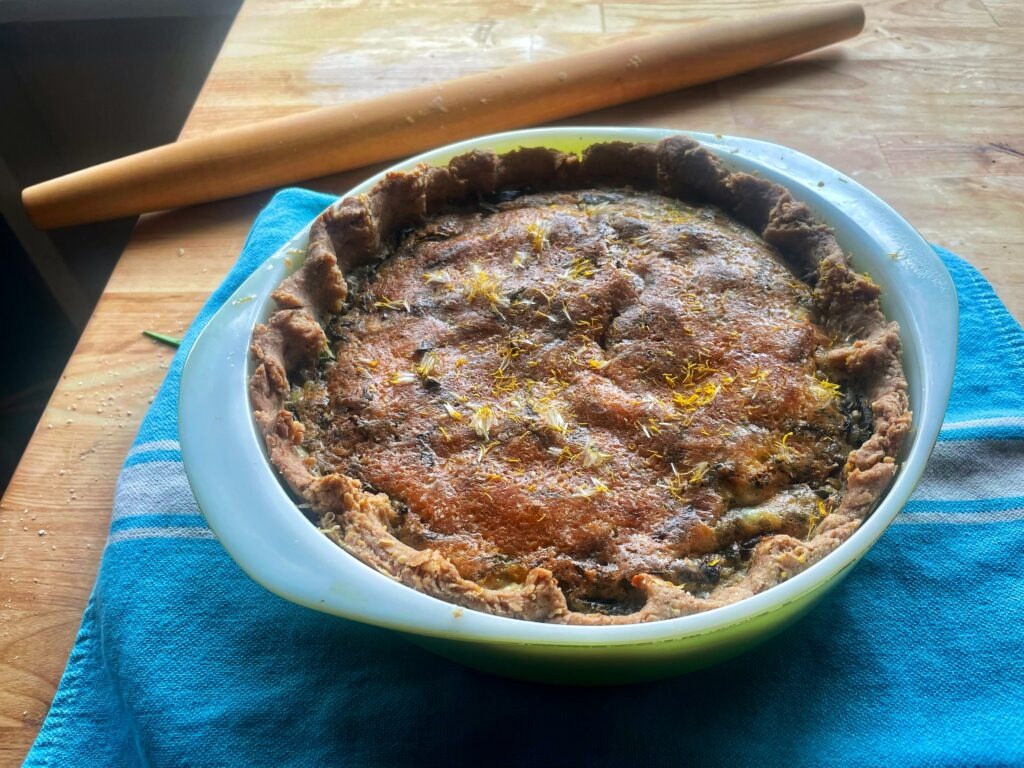
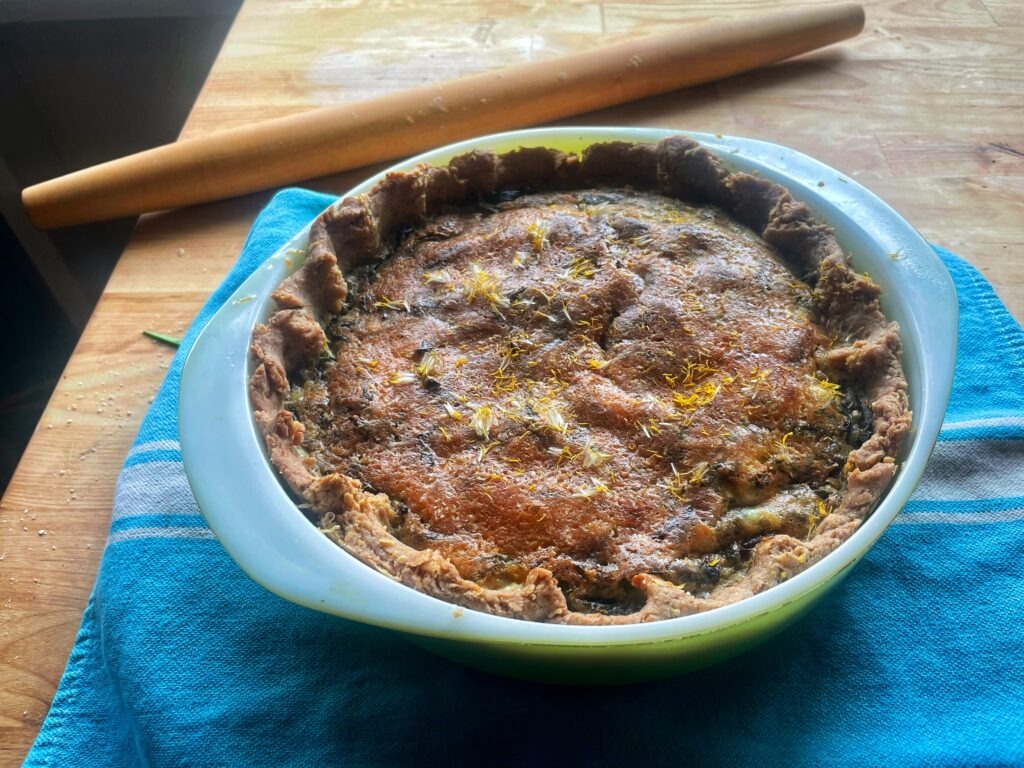
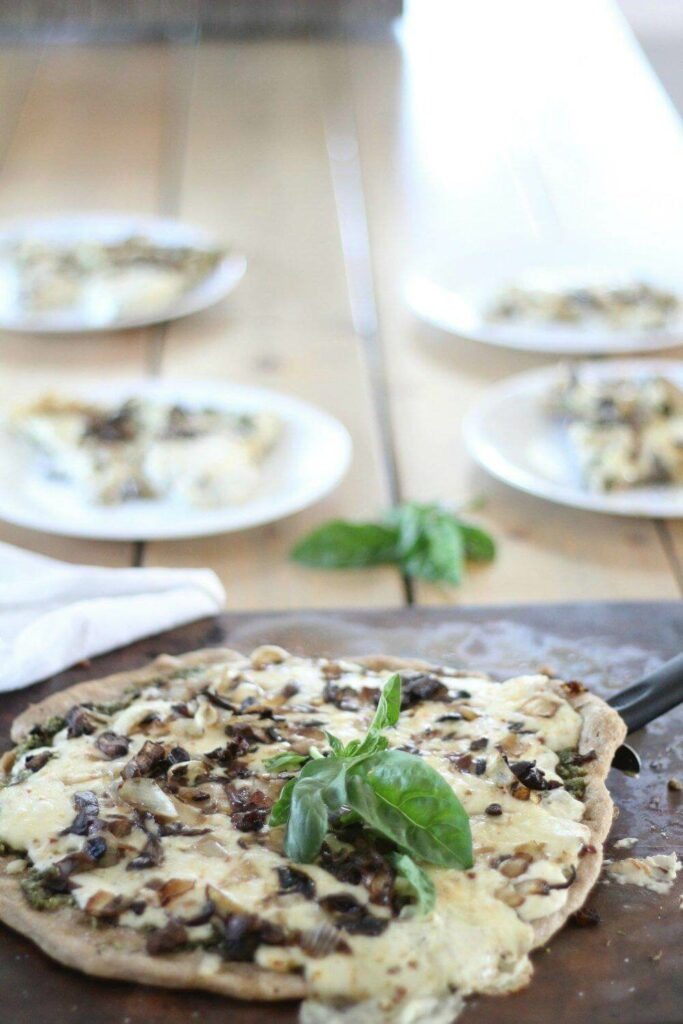
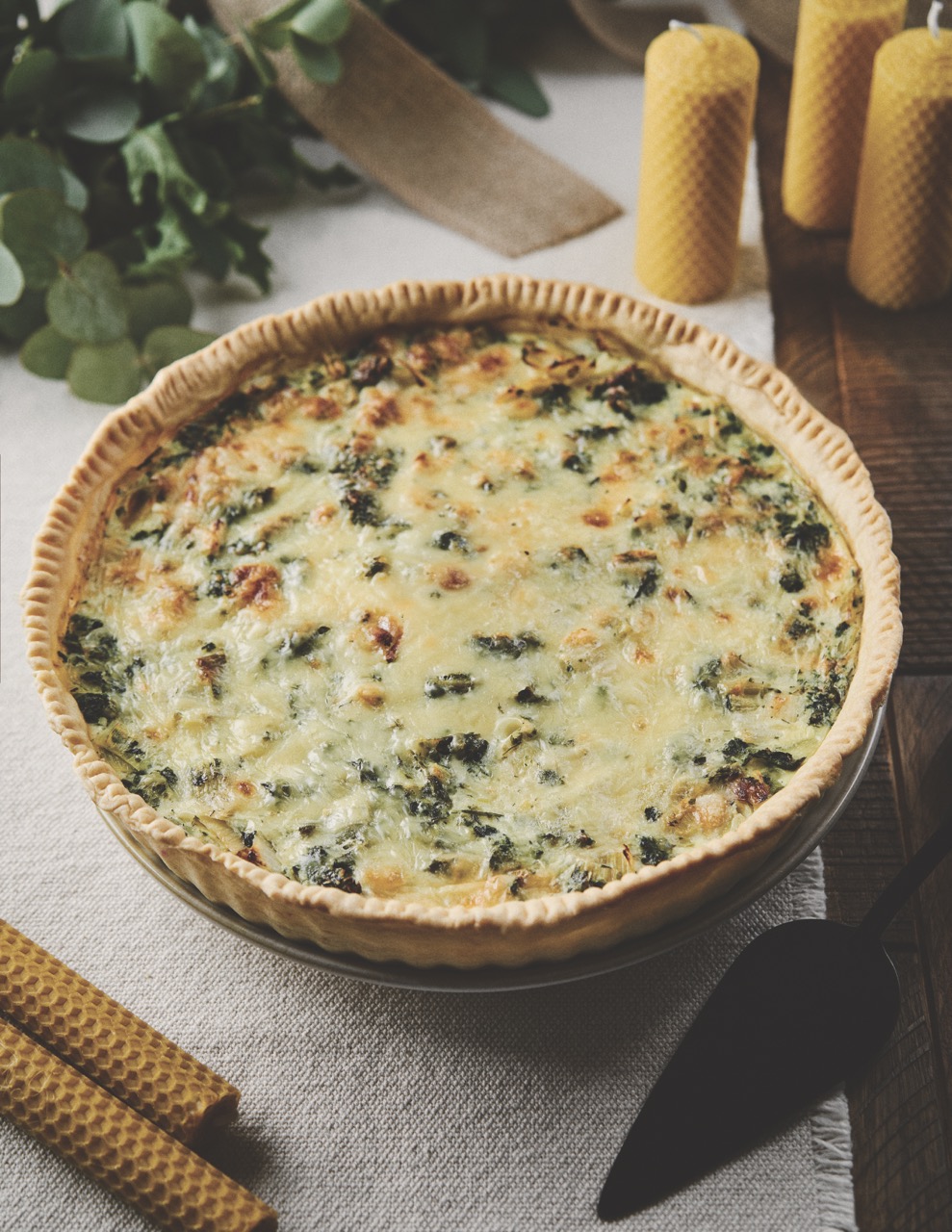
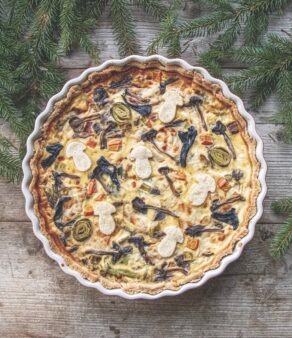
    Cooking with wild food is to typical cooking as improvisational theater is to a script-read play. When working with wild ingredients, you never know what will come your way: oyster mushrooms, locust blossoms, service berriesโ€ฆ The best way to be prepared to cook with wild foods is to keep a well-stocked pantry of common ingredients, and to have a few simple dishes that you can prepare in a variety of ways. A basic quiche recipe, a homemade pizza, or an embellishment of eggs on toast will readily accommodate a wide variety of foraged items. 

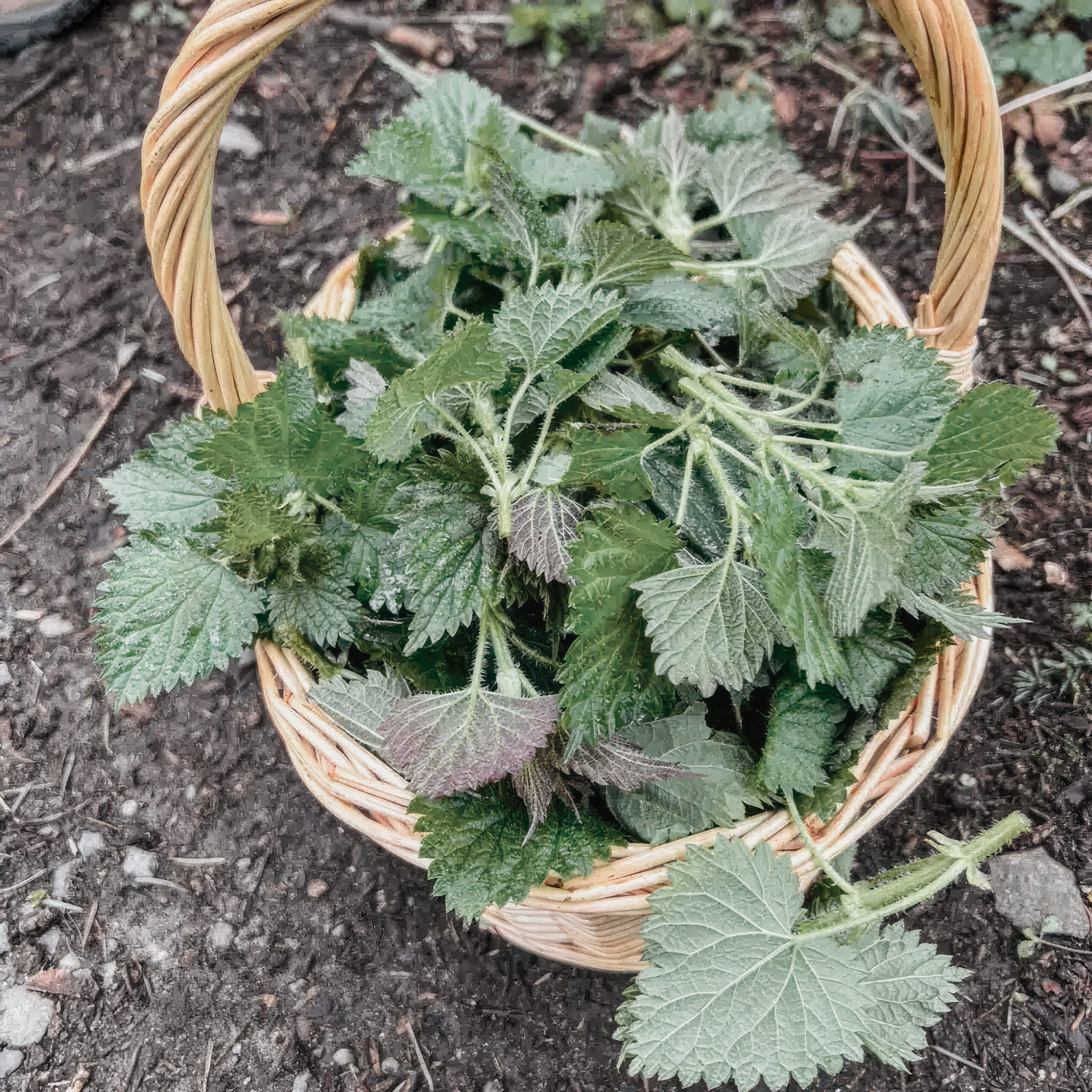
    One of the most abundant wild foods you will find (especially in the spring) will be beautiful, bountiful greens. You can use these greens anywhere you might normally use spinach. Wild greens can sometimes (not always) be more bitter than your cultivated greens, but we can work with that in mind. You are not limited to only one type of green. I will often mix a few dandelion greens with more mild greens such as lambs quarters. And if you have excess seasonal greens such as lambs quarters, dock, or nettle, you can dry them for use when greens are more scarce. 

    While cooking with wild foods can be an incredibly rewarding adventureโ€”one that I hope youโ€™ll embark on!โ€”keep in mind that there is always some inherent risk involved in foraging for oneโ€™s food. You must be in charge of your own health. Donโ€™t eat things that might hurt you. Develop a few trusted sources of info, and make a 100% positive identification before proceeding. Even then, tip-toe in: A smell, pause; a touch of the tongue, pause; a nibble, pause. If at any point your body says โ€œStop doing this to me,โ€ listen. Donโ€™t be fearful, but be alert and aware. What you consume is your responsibility. 

    That being said, once you learn to familiarize yourself with a few different wild foods, youโ€™ll be able to identify, harvest, and enjoy them with confidence, but the only way to build that confidence is to get out there and start learning. While there is much we can learn about these plants through books and guides, the only true way to bring them into our lives and onto our dinner plates is to get out โ€œin the field,โ€ (or the forest), and get to know the wild foods in your area on an intimate levelโ€”learn to love them.

    By incorporating more wild foods into your meals, home, and hospitality, my hope for you is that you develop an appreciation for the wild edibles in your area, and that your life is enriched with the bounty provided by your unique and wonderful ecosystem. Bon Appetit!

  • Homesteading Laws and Regulations: Zoning, Covenants, and Legal Tips

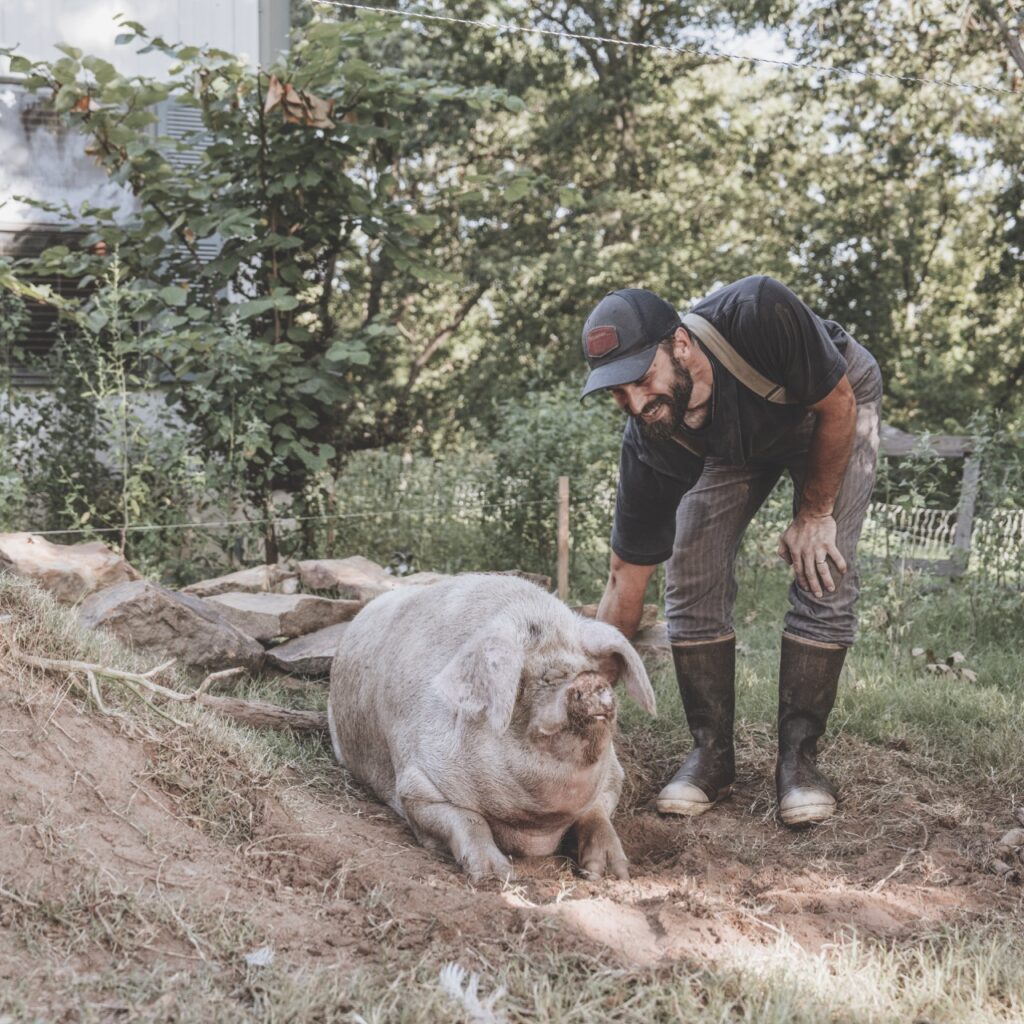
    Homesteading is undeniably nostalgicโ€”For many, the idea of wholesome, intentional living, connected more to the land than to our electronic devices, evokes a sense of rediscovered heritage and renewed purpose. But not everyone shares our passion for composted manure, crowing roosters, and happy pigs wallowing in the mud. And nothing dampens a homesteader’s enthusiasm and commitment faster than a cranky neighbor or government official decrying their โ€œillegalโ€ activities while threatening lawsuits and fines. 

    Some dissenters openly defy the law, as though busybodies and regulators will grow tired of their stubbornness and just leave them alone. But as much as we may want to, we can’t overlook centuries of societal and legal change and pretend to live in the past. This is a naive approach that invariably leads to further conflict, frustrations, and setbacks. Private disputes grow bitter and costly, while governments tighten rules and enforcement tactics until the rebels surrender.

    Modern laws and regulations aren’t necessarily bad things, though. Yes, they can limit us. But they can also protect us from the arbitrary whims and peddling of others, and require everyone to play by the same rules. Bad laws do exist, but thankfully we can change or repeal them, and enact better ones. There are certainly fights to pick with nosy neighbors and partisan legislators, but understanding their limitations and the legal framework of modern society is the first step to our success, not rejecting the rules and hoping they’ll go away.

    We cannot live by axioms like โ€œIgnorance is bliss,โ€ and โ€œItโ€™s better to ask for forgiveness than for permission.โ€ Ignorance of the law has never been a viable excuse. And forgiveness isn’t always painless. A far better creed is โ€œKnowledge is power.โ€ So, before you go โ€œhog wildโ€ on your homestead, it’s important to consider the modern legal implications of your pursuits, and explore the best ways to achieve your goals with the least possible legal hassle.

    The Land You Homestead On Matters

    Homesteading isn’t much without land. You don’t need a lot of it, but growing food and raising animals still requires space. However, most land in the United States and Canada is subject to private and public land use restrictions, municipal planning and zoning ordinances, building codes and special regulations, any of which can limit the way we use our land.  

    The scope of these limitations depends largely on where you live and whether your state and local governments promote agricultural endeavors or not. Adding a business can further complicate matters. Understanding these factors can help you make a better choice about where to homestead, or it can enable you to carve out a successful niche in a restricted environment.

    Private Land Use Restrictions

    It’s important to conduct thorough deed and title searches before buying any landโ€”and even if you already own the landโ€”to better understand whether your activities could trigger potential legal issues with your neighbors. For example, subdivided residential properties frequently carry restrictions intended to preserve the intended land use or prevent devaluation over time. These limitations are called โ€œdeed restrictions,โ€ โ€œrestrictive covenants,โ€ or, more commonly, โ€œcovenants, conditions, and restrictionsโ€ (CC&R’s). 

    These restrictions are private, legally-enforceable agreements made between sellers, buyers, and all subsequent owners of the subdivided land, often forbidding agricultural or commercial use like keeping animals, poultry or livestock, or operating a home business. Such terms can burden the land with easements (the legal right of others to enter and use the property for specific purposes), and even subject it to the invasive oversight and added cost of the dreaded homeowner’s association (HOA). 

    Not all restrictions interfere with homesteading though. A few are actually useful, like preventing your neighbors from operating a junkyard, or entitling you to water from the local irrigation district. You can also lawfully ignore some terms, and if necessary, challenge others in court. Knowing how to properly handle these private restrictions, however, requires you to start by knowing whether they exist in the first place, and exactly what they stipulate.

    Subdivision and deed records are generally available at your local county clerk or registrar/recorder’s office, but title search companies can speed up the process considerably. Since title searches are normally conducted for each sale of the property, you can approach the title company or realtor directly to request a copy of any deed restrictions and covenants, which they are required to disclose to potential buyers. 

    Paper Records Vs. Reality

    It is equally important to know the physical state of your land. Paper records don’t always match reality on the ground anymore. Trees may have been cut down, landmarks and waterways may have eroded, old fences may have collapsedโ€ฆ For a modest fee, a land surveyor will clearly mark property lines and identify corner monuments to resolve potential boundary or ownership disputes, and reveal any active encroachments on your land that need to be addressed. 

    A recorded survey can correct any discrepancies or errors found in the prior deeds and maps, before they become legal headaches for you later on. You can then plan and build with confidence.

    Public Land Use Restrictions

    Most counties also place land use restrictions on private land. These โ€œplanning and zoningโ€ maps and ordinances (usually accessible online), indicate the assigned zoning classification of each parcel and explain its allowable uses. Zoning can be changed but is generally tied to the historical use of the land and the surrounding properties. 

    One zone may allow you to keep up to 25 chickens on every lot. Another may limit cows to rural parcels over 5 acres. Beekeeping may be limited to specific zoning, with added registration and insurance requirements. An ordinance may list setback and height restrictions for animal shelters or fencing built along property lines, with specific fines for violations or escaped animals. In my county, there’s even a limit to the number of trees and bushes you can remove, for erosion control purposes. After determining your zoning classification, a thorough read-through of the relevant zoning ordinance can tell you a lot about your options, even before you start. 

    Unless the activity exceeds specified limits, zoning ordinances don’t usually require county approval. If you must inform officials of your plans though, it can be helpful to approach them with theoretical inquiries first, rather than firm plansโ€”ie. โ€œHere is what I am interested in doing. Can you help me understand the zoning limitations for this property and what my options are?โ€

    They are generally glad to review the ordinances and discuss the possibilities with you. Just remember they aren’t stupid and can still drive by your land to make sure you aren’t skirting the law even after consulting them.

    If you’re building a residential dwelling of any size, or installing structures with concrete foundations, septic systems, utility connections, electricity, or access roads, it’s a safe bet that you’ll need to obtain planning approval and building permits, pay development fees, and complete inspections in full compliance with local building codes and construction standards. Failure to comply with zoning and building regulations can prevent you from occupying, insuring, or selling your property, and can even result in administrative orders to vacate or tear down non-compliant structures at your own cost.

    For more complicated issues, you can find a reputable planning and zoning attorney in your area who can interpret these ordinances for you and help resolve any problems that arise.  

    Special Regulatory Issues

    Special state and federal regulations may also apply to your property. Some states limit surface water access and well drilling, with costly permits, licenses, and regular inspections required. For example, it’s illegal to build ponds or capture rainwater from your own roof in several places. Environmental and water quality agencies can even prevent you from plowing fields too deeply, or developing your land entirely, with millions of dollars in fines levied for non-compliance. 

    Many Western U.S. states also have โ€œ’open rangeโ€ laws requiring small landowners to build specific types of fences to keep free-range cattle or horses out of their property; the inverse of the โ€œfence-inโ€ requirements of many Eastern states. If you don’t, livestock owners can’t be held liable for any damage to your property, and you could be sued or criminally prosecuted for cattle rustling if you capture or injure their animals on your land.

    Business Considerations

    Few people recognize the legal challenges of starting a new business, particularly when selling animal and food products. Few homesteaders even know what questions to ask first. 

    Do you need a specific business or trade license? Should you incorporate your business? Can you hire employees? Are you required to collect and remit sales tax?

    Do cottage food laws or do commercial kitchen regulations apply? What food safety and labeling standards exist? Are nursery licenses required to sell vegetable seedlings? Can you sell live animals, home-butchered meat, fertile eggs, or raw dairy to customers without additional licensing and inspection? Are agricultural quarantine orders active in your area? 

    Can you sell products online and ship them out-of-state? How must you manage and protect customer data? What insurance will you need? Must you allow inspectors onto your property? 

    A complete discussion exceeds this article, but it is essential to explore the full scope of these issues and educate yourself before starting a business.

    Closing Thoughts

    You will undoubtedly face legal restrictions as a homesteader. Sometimes the rules are minimal; other times, they aren’t. The key to homesteading success is working within the system to minimize its impact on you, or adapt to function within the set limits. Not all rules are bad though, and if we learn to successfully navigate them, they can actually make homesteading better for us than it was for our great-grandparents, even back in โ€œthe good old days.โ€

    Legal Disclaimer

    Being that this is an article about the law, it only makes sense that there should be a legal disclaimer to accompany it! So here it is: This article is for educational and entertainment purposes only. It does not constitute business or legal advice, solicitation, or legal advertising, nor does it create an attorney-client relationship. For legal advice or representation, always consult a licensed attorney in your state who is knowledgeable about the facts and legal issues in question.  

  • Classic Sauerkraut Recipe

    I still remember the first time I cracked open a jar of freshly fermented sauerkraut. The smell hit me like a ton of bricks. I grabbed a huge forkfulโ€”having never eaten fermented foods before in my lifeโ€”and immediately ran to the sink to spit it out.

    Probably not how you expected me to start this story, but thatโ€™s the truth.

    I didnโ€™t grow up eating fermented foods, or, honestly, many vegetables at all. So when people described ferments as having a โ€œslight tang,โ€ that felt like quite the understatement from my newbie perspective. Looking back now, it makes me laugh because today I not only enjoy fermented foods, but I eat them with nearly every meal, and there have been no more mad dashes to the sink.

    What I discovered over the years of growing my own food is that fermentation isnโ€™t just one of the oldest preservation methods, itโ€™s also one of the most practical. As a busy mom learning to feed her family from the garden, fermentation became one of the simplest ways to preserve what we grew while making those vegetables more enjoyable to eat.

    Today, fermentation is one of our primary preservation methods, and because of that, I plan my garden differently. Fall cabbage turns into crocks of sauerkraut and kimchi. Spring root crops like radishes, carrots, and beets become fermented snacks my kids reach for all summer long. When cucumbers start producing in warm weather, jars of crisp pickles fill the fridge, and herbs scattered throughout the garden become sauces and bases that flavor meals for months.

    Sauerkraut is one of the simplest and most traditional fermented foods you can make. With just cabbage and salt, you can create a flavorful ferment that stores well for months and pairs beautifully with everyday meals. This basic method is an ideal starting point for beginners and can easily be customized with herbs and spices.

    Classic Sauerkraut Recipe

    Print Recipe Pin Recipe Rate Recipe

    Ingredients

    • 2 pounds cabbage about 1 medium head
    • 18 grams sea salt 2% salt ratio

    Optional Additions

    • Caraway seeds
    • Juniper berries
    • Garlic cloves
    • Black peppercorns
    • Shredded carrot
    • Fresh dill

    Instructions

    • Remove outer leaves and set one aside. Core the cabbage and shred finely.
    • Weigh shredded cabbage and calculate 2% salt by weight (add 9 grams of salt for every pound of cabbage). Sprinkle salt evenly over the cabbage.
    • Massage firmly for 3 to 5 minutes until the cabbage softens and releases enough liquid to form its own brine.
    • Pack cabbage tightly into a clean jar, pressing down until brine rises above the cabbage.
    • Place the reserved cabbage leaf on top and use a fermentation weight if needed to keep cabbage submerged.
    • Allow to ferment at room temperature for 7 to 14 days.
    • Taste periodically. When flavor is pleasantly tangy, seal and store in the refrigerator.

    Notes

    Sauerkraut flavor deepens the longer it ferments.
    Always keep cabbage submerged beneath brine to prevent spoilage.
    Sauerkraut can last up to 6 months or longer in refrigeration.
    Tried this recipe?Mention @homesteadlivingmagazine or tag #homesteadlivingmagazine!
  • The Coop Episode #21: The Economics of Homesteading w/ Jessica Spiers

    In a time when grocery prices keep climbing and the world feels increasingly uncertain, many families are asking a simple question: how can we stretch what we have further while building something that lasts?

    In Episode #21 of The Coop, Anna sits down with Jessica Spiers (homesteading and homeschooling mother of nine) for a deeply practical conversation about how modern homesteading is stepping in to fill the gap left by traditional home economics.

    Jessica shares how the old principles of home economics (planning, production, prevention, price comparison, and resourcefulness) are more relevant today than ever. 

    She explains how these timeless ideas naturally overlap with homesteading, helping families save money, reduce waste, involve their children in meaningful work, and become better stewards of their resources.

    Whether you have acreage or none at all, Jessicaโ€™s wisdom shows that homesteading doesnโ€™t have to be expensive or overwhelming.

    Itโ€™s about making intentional choices with what you already have, teaching kids real skills through everyday tasks, and shifting from a mindset of pure consumption to thoughtful production.

    In this episode, Anna and Jessica discuss:

    • Why homesteading doesnโ€™t need to be an expensive hobby
    • The five core principles of home economics and how they apply today
    • Practical ways to involve children in real household work that builds character
    • How to prioritize projects based on your familyโ€™s time, budget, and season of life
    • The long-term mindset of stewardship and production over convenience and consumption

    If youโ€™re looking for encouragement to live more intentionally, stretch your resources wisely, and raise capable children in an uncertain world, this conversation is for you.

    The show notes โ€ฆ

    00:00:00 – Introduction
    00:04:27 – Meet Jessica Spiers & Her Ohio Homestead
    00:08:10 – The “Why” Behind Homesteading
    00:11:12 – Does Homesteading Actually Save Money?
    00:20:12 – The Decline & Return of Home Economics
    00:25:29 – Principles #1 & #2: Planning and Production
    00:33:45 – Principle #3: Prevention & Food Waste
    00:40:08 – Principle #4: Price Comparison
    00:45:15 – Principle #5: Resourcefulness & A Written Budget
    00:55:36 – The Most Important Skill for Kids to Learn Today
    01:01:43 – Practical Ways for Busy Families to Teach Home Ec
    01:04:02 – Raising Good Stewards & Final Takeaways

    Episode Transcript

    Jessica Spiers:
    And if anything, what I hope that my children get from this experience of growing up on the homestead and doing all this work and having a hand in their food is that they will be better stewards wherever God places them in life. And I say this all the time, I even have a preservation challenge centered around where every bit counts. Every bit of your effort matters. And for every task that you could try to do yourself and produce yourself instead of consuming what someone else made, that helps your budget a little bit and is one step better in stewarding the earth a little better.

    Anna Sakawsky:
    This episode is brought to you by Azure Standard. Family owned since the 1970s, Azure Standard is on a mission to make real food more accessible by delivering it straight to your doorstep or to a convenient local drop point near you. Everything they offer is completely organic, non- GMO, and free from junk additives you don’t want in your home or in your body. With more than 13,000 carefully vetted products, Azure Standard makes it easy to stock up on what really matters from bulk grains, nuts, and healthy oils to fruits and vegetables, frozen meats, pantry staples, and even clean household goods. And the best part is you skip the grocery store markup. You can order exactly what your family actually needs, save big on high quality food and pick it up alongside neighbors who care about the same things you do. Health, sustainability, and supporting ethical producers.
    You can head to azurestandard.com right now to get started. Again, that’s azurestandard.com. Well, hello everyone and welcome to episode number 21 of The Coop. I’m your host, Anna Sokowski, editor-in-chief of Homestead Living Magazine. And today we are diving into a topic that feels especially relevant right now as the world gets more expensive and feels more fragile and uncertain every day. As food and gas prices continue to rise, household budgets are stretched thin, supply chains feel shaky and more people are starting to question whether the modern lifestyle of convenience and constant consumption is truly sustainable. We’re also seeing a resurgence of interest in homesetting and in traditional household skills like gardening, food preservation, cooking from scratch, and all of the practical skills that previous generations once considered completely normal. And that’s because learning these skills helps build resilience so that you have something stable to hold onto when the world itself feels a litle bit unstable, but also having the skills and resourcefulness to take care of yourself and your family in good times and bad is literally like having money in the bank because not only is it a hedge against uncertainty, but knowing how to grow, cook, preserve, build, craft and repair things yourself can save you tons of money as well, especially as many of the things that have been affordable in the past for so long are now costing more and more every day.
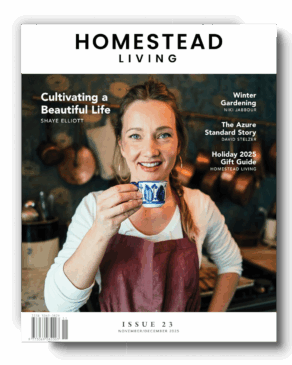
    So today we are talking all about the economics of homesteading and how combining modern homesteading with the principles of traditional home economics can help families stretch their budgets and build greater stability. So joining me for this conversation is Jessica Spears of Three Rivers Homestead. Jessica is a homesteading and homeschooling mother of nine who lives with her family in Northwest Ohio. She’s also a contributor to Homestead Living Magazine and through her YouTube channel and online platform, she teaches others how to grow, preserve and prepare food frugally while cultivating a home-centered life rooted in faith, family, and stewardship. She recently wrote an article for the latest issue of homestead living called The Return of Home Economics: Why Homesteading is the New Home Ec, where she explores how modern home setting is helping families reclaim practical household skills that previous generations actually once learned through home economics classes in school.
    So today, Jessica and I are talking about what homesteading really is at its core, not just the aesthetic version that we often see online nowadays, but the practical side of using what you have, stewarding your resources wisely, living more intentionally and teaching the next generation the skills that are going to help them to become capable and resilient adults. We’re also talking about whether homesteading actually saves money, how to approach it without turning it into an expensive hobby and why the principles of old-fashioned home economics may be more relevant today than ever before. So with that, I welcome Jessica Spears to the show.

    Jessica Spiers:
    Hi, thank you for having me.

    Anna Sakawsky:
    Well, thanks for being here. I really enjoyed your latest article. I actually reached out to you because I saw that you had been talking about this more and more on your Instagram. You mainly kind of share content through your Instagram stories and through your YouTube channel and you had started sharing some stuff on Instagram and then you did a bit of a series on YouTube where you walked people through the kind of five core principles of home economics, which you covered in your article, which we’re going to be going through today. But I just thought, A, it’s really relevant obviously right now more than ever, but these are all things that I think anybody can do. You don’t need tons of land. You don’t really even need any land. You don’t even need to be homesteading to apply these things. So I find that they’re very practical and just very attainable for most people.
    And so I wanted to obviously have you share some of that in an Article for Homestead Living, but I wanted to dive a little bit deeper into this idea of the kind of overlap between home setting and home ec today. So before we really dive in, I would love to just start by having you share a little bit more about your family and homestead. So where you live, the age range of your children, because obviously with nine children, you’re going to have quite an age range, what you grow and raise and what day-to-day life looks like for you and your family.

    Jessica Spiers:
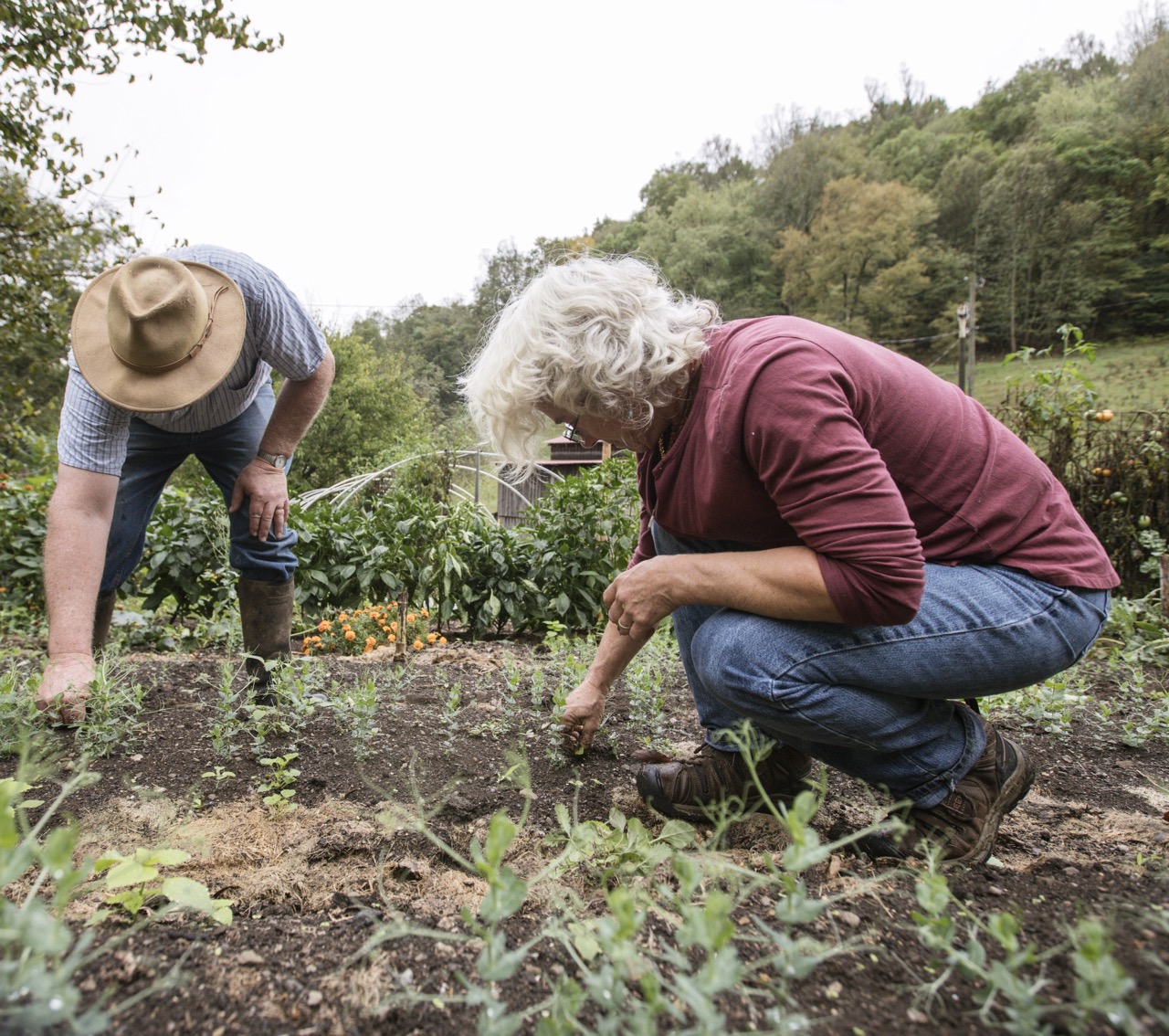
    Okay. Well, I live in Northwest Ohio and my husband Adam and I have nine children. As you mentioned, they range in age from our youngest. It’s just a little over one year old and our oldest is 18. He just graduated high school last week. So we have everything in between there. They keep us very busy. I obviously homeschool them, as you mentioned. And then on our homestead, it actually began for many reasons, which I’ll get into later, but a large part of the homestead is complimenting our homeschool work and teaching the children these skills that you mentioned that are part of a home economics education, but also then the great thing is we get food from it. And so on our homestead we have a garden, we have fruit trees, we had chickens end up, chicken both for eggs and for meat and we raised our own beef.
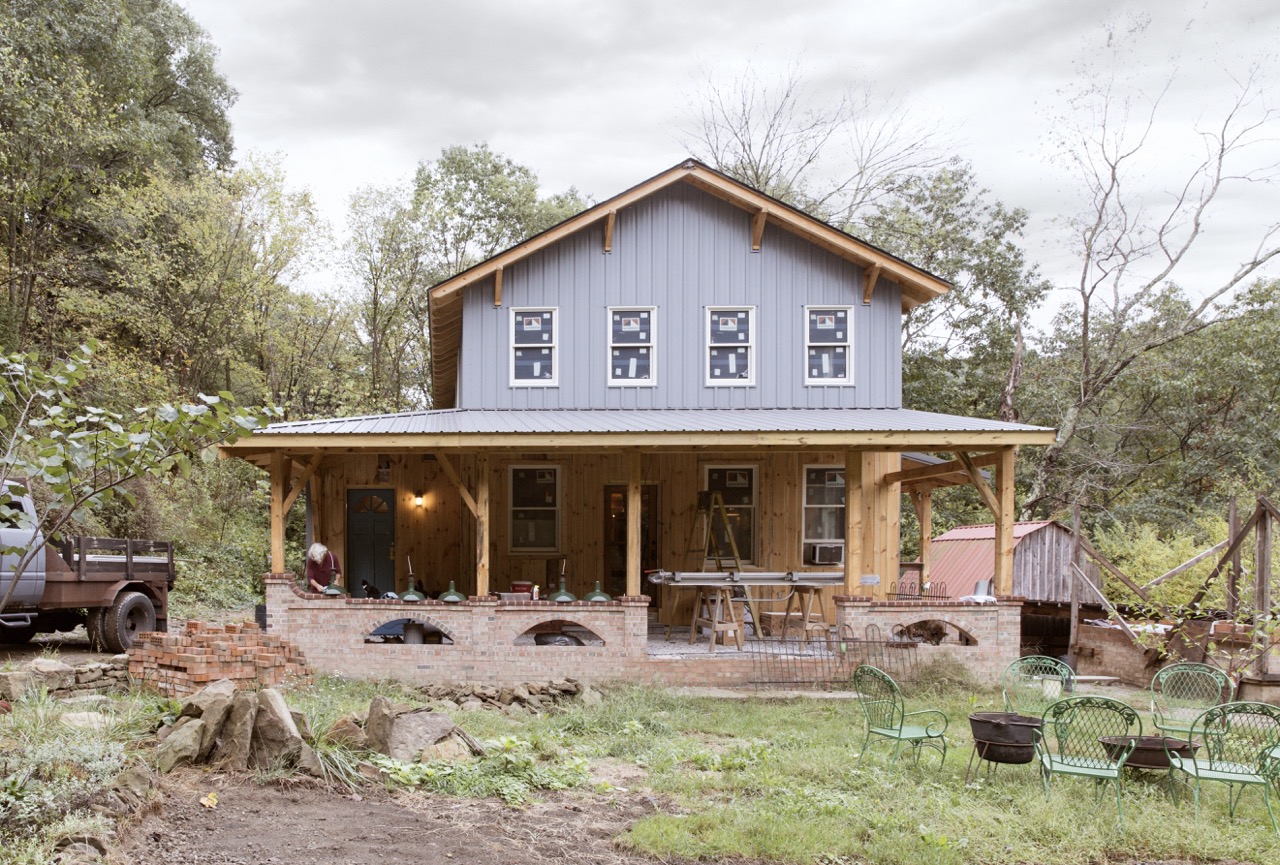
    And right now that’s what we’re doing. I can’t think of much else. We did bees for a while, but I had a bad encounter with the bees and so I kind of passed that on to a family member who’s doing that now for us for our honey. But that’s what we’re doing here. I’m passionate about homesteading and primarily as you mentioned about home economics and law school that used to just be something that everybody did. I think nowadays people think of homesteading as something special that only people with a lot of land can do, but throughout history these skills and these principles that we’re going to talk about today were something that every family did just to have a healthy home economy and finances and to be able to produce healthy food for their family. So it’s something you can do anywhere and our journey in homesteading started long before we moved to this particular property 10 years ago.
    I started applying these principles to my life when we were living in the suburbs with hardly end land and just working on the skills of doing more from scratch ourselves, cooking, canning, growing a little garden in whatever space that we had and we just continue every year to try to expand those skills. So that’s what I’m passionate about. I’m so excited to talk about this today because this is my favorite thing to talk about
    Home setting as it relates to home economics.

    Anna Sakawsky:
    Awesome. Well, okay. So you kind of mentioned that we’ll get back to what got you into homesteading the first place. So I don’t think you grew up doing this, did you? You’re one of the many of us that kind of came to this a bit later in life. So what was your original, I guess, what drew you to homesteading originally and has your why changed over the years and what would you say is the bigger purpose behind this lifestyle choice for you and your family today?

    Jessica Spiers:
    Absolutely. I did not grow up doing this. I had the very typical Midwestern suburban upbringing in a neighborhood kind of setting and all of that. And as I got older, I had an interest. I’ve always been kind of outdoorsy and loved nature. So there was like an interest in gardening and animal husbandry. But then when I had my oldest child, he has anaphylactic food allergies and so feeding him became quite a challenge and actually quite expensive because most store bought foods just weren’t necessarily processed store bought foods weren’t an option for him. And so purchasing those whole food ingredients in the store, I quickly realized that the better decision would be to try to produce as much of that ourselves. On top of that, I’ve had my own health concerns. I have Crohn’s disease, which I’ve been able to manage without pharmaceutical medication for the last, what would it be now, 14 years or so.
    And so it started out primarily for those health and financial reasons. And then as my oldest child and the other children came along and we got to school age, I realized that growing this food would be a great compliment to their education, not just in terms of the science. I mean, when you’re growing food, you’re experiencing science every day. The world is sort of your classroom, but also in character building in the work and the chores that come along with having a productive homestead and then the basic life skills, the home economics skills that we’re going to talk about today that will help them have a healthy home economy as they grow up. So that’s sort of how we got here. I am a Christian and stewardship is an important part of my faith. And so I think homesteading and home economics tie into that idea of being a good steward of the resources that we’ve been given, our finances of the land that we’ve been blessed to live on of the children that we’ve been blessed with and preparing them as best as we can for the world.
    So yeah, there’s so many reasons like the longer I’ve been doing this, the more I realize like I could go on and on about why
    I love.

    Anna Sakawsky:
    Absolutely. It’s funny because I feel like there are kind of a handful of major reasons why I think most people come into this. Health is often a big one, but everybody kind of has their entry point. It might be different for everybody, but usually over the years, everybody ends up with all of the same, like you want to be a good steward, you want to live a self-sufficient, sustainable lifestyle, you want the health benefits. And one of the things that does draw people to homesteading is this idea that we can save money or at least be more food secure and that sort of thing, especially in the world we’re living in now where everything’s getting more expensive and supply chain disruptions and all that sort of thing. But on the topic of money, I think people have an idea that they’re going to start home setting and they want to live more simply and become more self-sufficient and save money, but sometimes that can unintentionally actually turn into just another consumer hobby where people feel like they need all the newest equipment, expensive setups, like perfect aesthetics and they end up sinking a ton of money into it and relying on just buying things in an effort to achieve their goals.
    So I think that’s how we’re trained in our society is the solution is always, we’ll go buy something. So I think that it can get really expensive or I actually hear people who say they want to homestead, but it’s too expensive so they don’t even bother starting where meanwhile, I see that you really do seem to approach homesetting through a much more frugal and resourceful mindset that kind of old use it up, wear it out, make do or do without philosophy. So what would you say to people who feel like home setting is either too expensive to start or to those who may actually be spending more money than they’re saving in the pursuit of a simpler lifestyle?

    Jessica Spiers:
    Well, I would say that homesteading, it’s such a broad label. There are so many individual activities that could fall under that umbrella and for every person’s unique situation, not all of them are going to make great economic sense. You have to look at your time. Are you working a full-time job the amount of land that you have? We’re talking about homesteading in terms of raising something like protein sources. Are you going to be able to grow your own hay or are you going to have to outsource that? Anything that you’re doing, there are so many variables and it’s not going to be the same for everybody. And just because you can’t do a couple of things that fall under the homesteading umbrella doesn’t mean that you can’t homestead at all. There are other things that you can do that make sense and everybody has to look.
    So for some people, maybe growing a garden is a great idea that makes a lot of sense, but raising protein forces just isn’t going to work in your situation. Or maybe for some people they can’t grow a garden, but they have really good options for purchasing produce in bulk from local farmers. And so purchasing it is preserving it and using home skills of food preservation, that makes the most sense for them. And so you don’t have to copy what everybody else is doing. And I think if we talk about some of these principles of home economics, like home economic, it’s a very deliberate intentional act of deciding what makes sense for your home and your family and there’s a lot of planning involved in it. But yeah, like you said, if you just go into it trying to copy what other people are doing without doing the research and the work behind the scenes before you get into it, you’re just going to end up with a very expensive hobby that makes zero financial sense.
    And so yeah, you just need to be very intentional with the choices that you make and not try to copy what you see happening on social media because a lot of that just isn’t realistic for the average person.

    Anna Sakawsky:
    Absolutely. And I would kind of add to that, that you don’t necessarily need to do all of it, nor do you need to do all of it at once. I think that there’s often this pit that people fall into where it’s like when you start anything, it’s like when you start, I think of like starting a workout regime and you get really excited and so you go really hard and then it becomes unsustainable. So you stop doing it altogether rather than slowly building over time. And I mean to that point too, the reality is that there are certain aspects of homeselling that do require real investment either upfront or at the time of purchase. So things like fencing infrastructure, garden beds, investing in certain tools, maybe a good pressure canner, maybe a freeze dryer at some point, buying in bulk, maybe filling the freezer with a half a cow or buying in bulk when things are in season.
    Those can be big expenditures at the time and that’s, I think, why it can feel really expensive to people, especially if they’re trying to do all those things in the first couple years thinking they need all of that. But in your experience, how does that stack up over time compared to the standard modern lifestyle of just going to the grocery store whenever you need something? How have you approached it over the years and how do you discern between something that’s a worthwhile investment versus just an expense?

    Jessica Spiers:
    Yeah. I mean, I agree with what you’re saying and I would say everything’s going to cost you something. It’s either going to cost money or it’s going to cost you a lot of effort and sweat and work to accomplish it. We started very slow on our homestead. We moved here, obviously infrastructure. There was some fencing, like you said, of things that we needed to invest in to get started, but we couldn’t afford to buy everything that we would need at first and that just meant that we had to do a lot more of the physical labor in the years leading up. And so knowing that we had small children to take care of and I’m busy homeschooling, there’s only so much time I would have to do that physical labor. And so we had to be very intentional about which activities that we would choose.
    And we made a rule in the very beginning that we would only add one new project every year that when we moved to this home, so the first year we’ll invest in the gardens and we’ll get that going and then maybe the next year we’ll expand the chicken coop and put in a larger run for them and just do one thing at a time. But there were many years, like let’s say a tractor. A tractor is a huge experience home, but it’s also extremely helpful to have on the home dead. But we lived here for seven years, six years I think before we had the money available to do that. And so it just meant a lot of moving veil to pay by hand with three of us rolling that round veil across from one side of the property to the other. It just took us more time and a lot more energy, but you do it to get it done until you can save up to afford the equipment that you’re going to need.
    And so you just kind of have to be selective in that way. And if you’re not willing to do the hard work and you don’t have the finances to purchase the equipment, then that’s not an activity that you should pursue and that’s how you can kind of weed out what is and isn’t part of your effort on the homestead.

    Anna Sakawsky:
    Right. And another layer to that, I guess, is how have you decided outside of just what can we afford and that sort of thing, but what to prioritize first maybe it’s, “Oh, I really need to invest in the canner or whatever this year.” But I feel like with homesteading because there’s so many different areas of it, it’s like, “Oh, but we also need the garden beds or we need this and we need the greenhouse.” That’s, I think, where it can get overwhelming for people too is like they’re just, “Yeah, okay, I know I can only do so much, but where do I even focus?” So how have you decided where to prioritize your time, energy, money over the years?

    Jessica Spiers:
    Okay. So starting out when we first moved here, like I said, I had small children and was actively pregnant on and off it seemed like every other year. And so a lot of determining which projects made the most sense was what I had the energy or the time to actually do with children in tow. And so that weeded out a whole lot of things. Even in terms of raising our own beef, when we first moved here, my oldest child was only seven or eight. My husband works off the homestead every day and dealing with, let’s say, a cow gets loose or having to move, like I said, that the big bales of hay across the property wouldn’t have been possible for me to do. And so that was off the table until I had older children that were capable of helping me with those types of things.
    And so we prioritized the things that not only made the most financial sense, but made the most sense for me to be able to accomplish while also taking care of all of the other responsibilities that I had with just the family and things like that. And so for us, chickens, they were much easier. Kids could help with chicken chores. They’re pretty low investment. We cobbled together a coop out of just random junk those first couple years because of what we could do and fencing was hodgepodge, but we made it work and it was really fun. And then as time went on, we were able to get better fencing and another coop and you just prioritize it that way.

    Anna Sakawsky:
    Yeah. Okay. Well, let’s get into these principles of home economics. So you recently wrote an article, as I mentioned for Homestead Living, The Return of Home Economics, Y Home Setting is the new Home Act where you draw parallels between homesteading and the kind of more practical home economics skills that were taught to us in schools back in the day. So before we touch on the principles, what was the original purpose of HOMEC in schools and how did it evolve over time and why do you think that we maybe started to value these skills less and less?

    Jessica Spiers:
    Yeah, I think originally when Home X became a part of mainstream curriculum, I think it was probably in maybe the 1940s or so they started a campaign to really teach this and it makes sense. If you think about World War II era, victory gardens, all of this, we’ve got people really focusing on trying to produce as much food from the home as possible, preserve that food and have really healthy home economies. And in time, I just think the world changed a lot with a focus on less production happening in the home to now we live in a society where two parents often work outside of the home and we want to consume more than actually produce more out of the home. And so we saw, I mean, it’s a direct relation to as that happened over time, that home economics curriculum definitely changed from the focus being the home economy to being consumers.
    And you can see it in the 1990s, the curriculum, even the name of it shifted from home economics to family and consumer sciences. And then I would say now in a lot of places, it’s just consumer sciences with the focus on learning these skills and making you employable out in the world, not necessarily learning those skills to use them in the home setting, if that makes sense.
    So yeah, that’s kind of how I see where we got to where we are. And then my generation, I classify myself as an elder millennial. I grew up not having home economics even in the 90s. I do remember there being some consumer sciences classes, maybe some culinary arts or some child development, but I felt like the focus on all of that was maybe learning those skills to apply them and becoming a chef or becoming a daycare worker, not necessarily on learning them for my home. And so those of us who grew up with that gap in our education in the meantime also saw the economy becoming harsher and harsher and harder to raise our families with the price of food skyrocketing and then that gap in our knowledge of not knowing how to control that ourselves. And so I think that’s why we see the popularity in our generation in looking to homesteading and it’s sort of becoming this replacement for that education that we didn’t receive through either the school system or generationally from our grandmas and our mothers passing it down.
    And now we have this great tool of the internet to kind of help us learn from others how to do those things. I think that’s kind of how we’ve gotten to where we are today.

    Anna Sakawsky:
    Yeah. It’s interesting. I remember I did, so I’m in Canada, I don’t know if they actually do still … My daughter’s still in elementary, so we’ll see what happens when she goes into high school. I don’t know if they still have home ec classes. So many of those extras have been cut due to funding and that sort of thing. I remember even when I took … It was home ec at the time, but I just remember I didn’t really take it seriously because it wasn’t an academic course. There wasn’t a lot of … And I don’t remember it ever actually being explained through any, because we had four or five different teachers depending on whether you’re doing cooking or sewing or woodworking or whatever it was. And I don’t actually remember any of them explaining why we were learning it. I didn’t realize … And now, of course, looking back and knowing what I do and especially living this lifestyle, I think that those are probably some of the most important classes that we could have been taught, but there was a disconnect.
    We were just so focused on it’s your academic grades that matter and I just didn’t really see … And I think that’s maybe where a lot of people come from is they don’t really see the value in it. But as you say, I think more and more people are understanding the value of that as they’re realizing how applicable it is to the real world. And you said something about changing from the home sciences or whatever they call to consumer sciences, right? The home economy to consumer sciences and this whole emphasis on being consumers over the years. And it seems like that’s all we’ve been trained up to do and to be, is to either be consumers or to produce for other people’s consumption to keep the economy going. And it’s funny, when I think about what homesteading is at its core, for me, I always say that it’s a lifestyle of production rather than just simply consumption, right?
    Whatever you can actually be producing at home, then you’re not having to consume that or purchase that or source that from elsewhere. And again, you can do this on any level, even like you say, even if you don’t can’t grow garden, you can cook a meal at home or you can learn how to preserve or whatever. So it’s just that mindset of being a litle bit more of a producer than just having to consume everything.

    Jessica Spiers:
    Oh, go ahead.

    Anna Sakawsky:
    Yeah, I was just going to say, so let’s start with the principles. So I think I have them in the right order, but there’s five kind of core principles that you talk about that kind of overlap between homesteading and home economics. And those are planning, production, prevention, price comparison, and resourcefulness. So let’s start with planning. So what does that mean in the context of homesteading? What does that look like in practice?

    Jessica Spiers:
    Okay. I like to think of each one of these principles, you could think of a reason why someone would homestead. Every reason you could think of to start homesteading could be labeled as one of these principles. And so when we think about planning, it’s a lot about preparation. There are a lot of people who choose to homestead. We might label them as preppers, but they’re just trying to be prepared for any habituality. It could be economic problems, political problems, just being prepared for whatever life might throw at you, having a litle bit of extra food in the pantry just in case someone gets sick and you can’t make it to the grocery store next week or whatever. And so I think that planning is a really important part of homesteading for that reason. This is how we could be most prepared. And in terms of our economy of the home and when we talked about earlier, like deciding which projects that we’re going to do on the homestead make sense, it’s that planning process that is going to help us make that decision.
    And so running into these activities blind without doing any planning, that’s how it turns into what we were talking about before, just an expensive hobby. And so yeah, it’s just a really important principle of both home economics in terms of your finances, but also in terms of the homestead and determining which things make the most sense.

    Anna Sakawsky:
    Yeah. Well, I even think of, and again, whether you’re homesteading or not, I’m a planner in that I’m always planning ahead for the next season or the next year or whatever. So that means, for example, even something like, okay, Christmas ends. And then I’m thinking about next year already because I know that I can get things on sale now, put them away and then not be paying top dollar leading up trips or heading into the summer. I’m thinking about like, maybe I want to get my canning supplies now before they run out because there’s a rush on all that stuff at the store or while there’s this, again, a sale on. I’m kind of always thinking about the next season, trying to get things off season so that I can save a little bit of money, but also have them put away for when I need them.
    And that’s something that again, you can apply whether you’re homesteading or not, right?

    Jessica Spiers:
    Yeah. I mean, homesteading is cyclical by nature, right? You’re going to have seasons of abundance and you’re going to have seasons where you’re not growing anything and so you have to plan ahead for that. And so now what’s on my mind is we’re in the season of abundance when it comes to eggs. This is the time of year where the chickens and the ducks are just laying a ton. And so I need to plan ahead now for the winter when they tend to take a break and don’t have as many and due to work now to prepare in advance for that. And so every activity that you do on the homestead, because it’s cyclical in nature is going to require some planning, looking out a couple months into the future or a year into the future and see where you’ll be at and then plan the activities for the growing season to make sure that you’re going to be covered in that time period.

    Anna Sakawsky:
    Absolutely. Okay. Let’s talk about, sorry, what’s next? I don’t know if you have a specific … Is it prevention or production? Okay, I have production. So let’s talk about production. What does that look like?

    Jessica Spiers:
    Yeah. I mean, when we talk about the reasons people get into homesteading, I think production is a big one. There is this drive to want to kind of do it ourselves, to produce it because we think we can create a better product or a safer product or a healthier product, a product that might be cheaper and that is kind of the core of what homesteading is. So you’re producing food, you’re producing an education for your children if you’re involving them in this process. And so it really is a poor tenant of what homesteading has become and it’s a poor tenant of a healthy home economy. Nine times out of 10, it’s going to cost less when you produce it yourself versus having to pay for the labor of somebody else to have to produce it for you.

    Anna Sakawsky:
    What do you say to people? Because I know that there are folks out there, I have some in my family that are like, “Why Why would I grow my own tomatoes and I can go to Walmart and get it for cheaper than it’s going to cost and I’m not going to have to do all the work and that sort of thing.

    Jessica Spiers:
    Well, yeah. I mean, that could be the case. I did another video series on that where sometimes it doesn’t make sense to grow it yourself from a financial perspective. And it could just be that you haven’t done the planning to really look or the price comparisons to look and see if maybe where you’re purchasing that plant start or if you’re not purchasing them or starting the seeds yourself, that might not make the most sense. And maybe tomatoes aren’t something that you grow. Maybe it makes more sense to go to a local farm and purchase tomatoes from someone else. But if it’s not tomatoes, maybe it’s something else that you grow and place of tomatoes. But just having a production mindset of producing something is I guarantee if it’s not tomatoes, there’s something else that’s more expensive for you to purchase in the grocery store than it is to grow it yourself and you just have to determine what those things are.
    And it is about more than just cost. I mean, there are other reasons to homestead. The nutrients in your homegrown tomato or the flavor in your homegrown tomato might be different than what you could purchase in the store, especially off season or wherever. And so there are a lot of factors that go into it. Obviously, when you’re talking about a home economy, finances are going to be a huge portion of it, but it is always about that. Sometimes there’s a trade off to when it comes to flavor and health as well.

    Anna Sakawsky:
    Yeah, absolutely. I think it’s important to literally and figuratively compare apples to apples. So if you’re growing a beautiful homegrown organic tomato that tastes amazing and you’re comparing it to the conventionally grown tomato at Walmart that is flavorless and is stripped of nutrients and everything, then the comparison is not … Yeah, we’re not being super accurate with it. But if you were going to go purchase that organic tomato grown locally and everything else, then probably at that point producing it yourself is cheaper. So I think it’s a good point that just you need to make sure that you’re actually comparing things to like things, right?

    Jessica Spiers:
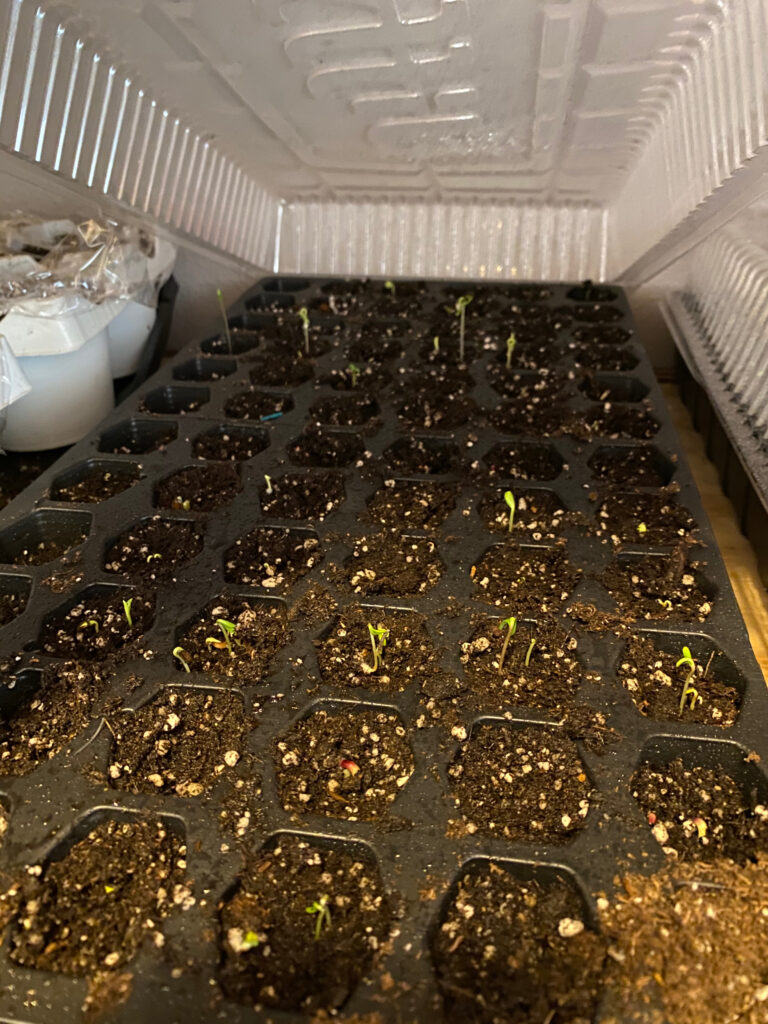
    Yeah. And I think a lot of people think growing a tomato has to be expensive because they’re used to seeing the plant starts that are available at Lowe’s or these big box stores where one tomato plant is costing them five or $6 and they’re like, “Well, that’s silly for the number of tomatoes I’m going to get off it. Why does it work all that time and effort?” But there are much better ways I would say to obtain a plant start like that. There might be a local farmer that sells plant starts or I know there are some online delivery places that I purchased plants starts from before for half of that price. Local greenhouses I can get a flat of tomatoes for $11 and it has like 48 plants in it or start it by yourself. And when you do the math, which I’ve done series before in videos detailing the map on these things, I very rarely find it where purchasing it is going to make better financial sense than doing it yourself.
    You just have to look at all the options and not just go for the easiest one, which might be the tomato start that’s available at the Lowe’s store or something.

    Anna Sakawsky:
    Yeah, absolutely. Okay. Let’s talk about prevention. What does that mean? What are we preventing?

    Jessica Spiers:
    Well, the reasons for homesteading, once again, a lot of people myself, why did I get into it for the first reason was for health reasons. I’m preventing having to be on pharmaceutical drugs, control my Crohn’s disease. I wanted to be able to grow food. I knew what was in it. I knew it would be safe. It wouldn’t have those allergens for my son and things like that. So it’s preventing health outcomes. It’s preventing unnecessary spending. Homesteading is preventing a lot of maybe environmental issues that could come about from growing things conventionally versus maybe doing it in a more sustainable way on the homestead. There’s a lot of prevention involved there. It’s preventing having to go to the grocery store. For me, in the middle of winter in January, it’s cold here in Ohio, it’s icy, the roads, it’s cold in flu season and everybody’s coughing out in public and homesteading prevents me from having to load all my kids up and go to the grocery store because my pantry is stocked and I can stay home where it’s warm and cozy and eat from the work that we did over the summer.

    Anna Sakawsky:
    Right. And food waste, I know you mentioned you did a video I believe on prevention and you talked about in that video that households are actually responsible for 43% of all food waste and that the average family throws away between $1,500 and $2,000 worth of food each year. And I see that. And it’s so funny just because I’m a real stickler about not wasting food. It can’t go anywhere else, it goes to the chickens or the compost, but we use everything because we value it because we know what it takes. But again, I know people that are quite close to me that when I spend time with them and I just watch the things they throw away, I’m like, “We barely touch that or whatever.” And I just think that it’s hard to watch sometimes just knowing how much that costs and how much that would take to produce, right?

    Jessica Spiers:
    Oh man, just like we talked about stewardship and all of that, just the idea of throwing away food in plastic that’s going to go in a landfill when it could become compost or it could be an animal or something. Oh, and there’s something too about having a hand in growing your food, watching these animals that you raise and then you butcher and then you consume. It’s like just the act of homesteading alone prevents you from wasting that because it’s like, I have too much respect for this animal and this work that I did. And so we’re going to eat what’s on our plate so we’re going to use every bit of that animal that we possibly can because wasting it just feels so wrong. This is once again, something that everybody used to do. Everybody had some backyard chickens or everybody had a garden and they threw stuff in the compost bin because people didn’t have trash services way back in the day.
    And so I think it’s just not just preventing financial waste or food waste, but it’s the right decision in terms of stewardship and the environment.

    Anna Sakawsky:
    Absolutely. And just having that connection to our food too and understanding more on a deeper level how food works, how long it actually lasts. For example, I know people that they just go by, it says it’s best before this date. And so I will toss it if it’s not … I had somebody I knew that was like, “Oh, this mustard says it expired like a week ago.” Well, mustard is like, it’s not something that’s going to easily go bad. And again, there’s a difference between say something that’s best before and something that’s got an expiry date on it and knowing how to actually discern that for yourself, but so much food I think gets wasted that way too. I bet a lot of it outside of just fresh produce that kind of wilts or goes bad and gets thrown away because people don’t know how to preserve it properly now is probably things that have some sort of a date on them because they’re mandated to have it and people that just don’t understand what that actually means.
    So they just automatically toss it if it’s past its best before date. So just understanding some of those things, even if we’re not producing it ourselves, like just having a better understanding of how that works so that we can be more mindful of

    Jessica Spiers:
    Buying and

    Anna Sakawsky:
    Using-

    Jessica Spiers:
    Speaking of old home economics versus newer versions of it, they used to focus on food preservation and teaching food safety from that perspective like, okay, vinegar preserves things. Why would mustard go bad because vinegar preserves it and it’s all about acidity levels. I’ve even shown people online the difference between canning guides that were made in the 1940s, 1950s. I have copies of some of them where there was actual food safety education in them versus the ones that are made now that just don’t have that information in them. And so a lot of these family and consumer science classes as they shifted away from home economics and teaching people about the basics of food safety in a home setting shifted to more commercial food safety and focusing on expiration dates and Best Buy date and just trusting that. And if your food’s left out all of the commercial canning rules or commercial food safety rules and everybody just lost all that knowledge of traditional preservation methods and what need.
    And I feel like that’s why canning is a lost art too, because people don’t understand how it works. They haven’t had that education. And I feel like a lot of the fear with canning and food preservation goes away once you understand botulism can’t grow in this environment as long as you do that. So yeah, it’s really stabbed because we just lost that knowledge over the years.

    Anna Sakawsky:
    Well, luckily it’s coming back. If the thought of raising chickens has ever intimidated you, consider this your sign to stop putting it off. Murray McMurray Hatchery has been helping first time chicken keepers succeed for over a hundred years. They offer the widest selection of day old chicks and poultry, super low minimum orders, sometimes as few as one bird and the best guarantees in the business, live arrival, 48 hour livability, and 90% sexing accuracy. Plus they’ve got everything you need to raise happy, healthy birds right from the start. Brooders, feed, incubators, the works. It’s never been easier or safer to start your own flock, so visit mcmurrayhatchery.com and tell them the coop sent you. Again, that’s mcmurrayhatchery.com. The next one is price comparison. We also kind of talked about that, about comparing apples to apples and that sort of thing, but what else kind of falls under price comparison or how do you approach that when you are actually comparing and trying to figure out where to invest your money?

    Jessica Spiers:
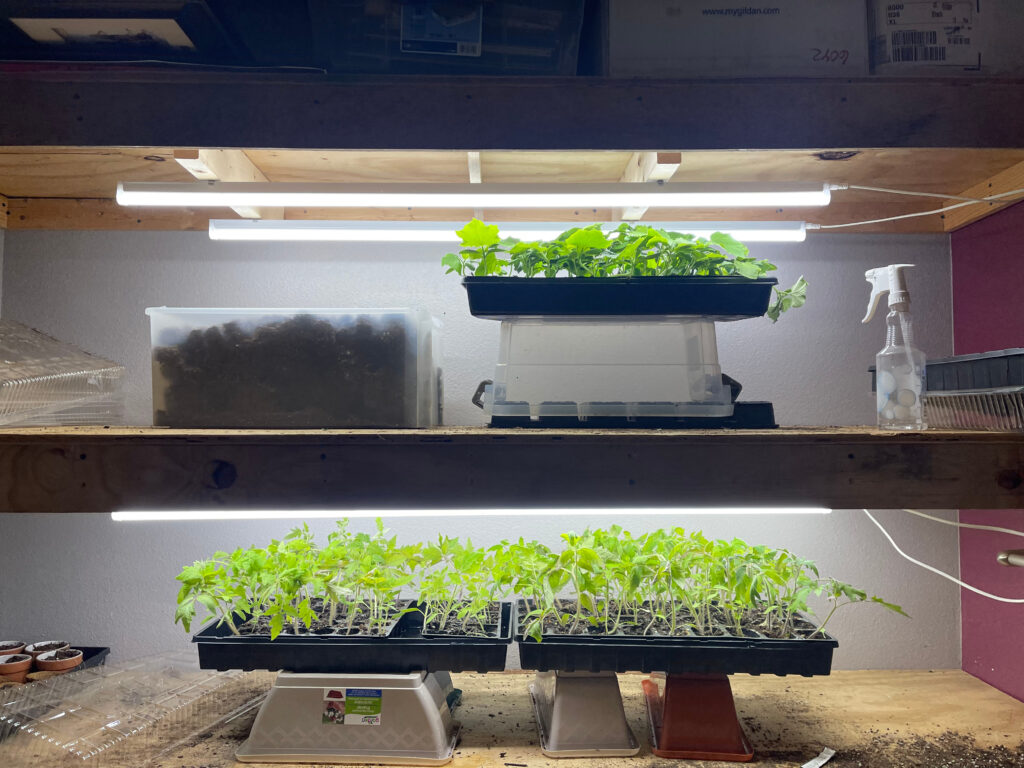
    Yeah. I mean, we talked about this in the beginning. Not every activity is going to make great sense. I did a video on this year. In past years, I grew most of my plant starks for my garden myself. I had more space in my house. I had this large grow light set up and I just thought for many years that growing it myself, starting on my seedlings myself would make the most financial sense. And then last year I sat down and really did the math on it and I calculated the cost of the soil and the cost of the electricity and all of it. And I realized that actually for a lot of just generic plants that aren’t a special heirloom variety or a really unique niche variety or whatever, it made much more sense for me to purchase plant starts from our local nursery.
    And then for my sanity too, I didn’t have all these grill lights using up space in my house, but so that was just one example of where doing the math and comparing the prices will help you determine what is the best use of your time and energy and money. I mean, home economics, this is like the cornerstone of it, right? We want to make sure that the food that you’re purchasing from the grocery store or the feed for your animals or whatever you’re doing, you want to be getting the best deal and it’s no different in your homesteading projects. So sometimes it makes sense to grow it yourself, sometimes it doesn’t. I mean, beef prices keep going up and up and up every year and the cost of way to purchase our beef calves to raise our beef and it’s hadrupled over the last probably five years, the cost of the cal and we’re getting to the point where it probably won’t make financial sense for us to do it if it keeps increasing.
    And so that’s something you have to evaluate every year to decide maybe our efforts would be better moving towards pork or expanding the amount of water you’re doing instead of purchasing your caps.

    Anna Sakawsky:
    Yeah. Well, and same as when you’re kind of deciding if it’s worth it to raise your own animals or whether it’s worth it to just purchase from a local farmer as well. So again, I think you’re right, it really comes down to actually doing the math is a really important part of it because even at the grocery store, for example, you need to understand how to do the math on certain things because there will be things that are priced a certain way. But again, first of all, I try to teach this to my daughter a lot when we’re shopping together. First of all, we look at the ingredients, because again, you want to be sure … For example, we purchased a … We were making dinner the other night and I wanted just something quick and easy. So we got one of those roasted chickens from the grocery store and then we went over to Costco and I realized that it was like $5 less for one of those chickens there.
    But then I was like, I looked at the ingredients and there’s all sorts of additives and stuff in there and seed oils and everything in the Costco one that the other one didn’t have. I’m like, well, for that $5, it’s worth it for me to pay that extra $5 to avoid all those other things. But the other thing that we look at is the unit price, right? Because you might have something that’s a couple dollars less than something else, but it’s a smaller amount that you’re getting. And when you actually price out the cost per unit, it makes sense to spend the extra couple bucks, or sometimes it actually makes sense to buy the smaller amount. You’d imagine that buying in bulk, sometimes you save money. That’s not always the case. I remember one of the most valuable lessons my mom ever taught me was how to purchase random weight cheeses, that if you got random weight cheeses, but they’re all priced the same, you look for the one that’s the highest weight, that’s actually the most expensive based on the weight of it, but then they’re all priced at the same price and so you grab that.
    So that’s another thing that I’m teaching my daughter right now. So just little tips and tricks like that, that again, if you haven’t been taught, you don’t know and that’s just wasted money every time you go to the store then, right?

    Jessica Spiers:
    Yeah. And it goes back to the question about the tomato that you said you get asked a lot from people. It isn’t just comparing, like you said, apples to apples. We all know if you’re growing a garden or you’re raising animals that they’re only as nutritious as the soil they grow in or the feed that they’re given. And so just doing a price comparison without looking into all the other factors, like you said, the ingredients in the food or the soil that it’s being grown in just doesn’t make sense because the same two tomatoes can look identical from the outside, but when you actually did a nutrient analysis of them, you’re getting more bang for your buck in terms of actual nutrients from typically the homegrown one.

    Anna Sakawsky:
    Okay. And then the last one is resourcefulness. So obviously homesteading is kind of known the resourcefulness and homesteading kind of go together, but again, what does this look like in practice? I’m sure it kind of crosses over into a lot of these other principles as well.

    Jessica Spiers:
    Yeah. We were talking about the reasons people homestead and one of the big reasons would be for environmental reasons, looking for a better way than conventional agriculture and something that honors the animal a little more, gives them better quality of life and healthier living. And so I would say for the people that choose to homestead for environmental reasons that resourcefulness is probably the topic that most relates to that. And it is everything about homesteading. It’s using everything. Like you said, it’s using your food scraps to create compost. It’s using the food scraps to feed another animal. When you get that cow back from the butcher after you butcher it yourself, it’s using all of the organ meat and turning the bones into another product. All of these principles relate to one another, but it’s like resourcefulness, part of it is having a production mindset as well.
    So not wasting anything, seeing what you can produce from every little thing. And yeah, just probably one of the most important principles behind production would be being as resourceful as possible.

    Anna Sakawsky:
    Absolutely. I see that a lot too with like my husband does all the building projects and everything around here and like right now he’s breaking down pallets, which we actually haven’t done in quite some time, but with the cost of lumber rising, he’s like, it’s now worth it again. Again, he had to do the math on it. And before lumber was cheap enough where it was like for the time and effort it took to break them down and get all the nails out and make it wasn’t worth it, but now it is again. So now he’s breaking down the pallets and he’s found he built us some raised beds last year and he wanted to build them out of cedar because long term, even though cedar is more expensive, it’s rot resistant so you’re not going to have to replace it as soon. So again, it’s that idea of like long term value as well.
    Sometimes the cheapest product isn’t actually the most affordable if you price it over the long run if you have to replace it. So he wanted cedar, but he found a guy with a mill up the road who had a bunch of off cuts. So they weren’t the standard size lumber that he could sell through the stores or whatever. So it was priced much cheaper and we were able to do that. We were able to mulch our entire front yard and we were putting our gardens in for free basically because we got a local arborist to drop it off. So those type of things too, I think it’s all resourcefulness. It’s like, how can I repurpose something, get something for cheaper, make use of something that would be wasted anyway and then what is the actual value of that long term? Again, I always like to think about, is it an investment?
    Is it something that maybe it costs a bit more now, but over the long term it’s going to be a lot cheaper than buying the cheap thing. And I even think about that in terms of like clothes. Not that they have to be expensive or brand name and sometimes the cheaper things are the better quality, but it really does come down to quality. You can get it at the thrift store, but it’s about the quality is it going to last? How many wears are you actually going to get out of it? Because if you’re only going to wear it once, it’s 10 bucks off of some cheap website, but then it falls apart, then what’s the point? So again, over the long term, does it have a return on investment, right?

    Jessica Spiers:
    Yeah. And I think this is one of the areas where social media can kind of do people a disservice because we talked earlier about how your homestead doesn’t have to look like everyone else’s and you don’t have to be doing what everybody else does. And there can be this inclination to see how other people are doing it and want to replicate it. And that usually makes us have to go out and purchase items to replicate what other people are doing. But at the core resourcefulness, it would be like trying to use what you already have and make it look your own way out of whatever. Yeah, it’s funny because you see a lot of people that have been homesteading for a long time and maybe their homesteads don’t look really aesthetically pleasing. They have things kind of cobbled together in a way and because they’re being resourceful and making use of, “Oh, I have this wood sitting here that I didn’t have any other use for.
    ” So we’ll turn that into the coop instead of having the nice fancy coop that I see in all the magazines or whatever. And so yeah, I think it’s not just important to not compare yourself to others in terms of determining which activities to do, but also in terms of how you’re going to do them, make it look like your own and use what you have. I get a lot of criticism honestly online for how my food looks. Have you been with me and this relates to it, but I love if you follow me for any time. I’m like the self-proclaimed queen of just taking leftovers and turning it into a new meal because it’s just like, why would I waste this food? I’m going to be resourceful and reinvent this into something else. And it keeps my grocery costs down and it prevents the waste of that food because I’d rather eat it than feed it to the animals.
    I worked really hard, but people criticize and say, “Oh, that doesn’t look great. It’s soup. Why are you having soup all the time?” Well, it’s a great way to repurpose leftovers and be resourceful. What do our ancestors do? They had this continuous pot of soap that you don’t have to keep your own stuff on. So anyways, that mindset of being resourceful, it’s going to save you money, it’s going to be better for the environment. It’s just really important to your home economy and to the homestead.

    Anna Sakawsky:
    Yeah, for sure. I think we have to get beyond that mindset of it doesn’t look pretty. It’s like vegetables from the store too. We’re so used to things just looking perfect that you pull a carrot under the ground and it’s kind of got dirt embedded in it and little creases and this and that into the average person they probably go, ew, right? But actually that’s the healthier carrot that’s grown in organic soil and all these different things. And I think we’ve just been so trained to have this mindset of it needs to look a certain way. But historically, like you say, that’s not how it was. We just made deal with what we had and that’s how we have survived for so long, right?

    Jessica Spiers:
    Yeah. That’s how grandma and grandpa didn’t have debt. Yeah. But it’s all

    Anna Sakawsky:
    Related

    Jessica Spiers:
    To the topic we were talking about, the shift in mindset towards a consumer attitude versus a production attitude. When you’re consuming things that are mass produced that they’re created to be visually appealing and perfect and fake, fake food, food size, all of that, but the real stuff, the authentic stuff, it’s going to be imperfect. It’s going to look different.

    Anna Sakawsky:
    Okay. So you just mentioned something. You mentioned debt, which is something that a lot of people carry in some way. Now first off, how important is it do you think to have a written budget versus just kind of having an idea or keeping it in your head or maybe you do a budget every once in a while, but you’re not always staying on top of it. And do you think there is a place for using credit for certain things?

    Jessica Spiers:
    Yeah. Well, I would say debt in general is probably bad, but I do think there is a place for that.
    My husband handles a lot of the budgeting for our family, so I won’t get into specifics of that, but I would say there probably is a place for debt in some situations, but having a budget absolutely important. I’ll put it on a micro scale just in my kitchen, my kitchen budget. I am a stickler with spending. I spend the same amount every month and track it and I’m very intentional about that. And when you’re feeding 11 people, if I went to the grocery store and I just threw in whatever I wanted, it would get out of control very quickly. And so I’ve always been a stickler about that. I think it’s extremely important. And because I’m such a stickler with the food budget and things, it frees up our money in other areas to be able to expand the homestead, do more projects, which in turn cut those grocery bills and make that budget smaller so that then we have more money to turn around and invest in the homestead and it just all is feeding itself that way.
    So yeah, just like you’re not going to run into a homestead project without doing any planning. I mean, it’s one of the principles of a good home economy. Budgeting is planning. You got to have rules for spending and what is and isn’t going to be allowed. It’ll snowball out of control.

    Anna Sakawsky:
    And it’s important to actually look at the finances. I know it’s something that a lot of us don’t like to do, right? Especially as things get more expensive, you’re like, “Oh my goodness.” But it’s important because otherwise it is very easy to overspend. It’s very easy to have an idea and think you’re spending one thing and then you look and we did this with gas with the last month, especially with gas prices rising. My husband’s been working about 45 minutes north of where we live and so the back and forth was costing us like hundreds of dollars more than we thought. Luckily he’s actually working up at his mom’s place. So now that we know now he’s been staying up there one night a week and just instead of doing the back and forth more time just to save a litle bit. But again, we had to actually add it all up and look at the numbers to be like, “Holy, did you realize?” Because I said, “How much did you think we spent?” And he gave me a number and I said, “It’s actually this much.” He’s like, “What?” I’m like, “Yeah.” So yeah, definitely.
    And I think again, as things get more expensive, that’s going to be more important because we have this outdated idea of what things cost, but that’s not maybe the reality now. Okay. Let’s talk about kids for a minute because this is another big important point that you brought up in your article. You wrote that homesteading offers a good opportunity to teach these skills to our kids. So you said, when kids grow up participating in the work of the household, they gain skills that translate directly into adulthood. It isn’t just about or just practical abilities they learn, but character qualities as well. Things like problem solving, service, stewardship and contentment. The lessons homesteading teaches build confidence and competence. Children who know how to cook, repair, grow, and manage resources are less dependent on systems that may not always serve them well and are better prepared for a future in an unstable economy.
    What specific skill or skills do you think are most important for kids to learn today?

    Jessica Spiers:
    Hard work absolutely kids-

    Anna Sakawsky:
    Really?

    Jessica Spiers:
    Yes, absolutely. I mean, it sounds so general, but you’d be amazed out there at kids who’ve never had to work hard or things beyond their own selfish needs,

    Anna Sakawsky:
    Right? Oh, sorry. Did you say hard work? Just the skill of hard work. I thought you said artwork for a moment. I’m like, “Oh, that’s an interesting one. Maybe that’s okay.”

    Jessica Spiers:
    Oh, I’m sorry.

    Anna Sakawsky:
    I got just a litle glitch and you cut out for a sec. So hard work. Yes. Okay. Absolutely. Yeah.

    Jessica Spiers:
    Hard work, like I said, not just serving your selfish needs. There are some kids out there that work really hard maybe academically or in cleaning their own room or their own space and that’s wonderful, right? Kids should be working hard for that, but that’s all self-serving. And the great thing about the homestead is by nature, kids are going to be out there not just helping themselves because they get to eat the food, but they’re helping the entire family unit. They’re helping the animals. They’re doing physically demanding labor, sometimes mentally demanding labor when it involves some kind of problem solving, but they’re doing it for a greater good for the entire family. And so that would be advice I would give to mothers of children when you’re divvying out chores or doing whatever, make sure that the chores your children are doing are not just something that serve them.
    And the great thing about a homestead is ample opportunities. And even if you don’t live somewhere where you can raise beef or chickens or whatever, maybe you have an indoor cat or maybe just something that is taken care of and working hard for something other than themselves.

    Anna Sakawsky:
    Absolutely. Now, obviously there’s a lot of talk about AI now and kind of the future of what that’s going to look like, taking people’s jobs, just taking over tasks for us where maybe we won’t have to do certain things. And again, I think we’re seeing right now over the past few years why it’s important to not lose these skills completely, but there are some things, for example, over the years that have become kind of obsolete. So one thing that comes to mind is most people are not washing their clothes by hand anymore. We have washing machines now and so doing that, not that that’s a particularly hard skill to learn if we had to, but you just kind of don’t have to anymore. And unless the whole grid goes down, that’s probably something that most people aren’t really going to need to worry about. Even just something like cursive writing in schools, they do a little bit in our schools, but they don’t focus on it like they did when I was a kid because now it’s all about typing and texting and that sort of thing and you don’t really need that skill anymore.
    And a lot of jobs have obviously gone by the wayside over the years because of just skills that are outdated. Do you think that any of these kind of home X skills, do you think they really are timeless or do you think that any of them might become obsolete in the modern world?

    Jessica Spiers:
    I don’t see anything that we really do with our hands becoming obsolete. AI’s not going to be able to take over gardening for us. I don’t think it’s not going to be able to take over cooking and taking care of our animals for us. So I think those things are always going to be a tether to the real world and to what it means to be human and to experience the world, which is another reason I think homesteading has become so popular. There is sort of a desire deep in us in an ever increasingly technological world to find what is human and real in life. And so people want to get their hands in dirt and need the dough and all of that. AI won’t take over that, but the planning portion that we talked about, some of the other preparation work, I think AI could be a tool that could be used to make that easier for us.
    And so some of that price comparison that we talk about or some of the budgeting and comparing costs of different activities AI could be a tool that could be used for good in that way, but I don’t ever see it actually replacing the work that is required to be a good home economist because we mentioned earlier, something’s either going to cost you money or it’s going to cost you your labor and one of the principles of being someone who is productive and isn’t a consumer, just by nature production requires work and effort and AI isn’t going to be able to take or that physical work that we have to do to have a healthy economy.

    Anna Sakawsky:
    Well, and just thinking economically too, right now it’s been introduced to us and it’s kind of open access to everybody, right? And I think that’s how they draw you in where you become kind of reliant on this, but that could change where they go, okay, now you got to pay. There’s design to paywall if you want access to this tool or whatever. And so at that point then again, you’re either paying for that or you need to do it yourself. And if you become reliant on that like anything nowadays and you lose that skill or it gets rusty, then you kind of have to relearn how to do that for yourself or be at the mercy of this system and whatever you have to pay to play, right?

    Jessica Spiers:
    Yeah. I think us with preparation, prepare for all eventual outcomes, it could be AI could be this scary tool that makes the world worse. It could end up if they solve some of the issues that we’re seeing, it could be this tool that could help humanity in certain ways. So I don’t know, I guess with anything that is the nature of homesteading is to be kind of prepared for all eventualities. It’s that prevention. We’re going to keep wearing these skills. We’re going to teach these skills to our children so that they can prevent losing that through the use of AI. So even if AI starts taking over some of this stuff, they’re not going to be at its mercy because they’ve been trained for any potential outcome.

    Anna Sakawsky:
    Right. Yeah. Okay. So you obviously homeschooled your children, and you talked a bit about how part of that decision and the decision to bring it and tie in home setting was so that you could incorporate that kind of in their curriculum almost, right? Yeah. And teach them some of these skills through that. But a lot of people are not homeschooling, maybe they’re stretched thin already, maybe both parents are working outside the home and they’re like, “I just need to get food on the table and get the kids to bed and get our bills paid. I don’t have time.” What are some simple, practical ways that families can begin involving their children in these everyday household tasks and teaching these skills naturally without feeling like it has to be part of some official homeschool curriculum or be another thing on the to- do list?

    Jessica Spiers:
    Yeah. I would say I have sympathy for the average parent who they’re working, two parents are working the kids are in school and kids are in activities and it’s really hard to feed people from scratch and enjoy that process when everybody’s running around. But I guess I would say that finding space in the week, even if it’s one meal a week on the weekend that you just prioritize being the big family dinner that you bring everybody together, you involve the kids in that process, have them help learn how to do some things and kids, they want to learn so much. They don’t differentiate between play and learning when it comes to these life skills and things. And so it kills multiple birds with one stone. You bring the kids in the kitchen, you’re teaching them life skills. They’re also getting time with mom and dad that they need after a busy week of everybody running around in different directions.
    And it could be this calming focal anchor in your week that could bring everybody together and everybody’s learning and producing an amazing meal. And so yeah, it’s tough. The way the world is set up, this consumer mindset, we’re all on the go. I mean, I even feel it as my kids have gotten older and they’ve gotten busy outside of the home and I’m running them to and pro, it does strip a little bit of the joy out of cooking when you’re having to rush really quick to get it on the table to get people to where they go. But just find those anchors in the week where you can come together and let it be a contrapt. Let it be an escape from the busyness of the week and be a special time.

    Anna Sakawsky:
    What do you hope that your children carry with them from this lifestyle that you’ve lived and kind of everything you’ve taught them into adulthood? I know some of them are young adults now themselves and even if they choose not to homestead and follow in those footsteps, what do you hope that they take away and remember?

    Jessica Spiers:
    Yeah. If I’m honest, I doubt that very many of my kids will live similarly to how I’m living. I don’t foresee all of them having land and having beef cows and all of that, but the skills or I guess the character qualities that have been developed to hard work can be transferred anywhere. And I told you at the beginning of this stewardship, it’s driven by my faith. It’s such a core part of what I believe and it drives a lot of what I do and a lot of my decision making. And if anything, what I hope that my children get from this experience of growing up on the homestead and doing all this work and having a hand in their food is that they will be better stewards wherever God places them in life. If they’re living in a city or if they’re on a huge ranch somewhere, I just want them to steward their resources well.
    I want them to steward their time well, their finances and the earth. And I feel like homesteading is a way for them to learn those things and it’s transferrable to anything.

    Anna Sakawsky:
    Yeah, for sure. Lots of transferable skills. If there’s one thing that you hope people listening or who read your article take away from it, what would that be?

    Jessica Spiers:
    It would be that you don’t have to be writing it all. We talked about that in the beginning of this, that if your heart is towards stewardship and you’re feeling this call to want to investigate homesteading more or you’re already in it, just remember that it isn’t about having to do it all. None of us are going to be growing at all ourselves or doing everything from scratch. It’s great in theory to be 100% self-sufficient, but it’s not possible, right? We live in communities, we live in a society that has expectations and rules and things that we have to do. And so we’re all just trying to do our best. And I say this all the time, I even have a preservation challenge centered around that every bit counts, every bit of your effort matters. And for every task that you could try to do yourself and produce yourself instead of consuming what someone else made that helps your budget a little bit and is one step better in stewarding the earth a little better and will teach your kids one more skill or is one more opportunity for them to learn hard work.
    And so just because you can’t do it all doesn’t mean you’re like, “Oh, it’s not worth doing.” I mean, it could just be baking your bread and that’s it. And that’s that time during the week that you make one loaf of bread on the weekends together with the kids and it feels great to produce this. I’m showing my kids that they can produce it themselves and not have to depend on other people for it. And that’s great. It’s one thing and it all adds up and then next week focus on another thing. Yeah.

    Anna Sakawsky:
    Awesome. Well, Jessica, thank you so much for joining me today and for sharing your wisdom with us. We’ll be sure to link to your Instagram and to your YouTube channel and everything in the show notes below. Again, I saw you just recently started posting some videos on this topic too where you walk people through these different principles and how to apply them. So for anybody who wants to learn more, you can check that out. Jessica, you’re online at Three Rivers Homestead everywhere, right? So if anybody’s searching, I know I’ve been following you for a number of years now and I’m always inspired by what you’re doing and just teaching through your YouTube channel and through your Instagram stories. So whether it’s your pantry challenge or the Every Bit Counts Challenge or just your musings on life in the world and how to be good stewards of our family and our resources.
    I always come away feeling like the way that you approach homesetting and the things that you share are both meaningful and achievable to the average person. So thank you for that and for always keeping it real and authentic.

    Jessica Spiers:
    Well, thank

    Anna Sakawsky:
    You. And I think your food looks great, by the way. I’d come for dinner any day at your place.

    Jessica Spiers:
    Thank you. Thank you for the kind words and for the opportunity to be here. This was fun. I love to talk about this. I love to encourage people in this, so thank you.

    Anna Sakawsky:
    Awesome. Well, for those of you listening, if you enjoyed this conversation, be sure to check out Jessica’s article, The Return of Home Economics: Why Homesteading is the New Home Act in the latest issue of Homestead Living Magazine. If you’re already a subscriber, your issue should have arrived already. And if not, we would love to invite you to subscribe so you never miss an issue. You can learn more at homesteadliving.com/subscribe. And also, if you haven’t done so yet, please hit the subscribe button and leave a review. It really does help us grow so we can reach more people who could benefit from these types of conversations. And on that note, if you do know someone who could benefit from this episode, please share it with them because I know that there are so many people right now who are looking for ways to stretch their money and I think this conversation is a great place to start.
    So Jessica, thanks again for being here. Thank you. And to everyone listening, until next time, keep learning, growing and building what matters and we will see you all back here next time on The Coop.


    Resources/Links

    Brought to you by

    This Episode of The Coop is brought to you by Azure Standard

    Family-owned since the โ€˜70s, Azure delivers real food to your doorstep or a local drop point.

    Completely organic, non-GMO, no junk additives โ€ฆ

    https://www.azurestandard.com/

    This Episode of The Coop is brought to you by Murray McMurray

    Trusted since 1917, this Iowa family operation hatches premium poultry for homesteaders and enthusiasts, delivering healthy, hand-packed birds and all the supplies you need to start your flock right โ€ฆ

    https://www.mcmurrayhatchery.com/

  • Natureโ€™s First Aid Kit: Common Wild Plants for Cuts, Fevers, Stings & More

    Being in nature is a great experience. Hunting, hiking, camping, and fishing trips can make wonderful memories. But being out in the elements also presents some challenges: Illness or injury are bad enough when weโ€™re sitting in our living rooms, but when weโ€™re on a long-awaited vacation in the boondocks, an illness or injury can be really miserable.

    The good news is that while the Good Lord was making majestic trees and pretty flowers to make our vacations nice, He also filled the forests, plains, and deserts of this world with amazing medicinal plants. You knowโ€ฆ in case we did something dumb and hurt ourselves out there!

    Let me introduce you to six plants that can make the difference between a minor inconvenience and a vacation-ending trip back to town. 

    These are plants I use regularly in my veterinary and naturopath practices. They arenโ€™t just โ€œgood enoughโ€ for emergencies, theyโ€™re rockstar medicinals I use all the time. They also happen to grow just about everywhere. 

    • Yarrow (Achillea millefolium)ย 

    Yarrow is a remarkable first-aid plant. The flower and leaf are the medicine and can be harvested any time itโ€™s in season. In cases of cuts and wounds, fresh (or dried) yarrow can be applied topically to stop bleeding. It also has some good antibiotic properties topically and internally. A warm cup of yarrow tea can help to break a fever, and the crushed plant rubbed topically on bee stings is helpful as well. Yarrow root is great topically on the gums for a toothache.

    Important to note: Do not use yarrow during lactation or pregnancy.

    • Mallow (Malva neglecta)

    Mallow is perhaps the most common weed in North Americaโ€ฆ or Europeโ€ฆ or Australiaโ€ฆ or anywhere else British or European folks ever set foot. Iโ€™ve even found it growing in sidewalk cracks in Israel! 

    Itโ€™s a cousin of the famous herb marshmallow and is virtually identical medicinally. Both the roots and leaves are edible and medicinal and can be harvested any time. So, whatโ€™s mallow good for? Well, a better question might be, whatโ€™s it not good for?!

    Mallow can be used for all sorts of issues. It contains a chemical called mucilage that is remarkably soothing to irritated mucus membranes anywhere in the body. Itโ€™s excellent for canker sores, sore throats, stomach issues, diarrhea, and dry, hacking coughs. Itโ€™s a pretty good expectorant for getting phlegm out of the lungs as well. Itโ€™s also quite good for bladder infections. I add it to my kidney stone formulas so it can soothe and lubricate the ureters and urethra to slide the little rocks along. Itโ€™s wonderful in wound and burn poultices as well. Mallow can be harvested any time. The root is a bit stronger than the leaf. 

    • Gumweed (Grindelia spp.)

    Another great plant to know is gumweed. It has a number of medicinal properties I use regularly in my practice. Itโ€™s an excellent antispasmodic and expectorant. This combination makes it an ideal choice for asthma cases. Itโ€™s also a good antibiotic, so itโ€™s a natural choice for respiratory infections like bronchitis as well. Its antibiotic properties can also be used for bladder infections and other infections. 

    Gumweed is also anti-inflammatory and vulnerary, meaning it accelerates wound healing. It can be used as a poultice for cuts and wounds, and is also soothing to inflammation from plants like poison oak. 

    The buds and flowers are the medicine. The leaves are medicinal too, but aren’t as strong as the buds and flowers. Buds and flowers can both be harvested when the plant starts to flower. The buds and flowers are covered with a sticky coating, giving the plant its name.

    • Mullein (Verbascum thapsus)

    Mullein is another really common plant all over the world. Mullein leaves and flowers can be harvested any time they are present. The flower is the strongest part but the leaf is nearly as good and much easier to harvest. The roots should be harvested in the fall of the first year or the early spring of the second.

    Mullein is quite good for respiratory conditions. It is one of natureโ€™s best cough suppressants, as it contains calming nervines that sedate bronchial muscles and quiet coughs. Itโ€™s also a good expectorantโ€”a nice combination for bronchitis or asthma. Itโ€™s good for sore throats too. Native Americans also used to smoke it for the positive respiratory effects.

    Mullein also has some antiviral effects against several of the respiratory viruses like Corona and Influenza. It has also been shown to be effective against the Herpes simplex virus that causes cold sores.

    Herbalist Jim McDonald discovered that mullein root is also quite good for back pain. In addition, mullein root is good for lymphatic congestion, cramps and diarrhea. Itโ€™s also a decent diuretic and is good for prostate problems and benign prostatic enlargement.

    The flower can be made into an infused oil and used for earaches by filling a jar with flowers and covering them with olive or almond oil for a week or so. 

    • Plantain (Plantago major, P. lanceolata)

    Plantain is a remarkable plant in many ways. It is a good diuretic and is useful for bladder infections and gout. It also has mild antibiotic, mild anti-inflammatory, and mild wound-healing properties. 

    Plantain also has a remarkable power to draw toxins from the body topically and internally. Chew up a leaf and put it on a mosquito bite or bee sting and it will take away the irritation. Iโ€™ve also used it internally and topically on significant cases of blood poisoning from wounds and on rattlesnake bites and venomous spider bites with great results.              

    • Pine (Pinus spp.)

    Pine is a great antiviral herb for respiratory viruses. So, if youโ€™re coming down with a cold or flu during your adventure in the great outdoors, enjoy a nice cup of pine needle tea several times a day. Itโ€™s also a good expectorant for getting mucus out of the lungs. 

    Pine also has some good anti-inflammatory properties topically. Iโ€™ve used pine needle tincture on numerous occasions for pretty significant pain in the feet or sore joints. Native Americans used to make a strong tea of the inner bark, which is likely a better strategy for a sprained ankle on a hunting trip if you donโ€™t have tinctures with you. Theyโ€™d just make a strong tea and soak their sore joints in it.

    Pine needles can be harvested any time. I usually use red pine (Pinus resinosa) or white pine (Pinus strobus), but other Pinus species have very similar properties. 

    Important to Note: Do not take pine internally if pregnant or or nursing.

    So Doc, How Do I Take These Herbs?

    Honestly, it doesnโ€™t matter very much how we get herbs into our bodies. The plant is the medicine, and the dose is the same for all of the plants weโ€™ve mentioned here.

    If youโ€™re using fresh herbs, the adult dose is going to be a teaspoon or two. For most of the plants on this list, making tea is going to be the easiest way to get them down. Simply boil however much water you want to drink and add a teaspoon or two of the fresh herb. Thereโ€™s no need to actually boil these herbs. Just add them to the boiling water and take the water off the heat to let them steep until the tea is cool enough to drink. Putting a lid on the pot or cup while itโ€™s steeping is good if possible. When itโ€™s cool enough to drink, strain it through a clean cloth and youโ€™re all set!

    For herbs like yarrow, plantain or gumweed that can also be used topically on cuts and wounds, just chop the herb and put it on. A little water can be added if needed to make a thick poultice paste. If you have some sort of light bandage material to keep it all in place, even better. 

    So there you have it! Weโ€™ve only discussed a few plants here, but if you have a little working knowledge and familiarity with these, it could do a lot of good if you were out enjoying nature and had some bad luck. Also, be aware that there are a lot of other species that are just as available and remarkably medicinal or edible. If youโ€™d like to learn more about whatโ€™s out there and how you could use it, I know a nice fellow that can help you with that! 

    I hope you enjoy your next trip to the woods, desert, or mountains. Thereโ€™s nothing quite like nature to soothe the soul, and being acquainted with the plants on this list means that if something goes wrong, youโ€™ll be able to soothe any illnesses or ailments that arise too!

  • Why Geese Might Be the Best Poultry Choice for a Sustainable Homestead

    These big, goofy birds might not be as common as chickens, but they are far and away the most sustainable and self-sufficient poultry you can keep on your homestead.

    Self-sufficient Dragons

    Adult geese are excellent foragers and can derive the vast majority of their diet from grasses. These birds will happily roam around your homestead or pasture, munching on grasses and weeds. This means that they can find a significant portion of their own food, reducing the amount of feed you need to provide for them. On our farm, after 6 weeks of age, our geese derive 90% of their diet from grass until the snow starts to fall and our long Vermont winters set in. Not only is this a cost-saving benefit, but it also makes geese a more sustainable choice as they are not reliant on a constant input of grain. Grain production requires significant amounts of energy, water, and land, making it a resource-intensive endeavor. By allowing your geese to forage for their own food, you are reducing your reliance on these resources and reducing the carbon footprint of your poultry activities.

    Geese have a long lifespan and continue to produce eggs for many years. In addition to their meat, which is leaner and healthier than chicken or turkey meat, geese also produce eggs. And let me tell you, folks, these are not your average eggs. Goose eggs are larger than chicken eggs, with a thicker and stronger shells. They are also higher in protein and have a richer flavor. But the real advantage of geese eggs is their longevity. Unlike chickens, which typically stop laying eggs after a few years, geese can continue to produce eggs for upwards of 15 years. This means that you can enjoy a steady supply of delicious, nutrient-rich eggs for a long time.

    Geese can be used for multiple purposes on a homestead, making them a valuable addition to any farm. In addition to their delicious and nutritious meat and eggs, geese can also serve as excellent guardians for your property. They are fiercely protective of their territory and will sound the alarm at the first sign of danger, acting as a sort of living and honking alarm system for your homestead. That said, it’s important to note that geese are not going to be able to fend off every predator โ€“ they’re more like a first line of defense against smaller pests and critters. While geese can chase off weasels or raccoons, they are no match for a coyote or bobcat.

    On our farm, we raise geese for both breeding stock and meat. Here in New England, goose meat is a popular delicacy during the holidays and it can fetch a premium price when compared to turkeys or chickens. I mean, let’s be real, who doesn’t love a roast Christmas goose? It’s like the filet mignon of poultry. The rich and savory meat and crispy skin are sure to be a hit at any dinner party.

    That said, it’s important to note that geese have a relatively short laying window, so we don’t sell our goose eggs for eating. Instead, we focus on hatching our goose eggs or selling them as fertilized eggs to other farmers. While you might not be able to enjoy fresh goose eggs for breakfast every day, the fact that these birds can continue to produce eggs for upwards of 15 years means that you’ll have a steady supply of delicious, nutrient-rich eggs for a long time to come. And really, isn’t that the whole point of homesteading โ€“ to be self-sufficient and sustainable?

    Caring for Geese

    When it comes to caring for geese on your homestead, providing them with adequate shelter and fencing is of the utmost importance. These birds need a secure coop or enclosure to protect them from predators and extreme weather. It doesnโ€™t need to be anything extreme though. Your geese will only require a shelter comparable to what your ducks or chickens would need. In the winter months, we house all of our geese, ducks and chickens in a large unheated hoop house (We call it Hoop Coop 2!) And in the summer months we let them free-range 24/7 in a 10-acre fenced-in pasture patrolled by livestock guardian dogs.

    In addition to a cozy coop, geese also need access to a fenced-in area where they can roam and forage to their heart’s content. We sometimes rotationally graze our geese on our farm, moving them with poultry netting or by simply relocating their sources of water. This helps to keep the grass trimmed and fertilized and keeps our geese happy and healthy. Plus, it’s like a never-ending game of goose-tag for them โ€“ they love chasing each other around and exploring new areas. Just make sure you have a sturdy fence in place to keep them contained โ€“ these birds are determined and will find a way to escape if given the opportunity.

    Feeding and nutrition considerations

    While geese are fantastic foragers and can find a significant portion of their own food, it’s important to remember that they still need a balanced diet to thrive. This includes high-quality goose feed and access to clean, fresh water. You can also supplement their diet with certain vegetables, fruit, and kitchen scraps to give them some extra nutrients. Think of it like a fancy buffet spread โ€“ you want to give them a variety of tasty treats to choose from.

    One thing to note is that, much like ducks, geese don’t necessarily need a pond or stream to get their water. In fact, on our farm, we use tubs of water as the primary source of water for our waterfowl. It’s like a little oasis in the middle of the pasture โ€“ they love splashing around and cooling off in the water. Just make sure to clean and refill the tubs regularly to ensure that the water stays clean and fresh. And as always, make sure to provide plenty of shade to protect them from the sun on hot days. Trust me, there’s nothing worse than a sunburnt goose.

    Breeding and reproduction management. If you’re planning to breed your geese, it’s important to consider their reproductive needs. These birds are seasonal breeders and typically lay their eggs in the spring, with the eggs hatching in the summer. But every so often, you may have an oddball who lays their eggs in the fall. It’s like they’re trying to mess with your schedule or something. Either way, it’s important to make sure they have a secure nest to lay their eggs in and to give them plenty of space and privacy to raise their young.

    Speaking from experience, it’s also important to protect your geese and their hatchlings from predators. Once those eggs start hatching, the geese become fiercely protective of their young and will go to great lengths to defend them. In fact, the only time I’ve ever had issues with aggressive geese on our farm has been when they have recently hatched goslings. They become like little dragon mamas, ready to breathe fire at any perceived threat. It’s best to give them plenty of space and keep a safe distance until they calm down a bit. Trust me, you don’t want to be on the receiving end of a goose attack.

    In conclusion, geese are the most self-sufficient and sustainable form of poultry that you can keep on your homestead. Their hardiness and ability to withstand harsh weather, their skills as foragers, and their long lifespan and egg-laying abilities make them a valuable addition to any homestead. With proper care and management, geese can provide you with a steady supply of meat, eggs, and pest control for years to come. If you’re considering adding poultry to your homestead, don’t overlook the humble goose โ€“ you won’t be disappointed.

  • Urban Homesteading in Detroit: How One Family Built a Thriving Half-Acre Farm in the City

    There is SO much you can do with a LOT of land! The junior farmers in our family, ages 7 and almost 9 years old, have sketched many maps and drawings of their dream 200-acre farm โ€” complete with every animal imaginable, machinery of all sizes, ATVs for every member of the family and no less than twenty kids a piece. (The maps also include a yurt for my husband and I to live in during the winter, as well as a treehouse for our summer dwelling, so that weโ€™ll be close by to help wrangle our 40 grandchildren. And the younger of our sons has informed me that I will be allowed to sell whichever vegetables I want at the market. Can you imagine a more marvelous retirement?) 

    Meanwhile, in present real life, our family recently upgraded from one diseased apple tree, ten laying hens, a compost tumbler, and two 3×4 raised beds in a 400 square-foot backyard with quadruplex apartments towering on either side of us. Two years ago we moved across town to the other side of Detroit, Michigan – where vacant lots of formerly demolished homes are plentiful, affordable, and begging for a fresh purpose.

    We now proudly own 6 city lots next to our new home, which totals roughly a half acre. That might not sound like much, but it feels like the wild frontier compared to our previous yard.  

    There are tremendous challenges to revitalizing land that has been mistreated and neglected for so many years. But we are constantly in awe and wonder at the tenacious way green things want to grow! A portion of our land is covered by a tiny forest that was once an illegal dump site. A team of volunteers kindly helped us pull out rotting mattress after mattress, couches, toilets, and more trash than you can imagine. Despite the rubbish, a sea of the most fragrant honeysuckle flourished, along with wild mulberry trees, maple trees, crabapples, chicken of the woods mushrooms, and more green things than I will ever be able to identify. 

    Now the tiny forest is also home to a chicken coop, a beehive, a kidโ€™s swing, a hammock, a fort that nature made from vines and fallen branches, and a giant tree-sized log perfect for pirates walking the plank or crossing a canyon of hot lava. (Let me not forget to mention, dear homesteaders and wannabes, the forest is also home to our maggot bucket. If that thought just ruined your vision of our lovely little haven, I assure you – the chickens find it positively magical.) 

    We are now on the brink of our third growing season and weโ€™ve managed to plant four fruit trees, four elderberry bushes, hardy kiwi, currants, haskaps, blackberries, raspberries, grapevines, and aronia berries. Weโ€™ve got raised beds and ground beds, flower beds, and a tipi trellis made from huge sticks we found lying in the tiny forest. We totally failed at growing brussel sprouts and popcorn, but we had the thickest bed of lettuce Iโ€™ve ever seen grow all on its own this past spring after we let it go to seed the first year. Our winter squash dreams flopped, but our pantry was fairly full of canned tomatoes, tomatillo salsa, pickled jalapenos, and all kinds of dried herbs. We managed to fill our freezer with 65 broiler chickens that we raised in 3 separate batches over the course of the spring, summer, and fall and butchered (all by ourselves!) 

    We live only 8 minutes from downtown, but these days we always have some outdoor project to work on together. Thereโ€™s always something new to learn and experiment, and always something living to be fascinated by. Itโ€™s still rather unusual to see a farm in the middle of the city, so we regularly have total strangers stop by out of sheer curiosity and we wind up giving impromptu biology lessons every time someone canโ€™t figure out how we get eggs without a rooster. 

    We regularly cook dinner around our firepit, the old-fashioned way, and love it when neighbors wander over to join us. We find ourselves nourished by far more than the colorful array of whole food making its way to our mouths. The fresh air, the dirt under our fingernails, the beauty of wildflowers, and the comical sight of our toddler chasing chickens across a miniature field renews our spirits and puts us back in wonder of our Creator. 

    We named our little slice of heaven in the hood Wonder Farm. 

    And while we honor the dreams of a giant farm in the pristine countryside somewhere, somehow, someday, if life presently finds you in a small-ish urban setting, here are some things weโ€™ve come to appreciate about city farming.  

    Perk #1: ACCESS TO FREE ORGANIC MATTER: 

    Every homestead needs copious amounts of organic matter and preferably of the free variety! One of our very first strategies for sheet mulching and wintering our raised beds was to collect leaves raked and bagged and left at the curb by fellow urban citizens. In certain neighborhoods, some folks even mulch the leaves before bagging them. Let me tell you, finding a bag of already mulched leaves feels kind of like finding buried treasure. Nothing is wasted. We rip open the brown paper bags and use the paper as part of the biodegradable barrier. (You may want to spy on people first to see if they use pesticides on their lawns, as cut grass often gets mixed up in the raked leaves. I personally steer clear of the yards with perfect-looking grass. Thereโ€™s a decent chance they used something unnatural to get it looking that way.)

    My husband Myles started setting up buckets with lids in each kitchen at the co-working space where he offices, as well as at a coffee shop a block away. Although we do not personally drink coffee, we have a year-round steady supply of grounds to add to our compost pile. This summer we hope to expand our compost collection rhythms to include food waste from nearby restaurants and a farm-to-table butcher shop in order to ramp up our compost production and reduce the grain intake for our hens. 

    ChipDrop is positively the best idea modern gardeners ever had! We are rebuilding our soil, generating more compost, and mulching garden paths with woodchips happily delivered for free by local arborists who need a place to dump. Beyond chips, ChipDrop will also help you get free logs, which have a variety of beneficial uses on an urban farm. We use free logs to construct raised garden bed areas, create hugel kultur mounds, add additional seating around our firepit and kids’ play area, and of course, as firewood for bonfires. Pro tip – if youโ€™ve signed up for a drop and youโ€™ve been waiting a while, pay $20 through the website to cover the arborist’s cost to use the site. It’s totally worth it for a faster whole dump truck full of chips. (Calling a local arborist directly also works sometimes.)

    Perk #2: THE OPPORTUNITY TO BECOME FINANCIALLY SELF-SUSTAINABLE:

    Every homesteader is also looking for ways to offset the cost of farming! In Detroit, we are fortunate to have an incredible Garden Resource Program called Keep Growing Detroit which buys seed in bulk and cultivate transplants, allowing hundreds of family gardens, community, school, and market gardens to receive seeds and transplants at a reduced cost. We also have the opportunity to participate in a market cooperative run through Keep Growing Detroit that allows small urban farmers to contribute their goods to sell at a collective vendor stall at Eastern Market while personally retaining all of the profits. 

    Last growing season we werenโ€™t quite ready for a market commitment, so instead each Monday morning, I sent an email to all the members of the co-working office space where my husband works with a list of all the veggies, flowers, herbs, and eggs we had available for purchase for the week. Interested members would text or email their order on Tuesday and send me their payment through CashApp or Venmo. Then on Wednesday morning, Myles would deliver their bags of produce to the office fridge and fresh flower orders to their desks. Additionally, I regularly sent texts to a group of neighbors and church friends. Neighbors would stop by and I made deliveries to our Sunday worship gathering. With no extra gas spent, very little extra time, and no vendor stall fees, we were able to earn a decent amount of money to help off-set some of the costs of equipment and supplies for our farm. 

    Perk #3: EXTRA ROOM FOR CREATIVE THINKING

    Smaller green spaces crowded by the sprawl of buildings provide the opportunity to think about sustainability outside the box! Nearby farmer friends carefully dismantled a decaying house on the lot behind their home, leaving the basement fully intact. They built a slanted greenhouse roof over the remaining basement, complete with a rainwater catchment system and a thousand-gallon tank that provides irrigation to all the plants growing inside. It’s by far the sweetest setup we’ve ever seen! 

    Perk #4: FREE HELP & ENCOURAGEMENT

    Humans remain the most exquisite part of this planet we call home, and community will forever be an essential part of creating a sustainable life. In our neighborhood here in Detroit, we have a lot of elderly neighbors whose grandparents had farms โ€œback in the day,โ€ and they lean over our fence with smiles, stories, suggestions, and even snacks for the kids and chickens. One of our neighbors regularly lends a hand with our backyard slaughter operations and is positively thrilled when we send him home with fresh chicken livers and gizzards. We have friends who like the idea of gardening, but for one reason or other donโ€™t have their own (yet) and will come help out just to learn alongside us or be fed a farm-fresh dinner. Iโ€™ll never forget the early spring day our teenage godson stopped by to drop off something while we were constructing our first set of raised beds. He wound up spending the whole afternoon just helping us build stuff. He kept ignoring calls from his friends to come hang out and told me later he was tired of being cooped up and the fresh air was just what he needed. 

    May this simple list leave you feeling inspired to seize the moment and the space you are in, with all of its particularities and challenges. There is beauty and blessing to be found in every corner of the earth – even the crowded ones!

  • More Than A Sweetener

    โ€œKind words are like honeyโ€”sweet to the soul and healthy for the body.โ€ Proverbs 16:24

    When one reads this Bible verse, the emphasis is often placed on the sweetness and uplifting feeling associated with โ€œkind words.โ€ However, as a beekeeper and herbalist who focuses more on the holistic approach, I couldnโ€™t help but reflect on how amazing it is that honey was known to heal the body long before modern-day science was able to study and confirm its health benefits.

    For thousands of years, this liquid gold has been used for much more than just a sweetener. But before we explore the many benefits of honey, Iโ€™d like to share with you how honey is made. I believe this knowledge will help you cherish and appreciate the millions of worker bees that travel many miles and visit many flowers to produce the only substance created by an insect that mankind can eat.

    How Honey is Made

    We are all familiar with honey bees, but did you know that only female honey bees actually make honey? The male bees are known as drones, and their sole purpose is to mate with the queen. The honey bees that you see among your flowers are known as worker bees, and they are all female. Throughout their life, they will have various roles, and when they are roughly 22 days old, they will begin to forage and collect pollen and nectar from a variety of flowers within a two-mile radius of their colony. They use their straw-like tongues called proboscis to drink the nectar out of the flowers and then store it in their crop and carry it back to their sisters in the colony.

    The forager bee then regurgitates the nectar directly into the crop of a โ€œprocessorโ€ bee at or near the entrance to the hive, then she heads back out to forage for more nectar and pollen. The processor bee will then pass it back and forth between other worker bees. This sharing promotes the evaporation of water that is in the nectar and froths it in the process. Once they know it is ready, they take the nectar to the designated hexagon-shaped wax honeycomb cells and dispense it into the cell, but she also adds an enzyme called invertase every time she does this. The nectar consists largely of sucrose (table sugar) and water, but the invertase breaks the sucrose down into two even simpler sugars: glucose (blood sugar) and fructose (fruit sugar).

    After the cells are full, the worker bees need to dry out the nectar and allow it to ripen. They fan their wings to create an airflow, which evaporates the water out of the nectar. This action prevents the honey from fermenting. They then seal the cell with a wax coating and store it until it is needed.

    One of the most remarkable facts about honey bees is the sheer amount of work a single bee will do in her short lifespan. During the peak of the nectar flow, a worker bee will live for roughly 42 days. She will have visited 63,000 flowers to produce approximately one 12th of a teaspoon of honey throughout her lifetime. To put it into a different perspective, the forager bees have to visit roughly two million flowers and fly 50,000 miles just to make one pound of honey. Itโ€™s no wonder where the phrase โ€œbusy as a beeโ€ came from! And honey isnโ€™t the only thing these bees help to produce; theyโ€™re also responsible for pollinating many of our crops, which would cease to exist without their hard work. Looking at it from the bigger picture, you canโ€™t help but realize how magnificent and perfectly created honey bees truly are!

    Medicinal Benefits of Honey

    Now that youโ€™ve gained a little more insight into how honey is created, letโ€™s talk about the medicinal benefits of what it has to offerโ€ฆ

    According to the National Honey Board, there are more than 300 different varieties of honey produced worldwide. While all honey shares the same delightful sweetness, each type has its own unique characteristics, including variations in color and flavor based on the nectar collected by honeybees in a specific area. As for nutrients, honey is made up of 95 to 97 percent carbohydrates, as well as proteins, vitamins (primarily vitamin C), amino acids, and approximately 31 different minerals, including phosphorus, sodium, calcium, potassium, sulfur, magnesium, and chlorine. Honey also contains organic acidsโ€”which are responsible for its acidic propertiesโ€”as well as fructose, glucose, flavonoids, and polyphenols.

    Flavonoids and polyphenols are special compounds in honey that act as antioxidants. They help protect the body from harmful substances and play a role in the honeyโ€™s health benefits. The types and amounts of flavonoids and polyphenols in honey can vary. This variation depends on factors such as the types of flowers the bees visited, the climate of the region, and the geographical conditions where the honey was produced.

    Some specific bioactive compounds in honey include galanin, quercetin, kaempferol, luteolin, isorhamnetin, naringenin, and hesperetin. These compounds offer various health benefits and medicinal properties, such as:

    • Antioxidants: They protect cells from damage caused by free radicals.
    • Antimicrobial: They inhibit the growth of microorganisms.
    • Anti-inflammatory: They reduce inflammation in the body.
    • Antiproliferative: They inhibit excessive cell growth.
    • Anticancer: They show potential in preventing or treating cancer.
    • Antimetastatic: They inhibit the spread of cancer cells to other parts of the body.

    I know this all may seem very scientific, but in understanding the makeup of honey, we can see how it truly is much more than just a sweetener. If youโ€™re still not convinced, here are a few more incredible health benefits of honey (and some of the main reasons I became a beekeeper myself):

    Cellular Protection

    Raw honey is one of the most treasured items in my home apothecary as I take a spoonful every day instead of a multivitamin. It is a perfect combination of a variety of plant chemicals that act as antioxidants to help protect your body from cell damage due to free radicals. Free radicals contribute to the aging process and may also contribute to the development of chronic diseases such as cancer and heart disease. It offers amino acids, enzymes, and essential vitamins and minerals that my body needs.

    Wound Healing

    Raw honey has wound-healing properties that can help your body fight off bacteria or fungi. Not only does it inhibit bacterial growth, but the properties in raw honey promote tissue growth and are used today on wounds, burns, and even in wounds that are not responding to todayโ€™s medicine. Its viscous consistency forms a protective layer over the wound, keeping bacteria out and preventing dehydration. The high sugar content creates an osmotic gradient, pulling fluid up and providing glucose for cell growth. Honeyโ€™s low pH enhances tissue oxygenation, and its antioxidants remove free radicals, preventing tissue damage.

    Colds & Coughs

    Raw Honey is also used to help alleviate sore throats and coughs, and is a wonderful alternative for children (over the age of one) who may not enjoy over-the-counter cough medicine. Honey is a demulcent and offers effective soothing properties along with antioxidants for support. Studies also show that it boosts the release of cytokines, suggesting potential antimicrobial effects.

    Digestive Health

    Honey has been shown to diminish the severity and duration of diarrhea. When ingesting honey, it promotes the increase of potassium and water intake, which is helpful for warding off dehydration when experiencing diarrhea. Honey also nourishes your microbiome and boosts your immune system by supporting your gut health. The antibacterial and anti-inflammatory properties in honey have been used to treat gastrointestinal conditions for thousands of years.

    In addition to all of the above, honey has traditionally been used as a treatment for eye diseases, bronchial asthma, throat infections, tuberculosis, fatigue, dizziness, hepatitis, constipation, worm infestation, piles, eczema, and ulcers. And it doesnโ€™t end thereโ€”many more uses of honey and studies are still being evaluated to this very day. But all modern research aside, I still rely on the simple wisdom that was written into the Bible thousands of years ago:

    โ€œKind words are like honeyโ€”sweet to the soul and healthy for the body.โ€ Proverbs 16:24

    Elderflower Honey Recipe

  • Elderflower Honey Recipe

    Elderflower honey offers numerous medicinal benefits and is something I look forward to making every year. Itโ€™s simple to make and can be used in a variety of ways to soothe sore throats, combat colds, and alleviate symptoms of seasonal allergies. Not only do you get to reap the medicinal benefits of honey, elderflowers are also high in antioxidants and have anti-inflammatory properties.

    Honey alone is wonderful, but pairing it with elderflower only adds a little something extra for your health and taste buds. Simply fill a glass jar loosely with fresh elderflowers, cover with honey, and let it infuse. Any leftover flowers can be dried and used for tea later on. Enjoy the elderflower honey in tea or straight from the spoon for its enhanced medicinal properties and flavor.

    Ingredients

    • Basket
    • Garden Snips
    • Fresh elderflowers
    • Raw honey
    • Glass jar with lid
    • Wooden chopstick or stainless steel knife
    • Sieve

    Instructions

    • Harvest the flowers by snipping the main stem after the morning dew has dried off to reduce any extra water from mixing with your honey. Only gather what you need and make sure to leave an abundance of flowers for the elderberries later in the season! (Try to avoid washing the flowers, but if it is required, place the flowers on a screen or towel to dry off before adding to the honey.)
    • Remove the blossoms from the branches and separate them from the stems. Place the flowers in a glass jar with a lid and pour raw honey over the flowers to cover.
    • Gently stir and release any trapped air with your wooden chopstick to ensure the flowers are submerged in the honey. Add more honey, if needed, to fill the jar.
    • Seal the jar with a lid and let it sit in a sunny window for one week to infuse.
    • After a week, use a sieve to strain the elderflowers from the honey. Donโ€™t toss the flowers! I like to save the sticky elderflowers and add them to vanilla ice cream for a sweet treat on a warm day.
    • Transfer the infused honey to a clean jar with a lid and store it in a cool, dark place like a pantry for up to six months.
    Tried this recipe?Mention @homesteadlivingmagazine or tag #homesteadlivingmagazine!
  • The Coop Episode #20: Navigating the Legal Side of Homesteading w/ Jacob Lauser

    If youโ€™ve ever wondered whether youโ€™re allowed to keep chickens, sell eggs from your backyard, build a shed, or start a small homestead business โ€ฆ this episode is essential listening.

    In Episode #20 of The Coop, Anna sits down with Jacob Lauser (lawyer, homesteader, and founder of Homesteaders.Legal) for a practical, no-nonsense conversation about the legal realities every homesteader should be aware of.

    Jacob shares his unique perspective as someone who has both practiced law and lived the homesteading life. He explains how to research zoning and land-use rules before (and after) buying property, what to watch for with livestock regulations, cottage food laws, water rights, HOA restrictions, and the realities of selling produce, eggs, or value-added products.

    Rather than acting as a roadblock, Jacob encourages homesteaders to become informed so they can work within the system when possible โ€ฆ finding legal pathways instead of constantly fighting it. He stresses the importance of doing your due diligence: checking official sources, talking to locals, understanding your countyโ€™s specific rules, and knowing when to consult a knowledgeable attorney.

    Whether youโ€™re dreaming of buying land, already raising animals, or thinking about turning your homestead into a small business, this episode will help you avoid common legal pitfalls and make smarter, more informed decisions.

    In this episode, Anna and Jacob discuss:

    • Key things to research before buying land (zoning, restrictions, water rights, and more)
    • Rules around livestock (chickens, goats, cows, and other animals)
    • Cottage food laws, selling produce/eggs/meat, and starting a small homestead business
    • How to work with the system instead of constantly fighting it
    • Practical advice for staying compliant while still enjoying the freedom of homesteading

    About Jacob Lauser

    Jacob is an attorney, former law professor, and passionate homesteader. With over 15 years of legal experience across multiple states, he specializes in helping homesteaders navigate land use, zoning, livestock regulations, cottage food laws, and small business compliance. Jacob left the system to focus on empowering everyday homesteaders through education and practical legal guidance. He founded Homesteaders.Legal to share the knowledge that allows families to build resilient, self-sufficient lives while staying on the right side of the law. Jacob lives in North Idaho with his wife and family, where he continues to practice traditional homesteading skills.

    The show notes โ€ฆ

    00:00 โ€” Introduction
    05:55 โ€” Disclaimer: Education vs. Advice
    12:36 โ€” Facilitating vs. Resisting
    18:21 โ€” Most Common Legal Issues
    23:00 โ€” Legal Considerations for Buying Land
    36:15 โ€” How to Research Local Laws
    44:35 โ€” Zoning 101
    52:01 โ€” Livestock Liability
    1:00:43 โ€” Food Growing Ordinances
    1:12:50 โ€” Water Rights
    1:22:27 โ€” Starting a Homestead Business
    1:33:08 โ€” Food Processing
    1:41:11 โ€” LLCs and Sole Proprietorships
    1:48:23 โ€” Reader Q&A
    1:55:29 โ€” Follow Jacob

    Episode Transcript

    Jacob Lauser:

    Well, this is actually shocking. A lot of people don’t realize this. Technically, gardening is illegal in the United States. I try to act as a facilitator. So somebody comes to me with a challenge, I’m not just saying, no, no, no. I’m saying, here’s how you can get there legally. Here’s what you need to think about as you do this so you can protect yourself or improve your benefits, make sure you’re in compliance with the law. The rules usually exist because somebody did something stupid and somebody got hurt. Or there was a big loss of money. I want to tell people, a big benefit for complying with all these rules, even if you don’t agree with them, is that it opens doors.


    Anna Sakawsky:

    This episode is brought to you by Azure Standard. Family owned since the 1970s, Azure Standard is on a mission to make real food more accessible by delivering it straight to your doorstep or to a convenient local drop point near you. Everything they offer is completely organic, non- GMO, and free from junk additives you don’t want in your home or in your body. With more than 13,000 carefully vetted products, Azure Standard makes it easy to stock up on what really matters from bulk grains, nuts, and healthy oils to fruits and vegetables, frozen meats, pantry staples, and even clean household goods. And the best part is you skip the grocery store markup. You can order exactly what your family actually needs, save big on high quality food, and pick it up alongside neighbors who care about the same things you do. Health, sustainability, and supporting ethical producers.

    You can head to azurestandard.com right now to get started. Again, that’s azurestandard.com. Well, hello everyone and welcome to episode number 20 of The Coop. I’m your host, Anna Sokowski, editor-in-chief of Homestead Living Magazine. And just before we begin today, I have to just put out a little disclaimer. I have been a little bit sick this week, so if you’re listening and thinking she sounds a little bit different, or if you’re watching me on YouTube and saying, “Something looks a little off. She doesn’t look so hot.” We’re just actually getting ready. We’re going away on Saturday. My family is all going on a trip to Mexico, which is a big deal. My dad is retiring after 50 years of work in the trucking industry this week, and we are going on a celebratory trip to Mexico, which sounds fantastic, but you know if you are a homesteader, even if you’re not a homesteader, if you got kids, if you got a job, all the things and in modern life, it can be hard to get away even for just a week.

    You got to get ahead on work and you got to make sure everything is buttoned up before you go. But if you homestead, it can be even harder to get away. And we’re lucky that it is at the time of recording late March. So we don’t have gardens that need to be taken care of. We do have some seedlings, but we’ve gone a little … We scaled that back a bit this year. But between that and we’ve got a sick chicken that we’ve been dealing with and there’s all these extra things that factor into the equation when you’re homestaying too. So all that to say that it’s always a little bit of a pressure cooker the week before we try to go away anywhere. And so this is just kind of a natural symptom of that. My kids got sick too. It’s spring break. It happens.

    But so just so you know, if you’re thinking, “Oh, she sounds a little under the weather, it’s because I am.” But all that aside, that is not what we’re actually talking about today. Today, we are talking about something that every homesteader think needs to know. And that is the legal side of this lifestyle. And that maybe sounds like boring at first, but actually I think it’s really interesting when you start getting into it. And it’s really important that I think everybody who wants to homestead in any capacity at least has a general idea of the types of legal issues that they may face at some point or considerations that they should make because it’s better to be informed, make an informed decision that ignorance is no excuse kind of thing. So we need to at least have that knowledge of what we should know, what kind of legal issues may present themselves in different situations as a homesteader, whether it’s buying raw land or building or trying to sell goods that we produce or whatever it is.

    There are legal regulations around certain things that we just need to be aware of. And so our guest today is Jacob Lauser. So he’s a lawyer turned homesteader and a regular contributor to Homestead Living Magazine and the founder of homesteaders.legal. So Jacob specializes in helping homesteaders navigate everything from land and water rights, zoning, livestock regulations, cottage food laws, bartering and business considerations. And I’m probably a lot more that I’m forgetting right now or that I can’t think of off the top of my head, but he lives in North Idaho with his wife Wendy and their five kids and brings a unique perspective on combining legal expertise with real life homesteading experience. So today we’re going to cover some of the legal issues you may come up against throughout your homesteading journey, what you need to consider before buying land, keeping animals, growing food, building infrastructure, or selling goods from your property.

    So whether you’re just getting started or looking to expand your homestead, Jacob’s insights, I think will really help you to stay on the right side of the law, hopefully, while enjoying the freedom of homesteading. So I’ve already learned a ton from Jacob’s articles that he’s written. I’m excited to finally have him on the show today because it’s very rare actually that you find someone who is equally well versed in both homesteading and the law. So I am excited to pick his brain a bit for my own sake too, because my husband and I have definitely come up against some legal issues already in our journey, mostly with building codes and zoning laws, nothing major, but I know what a pain they can be when they present themselves. And we want to hopefully save you that headache and that heartache by answering some of your legal questions today.

    So with that, I am pleased to welcome Jacob Lauser to the show.


    Jacob Lauser:

    Good morning, Anna. How are you today?


    Anna Sakawsky:

    I am. I’m good. I’ve explained to our listeners, I’m going to kind of rally through this, but I’m excited for this conversation. So I’m feeling a little pumped right now. So before we get into it, I know you have something really important that you like to include in every article and that you probably want to include at the beginning of this conversation. So before we start diving into all of the topics we’re going to cover, can you share with us what that is?


    Jacob Lauser:

    Absolutely. I mean, I think anybody that ever watches an attorney commercial, here’s the fast speech at the end with the legal disclaimers. And unfortunately, that’s the reality of our world today. I have to tell everybody that the information that I’m giving today is for education and entertainment purposes only. I’m happy to answer questions and point people in the right direction, but believe it or not, the legal profession is one of the most heavily regulated industries out there. So there are literally rules of ethics and practice that I have to follow, and they actually detail things like giving out free advice and all that sort of stuff. So not to be the wet blanket, but I have to say that education and entertainment purposes only, nothing that I say today should be relied on without consulting with an experienced attorney in your particular state or country, as the case may be, and that answering your questions does not create an attorney-client relationship with us.

    So I just have to say that. But if you have any follow-up questions about anything that we talk with today, speak with a knowledgeable attorney in your area. But the information that I provide and the articles that I’ve written and the questions and answers I’m going to provide today are really for education purposes to teach people how to think about legal challenges and questions because you said it earlier, ignorance of the law is no excuse, but if you don’t even know things are out there, you don’t even know where to look, you might step in bear traps as I call them. So this is intended to have that conversation to get people thinking that there’s probably some legal implications here you got to think about, and that’s just the first step. But now that we’ve gotten that out of the way, happy to talk more.

    Awesome.


    Anna Sakawsky:

    Well, I appreciate the disclaimer. It’s funny because I remember the first time you sent one in with one of your articles and I was like, oh, we don’t usually add these. Sometimes we do if it’s like an herbal thing or somebody recommending something for medicinal purposes or whatever, we tend to include some disclaimers here and there when needed. But we don’t typically do that, but I thought, well, this is very fitting, just the fact that you’re a lawyer to include that. But I really do appreciate the, not advice, but the free information that you share with everybody because it is hard to find, like you say, if you don’t even know it exists, you don’t even know where to start looking. You don’t even know that you are in breach of something, right? And it can be really hard, especially for homesteaders because it’s such a niche topic as well, right?

    And there’s so many different areas of home setting that could have legal ramifications if we’re not careful. So having just kind of, like I say, a broad view of what those areas are and just trying to avoid those bear traps. I had mentioned before we hopped on to record that there’s all of the issues that we’re going to talk about today, we could go into a lot deeper. And I would love to have you back to talk about those things in more depth, but for our listeners too, if you’re thinking, “Oh, I wish you would have asked that or it would have been…” We’re going to kind of give a broad overview of all these areas today and touch on all of them. And then hopefully if you have questions actually after listening, leave a comment right below the video and let us know and then maybe we’ll have Jacob back on to talk about some of the issues in more depth.

    But we’ll start off. I just want to start off by getting your background a little bit. So tell us a little bit about your legal background and how it has influenced you as a homesteader.


    Jacob Lauser:

    I like to tell people I’ve been homesteading for 40 years. I’m not that old, but well, I’m over 40, but I’m not a born farmer, but I grew up spending a lot of time on my grandmother’s farm in Southwest Virginia and really seeing how people were working the land and how things were changing over time. And later on, when I became an adult, I went to law school, I always had these things bumming around in the back of my mind. I just kind of assumed, “Well, doesn’t everybody garden? Doesn’t everybody can their own food? Doesn’t everybody know about these things?” And I realized very quickly that many people had no idea. I mean, it makes sense. After World War II, people gravitated towards cities and jobs and work and a lot of the rural lifestyle that our country had been marked by for centuries kind of went further and further by the wayside.

    And I found out that I was unusual because I had picked up some of those things from my grandparents and great grandparents and retained them and was still doing them. And so fast forward after law school, I went to law school in Southwest Virginia, Appalachian School of Law, and it’s very rural and a lot of the people who go to that school are from the Appalachian region and they’re very like- minded, very self-sufficient, independently minded folks. And so they too had a lot of this background that I did. But when I got out into the world and I started practicing law, people would come to me and ask me questions every now and then because they knew I had interests in agriculture or business, small business cottage industry type stuff. And I realized I have something unique here and maybe I could benefit people with that, but it really wasn’t until COVID came and everybody started saying, “We have to control our supply chains and we need eggs and toilet paper and all the things that you can get.

    ” And it really started to shift where the homesteading movement, which had been sort of simmering in the background, really came to the forefront and people started asking me questions and it was like, “Hey, what do I do about this? And what do I do about that? ” And I thought, “I really should share more of this information with people because again, if you don’t know what you don’t know, as they say, and just wanted to start sharing it because I think I commented about this in one of my articles, everybody wishes we could turn back the clock and pretend like it was 1890 or 1930 or whatever and live a more simpler life.” But the reality is that government regulation has steadily continued all that time and there’s usually something out there that you have to think about. But I don’t see myself as a roadblock or someone holding up a stop sign about what you can and can’t do.

    I try to act as a facilitator. So somebody comes to me with a challenge, I’m not just saying, “No, no, no.” I’m saying, “Here’s how you can get there legally. Here’s what you need to think about as you do this so you can protect yourself or improve your benefits, make sure you’re in compliance with the law.” I know Joel Salatin famously champions and his family champion this sort of resistance and unlike Star Trek, resistance of the government is not futile, but at the same time, I like to provide a little bit of a counterbalance to that to say that there are ways to work in the system if you understand it well, and to change it if you need to, changing the system. And I’ve been very encouraged to see the food sovereignty movement, homesteading movements, and really people stepping up and saying, “We want more control, we want more oversight, we want more say in our food systems and how we live.” And that’s very encouraging to me.

    So when I picked up some of these skills, I started saying, “I’m going to share this as far as I can so people can hear it, so they know what’s going on and they can be empowered.” There’s the old adage in cliche, knowledge is power. Well, this is just one more example of that.


    Anna Sakawsky:

    Yeah, absolutely. It’s so funny that you mentioned Joel Salatin because I was thinking that as I was writing up my questions for you. You kind of counterbalance him sometimes, I think, because you’re right, Joel. I find Joel is one that tends to advocate for better to beg forgiveness than ask permission, whereas I feel like maybe you’re a little bit more on the other side of that, is to try to at least do things the right way, the legal way and everything first so that you don’t have to deal with the ramifications of that afterward, right? Because not everybody has the tenacity that Joel has too to fight some of these things.


    Jacob Lauser:

    Yeah. Joel, well, I know what Joel’s dealing with. I mean, I think he’s there in Virginia and I was educated in Virginia and I spent a lot of time there because family was there. I know what he’s dealing with and I don’t fault Joel at all. I mean, sometimes in certain environments, especially as they change like Virginia is recently, whatever your politics are, there’s a lot of bureaucracy in some of these places that are entrenched. And in the case of Virginia, they’ve been doing it for 500 years. There’s a mechanism there that sometimes needs to be pushed back against very hard, and he’s done that well. I think half the time, just knowing that you’ve got fight in you and you’re not someone who’s going to roll over is very important to dealing with these situations, but so is being as educated as you can about the process beforehand, so you know which fights to pick.

    So again, I don’t fault Joel at all. I think he’s great. I’ve met him a couple of times at conferences and obviously read books and listened to his lectures and he’s a real kick in the pants and he’s very knowledgeable and he’s done a lot. And again, I wouldn’t say I’m a counterpoint as much, but more like additional information and


    Anna Sakawsky:

    Background. A balancing perspective maybe, but even like you say, knowledge is power and understanding the law does help you to fight it too, right? Because then you know what rights you have. And so that’s I think why Joel has been really successful is he is very well versed in his legal rights and how the bureaucracy works, even though he hates it. He actually just wrote, he’s going to be our cover feature story for the … I can’t remember when exactly this podcast will be coming out. I think it might be the beginning of May, so the issue will have already come out, but he’s our cover feature for the May, June issue, and he has written a story called If I Were a Bureaucrat, where he takes an honest look, like not satire, but an honest look, knowing what he does, that if he were in a position of authority, how would he act?

    What would his MO be for dealing with the types of issues that he comes up against, against other bureaucrats and that sort of thing. But he definitely knows his stuff and I really, yeah, I respect him a lot. But I do appreciate your kind of little bit more balanced perspective too, but like, “Hey, you know what?

    ” Because I think everybody for the most part wants to do things the legal way, right? But sometimes they make it hard for us, right? Whoever they are, whoever that bureaucracy … And again, I know just from things that we’ve built and stuff that we’ve done that sometimes you come up against legal issues or red tape that is just really ridiculous, right? But we have wanted … I think if you make it easy enough for people, they want to do things the right way. And so understanding that. But then we’ve also learned things throughout the process that’s like, well, we know what doing it that way is like now and maybe there’s a loophole. So not that we’re then doing anything illegal, but it’s like, and we’ll get into this, but we turned our garage into a rental suite a few years back, which had a whole bunch of issues where we did all the legal way.

    It took a lot longer. It cost a lot more money to do it. There was a lot of ridiculous red tape involved. Then when my husband went to build a workshop, he’s like, “I don’t want to do that again.” It’s going to cost like an extra $20,000. This workshop that cost him five grand to build out of scrap materials, but he found out that if we just build it up on skids, so it’s technically a movable structure and everything, then that’s okay because it’s not a permanent structure and all these different things. So we’ve found the legal loophole that’s now saved us a lot of money. But anyway, so all of that to say, I’m interested to know, I mean, you’ve written pretty extensively for homestead living and you’ve obviously dealt with some of these issues in real life and with other people who have.

    What legal issues or mistakes do you see most homesteaders running into or making most often?


    Jacob Lauser:

    All of them? Well, again, the first assumption everybody should have is that it’s regulated. You should just assume that something’s regulated. And the real challenge there is I’ve commented on some of my articles. The rules usually exist because somebody did something stupid and somebody got hurt or there was a big loss of money. I mean, for instance, the molasses flood of New England fame years ago resulted in regulations on how you store liquids in large quantities and urban environments or when you’re dealing with homesteading stuff, a lot of homesteaders want to sell eggs or sell farm products and their grandparents may have done that successfully for 50 years, but usually it’s somebody got poisoned from salmonella or something and then the state had to deal with three deaths and they came up with a quick new regulation to make it look like they’re doing something about it.

    And when you go long enough, you get a mishmash of these things piling up and there’s all these regulations that cover literally everything. You give people enough time to think about a problem or their job as a bureaucrat is to create fixes for non-problems and you’re going to get a bunch of stuff out there. So I guess what I tell people is first assume that there’s a regulation about something that you want to do and then the question is finding out what do you do about it? But some of the big ones that I see are homesteaders starting out and they start thinking business, this hobby costs a lot of money. How can I defray some of my costs? How can I turn my passion into a business is actually contributing to my bottom line instead of just being money out the door. And they jump right into selling bread or selling eggs or growing seedlings.

    Now that’s a big one. We’ve all got a bunch of seedlings at the end of our season in Red Solo Cups sitting there and we think, “Hey, I could sell these on Facebook Marketplace for five bucks a piece and yeah, that’s fine.” And so those are some of the areas. Others have to do with property rights. Again, we could have hours long conversations on all this, but the top ones I see are business related and tax related having to do with selling things from your farm or doing some sort of business or service. And then the other has to do with land use and zoning.That’s a really big one. You say, “Hey, I want to put a chicken coop in my backyard.” Well, chicken coops are hugely regulated in most environments ostensibly way back from the 60s and forward for quote unquote health and safety reasons.

    So most chicken coops, for instance, are banned according to the zoning and the land use or accessory structures. That’s a big one that I see. People want to put in little tool shed or a goat barn or something in their backyard and they don’t realize that those are regulated as well, where they’re located, where they’re situated, how far they are from the house or how far away from the neighbors, whether or not there’s going to be sounds and smells. I mean, there’s all sorts of regulations. So zoning laws and how you’re allowed to use your land, what you’re allowed to put on your land and what that might look like, size, shape, location. And then going down even further, you get into disputes with neighbors. People, we call it NIMBY, not in my backyard. People have these attitudes of, “Well, I want to do whatever I want on my property, but I don’t want that neighbor to be able to have their chickens or have a donkey or that cow is in a fenced dairy and it looks too small.

    I’m going to call the animal cruelty people on them.” So there’s all sorts of challenges and anybody who’s homesteaded long enough will have run into something, whether it’s a nasty gram from your neighbor saying they don’t like the noise of your rooster or a letter of enforcement from the county saying, “You don’t have the zoning to do what you want to do there.” And people get surprised and pretty soon they got to spend some money to fix the problem or go talk to a lawyer if it’s bad enough. And so those are sort of the highlights.


    Anna Sakawsky:

    Okay. Well, let’s start at the beginning then. So if somebody is just starting out, maybe they’re looking at buying some land, what are a few of the key legal considerations they should know before even purchasing land?


    Jacob Lauser:

    Oh, we could talk for hours just about that. Yeah. I don’t want people to be overwhelmed with what I’m sharing. I equate this sometimes of trying to get people to drink from a fire hose. There’s a lot of information. There’s a lot of considerations. I think most people who first start out, they think, “Oh, I’m going to buy a few acres and start a homestead.” They’ll take a look at some of the books and talk about looking at the land in all different seasons, seeing what the exposure is for growing stuff, what the local micro climate might be to see if that’s acceptable. But some of the other things you need to think about are, what am I allowed to do with this land? One of the first things that I tell people is try to get a hold and see if there’s any limitations or restrictions on the property.

    Most people know those as CC&Rs, covenants and restrictions on the property. That could be from a homeowner’s association. And a homeowners association doesn’t have to exist in an urban type of neighborhood. I’ve seen restrictions and HOAs existing for 10 acre ranchettes that have been developed a long time ago that tell you, you can’t have mobile homes on the property or if you build a house that has to go through the architectural committee. So that’s the first thing I do. Personally, when I look at land, first thing I ask the realtor is, “Let me see if there’s any restrictions on this property. And if there are, I want CC&Rs, I want covenants, I want to even see easements.” So CC&Rs are agreements between property owners in the same neighborhood where you can influence what you’re allowed to do by contract law, what you’re allowed to do on your land.

    Easements are actually the right of other people to use your land or whatever land it is for whatever purpose it could be. Easements often take the form of access, so they’re allowed to drive across your land to get to theirs. Other people are allowed to access waterways or resources. Sometimes they see shared well agreements or shared road agreements. So you want to take a look at all the easements to make sure you know exactly who’s allowed to use portions of your land and for what. And then before we get down to zoning, I’ll get to that next. Then you’re going to want to see what’s physically happening on the property. A lot of people don’t realize that most properties are bought and sold site unseen, or there’s been a big gap since the owner may have gone out to the property and taken a look at it.

    So it’s really important for you to go out and look at these parcels and see does it look like the neighbor is driving across this property? Does it look like somebody has put a fence up that might trespass on the land? Or in some cases, as I’ve seen rural land, some neighbor literally just put a fence up around the property and is trying to claim it for themselves. And you have to know those things because there are many concepts of the law, prescriptive use, adverse possession.

    To put it plainly, there are ways that people can steal land. I don’t advocate for that, but there’s ways people can steal land. It goes back to the old days when the government was trying to encourage people to actually physically occupy and settle land. And you had all these developers back yeast, the railroads and things that were buying up all this land on paper and then holding onto it and not allowing people to actually go and settle it and develop it. So the government came up with these ideas of adverse possession that whoever’s willing to go out and physically occupy the land for enough time, pay the taxes on it and actually start it being productive, will get title of the land. Now, that gets abused and people literally try to steal the land. So you got to get out there and see for yourself, how are people actually using this land?

    Are there any trespassers or people that are trying to stake a claim for themselves? And then you got to start thinking about, let’s assume everything’s good and clear. It’s a good property. Nobody’s trying to steal it or there’s no problems, there’s no easements over it I have to worry about. Now you have to think about government regulation. What am I actually allowed to do with this land? So the next thing I do when I’m helping anyone to search for a property is I take a look at the title, make sure the title is clear. All the legal procedures have been followed over the years. There’s no errors or problems that have to be fixed. And then I look at the zoning and the government literally zones every single piece of property.

    Think of zoning as a regulatory designation that tells you what you’re allowed to do on the property. The further out from urban areas, the further out from cities and towns, the less restrictive property is generally. You might have a designation that is rural residential or unzoned. Unzoned is still technically zoned. It’s just called unzoned. And you look at that and each zoning designation has a section of the code, the ordinance, that lists all the acceptable uses out there that you are allowed to do without special permission from the government. So I work my way down, make sure it’s a clean, good property, make sure that there’s nobody interfering with the potential rights there, and then see what the government lets you do. And let’s say it says rural residential one, and then you go into the ordinance and it says you’re allowed to have one house, one septic, and it will be specific.

    It’ll say agricultural activities to include five cows per acre or 40 chickens per acre. Or the best case scenario is, it won’t say anything. It’ll say unrestricted, do whatever you want.


    Anna Sakawsky:

    So


    Jacob Lauser:

    As you’re building this picture, obviously this takes hours and days to do some research sometimes unless you can find the information on the internet and most places you can, but you do this research and you start building a picture and then you see, “Okay, here’s the property, here’s the restrictions, if any, here’s what the government will let me do. ” And then you could go down even further and say, “Okay, what’s it say about chicken coops?” If it says anything about chicken coops, it could say something like, “A chicken coop of less than 50 square feet, situated at least 50 feet from dwellings and 10 feet from all surrounding property lines.” So you start drilling down, you get a final picture of what you’re allowed to do and that helps inform your plans and your ideas. You say, “I know what I can do without triggering the government coming and looking and investigating this more.” And as long as I stay within those boundaries, then if they come knocking, I’ll say, “Hey, I looked at this and this and this and look here Sure.

    My chicken coop is 50 feet from the house and my property line is over here and my fence is such and such height. It really depends on your location. Every county in the United States is different. Every jurisdiction, Canada has their own rules. So it’s just a matter of investigating them and see how detailed they are and then learning what those are based on what you want to do.


    Anna Sakawsky:

    Right. And so I mean, outside of, say you’re buying land and you’re asking the realtor to look into some certain things for you, where do you find this information? I know every area is different. What levels of government are regulating these things? Is it a mixture? Is some of it federally regulated? Is some of it state, county? Where are we even starting to find that information?


    Jacob Lauser:

    Everyone.


    Anna Sakawsky:

    So every level really kind of has their fingers in this pie.


    Jacob Lauser:

    It does. It does. There’s another old saying, government will expand to the limits that it can. It will get as big as it’s allowed to get. And in many areas, especially affecting land and land use, the government has stuck its nose where it doesn’t belong, quite honestly. Until a couple of years ago, for instance, we saw a continual expansion of government interference with private property water rights all across the United States, because what was happening consistently for the last 30 years, but especially during the Obama administration, was they changed the definition of something called waters of the United States. And the EPA and some other regulatory agencies basically got together and colluded to this idea that if we can’t directly go after property, what we can do is we can change the definitions, as they often do, change the definition of something that would naturally expand our power.

    And they changed the definitions of a statutory term called the waters of the United States, which gave them power and control from what it originally was, which was the main waterways in the United States, Mississippi River, Columbia River, all those quote unquote navigable waterways. Anywhere that you could drive a boat was considered a public conveyance or a highway in the old days. And so they belonged to the United States. But what was happening under these environmental regulations by expanding what qualified as the waters of the United States, they were able to reach in and control with government regulations intended for large waterways, mud puddles on private property. And it actually, the seminal case, I forget the case number, but it involved a homeowner up here in North Idaho on, I think it was Priest Lake, was trying to build a lakeside home. And they went in and the EPA and the federal government actually told them, “We have control of the water, the swampy water on your property so you’re not allowed to build there.” So I guess what I’m saying, thankfully they won that after a 10 year court battle or something, and the definition was slapped back to navigable waterways where you could actually do a boat.

    But that’s an example of, well, I would say government overreach, but government expansion into every area that can affect even things like a mud puddle that shows up on your property for three months a year in the summer. So you have to be aware of those things and those trends. Now, on the day-to-day basis, let’s assume you don’t have something like that that’s affecting your land. On a day-to-day basis, you should assume that your state has some sort of regulations, your county has some sort of regulations and your locality or your city or your town may have regulations, may or may not, depends on how big you are. But those are the places to look because assuming there’s no big federal thing that has to do with water, usually water, water and environmental rules at the federal level. And then state, the state may also have water and environmental rules like California’s infamous for this.

    They find farmers millions of dollars for tilling too deeply on their wheat fields. So you have to think about that. Are there any state level environmental regulations and things that could interfere with my use of the land? And then you get down to the county level. County is going to be more concerned about building codes, zoning, because they make money off it. I mean, most counties regulate those things because they get fees for development and that funds their budget. So there’s going to be something in the way of zoning, planning and zoning ordinances and construction standards. And then your local municipality may be divided on that as well. So sometimes you have counties that are the main drivers of all this. Others are large cities, so they kind of take the place of the county, but those are the big factors, at least in the United States, federal, state, county, local.

    And then depending on what you’re doing, there might be a state agency that handles these things like the Department of Agriculture or the Department of Water. In Idaho, we have the Idaho Department of Water Resources, for instance. You have to think about them. So those are sort of the multi-tiered levels of government interference.


    Anna Sakawsky:

    Right. Okay. And so if somebody is wanting to find out what their local regulations are and who controls what, do you just recommend just start with a Google search, just start asking around, should you get a lawyer? How do you start down this road to find out exactly what- Who controls what on your land and what you can do? Yeah.


    Jacob Lauser:

    I hope people never have to hire an attorney for these things. That sounds sort of self-defeating. I hate how legalistic and difficult managing these things and navigating these things has become for normal people because you shouldn’t have to hire a lawyer to navigate all these things. Sometimes you have to because of how complicated it is and what you’re doing. Most of the time I would tell people … I used to tell people go to Google. The problem with Google is, if you go to Google, first thing you have to do is you have to know what to ask. So it’s easy for me to go to Google and say, “Show me the planning ordinance for Kootenai County, and that’ll give me a quick link to their website, or I might have it bookmarked, and then I know how to dig through and look for what I need to look for.

    ” But if people don’t know what to ask Google, and what’s happening these days is it’s kicking in its AI features to try to fill in what it thinks you want,

    And it may point you in the wrong direction because there’s an AI element of that now, which is filling in things, and it might point you in the wrong direction than if you, in the old days when you knew the exact questions to get, and Google would only give you whatever results it had. So I would say this, first things first, sit down, write down what you’re trying to do, what you want to do, and then sort of brainstorm on what you think it might involve. Is it going to involve water rights? Is it going to involve land rights? Is it going to involve business regulations? Is it going to involve property disputes, contracts? Think about that level and try to separate it into categories and then break down what you’re trying to do. So if you think it’s going to be related to business and taxation, a question you might ask Google is, are there any business and tax regulations for Smith County or whatever?

    And the goal of that is just to see what pops up because the first thing you should find in the results is a link to Smith County Planning and Zoning Ordinances. And then you can follow that and know that that information is correct because it’s coming right from the municipality or the county. So don’t go off on these rabbit trails or get into ChatGPT and put a bunch of stuff and expect it to point you right in the right direction. What you need to do is look for information directly from the sources. If you find an advisory circular from the Department of Agriculture on Cottage Foods, that’s going to be something you can rely on, not an answer from ChatGPT. If you have a planning and zoning question about Smith County, you’re going to get that from Smith County. And what it should eventually lead you to is people to talk to.

    So you’re not going to be able to do all this online. You’re eventually going to hit a wall. Even I have to pick up the phone and call the planning and zoning officer and say, “Hey, we got this situation, here’s the zoning on it. I want to know what we can do with X, Y, and Z. Can you give me some information?” I know some people say don’t talk to officials like that because it can put you on their radar. I have found that you don’t have to always disclose specific information as long as you have things like zoning or size of your property or something. You say, “Hey, I’ve got a hypothetical for you. I own a


    Anna Sakawsky:

    Five-” I was asking for a friend.


    Jacob Lauser:

    Yeah. I have a hypothetical question. I have a five acre parcel in this zoning and I want to put in 50 chickens. Is that something I’m allowed to do? And if not, what are the regulations? And they’ll send you an email with the ordinance numbers and you can go read those yourself. So there’s a lot of resources. Most of the available material is linked online directly to the regulators, the state agencies, the regulators, the municipalities, the cities, and you can read all this stuff yourself because that’s part of our open society. Everybody has to be allowed to know what the rules say. And if you ask, they’re supposed to send you to the rules so that you can read them yourself. So it can start with a Google search. Of course, talking with other people in your area, that’s a great thing. If I’m going to look at some area, I’ll get on Facebook and see if there’s a Facebook homesteaders group or something for that area and, “Hey, what do you guys know about this?

    ” And that’s a good resource too, but does that answer your question?


    Anna Sakawsky:

    Yeah, for sure. I’m one of those people that I’m like, “I don’t even know where to start.” I’m so lucky that I have a husband that has navigated a lot of that type of stuff for me. I am like, man, it’s like paperwork and anything to do with any legalese is just like I tucktail and run the other way. It’s just not my forte. And I don’t want to generalize, but I feel like there’s a lot of people that are maybe in the homestead or camp that are like that. We want to just kind of be free to just do what we want to do. We don’t want to have to sit down and go through all the research and the paperwork. And a lot of times though it is just knowing like, I don’t even know where to start. Where do I start even looking for that?

    So just kind of knowing how you would maybe search or how you would narrow it down that like, “Hey, these are the different areas that I think I might come up against, legal challenges or issues or whatever.” And then you can start looking up specifics and then hopefully that leads you to the right person where you can actually ask some questions then, right?


    Jacob Lauser:

    Yeah. And I want to clarify too, I mean, let’s be absolutely realistic. This information is for people who want to be absolutely legal from the very beginning so that they never have a problem. And that’s my preference because I’m a lawyer and I know how messy things can get, but in reality, it’s almost like speeding on the highway. I do not advocate speeding. I think everybody should follow the rules, but the reality in function is that most people speed all the time, but because they do it in such a way that’s not necessarily terribly risky, like if you’re driving down the freeway in California, everybody’s going 85 miles an hour and the rules being applied are really going to go after those people that are driving 120 miles an hour. They’re going to pull those people over. But if you’re running in the pack and everybody’s going the same speed, you kind of blend in.

    And there’s this old saying, unless you’re speeding more than … Well, most people know this, unless you’re speeding more than 10 miles an hour over the speed limit, chances are the police aren’t going to pull you over unless they’re looking to fill a quota or something. So you know that there’s certain things that if you’re doing are probably going to fly under the radar and you’re not going to get an enforcement. So if you have chickens in your backyard and they’re not specifically banned and you don’t have a rooster, they may violate some sort of rule out there, but 15 other people in your area are doing it. Chances of you getting an enforcement action are probably much lower. And again, I’m not advocating this, but when you do that sort of low level activity, you’re probably going to blend in and not have issues.

    And many people do that. It’s when they expand or try to do more than what they’re trying to go faster than everyone else around them, that they get the regulators attention and they come after them. So I don’t want people to be ignorant. I’m not advocating that you break the law intentionally and pursue this better to ask forgiveness method, but at the same time, be aware of these things and go looking for the rules. Assume that there are rules and go looking for them. That’s really what I’m advocating.


    Anna Sakawsky:

    And again, you got to know the rules before you break them, right? Yeah. It must be an intentional decision.


    Jacob Lauser:

    Could be pretty bad. So looking for those sort of things, Google’s a good start, reading books, talking to other people that are in the space, and assuming that there’s something out there you have to be aware of, and there’s lots of stuff online that you can access to research these things,


    Anna Sakawsky:

    And


    Jacob Lauser:

    A good place is the agencies that regulate. There’s also, for homesteaders specifically, there’s a lot of information from universities that like safe canning approaches or cottage food things. Universities have a lot of students that have to do projects and they do research for professors and they put together these circulars and advisory opinions and great little PDF guides on this stuff all the time and they answer a lot of these questions, how to start a small business, how to start a small agricultural business or farm business.


    Anna Sakawsky:

    Those are the extension offices and stuff like that, right?


    Jacob Lauser:

    Yeah. So just go looking on the internet, reading, talking with people, making sure you’re not sucked down an AI rabbit hole that doesn’t have the right information and do your research.


    Anna Sakawsky:

    So high level, because I do want to get into a few specific topics, but just high level, you did mention zoning and it’s always going to differ, like you mentioned like rural, residential and agricultural, no restrictions versus restrictions on there. It’s going to be different for everybody, but high level, agricultural, recreational, and residential zoning. And I don’t know if there’s other ones that I’m missing that are like the kind of the higher level ones, but what’s the difference between those three in terms of just general usage of that type of land and what you can do on those?


    Jacob Lauser:

    So agricultural, residential and which?


    Anna Sakawsky:

    And recreational. This is actually a question that we had from, we had asked some of our readers ahead of time if they had questions and that was actually one that came in was, can you explain the difference between those three types of zoning?


    Jacob Lauser:

    Well, I’d have to look at the specific state and the specific county to tell exactly what the differences are. Generally though, when you’re dealing with recreational land, a lot of land, a lot of very rural land, very rural land out in the sticks two hours from any town is zoned recreational because it denotes sort of undevelopable wildland sort of use. There is a distinction, again, I’d have to look at the specific rules, but most land that I see being sold as recreational is being sold very, very cheaply. And the reason is there isn’t a lot of infrastructure available and there may be restrictions on the ability to develop anything substantial. Now, conversely, there may be absolutely no restrictions on that land and it’s just called recreational because it’s a marketing ploy. It’s unrestricted rural land with absolutely no services and you’re on your own, upper peninsula of Michigan or something like that.

    So that’s what I often see. Recreational is more of a marketing designation than a zoning designation, but if there is a designation for recreational, it’s probably because the jurisdiction doesn’t want people developing it. They just want them to use it as temporary occasional use for hunting or wintertime fishing or something like that.

    Agricultural land usually has some sort of history or connection or suitability for, as you guess, agriculture. This is a sort of land that is often less restricted, but may have some limited uses. For instance, I lived for several years in Lancaster, Pennsylvania, and there’s a lot of land out there that has specific protective zoning for agriculture that prevents it from being developed or used in some other way, because there’s a lot of development pressure on those properties. So they put them into trusts or protective designations to keep housing developments from being put in and enables them to be continued used for agriculture. As a general designation, agriculture is sort of the catchall, rural agricultural is sort of the catchall for rural land. And quite honestly, if I’m looking at land and I see an agricultural designation of any type, I think, “Oh, that’s great. That’s going to be the least restrictive.

    That’s going to allow me to do the most of what I want with my land, tilling, plowing, planting, moving dirt around, building agricultural sheds and greenhouses and chicken coops and chicken buildings.” I mean, that’s sort of the best approach is if I can get a rural piece that’s agriculturally zoned, that’s probably going to be what allows me to do the absolute most with my property in the United States at least.


    Anna Sakawsky:

    Right. Okay.


    Jacob Lauser:

    And then what was the third?


    Anna Sakawsky:

    And then just residential. I mean, that’s pretty self explanatory, but I guess that varies a lot too. You could be in a residential zone area where you can have a chicken coop or in a garden or you could be in an HOA where you can’t or, right? Again,


    Jacob Lauser:

    It depends on how far away from a city it is. And I don’t mean a city city. I mean, like if you have a town with a town core, you’re going to have commercial and maybe business and maybe industrial, and then your residential is going to start showing up further out from the center. And the further you get from the main center of the city, the lesser restrictions. So you’re going to have high density residential. I don’t know anybody else who played Sim City when they were growing up, but you have these high density residential, like two or three story places or duplexes or triplexes or apartment buildings, and then you go further out and you have a less dense. So it could be like residential one, residential two, residential three, but residential designations can actually have different land uses as well. But what you’re going to look for, I think rural residential is probably the best sort of designation because it’s still residential and it may restrict you from doing certain business or agricultural things, but it’s going to be geared toward the least restrictive residential use.

    It might allow you to have two or three houses on the same property depending on the acreage or the size. It may allow limited agricultural activities like I see in some rural residential designations. But yeah, those are the main differences


    Anna Sakawsky:

    Is


    Jacob Lauser:

    What kind of density and development do they allow and is there some sort of mix of business and agriculture allowed with agricultural zoning being the least restrictive usually? Right.


    Anna Sakawsky:

    Well, and I don’t know how it is in the states, but like because I’m in Canada for anybody who’s listening doesn’t know that. And so we’re zoned rural residential. We are actually like three properties away from the city limits and we’re in a really weird kind of quagmire of an area where we’re at the end of a no through road and onto a cul-de-sac and we’re kind of suburban in the front and then we back onto a green belt and we’re on pretty four residentially zoned land. We are pretty unrestricted because the city doesn’t come past that property line and the regional district where we live doesn’t come down the city road to ever get to us. We get pretty much left alone down here, which is nice. Now, if we get snowed in or something like that, nobody comes to our rescue either, but I’d rather have it this way.

    That being said, we’ve looked at, there are benefits to getting in Canada we call it, we have ALR land, so the agricultural land reserve, but because you can get all sorts of tax breaks and all that. So our property taxes are less than if we were in the city proper, for example. So that’s nice, but we’re still residentially zoned, but if we were on ALR land, there’s a lot more tax breaks, but there are certain stipulations that come with that here where you actually have to produce a certain amount of food to sell. There’s certain agriculture activities that you need to be maintaining on that property in order to basically to be on that property. So we’ve thought about that before too for the benefits, but then I’m like, is that what we want to do? Are we doing this to sell to the public?

    If you’re just homesetting for yourself and you’re not planning on doing any of that, then that might be something that you need to consider as well, is are there stipulations where you’re actually having to produce a certain amount on agricultural land, that sort of thing? Yeah. Interesting. So again, but it comes down to like, again, just really looking at getting really granular and you have to look at your specific area and zoning. And so another thing, aside from kind of the land and that sort of thing is livestock, which we’ve brought up before. So what are, again, this is going to vary depending on your zoning and where you are and I get all that, but what are some of the basics of livestock liability and keeping farm animals on property? Like what should people just be aware of from a legal standpoint? I know you’ve written about this before.


    Jacob Lauser:

    Yeah. I was going to say, that was my last article. I think we changed the title, but excuse me, ma’am, is this your goat? Yeah. Again, these are things that I can talk about for hours and I’ve written extensively on. The 60,000 foot view is people should know that there is potential liability. Anything you own, anything, whether it’s your car or your goat or your cow or your kids, anything that’s associated with you that leaves your property and does something to somebody else’s property could carry liability. It’s why we have liability insurance for vehicles. We’re out and about driving around, accidents happen, and you have to have coverage for that, at least by law in the United States, but it’s the same thing for things on our properties, whether it’s a water tank that you have on your property that could break and flood the neighbor’s yard or an animal, a large animal or cattle.

    Cattle are infamous for breaking down their fences and wandering onto other people’s yards. There’s that famous scene in of Green Gables where the cow gets out and goes next door and eats all the neighbor’s flowers. In today’s environment, people are especially lawsuit happy and even if they don’t sue you, they’re going to make a lot of legal demands that’s going to cause problems. So when you’re talking about animals, I think people need to understand, again, first there is potential liability. Your animals do any sort of damage anywhere, you could be held legally liable for it. Now, we don’t have escaped cow insurance. I mean, there actually is escaped cow insurance, but it’s obscure on a commercial level. I won’t even go into it, but normal people aren’t going to go looking for escaped cow insurance to protect against damage that their cattle caused. But if they break down a fence, for instance, and they get out on the road and somebody crashes into the cow in the middle of the night and it causes medical injuries, those people could come back after you as the owner of the cow and sue you for their medical injuries.

    So when you’re making the decision to have animals, whether it’s a chicken or a thousand pound cow or bigger, you have to understand you have an obligation to keep your animals under control in a safe environment where they’re not going to get out and damage other people’s property or potentially hurt them. And you need to follow all those procedures so that God forbid something does happen, you can say, “All right, well, the cow got out, but I built a fence in accordance with the legal standards for fence building.” And I ensured that the cow was behind two different levels of fence and we check the cow once a day and make sure that it’s in the pasture and we have liability insurance for our property that may cover this. So as long as you’re following those sort of best practices and making sure that you’re trying to be responsible, you recognize that you may have liability when you start getting these animals, before you start getting these animals, you’re building the proper containment structures and fences and pens and everything that you need and you’re being responsible.

    There’s a standard in the law called the reasonably prudent person and RPP, but the reasonably prudent person is just a fancy word for common sense.

    Are you thinking through what problems could arise before you act? And as long as you’re using common sense and saying, “Hey, I got an animal that is stubborn and wants to get out all the time, I’m going to make sure that it’s not going to get out if it doesn’t have to. ” And that applies to animals that can really hurt people, like even dogs, there’s a lot of vicious dog laws out there. So those rules change from place to place. But yeah, there’s a lot of things to consider, but the main one is if it’s yours, you could be responsible for what happens. So use your common sense when you think about what you’re doing.


    Anna Sakawsky:

    Yeah. It reminds me of there was a case in BC where I live a few years back and there was a farm that was adjacent to a golf course and they had had repeated reports of their pigs getting out and they had not taken it seriously and had not done enough to kind of keep their pigs in. And they got out and they like tore up the whole golf course, right? So caused hundreds of thousands of dollars worth of damage and they were on the hook for that, right? Especially because they had had these issues before and had not taken the proper steps to actually contain the pigs. So really important. And like you say, even chickens, so it’s funny because you bring up the roosters. So we have backyard lag hens. We’re only on a quarter acre, we’re rural residential, but even if we were in the township here, they have changed the laws over the past few years where you can have, I can’t remember how many it is, but you can have some backyard laying hens.

    No roosters, of course. No roosters if you’re on, but even rural, if you’re on under an acre, you’re not supposed to have roosters because you’re technically too close to your neighbors and obviously roosters are noisy. Well, we hatched some chicks last year. Of course, when you had your own chicks, you can’t control the outcome there. So we ended up with two roosters, two roosters. And it’s funny because we talk to all our neighbors and we have a really good relationship and not that this will always save you, but I think there’s something to be said about making sure that you do have a good relationship with your neighbors or people who live nearby as best as you can because then sometimes you can get maybe away with things or they’re not going to necessarily go and report you if you have a good relationship with them.

    So when these roosters started growing, we gave everybody some eggs. We’re like, sorry and thanks for putting up with them. And we got rid of a rooster before and they were like, all the neighbors were like, “Oh no, we really enjoyed him, so don’t worry about it. ” And so when we ended up with these ones, we’re like, “Okay.” So one of them though turned out to be quite aggressive and he was kind of coming at the kids first and then he was coming at me and I’m like, obviously we have to deal with this chicken, with this rooster, but we hadn’t yet. And I said to my husband even like, “We have to deal with this because if this rooster gets out and goes after…” We got a couple neighbors with like little wiener dogs. If he attacks one of these little dogs, we could be on the hook for that too.

    So even animals that you might not think of as being an issue, you still need to consider what-


    Jacob Lauser:

    Well, think about this. You get an aggressive rooster with some spurs on it, it can kill a wiener dog


    Anna Sakawsky:

    And


    Jacob Lauser:

    People don’t realize this. We used to breed dachshunds, but the average pure bread dychen is a $3,500 dog. So right there, that’s a big chunk. Your rooster gets out, kills the neighbor’s dog and you’re on the hook for $3,500 plus fees. And yeah,


    Anna Sakawsky:

    People


    Jacob Lauser:

    Don’t think about these things and it’s unfortunate that you have to, in the old days, dozen eggs and some jars of jam, we give jam away to the neighbors to keep them happy. All right.


    Anna Sakawsky:

    Well, we’re going to talk about that in just a second, sharing food and selling food. I do want to touch on gardening though too. So livestock is almost a little bit more cut and dry usually, I think, but as far as like gardening and growing food, especially if you’re dealing with something like an HOA, they can be quite restrictive. What kind of ordinances in general are there about like say growing food on a residential property? We have ours, our garden is all in our front yard because that’s where the sun hits and we can do that. We don’t have any restrictions about that sort of thing, but what should people maybe be aware of before just going and planting out a food forest or a garden or whatever or what kind of legal issues could they come up against?


    Jacob Lauser:

    Well, this is actually shocking. A lot of people don’t realize this.


    Anna Sakawsky:

    If you’ve ever dreamed of waking up to your own fresh eggs every morning, today’s sponsor is the place that’s been making that dream real since 1917. The Murray-McMurray Hatchery has been family-owned for over a century, handpacking the highest quality day old chicks, ducks, geese, turkeys, and rare heritage breeds, and then shipping them straight to your door with their famous live arrival and 48-hour livability guarantee. Low minimums, 90% sexing accuracy and everything you need to get started. Murray McMurray is the one-stop shop for your flock. Go to mcmurrayhatchery.com and tell them the coop sent you. Again, that’s mcmurrayhatchery.com.


    Jacob Lauser:

    Technically, and I say technically, this is one of the videos I have on my YouTube channel, but technically gardening is illegal in the United States. People don’t realize that. There was actually a US Supreme Court case, Wickered v. Filburn, it was decided in 1942, but the incident happened years before. And it was a wheat farmer who was just growing wheat for his own family use. And the US Supreme Court ruled that when people grow food for themselves, instead of purchasing it from farmers, it can actually have an impact on the stream. We call it the stream of commerce. It can have an impact on the economy. When people are making things for themselves, they’re not participating in the economy, therefore they’re impacting the economy and the government has the right to regulate that. And in the case of that farmer in 1942, the government said, “We can’t allow wheat farmers to just … We can’t allow everybody to just start growing their own food or they won’t be participating in the markets and the stock market will crash and the price of food will fluctuate.” So this ruling came out in 1942, which obviously was right in the middle of World War II.

    And the government said, “Okay, now that we’ve got that settled and we have the power to do whatever we want and you guys aren’t even allowed to grow your own food, go grow your own food because we need food for the war.” And so they started the victory garden program. And what happened was there were so many shortages, even in England for like 20 years after World War II, there were so many food shortages while Europe was crawling out of the damage that the US government said, “We’re going to encourage people to grow their own food and gardens, but remember we could take it away at any time. So go grow your own food, but remember, we’re still the ones that have the power.” So this home gardening movement has been going strong since 1940s. People were growing a lot of their own food prior to that, but especially since the 1940s.

    And the gardening industry sprouted up with seeds and everything that we buy for our gardens these days, even just go look at the displays at Lowe’s and Home Depot. So technically gardening’s illegal in the United States. So

    People need to remember that. Technically gardening is illegal. Now, they haven’t enforced it in a long time and they probably never will because there simply aren’t enough people out there doing this consistently that it really does impact global trade anymore. So they’ll probably never show up and take your food away, but they could. So that’s one thing. As far as the local considerations, you want to go out, like you said, and start a food forest in your front yard. If you own your property and you’re not dealing with a landlord, most places will say, do whatever you want. But again, going and looking at the ordinances for your town and your county and seeing what am I allowed to put and where. I have seen regulations that say you’re not allowed to put food gardens in the front yard, that they have to be in the backyard or out of sight.

    There’s a lot of HOAs that have CC&Rs and bylaws that say you can’t do anything in the front or you can’t grow food and sell it in a roadside stand or that sort of thing. So for most people, if you’re just growing vegetables and things in your backyard, out of sight, out of mind, you’re probably fine. But there could be rules, local rules that talk about that and then CC&Rs that tell you you’re not allowed to do it in your front yard where everybody can see it. However, I’m a big proponent for food sovereignty.That’s a passionate issue. I think everybody should be able to grow as much food as they want and that these restrictions I contend violate some fundamental rights. Now, we’re still dealing with Wicker v. Filburn and that reality, but my challenge is if you don’t have CC&Rs and bylaws, most of the rules that may restrict your ability to grow food might conflict with state laws that talk about the right to grow food or agriculture.

    It’s sometimes in the state constitutions. It’s sometimes a new food sovereignty rule, like you saw, I think in Maine last year, a couple of years ago. We hold the right to grow food in your backyard as being paramount so everyone’s allowed to do it. They may overrule those statutes or those local rules. So that’s one area I encourage people to push the boundaries, planting some squash in your front yard and seeing what happens because you have a good legal basis to go and say, “Your rules violate the food sovereignty rule that came into the state constitution last year so I don’t have to listen to you. ” So again, there’s areas where the government might be trying to regulate and as long as you’re aware of what’s going on and you push back knowing what the rules say, that’s going to be most important. But I think what’s this guy, James Prigioni over in New Jersey has a tomato growing food forest that he puts on all the time.

    And I think he’s just on a small little lot and there’s a couple other growers I’ve seen that have these front yard food forests and I think it’s great. I think it’s far better to have a food forest in your front yard than a nice lawn.


    Anna Sakawsky:

    Absolutely. Absolutely. Well, and this is my other question is like, do you have tips for homesteaders that are navigating HOAs, especially when they conflict with local or state laws? So we had a reader question actually saying HOAs usually prohibit farm animals, but I’ve heard that some states are overriding those HOA rules and allow homesetters or homeowners to have chickens in their backyard. How can we find out what our rights are and respectfully prove it to the HOA and neighbors?


    Jacob Lauser:

    HOAs are a nightmare.


    Anna Sakawsky:

    But if you are in one and you’re dealing with one and there are state rules, for example, that say you’re allowed to grow food or you’re allowed to keep chickens or whatever it is, how could you possibly have a leg to stand on or prove that to the HOA or do they overrule that in that case or like who has the authority there?


    Jacob Lauser:

    HOAs suck and the reality is there are many HOAs that don’t have a legal leg to stand on, but they’re still on a power trip and they can make your life absolutely miserable. So I would say this, if you’re dealing with an HOA that is being unreasonable and outrageous and threatening you with fines and liens and all sorts of stuff, it might be beneficial to talk with an attorney about it because they’re going to be able to take a look at the CC&Rs and rules and an attorney is going to be the best person to be able to, an experienced attorney, a skilled one and knows the rules, is going to be able to take a look at those and give you a specific answer to push back to the HOA with. Because what I often see is it’s this bully mentality. People on a power trip, I hate to say stuff like this, but it’s the truth.

    They’re on a power trip, they’re micromanaging their neighbors, they’ve gotten themselves elected to these boards specifically because they enjoy holding power over people and telling them what to do. And I see those sort of folks cropping up in HOA environments more than probably anywhere else in society. It’s just people that have nothing better to do and they like pushing people around and bullying them.

    And it’s a psychological control thing. That’s not everyone, but what I’m saying is in the HOA environment, that is more conducive for people interfering with and manipulating other people. And I don’t like them. I really don’t like them. I’ve represented many HOAs, but my voice to them is always the same. Be reasonable in what you’re enforcing and so long as it’s not something specific that you guys have decided to prioritize, try to work with everyone. That being said, somebody comes to me and says, “I got an HOA, they’re bothering me. ” Idaho, for instance, has a chicken’s rule. I think it came down two years ago. And in my neighborhood, for instance, I currently rent, but we have the statewide chicken rule and there are multiple people in my neighborhood who have chickens. And I get out on the porch, I can hear them all day long.

    No roosters, but I can hear the chickens clucking. And I know there’s probably 10 or 15, within three blocks of me, 10 or 15 people that have chickens. Now, it’s illegal under HOA rules. Our HOA doesn’t enforce it, but if they were squawking about it, no pun intended. If they were complaining about it, somebody could go and say, “All right, look, Idaho passed this rule. We’re allowed to have it. ” That might be enough to get the HOA to back down. It might not. I tell my clients all the time, “Look, you have a very strong case for whatever you’re dealing with, but I can’t stop anyone from suing you. If somebody wants to sue you, they’re going to be allowed to sue you and you’ll probably win, but I can’t stop you from having to deal with people who are on a power trip or just want to do something.” So consulting with an attorney to get a specific pushback for HOAs is important for a couple of reasons.

    HOAs have a contractual right of enforcement of even unreasonable things, as long as they’re not unconstitutional. So if your state doesn’t have a chicken rule that allows everybody to have chickens and gardens, they may be able to enforce a no chicken rule against you and they have the power to lien and foreclose your property.That’s really the shocking thing. You see these horror stories all the time on the news. Somebody doesn’t pay their homeowner’s association dues or their fines and as long as they follow the procedures in the Statewide Homeowners Association Act or the Condominium Act, they can fine you. And if you don’t pay those fines within a certain amount of time, they can actually foreclose on your property just like a bank to pay their $3,000 in fines. I mean, that’s absolutely outrageous. Now, thankfully, there are some changes across the US at least to bring those things in a check so that people can’t literally foreclose your house because you get into a dispute and don’t want to pay the fines, but it has happened.

    So you have to understand that homeowners association fights are probably one where you should a little more seriously consider some professional advice on if it’s over the top, because they could do some nasty things toward you that could literally lose you your house.

    And then you might want to think of selling your house and going somewhere without an HOA.


    Anna Sakawsky:

    Yeah, no kidding. Before we moved out of the city and ended up over on Vancouver Island where we are now, we were in an apartment. We were in a condo in a suburb of Vancouver, just renting, but my family owned it. So it was technically owned, right? But yeah, we had what we up here anyway called Strata Council, which is the same deal, right? And it’s people who tend to be on a power trip who decide that there’s all these silly rules a lot of the time. We were fine for years and then it was things like we were getting notes on our car that you can’t back your car in anymore. You got to pull in one way and not the other way. And we had these nice retan blinds over our balcony to block the sun in the summer. No, we can’t have those anymore, but other people have sheets in their window and all these different things, right?

    And so it was whatever. It was an interim point in our life when we knew we were moving on, but after just the experience we had there, I’m like, “I will never live again. I’d rather have our own place where we’re responsible for 100% of it. And yes, we’re on the line for all the costs associated with that and all the work that goes into it and all that sort of thing.” But man, the restrictions that we face just living there and not even really trying to do anything outside of just live our daily lives was too much for me. So yeah, from my experience, I would, especially as a homesteader, recommend against if you’re looking for land anyway, probably HOA is the last place you want to look, anything that’s highly regulated like that. Let’s bring it back to water use because you did mention that in the beginning.

    So what should you consider before, say, digging a well or diverting water from a pond or a stream on your property? Just in general, again, high level, what’s kind of generally allowed, what’s not, and what do you need kind of a permit for?


    Jacob Lauser:

    Well, again, you should assume there are regulations when it comes to water, and that makes sense when you think about what water is. Water is life. I mean, if you don’t have water on a property, you can’t do much. And this distinction sort of arose … Water was never really an issue for a long time because our nation was restricted to the east where it was very wet, a lot of rain. But as people moved westward, they discovered things get a lot drier and you end up with these pockets of places with a lot of water like the Pacific Northwest and some parts of California. And then you have Oregon, of course, and then you have other places which are practically and literally deserts. And so water management became very important. And with the environmental shift that we’ve seen in our lifetimes, especially, I don’t want to say climate change because I don’t want to touch that third rail.

    Again, we’re not trying to talk politics, but here’s the reality. Many, many places have changing climactic conditions, and whether they’re part of a cycle or not, the reality is there’s less water. And whether there’s less of a resource, people tend to fight over it. I’m actually from Tucson, Arizona originally. I grew up in the desert and I didn’t even see a flowing river until I was 17 years old and I visited Colorado. I think it was Denver and the Cherry Creek was just flowing through town and I was like … I mean, I’d seen a river, but nowhere that I’d actually paused and said, “Oh wow, that’s a river.” So in Arizona, the rivers flow for three hours after a big rainstorm in the summer and then the rest of the time is just that dry sandy place that people puts around in sometimes. So it really depends on your perspective, but the long and the short of it is, as things have gotten drier all over the place, people are fighting more about water and the government has stepped in to regulate that because the government actually wants to preserve water for its own uses.

    Believe it or not, the government wants to control the water for power generation, agricultural things, agricultural regulation, and they actually make money off of brokering water and mediating water disputes. You’ve got the whole Colorado river adjudications and disputes with Native American tribes and all sorts of things. So out west, you should assume you probably don’t have any water rights. I mean, there’s even places where you’re not even allowed to drill a private well.

    That’s usually regulated at the state level. I would encourage people to talk with your state level and see if there’s any well drilling regulations for private wells. You may find restrictions like we have an Idaho where you have to get a license to drill and they allow you to take so much water and so much of an allocation and then you have to get that formalized through the Idaho Department of Water Resources. A lot of states are the same way. You have to get some sort of license to drill. Those are mainly handled by well drillers. So if you call a well driller and you say, “I want to put a well in, ” they handle the whole process as part of their service for you. They’ll quote you 35,000 to drill a well. It’s going to be such and such deep and so many gallons a minute, and they do all the licensing and registration for you.

    Others, you have to … Go ahead.


    Anna Sakawsky:

    Oh, I was just going to say, is this also kind of where this issue of collecting rainwater comes in too? Because I know there’s some, that’s been in the news a few times of people who have been fined or faced legal consequences for collecting rainwater. And I think from my recollection, it does tend to be people out west in maybe drier areas where there are more restrictions on that. How do you find out if that’s something that you’re able to do in your area or what kind of legal consequences could you face just for doing something like that?


    Jacob Lauser:

    Well, that’s a quick Google search. Am I allowed to collect rainwater in Oregon, for instance? In Oregon, you’re not allowed to collect rainwater. A big part of the state is just a giant desert plateau. And the theory is that every drop of rain that falls has to trickle down through the aquifers and go out where it’s supposed to do, or it could impact the negative or the balance of the environment. So there are states that do not even allow you to collect rainwater, or they require you to get a permit to collect the rainwater because they say it could affect the needs of the vegetation and the environment. Other places don’t care, but that’s a quick Google search. Am I allowed to collect rainwater in Tennessee? You ask that question, people are going to be like, “Of course. Why wouldn’t you? It falls all the time.

    Who cares?” But when you go out somewhere like Nevada, I don’t know about Nevada, but you-


    Anna Sakawsky:

    No rainwater to collect. Yeah, there’s no


    Jacob Lauser:

    Rainwater to collect or it might be radioactive. Who knows? So anyway, that’s a sort of search you can look up, am I allowed to collect rainwater? And then it’ll say yes or no, and then you can go look at the state regulations for your area, but a lot of people don’t even think about that. Is it legal for me to collect rainwater? Is it legal for me to divert water that’s … The big one that I see is the water flowing across my land. Somebody is fortunate enough to buy a piece of property and they have a nice stream going through their property and they’re like, “I’m just going to stick a pipe in there and I’m going to spray it on my garden. That’s free water. Yay.” Well, you might not realize that you may not be allowed to do that without a license or a permit.

    Now, Georgia, for instance, I’ve been looking at some property in Georgia recently and I got a hit back and I said, “Oh, surface water use is restricted.

    You need a permit.” And I said, “Well, how many gallons am I allowed to use?” And the guy says, “Oh, anything over 100,000 gallons a day.” It was like 100,000 gallons a day. I mean, I’m never going to use that much water unless I were just spraying cornfields the entire time. And so sometimes the restrictions aren’t even worth considering, but you got to know what the limits are. So assume that there’s some sort of well drilling restriction or license required for groundwater. Assume that there’s some sort of restriction for surface water, even though you may be allowed to use a ton of it. There might be some local permitting or state permitting that you need, and then there could even be rainwater collection restrictions. But here’s something else I want to point out. People don’t think about this. Our world is incredibly contaminated and even things like firefighting foam that falls on the ground at airports that washes down the river from airports can contaminate all sorts of land with this stuff miles and miles away.

    So when you’re talking about water use, partly it’s, am I allowed to use this or get access to it? But the second thing you should be thinking about it, is it safe to use? Are there potential contaminants? And those contaminants can be underground. Test your wells to see if there’s contaminants, forever chemicals, lead, all sorts of things. You can get water tests for that, but also think about what’s coming on the surface of the ground because water may wash miles and miles downstream and bring those things right to your property. It might not be safe to use. So legality and safety, that’s a big thing with water.


    Anna Sakawsky:

    Yeah. Well, and if you’re farming or homesteading too, about any runoff. And like most of us in the homesteading world, I think are doing things pretty organically and that sort of thing too, not necessarily using like synthetic fertilizers and that sort of thing where we’ve seen problems with massive runoff that’s causing algae blooms in the oceans and all sorts of things. But it’s just another factor to consider too, of like making sure that you don’t have runoff that’s ending up in the public waterways and that sort of thing because I’m sure that that could have some consequences, right?


    Jacob Lauser:

    That’s a big legal liability. A lot of people don’t realize this, but any state that borders the Chesapeake Bay in Maryland, Virginia, Pennsylvania, all those places actually have additional environmental regulations, especially farmers, but you’re actually not even allowed to store compost in bags in the parking lot of big box stores back east because the rain falls on the bags and leaches out nitrogen and then that goes down into the bay and it ruins oysters and fish habitats and stuff. So you can get big fines locally in the Chesapeake Bay area for that sort of thing and farmers have also been hit with fertilizer runoff for their property. So this is ending up turning into like, oh, all these things you never knew of, you’re going to have nightmares about. Again, I’m not trying to be the guy that holds up the stop sign and the sky is falling, but yeah, almost everything, even something like that, is there potential liability for fertilizer runoff or something?


    Anna Sakawsky:

    Okay. I want to move on and talk about business stuff before we kind of wrap up, because I know again, we could talk all day about all these different things, but you mentioned this is something that comes up a lot. People want to maybe earn an income off their property, sell some of the goods they’re producing, that sort of thing. So let’s just start with like the basics, which is typically when somebody starts growing food, raising chickens, for example, gardening, selling eggs, selling flowers, some of those kind of basic things that you think there’s not really, there can’t be too much restrictions around that sort of thing, right? They’re not being processed. So what are those things, first of all, pretty safe items to sell if you wanted to set up a farm stand or sell at the farmer’s market or that sort of thing?

    Because they’re unaltered and they’re generally considered not dangerous or do you still need a permit or to meet certain regulatory standards? Where does that fall?


    Jacob Lauser:

    Well, I hate to be a broken record, but everything is regulated and

    I am just as frustrated by these things as everyone else. I don’t want you thinking I’m championing the law and I’m thinking, oh yeah, this is what I’m supposed to champion the law, but I’m not advocating for illegal activities, but everything is regulated. That’s the reality. That’s the reality. So when people are getting into business and they’re thinking small, for instance, I gave the example earlier, tomato seedlings in a red solo cup. You got some extras at the end of the year and you want, you think, “I could sell these and get my money back from the 30 bucks I spent on Baker Creek heirloom seeds or something and that’ll pay for my seedlings.” And that’s legal, right? That’s easy. I can just sell that on Facebook Marketplace. No big deal. Wrong. Sadly, sadly, everything’s regulated. In many states, for instance, if you’re going to sell seedlings, even if it’s just a few, you are required to have a nursery permit.

    Some places actually require inspection. I did this when I lived in California. I sold fruit trees and seedlings and a few other things, and I actually had to get a nursery license to do that. And I ended up stopping that when they changed the rules to start taxing certain percentage, not just sales tax, but a per plant requirement that they came up with, because they’re always trying to get some money or something. So many states require nursery licenses. I know Texas is a big one.

    Not only do they have big requirements, they have big fines if they catch you doing it. And they actually have investigators that scrounge around on Facebook looking for people selling stuff and calling them up, “Do you have a nursery license for this? ” Yeah, so it’s just kind of ridiculous. So to answer a question like, what is safe to sell or what can we easily get started in? Well, again, you have to do it legally if you don’t want problems. Now, thankfully, there are some things that have popped up, especially in some of my favorite homesteading states back East, Tennessee, Georgia, North Carolina, a couple others. There are exemptions. So you look at cottage food laws. They’re called cottage food laws. There are exemptions where the state has said, because we want to encourage people to get into these businesses and we don’t want to limit them unnecessarily, we’re going to allow them to sell a certain type of food and a certain amount every year before we really kick in the regulations.

    And as long as they qualify under these exemptions or they get a cottage food license, then they can do … I’m just spitballing here, but $5,000 worth of business every year. And some states have exemptions for nursery licenses, as long as you’re selling less than $800 of plants in a year. Often they’re very narrow and they’re very small, so they’re almost not worth it. But if you’re just selling a little bit here and there and you could keep it under the limit, then you may be able to sell cookies or breads or certain storable foods that aren’t prone to easy spoilage, things like jams or sourdough. A lot of people are making sourdough. So I encourage people to look at their cottage food regulations to see cottage foods are a big one, that there are specific laws that allow you to work within a limit to do something safely and generally legally, but you got to make sure you’re complying with the cottage food regulations.

    So I’m


    Anna Sakawsky:

    Just curious to know too, like you mentioned with the seedlings, that I find really crazy because I mean, unless there’s some justification that like, oh, you could be selling some invasive species or something like … What is the legal justification outside of just, well, we want to make sure that you’re paying taxes on it because we want our cut. Is there one?


    Jacob Lauser:

    There used to be. Today, I think it’s all about the money. They want to get as much money as they can from any tax source that they can, and it’s greed. I hate to say it. I hate to say a lot of things, but that’s the reality. It’s greed and government overreach and they’re trying to get in our pockets. I mean, you can’t even sell anything on eBay. I mean, eBay is way out of date, but you can’t sell anything on the internet anymore, more than what, $600 before it gets reported to the IRS. So it’s about taxation. It’s about income and taxation. It used to be for phytosanitary reasons, basically making sure that you weren’t spreading plant diseases all over the place.

    Sometimes it had to do with invasive species. So they wanted to make sure that you weren’t growing something invasive and selling it to all your neighbors and it was going to cause a problem. And there are legitimate places. For instance, Southern California is under a citrus quarantine has been for a long time because if you end up with the Asian citrus salad like they did in Florida, I mean, 95% of the Florida citrus industry has been destroyed in the last 10 years because of citrus greening disease. And that was brought in from China, but that would have been something to be a little more careful of because it can destroy multi-billion dollar industries if you have backyard people bringing in diseases and plants into places that could harm the economy. That’s common sense. Any more these days though, it’s just about money. They’re just looking for tax revenue.

    And I have talked with people in these agencies who say it’s an annoyance to have to regulate small people selling seedlings in their backyard, but that it’s part of a push to either exercise regulatory control so that people can’t do things without their permission or to get more tax money or certificate money or fee money out of it. But it’s really the big producers and the big importers that they’re focusing on for health and safety reasons.


    Anna Sakawsky:

    Right, right.


    Jacob Lauser:

    Yeah. So there’s a mix of reasons and they’re all legitimate in a way, but when you actually get down to what you’re actually enforcing every day, why are they annoying people selling seedlings out of their backyard?


    Anna Sakawsky:

    Well, yeah. I think it’s interesting because it’s come up several times during this conversation. Well, then they want their cut, right? Somebody wants their cut. Everybody wants to get in on it. Okay. So produce, eggs like, yes, there’s regulations, but maybe a little bit safer or more standardized than, for example, value added products. Like you mentioned, breads, jams, still fairly safe, but again, now you’re processing food, right? You’re processing it probably in your kitchen Right? If you’re doing this at home, especially if maybe you want to can some soup and you’re going to do it safe and you’re going to pressure can it or whatever, but obviously there’s some legitimate health and safety concerns with something like that. What should somebody be aware of if they’re actually … Or maybe Joel Salatin always brings up the example of the chicken pot pie. It shouldn’t be regulated to be able to sell a chicken pot pie to my neighbor.

    But it obviously is for a reason, A, because somebody wants their cut, but B, because there’s probably some health and safety concern with it. Somebody probably died from a chicken pot pie at some point in history or whatever, as you say. So what should people be aware of before they just go ahead and start cooking up a storm in their kitchen and selling what they’re cooking?


    Jacob Lauser:

    Well, again, I would direct everyone to look at their state cottage food regulations first because cottage foods are usually limited to shelf stable items that aren’t going to spoil, don’t need refrigeration and don’t carry a specific risk of disease with them. So you’re talking about some breads and some cookies and candies and things that are cooked at an extremely high temperature and aren’t going to spoil very quickly without refrigeration. So most cottage foods will cover things like jam. You got to deal with the issue of low acid foods, stuff like that. So what I tell people is generally cottage foods are going to entail anything that can be water bath canned. When you start talking about pressure canning, the reason you pressure can things is you have to have a higher temperature to kill the potential diseases and organisms to make them shelf stable. And if you’re not able to do that with the right equipment, whatever comes out of your canner could still potentially make people sick with botulism or something like that.

    I don’t want to say those risks are overblown, but again, regulators want to be absolutely safe. So if they’re going to put the green light on something, they’re going to make sure that it has a low risk for poisoning people.


    Anna Sakawsky:

    Okay. Well, because all it takes is one, right?


    Jacob Lauser:

    All it takes is one. And botullism, believe it or not, before the canning industry really got its act together, even back in like the 1910s, 1930s, there was a lot of botulism. I remember my grandmother used to check all of her cans, even into the 90s and 2000s. She checked all of her cans for botulism because she had known people that had been poisoned by botulism way, way back in the day. And people should be smart about what they open to a can. Don’t eat it if it smells bad.


    Anna Sakawsky:

    Botulism is one of those you can’t smell or anything too. I’m always weary if somebody, even if I fairly trust the person, if somebody gives me something that’s like meat that’s been canned or something that I know is a low acid food. And even if they say like, “Oh, yeah, I did it the right way,” because I just don’t know and I’m not willing to take that risk. And I think that in a perfect world, like Joel often says, that responsibility should fall on us to make that informed decision. And if that’s a risk we’re willing to take, then great. But again, not everybody is informed about that. They might eat something and then all of a sudden there’s an issue. And so it makes sense. What about like having, because I’ve heard that, and maybe this is just in some places or maybe it’s across the board, but if you’re processing food to sell, that you need to have some sort of commercial kitchen or it needs to be inspected.

    There’s some rules around just being able to do this in your kitchen.


    Jacob Lauser:

    Yeah. So again, that varies from state to state and from county to county. We have pretty strict county restrictions in Kootenai County where I currently live in Idaho compared to Bonner County or Boundary County, just two counties north of here, which have practically none. So if it’s not regulated at the state level, your local county may have health and safety regulations that are tied to commercial food production or restaurant type stuff that they lump home producers into. So you may have to get a commercial kitchen which is inspected and subject to all the rules for restaurants, safety, health certificates, all of that sort of stuff. And we actually know one producer here in North Idaho who had to do that. She wanted to start a syrup, apple syrup production off of her orchard, and she was forced to actually construct an expensive commercial kitchen and have it inspected.

    But because she had to do that, she’s now able to sell to all the grocery stores in the region. We see her products on the shelves. So there’s some trade offs here. I want to tell people, a big benefit for complying with all these rules, even if you don’t agree with them, is that it opens doors. It’s like, okay, you’ve played the game, you’ve done what we told you to do and we gave you a stamp of approval. Well, you’re now allowed to do all sorts of cool stuff like selling to all the grocery stores in the state or expanding to regional distribution and ending up with a multimillion dollar business. So there are benefits to approaching these things and attacking them head on and just saying, “I’m going to do this the full legal way from the very beginning because guess what? I can then go to the farmer’s market and say that I’m fully certified and I can charge you 10% more or whatever and I have a legitimate business.” Now, there’s tax things that go with all of that, but there’s some benefits to complying from the beginning, but it really depends on what you’re looking to do, how much you’re looking to expand.

    But for cottage foods type stuff, again, there are cottage food rules in most states now and it’s getting better everywhere where there’s certain types of shelf stable things that aren’t likely to poison people that have a low risk. But even when you sell those, you should be aware of low risk does not mean no risk. So you got to think about liability and potentially insurance whenever you make any of these decisions, but that’s a longer conversation.


    Anna Sakawsky:

    All right. Well, last one I’m going to ask you before, I’m going to wrap up with a few reader questions that came in, but the last kind of question on this topic is about meat and dairy. And I know, again, you’re going to say, of course there’s regulations. And with this one, I mean, it definitely makes sense. And obviously there’s areas where raw dairy is legal, there’s places where it isn’t. I mean, I’m in Canada, it is illegal across the board up here to sell raw milk. So I know there are loopholes in some areas where you can sell it as pet food or that sort of thing. But in general, like we did have a reader question just asking, I live in Texas or wherever they live, can I sell my Jersey cow milk and can I sell meat from my meatbirds or whatever?

    As a general overview question, what would you say to that? What sort of things should you consider there or where do you even begin?


    Jacob Lauser:

    Probably not.


    Anna Sakawsky:

    Probably not.


    Jacob Lauser:

    That’s a good safe answer. Probably not. Look, all of the regulations in place are usually, unless you have small producer rules, all of the regulations in place are geared toward large scale producers. So when you’re talking about butchering meat, packaging meat, aging meat, distributing meat, they are often set up for large producers, which is usually structured through a politically motivated, organized structure that arose 50 or 100 years ago for meat packers groups or ranchers or all these things. So you’re dealing with big, big rules, with big regulations. And they’re usually geared toward constituencies that advocated senators or something like that, and they’ve been existing for a long, long time. So you get a small producer coming along, you literally cannot comply with the terms of the statutes because you can’t do it on the scale or using the meat packers, organizations, or whoever it is.

    So when you’re coming in as a small producer, you have to understand that’s what you’re dealing with. You’re dealing with multi-billion or multi-trillion dollar industries that have politically influenced and shaped the rules for their own gain over a long, long time. So when you’re coming in and you want to do that, you have to understand that’s what exists. So when you start trying to get carve outs, if you don’t have these rules in your state, you may find yourself having to advocate for yourself on the small scale or advocate for others from a food sovereignty point of view, just like Joel Salatin’s done. And to change those rules, and that can take time and that could take energy and that could take a real investment over a lifetime. So if you’re not ready for that, don’t be shocked when you hit a wall and that’s what you’re dealing with.

    Thankfully though, there have been a lot of people that have come before you, even starting in the 1960s and 70s. There’s a lot of hippies, quote unquote, hippies are the punchline to a lot of jokes, but in many ways in the ’60s and ’70s, these now baby boomers were the ones who are pioneering alternative energy, alternative lifestyles, alternative food productions, living off the grid and Mother Earth news. So we have a good history and a good heritage to base on a lot of the work that they’ve done in most states. So again, what you’re probably going to find is small scale rules that have cropped up in various places, which will allow you to pack meat, sell dairy products, and do all that on a smaller scale. My wife’s family actually had a small dairy for 50 years or so until the 1980s, and one of her uncles continues that work on a small scale.

    So I know there’s rules and places that allow that, but if you’re just a homesteader starting out and you’ve got some extra meat, you’ve got some extra milk, unless it falls under specific cottage food exemptions, you’re probably dealing with large scale rules that you may or may not be able to comply with, but you got to go look at them. And talking with your extension offices, your agricultural extension offices, that’s a huge resource. Go to your county or your state agricultural extension offices and say, “I want to start a business and I want to run 30 head of cattle a year and we’re going to sell less than 20,000 pounds of meat every year. Is there a category available for me and how do I go about doing that? ” And they can be a huge resource because they’re there to help people start businesses.

    Remember, bigger businesses mean bigger taxes. So most states want to encourage this, but you got to know what the rules are and see if there’s an exemption to play in. And you see things like these herd shares and there’s all sorts of creative workarounds. I don’t like calling them loopholes because loopholes tend to get closed if enough people jump onto them, but there are workarounds and there are exemptions and ways that people can start these businesses. You just got to go out and look and see if it’s something that you can pursue and comply with.


    Anna Sakawsky:

    Yeah. Okay. Well, on that note, I do have a few more reader questions that I wanted to ask before we wrap up. One of them is kind of related to this, the idea of starting a business, selling some goods from your property. So Ruth Ann had asked about non-food items like soaps, candles, other handmade items. She said, “Am I allowed to sell altered products like goat milk soap,” for example, without having an LLC or an official farm title. So I guess, can you just start selling this stuff or what kind of business permits or titles do you need?


    Jacob Lauser:

    Yeah, so that’s a different issue entirely. So LLCs are a type of corporate structure. It’s in the name, limited liability company, that’s an LLC. So an LLC is a type of company. Another type of company is a company, Co or Incorporated.That’s a larger sort of company. It too has some limited liability, but it’s a different structure. And then you have what are called sole proprietorships. So if you’re just selling something without getting a license or without getting a company, you’re a sole proprietorship or you’re a small partnership. And those are basically just tax distinctions and whether or not your liability is limited to your investment in the company or whether it’s all falling on you as a person and an individual. I recommend that if you live in a state that has favorable LLCs that don’t cost you a ton of money, like California, it only costs a couple hundred bucks I think to start an LLC and to pay for the registration every year, but they also have a minimum tax that you have to pay of 700 bucks a year with the franchise tax board.

    So that ends up being a thousand dollars minimum to start an LLC every year in California.That’s not usually attainable, but most states have pretty affordable LLC rules. I encourage people to start an LLC and wherever they’re at and because that is going to limit their liability to the amount of investment that they have in the company. So if you only have $5,000 in supplies and $5,000 in whatever else associated with your business, your liability to anybody outside of that is $10,000. So they’re great for limiting your exposure from doing business and protecting your personal assets from corporate assets.


    Anna Sakawsky:

    Right. Because as a sole proprietor, as I understand it, because we actually don’t have LLCs in Canada, and this has been an issue for my husband and I with businesses that we’ve had, is there’s really only sole proprietorship or you’re incorporated and both of those things have their pros and cons, but as I understand it, as a sole proprietor, if somebody were to sue you for something, they can come after you and your personal property and your home, right? So that’s where the LLC, just for anybody who doesn’t understand what that is, that’s where it can come into play where you don’t necessarily need to go to the level of incorporating if you’re just selling, you have a small business or selling some things for your homestead or whatever, but it can protect you so that they can’t go after all of your personal assets only, as you said, what’s invested in the company.

    Is that correct?


    Jacob Lauser:

    Yes. And that’s a unique business structure to the US. They want to encourage small businesses without having to go the formal requirements of a full incorporated company. So it’s sort of an in between. Now, that’s just business structure. To really answer your question is, can people start selling stuff? You can start selling stuff. Let’s say you’re okay with the exposure of a sole proprietorship. You’re just going to be selling soap. You don’t think it’s going to be an issue and you’re going to do it for a hobby for a couple years and then get out. Okay. You don’t want to go into all the structures and the paperwork that’s required for an LLC. Just understand that you’re potentially liable even if it’s low. And then what you have to understand is when you’re selling things, what’s the first thing that always comes up when you think about business and selling things?

    Sales tax.

    Sales tax. So you are selling a product. Whether or not you make it or you’re reselling it, the government wants a cut. So everywhere, everywhere in the United States, I don’t know of a single place. Personally, I don’t know of a single place. There might be, but I don’t know of a single place that doesn’t have sales tax regulations. So usually what that requires, even if you are sole proprietorship, although again, I recommend an LLC, you’re going to go to your state taxing authority and you’re going to tell them, “I want a sales tax license because I’m going to be selling soap.” And they’ll usually have an application. They ask you what you’re going to be doing. I had to do one recently for something else and we had to get a taxpayer ID number, a separate taxpayer ID number from the federal government, and then we had to give the taxpayer ID number to the state tax board, and then they issued a tax ID number and gave us access to the system where we have to submit quarterly returns, and we had to give them an estimate of how much we’re going to be selling and when, so that they could try to match up our anticipated revenue for taxes.

    And you’re going to have to file a quarterly tax return that says, “I sold thousand soaps and here’s your $59 or whatever it is in tax sales.” And it’s a lot of paperwork. It is a lot of paperwork. Thankfully though, there are programs out there now you can buy pretty cheaply that track your finances and your sales tax and prepare all the tax filings for you. And there’s some good services out there for that, but it’s easier than it used to be, but you’re going to have to do that. And if you get caught selling products, and let’s say you’re successful, you sell $10,000 of products in a year and you owe the government $400 in tax or whatever it is, you could literally get busted for tax evasion. So yeah, we’re talking, whenever you talk about not remitting taxes to the government, if you got to obey any law first, as long as it’s not like don’t murder people, but any other law that the government has, learn the lesson that Al Capone faced, do your taxes.

    There’s actually people out there, I won’t comment more on this, but there’s actually people out there who do illegal businesses, like marijuana growers in California. They’ll file their taxes to keep the feds off their backs, even though what they’re doing is technically illegal because it takes away any potential tax evasion charges. So it’s pretty funny. But yeah, I recommend people, remember there’s sales taxes and those sales taxes might be state, they may be local. So you’re going to need a business license from your local area, you’re going to have a business license. You may also need a business license or a professions license from the state, depending on whether that area like a nursery license for plants or something like that. And then you’re going to have to deal with sales tax. And that can be pretty complicated, but that’s what the law says. So that’s what you need to do if you can do sole proprietorship selling off your farm, those are the three main considerations for that.


    Anna Sakawsky:

    All right. Well, that makes sense. And yes, living in Canada, I know all about the taxes. It was funny when you said $10,000 and you owe $400 in taxes, I was thinking, that sounds pretty low for up here. Yeah.


    Jacob Lauser:

    Could be more.


    Anna Sakawsky:

    Oh, man. Okay. So next question. Allison asked, this is a bit more of a specific one. She says, “My husband and I have 20 acres in North Idaho, so at least area you’re familiar with, from which we have selectively logged enough over the past 30 years to pay for the buying price a few times over. It’s a recognized tree farm, but is now going to need to regenerate for 15 to 20 years before it’s logged in. We are officially able to retain the tree farm status with the state during that 20 years. In the meantime, we have been upgrading the barn on the 20 acres to include electricity and running mountain well water and we’ll be refinishing half of it to be a small living space/office.” Okay, so that’s with that land. So she says, “We have an abundance of medicinal herbs available there and hope to start an orchard garden, possibly apiary as well.” Meanwhile, we actually live 20 miles away from the tree farm where we have an extensive garden, orchard, and a flock of chickens.

    Is it legal? She said unadvisable, but we know you can’t advise, but is it legal to your knowledge to continue to treat the improvements of the tree farm together with those at our homestead as tax deductible, if we are selling produce from both properties over the next several years while we wait for another crop of trees to grow to maturity?


    Jacob Lauser:

    Well, unfortunately, that is the sort of question that I would say, speak with a local attorney in your area for specific advice on your particular situation. I can tell you this, there are sometimes exemptions which allow you to swap off benefits and tax advantages for different types of property and apply them to other parcels that you own. In this particular situation, I would have to look at the particular status of the properties to look at what the agreement under the agency states, because there are different sort of preservation easements or preservation agreements that you get a preferential tax status and a discount for certain properties for a specific amount of time, and the fine print of those agreement will tell you whether you’re able to swap that out to a different property and continue treating it in a different way to take maximum advantage of that.

    And that’s sort of a case by case determination that would require an attorney sitting down looking at all that for an hour or two and then talking with you about it. I get that a lot. People come to me and they say, “I want to do this. I want to do that. ” First thing I’m going to say is, “Well, let me see the documents that relate to all this so that I can tell you for sure what they say.” And then I go back and I look at the statute and I say, “Here’s what the statute allows and here’s the exemptions and here’s how you could swap it around.” So they may be there. I don’t know without doing that sort of research and deep dive into the specifics of that property, but they do exist. And if they were consulting with me legally, sitting down in my office, that’s exactly the process I would go through is, “All right, well let me see all your documents.

    Let me see what deeds you have. Let me see what’s recorded on the property. Let me see the last correspondence that you had with the agency and what the document or the agreement was that was recorded here between you and the agency to set this up or whether you’ve been doing it informally.”


    Anna Sakawsky:

    And


    Jacob Lauser:

    Then I’d sit down and say, “Here’s what I found.” So yeah, that’s a very, very specific question that would need a deep dive on that, but they do exist.

    And those are the sort of things I tell people. There are opportunities where you can spend two or $300 consulting with an attorney for an hour or two with a specific problem and you say, “Here’s what I need to know. How can I do this? ” And then you give it to them and they give you the answer and you’re able to go from there, go back to the agency and say, “I talked with an attorney, here’s what I said, here’s the letter they gave me that outlines our rights, here’s what we want to do. ” And then the agency says, “Okay, you’ve done your homework. Okay, we’ll do that. ” Or, “We won’t do that. Or the attorney can negotiate on your behalf.” So that’s how that usually works.


    Anna Sakawsky:

    Okay, that makes sense. Okay. We got one more reader question before we wrap up here. So this is one that I left till the end because this pertains to me too. Nick asked, “Do you have any land and property laws, livestock, liability, water rights, cottage food regulations, or bartering information for homesteaders who live in Canada? What do you know about us poor Canadians up


    Jacob Lauser:

    Here?” Canada is a beautiful place. I’ve visited only a handful of times in my life. One of our favorite things to do during the pandemic was to show up at the Canadian border north of Bonners Ferry and try to get into the country so we could go up and have lunch in Creston or something, but stopped by the, I think was it Tim Horton’s or something?


    Anna Sakawsky:

    Yeah.


    Jacob Lauser:

    Yeah. But as far as the rules go, I know a lot of general things about Canadian law. I’m not a licensed attorney in Canada. I have studied some things that mainly have to do with taxation in Canada. And I’ll tell you, the only thing I can say about taxation and homesteading stuff in Canada is I’m so sorry. I’m so sorry. Every country has the right to set its own rules and laws, but I do recognize that you are under a significantly broader, it seems to me, a significantly broader regulatory, just a regulatory scheme and taxation set up up there that, I mean, what’s VAT? Value added tax, we don’t even deal with that. And some of the stuff out of Europe is even worse. So the short answers, I don’t have a lot. I know some general things and I have some friends that are up there and they tell me the stories and the horror stories and some of the benefits.

    I really love that you have some pretty cool access to hydroelectric power abilities on properties that we don’t have down here that’s really cool. So there’s trade offs there. But for those sort of questions, I have the ability to do research from an academic perspective and kind of comment just from an intellectual philosophical position, but for specific questions, we really do need a Canadian attorney, sort of a counterpart of mine in Canada who can get together and talk about some of these things because there’s a lot of homesteaders who reach out to me and say exactly that. “What can you tell me about Canada? “And I’m still looking. So if we find a good homesteading person up in Canada who wants to get together and team up for the sort of universal response on these things, I’d love to talk with them, but I don’t have too much.

    All


    Anna Sakawsky:

    Right. Well, I’ll keep my eye open for that because maybe we can have somebody else contributing from the Canadian perspective and that sort of


    Jacob Lauser:

    Thing. We can write a book together.


    Anna Sakawsky:

    That being said, you had mentioned that if somebody were to work with you, that you can kind of look more deeply into different situations, that sort of thing. So where can people find you and maybe contact you to work with you if they would like? And also you’re based out of North Idaho. So what areas do you service? Is it all across the US or is it just in your local area? What sort of legal services do you actually offer people at this point in your


    Jacob Lauser:

    Career? Well, it’s interesting that you should catch me at this particular time because we’re in the middle of a transition. I just resigned from my current office so that we could pursue some other opportunities, including growing the homesteaders legal brand and creating more education, speaking at conferences and a few other things. So right now, I’m not taking clients just now, but we’re going to be settling probably later in the summer and we actually might be relocating. We’ll see what happens there. We’re looking back at Georgia and a couple other places that we’ve really enjoyed and we’re looking to get that farm that we’ve always wanted. So we’re in a bit of a transition, but I do do work through Homesteaders Legal. I think I have a good contact page set up there with links to emails and some other stuff. My YouTube channel has been a little dormant recently because we’ve been preparing for all of this and doing some things, but I’m happy to just speak with people.

    If you go through the homesteaders.legal website, I have an email there and I can talk with people. I will just give that same caveat because I’ll tell them the same thing. I’m not currently accepting clients clients. I’m happy to share educational information to help point you in the right direction, but as far as like hiring me as an attorney, that’s a transition thing. So we’ll see where that settles soon. But I do envision that I’m going to be doing a lot more speaking, a lot more writing, and being more directly involved on an advocacy level and an education level. And I’m really, really looking forward to meeting some folks at the upcoming conferences across the country in this next year, year or two, and sharing more. So that’s kind of where we’re at the moment. But yeah, you caught us. If you’d asked me three months ago, this all came up very suddenly and it was like, oh, well, we can actually try to move forward and make a life’s change here or continue what we’re doing.

    And we’re making some decisions that as we speak, we’ve got things in the works. Well,


    Anna Sakawsky:

    That’s exciting. Well, that’s very exciting and exciting to hear that you’re doing some speaking events. And obviously we love having you as a contributor. You’re kind of contributing on around a quarterly basis or so right now, but I mean, I have so many ideas that I’ve got just from this conversation, right? I mean, again, we kind of broadly covered the different areas where you might come up against legal challenges as a homesteader, but we can get really granular into each of those topics. So I’m really looking forward to having you write some more for us and hopefully have you back on the podcast to go a little deeper. I think this is the longest we’ve ever recorded for, just because there is just so much to talk about, right? And I find it fascinating. And I am somebody who, my eyes glaze over at legal stuff, but I find it really interesting, especially hearing some of these things like technically it’s illegal to grow food in the States and you need a nursery, all these things.

    I’m like, “What?” Mind blown, right? So thank you anyway so much for coming on today and for sharing your expertise with us. I know against just the tip of the iceberg, so much more we could cover, but a really good general overview. So for our listeners, if you want to follow Jacob’s work, obviously check out his articles in Homestead Living and visit homesetters.legal. We’ll leave links to anything we mentioned to your website and to your YouTube channel and all that in the show notes for people to learn more or to get in contact with you if they so choose. And again, if you have any legal questions of your own that you thought of today during this conversation that you would like us to maybe explore in a future episode or an article, please leave them in the comments below and we’ll try to work them in at some point.

    And of course, as always, yeah, anything we mentioned, we’ll make sure we link below. And if you enjoyed the conversation, be sure to subscribe so you don’t miss for future episodes. And if you know someone who could benefit from this information, please share this episode with them as well. So we always appreciate it so that we can reach a wider audience and help more people. Thank you so much for being with us here today, Jacob.


    Jacob Lauser:

    Thank you. It was a pleasure. I look forward to talking more soon.


    Anna Sakawsky:

    Awesome. Well, thanks everybody. And I’ll see you back here next time on The Coop. Before we wrap up today, I just want to thank you, our listeners, for being a part of this community. If you’ve been listening for a while and haven’t yet joined us as a subscriber, this is your sign to start your subscription to Homestead Living Magazine. A Homestead Living subscription includes six beautifully printed issues each year, and they’re designed to be kept, dog eared, bookmarked, pulled off your shelf and referred back to you again and again. Every issue is filled with practical skills, seasonal guidance, and trusted voices who’ve put in the hours and learned the hard way so that you don’t have to. Right now, a full year, all six issues is just $49 and it is one of the best ways to support the work that we do here while building a home library that you’ll return to again and again.

    As the editor, I may be a little bit biased, but if you value thoughtful, authentic, grounded guidance from people who don’t just talk the homesteading talk, but actually walk the homesteading walk, then this magazine was made for you. So you can start your subscription now by heading to homesteadliving.com/subscribe or click the link in the show notes.

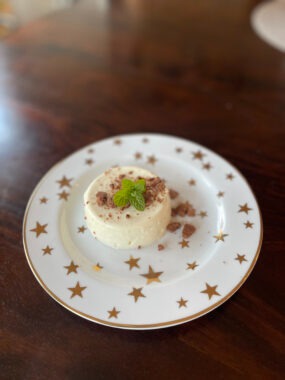


    Resources/Links

    Brought to you by

    Murray McMurray

    Trusted since 1917, this Iowa family operation hatches premium poultry for homesteaders and enthusiasts, delivering healthy, hand-packed birds and all the supplies you need to start your flock right โ€ฆ

    mcmurrayhatchery.com

    Azure Standard

    Family-owned since the โ€˜70s, Azure delivers real food to your doorstep or a local drop point.

    Completely organic, non-GMO, no junk additives โ€ฆ

    azurestandard.com

    Homestead Living Magazine

    Homestead Living magazine sets the standard for inspiring wisdom-filled homesteading content: actionable tips for organic growing, food preservation, delicious recipes, and uplifting true stories that feed body and soul.

    Learn more:
    https://homesteadliving-test.cospark.io/homestead-living-magazine

  • How to Build a Sustainable Food Forest Garden That Works With Nature

    What if the plants themselves interacted with one another, attracting beneficial insects, deterring pests, sharing nutrients from the soil, and fixing their own nitrogen as they grow?ย 

    Large swaths of Axe & Root Homestead are covered with blackberries, wine berries, and black cap raspberries. These plantings are encouraged to grow through cedar, walnut, and Russian olive plantings throughout the homestead.

    This can happen. 

    This is the magic of a food forest garden.

    If such a garden is possible, why are they so hard to find? First, food forest gardening is not a new concept. Indigenous peoples from around the world have been growing crops this way for centuries. One of the oldest sustainable food forests located in Morocco dates back to roughly 2000 years ago. In todayโ€™s modern American society, this growing method has been cast aside for swaths of monocultures, heavy farm machinery, and high yields from annual crops. 

    Fast-growing container, raised bed, and in-ground style gardens have become the norm for the hobby gardener. Simply put, perennial gardens take months to establish, if not years. Patience is the number one deterrent to folks planting forest gardens. 

    The second โ€œflawโ€ of forest gardening is an understanding of which crops to actually plant. Apples and pears are not well-suited to every growing climate, while perennial onions planted alongside beans can stunt both crops. A truly prolific garden requires research and an understanding of the local growing zone, tree species pollination requirements, and polyculture (also known as companion planting). 

    Popcorn, varying gourds and green beans grow along forest trails, surrounded by walnut and cedar trees. After three months with little-to-no rainfall in central New Jersey, the crops are just beginning to wilt. This garden has no alternative irrigation.

    Food Forest Garden Layers

    In a permaculture food forest system, the garden is constructed by installing different layers, just as there are in the forests found in nature. From top to bottom, there are over-story, mid-story, under-story, groundcover, and vining plants. All of these layers can be edible or provide some sort of function to the home whether they be dye plants for fiber, animal forage, medicinal herbs, or cutting flowers. Imagine multiplying your growing space simply by thinking of growing gardens upwards in layers, rather than thinking of garden real estate in horizontal terms.

    The tallest canopy is created by over-story trees. Such members of this family in a permaculture forest garden could include oak, chestnut, maple, or walnut. These trees provide a yield with their edible nuts (acorns from oaks, chestnuts or walnuts) or tap-able sap (from maples). Their canopies provide shade and, if planted near structures, cooling power and shelter for animals from the sunโ€™s rays. Pruned or chopped wood can provide heat for fires or for woodworking projects, the branching systems give shelter to small wildlife and insects, and their roots help to break compacted soils. Black Locust and Moringa trees actually fix nitrogen into the soil as they grow. But equally important is the contribution over-story trees provide to the atmosphere. By the time a silver maple tree is 25 years old, it will have sequestered roughly 400 pounds of carbon dioxide while oak trees can absorb about 92 pounds of carbon per year.

    Blackberries thrive in full sunlight and make an excellent under-story planting on the outskirts of larger tree crops.

    The mid-story layer is typically comprised of standard and semi-dwarf-sized fruit and nut trees within a permaculture food forest garden. The tree itself performs many of the same functions as that of the over-story layer but with a harvestable fruit yield each year. For example, letโ€™s assume an apple tree is well-pruned, pollinated, and generally well-cared for. It has experienced minimal pressure from pests and diseases and has suffered no detrimental damage from wind or other naturally occurring elements. This apple tree has the potential to yield eight to 10 bushels of apples per season (variety dependent). Dwarf and semi-dwarf varieties will yield one to two bushels per year, roughly. Fruit size varies based on the variety of the apple tree, but on average, one bushel of apples contains 126 pieces of fruit. Thatโ€™s the potential to reach 1,260 apples per season. Continuing with this example, itโ€™s worth noting that apple trees take eight to ten years to reach their full production potential. Buying and planting the largest and oldest apple tree you can afford helps to speed up this establishment process.

    Beneath the over- and mid-story layers resides the under-story. This real estate is largely dappled shade located directly beneath the fruit or nut tree, and the towering over-story tree. For sun-loving lower-growing shrubs and plants, cane berries such as blueberries and blackberries can be installed on the outer drip line of the mature tree. Partially-shade tolerant plantings such as autumn or Russian olive, kale, currents, gooseberry, and elderberry, for example, can be situated closer to the trunk.

    A perennial vining fruit common in Japan. Akebia (also known as chocolate vine) bears edible fruit in autumn.

    Culinary and medicinal herbs, daffodils, mint, nasturtium, chicory, comfrey, and other perennial flowers have a long list of benefits. They can be interplanted to attract beneficial insects, repel pests and even deter some forms of disease. These herbs pull nutrients upward from deep within the soil for other plants to feed from, balance nitrogen levels, act as natural mulchers, and even suppress weeds. These are ground-covering plants that fill spaces between taller flora on the food forest floor. In locations with adequate moisture, oak logs inoculated with mushroom spawn are also a fruitful option.

    And finally, vining crops such as beans, peas, akebia vine, hardy kiwi, and grapes can be planted alongside tree trunks. The trees provide a natural trellising system and fruits, depending on variety and type, can be harvested simultaneously with apples or other mid-story crops.

    Where to Begin

    If a food forest garden seems to be a good fit for your home or growing site, the best place to begin is by familiarizing yourself with the land around you โ€” paying close attention to the microclimate, weather patterns, water flow, and soil type. This research will help to ensure appropriate trees, shrubs, and plantings are selected. Apple, pear, and other fruiting trees, for example, require a certain number of chill hours (a chill hour is an hour of time that the tree experiences at temperatures below 45 degrees Fahrenheit) in order to blossom and set fruit. Understanding if water will pool or drain is essential to avoiding root rot in moisture-sensitive plantings. Familiarize yourself with your physical growing site and amend the soil as needed based on the results of a soil test.

    Bringing home the first of many gourd harvests from one portion of the food forest, pulled by horsepower.

    Next, I recommend researching perennial crop varieties and appropriate companions. While choosing typical orchard and nut trees may come easily, under-story members such as those of the ribes family (currents and gooseberries) are considered illegal in some states. Russian or autumn olive are wonderful nitrogen-fixing shrubs but are considered invasive. The siberian pea shrub could be an alternative for some, as the goumi could be for others. Your climate may be warm enough for pigeon peas or cool enough to support sea berries and beech plum. There are many wonderful tasting fruits and vegetables which are perennials that we do not see in grocery stores, or even at farmers’ markets.

    After plantings are selected, itโ€™s time to lay out the site. I start with the largest plant, my over-story tree. Measure the mature canopy size and account for space accordingly. Next, I space my mid- and under-story trees and shrubs. The canopies always slightly overlap at mature size but will seem quite far apart as young saplings. Ground cover choices are installed next. Full-sun crops can be planted and sustained until the tree and shrub canopies above spread and create shade. Partial-sun-loving crops are always my favorite choice as they seem adaptable to a growing space with ample sun in the food forestโ€™s early days, but also with filtered light later on. Vines are my last crop to plant as they tend to grow quickly and require support. I often wait to plant these until the tree is mature, unless an alternative trellis system will be used.

    Walnuts produce a compound called juglone which is toxic to many plants. Pumpkins and raspberries seem

    to tolerate black walnut soil and thrive under their canopies. Sometimes the gourds even climb the trees!

    Additional Benefits

    We tend to think of crop yields as the main offering from our gardens. And with so much effort, care, and funding invested, we should absolutely reap a decent harvest for our work. But the food forest offers more to the farm or homestead than simply produce. It invites beneficial wildlife. Never before have I experienced more praying mantis in my growing spaces until I started forest gardening. These permanent plantings create a residence for helpful insects and a healthy mantis population is like inviting an army of pest control professionals to stay! Swallows and owls have begun living on my homestead which greatly decreases our fly, mosquito, and rodent populations. Our livestock guardian dogs deter deer from eating our plantings, as does the abundance of garlic, onion, and chives interplanted within the forest systems.

    We experience a different level of sustainability, knowing new plantings will not need to be reinstalled each year, nor will the labor and costs associated with them. Our harvest quantities are increasing, our soil is improving, and we are sequestering more carbon. Good things certainly come to those who are willing to put in the workโ€ฆ and wait.

  • The Power of Saying NO on the Homestead

    Self-sufficiency is a tricky word. It sounds romantic, alluring even. It carries the promise of freedom from broken systems, spending our time and money how we want, and gaining more control over our familyโ€™s well-being and health. Iโ€™m all for the kinds of self-sufficiency that actually bring us more time, emotional well-being, and financial freedom.

    But left unchecked, our efforts toward becoming โ€œself-sufficientโ€ can easily become a prison just as toxic, isolating, and draining as the systems from which we homesteaders are fleeing. The never-ending to-do lists, gardens that need weeding, harvests that need preserving, livestock that need tendingโ€ฆ taking on too much, too quickly, or taking on/continuing in the *wrong* things can rob us of everything. Far too many would-be homesteaders burn themselves out and/or run out of money before they ever even taste the freedom they seek.

    There are two main lies that early homesteaders seem all too eager to believe:

    1. Doing things yourself is always cheaper/better.ย 
    2. Selling things = making money.ย 

    The first lie is homesteading is โ€œcheaperโ€ than city life. Dollar for dollar, if you stick it out for the long haul, you will likely end up saving money, but it takes a lot of time, learning, infrastructure, and often, money to get started. 

    Most first-time gardeners will tell you they learned heaps with their first garden, but if they actually accounted for all the time they spent on the garden โ€” time obtaining planting materials, seeds, starts, trellises, etc โ€” their first few tomatoes ended up costing a whole lot more than those they could have purchased at the grocery store. 

    And, after all the time, effort, and materials required to build a chicken coop (not to mention the brooder, heat lamps special waterers, and ALL THE FEED required to raise baby chicks to 6-month-old hens, ready to lay some eggs), those first few eggs were pretty pricey, too. The feeling of satisfaction and pride accompanying those first tomatoes and eggs is โ€œpriceless,โ€ but keep track of those receipts and make note of the time youโ€™re spending on these endeavors along the way because that information is going to be VERY helpful down the road when itโ€™s time to decide whether to add more hens to the flock so you can sell eggs to the neighbors or whether it makes financial sense to take your tomatoes to the farmerโ€™s market. 

    Time is money. We can trade our time working at a job so we can afford the convenience of purchasing tomatoes and eggs someone else took their time and effort to raise for us, or we can take our time building gardens and chicken coops, learning to raise veggies, care for our chickens, and weโ€™ll no longer have to rely on those items being available on the grocery shelves.

    If we are broke and our hours are more plentiful than our dollars, the latter option sounds fairly attractive. Ten years ago, when most of our food was coming from the food bank and there never seemed to be enough money for gas by the end of the week, I planted my first garden. I spent thousands of hours those first few years trying, failing and researching, and trying some more to grow nutrient-dense food. I learned a ton, but that learning wasnโ€™t free. 

    I started baking bread and raised illegal chickens in the city. With zero chill, I spent the next eight years constantly scaling up my farming endeavors and eventually found myself on a 30-acre beef/dairy farm, completely burnt out. I tried to do it all, alone, while also working full time, (a lot of that time was spent working multiple jobs) to make ends meet. In the process, I nearly lost everything Iโ€™d worked so hard for so long to build because I Simply. Could Not. Do It. All. Alone. Anymore. 

    Far too often, homesteaders seem to forget time is our only non-renewable resource. As we establish ourselves and start producing more than we consume, we can easily fall into a dangerous thinking trap that severely undervalues our time and costly consumables required to grow/produce things on our homestead. 

    A friend of mine lives off-grid with a family of five. Even living extremely frugally, scavenging, upcycling, and recycling as many supplies and materials they need, growing their own food, and doing darn near everything else themselves too, they need to earn at least $38,000 to keep their farm and family afloat. 

    She says $50,000 would make life a LOT more comfortable, but they have chosen to try to earn their entire living on their homestead so they can spend more time together as a family. Even the savviest homesteader would have a hard time fully exiting the modern economic system, so money needs to be earned one way or another.

    Property, farm goods, and, most everything we might need for the farm gets cheaper the more rural we go, but the farther we get from the city also means getting farther from a higher-paying customer base for farm wares and more opportunities for good-paying off-farm work. Rural internet typically isnโ€™t great for remote working either. 

    With no mortgage or other debt, their budget goes to: 

    • Supplementary Groceries
    • Propane
    • Gas for generator and cars
    • Car, Health, and Life insurance
    • Internet
    • Cell Phone
    • House Phone
    • Building infrastructure on the homestead
    • That breaks down to needing to generate: 
    • $19.23 per hour
    • $153.84 per day
    • $769.23 per week
    • $3,333.33 per month

    There are many great resources on living frugally and setting yourself up for success if you plan to run a business through your farm. I highly recommend Joel Salatinโ€™s book โ€œYou Can Farm,โ€ and if you have debt you need to pay off before diving in, Dave Ramsayโ€™s โ€œTotal Money Makeoverโ€ can be found at most any library. 

    I learned the hard way that selling my farm goods did not necessarily equal making money. There are tons of hidden costs in every endeavor. If weโ€™re not accounting for them, or our time spent and compensating ourselves fairly for it, we are not making money, even if money is changing hands. 

    Selling eggs was a major eye-opener for me. Like many other homesteaders with a heart, I developed a chicken collecting habit early on. It was impossible to go to Tractor Supply and not come home with a few puffballs at least a few times a season. 

    Eventually, this led to an extreme overabundance of eggs (and, incidentally, an astronomically high feed bill each month). I was selling eggs for $7 a dozen, which seemed like INSANELY good money, so, a few more chickens never seemed like a bad idea. But when I finally calculated out how much I was actually spending on chicks, feed, egg cartons, brooder supplies, as well as all the time, effort and energy spent raising the chicks to laying age, busting frozen waterers in the winter, collecting eggs, cleaning coops, stopping to chat with neighbors when they picked up their eggs, etc, I realized I would actually have to start selling my eggs for $9 a dozen just to break even, and even that put me making less than minimum wage as a chicken keeper. 

    Incidentally, I really, really hate cleaning chicken coops, so at $7 a dozen, I was literally paying my neighbors for the opportunity to do one of my least favorite things, way more often than I needed to be because I had way more birds than I should have had. Goodbye egg โ€œbusiness.โ€ A similar decision matrix helped me determine that my cow dairy/beef endeavors were worth investing in, while my goat dairy work needed to shrink significantly. 

    Iโ€™d like to give you permission to *not* do it all. Take a real, honest inventory of what youโ€™ve got going on. Think and dream aboutwhere youโ€™d like your life to be by the end of next year. And in the next five years. Press pause on the daily grind long enough to really look at the data: 

    • How are you spending your time each day, what do the things youโ€™re producing actually save/cost you to produce (both time and money-wise)? 
    • Is that savings/are those earnings worth the outlaying of time, effort, and infrastructure development? 
    • Where is the greatest value in what you have to offer? 
    • What things are you doing that are life-giving? 
    • What things are most draining?

    I give you permission to stop pouring time, money, energy, and your limited emotional capacity into endeavors that arenโ€™t serving you, your family, or your long-term goals. To cut your losses and let go of your sunk-cost biases. If you can convince yourself to slow down long enough to collect some data and get in the habit of regularly reviewing it, youโ€™ll create the ammo you need to make informed decisions that have the potential to buy back hundreds if not thousands of hours over the next couple of years. 

    Getting a handle on how I was spending my time each day helped me compress an 80-hour workweek into just under 40 hours. Taking this time to analyze helped me eliminate things that drained my emotional capacity. As a result, I was able to develop systems that better served me, my business, and my farm. 

    That data gave me the emotional permission I needed to cut my losses with certain endeavors and finally invest in expensive infrastructure here on the farm that will save me thousands of hours ($$) over the course of their lifetimes, remove huge stress points from my daily life, and help restore the excitement and creative vision Iโ€™d lost sight of. This assessment helped me recover from the extreme burnout and depression I experienced while frantically chasing the dream of โ€œfreedomโ€ without a solid plan as to how Iโ€™d actually attain it. 

    So, my friends, Iโ€™ll leave you with this: 

    I have made the regular habit this past year of asking myself the following questions about every endeavor I undertake on the farm: โ€œis this [still] fun? Why/Why not? Is this better, more of the time, than something else I could be doing with the very limited time I have available?โ€

    โ€œSelf-Sufficiencyโ€ does not necessarily mean doing literally everything ourselves, and Pinterestโ€™s city-dweller-to-farmer prescription is not for everyone.  Chickens โ†’ raised beds โ†’ sourdough aficionado โ†’ bee keeper โ†’ flour mill โ†’ canning and preserving โ†’ meat rabbits โ†’ goats โ†’ soaps & herbalism โ†’ goodbye city โ†’ cows โ†’ pigs โ†’ regenerative agriculture โ†’ fiber โ†’ cheese โ†’ meat curing โ†’ wood stove only โ†’ fully off-grid โ†’ my goodness itโ€™s exhausting just typing this list.

    Congratulations, you have achieved โ€œfreedom,โ€ but youโ€™ve spent your entire retirement on vet bills, youโ€™ve broken your body, and you can never take a vacation again because the cow needs to be milked twice a day, the fences need to be fixed, the tractor has a flat tire and the barn roof just sprung a leak.

    Just because other homesteaders are doing it, doesnโ€™t mean you need to do it, too. In fact, if you know other homesteaders, approach them! Hang out at the feed store, go to a farm auction, introduce yourself and ask lots of questions. Find ways to collaborate:ยญ ask them to teach you, barter with them, just plain buy their stuff and support their endeavors the way youโ€™d love to see others support yours. Unless, of course, you realize you love doing it, youโ€™ve got a clear picture of the time, effort, and money required to do the thing yourself and you know, by doing it, you can save/generate enough money to โ€œbuy backโ€ some of your precious time for other things that are important to you.

    We chose this way of life to create freedom, not to burden ourselves until we break. I truly believe humans were created to live in community, joyfully pursuing work that gives purpose and fulfillment. Life is a gift, not a punishment, so letโ€™s work together and make this one life we get a joyful endeavor, shall we?

  • Building the Right Foundation for True Off-Grid Freedom

    Living off the grid has been the most amazing experience and one that I will never be able to walk away from!  It has brought such joy and freedom to my life โ€” living off the grid has been everything we were seeking and more.

    We embarked on our off-grid journey when it wasnโ€™t well accepted and or considered glamorous, but we were determined. We pushed past the opposition and the skeptics to discover a life we treasure. With that being said, I would like to encourage you to embrace YOUR dreams and not worry about what ANYONE else has to say!  The best parts of life are on the other side of YOUR comfort zone!

    There are a lot of misconceptions that come along with off-grid living, and it is crucial to have an excellent foundation before embarking on such a journey.  So, letโ€™s dive into some of the things youโ€™ll need to understand and consider before you begin!

    How Solar Power & Alternative Energy Works

    The sun shines on your solar panels to create electricity. That electricity travels through an exterior breaker box on larger systems as a safeguard to prevent an excessive surge from reaching the house. It then travels from the outer breaker box, into the house, and into a charge controller.  The charge controller evaluates how full your battery bank is and will either allow the DC power to travel into the batteries to fully charge them or divert that power because the batteries are full. The charge controller is, in essence, protecting your batteries from an overcharge. The DC power then flows from the batteries into an inverter, where the DC power is then converted to AC power.  

    Once the power is converted to AC power, it flows into the breaker box of your home and powers your house just like power from the grid. As I write this, it is a gray winter day in Idaho, and I must say the sun is not only a renewable resource, but it is also renewing. Sunlight is a fantastic and free resource that we do not take for granted, and after years of homesteading, Iโ€™ve found that I am just as solar-powered as my home.

    Wind and Hydroelectric power are other options in addition to solar power. All will work the same once the power is created and traveling toward the charge controller. Although I love our solar, if you have the opportunity to harness wind or hydro, these resources will provide you with power 24/7  (not just when the sun is shining). Wind and Hydro are the ultimate power resources if you can tap into them. You can also combine multiple forms of renewable energy such as solar and wind together, etc.

    Choosing the right renewable energy system for you and your family is important and will be based on your standard power consumption and your power needs.

    Backup Power – Generator

    Many of you on the grid have a generator backup to power freezers, refrigerators, and possibly your well pump, in the event you lose power.

    Owning a generator is crucial when youโ€™re living off-grid, particularly when your primary power source is solar energy. It is important that you choose a generator suitable for the application.  

    An inverter generator is essential to run appliances like a washing machine or electronic equipment.  Such equipment requires certain sine waves and has surge possibilities.  It is wise to use surge-protected power strips with your appliances and electronics to eliminate troubles with surging. This also makes it easy to turn off your strips and stop unnecessary power consumption. If the generator is running to charge your batteries and you would like to run your washing machine, it is vital to have an inverter generator so that your appliances and the generator play better together. Otherwise, you will likely only be able to use your generator to power your batteries and not be able to run any appliances.  

    Honda generators are known for their stability, longevity, comparatively quiet function. We have a Honda EU7000IS. Just be sure you are purchasing an inverter generator, and be sure that itโ€™s powerful enough wattage-wise to run your system.

    Renewable Energy Maintenance

    There is minimal maintenance involved with alternative energy options, but with anything, the better you take care of it, the longer it will last. If you have high winds in your area and solar panels set up, it is always good to ensure they are heavily secured and insured for all Mother Nature may throw their way.  

    There are different types of batteries on the market today. Lead-acid batteries require monthly maintenance of checking the fluids on the batteries. Keep in mind that lead-acid batteries will off-gas, meaning they will slowly leak chemicals into the air. Lead-acid batteries shouldnโ€™t be stored in a living area, but in a utility room that is well ventilated.  

    AGM batteries require no maintenance and do not off-gas. They are a little more pricey, but in my opinion, they are the way to go for longevity.  Lithium batteries are even more expensive, but they will last even longer than AGM batteries, so this will all depend on your budget.

    Things To Consider Before Moving or Going Off-Grid

    First and foremost, you must check with your state and local municipalities to be certain that it is legal to live off-grid. Second, you need to know if there are any specific guidelines you will need to follow.  

    You Donโ€™t Necessarily Have To Move To Go Off-Grid

    If your location meets state and county guidelines and your property is ideal for off-grid living, you could put alternative energy in place right where you are. You could also purchase a piece of property in your dream location, but you will need to keep a couple of things in mind for both scenarios. If you intend to use solar power, you will need good southern exposure to the sun. If you donโ€™t have good exposure to the sun, solar will not work well for you.  

    If you intend to use hydro with a stream on your current or future property, the stream needs to have a particular grade, and it will require a necessary amount of pressure to provide you with ample power. This is something you should thoroughly evaluate before committing.  

    The same will apply to wind power. If you want to use a wind turbine in an area with little or no wind, that wonโ€™t be a viable option.  If this is something you need assistance with, as well as choosing a system for yourself, we offer off-grid and homestead consulting on our website at TrayerWilderness.com/consulting.

    Things To Know Before Going Off-Grid

    During the day when the sun is shining, you basically have endless amounts of power. However, when the sun is off the solar panels, you will be receiving power only from what is stored in your battery bank. With that being said, it is essential to either be intentional with your power usage during such times, have a large battery bank, or be aware that you will drain your batteries and will need to use a generator to recharge your batteries. You will also have the added expense of fuel for your generator.  We personally choose to live very frugally, so we are very mindful of our power consumption at all times to eliminate the expense of fuel. When there are too many gray days in a row, we need to use a generator, but under normal circumstances, we fair well by having adjusted to a frugal mindset.

    So with that being said, here are some things to consider and evaluate. We use all LED lights in our house because they use way less power than a standard light bulb. When we leave a room, we turn out the lights and leave nothing on using power. We intentionally have very few electric appliances and have replaced many with hand crank alternatives such as our Arcade coffee grinder, Wondermill hand crank grain mill, and an antique hand mixer, to name a few.

    It is essential to understand that anything that requires power and uses heat, such as a hairdryer, curling iron, toaster oven, crockpot, air popcorn popper, and clothes iron, requires extreme amounts of power. For example, a clothing iron uses 1200 watts of power regularly, and when you add the mist, it pulls 1800 watts.  That is a LOT of power and will quickly drain your batteries. I would recommend purchasing a P3 P4400 Kill A Watt Electricity Usage Monitor or the like to evaluate your most power-consuming appliances. Well pumps, refrigerators, freezers, standard water heaters, electric clothes dryers, and any non-energy efficient appliance will pull large amounts of power.  

    We created a workaround for our water pump by hard-wiring it to a breaker. This enabled us to fill a 275-gallon holding tank in our utility room when the sun was shining or the generator was running. Our water was plumbed into the house using Pex piping, a 12v SHURFlo RV water pump, and a small solar system hookup to keep the 12v battery charged that was necessary to run the pump. This worked fabulously and offered excellent water pressure as well.

    Our refrigerator and freezer run on propane.  We purchased these appliances over a decade ago, and there are currently appliances with multi-power options, such as electric and propane. There are even solar-powered refrigerators.

    We used an on-demand hot water heater that worked wonderfully.

    We used an energy-efficient front-loading washing machine and purchased a gas front-loading dryer but never actually used the dryer. We got a pulley system wash line put in place that was the bomb!

    In place of the slow cooker or Instapot, I use a Sun Oven in the summer months and my wood cookstove in the winter months.

    Expense Over Convenience or Convenience Over Expense โ€” That Is The Question!

    It will truly depend on how you wish to live and if you will want less expense over convenience. I enjoy having fewer expenses because that allows us to do more on our homestead and aids in our preparedness efforts. Not to mention, there is a lot to be said for a simplistic life.  Less is truly more in my opinion.

    Last Thoughts

    If you choose to embark on an off-grid journey, my best advice is to do your homework and research, find people in the know to help guide you through, ask lots of questions, and enjoy the process.

    My book How To Embrace An Off-Grid Lifestyle: Our Journey and A Step By Step Look At The Lifestyle may be helpful for you on your journey. You can also find an off-grid playlist on our Trayer Wilderness YouTube channel, and I welcome your questions and emails.

    It is a very rewarding lifestyle with a lot of freedom, and as I said in the beginning, I couldnโ€™t live any other way now that I have taken the plunge!

  • Black Marketing

    For example, on our farm, itโ€™s illegal for me to mill a black walnut log on my bandsaw mill, build that wood into a chair, and sell it to a neighbor. According to the zoning ordinance, thatโ€™s manufacturing, which is prohibited in our agricultural zone. Firewood can only be sold by the cord, not the pound, even though pounds are a far more accurate measurement of BTUs than volume.

    Most crafts are not regulated, including things like engraving signs, photography, or anything to do with fabric. These all have a clear history of being cottage industries, but more than that, they are considered relatively benign. Typically no one dies from a poorly sewn dress.

    Dairy, meat and poultry processing, and value-added food are in a whole different category. I donโ€™t have time in this column to explore all the nuances of regulations in the food and meat sector, but a couple of aspects are important. Some foods are considered hazardous and others are not. Many states have cottage food laws that allow a wide array of baking, jams, and jellies to be made in the home and sold directly to customers without government oversight because these are considered nonhazardous foods.

    Through the unwavering efforts of the Weston A. Price Foundation, most states now allow some degree of unregulated dairy, including raw milk. Often a numeric restriction exists to preserve small-scale sales, like three cows. Poultry enjoys the federal PL90-492 exemption, known as the Producer-Grower Exemption, which allows a farmer to raise and process up to 20,000 birds per year without inspection.

    Some states are more restrictive, but virtually all allow 1,000 without saying anything to anyone. For precise clarity, join the Farm to Consumer Legal Defense Fund. Interestingly, not all birds are the same. No regulations exist on quail and pheasant; you can produce and process 100,000 pheasants without any license or permit. I donโ€™t know why anyone would want to raise 100,000 pheasants, but if you wanted to, you could. Ha!

    Meat is far more stringent. In America, not one pound of beef, pork, goat, or lamb can be sold without going through government inspection. Because onerous regulations have put many local abattoirs out of business over the years, the whole nation is now grossly under-slotted (slots are processing appointments). Not only are abattoirs few, but they are also often far away. For a small outfit, hauling an animal 200 miles to an abattoir makes the processing cost prohibitively expensive.

    As a result of these regulations, many homesteaders seek and need a circumvention technique. We often raise more than our family needs and want to sell an animal or two, or a portion of them, to neighbors and friends. How can we do that without getting the terrifying knock on the door from a badge-flashing government agent informing us of illegal activity? Iโ€™ve been through that, and it isnโ€™t fun. If you want the full skinny on our battles, read my book Everything I Want to do is Illegal. Itโ€™ll make you laugh and cry at the same time.

    Fortunately, liberty-minded people tend to be more creative than bureaucrats and are coming up with techniques to circumvent rather than comply. In any society, when compliance becomes too onerous, circumvention becomes preferential. John Moody and I started the Rogue Food Conference (RFC) several years ago to showcase the creative circumvention models various people are developing around the country. The next one is May 12-13 here at our farm in Virginia (www.rfc.org). 

    Iโ€™m not an attorney, but let me explain the foundation of all these circumvention techniques. First, realize that written legal rulings establish that right now no American has a right to food choice. The Bill of Rights guarantees all sorts of God-given rights, but it does not mention food. As a result, the food regulatory agencies take a very broad view of their jurisdiction. Of course, they say that all of this oversight is done in the name of public safety. Most folks in America believe if we gave people freedom of food choice, theyโ€™d patronize filthy farmers and die in droves from unsafe food.

    So far, however, this oversight is limited to โ€œin commerce.โ€ Interestingly, courts have ruled on the difference between a sale and a non-sale. While this may seem picky, itโ€™s fundamental to understanding circumvention. If you can keep a food transaction from being โ€œin commerce,โ€ you can keep it away from government oversight jurisdiction. For example, I can butcher a hog in November in my backyard and give you some sausage and thatโ€™s perfectly legal. Itโ€™s a gift.

    Gifts are not โ€œin commerceโ€. An interesting nuance is that wild animals canโ€™t be sold unless you have a license and control your inventoryโ€”like deer contained in a high fence. But you can shoot a wild deer on a 70 degree F day, drag it through the squirrel dung and sticks and rocks, prominently display it on the hood of your Blazer as you promenade through town in the heat of the afternoon sun, hang it up in your backyard for a week and then cut it up, giving pieces to the neighbors and their children (perish the thought) and all that is considered being a great patriotic American. All of this is done without any governmental inspection whatsoever. But if you sell one pound of it, youโ€™re a criminal. 

    By the same token, you can be as clean and temperature-appropriate as you want with a cow, pig, goat, or lamb in your backyard, and give it away legally โ€” but if you sell one pound, youโ€™re a criminal. Clearly, the food safety laws are not about safety; they are about market access. Which brings us to commerce, and the definition of what qualifies as a sale. The point is this: if you can transact food trading without that transaction being counted as a sale, then you can do so without inspections, permits, and tangling with the food police.

    There are reasons this issue is now more important than ever. First, as a nation, weโ€™ve never had such a deficit of abattoir slots. Second, the homestead tsunami funnels thousands of animals into a community-centered, decentralized platform that is now dominated by centralization and export/import models. Finally, a plethora of consumers distrustful of big agriculture, government oversight, and mainstream distribution networks desperately want to procure alternative provenance.

    Various courageous innovators offer remedies. Niti Bali in North Carolina has a bona fide food church, wherein membership offers the perk of food. Itโ€™s not public. John Moody runs a buying club in Louisville that offers farmers a venue and eaters an opportunity to transact business without a sale. You join as a member with dues and the food is a dividend on your investment. When your tab runs out, you re-invest.

    Perhaps one of the models receiving the greatest interest right now is the Private Membership Association (PMA). Modeled after golf country club charters, itโ€™s not subject to things like nondiscrimination, handicapped access, and other public requirements. To be sure, the folks who invented this legal framework years ago were absolutely prejudiced and perhaps not the kind of people with whom youโ€™d want to associate. But to their credit, they wanted to get together without a bureaucrat telling them who or what they had to do and just wanted to be free to pursue their friendships the way they wanted.

    Most of us can appreciate that kind of desire, to just be left alone. Many if not most of us homesteaders, share that mentality. Weโ€™re not anarchists throwing bricks, lighting fires, and blocking interstates; we just want to live quiet, peaceable lives in our communities without being scared that big brother will tell us we canโ€™t pee behind the shed or sell a homemade quiche to a neighbor. 

    One of the distinctives of a sale is risk. If I go into Costco and buy something, I take no risk; someone else produced it, packaged it, marketed it, and put it on the shelf. I can take it or leave it; in many cases, I expect that some government oversight agency has validated its safety and confirmed the accuracy of the label. This is not the case if I buy stocks on Wall Street. That is not a sale; itโ€™s an investment with no guarantee of return. Dividends are not products; they are returns on investment.

    Membership and the perks thereof in a PMA, therefore, are not in commerce; they are dividends of investment, or perks from membership.  Applying the PMA country club platform to food is a brand new idea, but it is taking off like a race car. Perhaps the largest in the country is Amos Miller in Pennsylvania, with a 4,000-member membership around the country. He butchers on his farm, makes cheese, and sells milkโ€”all without any inspection whatsoever. 

    This attracted the food police way back in 2018 and heโ€™s been in and out of court ever since. A horse and buggy Amishman, Miller, unfortunately, has not had good legal representation until recently and has signed consent orders that now confuse his legal issues. Instead of his case being a clear first battle over PMA applied to food, itโ€™s a case over contempt of court and enforcement of judicial consent. 

    With good representation now, however, his legal team is going on offense and using the Religious Freedom and Restoration Act as well as the American With Disabilities Act to sue the government on behalf of members who say their rights are impaired by being unable to get the food he offers. So far, the food police are allowing him to continue shipping his dairy products and home-processed water buffalo (he calls it freedom beef). Exotic animals enjoy special dispensations not offered to common domestic livestock.

    To my knowledge, no one else using PMA in food is facing legal battles. Hereโ€™s the bottom line โ€” our food system is in a similar place as our education system was in the late 1970s when homeschooling burst onto the scene. The right to home education took several years, lots of legal battles and courtroom fights, and courage to withstand the education police. But gradually, homeschooling won. Today, itโ€™s food. Take courage! Letโ€™s hold the food freedom banner high and lead the way until society catches up.

  • How to Reclaim Your Health: The Whole Truth About Your Diet

    Plagued with digestive issues like bloating, cramps and constipation, according to the CDC, 41.9% of Americans are overweight, diabetic and pre-diabetic. Many others struggle with fatigue and low mood and yet it’s widely accepted that these fast-rising numbers are now a normal part of everyday life. 

    In 2002, not long after graduating from medical school with an honors degree in Physiology, I moved to London where I met and married a professional athlete. He was at the peak of his athletic career and should have been the very image of ideal health. What no one could have predicted rocked the face of the sports pages when at age 33, just 8 months into our marriage, he was diagnosed with Lou Gherigs disease and given just 18 months to live. 

    Unfortunately, modern medicine had little to offer us in the way of treatment or hope. So I did what most scientists do when they are faced with a problem โ€” I started scouring the medical journals for an answer.

    Because of my husband’s public profile, his story was all over the press. This led to us being contacted by a number of holistic health practitioners. For someone not familiar with the field, I listened cautiously at first, always wanting to qualify what I was learning with a scientific explanation. The common denominator and the one big โ€œgo-toโ€ that all these alternative practitioners kept repeating was that the most significant change we could make to support my husband’s health was to start โ€œeating clean.โ€ At the time, I did not have a clear understanding of what that meant. 

    Up until that point, as a consumer, I had the same trust and expectations that most other consumers have when they walk into a grocery store. Which is to say, whatever I take off the shelf and put in my basket has been tested and guaranteed safe for my use and consumption. I can say today, based on the knowledge Iโ€™ve gained from published scientific research, that is simply not the case. 

    During my quest for help, I came across a professor from Illinois who had written a book called Food Additives: A Shopperโ€™s Guide To Whatโ€™s Safe & Whatโ€™s Not.  This book listed over 300 additives and preservatives that the author had independently tested for their safety. As I glanced through the book, she had cautioned most commonly used additives as either toxic or poisonous to human health and so it seemed sensible to me that in order to cut these out of our diet. There were just going to be certain foods we must learn to live without. Our prerogative was to try and get my husband on a diet of food free from chemicals so his body could begin the work of trying to heal itself from the inside out. 

    This is where my homesteading journey began. Although my husband died 5 years later, the neurologists had initially given him just 18 months to live. The medical world considered him an anomaly for having held on so long. For my husband, perhaps there had already been too much damage done to his body when we made the change to cleaner living. 

    However, since that time I have continued on that journey and learned to grow food and cook from scratch. Iโ€™ve maintained a position that most chronic disease is made better or worse by lifestyle choice, particularly by what we eat. I absolutely believe that people can reclaim their health through diet, learning where food comes from, and how it’s processed. No matter your condition, you can make changes and have control over what you are consuming.

    If this is somewhere close to where you are at in your journey, trying to eat clean, and learning to grow your own then please know that I completely understand the challenge. The transition to eating a diet based solely on whole foods when youโ€™ve been raised on โ€˜done for youโ€™ foods can be totally overwhelming. But itโ€™s also true that โ€œRome was not built in a dayโ€ and often the biggest, most lasting changes are made by taking small steps toward the goal. 

    What is Added results in Subtraction.

    What is in my food?

    I want to share with you some of the holes that I discovered in my own diet and thinking. By addressing these issues, I was able to build a โ€˜wholeโ€™ diet to provide my life what I actually needed!

    On the first website I ever built I listed out every food additive, preservative, emulsifier, and acidifier and then categorized them according to why they are used in food, be it to make a product look better, last longer, taste better, improve its color, consistency, shelf life, etc. If youโ€™ve glanced at the side of most store-bought foods, you see all sorts of additives on the label. You probably donโ€™t know what half of them are, and may not be able to pronounce their names. Iโ€™d be willing to bet if I offered these substances to you as a white powder on a spoon that you would not take it without asking a lot of questions. Yet we eat multiple spoonfuls of these products every day.

    Learning to identify toxic chemicals in food is a minefield. Especially when you start to realize that labeling isnโ€™t quite as transparent as you might think it should be. Eventually, my grocery store visits were taking hours and causing a lot of frustration as I tried to read and decipher labels. Becoming aware of additives in food is the first hole to mend in your diet. When these chemicals are added to your food, your food subtracts from your health rather than adds to it. The benefit of the food you are eating is negated by the effect of the chemicals it contains. 

    My top 10 toxic food additives to avoid:

    • Monosodium Glutamate (MSG)ย 
    • Artificial Sweetenersย 
    • Partially Hydrogenated Oils (Trans Fats)
    • Sodium Nitriteย 
    • Potassium Bromate
    • BHA and BHTย 
    • Food Dyes
    • Aspartameย 
    • High Fructose Corn Syrupย 
    • Carrageenan

    Label reading is not only confusing but also time-consuming. It didnโ€™t take long for me to become tired and frustrated with trying to read labels, so I decided the only way to move forward was to learn to cook using whole foods only. If it came in a package or a can, it was not coming home with me! 

    The Whole Story 

    Most of us know that a critical part of a healthy diet includes a combination of whole fruits and vegetables, regardless of how they are grown. As much as I’d like to tell you I had solved all my problems by simply sticking to the fruit and vegetable sections at the grocery store, I was just starting to peel off the layers of the proverbial onion! 

    In the early 2000s, when the word โ€œorganicโ€ hit the labels on our produce, I think most people (myself included) thought it was another trend or fad. But even with an additional 20 years of studies and research to better inform us, many people still remain unaware that โ€œmore than 70 percent of non-organic fresh produce sold in the U.S. will test positive for potentially harmful pesticidesโ€ โ€” even after being washed and peeled! Yes, you read that correctly! (source EWG.org

    One of the most obvious health benefits of growing your own food is the complete control you have over what goes into the food you cook and prepare. When I’m making batches of tomato sauce, I know what goes into it. When you grow your own food, you are also in control of what kind of pesticide, if any, you use. But growing all of your own food can be challenging, and for many of us, there will always be some produce we need to source from the store. This is another significant hole in our diets that needs to be fixed โ€” reducing exposure to whole food chemicals. 

    Guacamole ingredients: Cilantro, scallions, and cherry tomatoes are homegrown, and limes and avocado store bought.

    The Environmental Working Group (EWG) is an organization committed to educating the public about fruits and vegetables with the highest and lowest pesticide residues so consumers can make the best decisions for their families. They publish annual lists based on test data from the Department of Agriculture and Food and Drug Administration to help consumers make informed decisions.

    The below lists are taken from EWGโ€™s 2022 Shopperโ€™s Guide to Pesticides. 

    The Dirty Dozen (foods containing the highest amounts of pesticides) 

    1. Strawberries
    2. Spinach
    3. Kale, collard and mustard greens
    4. Nectarines
    5. Apples
    6. Grapes
    7. Bell and hot peppers
    8. Cherries
    9. Peaches
    10. Pears
    11. Celery
    12. Tomatoes

    The Clean Fifteen (the top 15 conventional fruits and veg with the least amount of pesticide residue)

    1. Avocados
    2. Sweet corn
    3. Pineapple
    4. Onions
    5. Papaya
    6. Sweet peas (frozen)
    7. Asparagus
    8. Honeydew melon
    9. Kiwi
    10. Cabbage
    11. Mushrooms
    12. Cantaloupe
    13. Mangoes
    14. Watermelon
    15. Sweet Potato

    Improved nutrition

    As I continued down the rabbit hole of reclaiming health through diet, I was removing a lot of harmful substances but knew I needed to be adding even more healthy foods to my diet. It was obvious that I needed to start a garden. Aside from the benefits of fresh air and exercise and also saving money on grocery spend and reducing environmental impact, by growing your own food, you can control what you eat, ensure your food is of the highest quality, and add more nutrients to your diet. This is all possible because you control the conditions in which your food grows! 

    When I started my gardening journey I did not have a backyard and so I started by growing herbs in containers on a balcony measuring 3ft by 4ft in central London. You can do so much on a budget in a small space!

    My top 10 impact foods that can be grown in a grow bag

    1. Strawberries – superfood
    2. Cherry Tomatoes
    3. Sprouting Broccoli – superfood
    4. Any herbs of choice
    5. Carrots
    6. Ginger – superfood
    7. Potatoes
    8. Spinach – superfood
    9. Garlic/onion
    10. Sweet peppers – superfoodย 

    To supplement, I also found a farmers market where I could buy seasonal vegetables that I could not grow myself. 

    You may live in a zone where you can grow heat-loving plants year-round, or you may live where the season is short and the use of artificial light and heat is needed to maximize your yields, but either way, there is so much that each of us can do to improve our nutrition! 

    With a bit of smart planning, there are a lot of small crops that make a huge impact to our health. And you can get started wherever you live, learning to use these foods regularly in your cooking. Start simple, and start small. Before you know it, youโ€™ll learn to harvest and preserve some ot the best and healthiest food youโ€™ve ever eaten. Start your journey to reclaiming your health by making your diet whole!

  • The Coop Episode #19: Growing Fruit Trees with Confidence w/ Susan Poizner

    If youโ€™ve ever dreamed of stepping outside and picking fresh, juicy fruit straight from your own trees (but felt intimidated by pruning, rootstocks, pollination, or where to even begin) this episode is for you.

    In Episode #19 of The Coop, Anna sits down with Susan Poizner, orchardist, author, educator, and founder of OrchardPeople.com, for a warm, practical conversation that takes the mystery out of growing fruit trees.

    Susan shares why most big-box store trees set beginners up for disappointment and explains how choosing the right variety and rootstock for your climate and space can eliminate up to 60% of future problems. She walks through the advantages of starting with bare-root trees, proper planting techniques, and why the first 3 to 5 years are critical for shaping a strong, productive tree.

    The conversation dives into cross-pollination (why some trees need a partner and others donโ€™t), the difference between open-center and central-leader pruning, and how timing your pruning cuts makes a big difference in tree health and fruit production. Susan also explains why grafted trees are the norm and how they allow us to grow exactly the fruit we want โ€ฆ without waiting 5 to 7 years to see what a seedling produces.

    Whether you have room for just one small dwarf tree in your backyard or youโ€™re dreaming of an orchard on your homestead, this episode gives you the knowledge and confidence to get started the right way. Susanโ€™s passion is contagious, and her straightforward advice makes growing fruit trees feel exciting and totally doable โ€ฆ even for complete beginners.

    If youโ€™re ready to move beyond โ€œsomedayโ€ and actually plant your first fruit tree this season, donโ€™t miss this conversation.

    In this episode, Anna Sakawsky discusses:

    • How to choose the right fruit tree varieties and rootstocks for your climate and space
    • Why most big-box store trees set you up for disappointment
    • Cross-pollination basics and when you actually need more than one tree
    • Proper planting techniques (including bare-root trees and the first few critical years)
    • Pruning strategies (open center vs. central leader) and why timing matters
    • Common beginner mistakes and how to avoid them

    About Susan Poizner

    Susan Poizner is an orchard educator, author, and the founder of Orchard People. A former journalist and documentary filmmaker, Susan discovered her passion for fruit trees after moving back to North America and planting a community orchard in her local park. She now teaches gardeners and orchardists worldwide how to grow healthy, productive fruit trees through online courses, workshops, books, and her popular Orchard People podcast and radio show. Susan is the author of several books on fruit tree care, including Fruit Tree Pruning and Fruit Tree Grafting for Everyone, and helps home growers choose the right varieties, prune effectively, and solve common problems. She lives in Toronto, where she continues to grow and teach about fruit trees with enthusiasm and practical wisdom.

    The show notes โ€ฆ

    00:00:00 – Intro
    00:05:37 – Susan’s Journey from Journalist to Orchardist
    00:08:02 – Why Fruit Trees are Grafted
    00:14:33 – Sacrificing Early Fruit for Long-Term Growth
    00:16:33 – What to Know Before Buying a Fruit Tree
    00:21:49 – How to Choose Your Variety
    00:28:34 – Fruit Tree Spacing
    00:35:49 – Guiding Tree Hormones
    00:39:03 – Finding the Perfect Location
    00:44:31 – The Rules of Cross-Pollination
    00:50:04 – When and How to Plant Bare-Root Trees
    00:56:02 – The First Pruning Cut
    00:57:44 – Open Center vs. Central Leader
    01:02:13 – Ongoing Pruning for Older Trees
    01:07:20 – Summer Pruning vs. Winter Pruning
    01:15:58 – Tree Maintenance
    01:19:41 – Susanโ€™s New Book & Resources

    Episode Transcript

    Susan Poizner:

    Seeing that you can grow your own food changed me completely. Sit and decide, first of all, what type of fruit you want to grow. That’s important. Are you going to cook with it? Do you want to eat it raw? Do you want to make it into cider? Because different cultivars shine in different ways. And just choosing the right tree will get rid of 60% of the problems that you would’ve had. If you had planted trees from the big box store and just waited to see what happens, you have an ongoing relationship with the tree to ensure it’s partnership between you and the tree. You want to ensure that it gets everything it needs so that it can produce yummy fruit for you. And then it’ll give you lots of fruit and it’ll be so happy and healthy. Okay? So yes and the first three to five years are the most important time when you are building and sculpting the tree into the ideal structure.


    Anna Sakawsky:

    This episode is brought to you by Azure Standard. Family owned since the 1970s, Azure Standard is on a mission to make real food more accessible by delivering it straight to your doorstep or to a convenient local drop point near you. Everything they offer is completely organic, non- GMO, and free from junk additives you don’t want in your home or in your body. With more than 13,000 carefully vetted products, Azure Standard makes it easy to stock up on what really matters from bulk grains, nuts, and healthy oils to fruits and vegetables, frozen meats, pantry staples, and even clean household goods. And the best part is you skip the grocery store markup. You can order exactly what your family actually needs, save big on high quality food and pick it up alongside neighbors who care about the same things you do. Health, sustainability, and supporting ethical producers.

    You head to azurestandard.com right now to get started. Again, that’s azurestandard.com. Well, hello everyone and welcome to episode number 19 of The Coop. I’m your host, Anna Sokowski, editor-in-chief of Homestead Living Magazine, the magazine for Homesteaders Buy Homesteaders. And today we are talking about something that I think many homesteaders dream about, and that is growing your own fruit. So there’s something deeply satisfying about stepping outside and picking a fresh apple pear or cherries straight from your own tree. Not to mention harvesting enough fruit to enjoy fresh and preserve for the rest of the year. But for many people, fruit trees can feel a little intimidating. There’s a lot to think about when it comes to choosing the right varieties, understanding pollination, knowing when and how to prune, figuring out how to properly care for trees throughout the seasons, dealing with problems as they come up.

    And for beginners, it can be hard to know where to start. And I know that myself because I am a beginner fruit tree grower as well. I just planted my very first fruit tree last year, a cherry tree, and I did so actually with the help of our guest today. So today’s episode is all about breaking down the basics of growing fruit trees, especially for those who are just getting started. We’ll be talking about how to choose the right fruit tree varieties for your property, when and how to plant them, how long it typically takes before you can expect a harvest, and what sort of care fruit trees need to stay healthy and productive for many years. And to help guide us through all of this, I am joined by someone who has dedicated much of her work to helping people grow fruit successfully. Susan Poisner is an orchardist, educator, and the founder of orchardpeople.com.

    She teaches gardeners and orchardists around the world how to grow healthy, productive fruit trees. She’s the author of several books on Fruit Tree Growing, the host of the Orchard People Radio Show and podcast, and she teaches fruit tree care through workshops and courses designed for gardeners of all experience levels. Plus, she’s a contributor to Homestead Living Magazine. So you know she’s been vetted and is truly an expert in her field. Susan has spent years helping people gain the knowledge and confidence to grow fruit trees successfully, even if they are just starting with a single tree in their backyard. So I’m so excited to have her here with me today and share some of her knowledge with us. So Susan, welcome to the show.


    Susan Poizner:

    I’m so happy to be here with you. Thank you, Anna.


    Anna Sakawsky:

    Well, I’m so happy to have you here with me because I have already gained so much knowledge from you. Just from the articles that you’ve written, I know you’ve written a couple articles for the magazine already on … One was on pruning, which I found fascinating because pruning, I feel like goes against our instincts as gardeners and growers. We think we want to produce things. We want things to grow. We don’t want to cut and remove things, right? So that I found really interesting learning about how to properly prune fruit trees. And then you did another one on, I think, fall fruit tree care, and then kind of getting ahead of some common problems before they start. And then we actually got the chance to sit down, just you and I, and my husband joined this conversation last year when we planted our first fruit tree because we had no idea what we were doing.

    And I was like, “I know who we need to talk to. We got to get Susan on the phone.” Because our situation is a little bit unique too, and we’ll get into this, but we planted a cherry tree with … It’s got six different varieties grafted onto it. And so we were like, “Oh, what do we do with this? Does this follow the normal rules? What do we do? ” So having your help was … I think we’re on the right track because it looks like everything’s looking healthy and butting out now. And so I’m excited to see what happens with our tree this year. But before we get into all this, I always just like to ask a little bit about your background because I think you have a really unique story of how you got into growing fruit trees and became an orchardist because you were a journalist before you were an orchardist, correct?


    Susan Poizner:

    Yeah. I was a journalist for many, many years and a radio producer, a television producer. I did documentary films and the world of media changed. I had also been living in the UK. I had been living in Russia. I had a very interesting career, but when I came back to North America, I was like, “Okay, what am I going to do now?” I started a production company. I love education. I’ve always been very interested in teaching people stuff. So long story short, I ended up marrying my husband who is originally from Trinidad and loved gardening. And I’m like, “Listen, I don’t do that stuff. I don’t get my hands dirty. This is not my thing.” And he wanted to plant up the garden with this, that, and the other. And I’m like, “You know what? It’s going to be a mess and it’s all going to fall on me and I’m not doing it.

    ” And I gave him such hassle. In the end, it was magical. When seeing how things grow, seeing that you can grow your own food changed me completely and it put me on a different trajectory completely. So I ended up going to a landscape design school, learning about landscape design, falling in love with trees and falling in love with fruit trees because it’s food, one of my passions and nature, one of my passions. I planted a community orchard in my local park. That was a whole challenge in itself. There was some opposition interestingly, but we got through all the hurdles. We planted this orchard. I was already a gardener and I had no idea what I was doing. And I just thought you’re going to water the trees and they’ll be just fine. They take care of themselves and it could not be further from the truth when you’re planting fruit trees.

    Even regular trees, they need watering, especially when they’re establishing themselves. They only need a minimal amount of pruning, but they do need a little tenderness and love and care. Fruit trees are twice as … I don’t want to say challenging. They’ve cut so many opportunities, but they do have challenges that come with it. And part of that is because they are not exactly the kind of trees you would find in nature. You talked about your multi-fruit cherry tree, right? When you go out in nature, and if you’re going on a hike wherever you live, are you going to come across a tree that grows five or six different types of fruit on it? Absolutely not. Right? I wish. And that illustrates how fruit trees are made. They are all grafted. Your tree is super grafted. It’s supercharged, but almost every fruit tree that you’re going to grow, whether it’s like a Macintosh apple tree or a bing cherry or whatever you’re growing is a grafted tree.

    So it has roots from one type of tree and it has the top part is a different type of tree. That’s your fruiting wood. And they are carefully matched so that they will produce a tree that produces the fruit that you want to grow and grows the size that you need. So you don’t necessarily want your little multi-fruit cherry tree to be 60 feet tall and not … You can’t climb to go and harvest it and it all goes to waste and then the squirrels get it all or whatever.

    So grafted trees were kind of developed for a reason so we can customize our fruit trees saying that they need help. In order to produce a healthy, delicious, and quality harvest, they need help. And we can talk about why.


    Anna Sakawsky:

    I find that really interesting. I’ve always wondered about grafted trees and the fact that you kind of mentioned that they’re all basically grafted nowadays. I think of that because I am a gardener. I’m new to fruit trees, but I know gardening and seeds and that sort of thing. And so I think of them almost like planting hybrid seeds where they’re kind of developed specifically to have certain traits. But there are also open pollinated seeds. We have heirlooms, that sort of thing. So are there trees still out there that you can get that are not grafted? When you have kids, for example, that’ll eat an apple and they go, “Oh, here’s the seed. Can I plant the seed?” And you’re like, “Well, no, it doesn’t really work that way.” Does it work? They’re like, “Can it work that way still? Why doesn’t it work that way?”


    Susan Poizner:

    It does. It absolutely works that way. And it’s a wonderful project. It’s a multi-year project because apples are such a great example. An apple will, let’s say, have five seeds. Each seed is a genetically unique individual, just like you and your partner may have five children. They are not clones of you. They’re unique. They’ve got their own, they might have different hair color and different eye color. They might have some similar traits, but there’ll be a combination. The same thing happens with an apple tree. So the mother and the father tree both contribute sort of genetic material and you get a completely unique apple tree. So it’s still an apple tree. It will still grow fruit if you grow a seedling tree. The problem is the fruit might not actually taste very good. So in American history, they talk about Johnny appleseed. He collected all these seeds.

    He planted all these apple trees and he collected or the people who then lived wherever he planted them would collect those apples and turn it into cider. Those weren’t yummy and delicious crunching on apples. Those were great for juicing, for cider, for fermenting, and that was an important part of life at that time. But in society today, we want our apples to taste good fresh or we want to bake with them and you are rolling the dice when you’re planting an apple seed, whether the fruit will taste good. Now, if you have five to seven years to wait to see, go for it. It’s an awesome project.

    Interestingly, a lot of the ideas about pruning you’ll still want to do to improve the quality of the fruit, but yes, you can do that. But most gardeners, like you were saying in the beginning, they’re excited about planting fruit trees. They don’t want to wait five to seven years to see if the fruit tastes good. They want to know that this fruit is going to be the same fruit that Melissa next door was growing and it was awesome. I really enjoyed that fruit. It was maybe a special cultivar, maybe whatever her grandmother gave her this apple clipping from her apple tree. You love it. You want to propagate it, you clone it with grafting. I’ve even written a book called Fruit Tree Grafting for Everyone, which actually tells you how simple it is to take a cutting from a tree that produces fruit that you love to eat and to graft it to create your own tree for your backyard where you will get that exact type of fruit.


    Anna Sakawsky:

    Right. Okay. That actually makes a lot of sense. And especially in the context of the fact that it can take a number of years to get a harvest. So it’s a little bit different than when you’re growing an annual garden and you may want to take a chance at a seed that you’ve saved that may have cross-pollinated with something else and you go, “Oh, well, we’ll try it. And if it’s not great, then oh well.” But that’s only one season and one small plot in your garden that you have dedicated to that and that’s it. But when you’re growing a fruit tree, rolling the dice on that and not knowing what you’re going to get and then waiting, like you say, five to seven years to see is probably not in most people’s best interest. Although, like you say, if you have a lot of land, if you have the space to do it and you can dedicate a little bit of space to experimentation, then it’s cool to know that you can.


    Susan Poizner:

    Yeah. And it’s


    Anna Sakawsky:

    Also cool to know that you can graft your own. I remember my mom saying that my, I think it was my great-grandfather, my grandfather’s grandpa used to do that a lot. She’s like, “Oh yeah, he used to graft apple trees and that sort of thing.” So I always thought that was really cool because that’s beyond my skill level at this moment in time, but maybe someday.


    Susan Poizner:

    You know what though, Anna? I’m the biggest, I see myself as the biggest doofus in the world. I don’t know if that’s a word you use. That’s a word my husband talks about. I’m like, I’m not good at stuff, but if I manage to teach myself grafting, anybody can learn it. I promise you that.


    Anna Sakawsky:

    Totally.


    Susan Poizner:

    But there’s also something I want to say. We talked earlier about root stocks. They contribute quite a lot. And I said to you that when you plant a seed, you’re probably going to have to wait five to seven years for the tree to fruit. If you buy a grafted tree, you’re not going to have to wait five to seven years. And partly because sometimes the rootstock will contribute a quality of early fruiting. In fact, what I ask people to do when they plant a new fruit tree, cherries not so much though you could still do it with cherries. You plant a new fruit tree, whether you, hopefully you got a bear root tree from a specialist fruit tree nursery, maybe you got it from the big box store. I’m not a big fan and we can talk about why. But either way, for the first two years, I would suggest you remove every single piece of fruit that forms on that tree because they are precocious.

    They do want to produce fruit, especially if they’re grafted onto a good root stock, but you want a tree that will last a long time and be healthy and productive. So instead of the little young tree pushing its energy into the little fruitlets, you want that tree to push its energy into expanding its root system, right? So that’s what you want. It’s a short-term sacrifice, but long-term benefit.


    Anna Sakawsky:

    Yeah, that makes total sense. And again, having some gardening under my belt, I mean, we do that. We even do that with annuals. We pinch off the flowers from our tomato and pepper plants at the beginning of the season before they take roots so that they can put their energy into that. And then later on, we let them do that. I don’t know why the fruit trees and berry bushes and that sort of thing, it’s like more hesitant about. I’m like, I don’t want to damage them because they’re perennials and that sort of thing. This is actually the first year that I really gave my blueberry plants, like a really proper pruning because we’ve had them for a few years now and they’re just like a little. And now that I’ve learned actually a lot of this from you and the fruit trees, and then we did this with our elderberry plants last year where we cut them almost all the way down.

    I’m like, oh my God, they were the most productive they’ve ever been. But still, I go now and I’ve pruned them right back again and I’m like, “Oh no, what if I killed them?” And I’m sure that they’ll take off again. You always have this hesitation, but with pinching off the fruits and everything, again, with blueberries, with other plants, that’s recommended as well until they get established, right? Okay. Before we get into all that, because we will cover all this, but I do want to back up a little bit and just kind of talk about like, we’re just getting started. So if somebody is interested in growing fruit trees, has never done it before, they’re excited about it, they want to go buy a fruit tree, plant it in the ground, what are the first things they need to know or decide before they just go like a kid in a candy shop to the garden center and buy a fruitry?


    Susan Poizner:

    Absolutely. And by the way, I’ve been there, done that, bought the t-shirt, so please don’t run to the garden center or the big box store and get the trees that are on sale. They’re so pretty and there’s so much love and hope connected to them. But if you take your time and do your research first, it doesn’t take a long time. It would take a weekend. Then what you can do is sit and decide, first of all, what type of fruit you want to grow. That’s important. Are you going to cook with it? Do you want to eat it raw? Do you want to make it into cider? Because different cultivars shine in different ways. Once you decide what you want, then you decide, how much care do I want to give this tree? Because some fruit trees are easier to grow than others. So fruit trees have a series of diseases like just a number of diseases that they get.

    And I always say again and again, fruit trees are like kids in kindergarten. When one tree gets sick, it goes from tree to tree, spreads around the neighborhood. So you want to get, if possible, disease resistant cultivars, and they exist, but you’re not going to get them at the garden center and you’re not going to get them at the big box store. Where I would suggest is going to find your local fruit tree nursery and downloading their catalog on orchardpeople.com/nursery or something like that. I have a list of nurseries across North America and the UK and Ireland, but there may be more and look carefully at what they have and have a look. In the description, if a tree is resistant to common diseases, it’ll say, they will shout it from the rooftops, “This tree is resistant to fire blight or black knot or powdery mildew.” They will say that.

    If it doesn’t say anything, it’s not resistant. So that’s another thing you want to think about. You want to think about cross-pollination. I’ve had people come up to me and say, “Oh my gosh, I planted like a plum tree seven years ago and it flowers, but I’ve not gotten any fruit at all. ” And it turns out that they don’t have a pollination partner for that tree. So they have a beautiful, healthy tree they’ve loved and cared for, but no fruit. So it’s a little adventure as you go through step by step to figure out what is the right tree for you. So just to say that this year, this spring, I’m publishing my next book, which is called Designing a Fruit Tree Garden: How to Choose Fruit Trees That Thrive in Your Climate and Space. And it’s kind of fun. I did it as an interactive adventure as I take you guys through step by step, choosing your tree and then figuring out, okay, will it produce fruit?

    Is it disease resistant? Maybe I want to swap it out with something else. And then, how am I going to plant it? Do I want a high density planting with lots of trees in a small space, which is by the way, a really cool idea or do I want it decorative where you get less fruit, but it’s kind of beautiful. There’s so many options and it really doesn’t take a lot of time to think about it. By the end of the book, you know exactly what trees you want, you know they will produce fruit, you know they will be easier to grow and you know how you’re going to plant them and you know what kind of root stock you need. So that research is essential and just choosing the right tree will get rid of 60% of the problems that you would have had if you had planted trees from the big box store and just waited to see what happens.


    Anna Sakawsky:

    Makes sense. I mean, what do they say, right? An ounce of prevention’s worth a pound of cure. Oh


    Susan Poizner:

    God,


    Anna Sakawsky:

    Yes. I mean, I imagine that’s like tenfold with fruit trees because they take a while to establish and to produce everything, right? I know one of the banes of my existence is having to move perennials when you’re like, “Oh man, I planted this in the wrong spot or it’s


    Susan Poizner:

    Competing


    Anna Sakawsky:

    With this or whatever.” And then you kind of have to do this bit of a restarting process. I can imagine that that’s like, again, tenfold with fruit trees, right? If you have to move a fruit tree or you do something wrong off the bat or plant in the wrong space or whatever. Okay. So when it comes to actually choosing fruit trees, I mean, obviously there’s different types of fruit trees, right? There’s your apples, your pears, your plums, your cherries, depending on where you live, maybe peaches, that sort of thing. So outside of choosing, I mean, I would imagine the first choice you want to make is like, what fruit do you actually like to eat? Don’t plant a cherry tree if you don’t like cherries, but then there are many different varieties as well. And a lot of them are not necessarily varieties everybody’s familiar with because they’re not always the type of varieties that we see in the supermarkets, right?

    The Macintosh apples and Granny Smith’s and that sort of thing. So how do you know what types of fruit trees to choose for your property? How do you start that research or figure that out?


    Susan Poizner:

    Well, I love how you said that because we can start with what not to choose. Don’t go for the ones in the supermarket. That is a no-brainer. People love Honeycrisp apples. They are so hard to grow. And that’s why, by the way, they’re very expensive because professional growers don’t like growing them either and they’re very fiddly. But don’t go for the ones in the supermarket. And I know that, oh, I’m familiar with how it tastes and therefore I don’t want to take a chance. I get that. But the reason those trees, those fruits are in the supermarket is because they’re easy to ship, because they stay, I don’t know, good for longer. There’s lots of reasons, but they have nothing to do with your own homestead. They have to do with big industrial farming. So don’t go for those. Again, when you have your fruit tree nursery catalog in front of you, you will see descriptions of all different types of fruit.

    And I get it if people say, “It’s not enough for me to read a description saying that this is crunchy, juicy and sweet. Everybody loves it because you may not love that particular flavor or it says tart with a little bit of blah, blah, or whatever it is. ” What I like to do is every fall, I look around for apple tastings at local fruit tree nurseries. Lots of them do it where you go, you line up and you have a little piece of the various different apples. So you talk about cultivars nobody’s ever heard of Liberty Apple, pristine apple, freedom apple, those three, sweet 16, those are cultivars that are easier to grow because they’re disease resistant, but you’re not going to get them in the supermarket. So how do you know if you’re going to like the taste? I would say if you’re in a rush this year and you’ve got some space and you want to start planting one or two trees and then continue on later, that’s fine.

    Still do your research, but make sure in the fall that you go to some fruit tastings to taste. Also in the fruit, in the catalogs, for instance, under cherries, they’re going to describe, is this a pie cherry? That means basically in code that you’re not going to want to eat this cherry right off the tree, right? Or is it a sweet cherry? Is it a dessert apple, which means it’s a fresh eating apple. All of this, and in my book I talk about, but it’s all kind of code. In a compact little paragraph, they’re telling you a lot about the fruit. So with apples, I would say it’s great to taste them, though I will tell you my favorite disease resistant apple is a pristine apple, flat out, okay? Though there’s lots of other great ones. Cherries, like you did, you took a chance. I think they’re all great.

    You know what I mean? They’re all great as long as you know that the tart cherries are for baking and the sweet cherry. Peaches, there is not as much genetic diversity in peaches as there are in apples. So while I think it would be wonderful if people did their research in advance, figured out which are disease resistance, which are firmer, which are free stone, whatever, whatever they’re looking for, but there’s a little less diversity and flavors, but it’s the area where you’re going to get a lot of diversity as apples and plums and other types of fruit too.


    Anna Sakawsky:

    Yeah. Interesting that you mentioned the apple tastings. I don’t know if we have something like that here, but where we live, so just for anybody listening, so Susan, you are in the Toronto area, is that right?


    Susan Poizner:

    Yep.


    Anna Sakawsky:

    And I’m on Vancouver Island, but we have something in our community that is basically a gleaning organization. So a lot of people here have fruit trees in their backyard, that sort of thing. A lot of people have bought houses that already had established fruit trees and they don’t really want to deal with the harvest when it comes on. There’s all this fruit that comes and then if it falls, then it attracts animals into the yard and all. So they just want somebody, a lot of them are maybe elderly and they don’t want to deal with it. They just want somebody to come and take it. So we have this awesome organization called Lush Valley here that I have volunteered with before and they go around and they glean. So gleaning is basically gathering the harvest, the extra or unwanted harvest. And a lot of that has to do with the fruit trees around here.

    So they go, people can call up and be like, “Hey, I got a fruit tree. I don’t want to deal with it. Can you come take it? ” And the way it works, if this works for the homeowner is the volunteers go out, they gather the fruit, the homeowner gets a third if they want it. The volunteers get to divvy up about a third of the harvest between them, and then a third goes to the food bank or all the excess, because we get so many apples in our area, they process it into cider and then they sell it and then the money goes towards the food bank and local food initiatives and that sort of thing. So that’s just a really cool thing that we have in our area. But I have looked this up and I know that those type of organizations exist across North America too.

    So it’s worth looking into. Not only can you get a bit of a harvest out of that yourself, usually for free if you go just volunteer your time, but then you get a chance to taste a bunch of these different types of varieties that are more kind of backyard varieties. And usually, like I know with this organization, they’ll tell you, “We’ve got a Grabenstein pick coming up or whatever.” And then you get to go and you get to try some of those apples and go, “Oh, I really like this one or that’s not my favorite.” So maybe if you get the chance to do that as well, it’s a way to kind of get a bit of a harvest, volunteer in your community, and then also get to taste some of these things. And they do this again with all cherry trees, pear trees, plum trees, all the different fruit trees around here, and you get to kind of taste it that way too.

    So something we’ll look into.


    Susan Poizner:

    That’s a lot of fun. And also near you, you have the Salt Spring Island Apple Festival. And if you can get away from your homestead, that’s worth a trip that you get to taste all sorts of fantastic cultivars. And I know in the United States there’s probably also some big ones. So if you guys want to do a little tourism and take a trip somewhere fantastic and just try all those cultivars. I love doing that. It’s one of my favorite things.


    Anna Sakawsky:

    Oh, that’s really cool. I didn’t know about the Salt Spring Island one. I haven’t been to Salt Spring in years.That’d be very fun one to go


    Susan Poizner:

    To. Oh, it is. I know it is. I’ve spent time there. I didn’t go to the festival, but they have such a wide range of apples there. It’s a very good climate for apple growing and they’re proud of what they have and you’ll get to taste everything.


    Anna Sakawsky:

    Awesome. Okay. So the next thing I want to touch on is kind of just the space, right? So before we go planting any fruit trees, you had mentioned that you can actually plant fruit trees quite close together. How much space do fruit trees actually need and what should people consider when it comes to spacing and location on their property?


    Susan Poizner:

    Such a good question. And again, it’s a brilliant question to think about before you plant your tree and even before you order the tree. So how much space your tree needs depends on the root stalk that it’s grafted onto. So root stocks are generally called like dwarfing root stocks. That’s a little small tree that won’t get bigger than maybe seven or 10 feet tall. It also probably won’t be super strong. So if you have kids or pets running around in your garden and they knock into the tree, it could break it. So you often have to support those or use them in specific situations where you have a trellis for them. So that’s dwarfing trees. Then there’s semi-dwarfing trees and dwarfing trees could be planted maybe if they’re freestanding, just let them spread out maybe 10 feet apart, less if you’ve put them in a high density situation.

    We can talk about that in a minute. Then they’re semi-dwarfing trees and they sound like they’re also going to be small, but they’re not. They’re bigger and they are great. For instance, in our park where I planted our community orchard, we wanted trees that kids could climb, but we On a trees that weren’t going to be 40 feet high so that we couldn’t harvest and prune them. So that’s semi-dwarfing. They might be 20 feet tall depending on what you’re growing. They could be less, they could be more. And you’d want to plant those 15, 16 feet apart, something like that. Then there is standard trees. And standard trees are on a tough root stock. So if you’re in an environment with a lot of wind or with soil that’s a little bit too hard clay, you need roots that are going to push their way out into that soil.

    You need tough roots. So you might want to go for a standard tree. Now standard trees can get really big. And so they will be hard to climb, but to harvest and spray and stuff. But with correct pruning, you should be able to keep them more compact depending on where you live. Anyways, standard trees are good for long-lasting trees. They can live a hundred years, for instance, because they’re so tough. So if you have a space somewhere and you want to maybe get a beautiful crab apple tree that will pollinate your other trees, something that you can leave as a legacy to your kids, grandkids, and to nature, because nature, certain insects love older trees. So those have a place in a garden too if you’ve got enough space. Now, they would need to be much further apart because they grow so big and tall.

    When you think about how far apart your trees are going to be planted, you need to think about how wide the canopy is going to get. And the bigger your rootstock, the wider the canopy. You don’t want trees side by side to be fighting each other for space and light. You don’t want the branches to rub up against each other. So those are the reasons that freestanding trees need to be spaced very thoughtfully. Just to say that if you did go for a standard tree and you lived in an incredibly rugged environment with wind and high elevation, you may find that that standard tree is so busy standing up to the elements, it won’t get to be that huge size. So all of this is guidance. It depends on warmer climates, maybe they grow bigger and stuff like that. And again, that’s all in my book, Designing a Fruit Tree Garden.

    I talk about that. So in terms of spacing as well though, those little dwarfing trees we talked about, they don’t live as long, but they are really flexible. So you could grow them as a freestanding tree, or there are a couple of other options. You could grow them high density like many modern orchards grow their fruit trees. So these days, orchards are growing their fruit trees almost like grapes in a vineyard. They are supported against a trellis. There’s not a lot of pruning, but you can plant your apple trees on a dwarfing rootstock, maybe even four feet apart. You could have, in the same space, you might have two larger trees, you could have 10 or more different cultivars ensuring that the harvest is available at different times in the growing season. Sometimes people call this like a cider orchard because they used to do this for cider apples, but that gives you so much flexibility.

    And instead of pruning your trees, there is some pruning, but there’s more training. You are pulling the branches downwards and tying them to the trellis. And you do have to prune to make sure that the trees don’t fight with each other because they’re all side by side. You don’t want them rubbing up to each other. So high density plantings are really interesting. In a proper orchard, these trees would only be left for 15 years and then their fruitfulness declines and they would replace them with another tree. I don’t know if anybody has tested and could you leave them for 25 years? Yes, they would be less fruitful, but that might be fine. You maybe don’t need all that fruit all the time. So that’s an option. And then of course, there’s the fun option of Espalier, which is beautiful decorative plantings also with dwarfing trees, also tying them up to a trellis or a wall.

    And it’s very beautiful, but it’s fiddly. You need to be somebody who loves puttering in the garden, you’ll prune it like three times a year or something.


    Anna Sakawsky:

    Okay. We’re thinking about doing that with an apple. We haven’t bought our apple yet, so this is good actually because we would like to buy it this spring. And we’re thinking of a door variety. We don’t have a large property. We only have a quarter acre and our whole garden, everything is in the front yard because that’s where we get all of our sun. And we’ll have two septic tanks in our yard, one for our house and one for our rental. So we’re limited as to what we can plant as far as fruit trees and things that have extensive root systems. So we have our little cherry in one area and we have a grapevine that we are training along a fence along our yard. And then we would like to do a dwarf apple variety that we want to espelier or train along the fence from the other side.

    And it’s funny because I’ve always wondered that when we travel into the interior of the province, there’s a lot of vineyards and orchards. And I always see these apple trees, like you mentioned, that are really high density, only a few feet apart, and they’re like six feet tall. But they’re loaded with apples. And so I’ve always wondered, well, what are they doing? You don’t see apple trees grow like that in the wild. So are those dwarf varieties that then they’re also pruning to keep them that short and then they’re just really high density fruit production in that little space?


    Susan Poizner:

    It’s fabulous. There’s science there. Okay. So yes, this is a newfangled way to grow. Fruit trees, yes, it’s only possible because we now have so many different amazing dwarfing root stocks, but it is incredible. Their goal is fruit production. They need to make money. They don’t want to pay a lot of money to have people on ladders harvesting. They don’t want to spend a ton of time pruning. They do have to do some pruning, but it’s not very specialist. It’s just pruning between the trees to make sure they don’t fight with each other. But what they’re doing by pulling branches down, the fruitfulness of a branch depends on the angle that it grows at. Okay? It has to do with a hormone called oxen. So oxon is a hormone that sort of gathers at the tips of branches and it tells that branch, grow outward, give me more branch.

    And it suppresses the lateral buds or the side buds on that branch, which by the way, would’ve been fruit, especially with apples. So it’s dominating. The oxen is saying, “Hey, grow longer, don’t grow more fruit.” So oxen, those branches, they kind of aspire to reach to the sky sometimes or to reach out. But by pulling each branch a little bit below horizontal, you’re tricking the oxen and the oxen sort of diminishes and it maybe redistributes itself along the branch so that it no longer suppresses the lateral buds. So all of a sudden these lateral buds are not being dominated by oxens who say, “Do not do anything. I’m growing longer. That’s what I need to do. ” And instead, you get lots of blossoms. You get branches, you get blossoms, you get fruit. So the whole philosophy behind high density plantings is pull those branches down to just a little below horizontal.

    Keep pulling them down. You don’t even prune very much. Whereas when you have a beautiful freestanding tree, you need a really open canopy for various reasons, for good air circulation, to prevent disease, and to make sure that sunlight reaches every branch so each fruit can grow and ripen properly. So this is a different technique. And again, you’re tricking the hormones so that it would be heavy with fruit. And it will be heavy with fruit starting from year, let’s say three or four, going to year 15. And then after that, it will be little less fruitful as the years go on. So you may decide to replace in a staggered manner if you always want lots of fruit or you may leave some of the oldies and see what happens as long as they’re healthy.


    Anna Sakawsky:

    Okay. Yeah. I mean, there’s obviously a lot of science that’s fascinating. I don’t want to overwhelm any listeners thinking like, “Oh my God, tricking hormones. I got to do this. ” So again, let’s get back to, if somebody’s new to this and they’re just wanting to plant a fruit tree or two, right? We can talk about cross pollination just a sec, but we want to get it in the ground. So we obviously have to think about spacing and whether it’s a dwarf, semi-dwarf, standard tree, that sort of thing. What other things should we think about when it comes to the location of where we want to plant a fruit tree on our property?


    Susan Poizner:

    Absolutely. Great point. Okay. So fruit trees, like the conventional ones we’re talking about, apples, pears, apricots, peaches, cherries, they need full sun. They love full sun. So sometimes whenever I see a fruit tree planted in a shady garden, they always look really sad and they don’t ever produce terrific fruit. And I’ve even seen this in our own orchard now. It is a park and there are some trees that were younger at the time that we planted our trees in the only space that we could. And now those other trees are shading our trees. And so our trees are less productive some of them in those locations. So that’s kind of sad. Saying that, if you live in a really, really hot climate like Arizona or somewhere really hot, then what happens is you grow these fruit trees in full sun. Let’s say it’s an apple tree and the actual apples will cook on the branches because it’s way too hot for them.

    So there are certain situations where you might even want a little bit of shade for your tree. It’ll be dappled shade, not full shade. It’s not under an oak tree, maybe under something like a Kentucky coffee tree with little tiny leaves or something like that. But mostly in most cooler climates, full sun. And the less sun your tree gets, the less fruit you will get. Just know that. And the less luscious and lovely your tree will look. You need access to water. You need to be watering those trees, especially when they’re young. And I know that other community orchards in Toronto, they’d say, “Hey, we want to plant an orchard in our local ravine. It’s fantastic. We got this space.” And I’m like, “Great. Where’s the water going to come from?” Because fruit trees don’t have teeth. They can’t take nutrition in or liquid in from the soil, first of all, if the liquid isn’t there, but they can’t chew on the nutrition in the soil.

    They need everything in liquid form to come into its roots. So if a tree doesn’t have water, it will be starving basically. So you need irrigation and you need, I always say room for roots to grow. If it’s a freestanding tree and it’s not a dwarfing tree, give the tree room. Don’t plant. I really don’t like it when people plant hostas and stuff around their fruit trees or even strawberries because young fruit trees do not compete well for water and nutrition. They just don’t. Again, they’re these little frankin trees. They’re made up of two trees. They’re grafted. Give them the best start that you can. And yeah, those are a few tips.


    Anna Sakawsky:

    Okay. Yeah. Well, and I would just say one other thing that I know we considered, because we are working with a pretty small space, like I said, we have two septic tanks. We’ve got a raised bed garden, we’ve got an in- ground guard bed. There’s all these things, the factors that we need to consider. We couldn’t just necessarily put a fruit tree anywhere, but we kind of have this space along the side. And we had to also consider, we were thinking about placing a little bit closer to the front of our property, but we also thought, but when this tree grows in, it’s also going to provide shade. And if it’s near the front of the property and the sun’s coming up near the front, then that’s going to shade the garden beds behind it. So we decided to move it back. So now that shade hopefully won’t shade the garden bed, right?

    The shade will be cast towards the house. So that’s just another factor is it’s not just for the fruit tree, you want to make sure that you have full somebody you also have to consider. It might be small when you’re putting it in, but it’s going to get bigger and it’s also going to provide shade. So where is that shade going to be cast and is that going to be a problem as well?


    Susan Poizner:

    Exactly. And that’s why some people do opt for a spalier or high density because those are not trees that are going to shade anything. They would actually make a nice boundary for a big, even veggie garden like they did in the old days. So smaller trees are really important to consider if you don’t want it to overshade your whole garden. And that’s the beauty of root stocks. Again, when you go to a garden center, they often don’t even tell you what rootstock your tree is on. It’s just a big surprise when you take it home. Is it going to be a little tree or is it going to be a huge tree? You have no idea. Whereas with fruit tree nurseries, under the cultivar you want, let’s say you want a liberty apple tree, it’ll say, “This comes on two different root stocks. The M9 is the dwarfing rootstocks or whatever it is, the B9, and they will tell you, which size do you want?

    And we’ll give you the size you need.” Yeah.


    Anna Sakawsky:

    Okay. If the thought of raising chickens has ever intimidated you, consider this your sign to stop putting it off. Murray McMurray Hatchery has been helping first time chicken keepers succeed for over a hundred years. They offer the widest selection of day old chicks and poultry, super low minimum orders, sometimes as few as one bird, and the best guarantees in the business, live arrival, 48 hour livability, and 90% sexing accuracy. Plus they’ve got everything you need to raise happy, healthy birds right from the start. Brooders feed incubators the works. It’s never been easier or safer to start your own flock, so visit mcmurrayhatchery.com and tell them the coop sent you. Again, that’s mcmurrayhatchery.com. Let’s talk cross pollination because you already mentioned this that people sometimes will plant a tree, right? And this is kind of the case where we are. We don’t have room for an orchard.

    We don’t have room for a whole bunch of different trees, but as I … Well, first of all, are all fruit trees cross-pollinating or do any of them self-pollinate?


    Susan Poizner:

    No, they’re not all cross-pollen. That’s the beauty of it all, right? So for people like you who have … I only have room for one tree, I’ll put it on a dwarfing root stock, but I don’t have room for two. What do I do? Well, a lot of peach trees are self-pollinating. Our apricot trees are self-pollinating. Sometimes sour cherry trees can be self-pollinating. Sweet cherry often are cross-pollinating. That’s why you got your multi-fruit cherry tree because all the different branches are going to pollinate each other.


    Anna Sakawsky:

    Well, and that was another question of mine is if you have something that’s got multiple different varieties grafted on, do they cross-pollinate?


    Susan Poizner:

    Absolutely. They cross-pollinate each other. So-


    Anna Sakawsky:

    Because I actually remember that I actually used to work at a little school and there was an apple tree and it was having issues with pollination. It wasn’t producing. And so somebody had actually come and grafted another branch on from their apple tree and so that it would cross-pollinate itself. So I always thought that was really interesting.


    Susan Poizner:

    That’s so clever. Yes, so indeed. Now, apple trees are very rarely, if ever, cross-pollinating. So you need more than one for an apple tree. Okay.


    Anna Sakawsky:

    So they’re very-


    Susan Poizner:

    They do not. They need


    Anna Sakawsky:

    To cross-pollinate.


    Susan Poizner:

    Yeah, they don’t. Sorry, they don’t self-pollinate. So you would need to. Now, sometimes people say, “Okay, well, I really like, for instance, I don’t know, Macintosh apple trees. So I’ll get two Macintosh apple trees.” So the question is, will the two Macintosh apple trees pollinate each other? What do you think, Anna?


    Anna Sakawsky:

    Oh, I don’t know. No, maybe no, because they’re the same variety. They need to


    Susan Poizner:

    Be different varieties. Exactly. They’re clones. Well,


    Anna Sakawsky:

    I know that because our elderberries, that was what we got too because we learned that they need to cross pollinate. And we got, I think one’s called a york and one’s called a nova. We were told get those two different varieties because they will cross pollinate. You don’t want two the same.


    Susan Poizner:

    So you need for the cross-pollinating ones, which are most apples, which are most pears, lots of types of plums are cross-pollinating. Sweet cherries are often cross-pollinating. So for those, you need to choose two trees that are not the same cultivar and that they flower at the same time. The blossoms open at the same time. So sometimes what people do is they look for a pollination chart online, which will tell them, okay, liberty apples and freedom apples, let’s say for instance, flour at the same time, so they will cross pollinate each other. So that’s a good partnership or whatever. That’s what they have these pollination charts for. Yeah. But self-pollinating ones, you don’t have to worry about it. If in your fruit tree catalog, you’re looking through the catalog and it says self-pollinating or self-fertile, you’re good to go. You take it home. Now, if you have a Macintosh apple tree and your neighbor two doors down has a honey crisp apple tree, do you need to get a second apple tree?


    Anna Sakawsky:

    Maybe not.


    Susan Poizner:

    Maybe not. If the bees find both of them. I think that’s what


    Anna Sakawsky:

    We’re also thinking about because our neighbors, we’re on a cul-de-sac and there’s two or three neighbors that also have cherries in their backyard. So I’m like, “Oh, okay. So probably ours will be fine no matter what because we’re all in close enough proximity that the bees and the pollinating insects are going to be going back and forth to those anyway.”


    Susan Poizner:

    So


    Anna Sakawsky:

    That is something to consider. If you’re really close to a neighbor that has another apple tree or another cherry tree or whatever it is, that can provide that cross pollination granted that that tree blossoms at the same time and is a variety that can cross pollinate. But I know, for example, in our area, there are so many people with apple trees and that sort of thing that you can probably get away with just one variety. But to your point, if you’ve got a bigger property, you don’t have anything close by, you may need two of your own. That’s why we got the two elderberries because I don’t think anybody here is actually growing elderberries. So we needed to make sure we had two of our own that were going to cross pollinate.


    Susan Poizner:

    Yeah. And again, I hear you about not freaking people out. I remember when we started our orchard right now, it’s intuitive for me. I’ve done this for enough time and I see it as a game and as a puzzle to find the right partnerships for trees. But I remember when the park supervisor was talking me through about how I needed to choose trees that cross pollinate and he was, I don’t even remember if he talked about disease resistance, but it just seemed like this big puzzle and I was like so overwhelmed. And so it took me a few years until I’m like, “Oh no, don’t worry. It’s like six steps. Choose the fruit you want, decide if they’re going to cross pollinate, figure out if it’s disease resistant, figure out when your harvest time is so that you don’t get all the fruit in one month.” And then it’s just like six steps, but all of these steps are just important.

    So again, not to freak people out, just take it step by step. It’s worth thinking about it in advance because then you’re sorted no surprises.


    Anna Sakawsky:

    Right. Yes. Okay. So we’re doing the planning and prep work in advance. We’re feeling confident. We’re ready to go get our fruit tree or trees, put them in the ground. So first of all, when is the best time to actually plant fruit trees? And then second of all, what should we do at the time of planting? Should we just dig a hole in the ground where we want it to go? Should we be amending the soil? Should we be doing soil tests? What should we be doing at planting time?


    Susan Poizner:

    Good questions. Okay. So if you are buying your tree from a fruit tree nursery, you’re going to buy a bear root tree. And lots of people have done that and know what it is. But basically a bear root tree is dug out of the nursery when it’s dormant, no leaves, no fruit, no blossoms, no nothing. It is totally dormant. This happens either in the late fall or the early spring. Then they wrap up those roots with a bit of damp mulch and then seal it in a plastic bag and they ship it out to you. So you get this little bear root tree in the early spring or in the late fall. Both are very appropriate times to plant. Depending on your climate, I like doing them in the spring personally, but I like to think about you plant your tree and then it has the summer to settle in before the next winter.

    So that’s what I would do. But some people are very happy planting in the fall. That’s when you plant the tree. How you plant the tree. As much as possible, I don’t really amend the soil, but I do test the soil first. And the easiest test you can do, I do a few things, is just dig a hole in your garden, just take a shovel and dig a hole and feel the soil. If it takes you half an hour to dig a hole that’s like one foot deep and two feet wide, or maybe like two feet deep and two feet wide, let’s say. If it takes you half an hour, it’s probably not a good place for a fruit tree. You work too hard, right? If it doesn’t- Those roots


    Anna Sakawsky:

    Are going to have trouble penetrating the


    Susan Poizner:

    Soil. Yeah. Even if you put fabulous, put in some nice little bit of compost or whatever, nice triple mix to make it nice for the tree. If the soil is that hard, it’s going to grow like it was in a pot and your roots will circle around and they’ll basically, it’ll kill itself because it sort of strangles itself. So that’s not a good place to plant your tree. If the shovel goes in well and you put your hand on the soil and it forms into balls nicely, or you can make a ribbon out of the soil, then it’s just like, “Whoa, okay. I think I have a pretty good place for my tree.” So again, the tree roots are going to need to go down at least 12 inches, at least a foot, maybe more depending on what it is, but they also go wide.

    So do a nice wide hole. And then the second thing that if you can, that I would do, and I would highly recommend doing a little soil test, sending some of the soil to a lab and telling them specifically what type of tree you are going to grow. And what this does is they ask them, “Please give me recommendations for amendments so that this area will be good for fruit trees.” And they’ll send you suggestions. They’ll say, “Your soil is good, but you need a little of this, a little of that. ” That’s a nice thing to amend before you plant your tree, if possible, if possible. But if you felt the soil and the texture is good and you’re super keen to plant this year, you can do that too. It’s just, yeah. Yeah. And there was a third part to that question. How to plant … Oh, maybe I answered it all.

    I don’t remember.


    Anna Sakawsky:

    Well, I was just wondering too, so if you’re planting … So you’re saying bear roots are better than potted.


    Susan Poizner:

    Oh, yes.


    Anna Sakawsky:

    Why is that? Because I feel like we did a lot of things wrong with our first for tree without it was potted. You


    Susan Poizner:

    And me too, girl, like same thing, same thing. So


    Anna Sakawsky:

    Why is bear root better? And then when you’re planting that, should you just fill it back in with whatever the soil was there? You said don’t necessarily amend it, but adding just compost, what should we be doing with bear root and why are bear roots better?


    Susan Poizner:

    Okay. Bear roots are better because they adapt better to your environment. They grow quicker, so they make up for it. And because they’re younger, when you buy a bare root fruit tree, it’s sometimes just a whip which is a one year old tree. All you’ll see is like a little chute with some, not a chute, but like one branch with roots. You’ll even see where the graft union is. So the reason that is so fantastic is you plant that tree and it doesn’t have a root system that’s girdled and circling around and it’s not spoiled by some potting mix that it’s planted in and it’s not too old. When you go to the garden center, they want to show you a tree that looks like a tree. Maybe even it has an apple growing on it. Who knows? They’re trying to show you what is the possibility.

    What could this be? They’re taking advantages of your dreams. Okay. Whereas your little bearroot tree won’t do that. It’s very honest. It’s saying, “You know what? I’m a baby, but like a baby, you can mold me into exactly what you need me to be. ” And you can just be kind to me right from the beginning. So you plant your tree, mostly you can add maybe a little bit of triple mix or something, nothing too, you don’t want to put manure in there that could burn the roots, nothing too harsh and pat it down and just put a mulch circle of wood chips on top or even that sometimes is not necessary, but just very simple, water it in. And the other thing I forgot to say is I often pour water into the hole and then let it drain down, then do my planting and then water it again.

    Now, if you dig a hole and you pour water in the hole and it never drains, that’s another good sign that that’s not a good location for your fruit tree because fruit trees need well drained soil. So you pat it down. Now, this is the thing you were mentioning before about pruning. We want to be so kind to this little baby tree, right? Like, oh, I wouldn’t want to prune it because I don’t want to herd it. I don’t want to cut it. It’s just a little baby, right? But that’s when your opportunity is to shape the tree into a strong fruit bearing structure that will last a lifetime. So when you plant a bare root tree, tuck those roots into the ground, it’s a dormant season, it’s a dormant tree. Let’s say it’s the spring, you wouldn’t do this in the fall, you then do the very first pruning cut.

    And if it’s just one branch, you cut off the top third just past a bud. And what that does is the growing season that follows all those lateral buds, you’re actually cutting off oxygen hormones at the top, which we talked about. The lateral buds come to life and say, “Woo, let’s grow.” And you start to get the shape of the tree coming forward. The following year, you get to choose which branches you’re going to keep. And that’s the time the tree that will heal those cuts so quickly. It’s just a soft young branch. If you wait till your tree is seven years old before you prune it, those pruning cuts will not heal quickly. That’s an older tree. It’s already lignified. You can and will still prune at that age, but you don’t want to do big cuts then, that’s for sure.


    Anna Sakawsky:

    Okay. So you want to prune the first, as soon as you put it in the ground, you don’t want to give it a year or anything like that. Yeah, if it’s ringing. If it’s spring. Yeah. Okay. And then I know because you have written about this for us, for the magazine before about pruning fruit trees, about actually shaping them, because there are different ways to shape fruit trees as well. So there’s kind of pruning them open, which is kind of in a, if you want to visualize it like a chalice almost, where the middle is open and you kind of got branches growing out and up like a cup. And then you’ve got the central leader

    Style of pruning where you’ve got one central liter branch kind of coming up the middle and then branches out from there. So how do you decide what shape you want? And then we won’t necessarily get into the specifics of the cuts because it’s kind of hard to do on a podcast. If you are subscribed to the magazine, I believe this was in, I think it was the May 2025 issue that you wrote this in, but you can also check out Susan’s work and orchardpeople.com to get more visuals because you have some really good graphs too that show how to do this. But when we’re just talking about like there are different shapes that you can prune your tree into, how do you decide what shape you want and why?


    Susan Poizner:

    Okay. So let’s talk about the two main shapes. And by the way, I have my book, Fruit Tree Pruning the Science and Art of Cultivating Healthy Fruit Trees, and I take you through it right from beginning to end, whether you’re pruning a young tree like this whip that you’ve just planted, bare root whip to an older tree that you’ve neglected for a few years or more, that’s fine. So the two shapes that I talk about in that book are the main ones for freestanding trees like open center, which is like that vase shape. Sometimes with the open center, what it is, is anywhere from just three to five main branches. And that open center allows the tree to dry out really quickly. So if you live in a damp climate, that’s a really good option because what you don’t want is the tree’s canopy to get wet and stay wet.

    So if you let that tree, let’s say it is a cherry tree or a peach tree and you just let it grow and do whatever it wants and there’s a million branches all over the place and then the leaves fill the branches and then there’s fruit in there somewhere and then it rains and then maybe there’s a sunny day. Is the sun going to get in and penetrate the canopy and dry it out? No, it’ll get dark, it’ll get damp and it’ll be exactly the type of condition … That diseases love, especially fungal diseases. So it’s like a haven for fungal spores. You don’t want that. Contrast that with your vase shape, which is beautiful and open. So even if you live in a rainy climate, just one sunny day will dry out all those branches. That’s ideal. Also, some fruit trees like that shape.

    Cherry trees just naturally seem to want to be in that shape. I’ve started my cherry trees in central leader form and they just keep telling me, “Nope, I want to be open center.” It just sort of, they talk to you, they tell you that. Then there is the central leader structure, which was very dominant in North America for 50 years. And when I learned, or more even, when I learned from my mentor who was a professional orchardist, he did all his trees, cherries, peaches, apples, pears, everything was central leader. It’s like a Christmas tree shape. So you have one strong leader like the middle of the tree, and then the branches are longer at the bottom and shorter as they go up, with lots of space in between tiers. So again, that allows air circulation because you do remove a lot of those branches to make sure there’s lots of room.

    And it also guarantees, if you do it properly, that every single branch has equal access to sunshine. You don’t want a branch on top of another branch because the top branch will get the sun, the fruit will ripen properly and grow properly, but the one below won’t. You want consistently good fruit. So those are the two structures. On the whole, apples and pears really enjoy central leader. Though sometimes in the UK, they do grow apples as well in the open center format, but that’s because they have so much rain there.


    Anna Sakawsky:

    Okay. All right. Okay. And then when it comes to pruning, so you’re doing this at the beginning, obviously we want to do our pruning cut the first year when we plant. We want to continue to do that the second and probably third year and whatever as we’re shaping that tree. What about older trees or as they’re getting on in years, should we be pruning every year?


    Susan Poizner:

    Yeah.


    Anna Sakawsky:

    Or should we give it a break every once in


    Susan Poizner:

    A while?


    Anna Sakawsky:

    No,


    Susan Poizner:

    Every year you prune.This is horticulture. I say it in the sense of, let’s put it this way. You have an ongoing relationship with the tree to ensure it’s partnership between you and the tree. You want to ensure that it gets everything it needs so that it can produce yummy fruit for you. And then it’ll give you lots of fruit and it’ll be so happy and healthy. Okay? So yes, and the first three to five years are the most important time when you are building and sculpting the tree into the ideal structure. After that, you are just maintaining that shape. So there’s much less to do from year five onwards. In fact, with our orchard, we love the creative side of pruning. We love the thoughtfulness of thinking, where do I want the second tier to be or where do I want the next branch to be?

    It’s really fun and we love it, but now the trees are older and we’re like, “Hi, is there anything we can do for you? ” We still go in and we still make some cuts to clean up air circulation and we might be shortening branches, but it’s not as creative as in the first five years. Now saying that, if you’ve planted a tree and you’ve neglected it for five years or 10 years, you can still go in and learn if you know the science behind it and look up and say, “Okay, I want to improve air circulation. I’m going to make a few cuts to make the tree healthier and improve the quality of the fruit that is possible to do with your pruning skills.” So don’t think that if you miss the first five years, it’s too late. It’s not.


    Anna Sakawsky:

    Yeah. Well, and that was another question I had is sometimes people are maybe new to growing fruit trees, but maybe they’ve moved onto a property where there’s already an established fruit tree or inherited one or somehow. Our very first fruit tree that we ever dealt with, I guess that we ever had on our property, our last property was a rental and there was like a hundred year old grab and seen apple tree. And that was amazing. It was actually how I learned to can. My first canning project was applesauce because this tree just produced so much fruit, but it was a big old beast of a tree. It’s funny, actually, we got a really bad snowstorm one year and the snow was so heavy. It broke the tree almost in half or it broke an entire limb off, but it was like half the tree.

    There was a huge hole in the tree trunk and we thought, “Oh God, after a hundred years and this tree is like done now.” The owners, the homeowners were able to call, I guess it was arborists or whoever came out and they filled that trunk with like concrete.


    Susan Poizner:

    Oh shoot.


    Anna Sakawsky:

    I don’t know good or bad. I was just amazed at how the tree rebounded after that. I mean, I don’t know if the concrete was good or bad, but just the fact that it could lose basically an entire half of the tree, this big limb that came off. And I think the next year it didn’t really produce, but then the year after that, what was left was like a bumper crop again. So just all that to say, it’s just amazing how resilient they are.


    Susan Poizner:

    And what kind of rootstock do you think that tree had?


    Anna Sakawsky:

    A standard.


    Susan Poizner:

    Exactly. That is- Very arty standard restock. It was incredibly tough. A lifetime. And in the days that whoever planted that tree, that was common. You planted a tree for a hundred years. That’s just what you did. Now, if the tree had been pruned annually, it wouldn’t have gotten to that state because each year … So for instance, we had an ice storm, I think in 2013 in Toronto, and our trees were still pretty young, maybe five years old or something like that. There were big huge trees that fell all over the city, but our little young trees had ice all over them, not one branch broke because you are pruning to give your tree a strong structure that can support a heavy harvest. So this was like the trees were like, no problem. We don’t have a problem with this because we’re so balanced. It’s not a problem.

    But it does show you that fruit trees can be so resilient and so generous.


    Anna Sakawsky:

    Well, and I almost thought of the fact that like, I mean, obviously we don’t want that to happen. You should be doing controlled pruning, but I think almost taking off that half maybe stimulated something in that tree where it was like, whoa. And because again, a couple years later it produced like gangbusters. And I’m like, maybe that was like a form of extreme pruning for the tree rebounded from that. And then it went crazy and produced a bunch of fruit. But if somebody does have an older tree, what type of cut should they be mainly? If they’re looking at this tree that probably hasn’t been pruned in years or even decades, should they just be kind of trying to thin it out? It’s probably beyond the point where you’re shaping it, but what kind of cuts should you be doing to kind of breathe some life back into this tree?


    Susan Poizner:

    Okay. So for an older tree, for every tree, there’s something you need to think about. And that’s when you prune the tree because if you prune in winter, it’s going to … And you’ve got, let’s say you’ve got an apple tree, it’s way too big, and you prune during the dormant season because you want to make it smaller. But then you find rats like the tree just grew twice as big as a result of my pruning cuts. So when you’re pruning an older tree, if you want to keep it smaller, nine times out of 10, you are probably 10 times out of 10, you’re going to prune it as a summer pruning project. So summer pruning will be after petalfall. Don’t ever prune apple trees when the blossoms are open because there’s a disease that spreads then called fireblight. So summer pruning slows down growth and winter pruning speeds it up.

    So young trees, you do winter pruning. You want them to grow fast. Summer pruning slows them down. There’s a science behind it that I can explain as well, and I’ll briefly explain. In the winter, the fruit tree stores energy in its root system. So it’s preparing for the spring because it’s going to need to use that energy in the spring. So let’s say the tree has 10 branches. That energy, one tenth of the energy will go into each branch. That’s logical. But what happens if you as the pruner in the winter, late winter, you go and prune out three of those branches. It’s got the same pot of energy in the root system. Each of the remaining branches gets more of that share of energy so it can grow longer and stronger and produce more fruit. So take that old apple tree. It’s probably on a standard root stock.

    It’s a tough old tree and it’s way too big. It’s shading everybody in the garden, so you want to make it smaller. So let’s say out of its hundred branches, you prune out 25 of them and it looks great. You’ve opened up air circulation, that’s fantastic. And then as the season goes, you’ll notice that the remaining branches are growing so much longer. And you’ve like, “Why did I do that? ” Do the same pruning in the summer after pedal fall. So what happens is, again, you’ve got that pot of energy that the tree has, the big old tree with a hundred branches. Don’t prune it in the winter. Let it blossom. It’s burning energy. Let it even produce baby fruitlets. It’s burning energy. By the time you are ready to prune it after pedal fall or even a little bit later, not later than mid-summer, it doesn’t have any energy.

    It’ll have energy to do its other things it needs to do, but not to grow more wood.


    Anna Sakawsky:

    Right, because that’s already gone into those branches and then you’re


    Susan Poizner:

    Removing that.


    Anna Sakawsky:

    Exactly. Cut


    Susan Poizner:

    It off. Cut off fruitlets. You cut off all its productive stuff. So that’s one of the ways that you’re going to make an old neglected tree, slow it down. But the other thing that I like to do with an older tree is I go under the tree, look up at the canopy, and I say to myself, “What is the area that is most densely shaded? Where is the air circulation the worst?” And then I’ll go in there and instead of making a hundred little cuts, I’ll find one scaffold branch, so one branch that comes off the trunk of the tree that’ll have a lot of lateral branches coming off of it, like a broom, sort of, not really, but like a shrubby branch. And I will carefully and correctly using my pruning skills, cut that branch off just after the collar, which is where it heals from.

    You remove the branch and as long as it’s not more than 25% of the living canopy of the tree, it’s safe. You remove the branch and whoops, you look up, you can see the sky, right? You can see that there is at least one area where air can penetrate. So if you do one cut like that a year for four years or something, you’ve already got way better air circulation and you’ll find the fruit is better quality and the tree is healthier. And if you do this in the summer, it’s not going to overcompensate by just growing more branches.


    Anna Sakawsky:

    Okay.That makes a lot of sense. I really enjoy learning the science behind some of these things because oftentimes you’re told we’ll do this or do that. But I’m like, if it doesn’t make sense in my brain, it’s hard to do it. I really need to understand like, well, why? Because I’ve heard about summer pruning before, but I’m like, usually you’re told to prune in the winter and like, well, I’ll just do it then. But I see that there’s different reasons why you might want to prune at different times of year then.


    Susan Poizner:

    Thank you for saying that, Anna, because I always thought that there was something wrong with my brain because- Oh no,


    Anna Sakawsky:

    I need to know. I need to know. I need


    Susan Poizner:

    To understand why I’m


    Anna Sakawsky:

    Doing what I’m doing.


    Susan Poizner:

    Before, when I was struggling in the early years with the orchard, all I wanted was to learn. I didn’t want to be, and I never was a full-time orchardist. I just planted a community orchard and I thought, “What is the minimum I need to do to keep these trees healthy and productive? I have other things I do in life. This is not what I have time to do. ” And I remember at the time looking for online courses, I found an online course in the UK that cost thousands of dollars for proper orchardist. I’m like, “I’m not taking that. ” And in the end, I had to use my journalistic skills that we talked about in the beginning, my filmmaking skills and teach myself why you do what you do. So every single book that I write, whether it’s fruit tree pruning or fruit tree grafting, I don’t teach anything unless I understand it.

    So this new book I’m really excited about because it’s very hard, there’s an expression standing on one foot to teach people the steps to go through to choose the right fruit tree. But this is like really fun where it’s like, “Okay guys, go get a fruit tree nursery catalog and come back to the book on page three. We’re going to talk about choose three cultivars randomly, whatever you like and let’s see if they’re going to work.” And I just did it interactively because I like teaching. But man, if I don’t understand it, I can’t do it, I won’t do it, and I mess up anyways, even if I try. So science is beautiful. Science teaches us everything, and at some point it becomes intuitive. You just get it and you don’t have to look at the books anymore.


    Anna Sakawsky:

    Absolutely. Well, and like anything, right? Again, I’m new to growing fruit trees, so this is all very new for me, and I’m soaking in all of this knowledge as I’m trying to do it a little bit as well. But just like anything, like with gardening, that’s how it was at first. I was like, “Oh, I don’t know what I’m doing. I had to learn a bunch,” and then you just have to do it. And then now that I’ve been doing it for over a decade, I just kind of intuitively know some of these things or canning was one of those things. I mean, I was afraid to eat the first food that I canned and I did, oh my goodness, when I started pressure canning, I must have spent a good week of just researching botulism because I was terrified of it. I needed to understand exactly how it worked and exactly how to prevent it.

    I threw away the very first green beans I ever can. Now that I understand the science behind it, and I’ve done it now a number of times, I can do it with my eyes closed, no problem. I don’t worry about it anymore. But I just find that for me, and maybe it’s our … I have a journalist background as well, so maybe that’s part of it. But I think when you can understand why you’re doing what you’re doing and you get that part of it as well, it just kind of sets you up, kind of like doing your planning and preparing before planting, right? If you do that work ahead of time and you really understand what you’re doing, then it just sets you up on a really strong foundation so that as you then are putting your hand to something and doing it, it makes a lot more sense and you’re making those neural connections in your brain or whatever, and it just seems to come together a lot quicker, right?

    I


    Susan Poizner:

    Wonder as well if … I don’t know if our ancestors, I guess they didn’t understand what they were doing, but in terms of the science, but their parents and their grandparents showed them from generation to generation and they saw the results. So somewhere along the line, people figured out that open center, for instance, was a good way to grow fruit or central leader, and they just did it and they saw it worked, but we don’t want to have to wait generations and generations. So for folks like you and I, just teach me why, and then I can go ahead and be creative and push the boundaries even, but at least you get a head start and you don’t have to waste time.


    Anna Sakawsky:

    Yeah, absolutely. Well, I mean, I could pick your brain all day and I know that there are some things that I want to talk about that we’re kind of at time now, so fertilizing and watering and that sort of thing. We did touch on it a little bit. We talked about not necessarily adding too many amendments, but testing your soil and making sure that you have irrigation in place. One thing I will ask, because I feel like fruit trees, once you get them to a certain point, they are a little bit kind of set it and forget it, which is what makes them appealing rolling your eyes and


    Susan Poizner:

    Being like- More so, more so. But


    Anna Sakawsky:

    I would imagine that you have to be a lot more on top of things like making sure they’re really well irrigated and stuff when they’re new and they’re really trying to take root. And then after that, that you should obviously keep an eye on things, but that once their root system is established, should you still be watering your fruit trees in the summer, irrigating them or are they for the most part if you’re not in drought conditions, for example, and you’ve got a lot of rain over the winter and spring months, can they pretty much just soak up water from ground reserves?


    Susan Poizner:

    I love your question. I love the term set it in and forget it. Okay, I’ll tell you about our orchard, which is now older and there’s not as much for us to do. We do have a pollinator garden that we take care of. So we have a reason to go to the park and enjoy it. What you will do when they are more mature is a couple of things. The one thing that is so important is we do a dormant spray every year. It’s lime sulfur and dormant oil, and it’s just one spray that we do, but the timing is very precise. You have to read the box, but it’s like the temperature is just around freezing and not below. The buds have to be closed, tightly closed. You can’t see any tissue coming out of the buds. You spray the trees and it suffocates over wintering insects.

    If you set it and forget it and forget that particular spray, you may not have a fun year in your garden because the tree will be a little bit more vulnerable to pests. Every year we prune the trees, but like I say, there’s less pruning to do. And as the trees get older, we do summer pruning because we don’t want them to grow much bigger. So that’s easy. But what is important is scouting and recognizing diseases and pests so that you can nip them in the bud. So you don’t just never look at your tree. You look at it. If you see something, you take it seriously. If they’re orange spots or if there are sort of an olive green spots on the leaves or on the fruit or if something’s happening, you want to keep an eye on it. And there’s a few little easy tricks you can do to protect the fruit from pests.

    So it’s way much like the maintenance is much, much less, I miss it, I miss the excitement of the baby trees, but there’s a few things you’ll keep your eye on. Does that answer your question?


    Anna Sakawsky:

    Yes. Yeah, absolutely. Yeah. And yeah, you’re right. I mean, it certainly does fruit trees obviously need some care and attention at all stages of their life, but I think with most perennials, again, it’s that kind of getting them established the first few years, pruning shaping, getting the root system established, and then it’s a little bit more … It’s not like they need as much attention as years go on. So that’s kind of the nice thing about them.


    Susan Poizner:

    Yeah. And as for watering, just during a drought, once they’re older, especially if they’re on a semi-dwarf or standard root stock, the roots stretch out so much. They’re really quite resilient, but if it’s a drought, you absolutely give your trees a good water for sure. Yeah.


    Anna Sakawsky:

    Yeah. Because we even do that. I mean, we have a cedar in the backyard and the cedar’s big and old … I mean, there’s cedars in the forest. They’re not getting watered throughout the summer, but we do have now drought conditions in the summer months. And so I always give that area a little bit. A little bit of water as well, just to keep the ground a little bit moist. But well, thank you so much. I mean, you have answered so many questions today. And again, for our listeners, Susan has tons of information available online through her website, orchardpeople.com, through the many books that she’s written and courses she teaches, her new book. Is that going to be coming out soon or do you want to mention that again?


    Susan Poizner:

    Yeah. So the book is called Designing a Fruit Tree Garden. It will be available on Amazon. And if people … I’m going to have a freebie on Amazon where people can download the ebook for free. So on orchardpeople.com, if you join my mailing list, I’ll tell you about it. It’s going to happen, I think in May, the beginning of May, and you’ll be able to download the book on a Kindle format that you can look at any device, and then if you like it, you can buy the book. But yes, I’m super excited about this one. And this is a fun book because you’ll see lots of pictures from all the orchards that I have visited over the years in Norway, in the UK, our orchard as well, but you really get inspired by things people have done and it gives you great ideas for your own garden.


    Anna Sakawsky:

    Awesome. Well, I love a good gardening book of any type, so I’ll be sure to check it out. And we will include, of course, links to your website and anything we mentioned in this episode in the show notes below. So thank you so much again for being here. It’s been such a pleasure and I’m sure we’ll have you back to talk about fruit trees more again in the future because there’s obviously, like I said, I could pick your brain all day. There’s so much more to learn and to know. But for anybody who’s listening, I am hoping that this at least gives you a good starting point and enough knowledge that again, you can … I think it’s always good to learn enough to then take that first step, but then the next important thing is to actually take that first step and go get yourself a fruit tree and get planting and get growing and start some hands-on learning.

    Awesome. Well, if you enjoy today’s conversation, be sure to subscribe so you don’t miss future episodes. And if you know someone else who’s been thinking about planting fruit trees, please share this episode with them as well. So thank you so much for listening. We’ll see you all back here next time on The Coop. Before we wrap up today, I just want to thank you, our listeners, for being a part of this community. If you’ve been listening for a while and haven’t yet joined us as a subscriber, this is your sign to start your subscription to Homestead Living Magazine. A Homestead Living subscription includes six beautifully printed issues each year, and they’re designed to be kept, dog eared, bookmarked, pulled off your shelf and referred back to you again and again. Every issue is filled with practical skills, seasonal guidance, and trusted voices who’ve put in the hours and learned the hard way so that you don’t have to.

    Right now, a full year, all six issues is just $49, and it is one of the best ways to support the work that we do here while building a home library that you’ll return to again and again. As the editor, I may be a little bit biased, but if you value thoughtful, authentic, grounded guidance from people who don’t just talk the homesteading talk, but actually walk the homesteading walk, then this magazine was made for you. So you can start your subscription now by heading to homesteadliving.com/subscribe or click the link in the show notes.
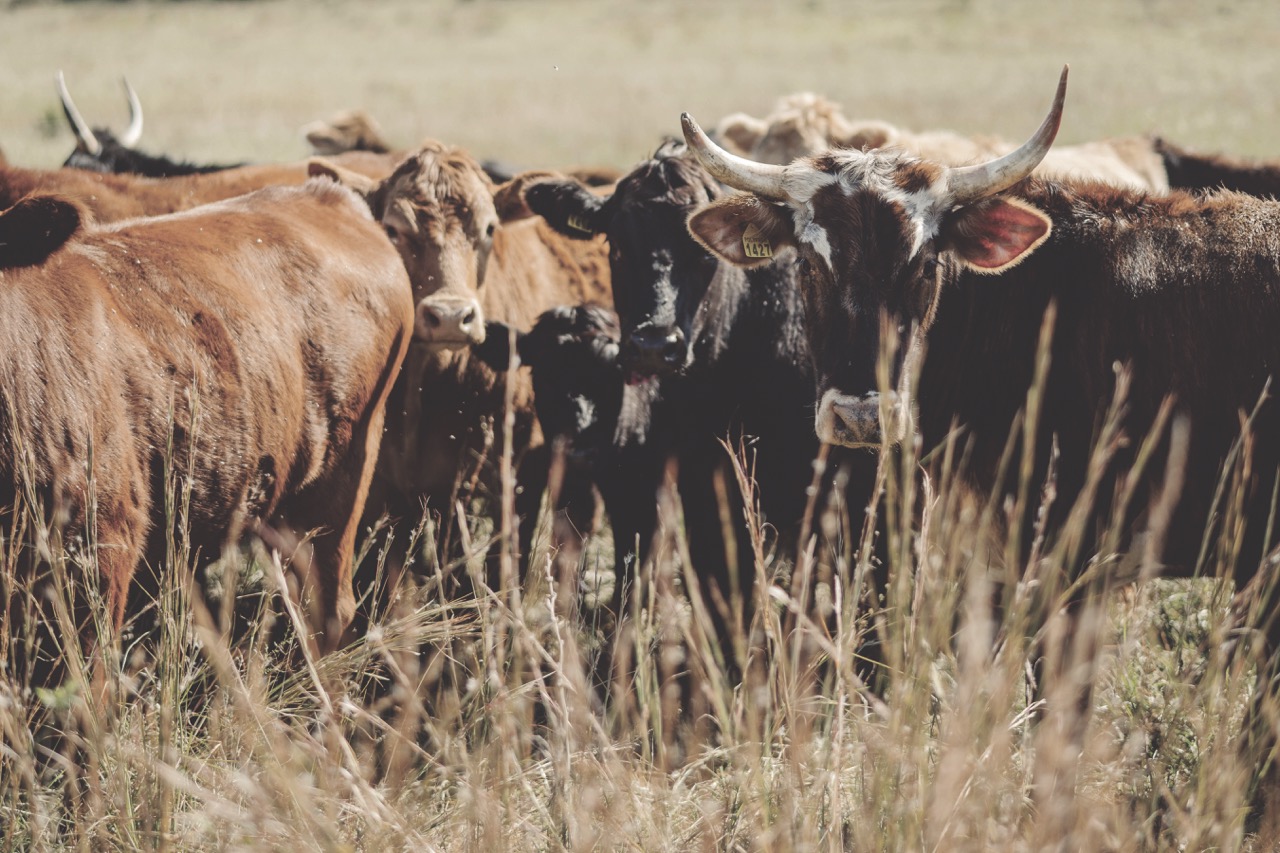
     

    Resources/Links

    Brought to you by

    Azure Standard

    Family-owned since the โ€˜70s, Azure delivers real food to your doorstep or a local drop point.

    Completely organic, non-GMO, no junk additives โ€ฆ

    azurestandard.com

    Murray McMurray

    Trusted since 1917, this Iowa family operation hatches premium poultry for homesteaders and enthusiasts, delivering healthy, hand-packed birds and all the supplies you need to start your flock right โ€ฆ

    mcmurrayhatchery.com

  • 8 Tips for a Decluttered & Naturally Clean Homestead

    While it never hurts to do a deep clean at least once each season, it makes good sense to clean in the spring because dirt, dust, soot, and grease tend to build up over the winter months. In winter weโ€™re indoors more often, using our kitchens more heavily, burning the wood stove, and keeping all of the doors and windows closed.

    Dating all the way back to the Victorian era, Mrs. Beeton wrote in her popular Mrs. Beetonโ€™s Book of Household Management that โ€œspring is the usual period set apart for house-cleaning, and removing all the dust and dirt, which will necessarily, with the best of housewives, accumulate over the winter months, from the smoke of coal, oil, gas, etc.โ€

    But itโ€™s not just dust and dirt that collects over the winter months; Clutter also tends to pile up. I donโ€™t know about you, but around here winter boots, jackets, hats, and gloves seem to multiply the longer winter drags on. Christmas gifts that never did find a home end up circulating from one place to another. Sourdough starters and kombucha bottles and dried herbs (that I still havenโ€™t pulled off the stem) pile up on the countertop. Books, papers, and childrenโ€™s toys take up space on just about every otherwise unoccupied surface.

    Not to mention, as homesteaders, our animals tend to find their way into the house over the winter months more often than other times of the year, whether due to illness or injury, extreme cold, or any other number of things. By early spring we tend to have some combination of rabbit poop, straw, hay, sawdust, cat fur, and chicken feed in every nook, cranny, and corner of our home. 

    Needless to say, come spring most of us are more than ready to roll up our sleeves, break out our cleaning supplies and give our homes a refresh. For homesteaders, itโ€™s arguably even more important to start the new growing season off with a clean slate as the dirt will inevitably get tracked in from the garden soon enough. And if thereโ€™s anything worse than winter dirt, itโ€™s spring dirt on top of winter dirt!

    But spring cleaning can feel pretty overwhelming if you go into it without a plan or you donโ€™t know where to begin. If you need a little help to get started, here are 8 tips to help you deep clean your home this spring and set a strong foundation that will support you and your familyโ€™s needs during the busy seasons ahead.

    1. Set realistic goals

    While it would be nice to declutter and deep clean your entire house including the attic, basement, garage, closets, and tool shed, thatโ€™s probably not a very realistic goal for most people to accomplish all in one season, let alone in a few days.

    Before you begin your spring cleaning, decide what your priorities are. Are there certain areas of your home that need more attention than others? Are there areas you cleaned last year that you could overlook this year?

    Maybe you have a junk drawer that desperately needs cleaning out, but your windows got deep cleaned last year and are still holding up. Decide where your time and energy is best focused so you can get the most important stuff done first.

    2. Focus on cleaning one room at a time

    Cleaning the house is a lot like pulling weeds: You could clean a little bit here and a little bit there and never feel like youโ€™re really accomplishing anything. Or you could clean one whole area all at once and enjoy the satisfaction and momentum that comes from having a completely tidy space.

    Personally, I always like to start with the kitchen. It doesnโ€™t seem to matter whatโ€™s going on in the other rooms of our house, if the kitchen is a mess, the whole house feels messy. So I always start with any dirty dishes. I go through and declutter and clean all of the countertops, and by the end, I have a clean kitchen and a โ€œstaging areaโ€ for cleaning the rest of the house.

    If youโ€™re not sure which room to start in, choose the one that needs the most attention or that makes you the most uncomfortable when itโ€™s messy. Alternatively, start at one end of your house and work your way to the other.

    3. Tidy and declutter before you clean

    While I recommend tackling one room at a time, I like to tidy each room first before I start deep cleaning. So Iโ€™ll start by tidying the kitchen and clearing countertops, but Iโ€™ll move on to tidying the other rooms in our house before I deep clean the walls, floors, and appliances in the kitchen.

    This approach is easier and more efficient than tidying and deep cleaning one room at a time since you can batch tasks like sweeping, vacuuming, washing walls, cleaning windows, and wiping surfaces once everything is tidy and the clutter is gone. But find what works for you and go with it. If youโ€™d rather tidy and clean each room individually before moving on to the next, thereโ€™s no rule that says you canโ€™t!

    Tidying pro-tip: Take everything off of surfaces and out of drawers and cupboards in each room and put it all into boxes. From there, lay it out and organize it into piles. Decide what to toss, donate or sell, and organize whateverโ€™s left back into drawers and cupboards. By the end, everything should have a home and nothing should need to sit out on surfaces. If you canโ€™t find a home for something, consider whether you truly need that item or if thereโ€™s a better place you could store it.

    4. Deep clean surfaces with natural cleaners

    When it comes time to deep clean your home, donโ€™t waste your money or sacrifice your familyโ€™s health by using toxic store-bought chemical cleaners. Most of what you need to make your own all-natural cleaning products can be found in your pantry. The rest are versatile ingredients that can be used alone or in combination with each other to clean just about anything that needs cleaning in your home.

    Vinegar and baking soda are the two most versatile natural cleaners that you can use to clean everything from cupboards and countertops to carpets and toilets. Use baking soda to scrub tubs, toilets and sinks, or to clean stainless steel appliances. Vinegar diluted with a bit of water is perfect for cleaning most surfaces, including wood, plastic, stainless steel, and glass. 

    DO NOT SPRAY VINEGAR ON MARBLE! Vinegar can stain and ruin marble surfaces.

    A simple combination of water and dish soap (while not always natural) is also a highly effective cleaner, especially when it comes to greasy surfaces. If you want an even more natural option, opt for Castile soap (natural soap) or Sal Suds (a biodegradable detergent that wonโ€™t leave soap scum). Dr. Bronnerโ€™s brand makes both Castile soap and Sal Suds.

    When making your own natural cleaners, you may wish to keep them unscented or you may want to scent them with essential oils. Lemon, lavender, grapefruit, peppermint, and tea tree oils are all great oils for cleaning. 

    For more information and full recipes for DIY natural cleaners (with or without essential oils) visit https://thehouseandhomestead.com/spring-cleaning-recipes/

    5. Replace heavy, winter decor with light and airy accents

    First of all, if there are still a few Christmas decorations scattered throughout your house, now would definitely be the time to put those away. Likewise, wash and put away any heavy blankets and throw pillows or other wintery decor and refresh your space with lighter, airier linens and decor.

    Heavy blankets and plaids can be replaced with light throws and cotton linens. Wintertime greenery can be replaced with spring flowers, etc.

    6. Clean out your pantry, fridge, and freezer

    If you havenโ€™t done so yet, this is also a great time to clean out your pantry, fridge, freezer, and any other food storage areas you have. Pull everything out of your pantry and reorganize it. Consolidate items, toss or donate things you wonโ€™t use, rotate your home-canned goods and food stores and make a plan to use up items that are approaching their best before date.

    Do the same thing with your fridge and freezer. Clean the fridge and defrost the freezer while youโ€™re at it. And if you have any other cold storage or areas where you store food, give them a once over too. While youโ€™re at it, you might also want to reorganize things like canning supplies and empty jars or other seasonal and/or small appliances that you might not need to access right now, but that youโ€™ll need come summer and fall.

    For help organizing your food storage, you can download my Pantry Inventory Checklists from my Free Resource Library, which you can access at https://thehouseandhomestead.com/resource-library/

    7. Add some finishing touches

    Once everything is clean and tidy, why not add a few finishing touches to help complete the transition from winter to spring?

    A fresh tablecloth, a vase of cut flowers, some new candles peppered around the house, and some floral or citrus-scented essential oils in the diffuser go a long way when it comes to refreshing your space for the season!

    8. Set a daily & weekly cleaning routine

    Last but not least, take some time to set up a daily and weekly cleaning routine. While you canโ€™t take time to deep clean the house every week or even every month, you donโ€™t want all of your hard work to go to waste either.

    Decide on your must-do daily cleaning tasks (ie. tidy the kitchen before bed, fold the laundry, sweep the floors, make the bed, etc.) along with weekly cleaning tasks (clean the toilet, take out the trash, vacuum, wash bedding, etc.) and put them on your calendar.

    The more regularly you clean and tidy your house, the less time youโ€™ll need to spend deep cleaning every spring!

    Finally, take a little time to enjoy your space once youโ€™re done cleaning. After all, if youโ€™re homesteading, raising kids, animals and/or plants โ€” or just generally living in your house at all, it wonโ€™t last long. So pour yourself a beverage, put your feet up and revel in it while you can ๐Ÿ™‚

  • Spring Foraging Recipes: Easy Quiche & Panzanella with Wild Greens

    There are day-lily shoots, dandelion roots, greens and blossoms,  clumps of catmint, carpets of cleavers and chickweed, stinging nettles and the ultimate spring joy– violets. The spring rains also bring on flushes of oyster mushrooms and, should we be so lucky, we might find a cache of morels.

    All of this spring goodness can be simply incorporated into exquisite meals and teas ifโ€ฆ

    You have a plan. 

    I cannot tell you how many times my husband and kids would come home from some expedition to plop a basket of amazing foraged goods on the kitchen table. I would be extremely grumpy in the aftermath because–I am the one left holding the basket. 

    Until I made a connection.

    Years ago when I was in culinary school I was part of a competition cooking team and one of the events was called โ€œThe Mystery Basket.โ€ You were given a mystery basket of strange and unique food items and asked to make a meal. You were not limited just to what was in your basket. You were given access to what is called a โ€œcommon kitchen,โ€ which provides all the basic items you might find in a normal kitchen such as oil, cream, eggs, flour, salt, vinegar etc. Part of the way I would prepare for this mystery basket is to have a repertoire of well known โ€œformsโ€ that could be flexibly employed in a variety of situations. 

    Decades later, I find myself still relying on such forms in the management of our bustling household.

    A few of my favorite classic forms are crepes,  quiche,  toasts,  soups,  pasta and salad. Within these I find a scaffold for endless creativity.  Now that I can only do fermented gluten, I have had to add a few other improvisational forms to my repertoire – The curry, the stir-fry, the board and the grain bowl and, well, taco Tuesday. 

    One of the keys to utilizing cooking forms is to really give thought to your common kitchen and think through what ingredients work for you. I have my common kitchen broken down into categories.  These categories are not rigid and fixed but they can give you a good idea of what to think through.

    Dairy
    Condiments
    Butters
    Sweeteners
    Grains

    Legumes
    Nuts and seeds
    Dried fruit
    Oils
    Vinegars

    Baking
    Frozen
    Fruit
    Vegetables
    pre-made

    This method gives me the opportunity to tailor our common kitchen to our own particular needs. For example, we mainly use maple and honey for sweeteners with the occasional cane sugar reserved for use in kombucha. So under my sweeteners section I have honey, maple and cane sugar. The idea is: as long as I have a stocked common kitchen, a freezer of meat and a steady flow of vegetables (garden and foraged) I will have everything I need to make a wide range of meals. As you can imagine this makes shopping so much easier. I just go through my list and stock up on the staples that I need. 

    Now back to that basket of foraged goods on my kitchen table. 

    My first step is to figure out what I am working with. Since it is spring let’s imagine that the basket has day-lily shoots, garlic greens, oyster mushrooms, dandelion blossoms and a big handful of cleavers. This could really work in almost all of the forms listed above.  But I am trying to move fast, so let’s sautรฉ the oyster mushrooms with the day-lily shoots and garlic greens and serve them over a thick slice of toasted sourdough and a fried egg. Oh noโ€ฆ hubby did not bake sourdough this week. I will make a quick quiche instead. My common kitchen is stocked with the basics and I am ready to makeโ€ฆ

    Wild Spring Quiche Or the Wild at Heart Spring Quiche

    As you can see this recipe can be endlessly re-worked for new seasonal renditions. 

    Many of the forms I listed above (such as soup and salad) each have their own forms nested within them. For example, in salads one of my favorite forms is a mediterranean style tabbouleh – typically bulgur wheat, lemon, parsley, tomatoes, onions and cucumbers. But with improvisation this might become quinoa, roasted red peppers and corn, cilantro, lime and queso-fresco. Or my absolute favorite salad form: The panzanella. The panzanella is a classic Italian chopped-style salad traditionally made of stale bread, onions and tomatoes. Okay, I may not be doing a great job selling this one with stale bread, but you have to try it. It is the most satisfying salad. 

    Roasted Spring Vegetable Panzanella

    This salad is super hearty on its own, but to bump up the protein sometimes I add sliced, grilled chicken thighs. As you can imagine, this recipe is endlessly flexible, moving seamlessly with each and every season.   

    One of the main reasons it is important to me to teach people to cook within these forms is because of my value for place-based hyper-seasonality. So often seasonal cookbooks are either written from a different climate or in generalities. I often find springtime recipes calling for fresh basil (which I will not have till June).  If we are seasonally adapted in our cooking, we can experiment with appropriate seasonal substitutions. 

    I think the other beautiful thing about working with forms is simply having limits. In the wide world of the grocery store, the rule is anything, anytime, anywhere. You can buy tomatoes in January, pomegranates in June, and strawberries in December. There is a simple beauty and grace in savoring things at their right time, when they are at their very best, in working with a small but complementary palette. In not having to choose from all the things, but working skillfully and artfully with what you have. 

  • Roasted Spring Vegetable Panzanella

    This salad is super hearty on its own, but to bump up the protein sometimes I add sliced, grilled chicken thighs. As you can imagine, this recipe is endlessly flexible, moving seamlessly with each and every season.  

    Roasted Spring Vegetable Panzanella

    Print Recipe Pin Recipe Rate Recipe

    Ingredients

    • 1 cup of leftover crumbled bread sourdough or baguette
    • ยฝ cup almonds chopped
    • 1 bunch of asparagus cut into 2โ€ pieces – compost the woody ends
    • 8-10 radishes quartered
    • 1 handful of pea shoots chopped into bite size pieces
    • โ…” cup fresh peas
    • 1-2 oz chopped fresh greens arugula, spinach, baby lettuces
    • 1 TBSP chopped fresh chives
    • 1-2 TBSP fresh grated parmesan cheese
    • Roasted radishes are so satisfying. That said you may not be into them. This recipe is also fantastic utilizing fresh strawberries in place of the radishes

    For vinaigrette

    • ยฝ lemon juice and zest
    • 2 cloves garlic from garlic press
    • 1 tsp dijon or stone ground mustard
    • 1 tsp honey or maple syrup
    • 1 TBSP white wine vinegar or vinegar of choice
    • 2 TBSP quality olive oil yes, it matters
    • ยฝ tsp salt

    Instructions

    • Preheat the oven to 350 degrees.
    • Break the leftover bread into ยฝ-inch chunks. This recipe works best if you can tear the bread, but sometimes the bread is too hard to tear by hand. In this case, I cut the bread with a knife.
    • Add the almonds, toss in a little olive oil and sprinkle with salt, toast for 5-7 minutes. Remove and increase the oven heat to 425 degrees.
    • Cut the Radish and asparagus toss in a little olive oil and sprinkle with salt. Roast for 10-15 minutes, or until slightly caramelized.Remove from the oven and let cool.
    • While the other ingredients are cooling to room temperature, prepare your vinaigrette and mix well.
    • Chop your greens of choice.
    • Add toasted bread, almonds, roasted vegetables and greens to one bowl and toss with vinaigrette.
    • Sprinkle the top with fresh chives and grated parmesan.
    Tried this recipe?Mention @homesteadlivingmagazine or tag #homesteadlivingmagazine!
  • Wild Spring Quiche Or the Wild at Heart Spring Quiche

    Ingredients

    For the crust

    • 1 ยฝ cup Pastry or all purpose flour chilled in freezer 1hr
    • 6 TBSP of chilled leaf lard or you can use chilled butter cut into small pieces
    • ยฝ tsp of salt
    • ยฝ cup ice water

    Wild Spring Filling

    • 2-3 oz daylily shoots cut into 2โ€pieces *
    • 2 TBSP chopped garlic tops *
    • 4-6 oyster mushrooms sliced *
    • 1 TBSP Butter or lard *
    • 4 large eggs
    • 1 cup heavy whipping cream *
    • 1 pinch fresh grated nutmeg *
    • 2 tsp fresh or dried tarragon *
    • ยผ tsp salt *
    • 3-4 TBSP grated parmesan *
    • 1 tsp dandelion petals *

    Wild at Heart Filling

    • 4 oz fresh spinach lightly sauteed *
    • ยฝ onion sliced and caramelized *
    • 6-8 spears of Asparagus cut in 2โ€pieces *
    • 4 slices of bacon cooked and crumbled *
    • For dairy free, omit cream and butter *

    Instructions

    For the Crust

    • Add Flour, salt and lard (or butter) to a food processor. Pulse 10 times or until the mixture has a crumbly texture.
    • Add ยฝ of the ice water and pulse 10 times. Check your mixture and see if you can gather it into a ball. If the mixture is not coming together slowly add the remaining water and pulse until you can work the dough.
    • Put the dough mixture on a lightly floured surface and gather into a ball roll and fold in half, turn ยผ turn and fold in half again. Cover the dough with parchment and chill in the freezer for 1 hour.
    • Pull crust from the freezer and roll out into a 12โ€ circle.
    • Put dough into a 9โ€ pie pan and flute the edges- this sounds complicated but really you are just folding the excess crust into a pie-ish looking edge.
    • Lightly tap the bottom and sides of the crust with the tines of a fork without breaking through the dough– this will keep the crust from excess bubbling.
    • Bake the crust for 12 minutes in a 350-degree oven. Remove from the oven and let cool while you prepare your filling.

    For Wild Spring Filling

    • Heat ยฝ butter over medium heat, add oyster mushrooms and saute for 3 minutes.
    • Add chopped garlic tops and a sprinkle of salt and cook for 1 more minute. Remove from heat and set aside.
    • Add more butter and reheat the pan, saute the day-lily shoots for about 3 minutes or until slightly wilted, lightly salt and remove from heat. Let cool.

    For Wild at Heart Filling

    • Heat ยฝ butter over medium heat, add onions and saute 5 minutes, add asparagus and cook another 4 minutes, and spinach and cook until the spinach is wilted about 3 more minutes.
    • Lightly salt and add crumbled bacon.
    • In a bowl crack eggs, add heavy cream, nutmeg, tarragon and salt. Whisk together well.

    Add the Filling of Choice

    • Add the filling of choice to the bottom of the tart shell, pour the egg mixture over the top.
    • Cover the top of the egg mixture in a coat of grated parmesan cheese.
    • Bake in a 350-degree oven for 30 minutes or until a knife comes out mostly clean. Sprinkle the top with dandelion petals
    Tried this recipe?Mention @homesteadlivingmagazine or tag #homesteadlivingmagazine!

    As you can see this recipe can be endlessly re-worked for new seasonal renditions. 

  • How to Make Sourdough a Simple Part of Your Daily Homestead Kitchen Routine

    If youโ€™ve never seen a beautiful round loaf of bread etched with a design rivaling the beauty and detail of a van Gogh painting, then Iโ€™m guessing you werenโ€™t on Instagram after March 2020. Sourdough has been all the rage for a few years now, but it can be intimidating to incorporate into your own kitchen. Do you need fancy tools, like baskets and razors? And whatโ€™s with hydration percentages and using a scale to measure all of the ingredients? 

    To muddy the waters just a little more, everybody and their brother has their own way of making sourdough. When I started baking with sourdough over 11 years ago, things were a bit simpler. Knead the dough, add water, flour, salt, and starter โ€” then rise and bake. Iโ€™m hoping to break it down for you to make it simple so that you can enjoy the taste and health benefits on the regular in your own home. No banneton baskets required. 

    To learn how to make a sourdough starter and get a collection of my favorite recipes, grab my free ebook.ย 

    Sourdough for more than just bread?

    Though I like a sourdough boule as much as the next person, bread is not the thing I find myself using my starter for most often. Pancakes, pizza crusts, flatbreads, cinnamon rolls, bagels, and even my one-pot wonder, sourdough skillets, are in the regular rotation around here. I keep a gallon size glass jar at least half full of starter at all times in order to have plenty on hand for no-wait recipes. 

    What are no-wait recipes?

    With bread, bagels, and rolls, you need to get your dough started the day before you actually want to bake. No-wait recipes allow you to pull fermented starter straight from the jar and use it in recipes instantly. Keeping plenty of starter on hand means you are always 30 minutes away from a gut-healthy sourdough meal. The real beauty of these quick and easy staples is that the starter doesnโ€™t need to be freshly fed. In fact, you could actually use a starter that has been sitting in the refrigerator for a week. For busy folks who sometimes fail to plan ahead, this can be a meal plan game changer. 

    My favorite no-wait recipes  

    Pizzaย ย 

    For this recipe, youโ€™ll need 3 basic ingredients: sourdough starter, olive oil, and salt.

    This crust requires no rising and no forethought. All you need to do is keep a large jar of starter in stock. We make basic pizza interesting by switching between mozzarella, cheddar, goat cheese, or some combination of the three. We sometimes use tomato sauce or get fancy with fig jam or chili date sauce. Herbs, pastured bacon, and seasonal veggies usually make their way on as well. The variety and lack of prep time keep this on the menu year-round. 

    Preheat a cast-iron skillet or pizza stone to 450 degrees. Spread sourdough starter on the preheated stone in a thin layer, using the back of a wooden spoon to create a circle. Drizzle with olive oil and sprinkle with salt. Bake for about 10 minutes, or until the crust pulls away from the skillet or stone. 

    Top with sauce, cheese, and other delicious toppings of your choosing. Bake at 425ยฐ for an additional 10 minutes, or until the cheese is good and melted.

    Sourdough Pancakes

    These have become a breakfast staple in homes all over the world, as evidenced by all of the IG tags I get with this recipe.ย ย ย ย 

    Maintaining a sourdough starter 

    To get an idea of how this actually looks in my kitchen, let me break down my typical feeding and usage practices. This can vary considerably depending on the time of year and what is going on with our family. In busy seasons of life, I may only get the starter out of the refrigerator once or twice a week. The one constant is that I donโ€™t let the jar have any less than four or five cups of starter in it, which is always enough for a quick meal. 

    When it is time to feed my starter, I like to start by eyeballing approximately how much sourdough starter is left in the jar. I feed it at least that amount in equal parts of flour and water. For example, if I have about three cups of sourdough starter, I will feed it at least three cups of water and three cups of flour. If Iโ€™m running low on starter, I will add more than the minimum requirement of flour and water. It is totally acceptable to feed four cups of flour and water to one cup of starter, as long as it is mature and thriving. The consistency should be similar to pancake batter. After feeding, I allow it to sit at room temperature for 4-12 hours before using it in a recipe. 

    When a sourdough starter is left on the counter at room temperature, the yeast will become active, and it will become a bubbly sourdough starter. If I have no plans to use it right away, I put it right back in the refrigerator to โ€œpauseโ€ the fermentation process. You can put the refrigerated starter straight into no-wait recipes. 

    For recipes that have no additional leavening agent, like baking powder or baking soda, I like to have a bubbly active starter. With bread, for example, I donโ€™t use the starter straight from the refrigerator. Instead, I feed it flour and water and then wait four hours until the starter is revived and bubbly.

    Maintenance is fairly simple. Like anything living, it requires food and water. Leaving it out on the counter, it will need to be fed equal parts water and flour every 12-24 hours. Warmer homes, or frequent baking, will require more frequent feeding (around every 12 hours), while colder homes every 24 hours.

    Storing sourdough starter in the fridge will require feeding around once a week. It can, however, be stored for up to two months in the fridge without being fed. When we moved into our farmhouse, we were displaced for close to a month while we waited for our hardwood floors to be refinished. The sourdough starter was buried beneath seven peopleโ€™s possessions in a horse trailer in the driveway. It came out beaten up but not beyond saving.

    Reviving a sourdough starter that has been stored for a longer period of time in the fridge (or a horse trailer) is a good idea. This can be done by discarding the bulk of the starter and then feeding it equal parts flour and water. Allow it to sit at room temperature for 12 hours, and then feed it again. It may need to be fed 2-3 times with 12 hours between each feeding before it becomes active enough to make certain recipes (like bread). For some no-wait recipes, you can use the starter sooner. 

    Once a rhythm is established, using a sourdough starter becomes second nature. A healthy starter can be passed down for generations. I love thinking about the fact that I started mine when my second daughter was a baby! I look forward to the day when I will be eating bread in her kitchen from the very same starter.

  • The Coop Episode #18: Anna Sakawsky on Her Homesteading Journey and What Homesteading Really Means

    In this solo episode of The Coop, Homestead Living Editor-in-Chief Anna Sakawsky finally shares her own story.

    From growing up as a city kid in Vancouver with almost no exposure to homesteading, to the stressful travel-agent days that made her long for a slower, more connected life, Anna opens up about the path that led her here.

    She talks about the travels abroad that unexpectedly taught her to cook creatively and make do with whatever was available, and the early days with her husband Ryan โ€ฆ living with very little money in Australia and learning to turn simple ingredients into meals they actually enjoyed.

    Most importantly, Anna addresses the big question so many people ask: What does homesteading actually mean in the modern world? She shares her thoughts on the confusion around the term, why definitions vary, and who this lifestyle is really for.

    If youโ€™ve ever wondered about Annaโ€™s journey or felt unsure whether you โ€œcountโ€ as a homesteader, this honest conversation is for you.

    In this episode, Anna Sakawsky discusses:

    • Her city-kid upbringing in Vancouver and early memories in her grandpaโ€™s garden
    • The stressful travel-agent job that sparked her desire for a slower life
    • How traveling and living abroad unexpectedly prepared her for homesteading
    • Early married life with Ryan: learning to cook creatively on a tight budget
    • What homesteading means (and doesnโ€™t mean) in the modern context
    • Why thereโ€™s confusion and sometimes debate around the term โ€œhomesteaderโ€
    • Who this lifestyle is really for

    About Anna Sakawsky

    Anna Sakawsky is the Editor-in-Chief of Homestead Living magazine. A former city girl from Vancouver, BC, she now lives with her husband Ryan and their family, working to build a more self-sufficient and meaningful life. Through the magazine and The Coop podcast, Anna is passionate about giving a voice to real homesteaders and sharing practical wisdom for wherever you are on the journey.

    The show notes โ€ฆ

    00:00 – Intro
    01:22 – Getting to Know Anna
    03:52 – From City Kid to World Traveler
    07:49 – Discovering the Homesteading Movement
    14:46 – The First Farmhouse
    19:05 – Building The Current Homestead
    24:08 – From Blogger to Magazine Editor
    29:56 – What is Homestead Living?
    36:37 – What Does Homesteading Mean Today?
    43:21 – The Reality vs. The Online Aesthetic
    46:53 – Final Thoughts

    Episode Transcript

    Anna Sakawsky:

    And there’s a constant tension between living the homestead life and working to fund it and to share it with the world. But the reality also is that if you’re really doing this and you’re really living this lifestyle, it’s messy and it’s hard and it can be stressful and all these things too. And I’m going to tell you a little bit about me, my background, my homesteading journey and where I’m at, what my situation looks like, all the things that happen on the slippery slope that is homesteading. And again, if you’re on this journey, you probably have a bit of an idea of what that’s like.

    Friends, nothing says homestead life like a backyard flock that fills your egg basket every morning, and maybe even your freezer too. That’s why I’m so happy to share today’s sponsor, Murray McMurray Hatchery. They’ve been helping homesteaders raise healthy backyard poultry for over a hundred years. They also carry more than a hundred breeds of chickens, ducks, geese, turkeys, and quail, including some beautiful rare and heritage breeds. Their chicks are handpacked with care, backed by a live arrival guarantee, and they’ve got all the supplies you need to get started raising backyard poultry at home in their one-stop shop. Whether you’re adding a few new layers or starting your very first block, you can head to mcmurrayhatchery.com to order your chicks today. Tell them the coop sent you and start building the flock you’ve been dreaming about. Again, that’s mcmurrayhatchery.com. Well, hello everyone and welcome to episode number 18 of The Coop.

    My name is Anna Sakawsky and I am the editor-in-chief of Homestead Living Magazine. And today I want to talk to you a little bit about just who I am and who we are at Homestead Living and what the Coop is all about and also what homesteading actually means. So it’s a little bit of an introduction episode, kind of the intro that we never had. I know it’s a little bit weird to do an introduction episode on episode 18, but I do think it’s high time that we do because some of you probably don’t know much about me. And as the host, I want to share a little bit more about my own homesteading journey so that you know who you are listening to, but some of you might also not know much about homestead living, especially if you found us on YouTube or on Apple or Spotify.

    You might not know what we do or how we help and give a voice to the homesteading community. So I want to talk a little bit about our story. And then finally, I want to quote unquote define the terms here. So to talk a little bit more about what I think homesteading is, what it isn’t, who it’s for, who it’s not for, because everybody has a little bit of a different definition about what homesteading means in the modern context. We’re not talking about the Homestead Act here, which funnily enough, some people who are not familiar with homesteading in the modern sense still think of when they think of homesteading. I actually had a terrible time trying to register my business up in Canada where I live trying to register a business with the name Homestead in the title because the official definition that I guess our government still has about what homesteading actually means is getting free land, staking your claim on free land.

    That’s not necessarily what we’re talking about in the modern sense, but there’s some confusion around it. And it’s a question that I ask a lot of our guests that we have on the show is, how do you define homesteading? What does it mean to you? And everybody has a slightly different answer, but there are some common threads too. So I want to talk about those and kind of address this question of like, who is a homesteader? What does it mean to homestead in the modern day? Especially nowadays when more and more people are coming to this lifestyle and more and more people are sharing it online. There’s been a lot of arguing almost that I’ve seen online lately about what a homesteader truly is and how long you need to have been doing this to be considered a real homesteader and all that sort of thing.

    So I want to address some of that as well. So let’s just kind of dive in. I’m going to tell you a little bit about me, my background, my homesteading journey and where I’m at, what my situation looks like. So my husband, Ryan, and I, we first met when we were living in the city. So both Ryan and I grew up in Vancouver, BC. And so we both really grew up as city kids. We lived in the suburbs, but we were full on city kids. I didn’t really have any exposure to homesteading or farming or anything like that. The closest to it probably was when I was a little girl. I mean, my grandpa had a pretty sizeable garden in his backyard. He did grow up in an era and in an area of the province where they did do a little bit of homesteading.

    They probably didn’t call it that back in the day, but they did grow some of their own food. And he had always had a garden, so that was natural for him and his mother did. And I remember my great-grandma still being alive when I was a little girl. And I remember she would always have like some tomato plants that she’d started in a sunny window and she’d grow some things in the backyard. And so that’s probably similar to a lot of people’s stories where a few generations back, like our family members were doing this and then it kind of got lost somewhere in between. But I was lucky enough to spend enough time with my grandpa that I had, I got the opportunity to go out in the garden with him and just kind of play in the dirt and that sort of thing. So I had some exposure to it anyway, but otherwise I really didn’t grow up around this at all.

    So when I was a little bit older … Well, I mean, I always loved nature. That was one thing. I always felt most at peace in nature. I loved to go camping and I loved to just be connected to the land and the seasons in whatever way I could. And then when I was a young adult, I was actually working as a travel agent and it was a pretty stressful job. And I was always on call and there was always problems with canceled flights and all the stress that goes along with that. And I was working downtown very much in the heart of the city and I just was dealing with a lot of anxiety all the time. And I remember going out to visit a friend who had moved out to one of the small islands off the coast of BC and it was just so beautiful and so peaceful.

    And I’m standing out there on her balcony looking out into the forest and there’s deer. And it was just so, so peaceful. And meanwhile, I’m on the phone trying to deal with a canceled flight and all of the stress that goes along with it. And I just thought, what am I doing? This is not what I want. I don’t want this kind of fast paced city life. I want this, right? I want to be somewhere where I can feel more connected with the land. So that was like my first inkling that I wanted to make a shift, but it still didn’t happen right away. I traveled a lot in my 20s and that led me all over the world. I lived abroad in Vienna, Austria for a term when I was going to school and traveled across Europe. And then I got to live in Africa for a while, just traveled around South Africa and then ended up doing some volunteer work in Senegal.

    And that was a really interesting … Traveling was really opened the door for me to do things that eventually led to homesteading, funnily enough, because traveling abroad and homesteading, being very home based can seem like very opposite things, right? But it was the first time I was really on my own. I had to learn to cook for myself, especially in Africa. That was a different experience altogether where it was like very much we just had a little burner and whatever you could get at the market that day was what you had to make. And it forced me to learn a lot and get creative. And then later on, I actually also lived over abroad in Australia. And that’s where my husband and I, we had met working and travel before that, but we stayed in touch and he ended up moving over to Australia with me and we lived there for a time.

    And that also continued to grow this kind of love for food. I guess in both of us, we didn’t have a lot of money. We were young. We were backpacking. We didn’t have a lot. And so we were living for a while in Byron Bay on the East Coast of Australia and basically didn’t have two nickels to rub together. And so we had to make do with whatever we had. We started watching a lot of cooking shows. That was really a big thing in Australia at that time, like master chef type stuff. And my kitchen rules was another one because we got like a free TV on the side of the road, so that was some of our entertainment. And then we couldn’t afford to eat out, but of course we still had to eat. So we were like, how can we eat for as cheap as possible, but still enjoy it?

    And so we were really inspired to go to the grocery store, see what we could get and see what we could actually make a meal out of. So as silly as that sounds, that was kind of the very beginnings of this foray into homesteading for me because I learned that I really liked to do this and I now had a partner who actually really liked to do this stuff too. And so when we came home and we moved into an apartment in the city and we actually had our own kitchen though. So it was really cool because it was like, “Hey, now we can expand on this love for cooking and food and all that. ” And so one thing led to another. And then that love of cooking and ingredients, making something out of nothing in a sense, out of a few ingredients led to me looking at how can I source my food more locally, finding local farmers in the area, that sort of thing.

    And then around this same time, this would have been late around, I guess 2012 was when we got back from Australia and this was around the same time that the homesteading movement was starting to pick up a bit of steam. So this was around the time that documentaries like Food Inc were coming out. That was a big kind of first exposure to Joel Salatin, for example, who is one of our regular contributors for the magazine now. But I believe it was like either that documentary or one of those. There was lots at that time that were coming out that kind of introduced us to this term homesteader, right? They were kind of comparing and contrasting the big industrial egg system that produces most of our food and then contrasting that with small regenerative farmers that were doing things differently. And then also people who were doing it on a homescale and they were calling themselves homesteaders, right?

    This is kind of growing for themselves. So rather than for production where you’re growing commodity crops or you’re growing to sell, homesteaders were taking that control of their food because they were growing it at home themselves. And that really sparked something in me. And then at the same time, a lot of the documentaries on TV too were based around that. They were picking up steam. So if you listen to our last episode, I had Eve Kilter from Alaska the last Frontier Fame. So Discovery Channel had a bunch of these shows, Back to the Landers up in Alaska and homesteaders and people that were just living alternative lifestyles. And so these puzzle pieces started coming together for us where we’re like, we like the cooking, we like sourcing local, I like knowing where my food’s coming from. I’m watching these documentaries about our industrial agriculture system and our industrial pharmaceutical industry and all these things.

    And I’m going like, “I know I don’t want that. ” And I’m back in the city where I grew up now and I’m dealing with anxiety again because there’s something about being in this city environment that’s not fitting and sitting well with me. And so all these puzzle pieces start to come together where it’s like, “Okay, I do want this. I do want a hand in where my food comes from and how it’s produced and processed and all that. ” And I don’t want to be feeding into this big industrial system in the way that we are now as just being kind of consumers of it. And I don’t really feel like I’m at home in the city and I think I want something else and we’re starting out, we’re getting married soon and we’re trying to figure out like, what does life look like for us?

    What do we want out of life? Where do we want to be? And so eventually, I can’t remember now if it was like a light bulb kind of went off overnight or if it was just this slow burn to where we kind of just went like, maybe this is the thing. Maybe we should pursue homesteading and move out of the city and get a little bit of land and have a garden and maybe have some chickens and raise some our own food and be more self-sufficient and disentangle from this system. And so that’s essentially what we did. And the journey was slow at first because we were still living in a condo in the city, but we started, we did what we could. Again, a lot of that at that point in time looked like sourcing food locally from other food producers in our area.

    I started learning how to forage for certain things that were in season. I started doing like very, very basic preserving, like really just mostly freezing at that point, but just freezing things that were in season and then getting to enjoy them throughout the year rather than just going to the grocery store and getting blueberries from, I don’t know, South America or something in the middle of the winter, right? Really trying to get more local with our food, cooking a lot more from scratch, learning a lot more about that.

    And then eventually we did start to try to grow some things, but we didn’t have a lot of luck where we were. We lived in an apartment building or our apartment had a north facing balcony. So it was shaded most of the day, which is not great when you’re trying to grow food, but I didn’t know anything about growing anything at that point. And so we had some herbs that like kind of did okay, but even they kind of dwindled over time because they weren’t getting enough sunlight. I think maybe we tried to grow a tomato planter too that didn’t do much of anything. We tried to start carrot seeds indoors, which that was a total failure. Typically, first of all, you don’t start carrot seeds indoors, you just direct sew them in the ground, which I had no idea what I was doing, but we also put them inside, did not have them under direct light.

    The window was like half a mile away and they were leggy and reaching toward the window and we way overwatered them and they were saturated. And I feel so bad for those poor little baby carrot seedlings that all just died. But you have to start somewhere. And so we did. That’s where we started. And most importantly, that was when I was in that voracious learning stage. And if you have ever been in that stage of homesteading or if you’re in it now, you know how exciting it is, right? That’s when everything is new and you want to learn everything. So I was taking books out of the library. I remember like the library was my best friend at that point in time and I was going and taking out books on everything to do with home setting and how to set up a small backyard garden and do a small skill homestead and how to identify certain things that you’re foraging for and how to cook more things from scratch and bake things and all the things.

    I was just like, I couldn’t get enough of it. It was like a fire hose had turned on and I was there for it to lap up every drop of it. I loved it, but I wanted to like take the next step too, right? And we were limited at the end of the day with what we could do in our apartment. And so we did have a plan to get out of the city. So fast forward a couple years, I had to go back to school and we got married and then we had made a plan to leave the city and move to Vancouver Island. So that is where we live now. So we live in a place called the Komox Valley, which in the local indigenous language here means the land of plenty. And that is actually because the soil is very fertile here because it was an ancient seabed basically.

    So a long time ago, this was underwater. And so there’s a lot of mineral deposits and that sort of thing in the soil here, which makes it very rich and very fertile for growing. And so it is a very big agricultural community here, lots of local food producers, lots of people that are into like regenerative, organic farming and growing and all that stuff. So that was part of why we decided on this community specifically, we did a lot of research into where we wanted to move and what would suit our needs and our goals in life. And we settled on the Komox Valley, which I am so glad in so many ways that we did. And at first when we moved here, we rented, but we luckily had to deal with the owners who my husband had worked for one of the owners when we lived back in the city and they happened to have a property over here that had been in his wife’s family forever.

    Her grandfather actually built the house and her father had grown up in the house and she had grown up in the house. And then when her father, I guess, had passed, the house was empty and they wanted to move back here when they retired or when they were ready and restore the house. It’s a beautiful old farmhouse. But in the meantime, it was sitting there not being lived in and they wanted to get some work done on it. So we kind of made a deal with them. Luckily I have a very handy husband and so he agreed to do some of the renovation work on it and we got to live there in the meantime. And that was great because we had animals that we were bringing and everything and it’s, I don’t know where you live, but where we are, it is very difficult to find rentals that will allow you to have animals as well.

    So it was a good deal always around. And we were super lucky that they did not charge us rent while we were there, which was just like another leg up for us. But in exchange, there was a work exchange for it. But so this farmhouse was on about, I want to say it was about an acre, just under an acre, but it also shared a few acres with the neighboring property and the neighbors were fantastic there and they had free range hens, free range chickens who would wander over and we’d get our eggs from them. And so that was like another, like my first toe dip into living somewhere where like we got chickens running around and I can just get my eggs off the neighbor now. And there was a really big old apple tree there. And when it was apple harvest season, we just had hundreds and probably thousands of pounds of apples fall off this tree.

    And I was so excited because I got to actually preserve them. That was my very first time canning was I canned a whole bunch of applesauce. And so that was how I got my toes dipped into that. And we asked if we could put a garden in and they let us put a few raised beds in. So we started to garden and then I learned how to start seeds. And then we were really cash strapped that first Christmas there. And so I decided to start making candles to give to everybody that Christmas. And so then I got into making things like candles and home and body products and that sort of thing. And just it started to snowball from there where one thing led to another, canning led to dehydrating, led to fermenting, led to all the things that happen on the slippery slope that is homesteading.

    And again, if you’re on this journey, you probably have a bit of an idea of what that’s like now. For a lot of people, it’s sourdough, for example, right? Sourdough was known as like the gateway drug into homesteading and you start with that and then you move on to something else. And then the beauty of this lifestyle is that there are a never ending amount of things that you could learn or you could add or you could do. That’s also a bit of the curse with it is you have to be realistic about how much you can do and how much you can do in all at once or in a season. But so that’s how we got started anyway. And then back in 2018, we bought a house just around the corner actually from there. So we’re not too far from where we started off.

    But now we own our place, but we are on a quarter acre. So it’s really not that big. A lot of people are really surprised that when they hear about our property, because I think maybe some people that do know me or follow along, would assume that I have some big homestead and we don’t. We just have a quarter acre that is basically, we’ve got one foot in the suburbs and one foot in more rural living. We are technically zoned as rural, but we’re three properties away from the property line from the city. We live on a cul-de-sac in the front, but we back onto a green belt. So we’ve kind of got a foot in both worlds. We’re down at the end of a dark no through road, but then at the same time, we’re right around the corner from Costco and the hospital.

    So in many ways, it’s actually the best of both worlds. Eventually, we would like to maybe upgrade and move out and get farther out, but for now this is a really good stepping stone. And on our quarter acre, we actually produce a fair amount of our food. So we have a large garden. Our whole front garden is basically garden beds, or our whole front yard is gardens. So we have four big in- ground beds that are, I call our market rows, because that’s where we kind of grow for production, grow a lot of our stable crops. And then we put in four more raised beds last year, one of which is our medicinal herb bed that I’m building out. And then the other three are kind of a mix of, I’m doing flowers now as well as a lot of our vegetables we grow. And we have a cattle panel trellis where in the middle of that where we grow our peas and our beans and all that sort of thing.

    So we’re trying to really work on how to maximize production on a small property. That’s our main goal. Just adding things all the time, grapevines and apple trees and cherry trees we added last year. And we have about … We have eight chickens. Eight chickens righ now? Yeah, eight chickens. We have one brooster, we call him Randy, Randy the rooster and seven hens at the moment. We have had rabbits here before, but we don’t for now, but we do have a pen where we could have them again, or we’ve thought about maybe doing some meat chickens, although we have not done that yet. We are currently building a greenhouse. We are currently, well, starting to convert back behind me, if you’re watching the video, is the door that leads to our laundry room/pantry. And we’re kind of working on converting that into a bit of a prep kitchen because we do a lot of preserving in the summer.

    And so having that be where we do some of the canning so it doesn’t take up our whole kitchen, have my dehydrator and my freeze dryer back there and we’ve got building out an expanded pantry because we’re also just in a rancher. We’re on a quarter acre and we have about a 1200 square foot rancher, right? It’s not huge. So we’re really trying to make the most of what we got. We also had a garage that we converted into a rental. So that’s all part of our homesteading plan though too, right? Is how can we be more productive on this land, earn an income from this land, whether it’s working from home or having a little bit of rental income come in, how can we produce more through what we’re growing and doing and producing? So that’s kind of our story in a nutshell and where we’re at now with homesteading.

    And quite honestly, I am so happy to be here. Yes, we have dreams of having more land and doing more eventually. I also have a nine-year-old daughter and a three-year-old son, and we are very busy. And I don’t know, quite honestly, if I could handle more than what we’re already doing.

    We source our meat, for example, locally because we’re not producing most of our own meat. We do have our chickens for eggs, but for the most part, we’re sourcing locally. We have a freezer full of beef and half a hog and are very lucky that we live in a community that also is full of food producers and small farmers and that sort of thing that we can support and that we can lean on for the things that we are not producing. So that is kind of our story. In addition to that, and maybe this kind of leads into the next thing about who is homestead living and what is my part in that? This episode is brought to you by Azure Standard. Family owned since the 1970s, Azure Standard is on a mission to make real food more accessible by delivering it straight to your doorstep or to a convenient local drop point near you.

    Everything they offer is completely organic, non- GMO, and free from junk additives you don’t want in your home or in your body. With more than 13,000 carefully vetted products, Azure standard makes it easy to stock up on what really matters from bulk grains, nuts, and healthy oils to fruits and vegetables, frozen meats, pantry staples, and even clean household goods. And the best part is you skip the grocery store markup. You can order exactly what your family actually needs, save big on high quality food and pick it up alongside neighbors who care about the same things you do, health, sustainability, and supporting ethical producers and head to azurestandard.com right now to get started. Again, that’s azurestandard.com. I decided to start a blog back in 2017, I believe now. And this of course was in the age of bloggers and homestead bloggers. And I certainly wasn’t one of the pioneers.

    There were a number of bigger homestead bloggers that had come before me, but this was still in the heyday of blogging and all that. And I have always loved to write. The first time I went to university was for journalism. I’ve always loved to … I have a magazine that I made for a school project when I was about seven or eight. So it was always something I’d like to do, write and edit and do that stuff. And then I went back to school to be a teacher, realized that wasn’t for me. I loved to teach, didn’t love to manage a class of kids. And then when I had my own kids, I had to be able to manage my energy to be with them. And anyway, so I decided I wanted to stay home with them, but I also wanted to still pursue something that was meaningful for me.

    And so I started to see these other homestead bloggers doing this as a living. I didn’t realize this was something you could actually do for a living, but they were, and they were sharing about homesteading and they were sharing what they were doing online and they were creating a bit of an income from it as well. And I was looking for a way to combine all of my passions and also be home with my kids. And so I launched my blog, which is called The House and Homestead back in 2017 and grew a little bit from there. It was never like a huge blogger, but I made it okay. It was supplemented our income and it was something, it was something that kept me extremely excited about what we were doing and excited to share it with everybody. And then in 2019, I decided to launch my own little magazine called Modern Homesteading Magazine.

    And I cringe now when I look back at the first covers of that, it was so bad, but I just put it together. It was just free at first. I just wanted to be able to have it to be something to give away to my readers in more of a printable compact form rather than on a blog. And it kind of took off. The people that were reading it really enjoyed it. So I just kept doing it every month. And then I did that actually for almost four years and people really wanted print. That was what I was realizing was that the homesteading community, it’s so funny because print is dying in so many ways. A lot of magazines are shutting down and just going digital now because people aren’t buying magazines like they used to, but the homesteading community, they like tangible things that they can hold in their hands and they can keep on their shelves and they can dog ear and actually hold onto in case they can’t access it online for some reason.

    I think that’s kind of part of this wanting to go back to the old fashioned, to this, maybe an analog, lifestyle, whatever the case may be. But with Homesteaders, we want to kind of go back to those things that are real and tangible and the things we can hold. And so I was getting a lot of requests to go to take the magazine to print, but being that I am actually based in Canada and most of my readers were in the US and printing and shipping costs, and this was already what, 2022 or 23, I guess. So we were already into the age of supply chain issues and inflation and that sort of thing after COVID. And no matter how many times I crunched the numbers, I couldn’t make it make sense. It was just not going to be a sustainable business model. I couldn’t do it all myself and bring it to print and ship it and everything.

    And so I decided to do a print issue for my very last issue, just as a thank you to all my readers and then shut it down. And right around that exact same time, I think I announced that online and Melissa K. Norris, who is one of our co-founders here at Homestead Living, reached out and said, “We are looking to take our magazine, Homestead Living print, and we need an editor and I’ve been watching what you’ve been doing and would you be interested?” And for a little bit of context, Melissa, and I do go back a little bit because she was one of the very first homesteaders that I ever started following that I learned most of what I know probably from. I learned how to garden from her and I learned how to bake sourdough bread from her. And I learned a lot of the preserving aspect of homesteading.

    I learned from her as well, canning and everything. And then I got to do some work with her on her blog back in the day. So did some guest posting there and helped her transcribe her podcast for a while. So we had a little bit of a relationship, but when she asked me to come on as the editor for Homestead Living, it really was kind of serendipitous. It was just like divine timing that they were looking for somebody to take that role because they were going to print and I was leaving and it took me months of deliberation and quite honestly praying over it and really listening to my intuition. And it was saying, “It’s time. It’s time to close this door.” And I didn’t know what was next. I just followed that intuition and I closed that door and literally the door to Homestead Living opened right at that time.

    And so I came on as the editor of Homestead Living Magazine in January of 2024, and that is when we officially went to print. We had done one trial print run before then and we started going to print in January and that’s been my role ever since. So I’m still running the house in Homestead on the side. If you want to ever go check that out, I’ve got lots of resources on there for anybody getting interested in homesteading or lots of gardening and preserving and cooking and baking and all that sort of stuff you can find at the houseinhomestead.com. But my main role now is as the editor-in-chief for Homestead Living. So that Brings me to who are we and what do we do? So for those of you who don’t know, first of all, The Coop, the podcast that you’re listening to is brought to you by Homestead Living.

    So we are a full media company who is committed to equipping people worldwide with practical education to fuel their homesteading journeys. That is our official mission and we do that in a number of ways. So number one is through the magazine, that’s how we started. So we actually started co-founder Melissa K. Norris and her co-founder, Daryl Vesterfeld, founded Homestead Living back in 2022 because they saw that there was kind of a bit of a gap in the market. And there were some certain magazines that had been around for a long time that cater to the homesteading or back to the land crowd. But there was nothing really speaking to a lot of the more modern homesteading crowd, people that have come to it in the last 10 years or so. And so they wanted to give a voice to these modern homesteaders. And it started off as just a really basic digital magazine and it grew.

    And of course, the homesteading crowd was demanding print, right? Probably louder than they were with mine. I saw a lot of the comments online and people were like, “This is great. Let me know when it comes to print and then I’ll buy it. ” So it took a couple of years of them growing it to the point where they could take it to print, but then that’s ultimately why we went to print is to serve the homesteading community who largely wants, like I say, something they can actually hold in their hands and keep on their shelves. So it started with the magazine. We’ve continued to grow from there with the magazine. And we have also grown into a publishing company. So we actually have six published titles to date, so books, including some titles that hopefully you know or maybe even have on your shelf already.

    Some of them are behind me. It’s a little bit small, so you probably can’t see them. But our first one was Everything Worth Preserving, which was by Melissa K. Norris. So a full comprehensive preserving book kind of covering all of the different preserving methods from canning to dehydrating to fermenting and all the different crops and how to preserve them. So there was everything worth preserving. Daily sourdough, which has I think been our top seller by Lisa Bass of Farmhouse on Boone. So Lisa is really well known for her sourdough baking. And this, again, because I think sourdough is so accessible to so many people, it has been wildly successful. This book, if you don’t have a copy of daily sourdough, definitely check it out. You can get all of these books to on our website, so at homesteadliving.com or check them out there. So we had everything worth preserving, Daily Sourdough, Freeze Drying the Harvest by Carolyn Thomas of Homesteading Family.

    And there are some other freeze-drying books out there, but this is really, I’d say, like the definitive comprehensive guide to freeze-drying. The produce that is either coming out of your garden or that you’re purchasing from farmer’s markets in the summertime. If you are able to invest in a freeze-dryer, then absolutely it makes sense to have this as a companion book, but freeze-drying the harvest. Then of course there was Cheese From Scratch by Robin Jackson. So Robin is a fellow British Colombian up here. I actually first met her back when I interviewed her for Modern Homestead Magazine. She reached out to me and was like, “Hey, did you want to chat about cheese making?” And at the time I was like, “Yeah, I do. I don’t know anybody else in this space doing cheese making.”That was even for homesteaders, that was next level if you were making your own cheese and milking your own cow.

    So we’ve got cheese from scratch by Robin Jackson and then the Beekeeper’s Apothecary, a foundational guide for becoming your own herbalist, a beautiful coffee table worthy book on herbalism essentially. It is a little bit deceiving because you don’t actually have to be a beekeeper to partake in the knowledge that Kaylee shares in her book and to make some of the recipes and be able to benefit from the herbs and the bee products like honey and that sort of thing that she uses in all of her recipes. And then our most recent release is Gardening with Chickens by Elisa Steele of Fresh Eggs Daily. So this is actually a release, a 10th anniversary re-release of Gardening with Chickens. And of course, she’s just got a decade more of experience under her belt to share about how to garden alongside your chickens in a way that’s symbiotic so that your garden is benefiting from your chickens, your chickens are benefiting from your garden.

    And also your garden is not being destroyed by your chickens because that is a messy reality sometimes of homesteading. And I actually, we did an episode with Lisa Steele not too far back, probably three episodes back, I think, where we talk all about gardening with chickens. So if you want to learn more about that, go check that out. But if you’re interested in any of those titles or any of those topics, you can check them all out at homesteadliving.com. So we are a magazine, we are a publishing house, and then we also launched The Coop, which is this podcast, as a live show back in January 2025, and then we decided to turn it into a podcast in the fall of 2025, and that pretty much brings us to today. So our mission as a team, as a company, as an entity is to inspire a healthy and sustainable life.

    And of course, that’s important that we all live that ourselves, right? So we don’t just preach it. We really try to walk the walk, right? We’re doing it right alongside you. And I’m not going to lie, pouring into work and into growing a business and a magazine and a podcast, that can be all consuming work. And there’s a constant tension between living the homestead life and working to fund it and to share it with the world. And if you miss the last episode, I mentioned I talked to Eve Kilchure all about finding balance as a homesteader in the modern world, because let’s face it, right? We don’t have all day to churn butter by hand these days. And man, sometimes I wish that we did, but I’m also happy to live in an age where we don’t have to spend all day churning butter. But that also does mean that we live in a time where we are trying to balance lots of different demands on our time and full schedules and all of … It’s not like most homesteaders nowadays go, “Okay, I’m going to be a homesteader, so I’m going to forego all of the modern conveniences and technology of the modern world, and I’m just going to go back to the land and live that way.” No.

    What it means in the modern context is that we’re doing some of that stuff, but we’re doing alongside all of the demands of modern life, right? We’re trying to somehow fit it into an already very full schedule. And so that kind of brings me to my last point here, which is what does homesteading actually mean in its modern context, right? Because I mean, if we’re not spending all day churning butter in our kitchen, what are we even doing? Or can we even call ourselves homesetters? So the short and direct answer to that is yes. Yes, we can call ourselves homesetters and not be doing that. Homesteading is not all or nothing. It can look like running a herd of cattle on 10 acres or 50 acres or 500 acres, or it can look like turning your backyard into a garden or keeping a few chickens or baking sourdough bread and preserving food from the farmer’s market in your urban apartment, right?

    That is homesteading too. Homesteading in the modern context isn’t about staking your claim on a free piece of land. All the power to you, if it can mean that as well, but it’s more so about the way I like to define it. And again, I ask most of our guests this and everybody’s got a bit of a different answer, but almost everybody touches on the fact that it’s like a mindset more than anything. And I believe that as well. And I think for me, the way I would describe it is it’s the mindset of being more of a producer rather than simply a consumer and being resourceful, doing what you can where you are with what you’ve got. So that can scale up and it can scale down, right? You don’t have to be doing it on a large scale or have a lot of land to just become a little bit more of a producer in your own life.

    Maybe that just means baking some bread in your kitchen. You can do that anywhere. If you got a kitchen and you live in the 21st floor of a downtown apartment, you can bake a loave of bread. You can cook a meal from scratch. You can preserve something, right? You can something probably. And of course, then you can scale up from there. So when I was thinking about this and what is modern homesteading and how did it kind of evolve to where it is today? I wanted to just touch on what the history of modern homesteading is. And homesteading, the actual history of homesteading, I mean, really, it goes back to ancient times, right? Because growing our own food and producing what we need, that is just how people lived for centuries and millennia. Of course, they didn’t call it homesteading then, but that was just life, right?

    And there’s a constant argument too between people about like, “Oh, well, this term homesteading and just why don’t you just do it? That’s just called life or that’s how I grew up or whatever.” But it’s helpful to be able to define it because it helps differentiate between people who are growing, for example, for themselves and their families versus growing for market or growing for the public. I think there’s a difference between farming, obviously in the conventional sense and maybe hobby farming and then homesteading. It’s just helpful to kind of be able to define, “Well, what do we mean when we’re talking about that? ” But we’ve been doing this, our ancestors did this forever. And then it kind of fell out of fashion in the age of modern convenience. It was actually really big. It had a couple waves where it came back and was really big during the first and second World War and during the Depression when people had to, again, turn to producing things for themselves to deal with not having the money to purchase things and to deal with supply chain issues and having to send all the food to the boys flight in the war.

    So you’re encouraged to grow your own at home to supplement that. But then after World War II, I think is really where it fell off because we all of a sudden had all these modern conveniences. We also had all these chemicals left over from the war that people were trying to figure out how do we put these to use? And they were converting them into being used for pesticides and things like that. So that was where modern agriculture really started to take off and we, the people stopped producing as much of our food, right? Stopped having that connection to it. And it got lost over the next couple generations. There was the wave of kind of back to the landers in the 1960s and 70s, and that’s, I think, where maybe you would say the OG modern homesteaders came from, like the people that maybe called themselves homesteaders back in the day that were choosing it rather than having to live that way because that was just the way you had to live.That was probably the real first wave of people who were choosing to go back to the land, choosing to live a homesteading lifestyle.

    And of course, that’s where some of the publications that we’ve known for a long time like Mother Earth News popped up around then. And then again, it kind of maybe fell out of fashion a little bit over the next couple decades. And then I’d say homesteading in its real modern context probably started to take off again around 2008. And that’s actually what I’ve noticed, but also what I’ve heard from people that I’ve interviewed and spoken to was that they really saw that there was an uptick back in 2008. And of course there was the recession, makes sense when times are bad or hard times, people start flocking to something that feels safe, right? It’s the same reason that people start buying gold when the economy feels shaky because they want to hang onto something that feels … I was going to say something that feels stable as I shake my screen, but they want something that feels like that it’s solid ground that’s not going to be ripped out from under them.

    And homesteading offers that to people, right? It’s something that you can control in a world where it feels like a lot is out of your control, right? And so a lot of people started coming to the homesteading movement then. That’s also the same time that social media and blogs were taking off. And so that’s, I think, how this whole marriage of the homesteading bloggers kind of happen is they were just two movements that were taking off at the same time. And then it held pretty steady over the 2010s. And like I say, I came into this in 2017 and to the actual … Well, I mean, that’s really when we started homesteading as well. I guess 2015 was when we moved out to the island, but 2017 was when I started blogging about it and then COVID happened, right? And so 2020, 2021, 2022, a lot more people, right?

    The latest kind of wave of homesteaders came in. Of course, we saw sourdough bread take off and we saw home gardens take off. And that’s when a lot of people came to homesteading. And then now we’ve got this other, like the latest movement, I guess, or people who are coming into it. And I know I’ve seen a lot of debate about this online, about just the fact that the online world is just saturated with homesteading content creators now. And a lot of them are really trying to put forth a persona or an image and really romanticize the lifestyle. We’ve got this vision of the beautiful woman in the long flowing prairie dress out in the garden and everything just seems very romantic. And honestly, I don’t think there’s anything wrong with that. I love the beautiful romantic side of homesteading because that is what draws us in.

    If it’s not beautiful and romantic, at least some of the time, why are we even doing this? But the reality also is that if you’re really doing this and you’re really living this lifestyle, it’s messy and it’s hard and it can be stressful and all these things too. And again, I keep talking about the last episode we did with Eve Kilture, but it’s really worth a listen because we really dive into all of these challenges that we face as homesteaders and trying to balance it in the modern world and the hardships that come with it and all that sort of stuff. So all of that to say that our goal at Homestead Living is really to show the reality of this lifestyle.

    I want to show what it’s really all about. I want to show homesetting and all of its glory, right? The good, the bad and the ugly, but we want to do it. We want to package it and present it in a way that still feels beautiful and inspiring and draws you. And we don’t want to turn you off of a lifestyle. We want to bring you in. And there’s a reason why people that live this lifestyle tend to keep living a sweat lifestyle. Yes, there are people who give it up. I believe from what I’ve seen, a lot of people that give it up or walk away from it, it’s because they took on too much, either too fast or just too much. It was more than they could handle. But again, I think if we look at homesetting as a spectrum, right, from the apartment city dweller growing some sprouts on their counter, herbs on the balcony and cooking some meals from scratch all the way up to the cattle farmer on a hundred acres or whatever, home setting is a spectrum and it looks different for everybody.

    And for some people, like being out there in their prairie dress in the garden, flowing around, that is authentic for them and all the power to you if it is. I just don’t want anybody to ever feel like it’s unattainable or that if you don’t look like that or you’re not doing all those things or you’re not … I hear a lot of people online now arguing about like, “Well, I was doing this before before it was cool.” And then somebody else will come in and be like, “Well, you’ve only been doing it for 20 years. I’ve been doing it for 60 years and I was the first one doing it before it was cool and I’m the pioneer.” It really doesn’t matter. I mean, for me, I’m just happy to see more people coming to this movement and I just want that you, you who’s listening right now, no matter where you are or what your experience level, I want you to know that you are a homesteader and you are welcome here.

    And this is for everyone, right? Again, I think it comes down to a mindset, right? This mindset that drives us to want to become a little or a lot more self-sufficient, produce more of what we consume and ultimately have a little more control over and connection to our food and the land and to the things that sustain us. And there is a big spectrum and a big scale of how we can do this and how this shows up and looks in each of our lives, right? It’s going to be unique to everyone.

    So that’s a wrap for today, friends. Thanks for joining me for this, I don’t know, stream of consciousness. I hope it wasn’t too rambly. Yeah. I mean, let me know. Let me know what you thought. If you like these solo episodes, let me know. Or if you’d rather me just shut up and bring more incredible guests on who probably know a lot more than I do about homesteading, then we’re going to do that anyway. We’re going to do that anyway. But if you do like these solo episodes, maybe I’ll start to throw a few more in. So if you did enjoy this episode, be sure to like, subscribe and leave us a review because honestly, that is how we are ultimately going to reach more people and bring even more homesteaders into our growing community. So most importantly, thank you for being a part of our community here.

    And until next time, keep building What Matters wherever you are using whatever you’ve got and I will see you all next time back here on The Coop. Before we wrap up today, I just want to thank you, our listeners for being a part of this community. If you’ve been listening for a while and haven’t yet joined us as a subscriber, this is your sign to start your subscription to Homestead Living Magazine. A Homestead Living subscription includes six beautifully printed issues each year, and they’re designed to be kept, dog eared, bookmarked, pulled off your shelf and referred back to you again and again. Every issue is filled with practical skills, seasonal guidance, and trusted voices who’ve put in the hours and learned the hard way so that you don’t have to. Right now, a full year, all six issues is just $49, and it is one of the best ways to support the work that we do here while building a home library that you’ll return to again and again.

    As the editor, I may be a little bit biased, but if you value thoughtful, authentic, grounded guidance from people who don’t just talk the homesteading talk, but actually walk the homesteading walk, then this magazine was made for you. So you can start your subscription now by heading to homesteadliving.com/subscribe or click the link in the show notes.
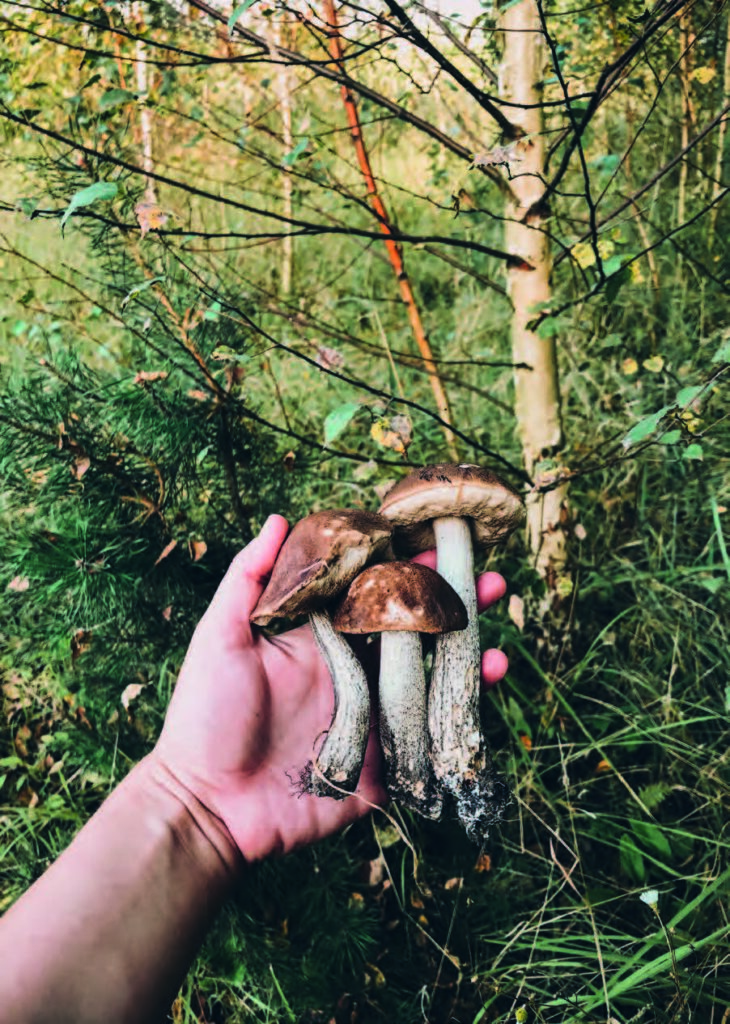


    Resources/Links

    Brought to you by

    Murray McMurray

    Trusted since 1917, this Iowa family operation hatches premium poultry for homesteaders and enthusiasts, delivering healthy, hand-packed birds and all the supplies you need to start your flock right โ€ฆ

    mcmurrayhatchery.com

    Azure Standard

    Family-owned since the โ€˜70s, Azure delivers real food to your doorstep or a local drop point.

    Completely organic, non-GMO, no junk additives โ€ฆ

    azurestandard.com

    Homestead Living Magazine

    This Episode of The Coop is brought to you by Homestead Living magazine.

    More than just a publication, Homestead Living is your go-to homesteading mentor, filled with advice, wisdom, and inspiration for homesteaders by homesteaders.

    homesteadliving.com/homestead-living-magazine

  • No-Wait Sourdough Pancakes

    These have become a breakfast staple in homes all over the world, as evidenced by all of the IG tags I get with this recipe.ย ย 

    No-Wait Sourdough Pancakes

    Print Recipe Pin Recipe Rate Recipe

    Ingredients

    • Sourdough Starter
    • 2 Eggs
    • ยผ cup melted butter
    • 2 tablespoons honey
    • ยฝ teaspoon of salt
    • 1 teaspoon of baking soda

    Instructions

    • Combine 2 cups of sourdough starter, 2 eggs, ยผ cup melted butter, 2 tablespoons honey, ยฝ teaspoon of salt, and 1 teaspoon of baking soda.
    • Grill in a cast-iron skillet, and top with syrup and butter.

    Notes

    We switch this recipe up by adding blueberries, bananas, pumpkin puree, pumpkin spice, or dark chocolate chunks.
    Tried this recipe?Mention @homesteadlivingmagazine or tag #homesteadlivingmagazine!

    Crepes, waffles, and dutch baby pancakes are some more no-wait staples for our breakfast menu. You can get those recipes in my free sourdough ebook.ย ย ย 

  • No-Wait Sourdough Pizza Recipe

    This crust requires no rising and no forethought. All you need to do is keep a large jar of starter in stock. We make basic pizza interesting by switching between mozzarella, cheddar, goat cheese, or some combination of the three. We sometimes use tomato sauce or get fancy with fig jam or chili date sauce. Herbs, pastured bacon, and seasonal veggies usually make their way on as well. The variety and lack of prep time keep this on the menu year-round.ย 

    No-Wait Sourdough Pizza

    Print Recipe Pin Recipe Rate Recipe

    Ingredients

    • sourdough starter
    • olive oil
    • salt

    Instructions

    • Preheat a cast-iron skillet or pizza stone to 450 degrees
    • Spread sourdough starter on the preheated stone in a thin layer, using the back of a wooden spoon to create a circle
    • Drizzle with olive oil
    • Sprinkle with salt
    • Bake for about 10 minutes, or until the crust pulls away from the skillet or stone
    • Top with sauce, cheese, and other delicious toppings of your choosing
    • Bake at 425ยฐ for an additional 10 minutes, or until the cheese is good and melted
    Tried this recipe?Mention @homesteadlivingmagazine or tag #homesteadlivingmagazine!
  • Why Heritage Sheep Belong on the Homestead

    Looking at history to learn why protecting these breeds is necessary

    Raising Heritage Sheep is one of the surest bets shepherds have to keep a healthy and successful flock if they will take the time to research and find sheep bred to succeed in their area. Heritage sheep often have disease-resistant characteristics and are weather hardy to certain climates. Heritage breeds also share a deep connection to the Revolutionary War as sheep raising and wool manufacturing were two rights England outlawed. Understanding their history will empower you to best select a strong and valuable breed for your farm, as well as, connect you in efforts to preserve our nationโ€™s past. 

    What are Heritage Sheep?

    According to the Livestock Conservancy, โ€œHeritage breeds are traditional livestock breeds that were raised by our forefathers.โ€ The Conservatory lists 24 North American Breeds they are watching. These breeds have been raised since pre-industrial times and are true to type. Each generation retains the traits of its forebears. 

    โ€œWhile there are other breeds also known as Heritage Breeds the only true way to define them is by researching when they were brought to the United States. If they were brought in the Pre-Industrial time (before 1850), they are considered by many as Heritage Sheep,โ€ says Cindra Kerscher Program Director at the Livestock Conservancy. 

    Benefits of raising Heritage Sheep

    These breeds were carefully selected and bred over time to develop traits that made them well-adapted to their local environments. Traditional historic breeds retain essential attributes for survival and self-sufficiency โ€“ fertility, foraging ability, longevity, maternal instincts, ability to mate naturally, and resistance to diseases and parasites.

    Origin of Sheep in the U.S.

    In the United States, there are currently about 60 breeds of domesticated sheep. Worldwide, the number is closer to 1,000. There is no record of sheep being in the colonies before they formed. Understanding History will explain why the U.S. has such a limited number of breeds compared to the world.

    In the 1400s the wool industry provided funding for Queen Isabella of Spain to send Columbus and other conquistadors to the New World. Beginning in 1519, Cortez took sheep with him that were offsprings of Columbusโ€™s sheep. These became what we call the โ€œNavajo Churroโ€ sheep and are considered the oldest breed of sheep in the U.S., followed closely by the โ€œGulf Coastโ€ breed native to Florida.

    During the 16th and 17th centuries, England tried to discourage the wool industry in the American colonies. Nonetheless, colonists quickly smuggled sheep into the colonies and developed a wool industry. By 1664, there were 10,000 sheep in the colonies and the general court of Massachusetts passed a law requiring youth to learn to spin and weave.

    As this industry began to bring success to the colonies, England became outraged and in 1698 they outlawed the wool trade making it punishable by cutting off the offenderโ€™s right hand. Spinning and weaving were considered patriotic acts that colonists sought to defend in the Revolutionary War. 

    Once these rights were secured, sheep became a staple of the U.S. industry. Many presidents adorned wool coats produced from the sheep they raised. President Woodrow Wilson even grazed sheep on the White House lawn. From the revolution onward, sheep were domesticated and moved throughout the states by early settlers and pioneers.

    Categorizing Heritage Sheep

    Sheep are prized for their wool and their meat. Wool is a natural, renewable product with a combination of practical and aesthetic characteristics unmatched by synthetic materials. It is strong, durable, elastic, warm, absorbent, and flame resistant. Different sheep breeds produce a variety of wool qualities. Wool is defined by four characteristics; long wool, medium wool, fine wool, and hair sheep โ€” all with different product purposes. Meat sheep tend to grow large and stout fairly quickly. Some breeds do not lose taste as the sheep age, which is a desirable trait for meat farmers. If your intent is to butcher for meat, you will need to look for breeds specifically bred to be best for meat. There is also a category of sheep referred to as โ€œdualโ€ which produces both high-quality wool and meat. 

    These lists are categorized by The Livestock Conservancy on Heritage Breeds which are known to be true heritage sheep and are on the conservancyโ€™s watch lists. 

    Heritage Wool Sheep

    • Shetland, Black Welsh Mountain, Jacob, Leicester Longwool, Lincoln, Santa Cruzย 
    • Heritage Meat Sheep
    • St. Croix, Shropshire, Southdown, Tunis, Wiltshire Horn, Barbados Blackbelly, Florida Cracker, Gulf Coast or Gulf Coast Native, Hog Island, Oxford
    • Heritage Dual Sheepย 
    • Teeswater, Clun Forest, Cotswold, Dorset Horn, Navajo-Churro, Romeldale/CVM, Soay, Karakul

    Heritage Sheep Based on Climate

    Climate must be a factor when selecting sheep for a farm. The Livestock Conservancy also lists ideal species according to weather. 

    • Hot/Humid: Barbados Blackbelly, Florida Cracker, Gulf Coast or Gulf Coast Native, St. Croix
    • Hot/Dry: Romeldale/CVM, Santa Cruz, Willshire Horn
    • Cold/Damp: Black Welsh Mountain, Soay, Shetland
    • Cold/Dry: Karakul, Navajo-Churro, Soayย 
    • Temperate: Shropshire, Southdown, Teeswater, Tunis, Jacob, Leicester Longwool, Lincoln, Oxford, Clun Forest, Cotswold, Dorset Horn

    The Danger Facing Heritage Sheep 

    Heritage breeds are considered โ€œrareโ€, which seems surprising considering they have been in the U.S. for the longest amount of time. But these breeds donโ€™t easily fit into todayโ€™s modern agricultural model. Newer breeds can be fed and fattened quicker than heritage breeds, which allows the new breeds to get to market faster.

    Additionally, in our current industrial society wool is rapidly being replaced by cheap petroleum-based synthetic fibers in many of todayโ€™s markets. These faux fibers are winning because they are faster and cheaper to produce in bulk. However, heritage-breed wool is far more sustainable and safer for both the consumer and the earth. Educating people on the importance of wool quality should be a message heritage breeders work to advance.

    Several heritage breeds are listed on levels of the endangered list. Choosing a breed based on its level of extinction is a great way to do your part in carrying on the history of heritage breeds. 

    Spotlighting Southdowns

    At Porter Valley Ranch we raise a variety of Southdown Sheep, called Olde English Babydoll Southdowns. Southdowns were believed to be the first sheep of Jamestown in 1640. Meanwhile in England, the breed was improving with goals to bring the sheep into maturity sooner and produce better quality meat. Because of these improvements, Southdowns began to contribute to the foundation stock of other down breeds: Suffolk, Hampshire, Oxford, Dorset Down, and Shropshire.

    The new and improved Southdowns were imported to the U.S. between 1824-1829. The Southdowns quickly gained popularity because they were prolific mothers, had the finest quality of wool, and could be brought to market between 12-15 months โ€” which was earlier than most other sheep at the time. Soon the Southdowns were bred intentionally smaller because refrigerators were so small at the time that only one sheep could fit inside, and this saved families from wasting the valuable meat from larger sheep.

    By the 1960s Americans were promoting โ€œbigger is betterโ€ and Southdown sheep lost popularity. In the 1990s Robert Mock began to seek out the smallest Southdown sheep and breed them as โ€œOlde English Babydoll Southdowns” and formed a registry known today as OEBSSR โ€” Olde English Babydoll Southdown Sheep Registryโ€” which is still owned by the Self Family. In 2003, a national registry began as a publicly-owned, board-governed association and registry known as NABSSAR โ€” the North American Babydoll Southdown Sheep Association and Registry. 

    โ€œBabydolls are a rescued version of the Heritage Sheep Southdowns,โ€ says Josh Porter at Porter Valley Ranch. โ€œThey have gained recent popularity on social media platforms and on small farms recently because they are a great size and have a teddy bear look everyone is falling in love with. But what we love on our farm is their history. Knowing they were on the homesteads of immigrants, pioneers, settlers and bred for purposes that fit those times so perfectly is a daily reminder of how this country began. We feel connected to those times by doing our part to keep the breed going.โ€ Porter Valley Ranch is a 17-acre farm in Oklahoma raising Babydolls, Harlequin Sheep, Chickens, and Ibex. 

    Porter Valley Ranch raises babydolls for other reasons, one being that this breed of sheep is a great addition to farms with just a few acres. Five Babydoll Ewes and their lambs can be raised on just one acre of land of grass pasture. Their docile nature is great for families with children who are eager to be involved. The sheepโ€™s small structure and their naturally polled horns make handling the animals much easier than several other breeds. They are very hardy in both the cold and heat and they normally have multiples at birth. 

    Spotlighting Tunis 

    Tunis are another one of the oldest breeds of sheep developed in the United States. In the late 1700s, a few Tunis sheep were sent to George Washington as a gift from the Bey of Tunis. John Adams, Thomas Jefferson, Richard Peters, Charles Roundtree, and George Washington Custis recorded letters, journals, and farm records with notes about raising the Tunis breed.

    The breed nearly went extinct during the Civil War, however, one flock was saved and hidden in South Carolina along the Congoree river near Columbia by a man named Maynard Spigener. After the war, the great lakes region and New England became strongholds for the breed and eventually the breed repopulated throughout the Southeast.

    In Fishers Indiana, Conner Prairie is a Smithsonian affiliate and member of the Livestock Conservancy, offering various experiential learning spaces with an authentic look into history. In Conner Prairieโ€™s Animal Encounters Barn, Tunis sheep are featured.

    โ€œWe currently have 30 Tunis sheep,โ€ explains Director of Agriculture Initiatives Stephanie Buchanan. โ€œOnce a year we host a Heritage Breeds Week, where we have various textiles and wool processing demonstrations with hands-on activities highlighting what makes wool from heritage breed sheep so unique.โ€ Their Annual Heritage Breeds Week features cattle, poultry, sheep and goats. Guests are allowed to interact with animals and learn more about their important role in United States history.

    Preserving Heritage Sheep

    The Livestock Conservancy prioritizes endangered sheep by numbers known through registries on their Conservation Priority List. They list them as study, recovering, watch, threatened and critical. In an effort to reward breeders and fiber artists for furthering Heritage Breeds by using their wool, they created the program, โ€œShave โ€˜Em to Save โ€˜Em.โ€ 

    This program recognizes fiber artists who use wool from breeds on their Conservation Priority List while connecting shepherds of heritage breeds with customers. Because of marketing challenges, some shepherds discard or compost the wool after their annual shearing rather than cleaning it and selling it. This program encourages fiber artists to try using rare wools, educates shepherds on how to prepare their wool for sale, and connects the two markets.

    Are You Interested in Raising Heritage Breeds?

    Heritage Sheep Farming comes with a host of enthusiasts. If you choose to take on a breed there are several organizations and individuals passionate to help you in your journey.

  • Spring Foraging Guide: Nettles, Dandelions & Wild Edibles

    The winters in Alaska are long and dark so when the days start to lengthen, and a hint of warmth returns to the air, we start dreaming of lush, green meadows and forests.  We hunt protein and we grow, gather, and preserve as much produce from the garden as we can during the summer and fall, but inevitably, we must buy some greens, fruit, and other various items from the store. At the end of the road in Alaska, most of the lettuce we buy is half-rotten and has had a long hard journey to land on our shelves. So, by the time the earth is surfacing from its long winter slumber and the days are getting longer, we are desperate for something fresh, green, and nutrient-packed.  For us, spring is the best time of year for wild edible foraging, and are we ever thankful for the moment those first nettles appear under all the dead plant debris. 

    Wild plants often have a higher concentration of vitamins and minerals than domestic vegetables because they havenโ€™t been cultivated for their size and hardiness. There is simply more dietary diversity in wild plants versus cultivated foods. My husband and I always remark how invigorated we feel after a meal of foraged spring plants; theyโ€™re just what the doctor ordered at the end of a long winter.

    Some of our favorite wild edibles in the spring are nettles, dandelions, watermelon berry shoots, devilโ€™s club shoots, fireweed, and succulent beach greens like an oyster leaf and sea chickweed. We are also lucky to have the high tunnel where most of the weeds are edible and sprout early because of the warm, snowless environment. Our first meal of wild edibles in the spring is usually steamed nettles with butter drizzled on top. Even the kids devour them ravenously. Our bodies crave them and canโ€™t get enough of these nutrient-dense plants. 

    Nettle Foraging Tips

    When picking nettles or processing nettles, you will want gloves because they have tiny hairs that will sting you and make your hands quite uncomfortable. However, once you cook or dehydrate nettles these little stinging hairs are destroyed. 

    The only time you want to harvest stinging nettles is in the spring when they are no taller than 6 inches. As nettles age, they lose much of their healthful benefits and become slightly toxic.  Every spring I try to gather large quantities of nettles so that I can dry them and put them in bread, soups, and tea all winter long for an added boost of iron, calcium, and other minerals. 

    Dandelion Foraging Tips

    Dandelions are another nutritious wild edible that is best harvested in the spring. They contain iron, calcium, magnesium, zinc, potassium, and vitamin B and C. I would say this is one of the holy grails of nutritious plants to eat, so think twice before eradicating these healthful beauties from your lawn. Every part of this wonderful plant is edible. Dandelion roots must be harvested early in the spring and can be sautรฉed in butter or made into tea. 

    The roots of the plant are the most nutrient-dense, but also somewhat bitter. The leaves have a milder flavor and are a great addition to most any salad. The dandelion petals are the kidโ€™s absolute favorite because they are naturally quite sweet and floral. As soon as they see the first yellow buds appear in the spring, they are begging for Dandy Cakes every morning. The great part of this is that they must run around outside gathering the petals and I get a few minutes of peace in the morning to drink my coffee. 

    I was raised by two biologists, so knowing the plants and animals around me is natural. Of course, I realize this knowledge and our lifestyle is not common, but foraging is something most anyone can learn. You can become a little less dependent on the local supermarket and also gain a better understanding of the environment around you. Foraging also helps cultivate a natural desire to steward the land with respect and forethought. Because we have learned where the first nettles of the season come up under the big rock in the lower meadow, we are motivated to treat this place with reverence. This is where the land will first feed us in the spring, so it must be cared for. 

    I want to teach my kids how to respect the natural world and recognize the effect we have on the world around us. If you pick too many watermelon berry shoots there wonโ€™t be any berries come summer or shoots next spring. Foraging builds a conservation mindset: yes, take some, but leave some too so this place can provide more for next year.

    When cooking with wild edibles, it can feel overwhelming or baffling as to how to use them. They all have a distinctive flavor, but most can be compared to other vegetables we use regularly. It takes some experimentation. I think foraging for and cooking with wild edibles requires us to tap into our adventurous spirit (by definition: a willingness to take risks or try new methods, ideas or experiences).

    Something I enjoy doing with any wild edible is to think about what it most closely resembles in taste and texture and then trying to integrate it into my favorite recipes. If Iโ€™m feeling adventurous, I will write a new recipe (my family can tell you some of these have been a terrible flop!) but eventually, I figure it out and create something wondrously unique. I am in love with creative food, and I always feel so much gratification if I can create something new and delicious. 

    Do I always have time for this? 

    Absolutely not; many times I just steam some greens, put butter and salt on them, and call it good. In my cookbook, Homestead Kitchen, I have a few recipes that we have developed utilizing some of Alaskaโ€™s wild edibles. One of the kidsโ€™ favorites is Dandy cakes.

    I want to make sure that people take the utmost care when foraging for any wild edibles. There are many plants that are harmful to humans. There are few look-alike plants and fungi in Alaska that I simply stay away from because the consequences of eating the wrong plant are severe.

    A good plant identification book will point these out to you, so it is imperative to do your homework before foraging. Another thing to keep in mind is to make sure you are gathering from places with unpolluted soil.  But donโ€™t let any of these things discourage you! Most plant identification is very straightforward and easy. 

    This type of gathering is so beneficial for your health and is more sustainable for the planet if done with care. Not to mention it is like going on a treasure hunt and kids are so quick and eager to learn these skills because they are instantly gratifying. You will be surprised what kids will eat if they are involved in the process of foraging for it. I hope this will provide a little inspiration to adventure out into your backyard โ€” or perhaps beyond โ€” to see what plant treasures are waiting to be discovered. 

    More recipes can be found on in our full-color cookbook Homestead Kitchen.

    Also read Dandy Cakes recipe.

    Homestead Living Recommends

  • Dandy Cakes

    When cooking with wild edibles, it can feel overwhelming or baffling as to how to use them. They all have a distinctive flavor, but most can be compared to other vegetables we use regularly. It takes some experimentation. I think foraging for and cooking with wild edibles requires us to tap into our adventurous spirit (by definition: a willingness to take risks or try new methods, ideas or experiences).

    In my cookbook, Homestead Kitchen, I have a few recipes that we have developed utilizing some of Alaskaโ€™s wild edibles. One of the kidsโ€™ favorites is Dandy cakes. 

    Also read Spring Foraging Guide: Nettles, Dandelions & Wild Edibles

    Homestead Living Recommends

    Standup Weed Puller

    Servings: 10

    Ingredients

    • 1 cup tender young dandelion petals just the yellow and white parts, no green bits
    • 1 cup whole wheat flour
    • 1 cup buckwheat flour
    • ยผ cup old-fashioned rolled oats
    • 2 teaspoons baking powder
    • ยฝ teaspoon baking soda
    • ยฝ teaspoon salt
    • 2 cups buttermilk
    • 1 cup goatโ€™s milk
    • 2 large eggs
    • 1 tablespoon honey
    • ยผ cup coconut oil
    • Grapeseed oil for the pan
    • Maple or birch syrup for serving

    Instructions

    • In a large bowl, whisk together the dandelion petals, flours, oats, baking powder, baking soda, and salt.
    • In a separate bowl, whisk together the buttermilk, goatโ€™s milk, eggs, honey, and coconut oil. Add the wet ingredients to the dry ingredients and fold together until just combined.
    • Coat a large, well-seasoned cast-iron skillet with a thin layer of grapeseed oil and heat over medium heat. When the pan is hot, pour about 1 1/3 cup of the batter into the pan for each cake.
    • Cook until bubbles begin to form on the surface and the edges start to turn golden. Flip and cook until the bottoms are golden. Transfer the pancakes to plates and serve hot with syrup or rhubarb sauce.

    Notes

    Recipe Note: If you harvest the yellow petals of dandelions within a week of their first opening in the spring, they are deliciously sweet all on their own.
    Tried this recipe?Mention @homesteadlivingmagazine or tag #homesteadlivingmagazine!
  • The Coop Episode #17: The Real, Messy Truth About Modern Homesteading w/ Eve Kilcher

    Eve Kilcher is no stranger to homesteading life. 

    As a former star on Discovery Channelโ€™s Alaska: The Last Frontier and a dedicated homesteader herself, sheโ€™s lived the reality of trying to balance it all: growing food, raising animals, and managing a homestead while also juggling the demands of modern life.

    In this honest conversation, Eve and host Anna Sakawsky talk about the gap between the romanticized version of homesteading we often see online and what it actually feels like day to day โ€ฆ especially in Alaska, where summer is short and manic and winter is the complete opposite.

    This conversation is about the realities of dealing with overwhelm as a modern homesteader, the hard choices we have to make sometimes, and the beauty of learning to let go when something no longer serves you.

    Eve shares her decision to get rid of her goats this year, the mental juggle of motherhood and homesteading, how she and her husband, Eivin, have compromised and made tough decisions on what to keep and what to let go of, and why she believes community and working together is more important than trying to do it all alone.

    If youโ€™ve ever felt the pressure of trying to keep up with homestead life while dealing with all of the other demands of modern life (especially while watching other people online make it look so easy), this episode is for you.

    In this episode, Anna and Eve discuss:

    • Why homesteading can feel like itโ€™s at odds with modern life
    • The manic pressure of summer in Alaska and vs. the slow, dark winter months
    • The emotional decision to let go of animals and projects for mental peace
    • The mental juggle of motherhood and homesteading
    • Why community and working together is more important than doing it all alone
    • Finding peace with imperfection and truly letting go
    • The realities of navigating tough decisions with a spouseโ€”especially when you disagree
    • What life is like on their 40-acre homestead bordering the larger Kilcher family land

    About Eve Kilcher

    Eve Kilcher is a homesteader, mother, and former star of the Discovery Channel show Alaska: The Last Frontier. She and her husband Eivin live on 40 acres bordering the larger Kilcher family homestead in Homer, Alaska. Together they raise animals, garden, preserve food, and are now building an online community to help others navigate real homesteading life alongside them.

    The show notes โ€ฆ

    00:00 – Introduction
    07:31 – Family and Homestead Setup
    17:38 – Challenges of Alaskaโ€™s Seasons: Winter vs. Summer
    26:32 – Tension Between Homesteading and Modern Life
    37:17 – Paring Back the Garden
    44:23 – Losing a Favorite Milk Goat
    48:19 – Eveโ€™s Reasons for Wanting to Homestead
    51:01 – Navigating a Homestead as a Couple
    59:35 – Balancing Motherhood and Homesteading
    01:09:06 – Balancing Showing Up Online and Getting Work Done
    01:15:32 – How Would You Define Homesteading?
    01:24:22 – Upcoming Projects & Where to Find Eve

    Episode Transcript

    Eve Kilcher:

    I feel like homesteading really needs to be more about community and all working together. It is the being truly being okay when a crop rots in the field because I don’t have time to deal with it and that’s okay.


    Anna Sakawsky:

    What’s wrong with me? Why can’t I do it? That person’s doing it. But usually again, we’re only being shown one side of it.


    Eve Kilcher:

    But we had my favorite milk goat dye. We don’t have a vet that can just be there and help us or do a C-section. We didn’t have a lot of options. I know we weren’t at fault, but it just was one of those things where I was like, sorry.


    Anna Sakawsky:

    Yeah. Oh no, not all. I mean, it is though. It is emotional and this is the real raw part. This episode is brought to you by Azure Standard. Family owned since the 1970s, Azure Standard is on a mission to make real food more accessible by delivering it straight to your doorstep or to a convenient local drop point near you. Everything they offer is completely organic, non- GMO, and free from junk additives you don’t want in your home or in your body. With more than 13,000 carefully vetted products, Azure Standard makes it easy to stock up on what really matters from bulk grains, nuts, and healthy oils to fruits and vegetables, frozen meats, pantry staples, and even clean household goods. And the best part is you skip the grocery store markup. You can order exactly what your family actually needs, save big on high quality food, and pick it up alongside neighbors who care about the same things you do.

    Health, sustainability, and supporting ethical producers. You head to azurestandard.com right now to get started. Again, that’s azurestandard.com. Well, hello everyone and a welcome to episode 17 of The Coop. My name is Anna Sokowski and I am the editor-in-chief of Homestead Living Magazine. And today I’m joined by a very special guest for some real talk about what it actually means to homestead in the 21st century and balance homesteading with all of the demands of modern life because so much of what we see nowadays online paints this perfect kind of bucolic picture of homesteading. Too often, we have this image of a woman in a long flowing prairie dress out in her garden with a gaggle of children at her feet, eating carrots out of the ground and tomatoes fresh off the vine. And maybe there’s a loaf of freshly baked bread cooling on the counter of a spotless white kitchen with fresh cut flowers and a vase and baby goats, somehow very clean baby goats, looking very photogenic in an oversized farmhouse sink.

    And maybe dad’s a skilled handyman fixing and building things around the homestead while the kids trail along, apprenticing at his side. And in the background, cows are moving and chickens are clocking and everyone lives happily ever after in harmony with the land and the rhythm of the seasons. And honestly, who wouldn’t want a life like this? If only it could be so romantic all the time. But the reality is that homesteading can be and often is messy and frustrating and overwhelming and hard and stressful. It doesn’t exist in a vacuum. It happens alongside all of the other demands and curve balls of modern life, and it can easily become just one more very big thing on an already overflowing to- do list. Kids have school and extracurriculars. Parents may be juggling one or more jobs. Outside the home, emails still need answering, businesses and careers need attention, bills need to be paid.

    And all of that exists alongside the planning, planting, building, harvesting, preserving, and everyday attending that a homestead requires. So on this episode of The Coop, I am honored to welcome Eve Kilcher for a conversation about overwhelm and finding that ever-elusive balance as a homesteader and about the heart and often emotional work of deciding what to keep, what to let go of and what enough really looks like. So if Eve’s name sounds familiar, it may be because she was one of the stars of the Discovery Channel show, Alaska, The Last Frontier. This is actually one of the shows that got my husband and I into homesetting in the first place back when we were still living in a city condo. And even though it was reality TV, which kind of comes with its own stigma, like how much is actually reality. But the kilters always felt very genuine to me.

    And I know from reading lots of comments online that that is the way they were perceived by much of their audience. They were never overly polished, never pretended that Homestead Life was easy or idyllic all the time. So we also featured Eve and her family, including the story of the Kilcher Family Homestead back in the January 2025 issue of Homestead Living. And we featured that story in our fourth annual collectors edition. So if you missed it, you can go to homesteadliving.com to get your copy. But today I’m excited to have Eve here to talk about the very real issues of managing stress, overwhelm and burnout as a modern homesetter, as well as how to scale back, set realistic expectations and still enjoy the journey even during the busy season. So Eve, welcome to the show.


    Eve Kilcher:

    Hey, thanks for having me.


    Anna Sakawsky:

    So I will say, just before we get into all of this, because I could easily kind of just ask you, what’s the answer here? Give us some strategies, give us some tips. And I don’t want to overwhelm you thinking like you have to have all the answers right now because you’re only human too. And I know that these are some things that you’re still trying to figure out for yourself. So I really just want this to be just a real conversation about like, what are some of the actual challenges? Because especially nowadays with so many people sharing their lives online and sharing the homesteading thing, people only want to share the good parts. And sometimes like with reality TV, we’re only curating certain aspects of it and it can set a really unrealistic expectation for other people who want to genuinely live this lifestyle. So I just really want to just be really real about what that looks like for you and all the messy parts of trying to figure it out.


    Eve Kilcher:

    Well, I think the number one is the answer always changes. If we can count on one thing in this life, it’s things will always change. And I think the more we can find our peace with that and find resilience in change and know that this works right now, but might not work later, I can change my mind, like I can get rid of the goats now, but that doesn’t mean I never get goats again. I think that overarching psychology is the answer. The answer will always change. I’m like …


    Anna Sakawsky:

    Totally. And you’re right. I think as soon as we embrace that a little bit, like I’ve even been saying that to my husband lately, we’re in a season similar to probably where you are just because of the stage of our lives and we’re building and we’ve got a young family and all these things. And it’s hard sometimes. I’m like, “But this is a season two. This will also not last forever.” And we have to remember that I think so many of us can kind of get caught up in the here and now and think it’s always going to be this way or it always has to be this way and then it can be really hard when.


    Eve Kilcher:

    Right.


    Anna Sakawsky:

    Well, before we dive into all this, I do want to just start by having you just paint a picture of your homestead and life because maybe people out there who don’t know you, maybe didn’t watch the show, aren’t familiar with your story. So just kind of give us an idea, where exactly are you located? Who makes up your family there? So your immediate family, but also I know that there’s kind of some extended family in your area and what does your overall setup look like? So how much land do you guys have? What kind of animals do you raise? What does your gardening setup look like and so on?


    Eve Kilcher:

    Yeah. So we live about 11 miles outside of the city of Homer, or not city at all, the small town of Homer, Alaska. So we have convenience limited because it is a very small town of the whole surrounding area, I believe, including where we live is about 30,000 people, but that’s a very large area. That is not the actual town of Homer. So we have some level of convenience. So our homestead, we live on a piece of 40 acre parcel that is owned by Ivan’s father and who bought it long ago for a great price. And it borders the Kilcher Homestead proper. So that is the homestead that Ivan’s grandfather came to during the whole season when you could come and you could stake your claim on some property and truly homestead, according to the Homestead Act, you better the property than you apply to then own the property.

    And that is the piece of property that we adjoin. That is a 600 acre piece and that is in … It’s all quite complicated and I won’t get into it too much, but there are various nonprofits and boards that manage that. And Yule was very smart and put it in the land trust here in Homer so the taxes are not exorbitant on it, but then with that comes limitations of what you can and can’t do with the property and all of that. So we basically border that. That is rolling Haymeadows down to a beach and is with incredible forests and the old Yules old homesteading site on it and various other little buildings. So we kind of have our own little site over here, little homestead of our own, but it, like I said, borders a very much larger homestead where we get our hay from our animals and do the hang and help out as we’re able with all the things that are needed over on the other homestead.

    But we also have our own autonomy here.


    Anna Sakawsky:

    Nice. And I mean, it’s absolutely beautiful. For anybody who hasn’t seen the show, either go back and check out some past episodes or you can check Ivan and Eve out online on their YouTube channel. I’m giving you kind of early plugs. We’ll talk about this at the end too. You guys have a YouTube channel and a website. And of course, there’s some beautiful photos that we got for the magazine as well, but it’s absolutely gorgeous, idyllic looking life for sure, but obviously still works. So on your property, you guys have 40 acres and what kind of animals are you currently raising? How many of them? And yeah, let’s talk about like, you do a lot of the gardening, I know specifically Eve, so how big is your garden? What all are you managing there?


    Eve Kilcher:

    Yeah. So what I am managing and I end up managing a lot of the homestead lifestyle because as we all know, homesteading is not a big money making endeavor. And when we were no longer being paid to homestead, a. K.a. Discovery paying us to do what we do, we also have to come in and make other money. Somebody has to make more money. And so Ivan has a heavy equipment, construction business, runs heavy equipment. And so a lot of the homesteading falls on me. The gardening, the taking care of the animals, the general, just all that that entails. Of course, he steps in and helps. There are many things that I can’t do on my own, all of that. So what we have here is we have anywhere from two to four horses here. We auto has horses, we have a couple horses, and then we have two goats right now, have had more at different points in time.

    We have probably about 20 chickens, that number varies. Three Holland Lop pet lunies. We have two dogs, two cats, and what else do we have? I think that’s it. Two


    Anna Sakawsky:

    Kids. Two kids is an important


    Eve Kilcher:

    Part


    Anna Sakawsky:

    Of managing that homestead, I’m sure.


    Eve Kilcher:

    Two kids. The most important part to manage the topic priority list. Yeah, two kids. My mom lives here in our basement. We have a daylight basement and has lived here for quite a while now. And she helps out as well with … She’s helped out with kids when they were younger and helps out a lot with the farm now. So we have ebbed and flowed a lot with having ducks or all kinds of animals. We have moved a lot of animals through here and yeah, I’ve gotten rid of things. I’m always dreaming of something else, but that’s kind of currently what we have going on.


    Anna Sakawsky:

    And then your garden. Let’s talk about your garden in the summer because you do the lion’s share of the gardening, from what I understand.


    Eve Kilcher:

    Yeah. I do all the gardening. Ivan just helps with any infrastructure that I need or any real heavy lifting. You’ll help with harvesting all the potatoes when there’s a huge project. We all work together on that and do it together. But most of the time I’m doing all of the gardening and general maintenance associated with that. I’d say I probably garden about an acre or an acre and a half worth of land. It’s all very spread out in different places. We have a big orchard, so I’m kind of counting that in there. And then I have a high tunnel that’s 30 by 72 feet. And then I have a big outside garden area that has a lot of my storage crops, cold weather crops. And then I have a big potato patch that’s quite expansive, probably about 30 by 70 feet as well, kind of depending.

    And then there are other little plots of things here and there that I plant as well. So that’s the extent of the gardens.


    Anna Sakawsky:

    And then are you growing all of that for your family or are you … I know for a while anyway, I think you were doing a CSA or the farmer’s market. Are you selling any of that or is it all mainly for you guys?


    Eve Kilcher:

    It is for me now. I share a lot of it. I’ve gardened with friends of mine that wanted to learn more about gardening from me, like other families. And I’ll donate a lot of excess to our Haven house here, which is like, it’s basically a place for women to go if they’re in a bad situation. Also, I’ll donate to our food pantry when I have extra. So I used to, this all began really and how we ended up being on the show was I took a permaculture course right out of college in Hawaii, got very inspired about growing food, being more self-sufficient and doing it in a more sustainable ecological way. And then I came home and my stepmother has a 40 acre parcel that also borders a different edge of the homestead. And I started a CSA, just a little one for the neighborhood on there.

    And so I just had like, I want to say eight families, and that’s where it began. I slowly grew up bigger and bigger as I learned more, as I felt more confident and just basically grew my gardens from there, eventually selling at the farmer’s market in town, always maintaining my CSA to kind of help with the overhead and growing the CSA. And then that was inevitably actually how we, one of the avenues that Discovery found us and then the Kilcher family as a whole.


    Anna Sakawsky:

    Right. Okay. Okay. And so, but now you’re kind of doing it mostly for your family, which I guess in some ways it takes a little pressure off of having to produce to sell, but at the same time, that probably means that you do a lot of preserving, that you end up with a lot of produce at the end of the season that you feel like you need to do something with less that all go to waste, right?


    Eve Kilcher:

    Yeah, totally. Totally. And


    Anna Sakawsky:

    Well, and speaking of the seasons, and I know we talked about this before when we featured you in the magazine, but Alaska’s seasons are so pronounced, right? You guys have these long, dark, very snowy winters and then these short, hot summers, this kind of really short … I think on one of your YouTube videos, which I’ll talk more about in a minute because it’s kind of what led to this interview in the first place, but Ivan had called it, said something about it feeling like it’s manic depressive, right? Yeah, the kind of opposites of summer and winter there, and that in the summer you’re just kind of frantically trying to get everything done. So I imagine that that already sets a lot of the rhythm and pace for the year for all Alaskans and especially as homesteaders, right? Yeah.


    Eve Kilcher:

    Yeah. Yeah. It is really intense and everyone feels it, not just people that are gardening. It’s also the season to make money. Homer is very much a tourist town, so all … I mean, everyone is under the same pressure, kind of no matter your avenue of making money. Fishermen, same thing. It’s just like we have lots of fishermen here and they have their fishing season and everything hinges on these literally three months. And you need to make the majority of your income within those three months or grow all your vegetables and get it all put up in those three months. So there is a lot of pressure. It’s also like the most beautiful epic time of year when you want to be out recreating, doing all the things, hiking, adventuring, going out on the boat, fishing. And so it’s like all the things need to happen in this extremely tight timeframe.


    Anna Sakawsky:

    Yeah. No kidding. Well,


    Eve Kilcher:

    Yeah, the long winter has its whole other set of challenges.


    Anna Sakawsky:

    Right. Well, I was going to ask that at first when I was kind of writing up my questions, I wanted to ask you what is an average day in the life, but I know that that’s almost impossible to answer because that changes throughout the year. And obviously it changes with the seasons of life too, which we’ll talk about in a sec. But just throughout the year, can you give us an idea of how that contrasts? What does an average kind of winter day look like for you versus a day in the summer when you’re trying to get everything done and put up before the snowfalls?


    Eve Kilcher:

    Yeah. Yeah. So summer, first and foremost, just the nature of summer here is so manic because it never really gets dark in the peak. So you’re driven, like your body, your whole biology is driven by that. So you can go these long 12, 13, 14 hour days and not stop simply driven by that it doesn’t get dark. There’s nothing that indicates to your body, “Okay, it’s time to be done, go to bed.” So we do pull a lot of really long days in the summer and then winter is the exact opposite. You have like three or four hours to do what you need to do to get outside for your mental health, exercise, fresh air and then … So we do all the outside things and all those things in the summer, like fishing and recreating and gardening and yeah, all that happens in the summer and then all that comes to a screeching halt.

    And then you have to like little whiplash and you’re like, okay, now it’s cold, the ground’s frozen, everything’s put away. Now we have to figure out how to slow down and yeah, what do we do in the winter? And I mean, a lot of what I do and what a day looks like, I could say in the winter for us is we’re doing a lot of more like working on the back end of our business, computer work, coming up with other ways to make income in the winter when it’s harder for even to do heavy equipment and all the things that we would normally do in the summer. And so a lot of that’s happening, a lot of like non-glorified computer work and like planning. And then I preserve a lot in the winter. So I do a lot of like just down and dirty, like get the thing processed and like in the freezer or however that looks and then later come back to it and actually like make jam from the frozen berries or can all those frozen tomatoes.

    A lot of that does not happen in the summer and doesn’t need to. So like a lot of people imagine and have this visual of like, you’re just preserving and canning and doing all these things in the fall. And I’m like, oh, heck no. I am literally like still in survival mode trying to get everything in before it breezes and like preserved in a capacity that it will last until I have a hot minute to actually have this like luxury to spend the time to make the jam and like do the thing inside.


    Anna Sakawsky:

    Well, that’s a really good tip just there, right? To just do what you need to do to get it preserved, get it in a form where it’s not going to go bad and then do the more intricate like canning or whatever you’re going to do throughout the winter. We do that with our tomatoes too for similar reasons, just because I don’t have time with everything else, but also because as they come on, I kind of throw them in the freezer and then when I have a big batch, we can do tomato sauce. And that usually happens in like January. So that’s a great tip. But as you said, a couple interesting things you said there, I didn’t think about the light. Yes, I knew because you guys are farther north, it’s darker for longer and lighter, but I didn’t really think about that it’s like most of the day, like in the summer, you’re right, your circadian rhythm probably isn’t even kicking in to say it’s time to go to bed because it’s still light out at nine, 10 o’clock or whatever, right?

    And then in the winter it’s the opposite. So that was really interesting. And then what was the other thing? Oh, I can’t remember now. We’ll get into it though too, because I know you mentioned like that it is go time also in the summer, whereas that’s the time to recreate and do all these things as well. And that’s, we’re similar here. Our seasons are not as pronounced again as yours are, but being from Vancouver Island, we’re similar kind of geography and it’s just so beautiful. And we have all these recreational things at our disposal in the summer. And I always feel like we can’t get away. We can’t


    Eve Kilcher:

    Take


    Anna Sakawsky:

    Advantage of a lot of them because we’re kind of tied to doing the work here. So yeah, I mean, the other thing too that I thought about is, oh, that was the other thing was that you mentioned that even in the winter, like the work doesn’t necessarily stop. It changes, right? But I think we have, again, this romanticized idea sometimes that homesetting today is just like homesetting in the little house on the prairie days. And even that obviously is way over romanticized. There was a lot of hardships back then and it wasn’t … But we kind of think about, oh, like you say, you do all the hard work and you’re canning and doing this all and it looks so beautiful in the summer and then you have everything stored away for winter and then you just get to sit by the fire and play the fiddle and just have family time and just rest and relax, but especially in the modern day, there’s a lot to continue to keep us busy throughout the winter and a lot of it does include like sitting in front of a computer and doing that kind of work and trying to balance those aspects of your life.

    So I know, like I actually love like January and February now because it is a little bit slower here. It is where we don’t have at least the outdoor projects going on, that sort of thing, but we’re just as busy in other ways. And sometimes I feel like even heading into the spring, I’m like, oh, I didn’t even get a rest really. And here we go again back into the really busy season. So do you find that as well, that there’s kind of a constant tension between home setting and the demands of modern life or is it more just that it’s like just the summer when it’s like frantic go time that’s really the problem?


    Eve Kilcher:

    No, I mean, in all honesty, if we’re being real, I feel like homesteading and modern life are literally like divisive and opposite in so many ways, right? It is so hard to live this homesteading lifestyle with a modern world that is like literally like at war sometimes for me, creating the more challenges and difficulties in doing this homesteading lifestyle, drawing me away from it, whether it be kids going to school and all their activities, and I spend so much time driving around when I really need to be home, like getting that vegetable preserved or getting those weeds out of the garden, there to me feel I’m like, in some ways back then it was simpler. It was definitely simpler because there just wasn’t all these modern expectations, pace of life, like we are expected to do it all and then some and this like grind, we have culturally been trained to just grind and do more and keep up with the, what do you call it?

    Keep up with this-


    Anna Sakawsky:

    Joneses.


    Eve Kilcher:

    I’m like, what’s that saying? Keep up with the Joneses like, “Oh, well so- and-so seems to be able to do this and all the other things and make sure their kid does like every activity under the sun.” And you’re like, “How the heck are they doing that? Where are the hours in the day?” So it’s like, yes, that old style of living is very romanticized. That was rough. We do have modern conveniences. We do have running water. We do have things that make it easier in the modern day to homestead. There is no doubt there is technology, it is helpful and Ivan is very into that and making systems more efficient, more easy, not going to lie, that makes it easier. But I do sometimes find them quite opposing and like dividing as to like, what is more important because they are so opposite. I have to choose one priority.

    I literally can’t balance to opposing things in the same moment.


    Anna Sakawsky:

    Yeah, that’s so true too. And I agree, there are lots of technologies and conveniences that make even homesteading easier, but if you’re not careful, you can start making life so easy again that you’re moving away from homesetting then and you’re not actually doing it yourself or whatever. So you have to almost find what is your own personal line because I agree everything is about like how efficient can you be. But again, if that’s our number one focus on just being efficient, then we’re probably not homesteading because it’s not the most efficient way to do things anymore. So I think you really have to be intentional about picking and choosing what you want to put your hand to, what is important that you are involved in directly and what you can maybe outsource or have a machine do or whatever, right? That’s only going to get worse with all the AI and technology nowadays, I know that these are questions that everybody’s asking.

    How much do humans even need to still be involved in things? But what are we losing then from not being the ones that are putting our hands to some of these things?


    Eve Kilcher:

    Yeah, exactly. And in the end it is what makes you happy? What do you enjoy? What fills your cup? And what are your priorities? And just always touching back in with that. This is not important to me anymore. I can figure out a different method to get milk. I don’t have to milk twice a day and have milk goats. I really can figure something out. I’m willing to let that go because all these other things are more important or they fill my cup more and get me excited versus drain me and just make everything else so challenging.


    Anna Sakawsky:

    Well, and that’s the other end of it too, is I think a lot of homesteaders can be kind of a bit of martyrs for the cause. We can get so like, no, I have to do everything. I know I’ve been in seasons like that with the homesteader where I’m like, if I’m not making all the bread and growing all the vegetables and doing everything, and then people sometimes can be judgmental too. And you’re not really a homesteader unless you’re turning your own butter. I think we just need to kind of go easier on ourselves. But I think we are the type of people that are driven. We obviously want to be doing those things. So I think we got to be careful not to fall into maybe a ditch on either side where we’re trying to do too much and we’re killing ourselves trying to do it.

    Or we’re just trying to outsource to be more efficient to the point where why are we even doing this all?


    Eve Kilcher:

    Yeah. And I think just like letting go of things, knowing that you can pick them back up again, it’s like there are seasons of life where I’ve had the capacity, time, capacity in my brain to make all of the bread that we eat. And then there are times where I’m like, I just don’t have the capacity to juggle that one more little thing and we will buy our bread. And then I get to get back into it and get excited about it again, get a break from it, whatever that is. It’s that I think a lot of times we feel like, oh, if I stop doing this or get rid of this or take this off my plate, it’s like a forever thing. And I’m like, not necessarily. As your children change or their interests change or well, they leave the house. I’m like, I will have a lot more capacity to focus on other things.

    It’s just in this season, that isn’t what’s making sense.


    Anna Sakawsky:

    Totally. Well, okay. So let’s talk about this season a bit because you and Ivan actually recently made a YouTube video on your channel called We Need to Talk. So that was a good little draw. That headline right there, I think was the original reason I watched it. And I actually saw that it has like some of the highest views on your channel. And it was just a real conversation about the realities of homesteading and how taxing this life can be and how you guys are navigating it in the season that you’re in with your kids at the age they are and all these different things. And obviously that resonated with a lot of people, resonated with me. I found that it was just very genuine and from the heart, wasn’t trying to be to hide anything. It was just a real glimpse into what life is like and what challenges you’re facing right now.

    So can you share more about maybe what you’re grappling with in the current season of life that you’re in and what, if any, changes that you’re making on your homestead right now to allow for more balance, especially as we kind of begin a new busy season again, right?


    Eve Kilcher:

    Yeah. Yeah. I feel like the greatest juggle is the mental part of it, right? That for me, I did let go of a lot of things last year with my garden and things rotted mice ate all my freaking vegetables and I just didn’t have the time or certain ones to deal with it. I had chosen me and doing something for myself and not being around the homestead as much and supporting my kids in different new endeavors instead of that. But what I found is I was like, okay, I can say I’m letting go of these things, but then when I come back and I’m like very stressed and very anxious and feeling like a failure because my garden did not succeed in all the ways it normally does, I’m like, “Whoa, wait, I didn’t let it go. ” That’s not letting it go. Letting it go is truly like being at peace with what is.

    And I think that is the biggest thing I’m working on right now. We can get rid of animals and I am planning on getting rid of my goats this year. I want more freedom and I want to have less animals for caretakers to take care of when we decide to leave. And I want to just have less living things. And so that’s something that I’m physically getting rid of. But really for me, personally, it is the mental juggle. It is the being, truly being okay when a crop rots in the field because I don’t have time to deal with it and that’s okay. And to not like beat myself up, feel like a bad person and like a bad homesteader and I’m not succeeding and I’m a failure and all those nasty little things that go on in our brains, but truly like, okay, take a deep breath.

    Are we going to starve this winter because those dang mice ate our carrots? No, we’re not. We’re very lucky. We can go to the store. I will not starve this winter and it’s okay. It is okay. And like finding that peace in your mind and not letting that nasty little voice in our head tell us we’re bad because this one thing didn’t work. I think that is really where I’m at is finding that peace, the peace in myself and my mind so that I can truly let go. So I said I was letting go of things last summer, but I didn’t truly. So my goal this summer is to truly like in mind, body and soul, like be okay when I’m letting that go. Yeah.


    Anna Sakawsky:

    Are you growing less this year or like because we’re kind of at the beginning of the season right now, what is your plan for how you are going to manage it going in? Are you kind of starting off with like, “Okay, I’m going to hold off on a bunch of things.”


    Eve Kilcher:

    Rain it back a little bit. Yeah, I tried to do that last year, but I’m so bad at it. So when you have been a commercial gardener, it is so … I have reigned it back a lot. Believe it or not, I mean, I have so much garden space, but I’ve reined it back, but I am really bad at that. If I have a garden space that I’m like- You’ll fill it. I’m going to fill it. Well,


    Anna Sakawsky:

    And especially at the beginning of the season, I’m really bad too. And I mean, we’re only on a quarter acre. We’re not doing anything near what you guys are doing, but we pretty much converted our entire yard into gardens. So there’s a surprising amount of space to fill if I want to. And when you’re in seed starting mode, the seeds are just so tiny. It’s just so easy to like, “Oh, I could do 20 or I could do a hundred.” It’s really the same at that point, but then later that’s a big difference, right? Yeah. But yeah, this year we’re actually, we’re not doing our … Again, I’ll knock on wood. I want to say we’re not doing a garden, but I don’t want to promise. We will do a garden, but not in our traditional sense because we’re building a greenhouse right now. We usually do all of our seeds starting indoors, under lights, usually behind me.

    Now I’m doing this podcast and I’m like, “I can’t have all these seedlings in here this year and the greenhouse won’t be ready for a couple of weeks probably.” And I came to terms the other day and I just said to myself, “You could just not do it this year.” And you know what? Immediately I had this piece come on like, “I could just not do it this year.” Oh my God, I’ve just saved myself hours and hours, but every once in a while this feeling comes up in my throat like I can’t not do it. What do you mean not do it? So I’m like, “Well, I know I have to have a few of these plants and I feel I’ll do a row of this. I know I’ll still have certain things, but I’m like, we’re just sticking to the stable crops and just what we know we’re either going to eat fresh in the summer or stuff that I don’t have to physically preserve.

    Our carrots, we still have carrots in the ground from last year that we’re digging out. ” That kind of stuff, fine, but anything that’s going to take any amount of time to deal with

    And even the seeds starting. I don’t have room for that, time for that this year. So I will just buy some transplants. It’s not the end of the world. Get up.


    Eve Kilcher:

    I personally, that’s my least favorite part of gardening. I do not like doing starts. Yes, I do all my own because they’re so expensive, but there are times where I’m just like, “You know what? I’m not going to start these things because first and foremost, mine just never turn out how I want. I’m just going to buy them and it’s okay. I can buy some starts. I can not grow that. “


    Anna Sakawsky:

    Exactly. Let


    Eve Kilcher:

    That go. Yeah.


    Anna Sakawsky:

    If the thought of raising chickens has ever intimidated you, consider this your sign to stop putting it off. Murray McMurray Hatchery has been helping first time chicken keepers succeed for over a hundred years. They offer the widest selection of day old chicks and poultry, super low minimum orders, sometimes as few as one bird, and the best guarantees in the business, live arrival, 48 hour livability, and 90% sexing accuracy. Plus they’ve got everything you need to raise happy, healthy birds right from the start. Brooders, feed, incubators, the works. It’s never been easier or safer to start your own flock, so visit mcmurrayhatchery.com and tell them the coop sent you. Again, that’s mcmurrayhatchery.com. Well, and one of the things for us this year is, it’s not just because the greenhouse isn’t ready, but we have a long list of projects that we want to get done this year.

    And when you’re trying to balance that with also doing the garden and also doing all these other things, and again, you have this season to do it in and then it stops, right? We’re trying to get as much done infrastructure wise and everything as possible. I’m like, “You know what? I would rather for the long run have that done and then just be able to focus on the garden next year and instead of trying to balance all of that together.” So that’s our current kind of North Star. But I was curious for you, have you thought about what is your North Star with homesteading in general? What is your kind of reason for wanting to homestead or what are you ultimately trying to accomplish? And does that kind of help guide some of your decision making with it?


    Eve Kilcher:

    Yeah. I mean, inevitably I love gardening. It really does fill my cup. So for me, the idea of not gardening at all doesn’t feel like something that would … I think it’d make me more sad than less stressed. Scaling it back would be a great place to start. And I did, in all honesty, scale it back a little bit last year, a little bit. I could definitely scale it back more, but I do enjoy it so much. I don’t feel like, for me, I’m like, the things I’d like to take out are not gardening because that one is just a … There’s just the things that … Also, it seriously helps my mental health, like being in the garden, in the dirt, with all of that life and just slowing down and weeding. I thoroughly enjoy that and it grounds me so much. I’m a very high strong, anxious person.

    I need all the things to call me and ground me and keep me on the earth and rooted in what is real. So I find gardening has more benefit than drawback for me. I do not think that is for everyone though. I know a lot of friends who are like, “I just don’t really like this. It’s not bringing me joy anymore. I would just rather go to the farmer’s market and buy vegetables from all these lovely farmers.” And I’m like, “Do that. ” If that’s not bringing you joy, then let it go because there are other great options here. We have a very thriving farmer community that grows incredibly high quality organic produce, regenerative, sustainable, go to the farmer’s market and buy it if it’s not bringing you joy. So I think that what I’m trying to get in touch with is like, what isn’t really bringing me enough joy or having enough benefit mental and physical that I can get rid of.

    And a lot of that for me is like the … For me, it was the animals and we had a lot of catastrophes with animals last year. We had my favorite milk goat, have a bad birth, baby was stuck. And we’ve had this happen a lot, not this exact scenario, but babies getting stuck, reaching in. It’s very dramatic. It’s very stressful, but we get the baby out, mom’s usually fine. Sometimes babies survive, sometimes they don’t. I’m kind of used to that, don’t love it. But we had my favorite milk go die because we tried to assist and we actually harmed her in trying to assist, which it’s like we don’t have a vet that can just be there and help us or do a C-section. We didn’t have a lot of options. I know we weren’t at fault, but it just was like one of those things where I was like …


    Anna Sakawsky:

    Yeah. Yeah.


    Eve Kilcher:

    I mean, it’s just, I was like, “I don’t want to do this anymore. This isn’t working for me. ” Sorry. Yeah.


    Anna Sakawsky:

    Oh, no, not all. I mean, it is though. It is emotional and this is the real raw part that a lot of people don’t necessarily see, especially people that are just getting into homesteading everything. It’s hard too. And-


    Eve Kilcher:

    It’s hard when you’re rurally everything, right? And I just had to go, “You know,

    I don’t want to be a vet. I don’t want this to fall on me when maybe there was nothing else we could do. ” Maybe that was inevitable, but it’s so hard to grapple with the fact that maybe I, in error, killed my favorite milk coat.That is hard to sit with. And I think that’s when I was like, this animal thing and trying to give an animal its best life and the gravity of that is too heavy. It empties the cup. It weighs me down. It’s not setting me free. It’s the benefits are not outweighing the cons at this point in time. For me and who I am and what I enjoy, no longer serving me.


    Anna Sakawsky:

    Yeah, totally. Well, and animals are a whole different ballgame too. They are something that you have and then made a commitment to that you have to see that through. You can’t just go, “You know what? I’m going to let them rot in the ground this year.” You have to, no matter what’s going on in your life, right?

    Whereas a garden, you can kind of decide, I’m not going to do it this year or whatever. And obviously with animals, you can decide to get rid of them for a season or whatever, but yeah, that brings up this idea of like having to decipher first of all, what are the things that you have to do versus the things that you want to do? Because obviously the have to do is, those are going to be the first things that either need to get done or you need to eliminate them from your plate in some way if they’re not bringing you joy.

    And so, and then from there though, like you said, with the garden, it maybe doesn’t have to be done, but it actually brings you joy. And so we don’t necessarily want to eliminate all of the things that are non-necessities just to clear our plate because some of those things might actually be the things that are adding in a positive way to our life, right? So what has been your process for figuring that out? It sounds like you know that with the garden and you kind of figured that with the animals in the garden, but how are you evaluating, I guess everything right now and deciding like, is this something that is worth keeping or something we need to let go of?


    Eve Kilcher:

    Yeah. Well, yeah. So back to sort of what I didn’t quite answer is, I mean, so the reason I started homesteading and growing my own food is because I deeply believe in knowing where your food comes from and the quality of food that I can produce is much more high quality than what I can buy in the store, especially at the end of the road in Alaska. Everything is about half rotten when it gets here. And so to me, that is a huge core piece of what began everything for me is stewarding the land and the earth and doing it in a regenerative, sustainable way, and at the same time, providing that incredible nutritious food for my family and also raising kids that are in touch with where their food comes from.

    That is like the core of all that I started. And so that is really the base. I’m like, I still want to produce good, healthy food for my family. I’m not ready to let that all go, even though at times that feels like a lot. So for me, I feel like the things I want to shed and let go of are the things that aren’t as directly related to that core set of values. And the goats, yes, I milked them and they provided milk, but there’s other farmers that have milk goats and milk cows and I can get milk from them. And I just realized, I’m like, “I don’t need to do it all. ” I can still hold that core value, but it doesn’t have to be me. And so that is kind of the base at which I decide whether I want to do something or not.

    So yeah, I guess a lot of what I’m trying to do is get rid of animals. The problem is Ivan and I have very different idea of what should happen with animals. He is very attached to our horses. I would get rid of them yesterday.

    And so that is a whole nother level and dynamic, right? It’s not just me. I don’t get to just make executive decisions about what happens on our homestead without his input.


    Anna Sakawsky:

    Yeah. Well, that was another question I was going to ask you is, what is that like kind of navigating it together as a couple? Are you both more or less on the same page about what you want out of life and out of your homestead? Or has there been some tension or disagreements over what to keep, what to get rid of? And what advice would you give to other couples who are maybe in a similar season and need to have some tough conversations?


    Eve Kilcher:

    We have had, I mean, probably some of our bigger arguments. We were just told by this editor we were interviewing, he actually edited discovery and might edit our YouTube channel. We’re just in conversation, but something that he brought up is like, “You guys really come across as this perfect couple. Do you guys ever argue? Do you have any issues?” That can be really hard for people to relate to. We were like, “Ha ha.” I feel like Ian and I do get along really well. One thing to keep in mind is Ivan and I have known each other since we were five years old. We grew up on neighboring farms. We really got into this knowing exactly, not exactly, but if we didn’t have a pretty good idea of who each other were and what we were about, I mean, yeah, basically we had a great idea of who we were and we grew up together.

    So that really helps, right? But Ivan and I do argue and one of our very big arguments and altercations, and we ended up actually having to see a therapist about it because it was a little bit of like neither of us, we couldn’t find the compromise, right? Marriage, life is compromise, right? It can lean one way or the other a little bit like, “Okay, I’m going to let you have that, but I’m going to have this. ” But this one was like an impasse and this happens and I really wanted to get rid of the horses. We don’t ride them, they don’t serve a purpose, they’re expensive. All the practical reasons, they’re just one more thing to keep alive, but both Ivan and I grew up with horses. We both had baby horses growing up. His horse that he had since he was like 11 was like his best friend.

    He trained it. He spent every day of the summer with it. He has a bond and they’re like his mental health thing. Gardening is for me, horses are for him. Even though he doesn’t get to ride them, he loves them when he can spend time with them, they fill his cup, they bring him joy, they relax him, they regulate him. And so, I mean, basically what we came to was that I didn’t want to be responsible for them and he needed to take more responsibility for them.

    And so basically just like take that homesteading task off my plate so I don’t have to think about them. And that’s sort of where we came to because it was sort of an impasse, but just like I wouldn’t want the thing that makes me happy taken away from me. I obviously wouldn’t want to do that for Ivan, but it was loaded. We were not in agreement. We do not get along all the time. And I felt really angry about it and bitter about it. I’m not going to lie for a while. But in the end, that’s what we decided. Whether we get rid of the horses eventually that may happen, but it’s just like he wasn’t ready now and that’s fine. We still have little kids, he wants them, not little, they’re big now, 10 and 12, but they love the horses, they want to be around them.

    I’m going to let it go. I’m going to get rid of my goats. Right. There’s the


    Anna Sakawsky:

    Compromise.


    Eve Kilcher:

    I’ll get rid of my goats. Then those are my responsibilities. I get let go of that responsibility.


    Anna Sakawsky:

    Have either of you ever thought of giving up homesteading entirely? Has that ever been something that’s on the table or absolutely not?


    Eve Kilcher:

    As we’re getting older, I’m definitely starting to see how, I mean, it’s not sustainable for the super long run. And I do feel like winters are getting harder for us and everything in the winter is so hard here. It’s just like everything freeze. It’s just like literally everything is hard. And as you get older, that just weighs on you heavier. You don’t have that young, vibrant energy to just want to do the hard thing. And I’m like, “I can do hard things. I don’t mind.” But as we’re getting older, I am starting to be like, “Yeah, living here year round might not be what I want to do forever.” Yeah, so I don’t know.


    Anna Sakawsky:

    Yeah. I mean, I think it just speaks to that idea of like we can change and evolve and that’s okay. And sometimes it’s for a season and sometimes it is like we have to think about that stuff as well.Like I say, we’re only on a quarter acre. We have dreams of having a larger property, but we’ve also done so much work where we are. And my husband has been the main one building all the infrastructure, doing all of that. And it’s getting harder on him now as he’s getting older, but he’s still able to do it. And so we still talk about this property in the distance and one day and we’ll have this and, “Oh, maybe we’ll build our own house and we’ll do this. ” And I’m like, “We have to be realistic too, but what stage are we going to be at if and when that happens?

    And are we going to want to start from scratch again? And are you going to be able to do that work? And am I going to want more land that I have to tender?” Is this enough too? I think, especially as homesteaders, most people have their site set on something more all the time, right? Something bigger or what’s the next thing I’m going to add. And it’s okay to go the other way too and be like, “Maybe I need less. Maybe this is enough.” If that doesn’t make you less of a homesteader, I don’t think to just be doing it on a smaller scale either or just … Yeah.


    Eve Kilcher:

    Yeah. I think we are both seeing that this … I think especially once our kids aren’t here anymore, like right now, this life I would not want … I mean, the reason I live this life is for my children. This vision was based in providing food and the lifestyle for my children and my family. And so I feel like once they’re not here and if they don’t want to participate in this anymore, then things might look a little different. And I think it’s once again that ability to adapt and change as life and the people around us and ourselves change. I mean, I can’t ever imagine not living here per se, but maybe if our kids move away, we’re not here all the time. And yeah, that would mean letting go of maybe some of the more traditional homesteading lifestyle elements.


    Anna Sakawsky:

    And then on the other hand, you may have some more time to put into certain things to do a big garden again or whatever. I know because I have kids that … I have a nine year old and a three year old and we’re in that same season of tension between like we do this for them and we want to expose this to them, but also I don’t want it to come across, I guess, to them as it’s always work, right? It’s always like, we got to get this and no, we can’t go do that because we have to do this because then I worry that they’re just going to grow up and go, “I don’t want to do that. I just remember it just being work all the time.” And I know this was something that you mentioned on that YouTube video you had said, there was a couple of things that you said that really struck me.

    The first was you said it’s just hard to find a balance between the homestead and working and being a mom and taking care of the kids’ needs and all the things. And I think every mom, including me was just nodding along with you at that point. Homesteader or not, I think moms in general are like, yeah, it’s constantly like, how do you balance doing these … It’s even like I’m doing this coaching program right now, a fitness coaching program and And the woman that I’m working with, she’s like, “The number one thing I hear from women is I’m doing this for my kids, but that’s also where their excuse comes in. ” It’s like, “I can’t because I got this for the kids.” And it’s like, how do you balance all these things that you’re trying to do for your kids and give them the best life?

    And how do you draw the line between one thing and another? And then the other thing that you said was that you often find yourself wishing the time away. So you had mentioned, again, the fact that you live in one of the most beautiful places in the world, and it’s especially beautiful in the summer. And yet that’s the time when you typically find yourself so busy that you end up just wishing for it to be over. And again, I think this idea can also apply to kids. We tend to wish time away. It’s like, oh, they just can’t wait to go out of diapers and I’m not doing that anymore. And I can’t wait till they can drive themselves places. And then it’s over. But that was the whole reason we were doing it.


    Eve Kilcher:

    Wait, I wanted to be a mom.


    Anna Sakawsky:

    And again, I don’t expect you to have the answers. These are like those age old answers that we all continue to ask ourselves. But for you, what has it been like to wrestle with this and how do you decide how much time and intention to give your homestead versus how much margin to allow to just be a mom and enjoy where you live and take your kids on trips and enjoy the fruits of your labor? How are you trying at least to figure that out?


    Eve Kilcher:

    Yeah. Well, so I also think another thing is, this is one of those things, once again, it’s like an assessment of who you are. I follow some homestead mamas on social media and they’re like, motherhood is it for me. It is the thing I want to do. I don’t want really anything else. And I’m like, wow, that’s amazing. And I’m like, “That isn’t me. That’s not what’s good for me. ” I’m like, “That is beautiful. I respect that. That is so awesome. You want to have seven kids and being a mother and living the homesteading lifestyle is all you need. That is wonderful. That’s not who I am. I am a person that needs to be engaged intellectually. I need self-care. I need away from my children. I need to have purpose outside of my children. I need to have my own goals and business endeavors.

    And I am just not a person that can only be a mother. And I also am not a person that only wants to be a homesteader.

    I also want to do something greater than that and engage with the world in a bigger way. And so in that, I’d say it’s a step-by-step everyday assessment. I have been more … So in the past, I volunteered at my kids’ school a lot. That’s taken a lot of my time, especially when they were younger. They’re getting older and I’ve just realized I have to say no to that a lot more because I’m moving into a season where I want to learn more about who I am separate from my children. And so I’m working on a lot of really fun, exciting business endeavors and trying to launch different things that are more about me and a greater community and who I am and what I want to give back. And I’m like, one of the things I want to give to the world is my children and good, healthy humans.

    That was my purpose for a really long time. That was the top of the list. Everything else could fall away. And the volunteering at this school and letting the garden go or the things, the kids were there. They are 10 and 12 now. Now I can be like, ” Hey, I need to leave you home for a couple hours while I go do some things that I need to do. I’m going to go on a ski, work on my mental health. I’m going to go do some work, go do a meeting. “And so I’m like, this is really the seasons thing and the day-to-day thing of where are you? You are at three and nine. That is a very different phase. That’s an all- in phase. Like you are all in to the number one is I got these humans that I have to like fall all in.

    There is not a lot about me right now. Yeah, I have to work a bit and do your job, but there’s also them. And so for me, I think I am right now doing a lot of trying not to parent as much. That is the phase I’m moving into and that’s been really hard, but this isn’t applicable to everyone in their phase of life. And so I think that is one of the big things I’ve actually been doing and stepping away from is I’m realizing at this age, less parenting is more. They need to fail. They need to fall. I don’t need to solve all their problems. They need to cook their lunch now. I can leave and say,” You need to cook your own lunch today.

    “I think we can do this when they’re younger too, but this is where I’m actually really starting to step back and realizing my kids are getting older in a blink of an eye. They are not going to even live here anymore. And who am I when they are gone? What am I doing? At 42, what do I want this next chapter of my life to look like? I have this opportunity to give back to the world now and kind of like reinvent myself. What is this last endeavor that I’m going to do before I’m like getting older and being a grandparent or something? So that I’d say for me personally is what I am stepping away from and letting go of. I am letting go of like animals and practical things and stepping things back on the homestead, letting things be, but I am just stepping back from parenting a lot in that I, over parenting sort of way, I’m realizing like I did a lot of that and now it’s time to let go.


    Anna Sakawsky:

    Well, okay. And let’s talk about some of your other endeavors as well, because one of the things that you and Ivan have been doing is growing your YouTube channel and your online presence. Obviously Alaska, the last frontier. When did it stop airing? 2017 or something like that. Does that sound right? Something. And then so now you guys are kind of more leaning into … I mean, the beauty of social media and YouTube and the online spaces, it has kind of democratized this ability to share your life with the masses, right? You don’t necessarily need to be on a reality show anymore to do that. So it’s opened a lot of doors for a lot of people. That’s why there’s so many people in the homesteading community now. There’s so much competition online because there’s so many people that are doing this, but it also creates its whole own kind of pressure because it could just never stop.

    And I think, and I’d be interested to know how you view doing the online thing and the YouTube thing versus being on TV where it’s a little bit more directed, there’s a little bit more guardrails on it, like this is when we’re filming, this is how we’re going to do it. I would imagine that with YouTube and stuff, it’s like you could technically always have the camera on, right? I’m sure there’s always an opportunity where you’re like, “Oh, we should be making content out of this, ” but also like we need to be doing the thing and that slows us down. How are you guys navigating kind of showing up online and sharing yourselves in the online world with actually balancing getting the work done as well? How are you finding that?


    Eve Kilcher:

    Yeah, that has always been a challenge, but it’s one we’ve been doing a really long time. I have to say that challenge was the same with Discovery as it is now, right? It is. Even with Discovery, we were not always doing the thing that we wanted to do. I mean, that was a win if we got to, but yeah, it was still a challenge back then to actually manage the homestead and do what we really needed to get done and then give them what they wanted or … So that challenge is the same through and through.

    I didn’t love the discovery thing in the beginning just because it was very limiting. They wanted certain things and we didn’t always get the creative freedom to give what or show what we wanted to show. And so it’s been like a rough road, like doing everything ourselves and filming everything, being the producer, the cameraman and the talent, but I am starting to find a lot more joy in it because I can really show what I want to show and what lights me up and give … A lot of times on discovery, I felt like I was asked to do things like more that I wasn’t actually really good at doing or … It just wasn’t easy. I didn’t get to show my light, my talents always. And so yes, it is hard. We could run the camera all the time, for sure. Our business manager and other people that help us with our online business are always like, “Oh my gosh, everything you do is interesting.

    That’s what you need to realize.” And I’m like, “Oh yeah, right.” So we’re getting better at that, turning the cameras on more, but it is hard inevitably to balance the two. But I have to say it’s much easier now because we can … Everything that we decide more or less to do on YouTube is something we want to do, need to do. And so that is, or on any social media platform. So that has been really liberating and we are really like hitting our stride, it was like hard creating the team we needed and to make all the things happen and to fill in the gaps where we’re really not good at certain things. And I feel like we’re getting there, right? It’s like up and down road and there’s a lot of competition and that can be really discouraging, right? It’s like we had some really good episodes on YouTube that did really well, and then we’ve had a couple that have just flopped.

    And like the mind game of that is not easy, right? Because it’s all on us. It’s a little more personal than like


    Anna Sakawsky:

    … Yeah. Well, and you’re dealing with algorithms differently than you’re dealing with like a TV slot where they’re all given equal airtime or whatever. I’m sure there sounds like there’s pros and cons to each for sure.


    Eve Kilcher:

    Yeah.


    Anna Sakawsky:

    I know for us, like the biggest thing, like we dabbled in YouTube for a little bit, but again, we found it so difficult to be the one setting up the … If we had a camera man here or something great, we’re just doing it. “Oh, we got to set up and take down and we’ve got two hours left of light and we’ve got to just … Or even now doing all these projects, we always forget to just take before pictures. I’m like, how hard is it to just go out and take a picture when there’s still a pile of crap out on the property before we turn it into whatever we’re doing? But we don’t because we’re like, ” We just got to go on it. “I always find that that’s a tough balance between just actually trying to get the work done and also trying to make content out of it, right?

    So I applaud you guys, especially knowing how frantic it can be in the summer, but obviously that’s probably when you get a lot of your best content because there’s just so many things that you could be filming,


    Eve Kilcher:

    Right? Yeah. It’s hard. I have to say we are starting, how old are we now, 42, to plan accordingly with the help of our business manager. It’s amazing when you have someone from the outside going like, ” Hey, let’s try to get ahead on YouTube videos when you guys aren’t so busy and so that there isn’t that extra pressure, right? We have a little bit of a buffer margin.

    Yeah, a little margin. Let’s create all this content now and then yes, of course we’re going to film in the summer because so much cool stuff is going on, but there’s just a little less pressure. And so we are working on that. But yeah, it’s really, really hard. It’s been a steep learning curve. Like you said, we are still constantly, I’d say every single episode not getting one thing that we need. It’s just so hard to be the person doing it and producing it and filming it. I mean, your brain is literally trying to be three completely different jobs at the same time. Totally. So it’s fun. Well,


    Anna Sakawsky:

    You guys are doing a great job. I’ve really been enjoying watching your channel. And like I say, it was that YouTube video that brought me back to you in the first place and reached out and said, Hey, I would love for you to talk more about this and come on the podcast. But you’re also, you’ve written already an article for an upcoming issue of the magazine. So that’s actually going to be coming out in the May, June issue, which is the one we’re working on now. So for anybody listening to who’s maybe not yet subscribed, you can, at the time that this podcast episode first airs, if you’re listening to it, you can still subscribe and your subscription will actually start with that issue. And if you dive a lot more into kind of


    Eve Kilcher:

    This


    Anna Sakawsky:

    Season of life that you’re in and share more tips on managing overwhelm and finding balance

    As a homesteader. So again, you can go to homesteadliving.com/subscribe now to start your subscription. I’m going to end this with a question that I ask most of our guests. I’m always just interested to know because the answer always differs just a little bit, but there’s some common threads with people’s answers to this. And so it’s just, how would you actually define homesteading in the modern context? Like you mentioned when Yule Kilture first came over, it was like that Alaska was still part of, that land was still under the Homestead Act at that time. And that’s how still people who are not maybe familiar with homesteading just learning, but still think of it like homesetting, oh, that’s getting free land, right? Obviously it’s changed a lot and it totally means something different nowadays, but it means a little bit of something different to everybody. So what does it mean to you to be a homesteader?


    Eve Kilcher:

    So we’ve actually talked about this a lot. I feel like homesteading is more of a mindset now. Obviously people are not getting free land and it’s that self-sufficiency, resilience and ability to problem solve and in the moment and basically kind of work with what you have and with the land that you are on. And whether that is maybe only a pot on your little apartment patio that has a tomato and some basil in it. To me, that is a mindset. That is you wanting to just connect with what it is to be with the land, be with plants, grow things. I feel like that can also just be connecting to your fellow farmers and homesteaders, going and working on a farm, making sure you’re buying local when you can.

    That is homesteading to me. Homesteading now is this big, beautiful, broad term that is really just about being in touch with the land and how we steward it, and also being connected to where your food comes from and supporting each other in that journey. I feel like homesteading really needs to be more about community and all working together and not all doing it all and kind of lifting each other up and just creating those beautiful communities where we all support each other and we all have our different talents and strengths and gifts. And when you come together, all these different people with all these different abilities and knowledge, I mean, we are unstoppable. And I think this like stalwart independence that we think homesteading is, is really not helpful, nor actually what it was about. I’m fairly certain back in the day, you all was connecting with other homesteaders and they were all helping each other out because they’re all they had, right?

    They were out in the wilderness and you would totally draw upon your neighbor if something was going awry. That’s all you had. And so I think just that, not forgetting that, that like community aspect. And that’s what I’m really excited about and I’m starting to work on as like kind of my dream is creating a community basically and helping people navigate their homesteads and their communities and how do you not do it all, not get stressed out. How do we do it together?


    Anna Sakawsky:

    Yeah. I love that. And I think that that is becoming much more integrated into the kind of vernacular of the modern homestead community is this idea of community sufficiency and building community, building relationships and networks within your local community, within the online community, and not trying to do absolutely everything by yourself and be this rugged individualist. And even following along with Alaska the last frontier, I mean, there was a reason we followed the whole family. It wasn’t just one person doing everything, right? It’s like one person had the herd of cattle, right? Otto had the herd of cattle and then somebody else did this part and you did the gardening and like they were showing all these different aspects of, not that you can’t dabble in a little bit of everything, but people have their strengths naturally. I’m not going to lie, I couldn’t do half of what we do on our property without my husband because I can’t build anything, that’s not me.

    But he couldn’t do it alone without me either because I do a lot of the things that are not necessarily in his wheelhouse or that he wouldn’t devote the time to. So right there, that’s where it starts. And then you kind of go build out there outward from your family into your community and-


    Eve Kilcher:

    Exactly. Yeah.


    Anna Sakawsky:

    Well, thank you so much for being here today and just sharing just such a real honest conversation about the realities of trying to homestead in the modern world.

    I feel, and I’m sure I’m not alone in this, that it’s just so refreshing to hear it, especially from somebody like you, to talk about homesteading so candidly and know that you face the same human struggles that we all face, right? Even with the advantage of having family land passed down or having been on a reality show that actually paid for you guys to homestead for a period of time, like just knowing that, because I think oftentimes, I know I even feel like this and I’m in the homesteading community a lot just because I work with a lot of people in this industry, if you want to call it that, right? A lot of the people that are doing things online, YouTube channels, blogs, all that. And still, I look at some of the things they’re doing. I’m like, how are they doing that? I can’t do that.

    They have 10 children and everything’s working like clockwork. I’m like, “I have two and I feel like everything’s falling apart some days, right?” Yeah, I think this will resonate probably with a lot of people just because, especially for those people trying to do it all and struggling to find the balance and just thinking like, “Is there something wrong with me? ” I know I have felt that before. “What’s wrong with me? Why can’t I do it? “That person’s doing it. But usually, again, we’re only being shown one side of it. So just hearing about the part that we don’t necessarily get shown all the time is helpful.


    Eve Kilcher:

    Yeah. Yeah. And you just don’t know what you don’t know, especially when looking in on people’s lives online. I mean, if I can say anything is sometimes it’s really good to take a break from that.


    Anna Sakawsky:

    Yeah, 100%. Well, that’s the thing, right? We fall into the comparison trap and even just hearing from you, oh, the YouTube channel, but we have a business manager and we have somebody that helps edit it, then at least we’re not going, ” How are you doing all this? And you’re sitting down and editing. “No, and this is what happens with a lot of people that we see online too and obviously on TV and stuff, but there’s a team helping make it happen. No one person can do everything,


    Eve Kilcher:

    Right? Yeah. And I have to tell you, we haven’t had a team until recently and now we’re curating this beautiful team and yeah, it’s had ups and downs. We’re currently trying to find a new editor and things like that. But I’m also like, this brings me such joy now that we’re not alone, right? We as humans are social creatures. We are meant to do this in community. And even if our business managers in Canada, we have a meeting every week, it gets me excited and I don’t feel overwhelmed. That feeling of like, ” I just can’t do this. There’s no way. When are all the hours in the day? “And I have a meeting with her and she’s like, ” Okay, all you need to do is A, B, C and I’m going to take care of everything else. Don’t even think about that. “And it’s like, ” Oh, okay.

    “It’s


    Anna Sakawsky:

    So much more doable now, right?


    Eve Kilcher:

    Even someone just being like, ” I need you to do A, B, and C. Can you do that this week? “And I’m like, ” That I can do. “Especially when you want it out like that.


    Anna Sakawsky:

    Totally. Well, I think a lot of home centers can relate to that too. Sometimes you’re just like, ” Can you just tell me? Just tell me what to do because you can feel so responsible for all of it. It’s like, where do I even start? What should I do? Where should I focus? “And having somebody just be like, ” Here is what you need to do, this, this, and this. Okay, great. I’ll go do that.


    Eve Kilcher:

    “Awesome. And I’m like, ” Yeah, maybe we’re not making as much money because we’re paying other people to help us, but in the end, we are going to succeed and make more money and be more successful and accomplish these beautiful dreams we have because we have a team and a team that’s into it, having fun, they’re good at this, I’m good at that. “It’s just all that same mindset, right?


    Anna Sakawsky:

    Well, and again, it comes back to balance, right? What’s your time and your peace of mind worth, right? It’s not always about the actual bottom line, but there’s other things that we need to factor into that too.


    Eve Kilcher:

    Right, right. Totally.


    Anna Sakawsky:

    Awesome. Well, okay, before we wrap up, where else can people follow along with you and your family? Learn more about your homestead. Give us all the shameless plugs right now.


    Eve Kilcher:

    Yeah, shameless plugs. Yeah. Well, I have to say the thing I’m most excited about right now that is launching at the end of March, beginning of April, fingers crossed is we are starting our own online community. It’ll be super affordable and basically the first people that join us are going to get all these fun perks for basically riding along on this awesome ride. And I’ve been filming tons of incredible informational content and writing and have basically created almost a whole online cookbook. And yeah, so we’re doing that and that’s what I’m most excited about right now just because- Where can


    Anna Sakawsky:

    People learn about that?


    Eve Kilcher:

    That is on our website, Ivananevekiltcher.com. And basically you can find everything on our website, our social media, Ivan’s YouTube channel is Ivan Kilchour Homestead, and we do a weekly video there. We’re really working on making those videos more both of us. It’s been a lot of Ivan, but we’re homesteading is not in a vacuum. This homestead only runs because of both of us.


    Anna Sakawsky:

    Yeah. Well, and you guys honestly do have such a nice dynamic on film. Y guys are so unpleasant to watch. And I’m sure that you guys have your arguments and everything behind closed doors, don’t we all, right? But it’s been a pleasure watching and being along for the journey right from the beginning to where you guys are at now. So


    Eve Kilcher:

    Yeah, just go check us out at IvananeveKilter.com and you can find out all the fun things we’re doing and all that we’re about to launch. And then of course Instagram. I’m on there regularly with stories, Eve Kilchure and that kind of keeps you up to date on all the fun things and just life and the day to day and just like the chaos. I try to show it all. I know I don’t always, but yeah, the ups and the downs, the goods and the bads.


    Anna Sakawsky:

    Awesome. Well, thank you so much for joining me here today and thanks to everybody listening. I hope that this conversation gave you some encouragement and maybe some practical ideas for navigating your own homestead as we head into the spring and summer months. And if you enjoyed this episode, be sure to like, subscribe and consider leaving a review so we can continue to reach more people who can benefit from these conversations. All right, guys. So until next time, keep building what matters and we’ll see you all back here on the next episode of The Coop. Before we wrap up today, I just want to thank you, our listeners, for being a part of this community. If you’ve been listening for a while and haven’t yet joined us as a subscriber, this is your sign to start your subscription to Homestead Living Magazine. A Homestead Living subscription includes six beautifully printed issues each year, and they’re designed to be kept, dog eared, bookmarked, pulled off your shelf and referred back to you again and again.

    Every issue is filled with practical skills, seasonal guidance, and trusted voices who’ve put in the hours and learned the hard way so that you don’t have to. Right now, a full year, all six issues is just $49, and it is one of the best ways to support the work that we do here while building a home library that you’ll return to again and again. As the editor, I may be a little bit biased, but if you value thoughtful, authentic, grounded guidance from people who don’t just talk the homesteading talk, but actually walk the homesteading walk, then this magazine was made for you. So you can start your subscription now by heading to homesteadliving.com/subscribe or click the link in the show notes.
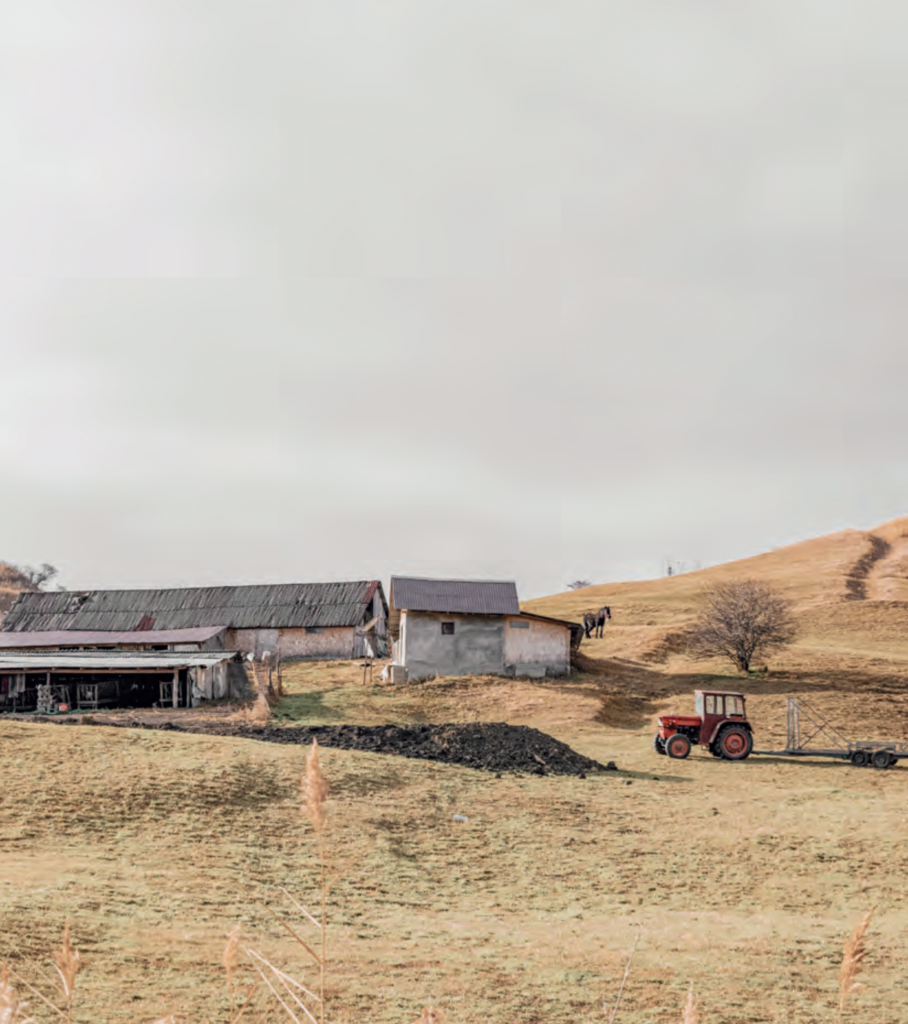
     

    ย 

    Resources/Links

    Brought to you by

    Azure Standard

    Family-owned since the โ€˜70s, Azure delivers real food to your doorstep or a local drop point.

    Completely organic, non-GMO, no junk additives โ€ฆ

    azurestandard.com

    Murray McMurray

    Trusted since 1917, this Iowa family operation hatches premium poultry for homesteaders and enthusiasts, delivering healthy, hand-packed birds and all the supplies you need to start your flock right โ€ฆ

    mcmurrayhatchery.com

    Homestead Living Magazine

    This Episode of The Coop is brought to you by Homestead Living magazine.

    More than just a publication, Homestead Living is your go-to homesteading mentor, filled with advice, wisdom, and inspiration for homesteaders by homesteaders.

    homesteadliving.com/homestead-living-magazine

  • How to Push Through Homesteading Burnout

    Most homesteaders start with abundance in mind but somewhere along the way become less enthusiastic because the blackberries got anthracnose, the cows jumped the fence, and the tomatoes expressed blossom-end rot.

    Our initial fantasies and dreams turn to reality sooner than weโ€™d like and weโ€™re suddenly faced with a daunting amount of maintenance. The castles weโ€™ve built in our imagination actually require more โ€” more work, more knowledge, more observation, more skill โ€” than we first envisioned.  The average life of a small-acreage property in the U.S. is six years.  The first two years are the honeymoon phase. The next two become burdensome. Then it takes two years to sell it.

    The one million backyard chicken flocks begun in 2020 during the initial paranoia of the COVID pandemic are dropping fast. If youโ€™ve been watching the news lately, people are abandoning these birds, taking them to animal shelters, or butchering them. Somewhere between initial euphoria and mid-term slog, the idea of a backyard chicken flock became work rather than mere fun.

    My mentor Allan Nation, founder of The Stockman Grass Farmer, liked to use the term โ€œslogโ€ to describe the lionโ€™s share of time spent producing something. Whether in homesteading or business, much of it is a daily grind, a regimen of cleaning dirty water troughs, toting feed, and hauling compost.  And unplanned death. 

    My old-timer neighbor farmer used to tell me that no matter whether you had two cows or a hundred, you always had one you wanted everyone to see and one you hoped would stay out behind the bushes.  He also said that anyone who hasnโ€™t lost a cow never raised one. I lost count long ago the number of panicked emails and calls Iโ€™ve received from folks facing the first chicken death. โ€œAll the chickens looked healthy last week and today I went out and one was dead!โ€ they cry.

    I view this introductory column as a kind of reality check, like pre-marital counseling or even wedding vows.  โ€œIn sickness and in health, for richer or poorerโ€ developed because wise elders realized that the honeymoon would end and it would, at times, turn into a slog. Unmet expectations, dirty diapers, and disagreements over parenting gradually creep in. Early romance gives way to reality.

    Fortunately, if a couple endures these painful middle years โ€” if they learn to appreciate their differences, learn to communicate, learn to cleave to those vows and dreams โ€” a true and deep love sets in. Genuine, strong, abiding. Life must run its course before the relationship matures into its fullness. Indeed, psychologists now recognize that the most intimate friendships only develop in shared adversity. You donโ€™t build deep, lasting friendships at parties and celebrations; you develop them in the slugfest of life. Thatโ€™s why military personnel usually have life-long, deep friendships after serving in undesirable conditions.

    This is the first issue of a publication dedicated to homesteading success and I debated long and hard about what I could bring to the table. What kind of an appetizer could I serve that would be helpful?  When Melissa asked me to address foundations, I couldnโ€™t help but deal with this cycle that Iโ€™ve seen countless times.  In fact, itโ€™s more common than perseverance.

    Business guru Peter Drucker talks about the learning curve. You have an idea or a dream, and you jump in. But instead of a gentle upward trajectory toward flight, you actually nosedive into what he called the โ€œslough.โ€ Itโ€™s a valley of learning, of trying new things, of developing protocols, and it usually lasts 3-5 years. Thatโ€™s a long time in our modern day, where instant gratification and sound bites dominate our expectations.

    Fortunately, the curve does eventually bend upward until it reaches the success originally envisioned.  The great news is that it continues to climb toward mastery and full-blown satisfaction.  Thatโ€™s where a marriage, outlasting the middle yearsโ€™ slog, culminates. Thatโ€™s the goal, which is why quitting and starting over simply shortens the final satisfaction and joy. More often than not, starting over means you never have time to reach maturity.

    In this first column, then, I thought it best to speak frankly and openly about early homestead ecstasy because buyerโ€™s remorse is more common than not.  In my experience, the folks who quit do so not because they canโ€™t eventually get it right. Not because they lack money. Not because they lack skill, even. Usually, itโ€™s just slow burnout and disappointment about matters not being what they envisioned.

    In other words, burnout is primarily emotional, not financial, knowledge, or resource-based. Anyone can do this work, but the difference between long-term success and quitting is attitudinal.  Notice I used the term quitting rather than failure. Thatโ€™s because new ventures โ€” goodness, even old ventures โ€” fail routinely. Failing at things is how you learn.

    A child doesnโ€™t walk well at first, talk well at first, or even poop well at first. Okay, they poop well, but they donโ€™t know where to put it. The point is, we donโ€™t do anything well the first time. We donโ€™t drive nails well, run a circle saw well, or plant tomatoes well. We must be mentored. We must experiment. We must fail. Welcome to life. But it is in that adversity, in the crucible of trying, of poking around new ideas, that we develop both proficiency and deep personal attraction to those on our team.

    If youโ€™re in the initial dreaming stage, reading books, watching videos, and enthusiastically planning your homestead, brace yourself.  It wonโ€™t be as easy as you think.  You wonโ€™t complete projects as fast as you think.  Here on our farm, weโ€™ve had some projects on our โ€œto-doโ€ list for five years.  Sometimes we look at old project lists just for fun and realize how foolish some were. โ€œGlad we didnโ€™t do that one,โ€ we laugh. Iโ€™m trying to give you the gift of mental and emotional reality to be prepared and not surprised when dark days come. They will. Embrace them. The sun will rise tomorrow.

    If youโ€™re a few years into the homestead and feeling like youโ€™re spinning your wheels, not making progress, or stalled out on your original plans, hang in there. It wonโ€™t always be like this. Youโ€™ll have breakthroughs and wonder why it took so long to do what is now obvious. Continue reading, watching informational videos, and attending gatherings of like-minded folks โ€” keep your boiler stoked, as they say. Feed your soul and fellowship with others; listen to their ideas, their solutions. Every pain point has an answer. Just because you havenโ€™t discovered it yet doesnโ€™t mean itโ€™s not there.

    Keep experimenting. Think about efficiencies like going loaded and coming loaded. Invest in efficiency like strategic fencing, good corrals, buried water lines, and simple structures to keep equipment sheltered. Where are your vulnerabilities? What gives you frustration? Ask for advice when you canโ€™t figure out how to get over those hurdles yourself. Youโ€™re on a journey, not a destination. If the journey is done well, though, you should see some things beginning to ease up. That bushel of green beans should be easier and easier to acquire. The apple tree pruning should go better each year, along with the apple crop. What you want are new trials, new hurdles. Thatโ€™s how you know youโ€™re making progress.

    On the other side of this homestead funk is deep satisfaction. Few things in life end up where they started. Eventually, your homestead will pour forth sustenance, both physical and emotional. Planting your garden wonโ€™t be full of angst; itโ€™ll be automatic. Planting tomatoes will be so easy youโ€™ll be able to think about other things while working, rather than fretting over technique and mortality.

    โ€œAm I doing this right?โ€ will convert to quiet efficiency and confidence. The homestead will affirm all the dreams and desires as you turn timidity into intrepidness. โ€œSure, we can do that!โ€ isnโ€™t some wishful foundationless fantasy, but a quiet resolve, steeped in perseverance, bathed in fortitude because youโ€™ve tackled countless daunting projects… successfully. Welcome to homestead legacy.  Welcome to homestead abundance.

  • How to Build Your Own Homestead Apothecary

    One of the most overlooked old-time skills is growing herbs for your family and your homestead. Centuries ago, herbalism was common practice. Our great-grandparents could walk into the woods or the fields and know exactly what each plant could accomplish if necessary. Plants were a necessary part of the everyday homesteaderโ€™s lifestyle โ€” and not just those that came from the garden. Now, in the 21st century, weโ€™ve lost much of that old fashioned wisdom. Itโ€™s not just about making tinctures and syrups to treat the flu and the common cold, either. We can make non-toxic toiletries and more (like soaps and lotions) out of herbs right from our own gardens and properties.

    The first question Iโ€™m often asked is โ€” where do I begin? 

    Growing herbs and starting an apothecary can seem overwhelming, and rightfully so. With hundreds of thousands of plants in the world, how do you know which ones to get started with? 

    I can remember when I first got started, I thought I needed 200 dried herbs in my apothecary cabinet. But, in reality you can do a great deal with only 15 to 20 herbs. Youโ€™ll never use 200 herbs! 

    Start by writing down five reasons youโ€™d like to get started with herbs on your homestead. When I first started, my reasons (or symptoms) looked a lot like this โ€” headache, seasonal allergies, cold/flu, fever, traumatic bleeding, and asthma. Then, for each symptom, I researched five herbs that could help. I focused on 5 herbs at a time, learning how they worked and how they would affect my body. This simplified process took the โ€œoverwhelmโ€ out of learning. Once I felt comfortable with those five herbs, Iโ€™d move on to the next five herbs, and then the next. 

    My very first list was modest, to say the least. We started our homesteading journey when our one-year-old son was diagnosed with childhood asthma. Having him on two inhalers and multiple medications every day wasnโ€™t something I was comfortable with โ€” so I turned to herbalism and natural remedies.

    Even though I was learning, it became more and more apparent that I wasnโ€™t going to fully grasp the power of herbal medicine until I understood how the human body worked. For example, I didnโ€™t know that childhood asthma could be genetic, but it could also be related to food allergies or a leaky gut. Sometimes I wondered, were my herbal preparations even helping my son?

    Learning herbalism and basic human anatomy truly go hand in hand, otherwise weโ€™re just walking in circles. Advanced cultures like the ancient Egyptians had a deep understanding of herbalism and the human body. They were performing successful surgeries on people in their communities with the help of plant medicine. Now, Iโ€™m not suggesting you try to do that, but I doubt anyone in the community asked to see their doctorate papers. 

    All of this to say, I always tell my students to also study the chemical side of herbs, as well as the basics of how the body works. You can treat symptoms all day long, just like the pharmaceutical companies do. But until you truly get to the root cause of the issue, herbs wonโ€™t work either. 

    Discovering that my sonโ€™s asthma could be related to food allergies or a leaky gut was truly liberating, and took my herbal protocols in a totally different direction.

    Some of My Favorite Herbs

    Letโ€™s get started with some of the basic herbs I keep in my apothecary at all times. As you dive deeper into these herbs, youโ€™ll see just how easy it is to keep a few plants on hand that have multiple different uses. Weโ€™ll also walk through some basic preparations that you can create for your own family, which are generally safe to use. 

    Meadowsweet (Filipendula ulmaria)

    Meadowsweet is a very efficient herb most notably known for its ability to help break fevers. It is also used for the digestive tract for things such as diarrhea, ulcers, stomach aches, and gout. Meadowsweet is also an efficient pain reliever. It is a natural anti-inflammatory. 

    Stinging Nettle (Utica dioica L.)

    Stinging nettle is often used as an overall body tonic. This is one herb that can be eaten, infused into tea, or used as a medicinal herb every day. It can be used for nosebleeds, excessive menstruation, and to treat internal bleeding. Itโ€™s also an exceptional herb to help ease seasonal allergies, sinusitis, and other respiratory issues.

    Chamomile (Matricaria recutita)

    Chamomile is a natural anti-inflammatory, antipeptic, antiphlogistic, antispasmodic, antibacterial, and has sedative actions. It is an incredible herb for the respiratory tract and nervous system.

    Elderberry (Sambucus nigra)

    A natural antiviral, elderberry became extremely popular after the H1N1 outbreak in the United States when a study revealed that elderberry had the ability to inhibit viral replication and effectively inhibited the H1N1 virus. Elderberry and flowers are well known to help lessen the duration of influenza, on average, by 4 days. It is also known to help prevent the influenza virus from attaching to cells.

    Astragalus (Astragalus membranaceus)

    Astragalus has major immunity stimulating properties, and is a fabulous adaptogen (meaning, it helps the body adapt to stress and other issues). It reduces the common cold and flu, increases white blood cell count, protects the cardiovascular system, and is a natural anti-inflammatory.

    Yarrow (Achillea millefolium)

    Yarrow has traditionally been used as a tonic, anti-inflammatory, antispasmodic, diaphoretic, diuretic, and emmenagogic agent (stimulating blood flow in the pelvic area and uterus). It has been used for the treatment of hemorrhage, pneumonia, rheumatic pain, and wound-healing in traditional Persian literature. The modern medicinal uses for yarrow have even included treatments for malaria, hepatitis, jaundice, liver disorders, and it is known as a hepatoprotective herb (meaning, it protects the liver).

    Lemon Balm (Melissa officinalis)

    In Germany, lemon balm is licensed as a standard medicinal tea for sleep disorders and gastrointestinal tract disorders. It has successfully been used for viral, fungal, and bacterial infections. In a 2015 study, the herb was used to reduce heart palpitations and anxiety. Lemon balm is most effective as a mild sedative an  to help relieve tension, stress, headache, and body aches. 

    Creating Basic Herbal Protocols 

    You now have seven herbs to get started with. What do you think youโ€™ll make with them? 

    There are many different options. To preserve herbs the longest, creating a tincture or glycerite is a fabulous first option. You would make a tincture or glycerite in exactly the same way, just with a different liquid for each protocol. A tincture often uses alcohol, like an 80-proof or higher vodka. A glycerite uses vegetable glycerin, which is a much more palatable option, especially for children. In general, you should expect tinctures to last much longer than glycerites (think 10 to 15 years, if not longer). Theyโ€™re both great options and you should choose whatever option is more feasible for you and your family.

    Just remember, whenever you make an herbal protocol, you should always weigh your herbs and other ingredients. This allows you to get the same results each and every time, and to know the proper dosage for your protocol. While the folk method of making these protocols can be efficient, itโ€™s much less efficient than weighing everything.

    Hereโ€™s how to make a basic tincture. Use the same measurements for a glycerite, but instead of vodka, use glycerin. Tinctures and glycerites use a 1:5 ratio (herb: liquid).

    Accompanying Recipes

  • How to Make a Tincture

    Ingredients

    • 1 oz dried herb
    • 5 fl oz vodka 80-proof or higher
    • 1 large glass jar with lid like a mason jar

    Instructions

    • Weigh out 1 ounce of dried herb and 5 fl oz of vodka.
    • In a clean glass mason jar, add measured dried herb. Pour over the vodka, being sure that all of the dried herb is covered with vodka. If you need to, you can crush the herb up to make it fit under the liquid. The dried herb should be just covered with the liquid. You can use a weight if necessary.
    • Cap the jar tightly, label, and place in a dark cabinet or pantry for 4 to 6 weeks.
    • Once the tincture is ready, pour out the vodka through a muslin cloth and strainer. Pour the tincture into an amber or dark glass bottle with an eyedropper top. Cap tightly, label, and store in a pantry or cabinet away from direct sunlight.
    Tried this recipe?Mention @homesteadlivingmagazine or tag #homesteadlivingmagazine!
  • How to Make a Medicinal Syrup

    An easy protocol for your apothecary is an herbal syrup. Most people know how to make a basic elderberry syrup, so you may already be ahead of the game on this one. If not, you can use this basic recipe for an herbal medicinal syrup.
    Youโ€™ll notice that this syrup is also a 1:5 ratio when it comes to weighing out your herb to liquid. This ratio is the general rule of thumb for creating herbal protocols.

    Ingredients

    • 200 g dried herb s
    • 1 quart water
    • 1 cup raw honey
    • 1 cup cane sugar optional

    Instructions

    • In a saucepan, add water and your choice of dried herbs. You can use just one herb, or various herbs. Just make sure they come to a total (altogether) of 200 grams.
    • Bring herbs and water to a boil, then turn the heat off and allow to infuse for 20 minutes. If using woody, stemmy, or root herbs, youโ€™ll boil the decoction for 20 minutes (at a high simmer) and then remove from heat.
    • Drain herbs from infusion/decoction, and return the strained liquid back to the burner on medium-low heat. Add in cane sugar and stir until it has dissolved. If you donโ€™t want to add sugar, the raw honey will act as a preservative as well.
    • Donโ€™t add the raw honey until after the mixture has cooled quite a bit. Afterwards, jar your syrup into a glass bottle or mason jar. Store in your refrigerator for up to 3 months.
    Tried this recipe?Mention @homesteadlivingmagazine or tag #homesteadlivingmagazine!

    Herbalism doesnโ€™t have to be intimidating or overwhelming. With these basic instructions, and learning just a few herbs at a time, you are creating the foundation of your herbal apothecary. Remember, herbs are medicine, and should be respected as such. But they are also incredible healers, given to us by the Creator of the entire universe. As your herbal knowledge increases, your confidence will grow. Youโ€™ll become excited to try new things and youโ€™ll be excited to share what youโ€™re learning with your community! You can do this!

  • How to Become Health Independent

    If youโ€™ve spent any time in homesteading circles at all, youโ€™ll have learned pretty quickly how to make your familyโ€™s version of elderberry syrup. With more and more of us stepping away from the typical plugged-in mainstream lifestyle, it makes sense to grow your own elderberries and make your own syrup.

    That being said, the logic often goes that, as homesteaders, we learn to manage common first-aid issues at home. This leaves room in the budget to head to the doctor to maintain more chronic issues. But is this really the best long-term plan for homestead self-sufficiency?

    For me, the root of wanting to homestead has always been about a kind of self-sufficiency that I believe is only earned with sustainable and resilient systems. We began our homestead with bees and quickly found out that any system that you have to rebuild every year will be a draw on time, money, and emotional resources. Starting out with conventional methods here in zone 5, Ohio, guaranteed we were replacing our bees every spring due to die-off. Once we changed our practices to the natural ones I shared in my book Sweet Remedies, we came out of winter with healthy, live bees that started gathering honey immediately without any further investment.

    Raising chickens provides another way to learn this lesson. The peak of chicken self-sufficiency, in my opinion, is raising multi-purpose chickens that provide eggs and are also a great source of meat. If the breed you choose has the tendency to go broody and raise their replacements, you have a self-sustaining source of food on your homestead.

    If you are diligent about investing in the sustainability of all the animal and crop systems on your farm, but neglect to invest in the sustainability of the health of the people, you arenโ€™t truly self-sufficient.

    If you rely on over-the-counter medicines to get out of bed and get the work done, youโ€™re reliant on pharma.

    If you depend on the supply chain to keep your life-saving medication coming to the local drugstore, or your front door delivery, you are vulnerable to the supply chain running uninterrupted, or being blackmailed by those who control your access to medication.

    If you are addicted to the chemicals in man-made substances or imitation foods, your God-given health design is altered, your production capabilities on your farm are compromised, your ability to remain truly present with your family is deadened, and you areโ€ฆ dependent.

    True freedom requires sustainable health. The inputs of sustainable health are real food, a healthy lifestyle, and occasional balanced, natural remedies that shore up weaknesses.

    What Can You Do to Become More Health Independent?

    Iโ€™m not suggesting that you need to fire your doctor and stop filling your prescriptions to be a true homesteader. It is magical thinking that fresh air, sunshine, and the hard work of growing your own real food suddenly cures you. The diseases of deficiency that we have either been handed by our most recent ancestors or we ourselves have created through mainstream living are more entrenched than that. There is a balance here that must be determined by each individual. It is a balance that requires the application of our thought, time, and effort if we are to truly gain our freedom and not just merely have a farm or live off-grid with one foot still firmly planted in the mainstream world.

    When we moved to our farm, one of the first things we did was test the soil. Itโ€™s a factโ€”your entire success as a homesteader lives and dies by your soil. In university, I was taught the conventional mindset that we see played out in modern farming. Depending on the soil test results, had we gone with this thinking, we would have added commercial fertilizers to bring in the fertility needed for healthy plants. Instant results can be had the conventional way, but this path guarantees a farm that is not sustainable.

    In conventional farming, you know the soil is deficient, yet the solution is designed to ignore the problem and instead bring in outside inputs that require labor, time, and money year after year. It requires a perspective of seeing the soil as merely a dead container in which to grow. Because chemical fertilizers focus on a few macronutrients and result in imbalanced, compromised food for you and your animals, further inputs of pesticides, herbicides, and fungicides are needed as well! As the soil at the bottom of the system grows weaker and weaker, it requires more of this artificial work-around to be funded and grows ever closer to collapse.

    We decided on our homestead that it was better to do the work to fix the soil and be patient as it healed. Applying rock powders that were needed to break down and release trace nutrients, incorporating manure and well-turned compost, folding in cover cropsโ€ฆ all of these things took time and work. But, as we have moved along the years in this process, we are producing food for both ourselves and our animals that truly forms a solid foundation of nutrient density and supports health and healing. We donโ€™t need outside inputs of fertilizer, herbicides, pesticides, or fungicides. Our soil supports health as designed and therefore the things we grow in it are not weakened enough to fall prey to predators and disease. When plants show signs of weakness, it is easy to correct minor nutrition and stress issues before disease and heavy pest problems set in.

    Many of us started our homesteads as a reaction to a personal or family diagnosis. My first book told the story of my own infertility, how I overcame it, and went on to give birth to our two children on our farm. The problem is that so many of us move to the country with the idea that we are going to stop any further health issues or that we will live as well as we can with the diagnosis we are given. As we share our sodas with fellow homesteaders, I talk to a lot of our community that are still wearing their โ€œdiabetesโ€ badges given to them by conventional medicine. I try to tell people as often as I can: Thatโ€™s NOT your identity! Your diagnosis is merely a place you are passing through at the moment if only you choose to fix your underlying issues.

    The people on your homestead are just like the soil. In fact, we ARE the soil in many ways. Our bodies are designed to heal in just the same way as the soil is. Choosing to simply manage a diagnosis rather than work toward curing the underlying issues that led to that diagnosis is the same as leaving the imbalances you saw in your soil test unaddressed and buying in chemical fertilizer, pesticides, herbicides, and fungicides instead. The alternative will take time, patience and hard workโ€ฆ but the proof is on thousands of homesteads across the country that the soil, and our bodies, can heal.

    A Holistic and Sustainable Approach to Healing and Health

    Elderberry is a great acute treatment of a passing cold and we need to know these simple first-aid type remedies. The elephant in the room is that many havenโ€™t addressed the underlying issues in their chronic diagnoses while attempting to live the homestead life of self-sufficiency. Just as problematic is merely switching from conventional methods to natural ones to maintain disease. The latter is like using natural bug repellants in your garden instead of fixing the underlying soil imbalances!

    If you are realizing that you have left this part of your homestead unaddressed, here are some steps you can take:

    Understand your diagnosis or those of your family
    For example, if I have been told I have diabetes, I need to understand that my digestion is compromised, my pancreas might be weakened, and my adrenal glands (and endocrine system) are likely under stress.

    Talk to your doctor
    If your doctor is not ready to have conversations about how to truly heal from your diagnosis, find a new one. Whoever is on your medical/healthcare team must be put on notice that your goal is to work toward sustainable health. This might involve a plan to reduce or eliminate prescriptions.

    Form a backup plan
    Especially if you currently require life-saving medications, itโ€™s important to have a backup plan. What would you do if your blood thinning medication was unavailable due to supply chain issues? Know what foods and herbs you can grow or sourceโ€”and how to use themโ€”in the event that you canโ€™t get what you need. The kind of fear you experience when you canโ€™t get what you need to keep yourself or a family member alive can be a powerful means of control.

    Eat real food
    If you are addicted to any foods that are man-made, synthetic, or what I call โ€œimitation creationโ€ kick them to the curb. One of the fastest ways to level up your health and shore up weaknesses is to eat only real food. The same goes for other addictive substances. The sooner you can wean yourself off,
    the better.

    Feed your weaknesses
    This is your opportunity as a homesteader to make your next garden plan specific to the health needs of your family. Grow food and herbs to strengthen body systems as well as specific diagnoses. You might grow bitter melon to support your blood sugar, and provide a bitter component to meals that supports your digestion. Or you might grow any of a variety of adaptogens that can support your bodyโ€™s reaction to stress.

    Be patient
    Remember that chronic imbalance issues arenโ€™t
    created overnight, and therefore canโ€™t be fixed
    overnight.

    There is no room for shame or guilt here. If you decide to try to close this self-sufficiency gap, you are going to need to take small steps and celebrate them every day. You might live in a holding pattern that isnโ€™t your imagined best-case scenario as you work to improve your health, and thatโ€™s ok! Every step you take today is one step closer to sustainability and the full ability to take charge of both your health and your homestead.

    Editorโ€™s Note: It is always recommended that you speak with your doctor or primary healthcare provider before incorporating any natural medicine or embarking on any new treatment plan. We also understand and acknowledge that not all chronic conditions are preventable or manageable with diet and lifestyle alone. This information is for education and entertainment purposes only, and to offer insight into how certain conditions might be managed or healed using holistic, sustainable approaches.

  • The Coop Episode #16: Herbs That Match Every Season of Life w/ Suzanne Tabert

    For nearly forty years Suzanne Tabert has been teaching people to look out their back door instead of reaching for a bottle.

    As a little girl in suburban Chicago she was already under the fir trees harvesting violets and baking tiny potatoes in a pit she dug herself. That same thread never broke. 

    Today she runs Cedar Mountain Herb School in North Idaho, writes books, and shows everyday families how the plants growing right where they live can gently support their bodies and spirits through every season.

    The idea is refreshingly straightforward: your backyard, your woods, and your garden already hold exactly what you need โ€ฆ if you know how to see them and use them.

    Nettles and dandelions for spring energy and cleansing. Hawthorn flowers when life feels in-between. Tulsi and motherwort when the to-do list feels bigger than you are. Roots and preserved herbs when the days grow short and you need deep nourishment.

    The conversation feels like sitting on the porch with a wise friend who actually lives what she teaches. And right now, more and more families are quietly stepping outside, picking a few leaves, and noticing how much better they feel.

    If you want simple, seasonal ways to support your familyโ€™s wellness without complicated protocols, this episode of The Coop is for you!

    IIn this episode, Anna Sakawsy and Suzanne Tabert discussed:

    • What bio-regional herbalism really means and why local plants work best for your body
    • Gentle spring cleansing with chickweed, nettles, and dandelions (plus easy recipes!)
    • Fresh herbs for allergies, inflammation, and natural energy
    • Hawthorn for navigating change, grief, and those โ€œwhat now?โ€ moments in life
    • Tulsi, motherwort, and other nervines to ease summer overwhelm
    • Fall foraging for immune support and how to make โ€œfarm dustโ€ herbal salt
    • Winter nourishment with oats, bone broth, and preserved herbs
    • How the seasons of the year mirror the seasons of our lives
    • Safe foraging basics, proper plant identification, and building your own home apothecary

    About Suzanne Tabert

    Suzanne Tabert is a bio-regional herbalist, author, and educator with nearly four decades of experience. She is the founder and director of herbal education at Cedar Mountain Herb School in North Idaho, a member of the American Herbalists Guild and American Herb Association, and a partner in education with United Plant Savers. She also serves as practicum supervisor and adjunct faculty at Bastyr University. 

    The show notes โ€ฆ

    00:00 – Introduction
    03:35 – Suzanneโ€™s Journey to Herbalism
    06:39 – Understanding Bioregional Herbalism
    11:04 – Using Herbs for Gentle Spring Cleansing
    19:52 – Spring Food Focus
    21:43 – The Power of Nettle
    27:57 – Herbs for Summer Support
    36:47 – Fallโ€™s Immunity Boosting Herbs
    42:28 – Nourishing Winter Herbs
    46:55 – Aligning Herbs with Your Emotional Seasons
    50:42 – Safety Tips & Herb Sources

    Episode Transcript

    Suzanne Tabert:
    Finding different ways to incorporate the herbs throughout all of the seasons as the seasons change will enable us to have a robust immune system, be able to fight off what’s coming our way, and be more resilient to stresses, day-to-day stresses, and then the big ones that happen as well. One of the mottos at my school is get the medicine of the people in ways they’ll enjoy taking so that healing can occur. And I have never met a person who doesn’t like a good chickweed burrito.

    Anna Sakawsky:
    Friends, nothing says homestead life like a backyard flock that fills your egg basket every morning, and maybe even your freezer too. That’s why I’m so happy to share today’s sponsor, Murray McMurray Hatchery. They’ve been helping homesteaders raise healthy backyard poultry for over a hundred years. They also carry more than a hundred breeds of chickens, ducks, geese, turkeys, and quail, including some beautiful rare and heritage breeds. Their chicks are handpacked with care, backed by a live arrival guarantee, and they’ve got all the supplies you need to get started raising backyard poultry at home in their one-stop shop. Whether you’re adding a few new layers or starting your very first block, you can head to mcmurrayhatchery.com to order your chicks today. Tell them the coop sent you and start building the flock you’ve been dreaming about. Again, that’s mcmurrayhatchery.com. Well, hello everyone and welcome to episode number 16 of The Coop.
    I’m your host, Anna Sakawsky, editor-in-chief of Homestead Living Magazine, the magazine for Homesteaders Buy Homesteaders. And today I am joined by another one of our contributors to talk all about how herbs and simple lifestyle shifts can support our wellness through each season of the year and through the different seasons of our lives as well. So Suzanne Tabert is a bioregional herbalist, author, and educator with nearly four decades of experience teaching the art and science of plant medicine. She is the founder and director of herbal education at the Cedar Mountain Herb School, a proud member of the American Herbalist Guild and the American Herb Association, a partner in education with United Plant Savers, and she serves as a practicum supervisor and adjunct faculty member at Best Deer University. Drawing from a lifetime of personal and academic study of plants and their habitats, Suzanne has dedicated her life to teaching herbal medicine and to sharing her love and knowledge of plants with the world, a passion she plans to pursue for the rest of her life.
    So I am so honored to have Suzanne here with me today as we explore how to work with the plants growing around us, especially as we head into spring to gently refresh the body, calm the nervous system and strengthen immunity and align ourselves more closely with nature’s rhythms. So Suzanne, welcome to the show.

    Suzanne Tabert:
    Thank you so much for having me. I am absolutely thrilled and I appreciate the opportunity.

    Anna Sakawsky:
    Well, so nice to have you here. I think you’ve been a contributor for a couple years at least now with the magazine and have written some really great articles, obviously related to herbalism, but a lot of them really do tie in this idea of using different herbs through different seasons and whatever we’re going through in that particular season. And you just recently wrote an article on spring cleansing with herbs to match with this season. That’s kind of what gave me the idea for this episode and to kind of expand on that and move through the different seasons of the year, but also look at how those mirror some of the different seasons in life and some of the herbal practices and lifestyle protocols that we can maybe be implementing to support ourselves at different times. So before we dive in though, I would love to just hear a little bit more about your background, your journey into herbalism and what being a bioregional herbalist actually means.

    Suzanne Tabert:
    Alrighty. So I’ve been playing with my plants my entire life. So I remember when I was a little girl, I grew up in a suburb of Chicago, actually born in Pittsburgh and then moved when I was small with my parents and siblings to Chicago. And I was always the one who was underneath the fur trees and picking little wild violets and putting them in vases that were my great-grandmas that she had given me. My dad gave me a plot in his garden. It was probably like three feet by three feet. And one year I grew potatoes because that’s what I chose that year. Fast forward till I was like 19 and living in Seattle area and in an urban area of Seattle. And I’d be the one looking at the weeds and the empty lots and I’d be scraping oak bark to make a tea for my face when I was breaking out.
    So it’s something that I’ve always done. And I turned my passion, my love for plants into a business. And by the way, when I was growing up, I had 29 plants in my bedroom. And when you opened up the door, it was like this wall of oxygen that would come out. And it was so dreamy. That was my apartment. I wanted to live there. I didn’t want to live in the regular rest of the house. I just wanted to live with all my plants and they’d be on my nightstand on my dresser hanging in macrame that I made by myself. And if you look at my bedroom now, I have about 20 something plants hanging from macrame that I’ve created myself on my nightstand, on my dresser. So it’s never changed. This is a thread, loving the plants and being with the plants, working with them, loving them, literally my entire life.
    And I had an aunt who passed away about 20 years ago and she was just a week shy of her 100th birthday. And she took me by the hand and she started teaching me the medicinal parts of the plant. So she took my passion just for plants in general and said, “You know what? You can use these for medicine.” And this is what my mom, which is my great-grandma, how she kept us healthy. So it’s very strong. Herbalism is strong in my blood and it’s strong in my heart too. And I started teaching my first herb class. I was in my late 20s, so that was 40 years ago. I work with the plants that live around me and I live in North Idaho. And North Idaho, the bioregional really encompasses the coast as well. So the Pacific Northwest, Inland West, we’re technically still Pacific Northwest.
    So the plants that grow here, that are adapted here, that thrive here, when we use them, we adapt to the area. We’re healed by the area and we thrive in the area in which we live. So I don’t buy plants from Bolivia or what have you because my body really doesn’t know what to do with those. And I’m a wildcrafter. So if I’m taking my students out, I need to know the plants that live in my bio region. So that in a nutshell, to me, is what bioregional herbalism is.

    Anna Sakawsky:
    That’s really interesting. So I mean, because there are some herbs, I guess, that maybe we think of as being more exotic or from elsewhere. Do you incorporate anything that doesn’t grow in your region, in your wellness protocol?

    Suzanne Tabert:
    I don’t. I don’t need to. Everything I need is here, right? I think that God put me here for a reason, put where these plants are that I can use, I can teach about, and I could lead other my apprentices and my day students into understanding their place in this world, in this particular corner of the world. So I don’t buy plants from elsewhere ever.

    Anna Sakawsky:
    Now, I would presume there are certain herbs and plants that grow in many different regions. Can people who maybe don’t live in the Pacific Northwest still apply some of what we’re going to talk about?

    Suzanne Tabert:
    Absolutely. Dandelions grow everywhere. Dandelion’s one of my favorite plants. Nettles grow just about anywhere that they can find a moist area to grow in. Chickweed grows in the gardens. It’s a so- called weed, but to me it’s medicine and it grows there. So I’m writing a book right … Well, I just finished writing a book called The Foragers Apothecary, and they wanted me to write about all wild plants. 50 actually ends up being close to a hundred plants that I wrote about for all the regions. So yes, hickory doesn’t grow here. And it’s really nice for me to know about hickory because I found that fascinating with how the bark is so shaggy and it kind of looks like bacon. But at the same time, the medicine in the hickory is the same as the medicine in the oak, right? And there’s some in other plants as well that grow here.
    So I find that many of the plants that we’re going to talk about today, they either grow in all the regions where people will be listening from, or there will be a plant that can be applied equally medicinally and nutritionally as well.

    Anna Sakawsky:
    Okay, perfect. Okay. Well, good to know. Well, let’s get into it because I’m really excited to dive into this conversation. Obviously, we’re so disconnected from nature and from the seasons in our modern life. Even homesteaders, I find even those of us who actually feel like we live pretty in tune with the seasons in the land, a lot of us still work indoors a lot of the day on computers and keep kind of the same pace all year long. And so yeah, I’m just really excited to get into this conversation about how we can use different herbs and lifestyle protocols throughout different seasons of the year. So I feel like the fitting place to start is spring because A, we’re heading into spring right now. B, as I said, you just wrote an article on spring cleansing with herbs for the latest issue of homestead living.
    And C, just because spring seems like even though the nature of seasons is cyclical, spring turns to summer turns to fall, turns to winter, turns to spring again, we still kind of look at spring as the natural starting point because it is the season of kind of birth and renewal and all that sort of thing. So why is spring, in your mind, traditionally associated with cleansing and renewal? And is there an actual physiological basis or need for cleansing our bodies?

    Suzanne Tabert:
    So a spring cleanse essentially helps us to get ready for the heavy work that’s ahead. The tilling, the planting, the birthing of maybe somebody has a sheep or goats and anybody who has that and has been at birthing, it could be a lot of work. And so we need to prepare our bodies. And the grandparents, the great grandparents, the ancestors before that, they always moved with the seasons because they didn’t have the computers to sit in front of and some of them didn’t have running water, some of them didn’t have electricity. So they moved with how the light was and the light is getting longer and the days are getting longer and we need to prepare ourselves for that. Right.

    Anna Sakawsky:
    Okay. I mean, that makes sense certainly from an ancestral context, I guess. Does that still stand in the modern world? If we have adapted and changed and we say keep a certain pace all year long, do we still need those naturally? Say for somebody who’s not homesteading too, maybe we’re not planting and tilling the land and birthing animals. We’re just sitting at the computer just like we do it every month of the year. Do we still need that cleansing or can we just kind of carry on the same all year long?

    Suzanne Tabert:
    Well, carry on. Oh gosh, that’s what modern people do. We just carry on. And then our body has a lot of inflammation because we’re sitting, we’re just settled. And when we’re not moving, our lymphatic system isn’t moving very well. Our cardiac system, we have a heart and that heart is a pump and it goes like this and it moves the blood and the fluid through all the whole cardiac pathways, but our lymphatic system does not have that. So how do we get our lymph moving through movement? And it’s very … I’m a science geek too. So our lymphatic pathways and our cardiac pathways, they are right next to each other and these membranes are permeable. So lymphatic fluid can go into the blood, what’s in the blood, maybe pathogens, viruses, what have you, funguses can go into the lymphatic pathways so that our immune system can deal with that.
    And if we’re just always sitting, if we’re … What’s the word for that? If it’s

    Anna Sakawsky:
    Stagnant.

    Suzanne Tabert:
    Stagnant. Yeah. If we’re stagnant, there’s no movement. So we need to have that movement and we can do that with certain herbs like cleavers. Cleavers used fresh will naturally help to move our lymphatic system, that fluid to …
    Because our immune system can kill viruses and other pathogens all day long, but it also needs to excrete it out. Otherwise, we just get like, “Do you remember Charlie in the chocolate factory, Varuka salt, and she just got bigger and bigger and became a big old blueberry?” I always picture that if we can’t excrete out what our immune system is attacking and all the metabolites of our hormones breaking down and whatnot, we’re going to be like big old Varuka salts. And so we need that excretory action happening. And then we have plants that is going to help with that too. So move the lymphatic system and move the waste through our expiratory organs.

    Anna Sakawsky:
    Is this the only time of year we should be doing something like a cleanse or are there other seasons where that might be appropriate as well?

    Suzanne Tabert:
    I would say spring is your best time. I don’t recommend cleansing regularly, unless a person is in a state of eating a lot of highly processed foods and eating a lot of foods like wheat and dairy that’s causing inflammation and we need to move that out or we’ve just been sick and we feel better now and we’re doing our herbs to build up our body. We also need to make sure we keep excreting. And that way, I would say dandelion root infusions or decoctions, it really helps. And well, let’s talk about our liver for a minute. Our liver does over 500 different functions all the time. And during the day it’s digesting, it’s creating bile to center gallbladder, which then goes mixes with the enzymes from the pancreas and goes into our small intestines so that we can break down and process fats. And it’s a kind of a recycling center.
    Everything, the blood goes through to be filtered and that needs to be cleaned out too. So if somebody is feeling … I’m just going to stand up for a second. Our liver … Oh, can’t get to my liver, huh? Our liver is right about here, right? Kind of where the middle of our ribcage is. And if we are having pains there, if we are having issues, then a liver cleanse might be a good thing to do. However, doing cleanses all the time will actually debilitate our system and weaken our entire body system over time. So strategic cleanses during the year as needed, and definitely in spring to, like I said, just get you ready for the season.

    Anna Sakawsky:
    Yeah, that makes sense. And just for listeners too, I mean, obviously our bodies are cleansing all the time, right? We have systems like our lymphatic system and our digestive system and all that in place so that we can be taking the good, the nutrients, all the things that we need, using those in our body, and then getting rid of all the waste and toxic things that accumulate. So it’s not that we’re not constantly cleansing, but we’re talking about doing a deeper, like an herbal cleanse or incorporating certain lifestyle changes. Maybe it’s like fasting, that sort of thing, to do a bit of a deeper cleanse. Now, you dive into this again, just to mention, you go into a lot of detail on spring cleansing in your article for homestead living. So we won’t get too granular with that. If you are subscribed, be sure to check that article out.
    That should have arrived in mailboxes already. And if you’re not subscribed yet, then make sure that you get subscribed. But beyond cleansing, what are some other ways that we can support the body in spring, whether energetically, emotionally, physically?

    Suzanne Tabert:
    Eat whole foods.
    Our body is, I hate calling it a machine. I don’t think of it as a machine, but it has many parts that need nutrients to work. And when we’re eating highly processed foods like potato chips, like everything in the freezer aisle, that’s not just like a bag of frozen veggies, cereals in a box, that sort of thing. If it’s not a whole grain, then it’s highly processed and the food gets digested very quickly and it doesn’t have a lot of nutrients. It has a lot of flavor enhancers. It could have a lot of sugar, a lot of salt, that sort of thing. So take a look at the labels of the foods you’re eating, try to stay as whole as possible.

    Anna Sakawsky:
    That’s a good tip for all times of year, right? As much as we can be cutting out processed foods and eating whole foods, the better. And I think that a lot of our audience, nobody’s perfect. And I certainly have a sweet tooth and I get into certain things at certain times and my husband loves his chips and we’re all human and we all do that from time to time. But I do think that for the most part, we’re probably a little bit more conscious of that sort of thing and eating a healthy whole foods diet. But I wonder how that mimics what we’re talking about in terms of like seasonal herbs and seasonal, different ways that we can support ourselves and our health through different times of year and the plants that are available. Would you also say that there are certain foods that are naturally growing at this time of year that we should be looking to support things like cleansing and energizing our body in the springtime?

    Suzanne Tabert:
    Yeah. So go outside your house and look to see what’s coming up right now. I have a 4,000 square foot herb garden that has all kinds of things outside of the fence because I can’t stay within boundaries. And I’m constantly looking, what’s coming up now? Are there little green things coming up? And already chickweed is coming up. We too have been enjoying a very mild winter in North Idaho. And so I’m already eating my chickweed and chickweed, I love chickweed. It’s a really benign taste. One of my favorite ways to eat chickweed besides chopping it and putting it in a salad, and people can say, “Ugh, I can only eat so much salads.” Everybody loves a good burrito, right? So you get your tortilla, it could be gluten-free, it could be whatever you want and put in some beans. Now, beans are high in fiber that’s going to feed your lower gut and then cheese or no cheese if you want, but cut up some of that chickwheat and put it on the tortilla and then put on some salsa.
    Maybe you have some salsa that you canned or your favorite salsa from the farmer’s market or grocery store and then you just roll that up and you eat that. It’s so satisfying. And so one of the mottos at my school is get the medicine of the people in ways they’ll enjoy taking so that healing can occur. And I have never met a person who doesn’t like a good chikweed burrito. And in the spring, one of my favorite things to make is pesto. And I make pesto with fresh dandelion tops, I mean, fresh nettle tops. So I just hit the first third and I know that you can find nettles right now where you’re living on Vancouver Island because I have a friend who lives in Concrete Washington and she sent me a picture of some nettles coming up, which is always the cause for celebration.
    Yay. And so you just pick that top piece and you can use gloves if you want, I don’t. And then you put that in a food processor. I use a bit of nutritional yeast, fresh garlic, and then a good olive oil, and then I whirl that up until it’s really smooth. And what you’re getting from fresh nettles that you don’t get from dried is an anti-inflammatory effect. And inflammation can really happen anytime for any reason, whether it’s the food you’re eating, the stress that’s you’re enduring right now, anxiety, whatever it is. And the body really responds to the chlorogenic acid and the other compounds that are in the nettles to bring down that inflammation. So if you have a neck that goes out all the time because of inflammation or your fingers feel like sausages in the morning, nettle pesto is your friend. And you can put them into tiny little containers and put them in your freezer because the freezing is not going to destroy that antihistamine effect.
    So take it out as you need it. And you know what comes in the spring, pollen, right?

    Anna Sakawsky:
    And pollen- It can be good or bad.

    Suzanne Tabert:
    Yeah. Yay. Yay. But the nettles help to take away that allergic reaction that somebody might be dying because of pollen, the nose that’s itching or maybe bleeding the watery, itchy eyes, whatever it is, nettle just works like a champ to take that away. And then I love dandelions. I love dandelions any time of the year, but especially in the spring and people say, “Oh, like you said, dandelion greens are so, they’re so bitter.” But you know how my great grandma used her dandelion greens? She sent my dad out together and she would put them in a big sauce pan where she had just made bacon. So she had all this bacon grease. She chopped up her dandelions and put it in there and just sauteed that up with the little onions and that was a little side dish. And the acidity of the fat, the acidity of the bacon, the meat itself
    Will help to unlock the calcium and the iron that’s within the dandelions and help our bodies utilize it. And if we have enough iron, then we have a lot of energy. And so if somebody’s feeling, “I’m sluggish, I don’t know what’s going on. ” It could be that they’re low in iron and a test for the hematocrit can tell them. There could be many reasons why they’re feeling sluggish, but if it’s because they are low iron, then the nutrients, the iron that’s in dandelions and nettles that can be harvested this time of year would just be a boon to that person.

    Anna Sakawsky:
    Awesome. Okay, that’s a great tip. I do actually know where a nettle patch grows close to me. It’s actually at my kids’ old school, at their preschool, because I used to teach there as well, and there was a nettle patch there. And I’m so thankful that the school community kind of is minded towards keeping things natural and teaching the kids about this sort of thing. So they’ve actually kept the nettle patch. They have to mow it down so that it’s not too dangerous, but they’ll actually email me usually in the spring and be like, “The nettles are up if you would like to come harvest them.” So that’s where I usually get mine from. I’ve never actually had them fresh. I always dry them, but I have seen true miracles work from nettles. My daughter a couple summers ago, we were up at a family cabin and she got stung by a wasp and we didn’t have any type of antihistamine on us.
    We drove all the way home. This poor girl had this swollen hand and then it was late and I said, “Okay, well, we can’t do anything until tomorrow. Drink some nettle tea because I knew there was natural antihistamines in it and then we’ll take care of it in the morning.” And she woke up in the morning, it was completely gone. So it really worked and that’s something that my husband does take regularly for seasonal allergies and that sort of thing. I’m always like, “Cake, get on it. You got to drink your nettle tea.” But it’s a really good tip. Nettles are a great early spring plant for sure. Now- They’ll be stronger if they’re fresh. Stronger if they’re fresh.

    Suzanne Tabert:
    Okay.histamine. So fresh infused vinegar, fresh infused tincture, alcohol

    Anna Sakawsky:
    Tincture,

    Suzanne Tabert:
    Or that pesto.

    Anna Sakawsky:
    This episode is brought to you by Azure Standard. Family owned since the 1970s, Azure Standard is on a mission to make real food more accessible by delivering it straight to your doorstep or to a convenient local drop point near you. Everything they offer is completely organic, non- GMO, and free from junk additives you don’t want in your home or in your body. With more than 13,000 carefully vetted products, Azure standard makes it easy to stock up on what really matters from bulk grains, nuts, and healthy oils to fruits and vegetables, frozen meats, pantry staples, and even clean household goods. And the best part is you skip the grocery store markup. You can order exactly what your family actually needs, save big on high quality food and pick it up alongside neighbors who care about the same things you do, health, sustainability, and supporting ethical producers.
    You head to azurestandard.com right now to get started. Again, that’s azurestandard.com. I do want to talk about some of the other seasons as well and some different herbs that can support us throughout the rest of the year. So if spring is about renewal and awakening, how does that shift as we move into summer and what sort of herbs support the body in this kind of hotter, busier season?

    Suzanne Tabert:
    So in late spring, we have Hawthorne flowers that start popping out. When the stamen are pink, they’re not pollinated and we can use that to create cordials or tinctures or infused vinegars. And that helps us, that Hawthorne itself will help us when we’re in the lemonal zone. And that lemonal zone is that place where what was, isn’t anymore and what is to be hasn’t happened yet. And this space can be confusing. It can be filled with anxiety. It can be grief. I’ve lost my job. I’ve lost a relationship. I lost a parent. Things are changing. I’ve moved and I don’t know what comes next. Well, what Hawthorne does is says, “I got you, honey. I’m going to walk with you. I’m not going to make what’s happened go away, that what happened has happened and what is to come isn’t here yet, but I’m going to support you.
    I’m going to take the edge off. I’m going to kind of give you that nice big warm hug that you need right now that you may not be getting and just help you move through this liminal season in a way that is full of grace so that we can see the blessings that are always around us anyways. And if we’re so stressed out, we may not see them.” And I believe, I call Hawthorne hope and faith that everything is going to eventually be okay. And the thing is we take it consistently. We walk with it consistently. We let it hold our hand consistently. That’s one of my favorite plants. And so we’re using those unpollinated flowers and the leaves as well. Now, if we didn’t Get to those unpollinated flowers or the flower buds, in the summer we can use the leaves themselves. I’ll make a flour and leaf tincture, a leaf tincture, and then in the late summer when the Hawthorne berries are ripe, then I mash them, put them in a jar, and then I use the tincture that I’ve strained from the leaves and the berries or just the leaves and the flowers, I mean.
    And I pour that over the berries. And so I get this double strength tincture of all those medicinal parts of the Hawthorne. And that Hawthorne can really help me move season to season. And then if I’m feeling really overwhelmed, I cannot cope at all. I use Tulsi, also known as holy basil. And I have a huge grain hopper. It’s probably, I don’t know, three, four feet by four feet. And it’s huge. And I grow my tulsi in there and I can do several. I can cut it back about four or five times a year and it just keeps coming back. And I use that as a tea and I use that as a tincture as well. Because what tulsi does is it takes away that overwhelming feeling. And we can be overwhelmed by life. We can be overwhelmed by all the work that needs to be done, whether it’s inside our house, in our garden, in our yard, in our flower beds, at work, whatever it is.
    Sometimes we just can’t even. You get that feels like I can’t even. I know you can’t even. I’m going to take that feeling away so you can even, but let’s just take a rest and regroup while I’m working on you, okay? So it helps to just take away that feeling and- Make

    Anna Sakawsky:
    It down a notch. Yeah. Which is great in the summer months too, because that is usually the time of year when that I can’t even feeling really creeps up. I mean, obviously it can happen at any time and work and all these different things, but if you’re homesetting too and your garden, it looks like a jungle and you’re like, “I got to harvest this and I got to weed that and I got to can this. And I also have to balance work and all the things.” And you’re like, “I just can’t.” It can get so overwhelming. So anything to get

    Suzanne Tabert:
    Down

    Anna Sakawsky:
    A notch.

    Suzanne Tabert:
    Yep. That’s where Tulsa comes in. And let me tell you, you go into my garden, I have 11 raised beds and I would say a good third of them are Nervines because for me, I’m a gal who’s constantly on the edge of having a panic attack or something. And so I have, what do I have in there? I have mugwort, I have mother wart, I have valerian. I have an entire four foot by 14 foot race bed dedicated to lavender. And then I have lavender outside as well along the fence line with roses. I have roses. I mean, it just goes on and on all these nerve

    Anna Sakawsky:
    Ends. And nervines, for anybody who doesn’t know, what is the effect that they have on the body?

    Suzanne Tabert:
    There are different types of nervines. There’s adaptogens that help us to gain strength like Rishi mushrooms, like ashwagandha, which I grow as well, help us to gain strength so that we’re more resilient to what’s being coming our way. And then there are calming nervines like the mugwort that literally has monoterpenes, essential oils in it that are sedating and tranquilizing so that we can just go, take that deep breath that we really need. Because if we’re stressed out, we get shallow breathing. So mugwort really helps with that. And of course, the lavender, the mother ward, you look at the name of that plant itself. Its botanical name is Leonard’s Kardiaca. So it literally meet lion, hearted,
    Right? Mother wart. Ward is an old English word, meaning plant. This is the plant of the mother. This is the plant that helps you when you feel like I am doing all the mothering and I’m not getting mothered at all, or I lost my mom. Or my mom was not the mom I wish I had. And there’s some grief in that. I just never got the mothering that I want. Mother wore it, what it does, it can nip a panic attack in the bud. It can take away your stress. It can cool a hot flash. It can calm you down. And it’s the herb that I find is a big cheerleader. It says, “You have a place in this world. You are worthy. You have purpose. Maybe you haven’t found it yet, but I know it’s in there somewhere.” And it’s just that hug, that motherly hug that we need.
    So I have loads of mother wart and it’s a plant in the min family. When it drops a seed, wherever it drops a seed, it grows a plant. And it seeds are in this kind of like a little five finger bowl that’s real prickly at the end and it’s got four seeds in there. And I walk through, right? I have maybe a sweater on or my jeans and it attaches and it pokes me. And so I rub it off and I might be by my front door and it falls into a flower pot and there’s mother war growing or a deer sidles up

    Anna Sakawsky:
    Against

    Suzanne Tabert:
    It or a cat, whatever, and you get mother wart everywhere. So I always give away mother wart plants.

    Anna Sakawsky:
    Oh man, I wish I could grab one off you. We weren’t cross borders because I was growing mother war and I actually had to rip it out because it was going everywhere. But now I’ve got a specific garden bed that is more dedicated to those type of medicinal herbs before it was kind of just going a little bit wild. I had it too close to the house too, and it just got really big and unruly. And I didn’t really know what I was doing with it at the time. I had both mug wart and mother wart and wasn’t quite sure what the difference was when. So this is good to know. I will be growing mother wart again and I will be a little bit more careful about where it seeds itself.

    Suzanne Tabert:
    Oh my gosh.

    Anna Sakawsky:
    But I love these because again, and we’ll kind of touch on this in a sec about how different seasons maybe of our lives can mimic different seasons of the year. But again, if we’re kind of relating this to summer at this time where we can feel stressed, overwhelmed, like we need somebody to just hold us sometimes and be like, “It’s okay. We’ll get through this. ” And these are a lot of the plants that are in season and growing in summer. So again, it kind of comes down to like looking at what’s around us, using what is available in our area and at that time of year to support us through that season. Now, what about moving into fall because that kind of demands something different of us again, right? So how can we use herbs proactively maybe to fortify our immune systems, prepare for cold and flu season, and as well as moving indoors and kind of going more inward at this time of year?

    Suzanne Tabert:
    So I have a Maker’s Day within my apprenticeship program in September and a three day open to the public at the end of September as well. So we go into the garden, we go into the wild and we gather plants that are going to help us through the season to come. When we’re inside, we’re getting coughs and colds, we’re going to harvest wild cherry bark, we’re going to harvest pine because we’ll make a honey, an infused honey with pine needles or fur needles and some ginger that’s really warming and opening up. And then we’ll add some citrus, including the peels and make an infused honey that way. And you can take that as a cough syrup. And so we’re digging up my echinacea roots to make a tincture, to dry it. And we’re going in. My husband has a 5,000, it’s more than that now.
    Yeah, it’s getting close to 10,000 square foot veggie garden and orchard. And so we go in there. The very last day of the apprenticeship program is let’s take all that we’ve learned and create a meal. So we’re harvesting out of his garden. We’re getting basil and basil is a bit calming. It’s a bit antiviral. We’re getting acorn squash and we’re stuffing it with herbs and like a good brown rice or quinoa. And we’re getting the oregano in thyme because thyme and oregano has spread throughout the summer. And I say to them, “We need to make a vinegar at a time oregano sage, and that’s going to help us an antiviral.” And we’re going to do an infused vinegar with that. And we also make what I call farm dust. So we’re taking herbs out of the garden, the thyme, the oregano, the margarum, the chives, some lavender.
    If it’s still, we got a second bloom, all the some horseradish leaves as well, some levage that’s a nice diuretic to help flush. So we’ll put in the seeds and the leaves and we’ll take equal parts, herbs and salt and pulse it in a food processor until it’s really smooth and then add another part of salt. And I like to use the Pink Himalayan mineral salt because it’s full of minerals. And then I lay it out on a cookie sheet that has parchment or paper towel and let it sit overnight and then break it all up. And maybe I’ll pulse it in my coffee grinder to get it smooth again if it needs to. And then I’ll use that salt. I love layering throughout all of the seasons because if we say, “Oh, I got to drink another cup of tea. I’m not going to drink another cup of tea.
    I don’t want to take tinctures, alcohol tinctures because I’m in recovery or it’s against my religion.” Finding different ways to incorporate the herbs throughout all of the seasons as the seasons change will enable us to have a robust immune system, be able to fight off what’s coming our way and be more resilient to stresses, day-to-day stresses, and then the big ones that happen as well.

    Anna Sakawsky:
    Yeah. No, I really like that idea of kind of layering on adding some fresh whatever that’s in season, maybe some that you’ve preserved, doing your teas, maybe making a salt out of it. So you’re putting that on as well, again, kind of comes back to … And this is what I hear actually a lot from it. And from any herbalist I speak to is they usually come back to this idea of get the herbs in the body any way you can. I think we get so … We like to put things in boxes. And when again, we think about medicine, we think about a particular type. Is it a syrup? Is it a tincture? Is it a cough drop or whatever we want to think of? How do I take this? And often when it comes to herbs, it’s like you take it whatever way you can get it in your body, right?
    So there’s many different ways you can do this. And so for fall, again, we’re looking at things that are in season then, things like roots, right? Plants that have had time to fully mature and develop the root system. Burdock

    Suzanne Tabert:
    And dandelion, horse radish. We’ve harvested maybe our onions and garlic already and we have those. I have those in my pantry, a few still. And we’re using the roots because it’s going to help us ground and slow down and get … The roots hold the medicine and the nutrition for the plant to be able to burst forth in the spring. It gives them the energy, right? So if we’re taking in the roots, the beets, whatever it is, then we’re gaining strength within our body to just kind of settle in through the winter and then have enough adaptive ability and resilience to be able to get moving again in the spring.

    Anna Sakawsky:
    Right. Okay. Yeah, that makes so much sense. Okay. And then what about winter? Again, I think kind of fall almost bleeds into winter with some of the things that we’re eating and that sort of thing, the roots. But I always think of winter as that time of just kind of maybe low mood. It’s a time where we’re kind of resting, retreating, going really inward. We kind of need that deep nourishment before we lighten our load again in the spring and do all the cleansing and everything. So what kind of herbs can be really supportive at this time of year?

    Suzanne Tabert:
    Well, that’s where this all comes into play, right?
    Right. I’ve dried my herbs over the spring, summer, fall, and I’ve got them in the jars and I utilize it. I don’t know if you can see right there. Those are my oats. So the oats are great nervine. It actually feeds, helps your nerve to be able to be strong enough for messenger transmission and resilience emotionally as well. So I really focus a lot on teas in the wintertime myself. And then maybe not so many salads, right? Because salads are bright and energetic. My greenhouse has all of my house … Well, like my big rosemary plant. It would die if I kept it outside in the Pacific Northwest, maybe not this winter, but my white sage is in there.
    My eucalyptus is in there and they’re in huge, huge pots. So I don’t have room to grow my lettuce and my radishes and whatnot. So I can buy them and they come from a state far from me, which I’m not adapted to. And yes, I’m going to get nutrition and I’m going to get this wonderful taste, but I really do want to eat local again. So again, I’m making the stews, I’m making the soups. We grow … Well, we raise our own chickens and do our own butchering. So I have loads of chicken and bone broth.

    Anna Sakawsky:
    Yeah. I was going to say bone broth and you can add a lot of herbs to those type of things.

    Suzanne Tabert:
    Absolutely you can. And I use bone broth to cook beans. I use bone broth. I put a chicken bone broth in my chili that I made yesterday, and that adds that collagen that helps us to … Our connective tissue to be working really well helps our bones and all of that. So we think about what have we stored for the winter because we’re not growing it right now. And if you’re in a mild place and you do have herbs come up, that’s still herbs of that season for you, right? So you can use that. So I’ve had oregano this whole winter. Normally, we have three to five feet of snow and I don’t see my garden for, oh my Lord, months at a time. It just kills me. So I’m using my oregano because it’s available. So I say, use what’s available to you where you are locally.
    Farmer’s markets are a great place to get things that you can’t grow yourself for whatever reason you don’t want to or you don’t have the space. And here where I live in Sandpoint, once a month, there’s an indoor market. And so the farmers are bringing in their carrots. They’re bringing in their beets and their potatoes and onions and garlic that they’ve stored. And so, again, local food really is

    Anna Sakawsky:
    Local

    Suzanne Tabert:
    Foods.

    Anna Sakawsky:
    Yeah, definitely the farmers. I was actually thinking about that when you were mentioning the nettle pesto. I was thinking, if I can’t get to making my own this year, I think that I’ve actually seen that at our local farmer’s market. So you can check there as well for certain things like that, certain type of preparations or foods that might be foraged that you’re not sure where to forage them, how to find them. We have somebody that brings mushrooms to market, that they’re able to forage in different seasons. And that’s something that I still haven’t learned enough about to be able to confidently go do that on my own. So yeah, another great untapped resource that obviously is really great for seasonal foods and herbs. Now, we’ve talked a lot about the seasons of the year, obviously, different herbs that can support us through those seasons.
    What about the seasons of life though? So different emotional seasons that we might be in, stress, grief, rebuilding, transition, that sort of thing. Do some of these seasonal herbs that we’ve talked about align with certain emotions or life seasons as well?

    Suzanne Tabert:
    Right. So we can review that Tulsi helps us when we’re feeling so overwhelmed that we may be in shock or we may be just completely stuck. Hawthorne holds on to you while you’re moving through these hard times and takes the edge off so that you can think. Because when we’re so stressed out, our brain literally, our thought process shuts down and it’s hard to make decisions then. And so somebody just had surgery and the doctors are saying, “We got to make decisions.” And you’re like, “Ah.” Hawthorne will help you to say, “Okay, all right, now I can think. ” The adaptogenics, you mentioned the mushrooms like Rishi mushrooms, the lion’s mane, any of the ganaderma mushrooms and chaga helps to build, build, build, helps us to have more resilience so that these transition times or these hard times, we’re able to cope with it a lot better.
    The adaptogenic herbs really help us to say, “We can do this. We’re strong. We can do this. It’s going to be okay. We may feel weak for a period, but emotionally we’re going to be just fine.”

    Anna Sakawsky:
    Well, and is that where, would you say, say telsea, for example, something that’s in season in the summer and can support us through that season, but it’s a good idea to maybe harvest and preserve some because we may need that sort of support at other times of year too. Maybe we’re in a season of life that doesn’t necessarily match the season of the year, but we need to prioritize that first, right?

    Suzanne Tabert:
    Exactly. So I have tulsi tincture on my kitchen counter and I’ve got dry tulsi leaves by my stove. And even just today, I threw some tulsi leaves in just to calm down because who knows what I’m going to say on these podcasts. I want to make sure I don’t say something weird or weirder. So this is a season, being on a podcast can be a little stressful, so I’m doing what I can. And is Tulsi growing now? No. Have I preserved it so that I can use it for this time? Absolutely, you betcha.

    Anna Sakawsky:
    Yeah, for sure. But it does seem like some of the energetics of the herbs seem to match the seasons that they grow in or that they’re in season at that time. A lot of the things that we see growing in the spring naturally help us to kind of cleanse and renew and reset our foundation. And then the things that tend to be in season in the summer are things that are more calming for the system when we’re in a season of chaos and stress and that sort of thing. And then again, the things that are in season in the fall or the things that more root us and ground us and bring us back to ourselves. And then again, in the winter, it’s more stuff that can kind of support our mood and get us through that kind of last of the dark season before spring renews itself again.
    So I just think that that’s really interesting. And to be looking first to what’s growing in season around us, but also working on building our own little apothecary and preserving things so that we have it to use whenever we are in a time of need. So for somebody who is new to herbalism too, are there any important safety considerations or anything like that to be aware of before somebody dives into all this?

    Suzanne Tabert:
    Yeah. If you’re going to be doing foraging on your own, make sure that you’re 110% positive of the identification. Like I said at the beginning of the podcast, I just wrote a book, The Foragers Apothecary, and my editor just told me today it’s locked, so I can’t make any more changes and it’s going to go into production. And I think it’s going to be, don’t quote me, spring of 2027 when it’s out. And for every monograph that I do, I have at least one to three lookalikes. Some are toxic, some may be medicinal, but they could be easily misconstrued or misidentified. So we got to make sure if you’re not sure about the identification, don’t harvest. And here’s my plant, my plants of the Pacific Northwest coast, this thing has seen some movies. I mean, I don’t even have the whole thing anymore. It’s been around for a long time.
    And so I would say get yourself a really good field guide. So a good field guide has pictures.
    It sure it may have a few drawings, but the pictures are what’s ultimately the most important because an artist’s rendition of a plant, however accurate they want it to be, may not be accurate enough to make that positive ID. So take some classes, go out with reputable foragers and herbalists who know their craft really well. My website, cedarmountainherbs.com, I have so much information on it. It’s a huge website and it has articles that are free. I have a Material Medica subscription four times a month. You get more information about a plant. So every month you get a new plant and then at the end you get like this burst of 20 plants just because I couldn’t stop. I’ve got articles anywhere from how to make a tincture with alcohol or without alcohol to how to make it through menopause. I got a lot of experience with that.
    It’s not on the website yet right as we’re talking, but I’m going to have a full day herb harvest in the Seattle area. I’m going to have a three-day herb camp in September here in Sandpoint, Idaho, my apprenticeship programs. If you’re not in this area, although I have a gal that moved from Hawaii just to take my apprenticeship program this year, and that’s happened to me so many times because I’ve been doing this for 157 years, but if you’re in your … Can you tell? But in your area, find out who has been doing this long enough. And social media can pretend a person can pretend that they’ve been doing it for a long time because they have pretty pictures, but word of mouth is key. Ask around who are the people, who are the foragers, who are the herbalists who have been at it for a long time and have the skills.
    And those are the people that you move to and learn from.

    Anna Sakawsky:
    Yeah, that’s good advice too, especially coming back to the idea of that bioregionalism and finding somebody in your area and getting to know the actual plants in your area. Where are some places that people might be able to find some of these herbs? If they don’t maybe want to forage them, I mean, I’m thinking either seeds for herbs that they can grow so that they’re sure of what they’re actually growing and then can harvest from there. Or do you have a resource? Where’s your go- to for dried herbs and that sort of thing?

    Suzanne Tabert:
    Ooh, Mountain Rose Herbs is my favorite, all time favorite place to get dried herbs. What I like about them is their commitment to quality and their commitment to local. I’m a writer for their blog. So if you go on mountainroseerbs.com and then go on the blog and put in my name, Suzanne Tabert, you can find all of my blog posts that I wrote. What I like about them, they’re very generous. They’re generous to the community. They have a storefront, they have an online present presence. They put out the free herbalism project every year. And then for seeds, I like strictly medicinal seeds. You can get seeds and starts for them. Rico Czech is the guy who owns that. And gosh, he goes way, way back. So he knows his stuff really well. His prices are a little brosy, but the quality is just absolutely amazing.
    And you know what you’re getting is the plant that you’re looking for, right? Yeah. Oh, and that leads me to say, make sure you know the botanical name of the plant, because there could be many different plants that are called self-heal, for instance. And if you want prunella vulgaris, make sure you’re looking up prunella vulgaris. And how do you find the botanical name? Ask Uncle Google. He’ll tell you.

    Anna Sakawsky:
    Well, that’s awesome. Well, thank you so much. I mean, if there’s any one takeaway that you would like to leave our listeners with today, just one principle about seasonal herbalism and wellness, what would you want that to be?

    Suzanne Tabert:
    Get out there every season and take in the vibe and the energy of that season. Open up your eyes to the bees, see who they’re pollinating, open up your eyes to that big green blur and start to learn the plants individually, and then open up your ears to the beauty of the seasons and the smell of the seasons, right? In North Idaho and the summer, the air smells like pine, that sweet smell of pine that I just so yearn to. And we can’t get that if we’re not outside. So go outside and play, my friends. You’re going to be benefited in so many ways.

    Anna Sakawsky:
    Well, there’s nothing like getting your hands in the dirt, actually learning about these plants up close, but also just getting out there. I mean, we didn’t really dive into other lifestyle habits and things like that to bring in other than obviously diet being a really important component, but just things like getting outdoors, getting fresh air, getting sunshine, literally touching the soil is healthy for you. There’s microbes in the soil and we’re grounding and we’re doing all these things. So just to say that herbs are just one component of this and of living a holistically healthy life. And of course, spring is a great time to get out there and start getting back into nature and getting more in tune with all the rhythms of the seasons and everything like that, because we’re not going to be stuck indoors pretty soon here.
    Awesome. Well, Suzanne, thank you so much for being here for sharing your wisdom today and helping us think kind of more intentionally just about how we can work with the plants that are around us in each season, not just in spring, but throughout the entire year. For those of you listening, Suzanne again goes even deeper into using herbs to refresh and renew the body in her article on Spring Cleansing, which is in the latest issue of Homestead Living Magazine. If you are already a subscriber, you should have received the March, April 2026 issue already. So make sure to set some time aside to read through that. There’s a lot of great information in there. Suzanne’s article being one of them, we also have articles actually on some of the other things that we talked about today, like reducing inflammation in the body and just eating seasonally to support ourselves through the spring season and beyond.
    And of course, if you are not yet subscribed, we would love to have you join our community. Each issue is packed with seasonal wisdom to support you both on the homestead as well as in your home and body so you can learn more and start your annual subscription at homesteadliving.com/subscribe. And as always, we will have all of the links that we mentioned on this episode, including links to Suzanne’s website and to all of her resources. You’ve got, I know, courses and eBooks and all sorts of things that can help people whether they’re beginning on their herbal journey or they’re kind of ready to take the next step. So we will include all of that in the show notes below. And finally, just a reminder that if you enjoy today’s conversation, be sure to hit subscribe, leave a review, maybe even share this episode with a friend.
    It truly helps us to grow and to reach more people who are striving to live healthier, more sustainable lives, which is at the heart of everything we do here at Homestead Living. So again, thank you so much, Suzanne, for being here. And until next- Thanks

    Suzanne Tabert:
    So much. Appreciate It.

    Anna Sakawsky:
    Thank you. And until next time, keep learning, keep growing. We’ll see you all next time on The Coop.


    Resources/Links

    Brought to you by

    Azure Standard

    Family-owned since the โ€˜70s, Azure delivers real food to your doorstep or a local drop point.

    Completely organic, non-GMO, no junk additives โ€ฆ

    azurestandard.com

    Murray McMurray

    Trusted since 1917, this Iowa family operation hatches premium poultry for homesteaders and enthusiasts, delivering healthy, hand-packed birds and all the supplies you need to start your flock right โ€ฆ

    mcmurrayhatchery.com

    Homestead Living Magazine

    This Episode of The Coop is brought to you by Homestead Living magazine.

    More than just a publication, Homestead Living is your go-to homesteading mentor, filled with advice, wisdom, and inspiration for homesteaders by homesteaders.

    homesteadliving.com/homestead-living-magazine

  • How to Master Rotational Grazing

    In nature, animals move. That seems like something you wouldnโ€™t have to mention, but itโ€™s the Achilles heel of domestic livestock production. The key to sanitation, health, and production is movement, but itโ€™s the hardest element to incorporate into any production protocol.

    How do you control the animals so they stay where you want them for the period of time you want them to be there? And how do you get water to them? And how do you shelter them from the sun if they donโ€™t have access to trees? And should you plant trees for shade? These are all critical elements in the moving game, or what is commonly known as rotational grazing.

    Whether you have one acre or 1,000 acres, you need a landscape design plan that includes access, water, and control. Access is how you move aroundโ€”you, your animals, and your equipment. Access can be called a lane, road, or alley, but it should meander to touch as much of your land as possible. Think of the lane as the center of an airplane and your grazing areas as the wings.

    The idea is that you can efficiently move your stock from one end of your property to the other, with one person, once the animals are in the laneway. A lane should be at least 8 feet wide for the surface and 16 feet wide to fence edges, and all-weather usable. It concentrates traffic and protects pastures from tire compression.

    Down one side of that lane youโ€™ll run a water line. You cannot afford to haul water; pipe is cheap and easily installed. The water line can service both sides of the lane, with an access T every hundred feet on an under-10-acre property and longer distances on larger tracts. The access valves should be placed at laneway access gates in order to service two temporarily-fenced paddock subdivisions. Bringing subdivisions to lane gates makes it easy to move stock in and out of lanes.

    Locate lane gates directly across from each other so you can easily move equipment like portable shelters or eggmobiles from one side of the lane to the other without having to turn onto the lane. Lane gates should be at least 20 feet long. On each side of the lane, a permanent electric fence creates the foundation of your control.

    Each field should be permanently fenced with a physical fence. All internal fencing can be electric. Cows are fine with one wire; sheep and pigs two; goats three. Any fence that will hold a goat will hold any other type of livestock. After fencing access and boundaries, fence-out other critical areas like ponds, streams, woods, yard, and garden. With access, water, and control complete, you have the infrastructure to begin raising livestock. Without all three of these elements, do not acquire livestock. Period. If you canโ€™t efficiently move โ€˜em, youโ€™ll overgraze and have health-compromised animals.

    Animal Math

    Every vocation has a way to measure performance. For an electrician, itโ€™s amps, watts, and volts. An orchardist measures bushels. A banker uses dollars. In grazing, we use animal units, which are usually keyed to the size of a cow, or 1,000 pounds. On our farm, since we primarily have cows, we use cow equivalents as a standard, which means we measure with cow-days. A cow-day is what one cow will eat in a day. It varies based on whether sheโ€™s lactating or whether the grass is spring flush or mid-summer drought-stressed. In general, seven sheep equal one cow.

    The goal of domestic livestock management is to move the animals daily to an area that can carry them adequately. That means you need to know how many animal units (AU) you have and how big an area you gave them. At the beginning, this is just a guessing game. But if you carefully record the AU and area, in a matter of days youโ€™ll begin to understand the carrying capacity of a given sward.

    Mastery is when you can look at a paddock and say, โ€This is 40-AU forage,โ€ or, โ€œThis is 60-AU forage.โ€ Letโ€™s imagine you have four cows, one milk cow, four calves (about three months old), and four yearling calves from last year, plus a flock of 10 ewes and 15 lambs about three months old. Converting this group to an AU looks like this: five cows, four calves equal to one cow, four yearlings equal to three cows, 10 ewes equal to two cows, and their lambs equal to one cow. If we add all that up, it comes to a grand total of 12 cow equivalents, or 12 animal units (AU).

    With that number, and the area you give them for a day, you can determine the AU per acre. If those 12 animals need only a quarter acre, you have 48 AU/acre grass. If they need half an acre, you have 24 AU/acre grass. The formula is simple: AU multiplied by days divided by acres. Often, especially in a smaller operation, youโ€™ll be dealing in fractions of an acre per day. An acre is about 5,000 square yards.

    If you need half an acre (2,500 square yards) and your paddock is 50 yards side to side, youโ€™ll want to give them a 50×50-yard paddock for the day. What if you miss? Figuring the right amount of area has two monitoring points: the animals and the forage. If the animals act dissatisfied and their left side (the main paunch side) is gaunt, or a bit hollow, they probably didnโ€™t get enough. If they donโ€™t pay attention to you when you go out to move them, and quite a bit of uneaten forage is left, you probably gave them too much.

    This is like sculpting a landscape. Imagine youโ€™re creating a masterpiece in forage, soil, worms, and livestock with your management. If you decide you shorted them by 10 percent, increase the paddock commensurately (in our example, from 2,500 square yards to 2,750 square yards). If you wasted forage by giving them too much, decrease the next paddock by 10 percent.

    By moving them every day, your feedback loop is precise and immediate. Within a month youโ€™ll have 30 tests; at this rate of feedback, your skill level increases rapidly. In a month, you may not be a master, but youโ€™ll have the nuts and bolts figured out and will begin feeling comfortable with the routine, and so will the animals. Theyโ€™ll begin to trust you to care for them, view you as a friend, and become extremely disciplined.

    The Importance of Well-Managed Rotation

    The reason Iโ€™m a stickler for daily moves is because this level of management forces you to learn quickly, develop access, water, and control, and achieve the highest utilization of forage without damaging it. The primary objective in moving is to never regraze newly-regrowing forage, or what guru Andre Voisin called โ€œthe law of the second bite.โ€ When grass grows rapidly, it can easily grow up to an inch a day; in less than a week, the new shoots are grazeable.

    If those new baby shoots get nipped, it weakens the plant. Waiting until the new shoot is long enough to replace the stored sugars in the roots that sent forth the new shoot enables the forage to achieve energy equilibrium. Continuous and overgrazed pastures operate at an energy deficit, which means they never grow as much volume, suffer harder during drought, and gradually move toward unpalatable species.

    Mobbing animals into small areas for a day encourages them to eat far more variety and keeps them away from yesterdayโ€™s excrement. Manure and urine spread more evenly on the pasture rather than concentrating in lounge spots. Iโ€™m a huge fan of portable shade using lightweight structures with nursery shadecloth on top. All animals except chickens can handle rain just fine.

    Itโ€™s important to know the habits and preferences of different livestock if you want to be successful with multi-species rotational grazing. Goats are browsers, not grazers; they want to eat above their shoulders 80 percent of the time. Pigs dig holes; I donโ€™t recommend running them in pastures where youโ€™ll run chickens. Yes, some pigs dig less, but the non-digging pigs take twice as long to grow; everything has tradeoffs. Digging pigs around the edge of your nice fields can utilize rough or forestal areas to great effect.

    Poultry work symbiotically with herbivores and pigs but are far more vulnerable to predation. In general, I like completely enclosed shelters for broilers and young layers. These can be moved through the same paddocks as the livestock. Adult laying hens can either be run in enclosed shelters or in portable electric netting. A guard goose or nearby guard dog can be invaluable to protect birds.

    Animals love routine; I like to move cows around 4 p.m. That gives them the longest graze time in comfortโ€”the sun begins going down and the night is cool. Itโ€™s also when the brix (sugars) are highest in the forage and itโ€™s dew-free, which protects from bloat. One of the most critical elements in a grazing plan is to change it from year to year. If you start at paddock A one year, start at paddock B or C the following year.

    By altering your rotation, you allow different paddocks to grow different plants to physiological maturity (seeds) and increase your plant diversity. On larger acreages, you want to subdivide fields using aspect as lines of demarcation. Southern aspects grow differently, for example, than northern aspects. If you combine sharp differences in aspect in the same paddock, youโ€™ll probably graze too early on some of the ground and too late on some of the others. Maintaining homogeneity in your paddocks increases your chances of grazing the whole paddock at exactly the right time.

    As you develop skill in reading your forage, youโ€™ll be able to inventory your forage just like counting bales of hay in a barn. You can match your livestock to your carrying capacity. You can determine if youโ€™re running ahead or behind. And if a nearby place becomes available, you can know exactly how many animals you can run there.

    A well-managed controlled grazing plan usually increases production at least three-fold over continuous grazing. Thatโ€™s a lot, even on a small acreage. The best thing you can do for your forage, soil, and animals is to just move โ€˜em.

  • Harnessing the Power of Hรผgelkultur

    We purchased our little farm by the sea more than eight years ago now. I instantly fell in love with the smell of the briny ocean air, the low and steady call of the distant foghorn, and the melody of the ocean waves rolling over the rocky Jasper Beach below.

    My husband, Ben, was impressed with the very dense and diverse population of maple, birch, spruce, and fir trees that had managed to lay down a network of strong roots on this rugged coastal property. Once settled in, I made note of where the sunny spaces were in anticipation of planning my next yearโ€™s garden. It was July, and the trees were in full leaf; the perfect time to mark those areas. We had planned for some selective tree harvesting during the winter to open those sunny areas further. The harvested wood would be used to heat the farmhouse the following winter. But what to do with all the branches, twigs, leaves, and old downed wood left on the ground? At $80 an hour, the cost to hire someone to haul it off was counterproductive, so we stacked the debris in large piles and planned for a massive bonfire.

    Spring arrived at Starboard Farm, and it was then that the reality of living on a heavily-wooded coastal mountain consisting entirely of ledge set in. We quickly discovered the ground on most of the property was merely six inchesโ€”at bestโ€”of soil over solid ledge. The only space that had any degree of soil depth was where the house had been built. Our vision for a traditional tilled garden that would feed us throughout the year was quickly dashed.

    Hรผgelkultur: Mimicking Mother Natureโ€™s Plan

    Several years prior, we had attended a demonstration on hรผgelkultur at the Common Ground Fair in Unity, Maine. Hรผgelkultur is a funny sounding name for a non-tillable, sustainable gardening technique that mimics a fallen tree in a woodland setting. The hรผgel mound or bed is a spatially efficient design that imitates natural nutrient cycling. This basic, yet adaptable design involves digging a trench and burying logs, branches, compost, sod, leaves, and garden debris into a mound. As the mound breaks down, the interior of the hรผgel acts as a water reservoir and low-level composting system. Over time, the mound comes alive with biological activity as a home for microbes, beneficial soil fungi, and insects all while recycling and conserving nutrients and building a healthy soil structure. The practice of hรผgelkultur retains nutrients so they do not leach.

    There are endless ways to โ€œhรผgel,โ€ and we were fascinated to learn that the mounds are adaptable to any geographic area or landscape. The hรผgel can be a traditionally-dug trench, created flat on the ground with rock or log borders, or raised beds which essentially mimic the traditional trench. Hรผgelkulturโ€™s ability to retain water during long, dry weather patterns makes it an excellent option for areas with little rainfall or no irrigation. I now realized how we could capitalize on all the woody debris we had planned to burn.

    How We Created Our Hรผgelkultur Beds

    We spent our first winter warm and toasty alongside the woodstove drawing up plans for two large hรผgel beds. That first spring Ben built two raised beds from scrap hemlock boards leftover from the new sheep barn floor. Each bed measured 12 feet long by 4 feet wide by 10 inches high. Hemlock or cedar work best for the exterior bed frame as they are naturally rot-resistant and not treated with chemicals.

    We had a limited amount of composted manure from our small herd of sheep and flock of chickens. We mutually agreed we did not want to import soil from an unknown source, so we turned to the woods surrounding the farm that was rich with fallen trees that had already begun to decompose and release nutrients. We gathered maple, birch, spruce, and fir logs along with small branches. The already-fallen softwoods that had begun to decay in the woods would provide an early supply of nutrients while the birch and maple would contribute for the future.

    I will confess, this was a tremendous amount of work and after the first bed was filled, I began to question our sanity. However, we were delighted in the knowledge that we were neither importing or exporting carbon, and using resources from our local biotic community.

    To create the hรผgelkultur beds we chose an area that was as flat as possible, would have sun most of the day, and would have the right landscape surrounding it to expand in the future. Laying the beds north to south, we added a layer of chipped wood to cover the ground inside. The chipped wood would act as a weed suppressant as well as help retain water. We opted to not use cardboard in our base or design as we were unsure what chemicals used in manufacture may be present in the ink or cardboard.

    Next, we laid the large logs, using the birch and maple as a base and laying the partially-rotted logs in next, packing them as tight as possible. Leaves, twigs, wool from our sheep that added an extra layer of water retention, larger branches from the debris pile, kitchen and animal compost all went in with no real degree of organization other than paying close attention to filling in the gaps. I mounded the bed higher in the middle, topped it off with more compost and old hay, and watered thoroughly.

    That year I threw any seed I could find into those beds. The seeds sprouted and began to grow, flourish, and produce! As they grew, their roots helped to break down the hรผgel layers and reap the rewards of the nutrients within. We learned much from those initial beds, and over the past eight years have fine-tuned our process and have increased our bed yields by making a few simple changes.

    For starters, we learned that new beds tend to be low on nitrogen as nitrogen is tied up in the wood that first year. Therefore, I make sure to plant vegetables that do not crave massive amounts of nitrogen. I usually plant different varieties of squash, leafy vegetables, and flowers such as nasturtium and calendula in the first-year beds, and then rotate crops in the beds each season as they break down. By year three, Iโ€™ve witnessed the healthiest growth and yield. Thatโ€™s how I know that the organic matter within the beds has become stable and itโ€™s time to plan the process of amending those older beds with seaweed or compost in the fall.

    We also learned that most of our new hรผgel beds lose over a third of their height after one growing season and must be built back up in the fall. Hรผgelkultur gardening is initially labor-intensive, but as we fine-tuned what we learned from the first two beds, the additional beds seemed less of a chore. Now, during the spring and summer months, I continually throw yard waste, compost, and other organic matter directly on the spot where I know the next two beds will be placed. By fall there is less space to fill and less work to do!

    The Pros and Cons of Hรผgelkultur

    After eight years of experience creating and growing in hรผgelkultur beds, these are the pros and cons:

    Pros

    I rarely have to weed these beds compared to a conventional tilled garden.

    The need to water is reduced drastically in comparison to tilled beds. This year we experienced a drought period of no substantial rain for over a month and the hรผgel beds continued to thrive and produce.

    As an advanced-aged homesteader, I appreciate that the beds are higher off the ground, making them easier to harvest and maintain.

    Hรผgel beds are โ€œself-tillingโ€ in a manner of speaking. Other than the addition of organic matter after a few years and filling in gaps and holes, the hรผgel bed is โ€œturn-keyโ€ each spring.

    Hรผgel beds extend my growing season here in Maine as the soil remains warmer with the decomposition process.

    Hรผgel beds assist in cleaning up your homestead by using the debris to cycle nutrients and build soil fertility.

    Cons

    Hรผgel beds can be more labor intensive and obtaining organic matter to fill them can be a challenge depending on your location.

    Little animals LOVE hรผgels. Iโ€™ve had snakes, toads, field mice, chipmunks, and squirrels make their home in a new hรผgel and destroy any seedling that came to light. Snakes and toads are beneficial, so I make it a point to live in harmony.

    Hรผgel beds tie up essential nitrogen the first season, so heavy, nitrogen-feeding plants like corn or tomatoes will not fare well in first-year beds.

    Is hรผgelkultur the right fit for your homestead? This will depend on your space, future goals, and resources at hand, however, if you are looking for a low-maintenance, sustainable gardening practice that will enhance your gardenโ€™s productivity as well as cycling nutrients from your homestead, then hรผgelkultur raised beds are worth considering.

    Preparing the base layer of the hรผgelkultur bed with a layer of chipped wood, hardwood logs, and branches.
    Second layer of smaller organic wood, discarded wool from our herd of sheep, and debris from the woods and around the homestead.
    A 6-inch layer of composted sheep and chicken manure over the log, wool, and branch base.
    The finished hรผgel bed with a final layer of hay. Ready to overwinter.
    The hรผgel bed garden at Starboard Farm. Easy access to work on all sides of the beds.
    Massive Swiss chard growing in a first-year hรผgel bed.
    The hรผgel bed garden at Starboard Farm. Our hรผgel garden in October is still going strong and producing. Extending the growing season is a major benefit of hรผgelkultur.

    Did You Know?

    Hรผgelkultur is a traditional gardening technique originating in Germany that involves building raised garden beds from layers of decaying wood, organic matter, and soil.

    The term โ€œHรผgelkulturโ€ literally translates to โ€œmound cultureโ€ or โ€œhill cultureโ€ in German.

  • How to Build The Worldโ€™s Most Efficient Wood Stove

    Like most homesteaders, it warms my soul to heat my home with wood. I harvested it, dried it, split it, started the fire, and checked on it. Beautiful fire. And since I nurture my trees, I like to think that I gardened and grew my heat too.

    In 2008, I had been heating my home with only wood for many years. A friend sat in my kitchen telling me about a weird wood-burning contraption he saw that defied my understanding of what wood heat can do. I told him that it had to be a fluke. I was adamant that he was wrong, and he was adamant that he was right. I trusted him, so it shook me that we would have such a disagreement. To prove my point, I traveled a few hours to see just what he was talking about. As it turned out, he was right.

    โ€‹โ€‹A Game-Changing Discovery

    A tiny fire burned for about an hourโ€”sideways. Peering into the hole, I watched as the flames got sucked away from me. I had to stare for a mighty long time to make sure it wasnโ€™t some sort of trick. The fire burned fast and hot, and when it went out, the bench beside it was too hot to touch. I had to put cushions on the bench to keep from burning myself! Within 15 minutes I had to get up because I felt like I was in a sauna.

    The next morning, with the world outside still tucked in a blanket of snow, the bench was still very warm. The whole house was still warmโ€”23 hours laterโ€”but there had been no new fire. What is this wizardry? I thought to myself. At home I would have had a big fire running as I went to bed, then I would have had to start a new fire first thing in the morning.

    I asked my friend, โ€œWhy donโ€™t more people know about this?โ€

    โ€œI dunno. I tell anybody that comes by,โ€ he replied.

    I had so many questions. I stayed for two days and helped them build another oneโ€”whatever it was. The new one was different; simple. We went from nothing to running a fire in about a day. There was a metal barrel, some ductwork, and we mixed a lot of sand and clay.

    Before I left, I started a fire and put my hand in the exhaust at the point where it exits the system. My hand got wet from a bit of cool steam, but it felt about room temperatureโ€”70ยฐF, maybe 80ยฐF (21-27ยบC).

    The contraption in question is called a โ€œrocket mass heater.โ€ It steals a lot of ideas from masonry stoves and then adds a few more things.

    How a Rocket Mass Heater Works

    Smoke and creosote burn at 1,300ยฐF (704ยบC), while your regular wood stoves struggle to get hotter than 1,000ยฐF (538ยบC). Rather than putting the fire in a metal box, the fire is in an insulated space; this pushes for temperatures around 982ยฐF (528ยบC) to make the smoke and creosote become bonus fuels, with the added bonus of an incredibly clean burn, far less likely to cause a chimney fire.

    Wood stoves have a chimney temperature of 350-600ยฐF (177-316ยบC). At night I would put a big log in the stove and turn the dampers down in the hopes of being able to wake up in the morning to a house that wasnโ€™t too brutally cold. I didnโ€™t realize that this would force my 75 percent efficient wood stove to operate at three percent efficiency. And when the fire would go out around midnight, the warm air continued to move from my house into the stove and up the chimney. The way I was running my wood stove was actually at a heat loss due to the introduction of outside air. You had to be right next to the running stove to feel any warmth.

    Now I heat my home with a rocket mass heater. I use about one-tenth of the wood that I used to use with my regular wood stove. I light one small fire per day and my house is warm in the morning when I wake up.

    It used to be that my woodshed would be packed, with a few dead-standing trees in reserve to supplement my heating needs once the shed was empty. I often thought about building another shed just to make it through the winter. Now, my shed is half-empty, and yet what I have is enough to last me three winters.

    All the soul-warming benefits of heating with woodโ€”and itโ€™s easier too.

    Different Styles of Rocket Mass Heaters

    I live outside Missoula, Montana (Zone 5). Iโ€™ve been heating my home exclusively with a rocket mass heater for over a decade now. We built it in 2013 with a design I sketched. It has a beautiful wood box surrounding the bench, granite slabs on top, and a stainless steel barrel that has developed a lovely patina over the years.

    I am a bit partial to mine, but I must acknowledge there are several other options for materials, design, layout, and ultimate appearance, all while still providing excellent performance, safety, and low-maintenance for decades to come.

    Mine is what we call an โ€œeight-inch pebble-style rocket mass heater,โ€ meaning that most of the duct is eight inches in diameter, and the mass is filled with small pebblesโ€”a great option for folks who might need to remove it someday.

    A lot of people build their rocket mass heaters using cobโ€”a mixture of clay, sand, and straw. Cob can be finished with an organic, sculpted look or a sleek, polished, modern finish that resembles marble. While I like my stainless steel barrel, standard metal drums work just as well. Some people even forgo the barrel entirely, opting instead for a brick or stone โ€œbell.โ€

    Some builders integrate the mass into the floor rather than a bench, creating luxuriant, radiant floor heating. In summer, the mass remains delightfully cool thanks to thermal inertia. Some folks have worked with their inspectors to make this โ€œmodified masonry stoveโ€ 100% code-compliant. Others, wanting a rocket mass heater without the DIY effort, have purchased a UL-certified Liberator Rocket Stove and run the exhaust through a mass. And then there are those who simply built one to stay warm, never worrying about all that stuff. Since it doesnโ€™t produce smoke after the first couple of minutes of operation, nobody likely even notices it. From the outside, it just looks like cool steam venting from the roof.

    Itโ€™s hard to describe the beauty, ease, and luxuriance of heating your home with a rocket mass heaterโ€”to undo everything we think we know about heating houses with wood. This is truly one of those things better experienced first-hand. There are likely tens of thousands of these heaters running across the U.S., mostly built by regular people with a little help. Many owners are more than happy to show them off and share their experiences.

    We love showing off all our rocket contraptions: 14 rocket mass heaters, three rocket stoves, two rocket cooktops, two rocket water heaters, a rocket sauna, a rocket hot tub, two rocket kilns, and a rocket forge.

    Learning Resources

    Weโ€™ve put together a variety of resources for you at permies.com, including a detailed FAQ, videos, a list of credentialed RMH experts and building contractors, and even leads on places where you can experience a beautiful Rocket Mass Heater firsthandโ€”my place included!

    If this kind of thing excites you, join the conversation in our forums at permies.com, where we regularly discuss rocket mass heaters, homesteading, and permaculture. Donโ€™t forget to grab your free Rocket Mass Heater 3D Plans at permies.com/3dp.

    Quick facts about rocket mass heaters:

    • You can heat your home with 80-90 percent less wood than a typical wood stove.
    • Exhaust is nearly pure steam and CO2, with a little smoke at the beginning.
    • The heat from one fire can last for days.
    • It can take as little as a day or two to
      build one.
    • Cost is anywhere from $50 to $3,000
      to DIY.
    • Produces less CO2 than natural gas or electric heat.
    • If you buy the wood, it costs less to operate than natural gas. If you have the wood, it can be virtually free to operate indefinitely.
  • A Guide to Medicinal Mushrooms: The Health Benefits of Reishi, Turkey Tail, and Chaga

    Thereโ€™s fungus among us!

    Fungi are everywhereโ€”in the ground, air, and on and inside plants, animals, and humans. They are neither plant nor animal but belong to their own unique kingdom. This distinction is one of the many remarkable qualities of fungi. They provide countless benefits, including helping plants communicate with one another. As some of the best natural composters, fungi play a crucial role in connecting the earth and all life upon it. We literally could not live if all the fungi on the earth were destroyed. Fungal networks connect and communicate with nature.

    Mushrooms are the fruiting bodies of fungi. There are many different types of mushrooms to explore (and some to avoid at all costs). Some are culinary delicacies, others are psychoactive, and some are deadly poisonous. And then there are medicinal mushrooms, which weโ€™ll explore in this article.

    Even within the world of medicinal mushrooms, variance exists. Due to space constraints, I will focus primarily on polypore mushrooms in the paragraphs that follow.

    What Are Polypore Mushrooms?

    Generally speaking, polypore mushrooms such as reishi (Ganoderma lucidum), artistโ€™s conk (Ganoderma applanatum), turkey tail (Trametes versicolor), and chaga (Inonotus obliquus) bring amazing medicine to the apothecary table.

    Polypore mushrooms have pores instead of gills. The pores hold and release the mushroom spores via gravity, wind, and rain. To note, chaga is not a polypore but begged to be included. Who am I to say no?

    Another important thing to note is that mushrooms are the fruiting bodies of fungi. The bulk of the entity grows underground or in and under bark. The bulk is called mycelium and works like neural pathways to sense, react, and link to other mycelium to form dense mats. The mycelia of the fungi is generally what the commercial industry makes medicine from, not the fruiting body (mushroom). Normally grown on a grain, that grain will be in the finished productโ€”buyer beware, as those with allergies or sensitivities to certain grains may be affected! Using the fruiting body creates a more powerful medicine.

    Mushrooms that grow on trees absorb both the medicinal properties and energetic qualities of the tree. In this article, you may notice similarities among polypore mushrooms as they often contain some of the same beneficial phytochemicals.

    Some of the medicinal properties of these mushrooms include:

    • Immune-modulating
    • Antiviral
    • Anti-inflammatory
    • Liver-protective
    • Heart-protective
    • Gut-healing
    • Styptic (helps stop bleeding)
    • Anti-tumor

    Letโ€™s look at each of these mushrooms in more detail.

    Reishi

    One of the most commonly known polypores is reishi (Ganoderma lucidum). One of its identifiers is that it has a โ€œneck.โ€ Lucidum means shiny. The top of the reishi shows that quite smashingly. Reishi is found in Asia, however, Iโ€™ve been hearing of sightings on the west coast as people may be populating the forests with their spores. Thatโ€™s interesting and not always wise as it can upset the natural balance of the native forests.

    Reishi is called the โ€œKing of Mushroomsโ€ due to its many healing attributes.

    Medicinal properties and therapeutic actions of reishi:

    • Helps calm stress and anxiety
    • Supports immune and respiratory health
    • Helps balance blood sugar levels
    • Promotes restful sleep; sedative due to volatile components
    • Enhances wound healing
    • Anti-HIV
    • Antibacterial (effective against S. aureus and Bacillus subtilis, which are found in soil and the gastrointestinal tracts of ruminants and humans)
    • Anti-influenza
    • Cardioprotective
    • Anti-tumor (blocks nutrient and oxygen supply to tumors via anti-angiogenesis)
    • Protects against sun damage
    • Warming energetic tonic

    Artistโ€™s Conk

    Artistโ€™s conk mushrooms (Ganoderma applanatum) have no neck, are perennial, and can be found on dead and dying trees such as conifers. An identifier is that when written on with a toothpick, the writing turns brown. Iโ€™ve seen some beautiful artwork on artistโ€™s conk mushrooms!

    Medicinal properties and therapeutic actions of artistโ€™s conk:

    • Carminative
    • Antibacterial
    • Reduces mucus production
    • Supports kidney health by inhibiting excess uric acid production
    • Immune-stimulating
    • Styptic (stops bleeding)
    • Antiviral
    • Anti-tumor
    • Antifibrotic

    Turkey Tail

    Turkey tail (Trametes versicolor) is a well-known medicinal mushroom. Versicolor means variable in color, from deep browns to grays to creams and greens. They are found on dead hardwoods and broadleaf trees such as birch, apple, cherry, and willow. The pore side is so white that it looks pearly and luminescent.

    Medicinal properties and therapeutic actions of turkey tail:

    • Antibacterial
    • Antifungal (particularly effective against Candida albicans)
    • Immune-stimulating and modulating
    • Protects healthy cells, making it useful for those undergoing chemotherapy or immunotherapy
    • Anti-inflammatory
    • Helps to heal the gut lining
    • Antiviral
    • Enhances circulation, clears heat, and reduces dampness

    Chaga

    Chaga (Inonotus obliquus) is a type of fungus that grows mainly on birch trees in cold climates that have been infected with and colonized by the mycelia of the pathogenic virus Inonotus obliquus. Chaga forms a hard, black, crusty mass on the tree trunk, often resembling burnt charcoal. Despite its rough exterior, the interior of chaga is orange-brown with a cork-like texture.

    Chaga is highly regarded for its medicinal properties. Itโ€™s believed to support the immune system, reduce inflammation, and potentially offer anticancer benefits. Tree-harvested chaga also contains betulin and betulinic acid from its host tree, birch. Birch bark contains high amounts of betulin and betulinic acid. Lab-grown myceliated grain chaga does not contain these compounds.

    Medicinal properties and therapeutic actions of chaga:

    • Antimicrobial
    • Supports cardiovascular health
    • Maintains blood sugar already within healthy limits
    • Enables free and easy breathing
    • Encourages a healthy inflammation response
    • Supports digestion and stomach health
    • Tree-harvested chaga enhances liver, stomach, and skin health
    • Betulin (from tree-harvested chaga): a triterpene with cytotoxic properties, which prevent cancer cells from dividing and spreading
    • Betulinic acid (from tree-harvested chaga): promotes apoptotic pathways, sparing healthy cells and targeting cancer cells for self-destruction

    These mushrooms are truly brimming with medicinal properties! On my website, youโ€™ll find a webinar titled Medicinal Mushrooms Inside and Out, which dives deeper into their healing potential and how to process them effectively. While I make my own triple extraction mushroom tinctures, I purchase mushroom extract powder from realmushrooms.com because it contains the full spectrum of beneficial polysaccharides, terpenes, and phenolic compounds.

    Getting medicine to people in ways theyโ€™ll enjoy so that healing can occur is a thread that runs through every program that I teach. On that note, Iโ€™m excited to share my Smoothing Face and Body Lotion recipe, which youโ€™ll find on the next page.

    Until next time, I leave you wild about plants!

    Recipe

    Recipe by Suzanne Tabert

    Reishi Face & Body Lotion

    Mushrooms in a skincare regimen? Of course! The beta-glucans and ganoderic acids in polypore mushrooms stimulate immune and antioxidant activity, lower inflammation, help relieve allergic reactions, and promote skin healingโ€”all good things. These constituents need heat to extract, which is why we make both a heat process mushroom oil and a mushroom decoction. Oh, and donโ€™t worry about the lotion smelling โ€œmushroomyโ€โ€”it has a fresh, clean scent youโ€™ll love!
    Print Recipe Pin Recipe Rate Recipe

    Ingredients

    Step 1: Make your Reishi oil and Reishi decoction

    • Reishi Oil Ingredients
    • 1/2 cup of cut reishi dried or fresh
    • 2 cups of extra virgin olive oil
    • Reishi Decoction Ingredients
    • 2 ounces by weight of cut, dried reishi
    • 3 cups of water

    Step 2: Make the lotion

    • 1 ounce beeswax by weight
    • 2 tablespoons shea butter or coconut oil
    • 2 tablespoons cocoa butter
    • 1 1/2 cups reishi medicinal oil
    • 1 cup reishi decoction
    • 20 drops tangerine essential oil
    • 10 drops nutmeg essential oil
    • 5 drops lemongrass essential oil
    • 5 drops cinnamon leaf essential oil

    Instructions

    Step 1 Directions

    • To make the reishi oil, place 1/2 cup dried or fresh, cut reishi in a crockpot, then add 2 cups of extra virgin olive oil. Allow reishiโ€™s medicine to extract in the crockpot on low for 4 hours, then strain.
    • To make the reishi decoction, simmer 2 ounces of cut, dried reishi in 3 cups of water until the water level goes down by half. Strain into a Pyrex measuring cup and compost the mushroom pieces. Set the strained decoction aside to cool.
    • Note: Youโ€™ll need one cup of the strained decoction for the lotion. Any extra can be frozen for later use.

    Step 2 Directions

    • Melt the beeswax in a saucepan, then add the shea and cocoa butters. When the butters are melted, take the pan off the heat and stir in the reishi medicinal oil. Pour into a 4-cup Pyrex measuring cup and allow to cool until the oils begin to solidify.
    • Once cooled, measure out one cup of the decoction and add the essential oils. Stir gently to mix the essential oils into the decoction.
    • Slowly pour the mushroom decoction and essential oils onto the the cooled oils and blend using a stick blender until the mixture is thick, creamy, and completely incorporated. This should take about five minutes. If the mix does not get creamy, it could be that the oils have not cooled enough. If this happens, let the mixture stand to cool more and blend.
    • Spoon or pour into jars. The cream will become thicker as it cools completely. Keep refrigerated. The lotion will keep for 6-8 months in the fridge.
    Tried this recipe?Mention @homesteadlivingmagazine or tag #homesteadlivingmagazine!
  • The Ultimate Cold-Weather Elixir: Fire Cider Hot Toddy

    Thereโ€™s nothing quite like a hot drink on a cold winter night. Every sip warms me up while also soothing my mind and soul. The recipe Iโ€™m sharing with you today adds another layer to the experience by supporting and nourishing the immune system and body. This drink is a fire cider hot toddy.

    If youโ€™re not familiar with fire cider already, itโ€™s a very old and beloved folk herbal formula packed with medicinal ingredients. Itโ€™s fairly easy to make at home and has a rich and delicious flavor profile that can be used in cooking and in drinks.

    Although used in traditional folk herbalism by people of many different cultures, fire cider was made popular by herbalist Rosemary Gladstar. This simple yet potent remedy has a base of garlic, onions, ginger, hot peppers, and horseradish infused in apple cider vinegar.

    Traditionally, fire cider is used to ward off colds and flu, support digestion, and more. I often take a tablespoon straight or make a fire cider hot toddy at the first sign of a sore throat or cold, or even when Iโ€™m just feeling tired and run down.

    Benefits of fire cider

    Fire cider is packed with antiviral and antibacterial ingredients like garlic, onions, ginger, and horseradish, which can help fight off respiratory infections and aid in recovery. The healthy enzymes in raw apple cider vinegar can aid digestion and promote gut health. At the same time, the aromatic herbs and spices can help alleviate bloating and indigestion. Warming ingredients like turmeric and cayenne pepper also have anti-inflammatory properties and help with circulation.

    Fire cider can be taken daily as a shot or added to water, tea, salad dressings, stir-fries, meat marinades, steamed veggies, and more. I personally love using it to make a warming winter hot toddy drink, as outlined in the recipe that follows.

    The Fire Cider Controversy

    Interestingly, some controversy over fire cider has garnered attention over the last decade. In short, a U.S. company attempted to trademark fire cider and launched legal battles for trademark infringement against several small American herbalists for selling fire cider in their local communities. The herbal community rallied thousands of people from various herbal communities across North America to show that people have been making fire cider long before the company filed the trademark.

    After years of legal battles, the company lost the fire cider trademark, which was deemed a generic term that no one could own. Fire cider was once again free for all of us to make at home or sell commercially.

    How to Make Fire Cider

    Traditionally, fire cider is made in the fall when itโ€™s time to harvest roots such as horseradish, and when vegetables like garlic and onions have been cured, and peppers are fresh and abundant. Thereโ€™s something extra special about making it with homegrown ingredients, but you can also buy good-quality vegetables and ingredients from your local farmersโ€™ market. When choosing your apple cider vinegar, make sure to choose organic, raw, and unpasteurized to maximize the health benefits.

    One interesting thing about fire cider is the variation in the base formula from one family, herbalist, or company to the next. Donโ€™t be afraid to experiment with the recipe that follows and add your own touch.

    I operate a company called Wild Muskoka Botanicals that sells sustainably foraged foods and drinks. Our unique addition to the traditional fire cider recipe is adding sustainably foraged Balsam fir needles, vegetables we grow in our homestead gardens, and organic spices. We prepare a 10-gallon batch every year to sell at community markets and online.

    Hopefully, the following recipes inspire you to make your own fire cider and participate in this important herbal tradition. With some basic kitchen tools and a small garden (or trip to the market or grocery store), homemade fire cider can become a staple in your homestead kitchen too.

    Recipes

    Classic Fire Cider Recipe

    Fire cider is a traditional folk remedy known for its robust flavor and medicinal benefits. This invigorating tonic combines garlic, onions, ginger, hot peppers, and horseradish infused in raw apple cider vinegar.
    Print Recipe Pin Recipe Rate Recipe
    Servings: 2 cups

    Ingredients

    • 1/2 cup fresh ginger grated
    • 1/2 cup fresh horseradish grated
    • 1 medium white or yellow onion chopped
    • 10 cloves garlic crushed or chopped
    • 2 hot peppers chopped with seeds (jalapeรฑo or cayenne peppers work well, however if you like things really spicy, you can use hotter peppers such as serrano, habanero, etc.)
    • 1 lemon thinly sliced with the peel on
    • 2 tablespoons of fresh aromatic herbs rosemary, thyme, oregano, fir needles, and pine needles all work. If using dry, use half the amount as dried herbs are stronger.
    • 1 tablespoon fresh turmeric grated
    • Raw unpasteurized apple cider vinegar
    • 1/4 cup raw unpasteurized honey (plus more to taste)

    Instructions

    • After grating or chopping the veggies, put the ginger, horseradish, onion, garlic, peppers, lemon slices, herbs, and turmeric in a quart-size canning jar. Cover with apple cider vinegar by about an inch.
    • Use a piece of natural parchment paper or wax paper under the lid to keep the vinegar from touching the metal, or use a plastic lid. Shake well.
    • Store in a dark, cool place for one month and shake daily.
    • After one month, strain the mixture through cheesecloth into a clean glass jar. Reserve the liquid fire cider and discard the solids.

    Notes

    An optional addition is to add 1/4 cup of honey after youโ€™ve strained the fire cider, and stir until incorporated. Taste your cider and add another 1/4 cup until you reach the desired sweetness.
    I personally like to skip adding the honey so I can use my fire cider in a wider range of culinary recipes, such as soups, marinades, and vegetables where I donโ€™t want the sweetness.
    Since many of these ingredients are very pungent-smelling.
    I prefer to make fire cider on a nice day when I can open the window and have a fan running. I also recommend wearing gloves when processing the hot peppers to reduce the chances of skin irritation from coming into contact with the pepper seeds.
    Tried this recipe?Mention @homesteadlivingmagazine or tag #homesteadlivingmagazine!

    Fire Cider Hot Toddy

    One of my favorite ways to use my finished fire cider is in a hot tea called a hot toddy: a beverage made with hot water, whiskey, honey, lemon, and spices. The combination of these ingredients is thought to help soothe a sore throat, alleviate congestion, and provide overall comfort during cold and flu season. Combined with the benefits of fire cider, this warming winter beverage is a medicinal powerhouse that can help alleviate cold symptoms or warm up on a chilly evening. Of course, if you donโ€™t drink alcohol or are giving it to children, you can enjoy this recipe on its own without the whiskey.
    Print Recipe Pin Recipe Rate Recipe
    Servings: 1 serving

    Ingredients

    • 1 1/2 cups water
    • 1 tablespoon freshly grated ginger
    • 1 tablespoon honey
    • 1 teaspoon fire cider
    • 1 1/2 ounces of your favorite whiskey optional
    • A squeeze of fresh lemon juice or a whole lemon slice
    • A sprinkle of cinnamon

    Instructions

    • Simmer the ginger in the water over medium heat for 10 minutes.
    • Strain the ginger tea into your favorite mug and add the other ingredients.
    • Mix well and enjoy hot!
    Tried this recipe?Mention @homesteadlivingmagazine or tag #homesteadlivingmagazine!
  • The Coop Episode #15: Starting Seeds the Right Way w/ Don Tipping

    Don Tipping has been at the seed starting game a long time. 

    Heโ€™s farmed and stewarded seeds at Seven Seeds Farm since 1997, founded Siskiyou Seeds in 2009, and now grows over 700 open-pollinated varieties, breeding for bio-regional strength in Southwest Oregonโ€™s variable climate.

    Heโ€™s seen the industrial seed game up close: big companies sourcing globally, pushing flashy hybrids while workhorse open-pollinated lines get neglected. 

    His work pushes back, prioritizing adaptation to local pests, weather, and soil so your garden thrives without constant inputs.

    The core truth is quiet and powerful:

    • Start from seed for control over every dial (light, soil, timing)
    • Source bio-regionally adapted varieties for plants that are adapted to your climate
    • Prioritize workhorse varieties for a more reliable harvest
    • Keep a journal, talk to neighbors, swap seeds, and never underestimate the power of local wisdom

    If youโ€™ve ever felt intimidated by seed starting, spent way too much money on transplants that didnโ€™t produce, or wondered why your results vary crop by crop and season by season, this conversation will give you all the tools and information you need to get growing.

    In this episode, Anna and Don discuss:

    • Why home-started seeds often outperform nursery transplants
    • Local wisdom vs. USDA zones (frost dates, microclimates, neighborly advice)
    • The importance of sourcing seeds from your bio-region
    • How to source quality seeds (and red flags to beware of)
    • Workhorse varieties and proven, reliable performers
    • The difference between heirloom, open-pollinated, and hybrid seeds
    • What โ€œdays to maturityโ€ actually means (and why it matters)
    • Starting indoors vs. direct sowing seeds
    • The truth about GMO seeds (and whether you need to worry about them)
    • Practical tips to avoid, common pitfalls, and much more!

    About Don Tipping

    Don Tipping is a permaculture leader, organic farmer, writer, and seed steward at Siskiyou Seeds in Southwest Oregon. Since 1997 heโ€™s grown food and seed at Seven Seeds Farm, breeding open-pollinated varieties for bio-regional resilience. He teaches seed saving nationwide, serves on the Seeds of Light nonprofit board, and is a contributor to Homestead Living magazine.

    The show notes โ€ฆ

    0:00 โ€“ Intro
    4:54 โ€“ Seeds vs. Transplants
    8:58 โ€“ Frost Dates & Seed Selection
    12:05 โ€“ Best Places to Source Seeds
    16:49 โ€“ Seed Swaps & Libraries
    22:06 โ€“ Selecting Varieties: Start Native
    26:25 โ€“ Reading Seed Packets
    32:53 โ€“ Are Heirloom Seeds Better?
    43:22 โ€“ What is a Hybrid Seed?
    47:31 โ€“ Should You Worry About GMOs?
    50:09 โ€“ Direct Sowing vs. Starting Indoors
    57:44 โ€“ Reading Days to Maturity

    Episode Transcript

    Don Tipping:

    I’m sorry. Never get seed at the hardware store where they’re a dollar a packet. Why would you do that? Why would you hobble yourself right from the start? Think how long that seed sat in some UPS truck in the sun, not in an optimal situation versus people that are treating it more like, I don’t know, the handmade goat cheese at your farmer’s market where the person loves their goats and the kids gave them names. That’s a very different thing than the industrial model. Why not grow some nice transplants? And that’s why I love transplants because I can prepare my beds, till them right before I plant, get it all just how I like it, and then put transplants in at the exact spacing. There’s no weeds. And then my plants have that six to eight week jumpstart on all the weeds.

    Anna Sakawsky:

    This episode is brought to you by Azure Standard. Family owned since the 1970s, Azure Standard is on a mission to make real food more accessible by delivering it straight to your doorstep or to a convenient local drop point near you. Everything they offer is completely organic, non- GMO, and free from junk additives you don’t want in your home or in your body. With more than 13,000 carefully vetted products, Azure Standard makes it easy to stock up on what really matters, from bulk grains, nuts, and healthy oils to fruits and vegetables, frozen meats, pantry staples, and even clean household goods. And the best part is you skip the grocery store markup. You can order exactly what your family actually needs, save big on high quality food, and pick it up alongside neighbors who care about the same things you do. Health, sustainability, and supporting ethical producers.

    You head to azurestandard.com right now to get started. Again, that’s azurestandard.com. Well, hello everyone and welcome to episode 15 of The Coop. I’m your host, Anna Sokowski, editor-in-chief of Homestead Living Magazine. And today I am joined by Dawn Tipping, owner of Siskiyou Seeds to talk all about seed starting. So Dawn is an established permaculture leader, organic farmer, writer, and community activist based in Southwest Oregon. He’s been farming and offering hands-on practical workshops at Seven Seeds Farm since 1997. And in 2009, he founded Siskiyou Seeds, a bioregional organic seed company that grows and stewards a collection of over 700 open pollinated flour, vegetable, and herb varieties, with new ones being bred and distributed nationally. Dawn is active in the seed stewardship movement and teaches regionally on seed saving through the Seed Academy, the Student Organic Seed Symposium, various seed schools, and numerous conferences. He currently serves on the board of a new nonprofit called Seeds of Light, which is developing educational programs for gap year students and workshops aimed at growing humans through their head, heart, and hands.

    Dawn is also a contributor to Homestead Living Magazine. You can catch his latest article on the importance of sourcing seeds locally in the January, February issue of Homestead Living Magazine. And I’m so glad to have Dawn on the show today to talk all about seed selecting, sourcing, and starting because it is the season. As we head into spring, now is the time to start planning and soon we will be planting our gardens out. So Dawn, welcome to the show.

    Don Tipping:

    Thanks so much. I’m happy to share some time with you.

    Anna Sakawsky:

    Awesome. Well, I’m really excited to pick your brain today because I have now been gardening for about 10 or 11 years. But A, I remember when I first started out, I had no idea what I was doing and you hear kind of conflicting things sometimes or you kind of almost get analysis paralysis. And I remember the first year I just didn’t even know where to start. And even now, 10 years later, there’s something new that I’m learning all the time. And I think that it’s probably safe to assume that a lot of our listeners and readers of the magazine, a lot of them probably maybe do some gardening in some capacity, although we do have people who are brand new to homesteading, maybe have never gardened before. And then there are others. I hear this a lot from people that there’s kind of an intimidation factor when it comes to starting seeds or maybe it’s been because of frustration because they’ve tried starting seeds in the past and they’ve had challenges or their seedlings have died or whatever.

    So a lot of people will just kind of revert to purchasing transplants from the nursery and growing a garden that way. So before we get into kind of the nitty-gritty of how to select, source, start seeds, what would you say are the benefits to starting plants from seed versus just going and purchasing transplants or starts from the store?

    Don Tipping:

    Yeah. Well, that’s a great setup and inquiry. And I think it’s important to consider that any life form, so in this instance we’re talking about plants, wants to begin growing and then grow at a steady trajectory up without encountering limits, constraints, undue stresses, or grow in a bubble and then be exposed to the cold, hard world. And so a lot of new gardeners will say, “Oh, I don’t have the situation set up for myself to start things from seed, whether it’s the trays or the ability of mixing soil or just the time.” So they’ll buy starts at a garden center or the farmer’s market or something like this. However, when you put yourself in the mind of someone selling vegetable starts or flour starts, and you’re going to want them to be big and dark green and leafy, and these are people that know how to grow things, which means that oftentimes, and I think almost exclusively, they’re fertilizing them excessively so that they look good, but it’s all show and no go.

    So when you put them into your home garden soil, and especially think for a new gardener, maybe their soil isn’t quite at the organic matter or tilth or soil preparation that you may be able to achieve when you’re more experienced. So you put this new vegetable start that’s grown by an expert into a more challenging environment and then it gets stressed out. And two, like I talked about wanting to start at one point and grow on a smooth trajectory, you’ve just interrupted that. So when you start your own seeds, you’re just more in control of all the dials, of all the parameters of the light, the timing, the soil, the proper temperature, and all of this to set yourself up for success. And I think that that’s really important. It’s not all that difficult. I’ve made a few YouTube videos of how to make potting soil, our recipe of homemade potting soil and how we start various seeds.

    Different species want different approaches taken to them, but it is one of the crucial parts. And if you think, if you look on the broad scale, planting things from seed was the hallmark of agriculture because nobody had greenhouses, there was no garden centers or that kind of thing. So for the great arc of thousands of years of human beings doing agriculture and gardening, they were planting right into the soil. So I think that it’s really implicit to start there. And like we learned to play the piano by learning how to play chopsticks before you learn the notes, but you learn that feeling of making sound on the keyboard. So I encourage everybody to go that way. See, buying starts as the backup plan and say in case yours fail, but don’t start there because it’s just going to set you up for a bit of a disappointment because you put these beautiful, big, leafy, dark green starts in, and then they just kind of sit there or maybe get frosted, attacked by disease, pests, or maybe too much sunlight because they were being grown under shade cloth, which is very common and in an environment where there was no wind.

    So there’s a lot there, but start off with that.

    Anna Sakawsky:

    Well, that makes a lot of sense. And we’re going to get into that and talk a little bit about direct sewing seeds versus starting them indoors and which seeds prefer what and why. But again, before we kind of get into the actual seeds starting, before anybody even goes and purchases their seeds, what sort of information should they have or what sort of things should they be considering, like things like gardening zones, frost dates, stuff like that, what should you know before you even decide what seeds to select?

    Don Tipping:

    Yeah, that’s good question. And I typically encourage people to get to know your gardening neighbors is the best source of local wisdom, much more so than a USDA zone, because all that tells you the hardiness zone is how cold does it get in the winter. But we’re generally gardening during the time of year where it’s not winter and it’s not frost. So locally through garden clubs or your neighbors who are already experienced gardeners, you can find out when is the last spring frost date. That’s crucial information as is knowing when typically frost comes in the fall, but even more important is the last frost date in the spring. For us, it’s usually around Memorial Day, the end of May. So that’s the demarcation point wherein you have to wait to plant the cold, sensitive, like frost sensitive crops that include all the summer vegetables of tomatoes, beans, corn, peppers, squash, cucumbers, melons, that kind of thing.

    The brassicas, lettuces, other greens, onions, leeks, peas, they can handle some light frost. So for us, we’re usually putting things like that, either direct seeding or transplanting in April in Western Oregon, but it’s going to vary. So you need to find out what the local wisdom is. And typically, there’s a gardener club or some kind of resource that you’ll be able to find, and it’s all very case by case to your location.

    Anna Sakawsky:

    Yeah, it’s so true because even our area, so I’ve got probably a similar climate to yours because I’m on Vancouver Island. So West Coast, same thing, same kind of idea, Memorial Day, that kind of time for us, it’s like Mother’s Day weekend is usually the weekend I typically, if weather is average, I can plant out things like my tomato starts and that sort of thing. So again, those warmer weather crops, but it varies even within our community, depending on where you are. Our microclimate is different because we’re at the top of a hill. So we get a little bit colder winters. We get a little bit hotter, a degree or two Celsius, but hotter in the summer than down lower. So it’s taken us a while to get to know our specific little micro climate here as well and when to plant everything out. And so I think there’s just a lot of validity to that is you can’t just necessarily go with what your gardening zone says or whatever you really need to get to know and have a feel for your particular microclimate.

    Don Tipping:

    Exactly.

    Anna Sakawsky:

    Okay. So when it comes to actually sourcing seeds, you actually wrote an article for the magazine this month on the importance of sourcing locally. So we’ll kind of talk about that, but what are just in general, what are some of the best places for home gardeners to source seeds? Are there certain companies? Should you always be looking for something local? Are there any sources that maybe you should avoid or that are red flags?

    Don Tipping:

    Yeah. Well, I think for one, obviously I have my own biases and insights because I have a seed company, but I’ve also been a commercial seed grower growing seed for many other companies. For instance, I’ve grown seed for high mowing seeds, Johnny’s, Fedco. All of those are in the Northeast. So let’s say you live in the Northeast of this country and you imagine, “Oh, I’m going to support my local seed companies.” The reality is, is like those three that are all excellent companies that really do a great job are sourcing nationwide and globally oftentimes and from more ideal seed growing regions like the Pacific Northwest. So just because a seed company is in a certain area doesn’t mean they’re obtaining the seeds locally. There is a different category of small farm-based seed companies like my own and others like up where you are, there’s saltwater seeds, BC ecoseeds, co-op, there’s uprising seeds is in Bellingham, Washington.

    And we’re hoping to develop a map so people can find this out. But once again, getting to know your neighborhood gardeners and asking them where they get their seeds is really helpful because it takes many iterations. And you think about, like I’ve been gardening for 35 years, so that may sound like a long time, but that’s only 35 times of an opportunity to source seed and all that. So being able, there’s an old saying like, “It’s good to learn from your own mistakes, but much easier to learn from the mistakes of others.” So becoming friends with other gardeners. Another good opportunity if it exists where you are is a seed swap because that’s a way to meet other gardeners and then you’re getting seed that local gardeners have grown and then they can share their experience about that. I wanted to give mention to there’s days to maturity, and this kind of overlaps our last question in this one too.

    So when you look at a seed packet, let’s say a lettuce, it may say 55 days to maturity. That doesn’t mean that you put that seed in the ground and that 55 days you have a head of lettuce, but it all depends on temperature, wind, pest, disease, how much sun, how much rain. So days to maturity can be really confusing and that’s why your local lore is more valuable and keeping a garden journal too. So one myth about seeds, and one of my mentors had kind of a tongue-in-cheek joke about it. He said that most seed companies are just paper companies. They print catalogs and packets and just need a little bit of floor sweepings to put in it because most gardeners will blame themselves for a failure or lackluster performance rather than the seed. Whereas a seed company like Johnny’s or high mowing, they can’t afford to be distributing poor quality seeds because farmers know the difference.

    They know like, “Hey, I planted carrot seeds here and

    They just didn’t work out. ” Because there’s so many variables. So keeping a journal and write your seed source in there, write what seed you started with. And a good way to learn about it is obtain seed from a few different sources and grow them side by side. And then you’ll learn firsthand what works for you and your site because there are so many variables and it’s important not to blame yourself, but the more data you have throughout the growing season, like maybe an observation is it was rainy and cool for a week before I put my seeds in the ground, the sun finally came out. Let’s say you’re planting sweet corn. Well, the soil’s still going to be cold and damp. So even though sun came out, doesn’t mean like everything warms up all of a sudden. So keeping that garden journal will really help you understand what went well and what could have been improved.

    Anna Sakawsky:

    Yeah, that’s a great tip. I need to get better at that. I am not a good garden journal keeper. I usually start out like when I start my onion seeds, which are usually the first things that I start around now, January, early February, and I’m really diligent about keeping track of everything and then later on in the season it all kind of falls apart. I have started just taking photos at least of the garden. So at least I know where things were planted so that I can do things like crop rotation and that sort of thing. But definitely garden journaling is a good tip and something I need to get better at. I love also the tip of like looking to see if there’s local seed swaps, that sort of thing. We have, in our community, we have something in the spring called Seed Saturday.

    So there’s a Saturday in March, early March, usually where you can go down to one of the community centers here and it’s a big seed swap and seed purchasing event, but all these local seed producers are there and it’s everybody from like some of the bigger seed companies, bigger local seed companies that actually sell in the garden stores and that sort of thing to just like just people swapping seeds, just everyday gardeners. So that’s been a really cool resource. And if you don’t have that in your community, another thing that I have found here and that I’ve heard that a lot of people have in their communities is like a seed library. So we have one of those at our public library in the spring. They just have a place where if you have saved seed from your garden, you can drop some off if you’ve got extra and if you want to pick some up, you can pick it up.

    And that’s a great way to get started for free as well. So yeah, love the idea of kind of starting locally. I’m just curious in your opinion too, what does local mean? How local should you be looking or what’s the radius that you want to stick within if possible?

    Don Tipping:

    My view about local has changed over the years, whereas I used to see it much like local food where you wanted to get it as local as possible from local farmers because of a whole variety of reasons that everybody probably already knows. However, with seeds, they’re plants and they imprint more on a climate analog. So the idea of bioregionally adapted is more important. So like you mentioned, you lived up there on Vancouver Island, which is actually more similar to my climate here than if I were to go east four or five hours from my location on the east side of the Cascades where it’s more a high desert climate. So it’s not so much about the radius, it’s more about what kind of springs do you have? Like here we have cool wet springs that vacillate from rainy and cool to sunny and nice. In the summer, it can get really hot, but nights are still cool because we’re in the mountains.

    Our winters are fairly moderate because we’re close enough to the ocean to have a bit of that maritime climate thing. And so from years of doing research and development on my farm, I’ve learned that seeds that were grown in Western Colorado actually do better on my farm than seeds that were grown in the Upper Pacific Northwest where it never really gets hot because we can get into the upper 90 degrees or for those that use Celsius, about 40 degrees Celsius in the summer, whereas around the Puget Town, it never gets that hot. So I think that’s a valuable thing to understand over time. And that’s back to the keeping a garden journal, getting to know your gardening neighbors. And like we mentioned before, seed swaps and seed libraries are great repositories for local seed. And unfortunately, the big seed companies, and I’m not going to name names, but the really big ones source like a couple that I know of, they source up to 70% of their seeds from China.

    There’s no requirement to disclose the country of origin for that. So obviously that’s the other side of the planet, but they’ll never tell you. And it’s really not doing gardeners any service because they’re trying in all their earnestness to do a good job growing from seed. However, if those seeds, seeds have memory and they get used to not only the location and climate, but also the growing techniques. So if perhaps the seed you’re planting was grown in a conventional environment with lots of nitrogen, chemical fertilizer, insecticides, fungicides, that kind of thing, or maybe it was even grown in an indoor environment, then those seeds over time, they won’t know what to do about the wind or cucumber beetles or any of the challenges that maybe fall a typical garden.

    Anna Sakawsky:

    Yeah, that’s a really interesting point too. I didn’t even think about that, but just even like the local pests and that sort of thing that you might have sourcing locally, hopefully you’ll get varieties that are more adapted, not just to your climate and your conditions, but to pests and things like that. Also, just thinking about some seeds that we sourced at one of these seedy Saturday conventions a number of years ago now, we got an heirloom type of seed that I have not seen anywhere else. So it’s like a local heirloom variety of tomato. It’s technically a paste tomato, but it kind of doubles as a slicer. It’s a beautiful … It’s perfect, right? And because it’s a local heirloom, it’s really adapted to our climate. It’s always our best performer every year. So that’s just another reason why sourcing locally, you might end up getting just varieties that you’re not going to necessarily find sourcing from those larger seed companies and ones that are obviously more adapted to your local region.

    Now, that being said, regardless of where you’re sourcing them from, the next kind of step to that is choosing the actual varieties, right? Because there are lots of different … I mean, it’s easy enough to go, okay, I want to grow some carrots, I want to grow some tomatoes and some broccoli, some lettuce, whatever, but then there’s a million different varieties of each one of those. So how does somebody that’s maybe just starting out know what varieties to choose?

    Don Tipping:

    Good question. And it can be bewildering because there are literally thousands of varieties out there. And sometimes too, I’ve, in all the years I’ve been gardening, notice sometimes multiple names for what is actually the same variety because it’s like a game of telephone that things change over time or people rename them or they lose the plant marker and just give it a name. So that’s where your local farm-based seed companies are useful. Here at Siskiyou Seeds, I have a general rule of we don’t sell it if we can’t grow it. So like okra, I’ve never really been all that successful growing okra. We’re just not in the right climate. Our nights are too cool. We do have one dwarf short season variety, but if you want okra and you’re really into it, go get seed from like Southern exposure seeds or so true seeds or true love seeds, one of those down there in the Southeast where they really know their okra.

    So whereas the plants that I have an affinity for, we have way more varieties for because I just care about them and I know they grow well in our area, whether that’s different varieties of corn or zinnas or lettuces. So variety selection, I would say, here’s my advice, just gamble and try some new things to catch your eye because there’s always new things coming out. I grew a few dozen new varieties of tomatoes that I’ve never heard of before this year, just because they’re new, so there wasn’t an established track record, yet there are those old favorites that all grow every year just because, and I know that they work in my area. So those are the kind of things you can find out through local garden clubs, seed libraries, food swaps, an experienced gardening neighbor. And in permaculture, there’s a little saying, and I think this axiom applies here, and it just goes simply like this.

    Start with natives, then proven exotics second, and then unproven exotics last.

    Anna Sakawsky:

    Right.

    Don Tipping:

    So don’t plan your whole canning approach on new varieties that you’ve never grown before.

    Anna Sakawsky:

    Yeah. I like that advice. And it’s funny that you bring up okra because I got some seeds actually given to me by, I guess, a mid-size seed company now, but based in the US and based a little bit more to the south. And there was a whole bunch of different types of plants and varieties in there, and one was a type of okra. And I thought, oh, I’m just going to give it a go. And I think I got two okras per plant, but I only grew three plants. I thought I wanted to grow a few just so that if one was just a bad plant or I could test a few, but I didn’t want to dedicate a whole garden bed to them or anything because if they didn’t work out, and even stuff that is more local, you’re right. If it’s not a proven thing that you know you’re going to do really well with, so that’s kind of how we have developed our approach to gardening over the years too, is to choose the things that we know are proven winners.

    And then we usually try one or two new varieties every year. And sometimes we do get something else that we’re like, “Hey, I really love that. I think it’s important to try new things too, but we have some good old standbys now that’s what takes up most of our garden space.” And most of it is kind of locally sourced, although you get surprised sometimes too. Actually, Melissa K. Norris, who you know as well, she sent me some of her family’s heirloom green bean, which she does grow obviously in the Pacific Northwest, but it’s originally from, I think, North Carolina, Tarheel green beans. And they grow great for us and we love them. And that’s kind of a standby every year too. So all that to say, it’s worth it to try new things, but I like that your idea of starting locally and with what’s proven in your area first and then branching out from there.

    Now, what about seed packets? If somebody is going to the garden center and they’re looking at different information on the seed packets and trying to choose the right seeds for them, first off, what kind of information can you typically find on a seed packet and how can that inform your decision?

    Don Tipping:

    Yeah. Well, it all depends because everybody puts different amounts of information on seed packets. And nowadays too, in our modern digitally interconnected world, a QR code may bring you to a website that provides infinite information about things. But in general, you’re looking for … Species would be the botanical description for lettuce or corn or tomatoes, and then the variety. So you want clear information there. If you’re interested in saving seed, having the Latin name is useful, but you can look that up because some things like squash, for instance, most gardeners grow varieties from three different species, cucurbita pipo, which is your zucchinis and pumpkins and delicata, cucarbita maxima, which is your buttercups and your kabocha squash and cucurbita mashada, which is your butter nut squash. You can grow those all next to each other and they won’t cross pollinate because they’re in different species. Plants cross within species, but very rarely outside of species lines.

    So that’s helpful information. Dase to maturity I think is only useful in terms of comparing one variety against another. So let’s say you want to ensure that you have fresh sweet corn for as long of the season as possible. Plant a 70-day variety, an 80-day variety, and a 90-day variety, or successionally plant. So some of that information is useful.

    And a lot of the general information of plant this deep, this far apart, that you can obtain that information from other sources. And as a general rule of thumb, I always say plant a seed twice as deep as it is long. The spacing really depends on the fertility of your soil. So just following the information on the packet may or may not lead you to success. So I think that’s just a caveat. I wanted to kind of back up on the last point, and this is where one of my mentors, he introduced me to the term workhorse varieties. And when we used to do truck farming for farmer’s markets, we called it box fillers. Varieties we just do, they’re dependable, they can fill boxes versus primadonas. And unfortunately in the seed trade, it’s the perfect setup for the primadonas. Think of the covers of the seed catalog.

    It’s always new or just released. It’s something pretty that catches our eye or the name conjures our imagination, but that doesn’t necessarily mean it’s tried and true. And so one of the mentors of this mentor that taught me that term, John Navasio, who got a PhD in plant breeding at University of Wisconsin, but he learned from Dr. Henry Munger, who was a plant breeder at Cornell. And Henry Munger developed a lot of the market more cucumbers and other vine crops like that. And this was in the era before insecticides. And so what he would do is seed thousands of seedlings and they need to have his grad students literally taste the lead So the cucumbers for the ones that weren’t bitter because the cucumber beetles are attracted to the bitter flavor. And this is the kind of work that true seedsmen or seeds women of old did before modern seed companies existed.

    So every agrarian community had some people that they just knew the varieties and the seeds and they worked on that because we didn’t have the fallback of grocery stores, various crop supports, sprays, row covers, that kind of stuff. And the resiliency of the crop needed to happen through the genetics. And that’s again, I’m just going to bring you back to implore people, find your local seed company, find the people doing this work because it’s vital and it’s not just supporting local. The difference, and sorry if I’m offending anyone, between locally produced soap and soap from somewhere else, it might be very small. But the genetics inside locally produce seed for your area versus seed produced somewhere else, it can be a world of difference. And that’s where we want these workhorse varieties that hopefully over time will be like a pop song on the radio that everybody knows like, oh, you grow crimson sprinter tomatoes or this, that or the other thing you just know or costato romanesco zucchini are the best tasting ones, which they are.

    And then you don’t even have to think twice. And so then this time of year when you’re thinking about sourcing seed, instead of being overwhelmed with all the diversity and all the information on the packets and all that, you’ve learned like, I know it’s easy to get distracted, but like there’s a bass player who had a great little piece of advice. Don’t drop the groove to play a note. You got to hold the groove because that’s why we’re growing gardens is for productivity and abundance. Some of it’s beauty and just the therapy of being in our garden, but at the end of the day, wouldn’t it be nice if it was productive and reliable as well? And that’s where the workhorse varieties really come through. And like at our seed companies, I have a couple collections I call Farmer Gone’s favorites. And I’m like, well, if you don’t know where to start, here, let me help you out.

    I know these ones may seem really good, but raising my kids, lemon cucumbers are the jam. They’ll just eat them as snacks. There’s stuff like that where it’s like, take my advice, this works.

    Anna Sakawsky:

    Right. Now, okay. So those kind of tried and true ones, are those typically like the heirloom seeds, which almost came first? I feel like a lot of them are probably heirlooms because those are the ones that people tend to save because they have good traits. But then also those traits are really good because people have saved them and selected them and bred them over years. And so they have developed these really great traits as well. So is that something that people should be looking for? We hear about this a lot like heirloom, right? Everybody wants to grow an heirloom garden. Is that a feature that people should be looking for when they’re selecting their seeds that it’s an heirloom strain?

    Don Tipping:

    Yeah. I’m really glad you brought that up. And there’s a lot of confusion in terms sometimes. So just to start off with the term, heirloom means the air of the loom and it comes from European weaving guilds. So if you, let’s say your parents were weavers, you would become the heir of the loom. That would also include who has the sheep? What are the weaving patterns? Who’s going to buy the cloth? The whole system. So again, like an heirloom tomato like I have Polish and Hungarian heritage that from there was also part of a recipe and a whole culinary thing and maybe a traditional food. So right now heirloom is a very buzz marketing term that it’s like theoretically better. Whereas I’ve bred varieties I call the heirlooms of tomorrow because maybe there weren’t heirlooms in our area of Oregon because agriculture’s kind of new.

    So I’ll cross pollinate a number of good ones together and then select so I get a combination of the best qualities, kind of like animal breeding in a way. So an unfortunate thing about heirlooms is with the advent of modern F1 proprietary hybrids that would generally start in the 1950s and it was just accelerated. There’s now a conception among some people that hybrids are better, but really that’s where all the focus of plant breeding went is into these because people have a belief you can’t save seed from hybrids, which is wrong. You totally can. So the effort of maintaining the heirlooms went away. So a Detroit dark red beet that was from seed from the year 1900, if you go back to the year 1900, that’s a way better beet than if you were to buy seed of the same exact variety today because the effort into selection and maintenance isn’t there because it’s difficult to recoup the investment of time that would go into that.

    Whereas if you look through a seed catalog, I’ll just use Johnny’s for example, and they produce a lot of excellent seed, source excellent seed. I’m not trying to pick on them at all. When you look at the open pollinative variety, so all heirlooms are open pollinated, meaning that if you let them just grow and flour, they will cross pollinate and grow true to type from seed, as long as they don’t cross with other varieties in the same species. I try not to make this too confusing.

    So anyhow, back to that idea, like with the hybrids, there’s a lot more effort that’s required in maintaining those and they’re sold by the seed count, whereas the open pollinated ones are sold by the graham or the ounce or the pound. And so there’s this weird obfuscation that is trying to trick people from comparing the price per seed. If you look at what a hybrid cucumber or hybrid melon seed costs, they can cost up to like 25 cents a seed. They’re really expensive because it’s a lot of effort to produce that seed. And increasingly, the big seed companies like Bejho, Vitalis, and Zazada, these ones you never even hear of because you can’t go buy seed from them. They only sell to big distributors. They have to put a lot of effort into this and it’s a lot of like laboratory techniques and they need a way to recover their investment.

    And so they’re producing primadanas for the industry. So I know it gets a little confusing between these terms, but heirloom isn’t always better. What you need are well-maintained open pollinated heirlooms. So like for us, let’s say we grow Cherokee purple tomato, which is a self-pollinated crop. Let’s say I’ve got a hundred foot row of them and I’ve planted one every 18 inches, so maybe there’s 80 plants in that row. If I notice one where the leaves just don’t look good, the plant, like it’s just not vigorous, I’ll literally go out there and rip that plant up and throw it in the compost. I don’t want any seed from it. Or let’s say a lettuce like a bronze arrow or crisp men or something. If when it’s making seed, I notice that it gets a disease and the plant dies, I’ll rip that plant up. Even though it managed to make seed, I won’t save any seed from that because you don’t want seed from a plant that got diseased.

    And this is the work that a seedsman or a seeds woman does, is the close observation. But imagine some big industrial field that’s producing container loads for all of seed for the global market. There’s nobody walking the row looking for the disease plants. I’m sorry. It’s just the industrial model. So our choices have consequences. And when you think about a $5 packet of seed, that’s a pretty cheap price. We’d go back to a tomato or a lettuce. How many tomatoes or lettuce can grow from that $5 packet? A lot. So spending a little bit more money at that stage. And one of my mentors, Larry Middleton, who worked friends is odd in one of the big Dutch seed companies, he reflected that in Europe, farmers were very willing to spend more money on quality seed because they knew that starting with quality, it results in a better result.

    Just like let’s say you’re playing music. If you’re playing a dime store guitar, it’s hard to make it beautiful versus a well-made instrument. Whereas in America, people tend to spend their money, this is his observation from many decades in the seed trade, on fertilizer, the tractor, and then they think about seed as an afterthought, which is why … I’m sorry, never get seed at the hardware store where they’re a dollar a packet. Why? Why would you do that? Why would you hobble yourself right from the start? Think how long that seed sat in some UPS truck in the sun, not in an optimal situation versus people that are treating it more like, I don’t know, the handmade goat cheese at your farmer’s market where the person loves their goats and the kids gave them names. That’s a very different thing than the industrial model. And our thoughts and our actions have consequences.

    And thankfully we’re seeing this renaissance where people want to participate in things that are consistent with the rest of their value set. So if the farmer … And I think with an heirloom, to me, an heirloom isn’t an heirloom unless it has a seed story. We’re limited by the amount of word space on our packets because we’re still low tech. We use Avery labels that we stick on there by hand. But on our website, I’m constantly updating it as I learn new stories oftentimes from older people about a variety like Cherokee Purple. That was actually some homesteader that moved to living near Cherokee indigenous people. It’s not a traditional crop of the Cherokee. Tomatoes are from the Oaxacan region of Mexico, but he really appreciated what he learned about living off the land from his Cherokee neighbors. So when he developed Cherokee Purple, he named it after the tribe.

    And so we get all these orders from like Oklahoma from what I presume are indigenous people from there who are wanting to reclaim their heritage. But I think it’s interesting the seed story, this game of telephone that’s beautiful in a way, and that it includes many people, many histories and lineages along the way. And that’s what we’re trying to rebuild with our broken food systems by having to have story and have heart and soul in it.

    Anna Sakawsky:

    If you’ve ever dreamed of waking up to your own fresh eggs every morning, today’s sponsor is the place that’s been making that dream real since 1917. The Murray McMurray Hatchery has been family owned for over a century, handpacking the highest quality day old chicks, ducks, geese, turkeys, and rare heritage breeds, and then shipping them straight to your door with their famous live arrival and 48 hour livability guarantee. Low minimums, 90% sexing accuracy and everything you need to get started. Murray McMurray is the one-stop shop for your flock. Go to mcmurrayhatchery.com and tell them the coop sent you. Again, that’s mcmurrayhatchery.com. Now what is, and I love that about the heirlooms is that they do have stories or you can look them up and they do have a story behind them. Sometimes they’re hard to find depending on the heirloom and how popular it is and where it’s from, but that’s what I love about them.

    Because there is a distinction, like a timeline, isn’t there, for how long something needs to be saved for, how many generations it needs to be saved for something to become an official heirloom?

    Don Tipping:

    Yeah. There’s no hard and fast line. It was like in the late 1950s is when hybrid sweet corn really began to and field corn make inroads into agriculture. So I’ve heard 1959 being kind of the threshold, but I think it’s more the idea of how many generations has this been around? Has it been something that’s in the cultural milu?

    Anna Sakawsky:

    Right. So passed down through a few generations. I’ve heard on average it’s like, I don’t know, three or four generations, that kind of

    Don Tipping:

    Thing. Yeah. That sounds good to me.

    Anna Sakawsky:

    Yeah. And because you mentioned, because I think there’s some overlap and I just want to make it clear for anybody who’s kind of new to this and who is maybe a little bit confused, that you said all heirlooms are open pollinated seeds, but not all open pollinated seeds are necessarily heirlooms, right? Exactly. So open pollinated seeds, just to kind of clarify, are seeds that pollinate naturally, right? Yeah. They pollinate either they’re self-pollinating or they pollinate by wind or by insects pollinating them, that sort of thing, right? And then they become heirlooms if they are specifically saved by the gardener or farmer and saved and replanted it over years and years to develop certain favorable traits. Correct. Now, just for anybody who might not understand what a hybrid is, because I’ve heard this from people before where there’s maybe confusion where they think it’s like a GMO seed, like something that’s actually bred in a lab.

    What is a hybrid seed?

    Don Tipping:

    So I like to use the term proprietary F1 hybrids because hybridization is happening all the time in nature. Every time there’s sexual reproduction in plants or animals, there’s hybridization occurring. So even in an open pollinated seed lot, like if it’s a cross-pollinated crop where you have, let’s say 100 or 200 plants cross-pollinating, they’re all interhybridizing. You can’t avoid that. However, for a F1 hybrid, what they do is they maintain these inbred parent lines to achieve the uniformity and other desirable characteristics. And oftentimes those inbred lines are really wimpy and would never grow without immense human effort. But when you cross pollinate parent line A with parent line B, just to use generalized terms, then you get the F1 and you get what’s called heterosis, which we know that as hybrid vigor and the idea that hybrids have more vigor. Open pollinated varieties can be every bit as good, if not better, because you can save the seed than hybrids, but it’s very difficult to recover the cost of the effort to do that breeding work.

    But our hybrids aren’t necessarily bad. I’ve definitely taken F1 hybrids and just grown a whole bunch of them and then let them cross and develop new varieties out of that. We have a variety of broccoli called Nutra Bud that came out of the F1 hybrid Pac-Man. And actually in laboratory testing, it showed to have the highest amino acid content of gluthalamine of any broccoli. So like win, but now here’s a variety that’s a stable open pollinated that you can grow. So yeah, there’s a lot there.

    Anna Sakawsky:

    Right, right. But if you’re kind of new to it, like you said, you can technically save seeds from hybrids, but they can be a little bit trickier because they’re bred from two different parent plants that are not necessarily the same open pollinated variety. And so from what I understand, you could have something that reverts back to one of the parent plants or the other or can be something totally new. It’s a lot more volatile. You’re not really necessarily sure what you’re going to get out of it. Is that correct?

    Don Tipping:

    True. Yeah. And there’s one of my mentors, Dr. Allen Kapler, he took early girl tomato, which was a very popular round red slicer that lots of truck farmers grew, and he grew it out. And by the F4, like fourth generation growing it out, he had a cherry tomato, aroma tomato, and a beefsteak, and ones that looked like the original. So all those were in the parent lines, just like we’re mutts of our parents and grandparents. So that’s useful. And generally, the big seed companies only produce hybrids for cross-pollinated crops, those that will outcross with others. Whereas the self-pollinated crops like lettuce, peas, beans, those ones don’t, you’ll never see an F1P, but they will put a utility patent or a Plant Variety Protection Act patent. And these are all intellectual property techniques that they sometimes tell you about in the seed catalog, sometimes not, to protect their investment.

    So a popular example of that that’s available is the saladova lettuces. I’ll have a utility patent. You’re legally not allowed to save seed from those. Yeah.

    Anna Sakawsky:

    Right. Okay. And I remember that actually freaking me out when I first started gardening too, that there’s legalities around it. I think I feel, this is almost embarrassing, but I feel like when I started gardening, I was so worried about something growing a seed or saving a seed, and I had no clue what I was doing at that time. I didn’t know where they were coming from. I was one of those people that worried, maybe this is a GMO seed. You hear these horror stories about farmers saving seed, Monsanto seed, and then having huge lawsuits. And I feel like I actually emailed Monsanto and I was like, “Am I going to get in trouble if I do this? ” But I mean, on that note, if you’re new to gardening, you do. There’s all these questions, and I see this come up too as a question of GMO seeds.

    Are these something that home gardeners ever have to worry about accidentally getting GMO seeds and planting them or having … I mean, well, we can talk about cross pollination maybe another time, maybe I’ll have it back and we can talk about seed saving, but is that something … Because I heard about a couple years ago now about a GMO seed that did come on the market that was available to home gardeners was like a purple tomato or something.

    Don Tipping:

    Exactly.

    Anna Sakawsky:

    So what’s the status on that right now?

    Don Tipping:

    GMOs are only for commodity crops. And if you look at the history, the first GMOs were all, they basically looked at what are the highest acreage planted crops in the country. And it was like GMO corn, GMO soy, GMO alfalfa, GMO cotton, sugar beets. These are commodity crops that people don’t eat because most of the corn and soy is just going to feed cows and pigs and feed lots. It’s not like your sweet corn. So this one, I can’t remember, it was like the Norwood purple tomato. Baker Creek totally put their foot in their mouth by … It was on their catalog cover. And it actually is a GMO tomato. So it’s not just purple on the outside, it’s purple on the inside. That was the first GMO vegetable crop for human consumption. Baker Creek to their credit did retract and withdrew that variety. And you can have GMOs cross into your variety.

    Let’s say you live in the Midwest, but I don’t …

    Anna Sakawsky:

    With corn is what you’re saying, with corn crossfallen again. One

    Don Tipping:

    Of my mentors, Dr. Jean Navasio always said, nature finds a backdoor. GMOs aren’t Frankenstein. Nature’s been here for so long and it’s always going to find the path of least resistance. And none of the GMO laboratory techniques are actually beneficial to the plant. It’s all just for making money or control. So I wouldn’t lose sleep about it. Not that I’m for tampering with the genetics of our food, but I think a lot of it is this fear that people pass along just because it gets likes and clicks.

    Anna Sakawsky:

    Yeah, for sure. Or you see one crop come out a variety like that and you think, “Uh-oh, now the market’s being flooded with GMO seeds and now it’s something we need to be wary of. ” So no, but good to know that it’s not generally an issue. If you’re just gardening at home, right? Homesteading gardening, that GMO seeds are not really something that you need to worry about. I do want to talk a little bit about the actual seed starting process because you’ve mentioned a couple times days to maturity, which can be really confusing for people, and that has a lot to do with whether we are starting seeds indoors or whether we’re direct sewing them. So first off, just as far as starting seeds indoors, A, why? Why do we need to start seeds indoors at all? Why can’t we just plant them directly in the ground?

    And B, how do we know which seeds to start indoors? If you’re a new gardener, how do you know which ones should be started indoors ahead of time and which ones should just go directly outside in the ground?

    Don Tipping:

    Yeah, great question. And for some crops, you can do it either way, either start inside or direct it seed in the ground. So we have a chart we have on our website, and I’m sure this is widely available information, but these of when should you plant these various crops, species by species from arugula to zucchini, and do you start it inside or outside? Oftentimes we’re starting things indoors to get a jumpstart on the season because you can maybe gain two months or more of the plant’s life cycle. And it’s important to consider that we grow a lot of subtropical plants in the north. So tomatoes, peppers, eggplants, corn, beans, squash, cucumbers, melons, all this. These are all subtropical plants in terms of where did they originate? So we’re trying to grow something that needs a long, warm growing season where we maybe just have a short growing season, whereas other crops maybe evolved over time at our same latitude.

    So latitude makes a big difference, especially with plants that are photosensitive like onions. So I have a little rule of thumb just to create peace of mind for myself being a farmer is I don’t plant any seeds before February 1st, just to give myself all of January. So coming up soon, we’re about to plant onions, leeks. We’ll start the cool season crops like lettuces, mustards, arugula, broccoli, cabbage in the greenhouse. Those ones, also a question you need to answer is, does it need warmth to germinate? So those like subtropical plants that I mentioned earlier, like tomatoes and corn and stuff, they need warmth to germinate, otherwise the seed will just rot. So if you are serious about starting from seed, it’s totally worth investing in a heat mat. They’re fairly inexpensive for the advantage they give you. And it’s a simple thing that plugs into electricity and just provides some bottom heat.

    So if you’re growing in trays, you can sprout things like tomatoes and other heat loving crops earlier and grow them in a protected environment. Things like broccoli and lettuce, they’re fine. They can germinate in 40 degrees soil. It’s going to take them longer. Other people have more elaborate techniques. YouTube is full of different approaches, but heat mats are awesome.

    You can even use a little dome on top to expedite the process. So we make our own potting soil out of compost, sand, eggshells, and a little bit of kelp for minerals. We’ve got recipes like that. I don’t like buying a lot of stuff because when you buy your potting soil, their suppliers may change. And every year I hear about some farmers in my area, and I’m talking farmers, not just like backyard gardeners, who their supplier changed the ingredients in their soil mix and maybe it was too hot, too rich in nitrogen, and they lost all their spring seedlings because they don’t have control over that crucial part. So I think that’s a goal worth evolving towards. If not, ask some experienced gardeners what their starting mix is and copy them. Direct seeding outside totally works, but you got to remember early in the season that all of nature is waiting for spring and they see your little carrots or your lettuce seedlings come up and they’re just going to pick them off.

    So depending on your environment, you may need to use floating row covers or like some hardware cloth or some other deterrent because nature’s slow to wake up, especially here in the north. So that’s another advantage of starting inside. So you can totally direct seed lettuce outside, but why not grow some nice transplants? And that’s why I love transplants because I can prepare my beds, till them right before I plant, get it all just how I like it, and then put transplants in at the exact spacing. There’s no weeds. And then my plants have that six to eight week jumpstart on all the weeds. If you go out and direct seed carrots or onions, the weeds are going to grow faster than your crop. And then you’re going to be out there doing archeology looking for like, well, where are my seed things? And especially when you’re new to gardening, you don’t know what the baby seedlings look like of your plants.

    And there’s maybe weeds that look exactly like what your desired plants may look like. So transplants really give you that advantage and it’s a very fulfilling, at least for me, I like that sense of order and uniformity, no gaps.

    That said, some plants like your root vegetables just work better, direct seeded. Corn, almost nobody transplants corn. You can, just because it’s not really worth doing. So just find a chart that kind of works for your area of like what people direct seed or transplant and when they do it. And then remember succession planting because like I mentioned before, if you want sweet corn, we do a May 1st planting, a June 1st and a July 1st, and then we’ve got sweet corn the whole season.

    Anna Sakawsky:

    Yeah. That’s something else I need to get better at. Every year I’m like, “I’m going to succession plant.” And some things I do a little bit, but I just tend to like, it’s easier in the spring. I know my dates, I know my times to start everything now. So I, for example, planted a whole row of carrots last year. We’re still eating them. The carrots are actually amazing because they last so well through the winter, especially on the west coast it’s pretty temperate, so I can still dig them out of the ground. So we’re still eating carrots that I planted last April, but I have all these good intentions to do a second planting and I just don’t get around to it. But I’m like you, I actually prefer to start a lot of them indoors and then plant out because then like you say, you have less gaps.

    You can be a little bit more precise with when you’re planting and make sure … There’s certain ones that I do tend to direct. So peas being one of them, especially because they can go in really early when the soil’s still pretty cool and they’re pretty hardy. They’ll grow without issue. Although beans was another one that I’ve heard you should direct so they tend to not like to be moved as much, but I had one year. And so I do that usually, but I had one year where I think it was little pillbugs eating them, I don’t know, but the pest situation was so bad and I must have done five plantings of these. And I was at the point where I’m like, I’m going to give up. I’m almost at the end of the season where I could even plant them. And I thought, oh, well, what the heck?

    I’m just going to try starting them indoors. And I was able to transplant them and they were just fine. So all of that to say that these are not always hard and fast rules, right? So for anybody who feels like maybe I did one starting out gardening and feels really intimidated by all these, do this, don’t do that. You can play with different things too. Before we wrap up, I do want to talk a little bit about the idea of days to maturity, because I do know that this is a sticking point for people.

    And you mentioned it at the beginning that it doesn’t necessarily mean days from when you start the seed, but sometimes it does. So how do you know? Sometimes it’s from when you start the seed, sometimes it’s from when you plant them in the ground. So how do you know what’s what?

    Don Tipping:

    Yeah. Honestly, we put days to maturity on our packets because people want us to, but if I could wave a magic wand, I wouldn’t. I would just say, this is an early tomato. This is a mid-season tomato. This one takes a long time to mature because it all depends on how much fertilizer do you have in there. Did the plant get stunted because you had a free cold snap happen right after you transplanted it or did slugs eat off all the leaves of your broccoli early and then it had to grow new leaves or were conditions just perfect? So I think the days of maturity, like I mentioned before, is really just for comparing varieties to varieties and it’s coming out of that industrial mindset where the industrial frozen canned corn industry needs to know, is this a 78-day sweet corn or an 83-day sweet corn?

    To the gardener, there’s so many other variables that it doesn’t really matter, but I think just to clarify, like a tomato, let’s say a really early tomato, for instance, like we have one called Oregon Spring. When I look at a packet, if it’s ours or somebody else, it’ll say 75 days. So we plant tomatoes from seed March 1st in our greenhouse. Well, 75 days after March 1st is like, what is that, May 15th? No way are we getting tomatoes May 15th? That tomato’s going to take a long time to germinate because even if it’s on bottom heat, it’s growing slowly in a greenhouse where maybe the average temperature between day and night is like 43 degrees or something in March or April. And then we’re transplanting it out end of May. We’re lucky if we’re getting tomatoes by the end of July. Well, March 1st, let’s just say August 1st, well, that’s five Five months.

    Imagine if we put 150 days on a tomato and said, “This is an early tomato.” That would be truth in advertising.

    Anna Sakawsky:

    And

    Don Tipping:

    That’s why I think you always have to look a little deeper, which is why we have all these videos on YouTube and we make a blog for a seed company because that’s one way I see it. Really the role of myself as a seedsman is I don’t sell seeds. I provide a service. I help facilitate the experience of gardening and we provide seeds as a vehicle for that. But without the proper cultural information of how people do it. I’d grown okra for years to go back to okra. Before I finally was out at a small conference in Wisconsin and talking to people that had grown okra for years, that culturally for them. And they’re like, “Oh, you grow okra as a transplant?” No, you don’t do that. You plant it like corn. And they had okra that was four or five feet tall. So I’m like, “I’m going to listen to them.

    They know what they’re talking about. ” So now when I grow okra, I wait till the soil’s warm end of May, early June and I direct seed it and I do way better. So there’s so much to learn. And this is why old people, sorry for calling them old, are the best gardeners because it takes so many seasons to learn all those little things. Whether you have a good memory or you keep a journal or you just get together for tea or coffee with your neighbors that garden, that’s where the collective wisdom I think is stored about how to … My goal, in permaculture, we say we go from patterns to details. And the way I look at it is I want fresh food from the garden for as long of the season as possible. And then we begin to design a system backwards from that.

    Anna Sakawsky:

    Yeah. I love that. And so true on looking to … Our elders will say, especially in our communities, I have a neighbor who’s, they’re elderly, but they garden and have been growing in this exact spot for many, many years now. And so I’m always kind of picking their brain and asking how they do things and seeing if I can improve and get better. And so yeah, I think that’s a great tip that that’s a great source of wisdom. And again, there’s nuance to everything, right? And you kind of have to just learn as you go and do it. And so don’t be intimidated or afraid of getting started. Even if there’s some things that you don’t understand, that’s how you learn. And every year I’m learning something new. Just when you think you’ve got it with one thing, then it’s like whack-a-mole, right? You’ve got one problem under control and then another one pops up or one crop fails one year and then one does great.

    And so it’s just every year is a little bit different learning all the time. I’ve definitely learned a lot today. I didn’t know things like the different varieties, like the different, like when you’re talking about the Latin names of the different squashes. I thought all squash could cross pollinate. So that’s awesome. That’s great to know now. So then I know which ones I can save seeds from. And so there’s been some great information. I would love to have you back. I have so many more questions. I would love to at some point get into like how to actually start seed, say indoors, like what they need, looking at different, like you talked about starting or making your own blends of potting soil and what people can do with that, what kind of lights they need, all that. And then of course, I would love to talk to you later in the season too about seed saving, because that’s another big one that is a rabbit hole we could go down and we don’t have time for today, but I think that would be of great interest to a lot of people.

    So I will definitely have to have you back. And I look forward to also having you as a contributor for the magazine again. But until that time, if people do want to learn more from you and about you, maybe get their hands on some of your seeds. A, where can they find you and your seeds online? But B, I also know that you do a lot of live in- person conferences and speak. I think the first time I saw you speak was at the Modern Homesteading Conference, but you do a few of these throughout the year. So if somebody wanted to catch you live, where can they maybe catch up with you this year?

    Don Tipping:

    Yeah. Well, I’m very much looking forward to coming back to the Modern Homesteading Conference. I really enjoyed that event and I’ll be there and sharing a couple talks and we’ll have a booth. And whenever we do a booth, I call it my office hours in town of like, come ask questions. We do a few events on our home farm that I run with my two young adult sons in Southwestern Oregon. I haven’t set dates yet, but I will be doing so soon. So we do an on- farm hands-on seed saving course. So I feel like it’s best to learn right from the plants, from the land. And you can see so many little things. So we usually do one or two of those a year and kind of a whole systems permaculture thing because we’ve got a good size flock of sheep and hundreds of fruit trees and 11 ponds and a whole interconnected farm ecosystem.

    So all of that can be found on our seed website, siskuseeds.com. And that’s S-I-S-K-I-Y-O-U-S-E-E-D-S.com. And there’s a tab for our blog and other, a portal into all that stuff. And again, I just see it’s all a service helping people because I was born in Detroit, Michigan. I didn’t know any of this stuff. So I’m very much indebted to those that came before me and taught me and I want to do my best to pay it forward. And I really appreciate the time we’ve had today.

    Anna Sakawsky:

    Awesome. Well, thank you so much. And we will include links to your site and anything that we’ve referenced in the show today in the show notes, but thank you so much. That was super informative. Like I say, even for me, having Garden for over a decade now, I learned a lot, so I’m sure that our listeners got a lot out of the conversation as well. Yeah, so that is great. We will also obviously be at the Modern Homestead Conference this year. I’ll be there with the Homestead Living team. So I look forward to catching up with you in person there.

    Don Tipping:

    Wonderful.

    Anna Sakawsky:

    Awesome. Okay. Well, thanks so much, John. We’ll have to have you back soon.

    Don Tipping:

    Yeah, thank you very much.

    Anna Sakawsky:

    All right. Thanks everyone for joining us here today, and I will see you back here next time on The Coop. Before we wrap up today, I just want to thank you, our listeners, for being a part of this community. If you’ve been listening for a while and haven’t yet joined us as a subscriber, this is your sign to start your subscription to Homestead Living Magazine. A Homestead Living subscription includes six beautifully printed issues each year, and they’re designed to be kept, dog eared, bookmarked, pulled off your shelf and referred back to you again and again. Every issue is filled with practical skills, seasonal guidance, and trusted voices who’ve put in the hours and learned the hard way so that you don’t have to. Right now, a full year, all six issues is just $49, and it is one of the best ways to support the work that we do here while building a home library that you’ll return to again and again.

    As the editor, I may be a little bit biased, but if you value thoughtful, authentic, grounded guidance from people who don’t just talk the homesteading talk, but actually walk the homesteading walk, then this magazine was made for you. So you can start your subscription now by heading to homesteadliving.com/subscribe or click the link in the show notes.
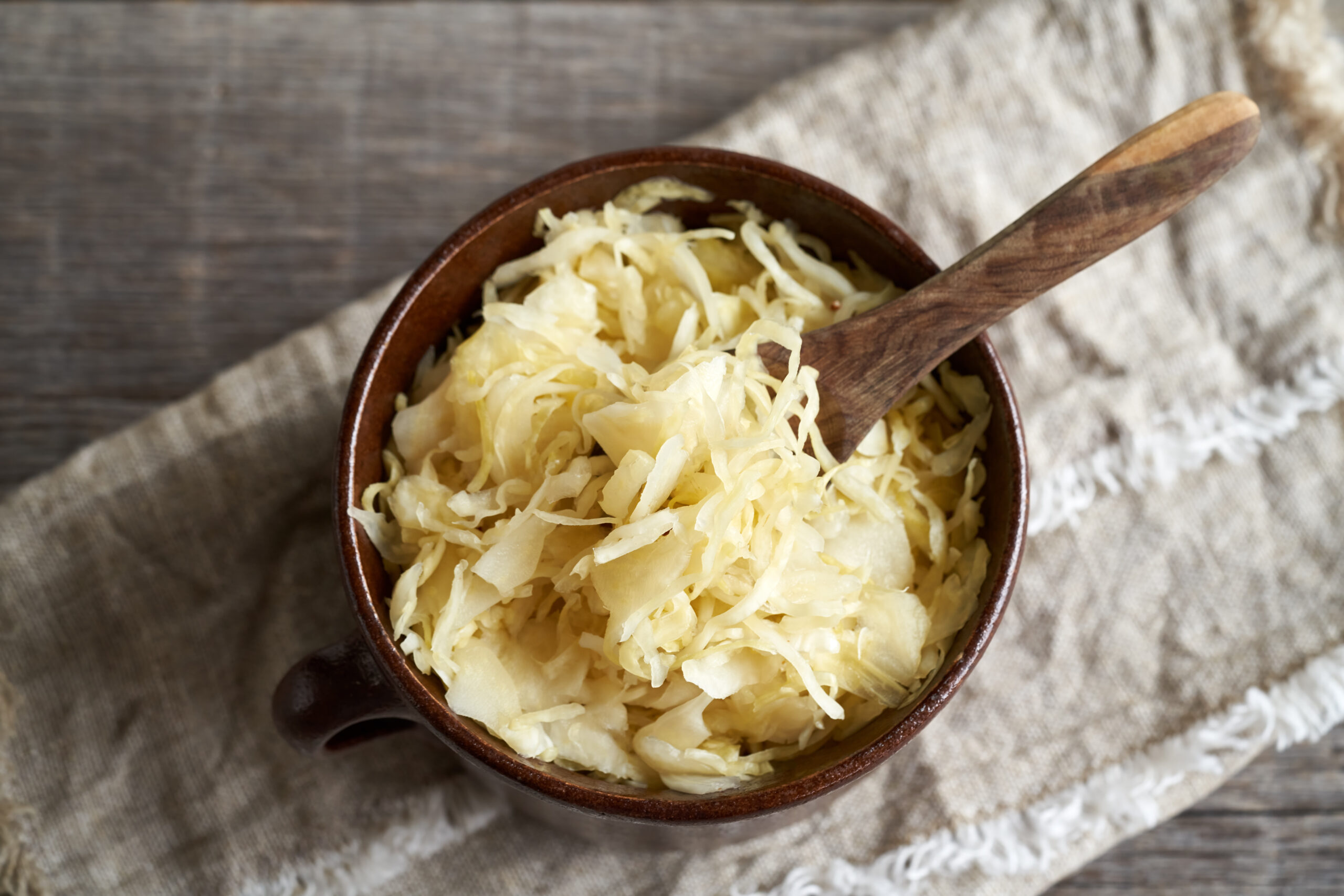
     

    Resources/Links

    Brought to you by

    Azure Standard

    Family-owned since the โ€˜70s, Azure delivers real food to your doorstep or a local drop point.

    Completely organic, non-GMO, no junk additives โ€ฆ

    azurestandard.com

    Murray McMurray

    Trusted since 1917, this Iowa family operation hatches premium poultry for homesteaders and enthusiasts, delivering healthy, hand-packed birds and all the supplies you need to start your flock right โ€ฆ

    mcmurrayhatchery.com

  • From a Derelict Hillside to a Thriving Family Farm

    How do a college theatre professor and his serially pregnant wife become homesteaders who grow just about everything their family of 10 eatsโ€”and everything their livestock eat as wellโ€”simply by grazing a few dairy cows on a steep, rocky hillside officially designated by the state of Ohio as โ€œnot suitable for agricultureโ€? Answer: mostly by accident.

    Our first glimpse of the Sowโ€™s Ear was in January of 1996, on a day pretty much like today: gray, overcast, with a wet, sloppy coating of old snow. The encounter was not promising. Our beat-up station wagon bounced and jolted over the uneven drive, naked blackberry canes scraping spiny fingers down its sides. The land was 17 acres, abandoned and overgrown, clinging to the sides of a steep, narrow draw. Whatever wasnโ€™t weedy, second-growth maple, oak, and locust woods was steep wasteland, bristling with brambles higher than your head. The house was derelict: windows broken, siding discolored, front door hanging from one hinge. Inside, it looked as though its last use had been as a kennel for dogs.

    At that moment, nothing was farther from our minds than what the future actually held: that, decades later, this land would be a tiny, thriving jewel of a farm, nestled into the hills, feeding our large family and larger assortment of livestockโ€”dairy and beef cows, dairy goats, and sheep; pigs, hens, ducks, turkeys; a farm dog and three barn cats. Who could have pictured green pasture carpeting the steep, eroding hillsides with gardens tucked into every corner?

    Certainly not us. As we picked our way over a yard littered with old auto parts, and crunched through rooms whose soiled carpets were strewn with broken glass, our only thought was that we would never in a million years buy this place. Out in the car, our three young sonsโ€”who, after one glimpse of the devastated zone, had prudently declined to join us insideโ€”were fervently agreeing.

    Our problem was a common one, and itโ€™s one of the first obstacles for beginning homesteaders. Homesteading has many challenges, and one of the biggest is that while we are in love with the idea of a homestead, most of us have, at best, a very fuzzy notion of what a working homestead should actually be like. Conventional large-scale grain or livestock operations, with their commercial goals and expensive equipment, donโ€™t give us much to go on. Homesteading at its core is about raising the best, nutrient-dense, health-giving food, primarily or exclusively for consumption by the family who lives there. Most Americans today have never seen such a thing in action, although, as we say, the idea of it is firmly fixed in our dreams.

    On that day in 1996, we were no exception. Even though both of us grew up on small farms with cows and big gardens, when we began shopping for a place of our own, what it turns out we were actually seeking was a look. We imagined a homestead that was flat, green, and open, with fences, barns, established pastures, garden plots, and maybe a pretty white house with a deep porch and maple trees in the front yard. Nothing was farther from our minds than buying something like this cross between a dump and a dying jungle.

    Our inspection didnโ€™t take long; in five minutes, we had seen enough. We fought our way back through the mounds of garbage and broken furniture to the front door. Brambles snatched at our ankles as we crossed the weed-choked lawn. Back in the station wagon, our children breathed a sigh of relief on hearing that this place, at least, was off the list of possible future homesteads.

    So, naturally, when we got home, we called the owner and said weโ€™d take it.

    Starting From (Less Than) Scratch

    Looking back, it still seems like the logical choice to have made. Land is expensive, often ruinously expensive. Mortgages take a lot of paying down. If we could buy land cheapโ€”and this land, with its derelict dwelling, was very, very cheapโ€”we could concentrate our future labor and money on improvements rather than mortgage payments. Of course, we reminded ourselves, the place wasnโ€™t a farm; but we figured that while we continued our search for appropriate land, weโ€™d fix up this junk-heap and flip it.

    What we didnโ€™t know was that this forlorn piece of real estate was going to teach us how Godโ€™s earth is marvelously diverse, adaptable, and self-healing, and how just about any piece of it can become a fruitful home for a family. We were going to learn that God designed His creation with built-in patterns that produce the health, diversity, and abundance we see in nature, and we can use those same patterns to build thriving, abundant homesteads.

    In retrospect, we can see that buying this place was a watershed point for our family. As Shawn sometimes says, who we areโ€”the kind of people, the kind of family we areโ€”is a direct function of our decision to buy and stay on one cheap, damaged, rejected piece of Appalachia and tend it according to the promptings of nature. Since that day in 1996, our lives, our work, our food, and our education have grown up out of these slate hills, until we have become people of this place, bone of its bone. Weโ€™ve become farmers.

    Not that we had any sense of this on that day in March when, with butterflies in our stomachs, we paid cash for our dubious new purchase. By April 1st, we were tearing out walls, putting lally columns in the basement, and scything blackberry canes around the back door. We had to pause for a couple days to have a babyโ€”another boyโ€”but early in May we moved in.

    The house was far from readyโ€”no drywall, only one functioning faucetโ€”but we knew we needed to be there. With spring already advancing, we had no time to waste, so even before getting running water in the house, we got to work making gardens. In places, rocks were only inches below the surface; in other spots, soil that looked promising turned out to be mostly silt and gravel. We sought out organic matter wherever we could find it. We hauled in loads of cow manure to make raised beds; elsewhere, we tilled rotted sawdust into the stony soil. Soon the weedy lawn was sprouting crooked tomato stakes and tips of pole beans.

    Livestock werenโ€™t neglected: two dozen brown leghorns took up residence in a shed behind the house, and right away there were eggs for breakfast. It was an exciting day when we first picketed our new Nubian does, Nutmeg and Clove, in a thick brake of berry canes. That night we had some of their milkโ€”our mouths screwed up with the new experienceโ€”to go with our dinners. It was the beginning of something big.

    It isnโ€™t as though we had a plan. We just wanted to raise our family in the country, work together, and grow our own food. But maybe nature had a plan for us. As we scan back over the years, certain twists in our homestead saga stand out as the drivers of change, the things that really signaled what direction we would be going. Three, in particular, were decisive.

    Adding Dairy Animals

    The first, biggest, and most important choice we made was the decision to keep dairy animals. Like everyone else, we had always heard how much trouble dairying wasโ€”what a ball and chain it would quickly become. And yet, it was something that felt right. We were fascinated by the idea of fresh nutrition every day, nearly, or actually, for free. Those dairy goats ate briars, bushes, honeysuckle, and poison ivy, and theyโ€™d have been worth their weight and then some if thatโ€™s all they had done. But this daily influx of milk, for drinking and cooking and cheese-making, was like a wish granted in a fairytale. We were hooked.

    Goatโ€™s milk, appropriately enough, tastes like goatโ€™s milk. We loved it in strong, sour cheeses, rich with butterfat; it worked well in cooking, too. But for drinking, our palates had been formed on cowโ€™s milk, so by the time the briars had begun to recede and grass was growing in, there was a young Jersey cow, Isabel, to graze it. And all of a sudden, there was a whole, whole lot of milk.

    Sometimes when blessings arrive, they seem like problems. Isabel started out giving five gallons of milk a day, and by day three there was no room in the refrigerator. We made butter and yogurt and cheeseโ€”in fact, we seemed to be doing little else. But even with some herd shares to take the pressure off, we had more milk than we knew what to do with. We knew it was time to do a
    little research.

    And guess what we learned? Farmers have had the โ€œtoo much milkโ€ problem since the beginning of timeโ€ฆ only they called it a blessing and used it to fatten pigs. According to standard procedure, fresh milk is strained and set so the cream can riseโ€”cream for butter-making and coffee. Butter-making leaves skim milk and buttermilk, which go to the pigs. Milk is a pipeline for the solar energy the farm runs on, sunlight captured in grass and converted by the cow.

    Since ruminants can digest celluloseโ€”which is 90 percent of the energy in grassโ€”and other animals canโ€™t, using cows to convert our sunlight into proteins and fats doesnโ€™t just feed people, it feeds the whole farm. There were the pigs, of course. Chickens, it turns out, love milk too, which provides them with protein and calcium for egg-making. The additional protein meant we had to buy less commercial feed. Dogs and cats who get milk love their home and stick around to catch pests and predators, so we werenโ€™t buying pet food, either. Grass was feeding the farm.

    And holistically-grazed pasture makes a whole lot of grass. Our pasture management (read: holistic grazing) was growing more and better grass every season. With daily or twice-daily paddock moves, our cows were healthy and parasite-free, too. Healthy pasture, healthy cows, healthy milkโ€”it all goes together. The discovery that grass could feed the farm was titanic. There was only one way to make it better, and that discoveryโ€”our second big lessonโ€”was just around the corner.

    Investing in Borrowed Land

    We used to balk at the idea of putting our hard work into someone elseโ€™s property. Not that we mind doing work for friendship or charity, but we disliked the thought of improving someone elseโ€™s land instead of our own. If we were going to build soil somewhere, we wanted to own that somewhere, and thatโ€™s all there was to it.

    Only, there was no getting around the fact that most of our own land was too steep, and too densely forested, for grazing a cow, while just next door the neighbors had aโ€”weโ€™ll call it a field, but it was more of a bramble patchโ€”that, while it was steep, weedy, and rocky, was also unused.

    Getting over our determination to own whatever land we used was a huge leap forward. Land costs money, and money was just the thing we were short of. If we were determined to solve problems with more money, Shawn was going to have to spend more time working off-farm, and that was something we really didnโ€™t want. Meanwhile, land sat idle next door because we were stubborn. Isabel was looking longingly over the fence, and we decided we needed to get over itโ€”our prejudices, not the fence.

    Getting comfortable with improving land we didnโ€™t own opened up a whole range of possibilities. We got permission to graze that field and eventually we did buy it. As our little herd grew, we extended our reach a mile up the road to another vacant field, this one belonging to a convent. Our notion that we should be a self-sufficient island gave place to the certainty that our work, our land, and our neighbors were all part of a much bigger planโ€”Godโ€™s planโ€”and we needed to be more open to His purposes.

    Growing Food Year-Round

    Our gardens thrived with all the composted pig bedding and chicken manure our animals made. We were producing all of our own meat and dairy, our staple carbohydrates (potatoes), and in-season fresh vegetables. We canned, dehydrated, fermented, and stored extra produce in our root cellar, and our table was covered with homegrown food year-round. But there was a gap: winter produce. We love our fresh salads, and we didnโ€™t want to give them up. But winter vegetables require infrastructure that was beyond our frugal budgetโ€ฆ or so we thought.

    Until we stumbled upon Eliot Colemanโ€™s landmark book, The Winter Harvest Handbook. Our first, simple low-tunnel was cheap PVC hoops over a bed of lettuce, but it didnโ€™t stop there; we began growing winter carrots under cover, then beets, spinach, and other cold-hardy greens. The last piece of our diet.

    A Family Legacy

    Our family continued to grow, adding two more boys, and two girls. When we needed an addition on the house, we built it ourselves. We all loved to eat, so growing and raising our food came naturally to the children, especially when we worked as a family. Homeschooling meant we could customize our schedule and curriculum to our individual needs, talents, and opportunitiesโ€”something we felt strongly that God was calling us to do.

    In 2023, that paid off unexpectedly when our beloved, ramshackle farmhouse was destroyed by fire. Our children, now aged 36 to 16, plus five daughters-in-law and a dozen grandchildren, took on the task of rebuilding. Skilled in the arts of construction, along with timber framing, masonry, and design (one son is an architect), they collaborated on the creation of a legacy home, built entirely by ourselves, and uniquely suited to our lifestyle and aesthetic. Our family food waysโ€”dairying, butchering, food preservation, and storageโ€”have shaped the house, as they shaped the farm, as they shaped us.

    Life continues to unfold for us as we go on growing where we are planted, building from the simple, even damaged pieces God has placed in our paths. Being together has been our most important priority; working together, providing for one another, has driven our choices. A thorny, trash-covered piece of hillside has become a tiny jewel of a farm, a burgeoning source of sustenance, and a family way that binds us to one another and to our land.

    A resurrection out of ashes.

  • Ditch Refined Flour: How to Bake Nourishing Bread at Home

    Being born and raised in the South, down-home comfort food has always been on the menu. From garden-fresh corn on the cob and fried green tomatoes to mac and cheese and bacon-wrapped green beans, delicious food has always made life sweeter and brought people together.

    Alongside almost every Southern meal is some kind of mouthwatering bread. Most meals have their complimentary bread counterparts: for example, chili and cornbread, roast and rolls, or chicken and biscuits. The list goes on. Southern tables are laced with delectable dishes and an abundance of bread in the breadbaskets.

    This type of โ€œheavy carbโ€ meal was commonplace for me growing up. However, as an adult, I have become increasingly aware that bread has received a bad reputation for being unhealthy and loaded with carbs that cause unwanted weight gain. This perspective has brought about many low-carb and no-carb diet fads, along with a growing number of people switching to gluten-free diets. As a result, many skip the breadbasket when it is passed around the dinner table, hoping their waistlines will thank them later.

    In my adult life, I began adopting many of these cultural views toward bread, such as the idea that โ€œcarbs are bad.โ€ I even tried some of the low-carb diets. But each time I ate this way, I didnโ€™t feel well in my body. No matter the weight loss I may have achieved, I lacked energy, and my gut didnโ€™t feel healthy.

    This process led me back to something that had always puzzled me. After all, breadmaking has been an ancient tradition and a food staple throughout history, across all cultures. People have grown, harvested, stored, and ground their grains into delicious and nutritious food for millennia. So what has happened in the last century and a half to turn this fundamental food staple into a pernicious one?

    Essentially, everything has changed.

    Benefits of Freshly Milled Flour

    Historically, people have always ground whole grains using a mortar and pestle, quern, or stone mill powered either by hand, water, wind, or steam. This freshly milled flour included all of the parts of the grain seed and was incredibly nutritious, but not particularly shelf stable. Because the oil from the germ remained in the flour, once it was exposed to the air, the flour began to turn rancid and had to be consumed within a short amount of time. This meant that families needed to visit their local miller often and thus communities formed near the mills.

    Then, in the 1870s, the flour milling industry was forever changed when steel roller mills were invented. These new roller mills allowed companies to separate the parts of the grain when it was ground into flour. To understand the great importance this invention had on our health, we need to know about the parts of the grain seed.

    There are three main parts to each grain seed:

    • Bran: The protective outer layer that is high in fiber and B vitamins.
    • Germ: The seed for a new plant and the life force of the grain, the germ contains B vitamins, minerals, protein, healthy oils, fatty acids, and is one of the most abundant food sources of vitamin E.
    • Endosperm: The white flour portion of the milled grain that contains starch, protein, and very little vitamins and minerals.

    The new roller mills were less expensive to operate and separated the bran and the germ, leaving only the endospermโ€”the least nutritious, starchy part of the grain. With the bran and germ removed, this long-lasting white flour was fluffier, more shelf-stable, and could be distributed over greater distances to the masses, thereby becoming more profitable.

    The new invention was seen as a modern advancement, but it soon became clear that this refined white flour was behind the increase in many diseases. By the 1920s pellagra, anemia, and beriberi were escalating rapidly. Each of these diseases is caused by a deficiency. Pellagra is caused by a niacin (vitamin B3) deficiency, anemia is an iron deficiency, and beriberi is caused by a thiamine (vitamin B1) deficiency. Iron and B vitamins are part of what is sifted and removed from the milled flour to produce the white flour.

    In the 1940s, America was facing disease at such high proportions that the government stepped in and mandated that store-bought flour be enriched with iron, along with three B vitamins (thiamine, riboflavin, and niacin).

    However, iron, thiamine, riboflavin, and niacin arenโ€™t the only nutrients lost during processing. You might be surprised to learn that 30 nutrients are removed when the bran and germ are stripped from commercially milled flour. Of these, only four are added back, yet we call it โ€œenriched flour.โ€ In reality, that flour is anything but โ€œenriched,โ€ and itโ€™s used in many processed foods that contribute to obesity, diabetes, constipation, and more. By using freshly milled flour, which includes all parts of the grain, youโ€™re adding fiber, vitamins, minerals, and fatty acids back into your dietโ€”and your health will thank you for it.

    As homesteaders, we are always working to provide our families with wholesome, fresh, quality food. We grow gardens for vegetables and fruits and preserve the bounty for our pantries. We cook from scratch and love to buy local, organic meat, dairy, and produce. Why would we not prepare and cook our grains as nature intended to reap all of their nutritional benefits in our baked goods?

    Types of Whole Grains

    When it comes to buying grains to mill, I like to purchase hard wheat and soft wheat grains (also called wheat berries) in bulk, as well as whole oats, and whole dent (or field) corn. I typically buy these in 25- or 50-pound bags. I use hard wheat in almost all of my bread baking including honey wheat bread, sourdough bread, and muffins. Soft wheat is fantastic in softer baked goods like cookies, biscuits, cakes, and pastry dough. I like to keep smaller quantities of spelt, kamut, and einkorn berries for baking. If youโ€™re trying a new grain, I recommend starting with a small quantity and experimenting with a few recipes to see how you like it before buying in bulk.

    Whole grains can be purchased from many suppliers including Azure Standard and Amazon. I like to buy mine from Azure Standard because they offer many organic options for the grains I use.

    Choosing a Mill

    Just like many homesteading skills, having the right equipment is key. When it comes to milling, itโ€™s important to consider several factors before purchasing a mill. Consider how much time you plan to devote to milling and the cost you are willing to invest. There is a milling method for just about every budget. There are even ways to mill your grains without a home mill.

    Manual Vs. Electric Mills

    The first thing to decide when choosing a flour mill is whether you want a manual or electric mill. This is fairly self-explanatory but does play a role in how much time you are willing to spend milling your flour. Although they can be more tiresome and time-consuming, manual mills are an excellent choice if you are concerned about making flour without electricity. Lehmanโ€™s, Grain Maker, and Country Living are all great choices for manual mills.

    Electric mills require minimal effort and allow the user to continue other kitchen tasks as the grain is efficiently ground into flour. Some popular choices for electric flour mills include Mockmill, Nutrimill, and Wondermill. I personally own the Mockmill 100 and love it!

    Impact Vs. Stone Mills

    The second thing to decide on is the method of grinding you prefer. Impact mills use stainless-steel blades to fracture and grind the grains. Wondermill and Nutrimill are examples of impact mills. Stone mills use two millstones, one stationary (the stator) and one that rotates (the rotor). Together these stones work to grind the grains into flour. Mockmill is an example of a stone mill.

    Baking With Freshly Milled Flour

    Baking with freshly milled flour requires a few adjustments to your recipes. First, youโ€™ll need to use less freshly milled flour than you would store-bought flour. Freshly milled flour is also more absorbent, which means youโ€™ll likely need to add extra liquid. As a general rule, you can add up to 1/4 cup of additional liquid per recipe when substituting freshly milled flour for store-bought flour. The exact adjustments will depend on what youโ€™re baking. If your dough feels too sticky, add more flour one tablespoon at a time. If it seems too dry, add more liquid one tablespoon at a time until you reach the desired consistency.

    Additionally, freshly milled flour tends to create a tighter crumb texture and may not rise as much during proofing compared to store-bought flour. These subtle differences can add unique character to your baked goods while still delivering delicious results.

    Storing Your Grains

    Whole grains store for years in five-gallon buckets with gamma lids, making them a great bulk buy to keep as pantry staples. Once milled, unsifted flour should be kept in the freezer in an airtight container or freezer bag for up to two months. Some of the nutrients begin to oxidize within 24 hours after milling, so donโ€™t leave flour at room temperature. Either bake with it the same day or freeze it for later use.

    Knowing the amazing health benefits and nutrients of freshly milled grains, I no longer stay away from bread but instead welcome the healthy grains in my diet as nature intendedโ€”freshly milled and using all of the seed. Today, I love to cook and eat bread, muffins, cookies, biscuits, and cornbread made with freshly milled grains. What greater gift could I give to my family than nourishing food that brings us all together? Pass the breadbasket, please!

    Milling Flour Without A Grain Mill

    You donโ€™t have to own a grain mill to have nutritious whole grain flour at home. Here are a few economical alternatives to purchasing a home grain mill.

    Coffee Grinder: This is the most affordable option and is easy to use. You can sift out any larger pieces, but overall it gives a beautiful grain on the coarser side.

    Food Processor: This works very well for grinding things finely and quickly. It will hold more flour than a typical coffee grinder and is cheaper than a grain mill.

    Blender: Many of us already own a blenderโ€”like a Ninja or Vitamixโ€”and that is an efficient way to grind your grains into a very fine flour. This option is still cheaper than a grain mill.

    Recipes

    Honey Whole-Wheat Bread

    This delicious whole-wheat bread is my go-to weekly recipe! With its lightly sweet taste and fluffy texture, itโ€™s perfect for making sandwiches, toast, or serving alongside your favorite bowl of soup. The recipe is super simple and hands-off, so you can work on other kitchen tasks while your mixer does the kneading for you. Using freshly milled flour means that this bread is truly โ€œwhole wheat,โ€ incorporating all the nutritious goodness of the whole wheat berry to elevate your homemade bread.
    Print Recipe Pin Recipe Rate Recipe
    Servings: 2 Loaves

    Ingredients

    • 4 1/2 cups freshly milled hard wheat flour white or red
    • 1 1/2 cups water or use half water, half milk
    • 3 tablespoons butter
    • 3 tablespoons honey
    • 2 teaspoons instant yeast
    • 1 egg
    • 1 1/2 teaspoons sea salt

    Instructions

    • Mill about 3 cups of hard wheat berries in your mill. This should give you about 4 1/2 cups of flour. Set aside.
    • Add water (and milk if using), butter, and honey to a glass bowl and heat (either in the microwave or over a small pot of water on the stove) until the butter is melted. Add the butter mixture to the bowl of a stand mixer fitted with the dough hook. Sprinkle the yeast on top and let it bloom for 5 minutes. Then add the egg, salt, and freshly milled flour.
    • Knead with the dough hook until the dough cleans the bowl while kneading, and passes the windowpane test when pulled gently. If the dough seems too sticky, add more flour one tablespoon at a time. If the dough seems too dry, add more water one tablespoon at a time.
    • Let the dough rise in a covered bowl in a warm place until doubled (about one hour).
    • Divide the dough in half and roll up to shape into two bread loaves. Place into greased loaf pans and let rise until doubled again.
    • Bake at 350ยบF (177ยบC) for 30-35 minutes. Remove from pans from the oven and allow to cool completely before slicing.
    Tried this recipe?Mention @homesteadlivingmagazine or tag #homesteadlivingmagazine!

    Whole-Wheat Blueberry Muffins

    These whole-wheat blueberry muffins are loaded with nutritious fiber from all of the freshly milled flour and antioxidant-rich blueberries. These muffins freeze beautifully so I always double or triple the recipe to enjoy some fresh, and freeze the remaining muffins to make busy mornings easier. You can also swap out the blueberries for fresh or frozen strawberries, raspberries, or blackberries. Serve these alongside a piping hot cup of coffee and your morning just got a little sweeter!
    Print Recipe Pin Recipe Rate Recipe
    Servings: 12 muffins

    Ingredients

    • 2 1/4 cups freshly milled soft white wheat flour (spelt or kamut work great also)
    • 1 teaspoon baking powder
    • 1 teaspoon baking soda
    • 1 teaspoon sea salt
    • 1 1/2 teaspoons ground cinnamon
    • 1/4 teaspoon ground nutmeg
    • 1 egg
    • 1/2 cup olive oil
    • 1/2 cup honey
    • 1 cup buttermilk*
    • 1 teaspoon vanilla extract
    • 1 cup fresh or frozen blueberries

    Instructions

    • Mill about 1 2/3 cups of soft white wheat berries in your mill. This should give you about 2 1/2 cups of flour.
    • Whisk together the wet ingredients. Then add 2 1/4 cups of flour and stir to combine.
    • Scoop into a greased muffin tin and bake at 400ยฐF (204ยบC) for about 20 minutes or until golden.

    Notes

    Donโ€™t have buttermilk on hand? You can make your own by adding a tablespoon of vinegar or lemon juice to a cup of milk. Let stand at room temperature for approximately 5 minutes before using.
    Tried this recipe?Mention @homesteadlivingmagazine or tag #homesteadlivingmagazine!
  • The Beginnerโ€™s Guide to Raising Dairy Sheep

    Home dairying is on the rise, and rightly so. Thereโ€™s a unique satisfaction in knowing the animal that provides our milk. However, not everyone can have a dairy cow, and not everyone wants to tackle the beloved tornado that is a dairy goat.

    Cows are large animals and an equally large financial investment. They drink up to 20 gallons of water a day, and need at least a few acres to be kept well. Goats respect fences that contain water, and in temperament, tend to be the Golden Retriever puppy of the livestock world. They donโ€™t do well on only grass, and their milk is polarizing. You either love it or hate it.

    While we all deserve access to fresh, local milk, sometimes cows and goats just arenโ€™t a good fit for every homestead. Enter the humble dairy sheep.

    The Case for Sheep Milk

    Sheep milk is not a new concept; neolithic archeological digs have recently resubmitted the milk residue found on pottery shards for chemical testing. The results point to sheep as the party responsible for the milk. The earliest domesticated animal graveyards found around the archaeological sites are lamb bones. Calf and goat kid bones show up a bit later, indicating sheep may have been the first domesticated farm animal kept for dairy. (Ruminant graveyards of the young indicate dairy operations, as slaughtering upon birth used to be common practice in dairies. This led to larger-harvested milk yields, and the stomachs of the young were used to make rennet for cheesemaking.)

    Why would our ancestors prefer sheep milk to cow or goat milk? Firstly, because it tastes amazing. Sheep milk is known as the champagne of milk. Iโ€™ve heard it compared to melted vanilla ice cream. Despite having the lowest amount of lactose (milk sugar) out of the three species, sheep milk tastes sweeter than cow and goat milk. It is the highest in fat content, meaning that a gallon of sheep milk will always make more cheese than a gallon of goat or cow milk, and there will be less whey waste. The protein in sheep milk is A2A2, but it is a different kind than the A2A2 found in cow milk. The fats and proteins are smaller and smoother in shape, which means minerals cling to them more densely.

    Sheep milk also has doubleโ€”if not tripleโ€”the amount of vitamins and minerals found in goat and cow milk. Itโ€™s low lactose and high fat content means it will ferment slower, an important factor to remember during cheesemaking. This also means that you wonโ€™t have that pesky belching or flatulence after consuming sheep milk that some folks experience after consuming cow milk products. Some studies indicate that sheep milk actually contributes to your bodyโ€™s production of betaine, an important component in the digestive process. If the studies are right, this means that sheep milk could potentially help you digest other foods.

    Sheep tend to lactate for six to eight months at most, meaning there will be a dry period for part of your homesteading year. Sheep milk can be frozen or preserved in the form of cheese, but it isnโ€™t the same as fresh milk.

    Dairy specific breeds of sheep are quite rare in the United States at this time. Most are still involved in โ€œbreeding up programs,โ€ meaning that genetics in the form of frozen semen or fertilized embryos are being imported and surgically implanted in ewes. Offspring are either a higher percentage than the host parent or, in the case of in vitro fertilization (IVF), are 100 percent genetically pure. Artificial insemination leads to a higher percentage of offspring, and is the more successful and financially viable method of bringing in sheep genetics into our country. In vitro fertilization has a low success rate, sometimes a one-in-four (one viable lamb per every four pregnancies), and so those sheep are fantastically expensive.

    Shall we despair of a home dairy sheep operation? I think not.

    Historically, our ancestors were not as concerned with breed types as we are now. Ancient shepherds and dairymen did not require a pedigree in order to enjoy milk. They simply harvested when there was enough and did without when there wasnโ€™t. Some shepherds weaned their lambs when coming off summer pastures and milked the ewes for a monthโ€™s drying off period. Their dairy operation was a short window each summer to make their yearโ€™s stockpile of sheep cheese.

    Therefore if you research many breeds of sheep currently considered โ€œmeat sheep,โ€ you will find that someone somewhere has historically milked them at some point. A prime example is the Cheviot sheep. This wool breed is predominantly raised for meat, although some brave fiber artists spin its strong locks and enjoy warm socks and outdoor wear from the ensuing yarn. Historically, Cheviots were milked. Border Leicesters, Black Welsh Mountain sheep, Navajo Churros, Karakul, and Clun Forests were similarly milked by their historic shepherds. But today they are firmly classified as meat sheep.

    What Makes a Good Dairy Sheep?

    A dairy specific breed of sheep is one that has been selectively bredโ€”sometimes for hundreds if not thousands of yearsโ€”for longer lactation time, higher milk yield, and larger teats to make hand milking more enjoyable.

    East Friesians are the most commonly known dairy breed; they are the โ€œHolstein cowsโ€ of the sheep world. Some can give up to a gallon of milk per day, and their lactation time can range from eight to 10 months.
    Their ancestors hail from the German countryside, and their Dutch cousins are called the Zwartbles. Their overall hardiness is debatable. These sheep want babiesโ€”but youโ€™ll want to baby them because they are so friendly.

    Awassi sheep are a Middle Eastern breed whose cousin is the Karakul sheepโ€”both fat tailed breeds. They donโ€™t produce as much milk as the East Friesian, but they are typically hardier, if not a little flightier. Assaf are an Israeli breed that was created by combining East Friesians with Awassi sheep.

    Finally we have the Lacaune, which are a French breed of sheep from whom Roquefort cheese is made. Of the dairy specific breeds, these are my favorite. Their milk is high in fat and they are hardy with a decent temperament.

    These breeds all have high milk production and long lactation times. Their udders are large and their teats typically a joy to grab onto and squeeze milk from. Their primary product is milk production, with meat and wool as byproducts.

    Meat breeds of sheep will lactate between three to six months, and it is luck-of-the-draw as to whether they will have jelly beans for teats or nice big handles. You wonโ€™t know until after youโ€™ve bred and trained them to the stanchion and get them up there to see. I personally milk meat breeds and dairy crosses alike. I milk my purebred Gulf Coast Native sheepโ€”a naturalized heritage breed from the American South. I also milk ewes that are crosses between East Friesians, Awassi, Lacaune, and other heritage breeds such as Icelandics and Tunis. The heritage breed genes give the ewes hardiness and the East Friesian genetics give them longer lactation and larger milk supply.

    Many folks ask if they can milk their hair breed sheep. Yes you canโ€”you can milk anything that lactates if you can hold on long enough. Hair sheep typically have very short lactation times and the amounts range from a cup to a pint. Some breed associations like the Tennessee Katadin Association have records of which family lines have higher milk production. However, while hair sheep have their place in this world, I try to encourage homesteaders to not shy away from the wooly breeds.

    Other Useful Byproducts of Dairy Sheep

    Wool is a fabulous homestead commodity that I am almost as passionate about as I am sheep milk. Wool is antimicrobial, antiviral, has a high frequency signature, and composts incredibly well. Plants that are mulched with wool are healthier, hardier, and more nutrient dense. People who wear wool are also healthier.

    Felting oneโ€™s wool harvest is an easy way to turn it from a raw product into a value-added item that one can use, gift, or sell. Spinning, weaving, knitting, and crochet are all wonderful skills to bring back to daily homesteading life. None of them have to be super complicated, they just take time and practice to master. I personally spin and knit my sheepโ€™s wool into both winter and summer garments for myself and my family. Wool wicks away moisture from sweat and is breathable, so if the created fabric is thin enough it makes fabulous summer wear. I also make blankets and stuffed animals for my son. My husband says the most comfortable pillow heโ€™s ever used is the one I peg-loomed and stuffed with wool.

    Sheep are also the ultimate permaculture animal. Dairy sheep are an untapped resource many homesteaders are currently unaware of. From their manure that feeds soil, to their wool that keeps us warm and healthy, to their nourishing meat and life-giving milk, I can say with confidence that sheep have improved our homestead exponentially.

    How to Get Started with Dairy Sheep

    So how does one go about acquiring oneโ€™s own flock of dairy sheep, and what does it take to start out? First, decide on what breed you want to bring home. We have about 50 breeds of sheep available in the United States, and all of them make milk after lambing. I recommend new shepherds start with four sheep; two ewes, a ram and a wether (a castrated male sheep). Sheep get lonely, so itโ€™s important for your ram to have a buddy when heโ€™s not in with his girls.

    Once you get your new flock home, itโ€™s important to start working with them right away and training them to your stanchion and routine. Yes, sheep are smart enough to train. They really arenโ€™t stupid at all. But you do have to earn their trust, and establish yourself as their shepherd. Once they bestow that role upon you, training can begin.

    A new organization was formed in 2024 as a resource to connect dairy shepherds and customers. The North American Dairy Sheep Association is a great place to find sellers of multiple sheep breeds being used for dairy.

    I also have a detailed process outlined in my ebook, Bringing Your New Sheep Home, and I discuss the step-by step-processes on training your new sheep to be milked and how to hand milk them in my book, The Guide to Homestead Dairy Sheep.

    All of that to say, if you are looking for a personal source of nourishing home dairy, as well as a number of potentially beneficial byproducts including meat, manure, and wool, consider the humble sheep as an option. Dairy sheep could just be the missing link on your homestead.

  • Winter Livestock Care: Joel Salatinโ€™s No-Nonsense Guide

    Every species of livestock has a different tolerance for cold and the many nuances winter brings for good care. In general, herbivores can handle the cold easier than omnivores. In all cases, wind (drafts) and dampness compound coldโ€™s difficulties.

    Access to Water

    When delving into cold-weather animal care, the one aspect too many people overlook is water. Low temperatures do reduce water consumption, but animals still need water, even on the coldest days. Ice wonโ€™t do.

    If you have electric power to a water trough, you can use a thermal gadget to maintain open water. Moving water freezes slower than motionless water. Well water comes out of the ground at about 50ยฐF (10ยบC) versus pond water with a foot of ice on top that starts down a pipe at about 33ยฐF (0.5ยบC).

    The chances of moving water freezing changes dramatically depending on how long the pipe is exposed to cold air and at what temperature the water entered the pipe. On our farm, we use pond water but bury the water lines. Even though a pond may have a foot of ice on top, as soon as the water enters the buried pipe it begins to warm.

    Overflows work extremely well if you have plenty of water. Fortunately, most of the time, water is far more plentiful (ponds, wells, springs) in the winter than in the summer. Winter wastage is usually not a problem like it is in the summer when droughts can deplete sources.

    Weโ€™ve been successful keeping troughs open down to 0ยฐF (-18ยบC) by creating a flow-through system. This can be a siphon or a simple bulkhead fitting in the side of the trough that drains water off. In either case, be sure to run your overflow hose away from the animals so they donโ€™t muddy up the area. With a full-flow valve plumbed into the bottom of a 100-gallon tank (or smaller) it doesnโ€™t take much flow (1-2 gallons per minute) to keep things ice-free as long as the water is coming in at ground temperature.

    Balancing Convenience and Practicality

    Figuring out how much flow you need and at what temperature for a certain size tank is a bit of an art, but with a little experience youโ€™ll get the hang of it quickly. While some folks may think wasting this much water is a terrible thing, other alternatives may be more costly in time and/or materials. Running an electric line out to a thermal unit has its own limitations, especially in far-away fields or rented ground. Sometimes we have our livestock on rented land that has no power drop.

    Some folks want to develop infrastructure thatโ€™s bullet-proof to the most ultra-imaginable apocalypse. Thatโ€™s never cost effective. By the time you do that, youโ€™ll be bankrupt. Capitalizing on infrastructure designed to handle 95 percent of your weather anomalies means that a handful of days each year you have to do some babysitting. A few days of babysitting (checking a tank or finagling a siphon drain) beats stationary frost-free field drinkers. I want everything portable in order to keep the animals on clean ground and move the impaction around for greatest benefit. Every cow path indicates a lack of proper management.

    Another cold alternative is to drain the feeder hose or pipe in the evening and let the animals drink the tank dry overnight. In the morning, hook the water back up for the day. Nothing keeps a tank open like bright sunshine, so whatever you can do to encourage that is good. We have pigs in sheds with plastic pig waterers. A buried pipe feeds a frost-free hydrant nearby. In the morning, we fill the 85-gallon waterer. The pigs drink all day, and at night it may freeze solid, but as soon as we put 50ยฐF (10ยบC) water in it, enough thaws to get everything working.

    For chickens and rabbits, nothing works as well as housing them in a hoop house. No matter how cold it gets, we can always get the temperature to 70ยฐF (21ยบC) in the daytime. Even if water lines and waterers freeze at night, within an hour or two of sunrise everything thaws enough to run again. We simply disconnect the feed lines from the frost-free hydrants overnight so the hydrant can drain and not freeze.

    Yes, extremely expensive frost-free livestock watering systems exist, but as long as your main feed lines are buried enough to not freeze, you can get by with a little babysitting. Of course, historically folks gave their animals access to streams (and spring-fed flows) in the winter. In that case, always create a tight V access so they canโ€™t completely enter the water and pee in it. You want a tight enough V that they can stand at the edge and drink, but not go completely into the pond or stream and turn around.

    As a side note, what Iโ€™ve described would not satisfy animal welfare certification programs which demand that all animals have access to drinking water at all times of day and night. Anyone who keeps livestock knows animals are highly adaptive to routine and do not require water every moment of the day. Herdsmen and shepherds taking animals to water a couple of times a day predates modern urbanites writing ridiculous rules. As long as you develop a dependable routine, animals donโ€™t stress. If you give them plenty of water a couple of times a day, theyโ€™ll be quite happy.

    But not chickens. Their metabolism and ability to hold water is different from larger animals. They need water throughout the day, but they sleep the most soundly at night. Cows will wander around some at night, but not chickens. Thatโ€™s the positive side of the chicken, which needs no water at night.

    Keeping Animals Dry and Protected

    Now letโ€™s move to shelter. Draft and dampness kill chickens even at moderate temperatures. All animals have the capacity to insulate themselves with hair, wool, hide, and feathers. Or, in the case of pigs, they naturally make nests and snuggle together to keep warm. But no animal likes it windy and wet. Cows can handle snow much better than a cold, freezing rain. Itโ€™s all about preserving their natural insulation.

    Think about what happens to you when your coat gets wet on a cold day. As long as it stays dry, youโ€™re warm. As soon as itโ€™s soaked through, you start to shiver. Thatโ€™s similar to animals and why they all seek shelter in cold rains and blizzards. Since our animals canโ€™t always find natural shelter, we ought to provide it for them.

    Here at our farm, we like pole sheds. The poles offer lots of configuration options by providing sturdy anchors for gates and temporary divisions. The key is a roof to keep off cold rains and a soft, carbonaceous bedding to provide a dry, warm place to lounge. Wood chips, sawdust, leaves, strawโ€”any kind of carbon will work, but it should go in dry in order to absorb all the urine it possibly can.

    Deep Bedding for Warmth and Comfort

    We store mountains of wood chips in a carbon shed next to the livestock barnโ€”pole shedโ€”and bed the animals every few days by loading the carbon in a manure spreader and backing gently through the shed. We add 80 pounds of corn per cubic yard and it ferments in the anaerobic, compacted bedding. When spring arrives and grass grows, the cows and sheep go back out to pasture and we put in pigs, who seek the fermented, buried corn and aerate the deep bedding (up to 4 feet deep), turning it into beautiful compost.

    That fermented bedding never gets below about 50ยฐF (10ยบC) during the winter, which means the cows and sheep do not need as much caloric intake to maintain body temperature. That reduces hay consumption. We feed in vertically-movable hay gates or even round bale feeders (square bales work just fine) that we move around when the bedding starts building up around them.

    All animals thrive on deep bedding, or what we call a โ€œcarbonaceous diaper.โ€ Chickens, rabbits, and pigs in tall tunnels stay warm during the day. At night, they snuggle together and stay warm. Imagine a cold bedroom where you snuggle under blanketsโ€”and if youโ€™re fortunate, next to a warm spouse. The point is, you can take about any temperature at night as long as you can warm up during the day.

    If pigs can create a nest of carbon, they can handle just about anything. We had two blizzards back-to-back one early December before weโ€™d gotten our last group of pigs in from their forest acorn glen. I couldnโ€™t get to them for a couple of days. When I finally broke through the snow drifts and arrived on the tractor, they erupted out of a big nest theyโ€™d built in the leaves next to a deadfall. Steam rose like a maple sugaring evaporation tray. They were happy to see me, but mainly, they were comfortable and healthy. They followed the tractor tracks home to the shed and were glad to be home for the rest of the winter.

    Animalsโ€™ Resilience in Cold Weather

    Animals are far more resilient than most people think. As long as they can stay dry, both above with a roof and below with bedding, and stay out of the wind, they can handle just about anything. You donโ€™t need an L.L. Bean plug-in heated pillow for every chicken. With these minimal requirements, your livestock will thrive through the winter and be ready, like you, to greet spring.

  • The Best In-Person Homesteading Events in 2026

    Homesteading can sometimes be a lonely pursuit. Either people donโ€™t understand what youโ€™re trying to accomplish or why, or you can feel like youโ€™re up against a steep learning curve with no one to show you the ropes.

    While print and online resources are a huge help, thereโ€™s nothing quite like attending a live event where you can learn from experts in person and connect with other like-minded folks who โ€œget it.โ€

    Luckily, there are more and more live homesteading events popping up all over the country each year. Here are a few you might want to check out in 2026.

    1. WEST COAST HOMESTEADING EXPO
    March 14-15, 2026
    Location: Puyallup, WA
    More info: https://www.westcoasthomesteadingexpo.com/

    2. OKIE HOMESTEADING EXPO 2026
    March 20-21, 2026
    Location: Pryor, OK
    More info: https://www.okiehomesteading.com/

    3. SEEKING WHOLE HEALTH CONFERENCE
    April 16-18, 2026
    Location: Wooster, OH
    More info: https://seekingwholehealth.com/

    4. CENTRAL ARKANSAS HOMESTEAD CONFERENCE
    April 17-18, 2026
    Location: Conway, AR
    More info: https://www.centralarhomesteading.com/

    5. THE HOMESTEAD CONFERENCE
    April 24-25, 2026
    Location: Waco, TX
    More info: https://thehomesteadconference.com/

    6. EASTERN WASHINGTON HOMESTEADING EXPO
    April 24-26, 2026
    Location: Okanogan, WA
    More info: https://www.facebook.com/p/Eastern-Washington-Homesteading-Expo-61573023031080/

    7. EAST TENNESSEE HOMESTEAD ALLIANCE FESTIVAL
    April 24-26, 2026
    Location: Knoxville, TN
    More info: www.thehomesteadevent.org

    8. FARM WHERE YOU LIVE CONFERENCE
    May 3, 2026
    Location: Spartanburg, SC
    More info: https://farmwhereyoulive.com/festivals/

    9. PRAIRIE ROOTS HOMESTEADING SUMMIT
    May 15-16, 2026
    Location: Watford City, ND
    More info: https://www.mcagexpo.com/homesteading-summit

    10. HOLISTIC HOMESTEAD CONFERENCE
    May 16, 2026
    Location: Morganton, NC
    More info: https://holistichomesteadconference.com/

    11. LEARN TO HOMESTEAD IN A WEEKEND
    May 22-23, 2026
    Location: Swoope, VA
    More info: https://homesteadersofamerica.com/homestead-in-a-weekend-event/

    12. ALASKA HOMESTEAD EXPO & MARKETPLACE
    May 23-25, 2026
    Location: Big Lake, AK
    More info: https://commongroundalaska.com/alaska-homestead-expo/

    13. MITTEN HOMESTEADERS CONFERENCE
    May 29-30, 2026
    Location: Lake Odessa, MI
    More info: https://www.mittenhomesteaders.com/

    14. AMERICAN FARMSTEAD CONVENTION
    May 30-31, 2026
    Location: Green Cove Springs, FL
    More info: https://americanfarmsteadconvention.com/

    15. THE HOMESTEAD FESTIVAL
    June 5-6, 2026
    Location: Colombia, TN
    More info: https://www.thehomesteadfestival.com/

    16. FOOD INDEPENDENCE SUMMIT
    June 17-18, 2026
    Location: Walnut Creek, OH
    More info: https://seedtospoon.life

    17. MODERN HOMESTEADING CONFERENCE
    June 26-27, 2026
    Location: Coeur d’Alene, ID
    More info: https://modernhomesteading.com/

    Homestead Living is a sponsor of the Modern Homesteading Conference in Coeur dโ€™Alene, ID. Be sure to stop by our booth in the Midway and say hi this June 26th and 27th!

    18. EASTERN PA HOMESTEAD FESTIVAL
    July 2-5, 2026
    Location: Kutztown, PA
    More info: https://easternpahomesteadfestival.com/

    19. OZARKS HOMESTEADING EXPO
    September 4-5, 2026
    Location: Marshfield, MO
    More info: https://ozarkshomesteading.com/

    20. SELF RELIANCE FESTIVAL
    October 3-4, 2026
    Location: Camden, TN
    More info: https://selfreliancefestival.com/

    21. HOMESTEADERS OF AMERICA CONFERENCE
    October 9-10, 2026
    Location: Front Royal, VA
    More info: https://homesteadersofamerica.com/

    22. DAVID CROCKETT HOMESTEAD AND BLUEGRASS FESTIVAL
    October 23-24, 2026
    Location: Union City, TN
    More info: https://discoveryparkofamerica.com/event/2026-david-crockett-homestead-and-heritage-festival/

  • The Coop Episode #14: Gardening with Chickens โ€ฆ Symbiotic Systems That Work w/ Lisa Steele

    Lisa Steele didnโ€™t set out to become the โ€œqueen of the coop.โ€ 

    Sheโ€™s a fifth-generation chicken keeper who left her rural roots for a career on Wall Street, only to return back to pick up where she left off. Sheโ€™s been raising backyard chickens, ducks, and geese the natural way since 2009 when she launched her popular blog and brand, Fresh Eggs Daily.

    Today, Lisa has an audience of nearly a million followers and has become a trusted voice in the backyard chicken keeping world. Her book Gardening with Chickens (first released 2016) showed how flocks and gardens can support each other instead of fight. 

    Ten years later, the updated anniversary edition refines those systems with lessons from a decade more of real life: 

    • Better timing for free-ranging
    • Smarter herb use
    • Practical problem-solving for small spaces
    • Experience and advice that works for all gardening zones

    And more!

    The core truth remains disarmingly simple: chickens scratch, fertilize, debug; gardens provide greens, bugs, scraps. 

    Done right, you cut feed costs, build soil, raise healthier birds โ€ฆ all while keeping things beautiful and fun. 

    If you want nutrient-dense eggs with deep yellow yolks, organic veggies that grow abundantly, and a setup that feels like a partnership instead of a battle, this conversation delivers.

    In this episode, Anna and Lisa cover:

    • Lisaโ€™s journey from Wall Street back to her rural roots
    • Why she chooses natural herbs over chemicals for keeping her flock healthy
    • Safe plants vs. toxic ones for chickens
    • How chickens can help manage compost, weeds, and garden pests
    • Timing free-range access to optimize your garden while protecting your main-season crops
    • Chicken tractors, tunnels, and wing clipping: real-world pros and cons
    • Decorating the coop for joy (curtains, herbs, and aesthetics for form and function)
    • Lessons learned from more than a decade of gardening with chickens
    • A sneak peek into Lisaโ€™s updated 10th anniversary edition of her book Gardening with Chickens

    About Lisa Steele

    Lisa Steele is a fifth-generation chicken keeper, Maine Master Gardener, cookbook author, and founder of Fresh Eggs Daily. For over 15 years sheโ€™s shared practical, natural advice on raising poultry, using herbs, and integrating flocks with gardens. Her global audience trusts her experience-based, no-nonsense approach. She lives and farms in Maine.

    The show notes โ€ฆ

    0:00 โ€“ Intro
    4:54 โ€“ From Wall Street to 5th Gen Chicken Keeper
    8:30 โ€“ The Natural Approach: Herbs & Holistic Health
    15:03 โ€“ Feeding the Flock
    18:15 โ€“ Which Herbs are Safe for Chickens?
    24:39 โ€“ Lisaโ€™s Iconic Coop
    28:20 โ€“ Feeding Scraps
    35:43 โ€“ The Compost Strategy & Closed Loop Systems
    41:26 โ€“ Protecting the Garden During Growing Season
    46:41 โ€“ Chicken Tractors vs. Chicken Tunnels
    50:37 โ€“ “Gardening with Chickens” 10th Anniversary Edition
    58:02 โ€“ The Rise of Homesteading
    1:02:17 โ€“ Defining Modern Homesteading
    1:05:11 โ€“ You Don’t Have to Do It All
    1:05:39 โ€“ Find More of Lisaโ€™s Content

    Episode Transcript

    Lisa Steele:
    Funny enough, because people always call chickens the gateway animal now, and it really is true. It’s kind of easy just to slide into the chickens because they’re small and they’re easy and whatever. A lot of people
    Anna Sakawsky:
    Think of you first when they think of who would know, who would have the answer to this chicken keeping problem, or especially if you’re what we want to go the natural route. A lot of what you talk about is creating these closed loop systems where your chickens are working together with your garden.
    Lisa Steele:
    So letting the chickens in before the planting season is wonderful because they get in there, they kind of do what they did in the compost pile, they spread a little manure, they scratch up the dirt, so they’re kind of like rota tilling it for you. They’re loosening the dirt. They’re looking for not only weed seeds that might sprout in your garden, they’ll eat those, they’ll eat bugs that have overwintered bug larva, so they’re really prepping your garden for the planting season.
    Anna Sakawsky:
    Obviously there is a growing interest in chicken keeping, gardening home setting. As the world gets crazier, more and more people seem to be coming to this lifestyle.
    Lisa Steele:
    No matter what’s going on in the world, being able to feed your family is never a bad thing and not have to worry. And I mean if you have eggs, eggs are so versatile. They’re such a great protein source that if you don’t have to worry about eggs and you have a small garden, you really can feed your family.
    Anna Sakawsky:
    Hey everyone. Before we get into today’s episode, I want to tell you about something that we created in partner with Jill Winger of the Prairie Homestead that I genuinely believe makes Homestead life more doable, and that is the Old Fashioned On Purpose Planner. This is not a disposable planner that you toss at the end of the year. Oh no. It is built to live on your counter or desk season after season to refer back to, because inside there are dedicated sections for your kitchen, garden and home where you can track pantry inventory, meal planning projects, livestock production, and the rhythms of daily life that are with you throughout the year. And here is the important part. This planner will not be reprinted. What is available now is the final run. So when they’re gone, they’re gone. And even though we are a little bit into 2026 already, you can pick this up whenever there is no rule that says you need to start on January 1st.
    So if you’re craving a little more clarity, a little more intention and a tool that supports the life that you are living, this was made for you. I can genuinely say I love my Old Fashioned on Purpose Planner. As you can see, I’ve already got tons of use out of it, and we’re only a few weeks in to 2026. So you can grab your copy of the Old Fashioned on Purpose Planner right now by visiting homestead living.com, or you can head to the link in the show notes. Hello everyone and welcome back to the Coop. I’m your host, Anna Sikowski, editor in chief of Homestead Living Magazine, and joining me today is someone many of you already know and trust. She is featured on the cover of our upcoming March April issue. She’s the voice behind the wildly popular Fresh Eggs daily platform, and she is one of the people who helped bring Backyard Chicken keeping into the mainstream before it was really trendy, dubbed the Queen of the Coop by the media.
    Lisa Steele is a fifth generation chicken keeper, Maine master Gardener cookbook author and the founder of Fresh Eggs Daily, one of the most trusted and recognizable voices in backyard poultry keeping. She’s been sharing time tested practical advice on raising chickens, ducks and geese along with recipes using eggs fresh from the coop and produce fresh from the garden for more than 15 years. Lisa’s journey into home setting is especially compelling because after leaving a successful career on Wall Street, she returned to her roots raising backyard poultry the old timer way, using natural methods, herbs, and a holistic approach that prioritizes healthy flocks and sustainable closed loop systems. Since launching Fresh Eggs Daily in 2009, she has been the sole voice behind the brand building a global audience of nearly a million followers who trust her grounded experience, experience-based approach. Today we’re talking about what she’s learned over the years, not just about chickens, but about gardening, home setting and designing systems where everything works together. We’ll also dig into her newly updated 10th anniversary edition of Gardening With Chickens and why this book matters now more than ever. Lisa, welcome back to the Coop.
    Lisa Steele:
    Hi, thanks for having me. Great introduction.
    Anna Sakawsky:
    Oh, awesome. Well, thank you. And for our listeners, I say welcome back to the coop because we actually tried to do this last week and had some tech issues as homesteaders do. Living rurally internet connectivity is sometimes a bit of an issue, so hopefully today everything will go smoothly, but thanks so much for taking time to be with me here again today.
    Lisa Steele:
    Absolutely.
    Anna Sakawsky:
    Well, let’s get into it. Let’s start back at the beginning and talk about how you kind of came to be known for chicken keeping and how you started the Fresh Eggs Daily blog and where that all came from. Because as I mentioned, you have a bit of an interesting trajectory. First, you are a fifth generation chicken keeper, so you started off growing up around chickens. This is not new to you, but then you moved away from that. You ended up working on Wall Street, and then you decided to kind of come back to your roots and get back into chicken keeping. So walk me through your journey from first of all, growing up in a chicken keeping family to then working on Wall Street, what you did there, how long you did that for, and then coming back in 2009 and then eventually starting Fresh Eggs Daily.
    Lisa Steele:
    Yeah, I firmly believe that you end up in life where you belong, and I don’t think that I could have avoided this. I think it was just in my DNA. I did grow up a small town in Massachusetts across the street from my grandparents’, chicken farm. They were legit chicken farmers, two story, two wing chicken barn. They supplied eggs and meat to local restaurants. They sold it locally, whatever. And I had chickens as a kid, small flock. I was in four H and we had a bunny at one point and I go whatever, small, not a farm, just we lived out in the country. And then I decided that there was a big world out there. So I went to college in Rhode Island and I got a degree in accounting and then got a job on Wall Street. So I moved to New York about a year after I graduated, and I worked on Wall Street for probably six or seven years, I guess.
    Fun. I mean, I was in my early twenties. It was a lot of young people and it was the eighties, so things were rock and rolling. I mean, there was a lot going on, but I realized it wasn’t what I wanted to do for the rest of my life. It was a lot. It was a rat race and I couldn’t imagine being older and doing that, just the hours and the stress and all that. So long story short, well actually quit that, opened a bookstore, did that for a few years, and then I met my husband. He was in the Navy and stationed in Pensacola, Florida. So I ended up in Florida and then he retired. We moved to Virginia and he was still working for the Navy. I was kind of home not doing a whole lot, and it was 2009 and homesteading goats, everybody was making soap and everybody was making sourdough kind of what everybody did during COVID, but in 2009, and we ended up getting some chickens just kind of stumbling into it.
    We had a small barn, small farm, we had two horses and I wasn’t super excited. I had chickens as a kid and they were just chores. We loved them when they were baby chicks and we would name them, and then as soon as they went outside, we lost interest. So I wasn’t a huge fan of chickens, and I remember having brewsters that weren’t friendly at all, but I love animals. And I said, well, we’ll start with the chickens. And then, I mean, funny enough, because people always call chickens the gateway animal now, and it really is true. It’s kind of easy just to slide into the chickens small and they’re easy and whatever. So started raising chickens and just randomly, because I had grown up around them, my grandmother at that point was still alive. She lived to me 99 years old. So I would go home and visit my mom and my grandmother and talk to her about her chickens.
    And so I started posting on social media. Facebook was kind of brand new I guess then at the time, and people would ask me questions and I realized that I knew because I had grown up around it. So I started answering questions and started a blog, which was also pretty new at that time. There wasn’t really a ton of information out there for backyard people because I did have to take a crash course. When you’re a kid and you’re just collecting eggs, it’s a lot different than keeping chickens alive. So I did a lot of research. I read a lot of books. There wasn’t really a ton of information for the casual backyard chicken keeper that wanted them as pets with benefits, collect the eggs, but wasn’t hardcore raising them or processing them or whatever. And a lot of the information, all the information out there was if they get sick or injured, they’re probably just going to die and just get another one.
    And that wasn’t really my philosophy or what I wanted to do. And since I had always kind of believed in natural herbs and we take echinacea and vitamin C and zinc when we’re sick, I knew that there had to be the same principles with chickens. I didn’t want to start giving them antibiotics and medication. So I started really researching using herbs and natural supplements with the chickens. There wasn’t a ton of information like that out there at the time. There’s a lot more now, but I found it so fascinating and it seemed like it worked. My chickens never got sick. They lived a long time. So I started sharing that information and I think it was very much the right message at the right time for the right group of people because you raise chickens because you want to know what you’re eating and that it’s clean and what your animals are eating, so you don’t want to be giving them medications and antibiotics and things like that.
    Anna Sakawsky:
    I’m curious to know what your, your grandparents, for example, thought of your approach to chicken keeping at this point because it is very different than if you think about a conventional chicken farm and that’s what you were raised around and that’s how they kept chickens. And then to see you using herbs and going the all natural route and that sort of thing. What were their thoughts? Did they think you were crazy or were they encouraging?
    Lisa Steele:
    Yeah, I mean, my grandmother said to my mom at one point she said, Lisa names all her chickens. And my mom said, well, I know they’re pets to her. I mean, they had hundreds of chickens. So obviously my grandmother was not raising all, naming all their chickens. And then she said, Lisa puts curtains in her chicken coop. And my mom said, I know she’s enjoying it, let her do her thing. But honestly, I did try to bring back some of the old timers methods. Farmers did hang burlap bags or old feed bags over the front of their nesting boxes, helps to keep the eggs from freezing. It helps to keep a curious chicken from walking by and eating the egg, and it gives broody a more private area. So maybe they weren’t actually sewing curtains and putting tiebacks, but they were using the same principle.
    And I do the deep litter method, which is a very old timers method of basically composting inside your coop during the winter instead of constantly cleaning the litter out, you let it build up, you turn it, you introduce oxygen, you add new litter, and you’re creating natural heat as well as microbes that are super beneficial for the chickens. And you save yourself a ton of work in the winter. So a lot of the things that the old timers did made so much sense because they didn’t have a lot of money. Everything had to be economical and efficient. So I have taken some of those ideas and kind of incorporated them into what I’m doing,
    Anna Sakawsky:
    Kind of a modern version of that. So I mean obviously you became a foundational voice, I guess certainly in the backyard chicken keeping movement, even to this day. There’s other people that are doing this out there that that’s where their area of expertise is. But I think a lot of people think of you first when they think of who would know who would have the answer to this chicken keeping problem or especially if we want to go the natural route. But as you mentioned at the time, and that’s part of why you started sharing this, right? Because people were asking you questions, there wasn’t this information out there. So how did you learn all of this, right? Yes, you grew up in a chicken keeping family, but they were raising chickens in a different way.
    Lisa Steele:
    Where
    Anna Sakawsky:
    Did you learn these old timer methods from?
    Lisa Steele:
    I actually found some great books that were written in the 1960s. There’s an herbal, I forget what it’s called, it’s like the Herbal Guide to Farm and Stable or something like that. And there’s some really great tidbits in there. That’s where I learned about adding garlic to their water, apple cider vinegar to their water. So it took some searching, but I did find some of that. And then early on I was really lucky because I started working with some big brands like Manda Pro and Meyer Hatchery and some of the brands that had AV n vets and poultry scientists on staff. So I had access to those people and could ask them questions, which was super helpful, a microbiologist and just all kinds of people that worked for those brands that were doing a lot of the research into the different things that worked. Funny story, I live in Maine, so I was at the airport one time, I think it was LaGuardia, and it was right when the Purdue ads came out.
    Purdue was saying, we feed our chickens parsley in time or whatever it is. They’re standing there with the chickens. Well, there was a guy with a Purdue jacket waiting for the same flight that I was. So I walked over to him and I said, you probably did a lot of studies into whether these herbs really have benefits for the chickens. And he said, oh, absolutely. I mean, obviously we wouldn’t spend the money feeding the chicken’s herbs and making all these commercials if we hadn’t done the studies. And I said, you’re probably not willing to share them, are you? And he said, no,
    Anna Sakawsky:
    And
    Lisa Steele:
    I tried, but for me that was big to have a big brand like that, putting the money into something that obviously isn’t inexpensive. They believed that these herbs were keeping their chickens healthier, which I think is huge. And that was years ago. But over the years, I’ve read a lot of studies. There’s a lot of scientific studies especially that come out of India, the Middle East, they do a lot of work with herbs. They don’t have access to a lot of the commercial products that we do, so they are forced to use what they have growing locally, and there’s a lot of really fascinating studies and I just like that kind of stuff.
    Anna Sakawsky:
    Okay. So I mean obviously that’s a big part of what you do is using herbs, doing things kind of the natural way, trying to create these closed loop systems where your garden is growing. A lot of the things that your chickens need. What does that actually look like on a daily basis? How much are you actually bringing in external inputs, feed, that sort of thing? How much are you feeding them from your land and what does that look like as far as using herbs and incorporating them into their diet or into their coop? What are you doing on a kind of practical level to incorporate these natural methods?
    Lisa Steele:
    So the first seven years I think that we had chickens. We lived in Virginia, so that was kind of year round. I had a really big herb garden and we had a vegetable garden. We had a compost pile that I could dig worms out of for them. So that was kind of year round that I could grow and really feed them and let them out to free range eating the grass and the weeds and stuff. Here in Maine, obviously there’s snow on the ground for much of the year, so it’s really mostly during the growing season, although I do dry extra herbs, but the chickens have their own herb garden. I planted right next to the coop, kind of a raised bed. And when they’re out free ranging, they have access to it, they can hop in, they can nibble on what they want, they can take their dust baths, whatever.
    I have a kitchen garden on our deck for the herbs that we use for cooking because I don’t really want to be cooking with the herbs that the chickens have been rolling around in. But I spend a lot of time watching them and realize that if they go into your vegetable garden, they’re going to eat the entire cucumber plant. They’re going to eat all your lettuce, all your spinach, whatever. But in the herb garden, they pick and choose and they’ll nibble a little bit of this and a little bit of that. Herbs are so jam packed with nutrients and animals I believe, know what they need when they need it, how much, and they realize they don’t have to eat the whole basil plant to get what they need from that plant. So you’d be surprised at how long your garden actually stays. They don’t take it right down to the dirt.
    They would a vegetable garden or whatever, which is really fascinating. And I started watching what they were eating, what they were taking their dust baths in. So the things that they take their dust baths in, like the lavender, the rosemary, things like that, mint, those are the things that I tend to cut and put in their nesting boxes and enter their dust bath area in the run. And then the things they were eating, like the basil, cilantro, parsley, those are the things that I tend to dry and either add to their feed or give it to ’em fresh when we have it. And when you start researching the benefits, you realize certain herbs help repel parasites. Certain herbs are calming. Certain herbs do have tons of health benefits internally, so they really do know what they’re doing. If you just watch what they’re doing and what they’re eating, it starts to make a lot of sense.
    Anna Sakawsky:
    Right. Okay. And so when you mentioned, so I’m trying to go over some of the herbs wondering first of all, from your research, like you say, obviously some have certain medicinal properties. Are they kind of the same properties or do they have the same effects on chickens as they would have on us? Would you use the same herbs for similar? Okay. And first of all, are there any herbs or plants specifically that maybe are bad for chickens or that they shouldn’t have that you maybe should be careful of if you’re going to plant a little herb garden or toss them a handful of something?
    Lisa Steele:
    Yeah, there are actually a poultry scientist I was talking to once we were talking about exactly that because I was asking him how much of the research that I was reading about human use could be applied to chickens. And he said something very interesting. He said that whether it’s humans or monkeys or birds or whatever, we are like 98% the same as far as our DNA and how our bodies work. And there’s like 2% that makes you a chicken or a monkey or a bird or a human. So yes, generally it’s going to work the same. There are exceptions like dogs can’t have raisins or chocolate. There are certain things that you shouldn’t feed chickens as far as the herbs go, any of the culinary herbs are fine. So anything that you’re going to be cooking with or using in your cooking, those are fine.
    Penny Royal is one that you should stay away from. I think that’s in the Mint family, and that’s obviously not a culinary herb anyway. Free is controversial. A lot of people say that they do feed it and it’s okay, but I’ve seen where too much free can be a problem as well as tanzi wormwood. And again, none of those are culinary herbs, so people probably aren’t growing them through own use anyway. It’s something that you probably shouldn’t be feeding to your chickens, but your parsleys and your oregano and cilantro and rosemary, thyme, all that stuff is great for them.
    Anna Sakawsky:
    Perfect. Yeah, it is funny you saying that we’re only 2% different biologically or whatever. I reminded of, I interviewed Kaylee Richardson of the Honey Stu last year, and she talked about doing the same thing with her bees, that she uses the herbs in the same way where she’ll put some time where they’re going to get it on themselves. So because that helps to protect them from different diseases and that sort of thing. Right. So yeah, I just think it’s funny whether we’re talking about chickens or bees or monkeys, like you said, we can all kind of benefit from the same things. Right. That’s fascinating. And what are some practical ways, so you talk about feeding them herbs, obviously having a little garden for them, they’re going to kind of pack it at whatever’s in there. Are you just tossing them handfuls of herbs as well? Are you mixing it into their feed? How are you actually getting them to eat some of these
    Lisa Steele:
    Things? Yes, to all the above. Yeah. I mean obviously if they’re out free ranging, which we do limited, we have a lot of predators, but if they go out, they can eat on their own. If I have extra herbs or if I’m cooking with herbs and I cut off the stems or the stalks or there’s something that’s a little wilty or whatever, I just throw that in for them into the run and they can nibble at it, drying herbs and then feeding them through the winter. You can mix ’em into their feed. You can mix ’em into some scrambled eggs, just some oatmeal or whatever. You could just give ’em a bowl of dried herbs that probably pick at it. And you can also make herbal tea where you just basically pea water up and then steep some either fresh or dried herbs in that water, let it cool, give them that. So really any which way that you can figure out to add those herbs to their diet is going to be great.
    Anna Sakawsky:
    Yeah. You mentioned putting garlic in their water, so getting them to kind of get the medicinal properties of that garlic by drinking the water, are they ever turned off by that? Especially garlic, you hear that that actually repels a lot of things because of the strong scent and flavor and everything. Have you ever had any chickens that are like, no, I don’t want to drink this. This seems gross.
    Lisa Steele:
    No, and I mean, well, for my baby chicks, I like to give them fresh herbs to get them used to eating them and nibbling ’em at them, and it gives ’em something to do. But same with the garlic, I’ll just put a little garlic, a little apple cider vinegar in the chick’s water, so they get used to it. If you’re starting out with it, I would always put out plain water also, but I’ve also read studies that the chickens actually prefer the water with the apple cider vinegar and or garlic, you can put it at the same time, they don’t have a great sense of taste, so it’s probably not going to turn them off. And our ducks will actually fish the pieces of garlic right out of the water and eat them. So no, I don’t think that that harms them. And I do believe that. Same with people. If you eat a lot of garlic, then people say that ticks or mosquitoes are not going to bother you as much because they don’t like that taste that gets into your body. And I think same with the chickens, I think that having the garlic in their diet helps repel a lot of the parasites that might otherwise bother them.
    Anna Sakawsky:
    Yeah, that makes sense. Yeah, that’s really interesting. Okay. And another thing that you do is you add herbs to their nesting boxes into the coop itself, right? I do. So what is the reasoning behind that and what specific herbs are you adding in into the nesting boxes?
    Lisa Steele:
    Yeah, that’s something else that I had read about early on is that scientists have observed wild birds picking flowers and leaves and herbs and things and lining their nests with them. And the thought was that the aromatics will keep bugs like mites and things can get into wild birds nests and be harmful for the baby birds. So they observed the wild birds doing this, and so it kind of just makes sense. So I will put things in like marigolds, marigold petals. A lot of people plant marigolds on the outside of their garden. It’ll keep a lot of the pests away. I put lavender, I put mint, rosemary, pretty much anything that just smells really, really strong. Chickens have almost zero sense of smell, so nothing is going to turn them off. They don’t care. But in addition to hopefully keeping bugs and things out of your nest, it can help keep mice out. Mice don’t love strong smells. They do have a very good sense of smell and they use their noses to detect a predator. So if you put things in your coop that have a strong scent, they cannot detect a predator coming and it makes them a little bit uneasy and they’re not going to want to make a home in your coop because they can’t accurately detect a predator’s presence. This stuff is so fascinating. I just find it all so interesting.
    Anna Sakawsky:
    It really is fascinating, and yeah, when you think about it, it makes so much sense. Okay, I do want to talk about your coop for a minute because between the herbs and the curtains and the little decor that you have in there, your coop has kind of become a little bit iconic. For anybody who is listening or watching and has not seen photos of Lisa’s coop, you got to go check ’em out. If you have the November, December issue of Homestead Living Magazine, we featured some photos of your cup coupon there. Lisa wrote an article all about decorating your chicken coop for Christmas. It was just kind of a fun article, but it was just, I think it’s inspiring because that’s a lot of the reason why people get into this. Yes, there’s the practical aspect of we want eggs, we want meat, whatever the practical reasons are for chicken keeping, but we want to have fun with it too, right?
    As homesteaders, we want to make things fun, and if you can make things beautiful as well, and you’ve really leaned into this, and so Lisa’s coop, you’ve got, like I say, you’ve got the curtains up, you’ve got a little chair in there that they can hop up on. It’s really quite nice, honestly, in your opinion, as somebody who I guess does this online as a bit of an influencer, I’m sure a lot of people probably look at that and go, well, yeah, but that’s just for photos. Do you genuinely keep your coop that way? And how do you keep it looking So cute because chicken started. I do. I
    Lisa Steele:
    Was heavily influenced by Joanna Gaines years ago. I watched way too much mixer upper, and I thought, wouldn’t it be fun to shiplap the inside of the coop? And I went to Home Depot got all the, they sell shiplap. You just have to nail it up, cut it aside. It’s really easy. So I’m doing it. And then I was thinking, is this crazy to have the entire inside of my coop white? I really loved it though. It brightened everything up. I can’t think it kept the coop warmer. I loved the double wall because it kind of held air in between, so it was kind of like a little insulation. And realistically, I mean, I did that years ago, and sure it needs to be dusted. There’s some cobwebs and things, but it has stayed much cleaner than I expected. The one thing I did though, around the wall behind and to the side of the roosts, which honestly is where most of the poop goes, I put up contact paper.
    You can get contact paper that looks like wallpaper. It’s really beautiful and it’s so easy just to sponge off. So I did that because there’s no way you’re getting poop off a shiplap, I can tell you that much. But yeah, it stayed nice. I have curtains. Originally I was sewing the curtains, whatever, throwing them, making tiebacks. Then I realized I could get a curtain rod that has little rings with clips. So all you need to do is cut a piece of material and clip it onto the rings so it’s easy to take off to wash or just throw away when it needs to be. So keeping it clean really is not difficult at all. And it does look really cute. I like the curtains over the windows because when it’s cold in the winter, I can shut them. So I think it keeps in the body heat a little bit. And then of course in the summer I can shut ’em to keep the sun out. So again, okay, I get a lot of flack for doing things that maybe seem a little like whatever, but realistically, most of them do have a very functional and practical purpose bottom line.
    Anna Sakawsky:
    Yeah, absolutely. I mean, you think about it, we have curtains for reasons other than aesthetics and that sort of thing in our home. It’s kind of after the conversation about herbs and stuff that what’s good for us is good for our animals as well. I mean, maybe not everything or to the nth degree kind of thing, but if it makes sense on a practical level, why not? And if you’re having fun with it, absolutely. Why not? I think it’s awesome. Yeah. So I mean, obviously if I were a chicken, I would want to live in your coop. It is gorgeous. You take very good care of your animals. You’ve got herbs in there, everything smells nice. You talked also about mixing herbs into eggs and that sort of thing. I’m curious what other types of things you feed them. I mean, most backyard chicken keepers, I would say homesteaders, that sort of thing.
    We kind of all know or have the chicken bucket or we always have a bowl of scraps that’s going out to the coop, that sort of thing. And they’re obviously great because they can make use of all that stuff. But is there anything else specifically that you try to make sure that your chickens get, again, feeding them back some of their eggs? Do you feed them? I know people will feed them crushed egg shells, that sort of thing. What other types of foods that are maybe kind of naturally byproducts from your property, the things that you’re growing or things that are coming out of your kitchen? Are you making sure that the chickens are
    Lisa Steele:
    Getting Yeah, definitely to the eggshells. I mean, anybody who’s not feeding the eggshells back to their chickens, it’s a free, very available source of calcium. And my grandmother was not going out and buying crushed oyster shell. She was crushing those eggshells and feeding ’em back. And people overcomplicate that they do not need to be baked. They do not need to be pulverized. In fact, they shouldn’t be pulverized. They absorb a battery if they’re in a little bit bigger pieces. So I’ll just take my fingers and crush ’em up after I’ve cracked the egg. If I have too many and I’m not going to give ’em right away, I will pull the membrane out because they just dry a lot better without the membrane, but they can just air dry and then you can just crush ’em with your hands or with a rolling pin. So people overcomplicate that. I see so many people on social media saying that you have to bake ’em and then pul them. And honestly, if I break an egg in the coop or if I go down in once cracked, I just throw the eggshell halves into the run and the ducks eat ’em like potato chips. They don’t care. They love ’em. So that’s eggshells.
    Anna Sakawsky:
    I was just going to say, I’ve noticed too, if an egg gets broken in the coop, one knocks one on the ground or something while I’m collecting them or whatever, they love the eggs. And again, you talk a lot about how chickens, animals in general seem to be really intuitive and know what they need. I remember being freaked out about it at first when I first got chickens. I’m like, oh my God, they’re eating their own eggs. That can’t be good. But again, they seem to really enjoy it. I figure it’s got to be good protein and calcium from the egg shell and everything like that. And so every once in a while too, I’ll just smash one in there and let them have it. Do you do that kind of thing too? Will you just kind of feed some back to ’em? Every once in a while?
    Lisa Steele:
    I do. And if you want to get rage bait on social media, just smash an egg on the ground and let your chickens have at it. I do believe that. I think that most of the people who have problems with their chickens eating eggs, grabbing them themselves is because they’re not getting enough calcium or they’re not getting what they need. And I think if you give the chickens the eggs, whether they’re cooked or raw, it’s going to give ’em what they need. They’re not going to go looking for something else. I have never had a problem with my chickens just going and finding eggs and eating them, and I same as you. If an egg cracks or I just don’t feel like carrying it back to the house, I just smash it on the ground. They eat it, they’re fine. But if you are worried about that, you can always cook ’em, scramble ’em up or whatever. But eggs, before a chick hatches, it absorbs the yolk of the egg that it’s in, and that’s the nutrition that it has for the first 48 hours or so. An egg has every nutrient that you need, whether us or chickens need for life, except for vitamin C, it’s almost like the most complete food that there is. So feeding your chicken’s eggs is great.
    Anna Sakawsky:
    Okay, good. That’s really good to know. Yeah, I have wondered about that. But I’ve also noticed same thing, like you said, they don’t go and just eat their eggs. If one kind of smashes and yolk is out and whatever, then they’ll peck at it. But they’re not looking at eggs as a food source, right?
    Lisa Steele:
    As long as you regularly, as long as they have a good diet, a balanced diet, maybe if they’re bored, it can happen. But yeah,
    Anna Sakawsky:
    This episode is brought to you by Azure Standard Family owned since the 1970s. Azure Standard is on a mission to make real food more accessible by delivering it straight to your doorstep or to a convenient local drop point near you. Everything they offer is completely organic non GMO and free from junk additives you don’t want in your home or in your body. With more than 13,000 carefully vetted products, Azure Standard makes it easy to stock up on what really matters from bulk grains, nuts, and healthy oils to fruits and vegetables, frozen meats, pantry staples, and even clean household goods. And the best part is you skip the grocery store markup. You can order exactly what your family actually needs, save big on high quality food and pick it up alongside neighbors who care about the same things you do, health, sustainability and supporting ethical producers.
    And head to azure standard.com right now to get started. Again, that’s azure standard.com. Okay, so we’re going to get into this a little bit more in just a sec too, but creating these closed loop systems producing things on your land that you’re actually feeding back to your chickens, especially from the garden. But just on this topic, I have another quick question for you. What about meat and specifically chicken meat? I have heard mixed things about this that you should not feed your chickens chicken meat, they could develop blood lust or whatever. If you’re cooking chicken in the kitchen or something and you’ve got a little bit of scraps leftover, or I have a toddler that maybe doesn’t finish all his food, do you toss that kind of stuff to them or do you not give them that?
    Lisa Steele:
    The chickens get, I mean, you should see chickens go out of Turkey carcass from Thanksgiving. They will pick that clean.
    Realistically, chickens are cannibals. I mean, they would eat each other if they could. I mean, I’m convinced, but yeah, there’s no such thing as like mad cow disease or there’s no problem with feeding chickens. We don’t eat a ton of chicken, honestly, but I give them meat scraps. I give them, like I said, the Turkey carcass. I give them salmon skin, shrimp shells, lobster shells, all that kind of protein and meat is so great for them. There’s very little. I do have the little bucket next to the stove that my mom had, that my grandmother had, that all chicken keepers have pretty much everything goes into that, except for obviously tea bags of coffee grounds. I don’t go out of my way to put onions in there, but if I have leftover salad or soup or something that has onions in it, I’m not going to pick them out.
    I’ll give them the leftovers, but I don’t go out of my way. Avocados, I do steer clear of avocados are toxic to most birds, so you kind of don’t want to give ’em avocado. They don’t love citrus, so I don’t bother to give them orange slices or lemon slices or whatever. Those go in the compost as far as what I cook with. I mean almost everything else. And the healthier you are eating, if you’re a frying chicken every night and eating bagfuls of cookies and giving them the stale cookies and all that, they’re not going to be super healthy. But if you’re eating whole grains and lean meats and a lot of fruits and vegetables and all that, then all of you are trimmings and ends and scraps and stuff should be fine for them.
    Anna Sakawsky:
    Well, and for anybody listening too who’s like, oh, okay, good. Don’t feed them avocados. They don’t like citrus. No onion peels in there. We talked about this last time when I had you on last week, and it didn’t record right, but I was just saying that we actually, after many years or a number of years now, having chickens and our garden and everything else and kind of having to remap where we should have everything you kind of learn after a while with your property, where things should be. I was mentioning we used to have our compost in the front yard, which is where our main garden is. That’s where we get full sun south facing. But we had a big bindweed problem. And so the bindweed was always growing through the compost bin, but we had this kind of space beside our chicken run that we finally went, well, why don’t we just move the compost back here and there’s a throughway to the garden.
    And so we clued in. We moved our compost bin back there. So now everything that we compost goes back there, and then the chickens get let out there and they dig through it. And so our feed bucket is also just the compost bucket, and it all goes into one place. And honestly, we don’t worry. I throw avocado peels in there, I throw citrus peels, I throw onion peels, whatever, it all goes in there. But like you said, I feel like they kind of know what to eat and not eat. I’ve never had an issue with them. And so then therefore, they pick through what they, they eat it out of there, and then the rest just gets composted naturally. But then they’re also in there digging the compost scratching, adding their manure to it, pecking through for bugs. I’ll go in there and turn it every once in a while, and there’s tons of earthworms, which they love and gives them protein.
    So just so that people aren’t like, oh, because I remember, especially as a new chicken keeper, new at anything you hear, don’t do something. And it’s like a golden rule. It’s like you think, oh my God, if I do that, the whole world’s going to end. But I think, yeah, don’t worry too much about it. And also, I think it’s, that’s a good example of how you can start to create some of these closed loop systems where these elements are working together. You got the chickens working, the compost, adding to the compost, compost is working for the chickens. They’re packing stuff out of
    Lisa Steele:
    There. You’re giving them such a variety of things that they can pick and choose. I wouldn’t throw them only onions for a month, but as long as you’re giving them this whole buffet of things, then that’s perfectly fine. And I should also mention that toxic does not mean immediately fatal. So some things have toxins in them, but it doesn’t mean if your chicken eats it, it’s going to kill them. It just means there are toxic substances that might cause anemia or might be harmful if a chicken is already sick or older or whatever. So that’s just to keep in mind, right?
    Anna Sakawsky:
    Yeah, yeah, for sure. Okay, so let’s talk about more of this idea of creating closed loop systems. This is something that you talk a lot about. I know it’s something that you have talked about a lot in your new book, or actually it’s not a new book, but this is a book that you wrote actually 10 years ago now. 2016, you released a book called Gardening with Chickens, and we’ve just now this year are re-releasing a 10th anniversary edition of Gardening with Chickens. And a lot of what you talk about is creating these closed loop systems where your chickens are working together with your garden. So first of all, what are some of the different ways that is working on your property? How are your chickens supporting your garden and your garden supporting your chickens?
    Lisa Steele:
    Yeah, I think a lot of people get discouraged because they get chickens, and we talked about this last time. They get chickens and they see these idyllic videos on social media where the chickens are just kind of roaming through the lawn or roaming through the garden, and then they get chickens and the chickens destroy their lawn, destroy all their landscaping, all their mulch, eat their whole garden, and they just get discouraged and pen up the chickens. And that really is not using them to their best advantage. So absolutely, if you have chickens, you’re going to have to fence your garden in if you’re going to let them out at all. I mean, that’s just the reality of it because you turn your back and all your vegetables will be gone. But the key is timing. So letting the chickens in before the planting season is wonderful because they get in there, they kind of do what they did in the compost pile.
    They spread a little manure, they scratch up the dirt. So they’re kind of like rota tilling it for you. They’re loosening the dirt. They’re looking for not only weed seeds that might sprout in your garden, they’ll eat those. They’ll eat bugs that have overwintered bug larvae. So they’re really prepping your garden for the planting season. So then once you’re ready to plant, get them out of there. Make sure they don’t have access when they’re small seedlings in that they will just destroy them. And then during the growing season, I generally don’t let them in the garden either. Unless you’re going to really closely supervise and you only have a few chickens, they’re just going to destroy everything. But then once you’ve harvested all your vegetables in the fall, let them back in because again, they’ll turn the soil over any stalks or stems or plants that are left, maybe there’s a couple tomatoes that were bug eaten, some things that are a little past their prime.
    They’ll eat all of those. They will eat bugs that we’re going to hang around for the winter. So they really do a great job of prepping the soil and then after the season, kind of getting it ready for the off season. And of course, all winter if you’re not planting anything, you can let them roam around as much as they want, but it really is just about the timing and then putting them to work. And then of course, even during the growing season when they’re not allowed in the garden, you have to thin your seedlings because you plant and then everything’s too close together. So you thin those seedlings, well give them to the chickens. They’re like, I mean, they’re super nutritious and they’re going to love ’em. So they can still help you out during the growing season. Or you find the zucchini that was under the leaf and now it’s like three feet long. It’s just going to be too dry and not good to eat. Slice it up and give it to the chickens. Of course, you should always share whatever you’re growing contributed the manure and stuff. So they deserve to share in the harvest as well.
    Anna Sakawsky:
    Yeah, for sure. And bugs too. You pick off a tomato horn worm or something like that, throw that to the chickens first of all. Then you actually make sure you eliminate that problem or that particular bug anyway. You’re not tossing it somewhere, whatever. But that’s great extra protein for them too, right? Yeah. And I like that you obviously bring up the fact that they can support each other. So the chickens are digging and scratching, turning your soil, debugging everything, eating stuff that needs to be eaten, but then that you’re also keeping them away from your main season garden. Because the reality is that they will, yeah, they’ll eat the weeds, they’ll eat the bugs, but they’ll also eat plants and that sort of thing too, and they’ll totally dig up your beds. And I just think that it’s something that gets romanticized a bit. I think people see it again online or wherever they get the idea that like, oh, I’m just going to have my chickens free range everywhere, and they’re just going to be wandering through the gardens and it’s going to look like a little, I don’t know, Beatrix Potter story.
    But then they get them and they try to do this, and they realize that like, oh my God, this isn’t actually as easy as I thought it would be, and they just ruined everything. And I ate something that I spent four months growing or destroyed my garden bed or pooped all over my deck, whatever it is. And then like you say, then sometimes they go to the extreme and they’re like, okay, I just can’t let them out, which isn’t good for them either, and kind of ruins any romanticism that is left. So I think it’s nice that there’s a bit of a happy medium, and it’s all about a timing, so letting them in at a certain time, then keeping them out of the main season garden. But what about during that main season? So you said fence your garden. Do you keep your chickens in their run or do you still let them free range and then just protect the garden area? How do you kind of balance that during the summer season?
    Lisa Steele:
    Yeah, that’s the easiest thing to do. And then I also, I use chicken wire CLOs. You can either buy them or I make ’em out of tomato cages upside down and just put chicken wire around it. And I plop those over my other plants, not just your vegetable garden. I mean, they’re going to ruin your flower beds and all your landscaping and whatever. So when some of the other plants and bushes and stuff are small, I just plop. I mean, we have cages all over everything because I just don’t want them destroying the plants while they’re small. And then once they’re a foot or two tall, even if they eat some of the lower branches and stuff, they’ll be fine. But I do protect individual plants that way in the landscaping around the house and everything. But the easiest thing is to get a fence around your garden.
    And it doesn’t have to be super tall like we were talking, but if it’s a post fence where the chickens can flatter and flap up and then perch and then hop over, they’re going to get over a much higher fence than if you just have a flimsy, like that plastic, the bird netting or whatever that’s called is really good to use. Take metal spikes and use them at the corners or stakes or whatever, and just put that flimsy fencing around because chickens have a harder time getting over that because there’s nothing for them to go up perch and over. They kind of have to clear it all in one movement, and that’s going to be really tough for them. So I find that that actually works better than a more well fence, probably going to have to, like you said, you’ve had chickens get over a five foot fence?
    Anna Sakawsky:
    Yeah, yeah. Oh, it’s funny. Yeah, we were talking about this last time I had you on here. And yeah, my chickens will get up. We have basically a five or six foot fence, but it’s got posts on top that they can get up and roosts there, get up on top and then hop over. Whereas we have a shorter four foot fence that kind of keeps them in their run, but it doesn’t have that top to it. And so they have a much harder time. They don’t get out of that one as much.
    Lisa Steele:
    And
    Anna Sakawsky:
    Then I wanted to talk to you, we did mention this last time, but what is your philosophy on clipping wings? Because we have done a bit of both. We’ve had some sneaky chickens that we just because we are on a pretty small property where we have neighbors next door, we’ve had a couple chickens that just won’t stay in the yard, and our neighbors are so good about it, but rather than having to be going and getting them all the time or building Fort Knox, we did decide to clip a few of the wings from the research we’ve done. It’s kind of like clipping nails. It doesn’t necessarily hurt them, but there are always pros and cons. What’s your take on clipping wings?
    Lisa Steele:
    I don’t love it. I don’t like the way it looks. First of all, you are kind of clipping the ends of the wing off. You’re only supposed to, do you do one wing or both?
    Anna Sakawsky:
    We’ve done both when we’ve done it.
    Lisa Steele:
    Okay. Because actually I’ve never actually done it, but from what I understand is you’re supposed to do one because it really throws off the balance. The balance. I personally don’t do it because chickens are super vulnerable when they’re out free ranging and really their only defense is to get up into a tree or onto something or the roof of the coop or whatever. And so you’re kind of taking away their only defense. So you have to weigh, like you said, I mean if they hop over your fence and get hit by a car, that’s not good either. So you got to decide what’s the best for you. But yeah, for us, I’ve never done it. I do want to leave them that one little glimmer of hope if they happen to see a fox or coyote or something like that and they need to get away fast.
    Anna Sakawsky:
    Yeah, that makes sense too. And that’s the thing is we’re always kind of weighing out, if we do this, then we’re creating this problem on this end, but if we leave it this way, then we’ve got this problem. So what’s kind of better and worse now? What are your thoughts on chicken tractors? Because I know that people will use chicken tractors as a way to let their hands or their chickens free range as in get around their property, pack it and scratch at different areas, that sort of thing, get out of the main coop and run, but still be protected. Do you use anything like that?
    Lisa Steele:
    I mean, we have a pretty large property, and I mean, our grass is never going to win any awards anyway, so I don’t really care if they are all over the place, whatever. Personally, I don’t love the tractors, but I do believe that you can be talking about a couple different things. If you’re talking about a tractor that’s about the size of one of those little starter coops, I don’t love them because they’re still not giving the chickens much room to exercise. They can’t run, they can’t chase butterflies. They’re still in a pretty small confined space. But I have seen tractors that people actually pull with a tractor that are pretty large and that do give the chickens a lot of room and they can move it around to different spots, give the run a break. So yeah, it depends on what you’re talking about. In general, I’m not a huge fan. They’re also not super predator proof because something can dig under them pretty easily. So if you’re planning on keeping your chickens in an overnight, probably not a great idea. But you said you’ve used them pretty successfully.
    Anna Sakawsky:
    Well, we built one a few years ago and we used it successfully, but the problem for us is we are only on a quarter acre, so there’s only so many places to move it to, so it didn’t make a lot of sense. So we ended up just selling it. And then now what we’ve done, again, after many years of observation on our property, and so we moved the compost bin back to where the chickens are, and there’s kind of a throughway there, but we didn’t want them just being able to get out into the garden whenever, because like you said, if it’s during the main growing season, they can destroy things. And so we wanted to control access a bit, but we’ve had this bindweed issue as well that we’ve been trying to deal with. And especially along the fence line, it’s a big problem because it’s like coming over from the neighbor’s yard and it’s really hard to totally eradicate it there.
    So my husband actually came up with the idea of building a chicken tunnel, so it’s kind of like a chicken wire tunnel that we built along the fence. So they have their coop and their main, they actually run, they’re going to just take over the whole property soon because first they had their coop and their little main outdoor run. Then that outdoor run expanded to include the area with the compost and the whole one side of the backyard. And now they also have this chicken tunnel that they can access anytime that goes all the way down the front yard. And then like you say, in the spring and fall and in the off season, they’re allowed just in the garden in general, which is fenced off because we also have deer. So they’re protected at least somewhat in there. They’re not going to just wander away.
    But that has worked actually pretty well so far. The chicken tunnel, we have no sign. I mean, it’s the off season, we’ll see in the summer, but it gives them a lot more room to roam and no bind. Wheat has come back yet. So they’re kind of, again, a way of having them. They’re getting some extra space, they’re getting some extra food by being able to forge along the fence line. And then we’re also taking care of an issue that would take a lot of manpower to deal with too. So I think it just hearkens back to this idea of the closed loop system, that there’s many different ways to have your chickens or your animals working with your garden or your property and vice versa, right?
    Lisa Steele:
    Yeah. And I love the idea about a tunnel around the perimeter of your garden, because if your chickens are running around in that all day, grasshoppers and other bugs that are trying to get into your garden, they’re hopefully going to intercept them. So it’s great protein for the chickens. And then you’ll see fewer bugs in the garden, which is always the idea. You don’t want to be spraying your garden with pesticides, and that’s not why we grow our own food. So yeah, chickens, they can be super helpful, but they just have to be supervised really carefully.
    Anna Sakawsky:
    Yeah. Well, and again, you talk a lot about that in your book, which you have re-released, it’s actually coming out with Homestead Living next month, it’ll be next month once this podcast airs March, 2026. So talk to me a little bit about what people can expect from this book. First of all, you wrote it initially back in 2016, so what problem were you trying to solve for people back then? What information did you share in the original release? And then what new perspectives or lessons have you learned over the past 10 years that made you feel like it was time to revisit and expand the book and re-release it this year?
    Lisa Steele:
    Yeah, it was my third book, I believe, and I had written kind of a basic chicken keeping book, a basic duck keeping book, and I really was working a lot with the herbs. We had a garden, we lived in Virginia, and I just thought it was a really interesting topic and there was a lot to say about it. And I was going to gardening conferences at the time because I am interested in gardening. And it was amazing. I many gardeners seemed interested in raising chickens, but didn’t really know what that would look like. So I thought it was something that there was a lot to talk about. There was a lot that I had learned just from trying to save our garden from our chickens. But then ironically, as the book was kind of coming out, we were doing the photography before it, we moved to Maine.
    So the original book was just from the perspective of living in Virginia. So now 10 years later, I’ve written a bunch more books and I thought it would be really fun for the 10 year anniversary to put out a reissue and started looking at the content and what was in there. And then I realized now I have 10 years of experience living in a cold climate, which brings its own challenges and lessons and all that. So we really took the book down to the bare bones. I mean, at first we were kind of thinking, we’ll just reissue it, clean it up a little, whatever. It really is a completely different book because now I’ve got the perspective of a warm climate and a cold climate. I’ve now got 10 more years of experience, things that I’ve tried, things that work, things that don’t work. So we did pull some things out of the book that maybe weren’t as relevant or I feel like I covered in another book, written a bunch of books since then and we added a lot of things that I had learned different ways.
    We added a whole section on keeping your chickens safe from predators, because once you start letting them out, that’s something you really have to focus on. And I think the book didn’t really talk about that as much. Again, it’s the idyllic, you watch a couple reels and you think your chickens are going to be fine, and then you let your chickens out and a hawk grabs one of ’em. So I thought it was important to talk about not only protecting your garden, but protecting your chickens while they’re out helping with your garden. So we did that and it’s more refined, I think, and I think it’s going to be a lot more helpful to people who really want to do this. And yeah, I don’t know. I mean, it is almost like a completely different book. I feel like people who bought the original book, if it was titled something different, wouldn’t even realize that it was the same book because the angle was different.
    In the original book, we had a lot of illustrations of garden plots. If you want orange egg yolks, well here are the herbs that you should feed for that. And we did keep that information, but we reworked it in a different way. So I think the biggest thing though is 10 additional years of experience and also different climates. Now I think you can grow the same things because grown watermelon, I’ve grown sweet potatoes up here, grow corn. I feel like you could grow the same things, but the timing is very different. And then of course, because we’re not growing all through the winter, when I clean my coop out, I can take all that chicken manure and straw and feathers and everything and put them right on the garden because by the time we plant in the spring, it’ll have had time to age. You can’t throw fresh manure on the garden because it’s got pathogens in it. It’s probably got weed seeds in it, whatever it’s got in it. And Virginia, we couldn’t really do that because I did grow stuff in the winter, so I didn’t really have a time when the garden was dormant for six or eight months. So yeah, there was just a lot more insight into, but definitely not just for people that live in cold climates because the first seven years I was in hot, humid Virginia.
    Anna Sakawsky:
    Right. Well, really good to know too because yeah, I think that’s where sometimes homesteaders gardeners, chicken keepers, we can get so wrapped up in our little world and this is how we do it, and this is the month you do this and this is what to grow. And not thinking that will people live in different climates and have access to different things. And so it is kind of nice that it sounds like this will resonate with people no matter where they’re at geographically. I hope so. Yeah. But I would imagine also, no matter what level they’re at, maybe not if you’re at the expert level, but it sounds like it’s good for beginner gardeners and chicken keepers, but also maybe for people that have been doing this for a while and are still just trying to nail down some of these systems or close some of these loops or just manage some of these problems that they’ve had over the years and are just looking for some advice.
    Lisa Steele:
    Yeah, I mean, I think even an expert gardener who just has gotten chickens is going to find value in it, or someone who’s had chickens for 15 years but really has never thought about integrating them into the garden. So I do it. Or if you’re a beginner in both things, it’s a great time to set up. Like you said, you’ve tried a couple things. We’ve tried a million things. It’s a great time to think about where are you going to put your coop, where are you going to put your garden? So if you’re just starting out with chickens and or gardening, it is a good time to prep and maybe some of these questions that didn’t come up before because you didn’t think about integrating them now, it more important to think about these things. Where’s your water source in relation to where your coop is, where your garden is? There’s just all those considerations.
    Anna Sakawsky:
    Yeah. Well, I’m sure it can save people a lot of time and hopefully some mistakes. I think it’s important for everybody and everybody is going to make their own mistakes, and that is how you learn. I think those are the biggest opportunities for learning is when we make mistakes ourselves because we go, Ooh, that hurt. I don’t want to do that again. But also if we can learn from somebody else’s experience and mistakes and maybe shave some years off. Like I say, for us, we still haven’t dialed in our property, but we’re getting there. But it’s taken us seven or eight years of really trying different things and observing and trying different things in different areas to really get it. Whereas if somebody’s already done this when you’re reading the book and you’re like, oh yeah, getting these ideas right from the start so that maybe you can put some of these systems in place from the start and save yourself some time and heartache.
    So it sounds like there’s some great information in there. I’m really looking forward to getting my copy. And I mean obviously there is a growing interest in chicken keeping, gardening home setting. As the world gets crazier, more and more people seem to be coming to this lifestyle. I’m curious to know, because you have been in the online space for a number of years now, 17 years since you started Fresh Eggs Daily, what have you noticed about the people who have come to home setting and chicken keeping over the years? Has there been a pretty steady interest? And I know I think we talked about this last time, but I think you had mentioned it was really big, and I’ve heard this from a few people. It was really big back in 2009, for example, because of the 2008 financial crisis, same kind of thing as COVID where people took an interest because it’s like, oh, maybe our systems are not as stable as we thought they were. Maybe we should be a little bit more self-sufficient, all that stuff. So people took an interest then what have you seen over the years? Has that fluctuated? Has it remained kind of steady? Has it skyrocketed in the last few years? And has the demographic of people that are coming to backyard chicken keeping and home setting changed or has it remained mostly the same?
    Lisa Steele:
    I think, well, you’re exactly right. 2009 when I got it in, like I said, right place, right time, I mean it seemed like people were nervous, they were out of work, a lot of uncertainty, and so they turned to what can we do to grow and raise and make ourselves more? And then it really kind of leveled off. I think it plateaued for the next couple of years, a lot of years. And then when COVID came, it was like Groundhog Day. It was right back to a lot of brand new people, a lot of people just getting into it. People worried because they went to the store and there were no eggs or things were getting really expensive, a lot of people out of work or staying home. So they had the time they thought. I don’t think a lot of people who started get out of it.
    I think very few people start raising chickens and decide it’s not for them. Of course there are some, but I think for the most part, people stick with it. And I know I have people who have been following me since 2009, and it was a much smaller community back then. So I recognize names and the people that would comment all the time. I think the demographic has changed mostly because more areas are allowing chickens, a lot of suburban areas, even inner cities. Every day I get the Google alerts about backyard chickens and it seems like every day there’s another municipality or city or town somewhere petitioning to have chickens or they’re going to let you have more than five chickens or whatever. So I think that in that respect, the demographic has changed because it’s allowing more people to raise chickens that live in different areas. So it’s not just people that live in rural areas. And I think it is a lot of moms in cul-de-sacs and just families, young families, and I think that’s great because I think that no matter what’s going on in the world, being able to feed your family is never a bad thing and not have to worry. I mean, if you have eggs, eggs are so versatile. They’re such a great protein source that
    If you don’t have to worry about eggs and you have a small garden, you really can feed your family pretty well.
    Anna Sakawsky:
    Yeah, for sure. I’m going to end on a question that I’ve asked many of our guests before because on that note that there’s more people in urban settings or suburban settings, folks that are not necessarily rural that are doing this, right? They’re planting a little garden, even if it’s just small, they’re keeping chickens, even if it’s just a few. During COVID people, everybody was starting a sourdough starter and we’re seeing more people come to this and you don’t necessarily need to have a lot of land. You yourself have even called yourself. I think I heard on a podcast before you said, well, I’m kind of a light version of a homesteader. And I think we get it in our mind sometime that in order to do this, to live this lifestyle you need, I always say the 10 acres and the milk cow kind of thing that you need the Joel salad kind of setup.
    You need all this land. I hear people saying like, oh, I’d love to do this. I’d love to keep chickens. I’d love to have a garden. I’d love someday. Someday when I hopefully move out, get the land, whatever it is. But they just think, well, but I’m not going to take any action on it until then because I just can’t do it. Whereas I think we’re seeing that you can do it even if you have a smaller space. So I’m just curious, in your own words, how would you describe homesteading as it pertains to modern life? What does that mean to you?
    Lisa Steele:
    I’m not sure. Well, I guess I like the term because it just basically is saying that you are doing things in your home. I mean, even when I lived in an apartment in New York, I had herbs growing on the window sill, even if that’s the only thing you do. I love fresh herbs. I love cooking with them, and they’re expensive. So if that’s the only thing you do, you can plant a tomato in a pot on your fire escape. I do hear a lot of people say, oh, I wish I could do that, or I wish I can’t wait until the day. And it’s like, well, why wait five chickens don’t take out much more space than a dog. If you have a small coop like the sides of a dog house and a little run attached, a small suburban backyard can handle a couple of chickens. You don’t need 35 chickens or you don’t even need five, you can have three. I would say just do it. I don’t think that waiting until you have the perfect situation makes sense. And anybody can bake bread. You don’t need a farm to bake bread you don’t need. But I will say sourdough is tricky. I’ve killed more sourdough starter than anything, so I wouldn’t start with sourdough. I just find that kind of hard, but regular bread,
    Anna Sakawsky:
    Funny you say that because I’m the same way. It’s funny, they always like chickens are the gateway to other animals, and they always say sourdough is the gateway to other things, but I find sourdough one of the hardest. I could do it. I baked lots of sourdough in the past, and actually my sourdough starter is incredibly resilient considering how much neglect it gets. But I always find it’s the hardest thing to keep up with because it takes, you have to stay on a schedule. I’m like, oh, I forgot to feed it again. I got to build it back up again. Whereas the chickens are easy. You feed them, you give ’em water, you keep ’em pretty healthy and happy, and they do the work. And again, if you compare ’em with the garden and set certain systems up strategically, they can do a lot of the work out there. I’m not even having to weed parts of it now. I think that in many ways, chicken keeping has been much easier than keeping a sour easy
    Lisa Steele:
    Once you have your routine down when it’s cold. I mean, I can go down and let them out and feed them, and I swear like three and a half minutes. It’s not like a huge time commitment. You’ve got to be consistent. You’ll be there every day. But yeah, sourdough, I was shocked when sourdough took off during COVID because if anything sourdough would put me off baking bread ever again in my life. I just think it’s one of the hardest things I’ve ever tried to do. So I mean, go figure.
    Anna Sakawsky:
    Totally. And there’s people, that is their thing. And I just think that that’s important because again, home setting looks very different for everybody. Priorities look different for everybody. Just because I’m doing something one way or you are doing something one way or somebody else is doing something another way, doesn’t mean that you have to do it that same way. You can choose what works for you, what makes the most sense in your life. And that makes you a homesteader too. You don’t do if you’re doing anything at home, I think. Yeah, exactly.
    Lisa Steele:
    No, absolutely. You do not have to do everything. I’m also a terrible canner. I’ve tried canning and no, not for me. I mean, there’s a reason we have grocery stores, and you can also just freeze vegetables instead of canning them. So if you try something you don’t like it, don’t feel like you have to keep doing it. Absolutely not
    Anna Sakawsky:
    For sure. Well, I definitely think that chicken keeping is something that if you haven’t tried it, it should be at least something that you should try if you’re able to, because it really is, I think, and I think you would agree, worth it in the end between the eggs and just entertainment that chickens provide. Yeah, I think that that’s definitely something that everybody should at least have some experience with in their life. Well, Lisa, thank you so much for joining me again today. I’m sure that whether our listeners are long time chicken keepers or maybe still just dreaming about bringing home their first flock, they’re going to walk away feeling more encouraged and confident. And just a reminder for anyone who has ever tried to garden with chickens and maybe felt like they were fighting a losing battle, or just for anybody who wants to raise healthier birds while growing better food with fewer outside inputs, Lisa’s newly updated 10th anniversary edition of Gardening With Chickens is an invaluable resource to keep on yourself.
    The book builds on the original release with new insights, refined systems, and lessons learned from more than a decade of additional hands-on experience. It officially releases in March, 2026 and is available for pre-order now at homestead living.com/gardening with dash chickens. We will of course link to that in the show notes, so you can check it out there. And also you can check out Lisa’s feature article, which is coming out in the March April issue of Homestead Living. She’s also on the cover. We got some beautiful photos. Again, just between your coop and your property, everything is just, I think it looks very idyllic, but you’re also showing that it can look very, you can do it in a beautiful way, but also in a very practical way. That makes a lot of sense. So the photos were beautiful. Lisa’s graced our cover of the march April issue, and she has also written a story where she’s also sharing some more of her top strategies for creating this kind of symbiotic relationship between your hens and your plants.
    So you can visit homestead living.com/subscribe to start your subscription if you have not yet, and to continue learning from Lisa. Of course, you can find her online@fresheggsdaily.com or across all social media platforms as Fresh Eggs Daily. So Lisa, thank you once again. I always enjoy talking to you. Thanks. Before we wrap up today, I just want to thank you, our listeners for being a part of this community. If you’ve been listening for a while and haven’t yet joined us as a subscriber, this is your sign to start your subscription to Homestead Living Magazine. A Homestead Living subscription includes six beautifully printed issues each year, and they’re to be kept dogeared bookmarked, pulled off your shelf, and referred back to you again and again, every issue is filled with practical skills, seasonal guidance, and trusted voices who’ve put in the hours and learned the hard way so that you don’t have to right now, a full year, all six issues is just $49. And it is one of the best ways to support the work that we do here while building a home library that you’ll return to again and again as the editor, I may be a little bit biased, but if you value thoughtful, authentic, grounded guidance from people who don’t just talk the home setting talk, but actually walk the home setting walk, then this magazine was made for you. So you can start your subscription now by heading to homestead living.com/subscribe, or click the link in the show notes.

    Resources/Links

    Brought to you by

    If you liked this episode of The Coop, youโ€™ll love Homestead Living magazine. Itโ€™s so much more than just a gorgeous bi-monthly  homesteading magazine โ€ฆ itโ€™s your always-available homesteading mentor in print.

    Written by homesteaders for homesteaders, Homestead Living is FILLED with the advice, wisdom, and inspiration you need to make your dreams a reality.

    THE OLD-FASHIONED ON PURPOSE PLANNER by JILL WINGER

    The 2026 Old-Fashioned on Purpose Planner is here to help you juggle the beautiful chaos of your old-fashioned life. Designed by a homesteader (our great friend Jill Winger) for homesteaders, this isnโ€™t just a planner โ€ฆ itโ€™s your partner in turning big dreams into reality, one checked-off task at a time.

    Azure Standard โ€” Abundance, health, and community.

    This episode is brought to you by Azure Standard. 

    Family-owned since the โ€˜70s, Azure delivers real food to your doorstep or a local drop point.

    Completely organic, non-GMO, no junk additives. Over 13,000 vetted items: from bulk grains, nuts, and oils, to frozen meats, and clean household goods. 

    Skip the grocery markup. Order what your family actually needs, save big on quality, and pick up with neighbors who care about the same things you do.

    azurestandard.com

  • Alaskaโ€™s Harsh Truth: Why Homesteading Here Breaks Most People

    With its unforgiving climate and vast, untamed wilderness, Alaska truly is the last frontier. For those bold enough to homestead here, itโ€™s far more than just a hobby; itโ€™s a demanding way of life that requires a level of grit, fortitude, and resilience few can imagine. The year revolves around the brief but intense summer, when every essential task, from planting crops to gathering firewood, must be done with winter in mind. Winters are long, dark, and isolating. As the snow piles up and temperatures plunge, access to resources becomes limited, and self-sufficiency becomes a necessity. This relentless cycle of preparation and endurance defines life here, shaping individuals who are as rugged as the land they call home.

    To some, this may sound grueling and unappealing, especially for those who cherish modern conveniences above all else. And yet, thereโ€™s something thrilling about racing against the clock and pushing through the short summer months to secure provisions for a long, cold winter; something that speaks to our primal instincts to hunt, gather, grow, preserve, and provide for ourselves with our own two hands. The challenge of doing so in a harsh climate and extreme conditions only adds to the allure. Perhaps this is why reality shows about homesteading in Alaska saw such popularity a decade ago.

    Thatโ€™s how most of us were first introduced to Eivin and Eve Kilcher. The couple rose to fame alongside their family on the popular Discovery Channel show Alaska: The Last Frontier. While this was one of many shows at the time about homesteading and subsistence living in Alaska (and beyond), the Kilchersโ€™ warmth, authenticity, and strong focus on family set them apart, allowing viewers to connect on a deeper level.

    The show was certainly a big influence on my husband and me when we were still living in a city condo, dreaming of moving out of the city and starting our own homestead. Fast forward 10 years, and it felt like a full circle moment when I had the opportunity to sit down with Eivin and Eve to discuss what itโ€™s really like to homestead in Alaska, the unique history behind their family property, and the realities of living life on reality TV.

    The History of the Kilcher Homestead

    โ€œMy grandfather came here in 1936,โ€ said Eivin. โ€œEurope has always been very developed, and he wanted to homestead.โ€ Eivinโ€™s grandfather, Yule Kilcher, left Switzerland for the United States in the 1930s. According to Eivin, Yule had originally set his sights on the west coast of Canada, but he met someone as he was hitchhiking across the U.S. who told him about a place in Alaska where โ€œthe coal was just laying all over the beach.โ€

    โ€œComing from Europe, especially during that time period, coal meant success. Coal was how everyone heated their homes and how trains were powered. That was energy. And so, to think that youโ€™re going to a place where energy is literally just lying on the beach was very, very appealing to him,โ€ said Eivin.

    Eivinโ€™s grandmother came over a few years later. Her dowry helped purchase the original homestead from a fox farmer, and Yule expanded out from there.

    โ€œBack then the term homesteading meant you just started using the land; you proved that you were using it; you fenced it and then you could apply for the use of that land through the Homestead Act, and it could be granted to you. Thatโ€™s how he got our family property,โ€ said Eivin.

    The Kilcher homestead now sits on 620 acres overlooking stunning Kachemak Bay in Homer, Alaska. Eivin and Eve share the land with family, including their two children, Sparrow and Findlay, Eivinโ€™s dad, Otto, and multiple other family members including aunts, uncles, and cousins. Here they raise their own meat and vegetables, hunt, and fish to fill their freezers for winter.

    โ€œMy grandfather was pretty insightful in trying to come up with a way to preserve that 620 acres so that we wouldnโ€™t lose it to rising property taxes, inheritance taxes, disputes within the family of who wants to keep it, who wants to sell it, etc. It was very important to him to keep it whole, so he put it all in a number of trusts,โ€ said Eivin. โ€œVarious other people and family members have bought lots that surround the homestead. My dad bought a lot in the late โ€™80s that is bordering it. Thatโ€™s where my house is, on a 40-acre piece thatโ€™s right up against the Kilcher homestead. Eveโ€™s stepmother also owns a lot that borders it.โ€

    Eveโ€™s family moved to Alaska during the back-to-the-land movement of the 1970s. Her mother was a whale biologist in Glacier Bay, and her father and stepmother bought a parcel adjoining the Kilcher homestead, which is how she and Eivin first met when they were young.

    โ€œMy mom always had a garden, and my dad and Olga did meat rabbits, meat chickens, and big gardens. I always had ducks and horses. We had a root cellar. They were homesteading, but to me, thatโ€™s just how we livedโ€”hunting, fishing, foragingโ€ฆ My family wasnโ€™t unique. Everyone had a garden, or if they didnโ€™t have a garden they were commercial fishing. That is the mindset you have to have to live in remote parts of Alaska. You have to be resourceful; you have to know how to use only what you have and โ€˜MacGyverโ€™ your way through. You just donโ€™t have access to everything all the time. I mean itโ€™s way better out here now, but not in the bush,โ€ she explained.

    A Family Legacy

    While Alaskan homesteaders are rugged individualists by nature, they also rely on the knowledge and support of those around them, as well as the sacrifices of previous generations. The Kilchersโ€™ family legacy and lifestyle exemplifies this balance. Even as theyโ€™ve carved out self-sufficient lives on the land Yule Kilcher first claimed, they acknowledge they couldnโ€™t have done it alone.

    โ€œI think thereโ€™s a romanticism with battling the climate and just really trying to forge your own wayโ€ฆ It looks romantic, but we were also handed this lifestyle on a silver platter in a lot of ways,โ€ Eivin reflected. โ€œI donโ€™t mean financiallyโ€”there have always been struggles. But my grandfather came here in the 1930s and worked hard, as did my grandmother, my aunts, and my uncles. They built hay meadows, barns, cabins, and secured land at prices we could afford. Not having to buy prime real estate in Homer, Alaska, that was huge. Weโ€™re incredibly fortunate to have enough family land to live the way we do, with room for goats, horses, and my dadโ€™s cattle. Having grown up learning all of these beneficial skills also gave us a leg up.โ€

    Over time, a community has also formed around the Kilcher homesteadโ€”a network of neighbors and family who live nearby and share both resources and a common understanding of what it takes to survive and thrive here. โ€œIn many ways, weโ€™ve built a community here, which is exactly what my grandfather envisioned,โ€ said Eivin. โ€œHe wanted to create a place that fostered this mindsetโ€”a community of people who wanted to live this way.โ€

    For the Kilchers and many other Alaskan homesteaders, community isnโ€™t a mere convenience; itโ€™s a lifeline. With the landโ€™s demands often exceeding what any one person or family can manage alone, theyโ€™ve created a web of support, kinship, and interdependence thatโ€™s as essential to survival as any tool or skill. Yet people here remain independent, and they donโ€™t always see eye-to-eye.

    โ€œHonestly thereโ€™s a lot of politicking involved with a large piece of property like that,โ€ said Eivin. โ€œI mean, running a giant homestead with a lot of different people involved in it is very complicated. Thereโ€™s a lot of different opinions and a constant need to mitigate that. Not everyone is on the same page.โ€

    โ€œI feel like we have a great community of fiercely independent, incredibly helpful, very capable, compassionate, generous humans,โ€ said Eve. โ€œWe love helping our neighbors. But the reality is weโ€™re human and we want to do things the way we want to do things. Alaskans are very fiercely independentโ€”to a fault sometimes.โ€

    The Foray Into Reality TV

    The Kilchers caught the attention of television producers back in 2011 when someone from Discovery Channel reached out to Eivin on Facebook about filming a reality TV show. They were looking to produce a show about people living a subsistence lifestyle in Alaska, and specifically wanted to film in Homer due to its breathtaking scenery and community of homesteaders.

    โ€œI told her, โ€˜I donโ€™t really know if Iโ€™m what youโ€™re looking for. You should talk to my dad; you should talk to my cousin Atz Lee and my uncle Atz because theyโ€™re musicians and theyโ€™re always on stage and they love being in the spotlight.โ€™ She said, โ€˜Theyโ€™d really like to talk to all of you guys.โ€™ The original producer and the directors of photography came up and fell in love with the family, the message, the story, and each one of our different perspectives. Thatโ€™s more or less how it started, and then we started filming Alaska: The Last Frontier,โ€ said Eivin.

    While reality TV has a reputation for being anything but real, the Kilchersโ€™ authenticity quickly won over audiences. Still, the couple admitted they often had to push back to maintain their integrity as producers occasionally urged them to say or do things that didnโ€™t feel genuine. Fortunately, Eivinโ€™s cousin, singer Jewel, connected them with her lawyer, who ensured their contracts prevented them from being misrepresentedโ€”producers couldnโ€™t force scripted lines or take their words out of context. For the most part, Eivin said they respected these boundaries and worked with the family to capture their honest, everyday reality.

    โ€œIt was a bit of back and forth between us and the producers talking about what we were doing. Theyโ€™d be like, โ€˜What do you guys need to do? Iโ€™d say, โ€˜I want to build a chicken house. I want to build a barn. I want to build fun things for my kid to play with. I want to go hunting, I want to go fishing. Eve wants to grow the garden, and she wants to grow hundreds of pounds of potatoes.โ€™ None of it was a stretch, we were just filming it,โ€ said Eivin.

    โ€œThe hard part though, is that the narrator then says things like, โ€˜Itโ€™s essential that they catch this salmon for their survival for the winter.โ€™ Well, itโ€™s not. We could drive to Homer and buy salmon from Safeway. It would cost us a ton of money and I would need to work hard and figure out how Iโ€™m going to pay for that salmon, but none of it is essential for our survival. And that was always one of the hard pills to swallowโ€”what Discovery had the narrator say for this injected drama that they felt like they needed,โ€ he explained.

    Adapting to Life On and Off Camera

    Another hard pill to swallow was learning to adapt to the presence of a film crew on the homestead. โ€œGrowing up on the homestead, if youโ€™re around and someoneโ€™s working, youโ€™re helping them,โ€ said Eivin, โ€œMy dad very much trained me to do that. If heโ€™s working on a tractor, Iโ€™m there helping him work on the tractor. If there are hay bales being thrown, Iโ€™m there and Iโ€™m throwing hay balesโ€ฆ It was a definite mind adjustment for me when there were these camera guys standing around all the time that were useless. Iโ€™d be trying to lift something heavy and Iโ€™d be like, โ€˜Hey, can you help me get this?โ€™ And theyโ€™d be like, โ€˜No, we want to see how youโ€™d do that if we werenโ€™t here. Thatโ€™s what everybody wants to see. How are you going to move that big heavy thing by yourself?โ€™โ€

    Despite the film crew being unable to help with homesteading tasks, and the fact that filming made everything take longer than it would have were the cameras not rolling, the bright side was that the show gave the Kilchers the ability to earn an income doing what they love, and allowed them to focus all of their attention on the homestead. Since the show ended in 2022, Eivin has gone back to driving heavy equipment to make ends meet.

    โ€œI own a construction company, and I do landscaping, excavations, foundations, septic systems, power line installs, etc. It pays really well, but Iโ€™m not able to focus on the homesteading aspect of life, which I miss.
    I miss doing property improvements here. I miss doing the things that help support Eve in her homesteading. Thatโ€™s one reason why Iโ€™m trying to dive more into the YouTube world. It was nice to get a break from Discovery and filming, but now Iโ€™m finding that I really miss being more creative,โ€ said Eivin.

    โ€œWhen the show stopped and Eivin had to start working again, so much more of our homestead fell on my shoulders. That transition has been rough at times,โ€ said Eve. โ€œI feel like the first year Discovery ended was hard on a lot of different levels. I didnโ€™t always love making TV. It wasnโ€™t actually something I ever wouldโ€™ve wanted, asked for, or chosen, but in the end, I learned to enjoy it, and it provided the means for this lifestyle. That is what I wanted my whole life, and what I wanted for our children.โ€

    With their Discovery Channel series behind them, the couple is now focused on building a sustainable future for their family. They hope to grow their YouTube channel,
    @kilcher_homestead, into a reliable source of income so that one day they can both return to homesteading full-time. Until then, they continue to balance outside work with the demands of life on the homestead.

    The Reality of Homesteading in Alaska

    โ€œHomesteading, no matter what, means youโ€™re going to work harder than you ever would at a normal nine-to-five job. Homesteading isnโ€™t nine-to-five. Itโ€™s waking up at 2:00 a.m. to a bear eating your goat, then staying up all night trying to track down that bear so it doesnโ€™t come back and eat the other goat. Then you go to work all day and come home to work more, get maybe a few hours of sleep, and do it all again!โ€ Eve said with a somewhat ironic laugh.

    โ€œFor some perspective here, my grandparents were doing the exact same thing. My grandfather was going to Anchorage a lot. He was working construction; he served as a senator for a while; he worked in commercial fishing. He was out trying to bring in an income, so this is not new. You canโ€™t homestead without earning an income. That was always a thing,โ€ said Eivin.

    Unsurprisingly, the success of Alaska: The Last Frontier was followed by a wave of people who wanted to follow in the Kilcher familyโ€™s footsteps and start a homestead in Alaska. While the realtors loved the business it brought them, most newcomers didnโ€™t last more than a few years.

    โ€œMy recommendation is donโ€™t come homestead in Alaska. Most people are not cut out for this. Itโ€™s not easy. Everything is going to be so much harder and harsher than somewhere down in the lower 48. If youโ€™ve never spent time living in Alaska, I wouldnโ€™t start a homestead here. I would start a homestead, well, wherever you are! Just start small. Have the little backyard garden. Figure out what you like to do. Go in with zero expectations and take things one step at a time. Try somethingโ€”or even a few thingsโ€”and see what works,โ€ said Eve, offering some wise words of wisdom.

    When asked what keeps her going through all of the ups, downs, blood, sweat, and tears that come with this lifestyle, she paused, then replied, โ€œI just have such a strong ethos and idea about what is healthy and what I want to give my children. It is so deep in my core, and so important that itโ€™s really hard for me to let go of any homesteading elements because itโ€™s justโ€ฆ I know how toxic that chicken I buy at the store is, and so I would almost break my back to not have to feed that chicken to my children. Is that even sane? Iโ€™m not really sure.โ€

    I think many of us can relate, and itโ€™s precisely this relatability that made the Kilchersโ€™ journey so captivating to viewers. In a time when it feels like celebrities are increasingly out of touch with everyday people, Eivin, Eve, and the entire Kilcher family represent realness and authenticity. Sitting down with the couple, itโ€™s clear that fame hasnโ€™t changed them. Theyโ€™re just regular folks like the rest of us, working hard to make ends meet, fill their freezers, and provide a good life and healthy food for their family, just as their parents and grandparents did before them. Theyโ€™re not only preserving a way of life but also carrying forward the legacy that was entrusted to themโ€”one that continues to inspire people all over the world seeking a simpler, more meaningful life.

    Keeping Up with the Kilchers

    Whether youโ€™re a longtime fan of the show or this is your first introduction to the Kilcher clan, you can still stream all episodes of Alaska: The Last Frontier on Discovery Plus, or keep up with Eivin, Eve, and the rest of the family on YouTube at youtube.com/@kilcher_homestead.

  • Micro-Homesteading 101: Simple Steps to Start Living Self-Sufficiently

    Many define homesteading as a fruitful use of oneโ€™s property: growing your own food, raising your own animals, and living as self-sufficiently as possible. But does every homestead need to check every box?

    With rising property costs and interest rates, many aspiring homesteaders feel stuck. Itโ€™s true that you can do a lot with a small amount of landโ€”but of course, you wonโ€™t be raising cattle and growing all your produce for the year on a quarter acre.

    This brings us to the rising trend of micro-homesteading. Micro-homesteading is defined by having limitations on your propertyโ€”whether itโ€™s space or time constraints or an HOA dictating what you can and canโ€™t doโ€”while still taking whatever small steps you can to live more sustainably.

    How to Start a Micro-Homestead

    Many micro-homesteaders are new to the homesteading lifestyle. Whether you have land and hope to grow your homestead over time or know your current property has limitations, micro-homesteading is a wonderful way to start small and begin cultivating essential homesteading skills you can build on over time.

    New homesteaders can easily burn out by starting too much at once, so I recommend beginning with one project at a timeโ€”specifically whatever youโ€™re most excited about and have the resources to complete.

    Our first two projects in our first year of micro-homesteading were expanding our garden and raising chickens. We live on less than half an acre and are allowed four hens where we live. Neither of us had any experience with farming or chicken keeping. We prepared before spring by building a large raised bed, ordering chicks, and learning how to start seeds.

    With two toddlers at home and both of us working full-time, this was plenty to take onโ€”but not so much that we felt overwhelmed or lost excitement about the new skills we were developing.

    Composting is another great way to make a big impact in a small space. We use a small, tumbling compost bin, and between that and our chickens, weโ€™ve cut down immensely on food waste while creating free compost for the garden each year.

    Another quick and easy DIY project we tackled was setting up rain barrels. We installed twoโ€”one at each back corner of our houseโ€”and the kids and I had fun painting them since I didnโ€™t want an eyesore in the garden. I made it through the entire summer without using city water for our plants, and it was such an easy, low-cost project.

    Who Can Be Considered a Micro-Homesteader?

    The way I see itโ€”as do many others in our communityโ€”homesteading is a state of mind. If you want to live more sustainably, there are steps you can take from anywhere.

    One way to start expanding your homesteading skills is by learning to cook and bake more from scratch. Even if you live in an apartment, you can make fresh bread, pasta, and learn how to preserve and best utilize your produce for the day when you grow more of it yourself.

    A full-scale homestead is a full-time job. With our schedules, we canโ€™t make everything we eat from scratch (even if I do aspire for that one day). For now, we focus on bread, pasta, and staple snacks like granola bars. Itโ€™s not perfectโ€”we still rely on the grocery store to supplement our pantryโ€”but it feels great knowing that many of the foods we eat daily are made by us, with ingredients we trust.

    Thatโ€™s what micro-homesteading looks like for most familiesโ€”not all or nothing, but doing the best we can with what we have right now.

    Some micro-homesteaders simply want the best of both worlds. Itโ€™s fair to enjoy raising a few animals and growing a robust garden without wanting to expand into a full homestead. Plenty of micro-homesteaders feel this way, especially if they work full-time like we do. Keeping things manageable helps prevent burnout and ensures the homestead remains a joy rather than a burden.

    What Are the Benefits of Micro-Homesteading?

    When it comes to what you can do on a micro homestead, the possibilities are endless. Itโ€™s all about working within the constraints youโ€™ve got and then getting creative. There are lots of ways to grow a lot of food in a small space, for example. By growing vertically, in containers, and choosing high-yielding crops that take up a small footprint, youโ€™d be surprised at how much you can produce in a relatively small space!

    If itโ€™s a lack of time that has you feeling stretched, you can scale back your homesteading efforts to only the things that truly serve you and your family in this season. Maybe that means keeping a few laying hens for fresh eggs, and growing a small perennial herb garden instead of a bigger annual garden that requires seed-starting and preserving crops. 

    If youโ€™re dealing with an HOA or other neighborhood regulations, consider what you can do indoors or in pots and containers. Even if youโ€™re restricted in terms of what you can grow in your yard, you can always grow some sprouts on your windowsill, keep a sourdough starter on your counter, and preserve food purchased from the farmers market in season.

    Micro-homesteading also encourages us to lean into community, since we canโ€™t produce everything we need on our own. If you canโ€™t raise your own meat, find a local farmer who does and buy in bulk! If your neighbor is growing zucchinis and youโ€™ve got eggs, consider trading instead of having to grow both yourself.

    If homesteaders can lean on one another for support, share skills, and trade resources, these hardworking families can thriveโ€”and our collective community can continue to grow.

    The greatest benefit of micro-homesteading is that it makes sustainable living more accessible. You donโ€™t need to be a commercial farmer to grow some (or even a lot) of your own food. 

    Imagine if every suburban family gathered eggs from their own hens, grew a little produce in their backyards, and bought the rest from local farmers markets. Just like that, our communities would be healthier, happier, and less reliant on the supermarket. Our planet would be happier too, as single-use plastics and landfill waste would decrease as well.

    Another invaluable aspect of micro-homesteading is that it introduces young people to farming and food production while providing a stepping stone for those who want to scale up. 

    Multi-generational farms are being sold to developers all the time as fewer people are taking an interest in farming or lack the skills and knowledge to successfully operate a farm. This could have serious consequences in the near future.

    We shouldnโ€™t wait for a national food shortage before we act. Encouraging more people to start small helps keep these essential skills alive and prepares the next generation to be ready if and when the opportunity arises to acquire more land.

    Micro-Homesteading for Beginners (and Beyond!)

    The beauty of micro-homesteading is that it looks different for everyone. Your version might be shaped by your space, schedule, or neighborhoodโ€”but each small effort adds up. The best time to start is now!

    No matter the season or the size of your property, you can start micro-homesting right now. I often kick myself for not getting chickens sooner. They bring me so much joy, and making meals from scratch with fresh eggs and homegrown produce gives me a sense of accomplishmentโ€”something becoming increasingly important in a time when more and more people are feeling like they lack purpose.

    Our kids get to experience it all with us, too. Watching chicks grow or seeds sprout into vegetables fills them with wonder and teaches them where our food comes from and how much work goes into it.

    While there are still people who cling to the idea that in order to be a โ€œrealโ€ homesteader, you need to have multiple acres and make everything from your bread and butter to your clothes from scratch, the reality is that we live in a time when thatโ€™s not possible for most people. 

    Instead of comparing ourselves and others to an impossible ideal, we can expand our understanding of what homesteading means today. Itโ€™s not about the size of your land or how much youโ€™re producingโ€”itโ€™s about your mindset, your resourcefulness, and your willingness to take small, meaningful steps toward self-sufficiency.

    Whether you already run your own successful homestead or aspire to someday, we all need to support one another. The more resilient and self-reliant each member of our community is, the stronger we are together.

    Encourage micro-homesteaders to do what they can, and if you are an aspiring micro-homesteader yourself, get started right where youโ€™re at! Even small steps toward sustainable living should be celebrated, and making these steps more accessible is something the homesteading community canโ€”and shouldโ€”be proud of. 

  • Why I Raise My Own Thanksgiving Turkey (And You Should Too)

    Have you ever considered raising your own turkey for the holidays?

    A few years ago, sometime in the fall, I thought โ€œWhy donโ€™t I raise my own Thanksgiving turkey?โ€ So I set a goal to raise turkeys for the following year. I imagined how rewarding it would be to share that special meal with family and friends. 

    The thought of savoring meat from an animal I raised while giving it the best life possible felt so much better than settling for a commercial bird from a CAFO (Concentrated Animal Feeding Operation).

    To get started, I ordered my poults (aka: baby turkeys) from Murray McMurray Hatchery. Pre-orders typically open in November. For years, I have ordered chicks, ducklings, goslings, and more from them and have always had good results. For my first batch of poults, I ordered Bourbon Reds, and I looked forward to those birds shipping out for months.

    Everything started off great. I was excited… until one died. Then another. And another. I had heard that baby turkeys have a way of just wanting to die on you, and now it was happening to me. I kept thinking, โ€œWhat am I doing wrong? How do I stop this?โ€

    I quickly learned the hard way that poults are definitely more fragile and susceptible to dying compared to other baby fowl. Chicks, ducklings, and goslings are much hardier. Poults require extra care during the early stages of life, and I realized I needed to go the extra mile to keep them alive.

    A Challenging Start

    For starters, I had to step it up and make sure the brooder temperature stayed consistent. Poults are really sensitive to temperature changes, so I kept the brooder at 95ยฐF (35ยฐC), especially in that critical first week.

    I watched them closelyโ€”if they huddled up, they were too cold; if they spread out too much, they were too hot. In addition to a brooder heat lamp, I also used a heat plate as a secondary or backup heat source. (From my experience, I think a heat lamp is a must, because a heat plate alone isnโ€™t enough heat for the birds.)

    Another big lesson I learned with raising poults is the importance of proper ventilation. Like other baby birds, poults need fresh air, but they canโ€™t handle drafts. In my first batch, the brooder wasnโ€™t draft-proof enough, and I think this alone was the main reason I lost so many birds.

    Since then, Iโ€™ve made sure thereโ€™s good air circulation while blocking any cold drafts that could reach them. I did this by covering and sealing off direct airflow, but still leaving enough room for fresh air. To block larger drafts, I used whatever I had on handโ€”wood, insulation, metal paneling, you name it. However, I was careful not to put flammable objects anywhere close to heat lamps to avoid a fire hazard.

    Another hard lesson I learned with poults is that they fall asleep in their waterer. When theyโ€™re young, they are weak, get tired easily, and are really clumsy. Because of that, poults are known to just fall asleep in their water and drown, and they even accidently fall into the water or over-immerse themselves when trying to drink. This can easily lead to hypothermia and death.

    To avoid this, I use shallow waterers or add gravel or marbles in the waterer to prevent them from submerging their heads and bodies. I have found that these modifications will greatly reduce the chances of losing poults to their water.

    It Gets Easier

    As part of my turkey-raising journey, one of the key lessons I picked up during a visit to Polyface Farms was learning how to transition baby poults to the outdoors. Generally, once theyโ€™re fully featheredโ€”around six to eight weeks oldโ€”and the weather is consistently warmโ€”at least 65-70ยฐF (18-21ยบC) during the dayโ€”itโ€™s time to move them out of the brooder.

    The first step in transitioning your poults outside is moving them into a chicken tractor. This setup keeps them safe from predators while letting them adjust to life out of the brooder. If temperatures are cooler, being in a chicken tractor can also help them with adjusting to the lower temps. Chicken tractors can also be warmer with blocking drafts, and you can add a heat source if it is needed.

    For me, this is the most exciting part of raising turkeysโ€”watching them explore the outdoors for the first time. They run around, chase bugs, and flap their wings like little ninja birds! After working out the kinks in the early stages of raising turkeys, this system is what I have followed for the past couple years, and it has worked great!

    First, I start by moving my chicken tractor filled with turkeys onto fresh grass, giving them a fresh, healthy area of grass to eat from. I do this daily until they outgrow the tractor. When that time comes, they graduate to a bigger space inside Premier 1 electric poultry netting. This much larger space really gives them the freedom to move more.

    At this age, they are big enough that most predators, particularly aerial ones, donโ€™t bother them. Along with the poultry netting, I constructed a โ€œTurkeyShawโ€ (aka: mobile turkey shelter) which is their final home. The turkeys roost on it at night, and it provides shade during those scorching hot days and shelter when it rains. During this phase, I check on them every day to make sure they have plenty of fresh water and feed. I also move the whole setup to fresh grass every week.

    You can easily follow these guidelines on a small scale, or you can scale up. Last year, I raised even more turkeys for Thanksgiving, and I was able to sell the extras to farm customers and friends. Last season, I raised Murrayโ€™s Artisan Black and Murrayโ€™s Midget White Turkeys from Murray McMurray Hatchery, and let me tell you, the Artisan Blacks were my besties. Iโ€™d call out, and theyโ€™d gobble right back at me.

    Time for the Table

    Then comes the hard partโ€”harvest day. Itโ€™s bittersweet because you can get attached to these birds. But on the night before we harvest them, I gather them from the TurkeyShaw. I do this at night using a red light (because turkeys canโ€™t see well with it, so they stay nice and calm).

    When youโ€™re gearing up for turkey processing day, remember that turkeys are a lot bigger than chickens and ducks, so youโ€™ll need equipment thatโ€™s up to the task (check out my essential items checklist for what youโ€™ll need). 

    And fair warningโ€”processing turkeys is a serious workout! Itโ€™s way more physical than handling chickens. Youโ€™ll need a bigger plucker, some extra muscle, and yep, youโ€™ll be plucking a ton of feathers. But trust me, the effort pays off in spades.

    7 Vital Steps for Raising Healthy Turkey Poults

    1. Provide Consistent Heat

    Poults need a warm, stable environment to thrive. Use a heat lamp and/or brooder plate to maintain a temperature of 95ยฐF (35ยบC) during the first week, decreasing by 5ยฐF (roughly 2.5ยบC) each week until they are fully feathered.

    2. Ensure Proper Ventilation

    Good airflow is essential to prevent respiratory issues in poults. Avoid drafts while ensuring there is enough fresh air circulating in the brooder to keep humidity levels down and reduce ammonia buildup.

    3. Provide a Healthy Environment

    Poults are more prone to disease if kept in wet or dirty conditions. Change bedding daily to prevent bacterial growth and keep things dry. Use absorbent materials like pine shavings.

    Poults can get dried poop stuck to their rears, which can block them from passing droppings. Check them daily and gently clean their vents with a damp cloth if needed.

    4. Protein-Rich Feed

    Poults need a starter feed with 28-30% protein for healthy growth. If turkey starter isnโ€™t available, you can boost protein in chick starter by adding soy or another high-protein source.

    Adding probiotics and poultry grit helps poults digest their feed better and promotes gut health.

    5. Limit Stress

    Poults are easily stressed. Handle them gently and only when necessary.

    Minimize loud noises and sudden movements around the brooder. Stress weakens their immune systems, making them more vulnerable to illness.

    6. Immediate Hydration

    Add electrolytes and vitamins to their water right away to boost their immune systems and help them recover from shipping stress.

    Dip poultsโ€™ beaks in the water when they arrive to show them where it is. Keep waterers clean, shallow, and monitor them closely as turkeys may fall asleep in their water.

    7. Observe & Monitor

    Poults can decline quickly if they get sick. Watch for signs like lethargy, lack of appetite, or drooping wings. Isolate any sick poults immediately and consult a vet if needed.

    Spend time watching your poults daily. If you notice unusual behavior like not eating or drinking, act fastโ€”early intervention can make all the difference.

    At the end of the day, thereโ€™s no comparisonโ€”homegrown turkey tastes WAY better than anything from the store. The flavor is rich, the meat is tender, and thereโ€™s something so empowering about knowing you raised that bird yourself. And on Thanksgiving or Christmas, when I sit down with my family and serve up those birds, itโ€™s next level. Last year, my wife Lacie cooked up two of them, and honestly, they were the best turkeys weโ€™ve ever had. Itโ€™s not just the flavor, thoughโ€”itโ€™s the whole experience of raising, tending, and finally serving those turkeys to my family that makes it so special. I promise, it makes for the ultimate holiday celebration.

    Turkey Butchering Items Checklist

    Tools to make turkey processing day smoother and more enjoyable:

    Sharp Knives: A high-quality sharp knife (boning or butcher knife) for precise cuts.

    Turkey-Sized Killing Cones: Helps restrain the turkeys for a clean, humane kill.

    Scalding Tank: A large pot or scalding tank that is big enough to dip the turkeys in hot waterโ€”around 145-150ยฐF (63-66ยบC)โ€” to loosen feathers for plucking.

    Large Poultry Plucker: For removing feathers quickly and efficiently (plucking can also be done by hand or with a handheld plucker).

    Large Chill Tank or Large Ice Coolers: Filled with ice water to cool the birds immediately after butchering to preserve meat quality.

    Poultry Shears: For cutting through bones and removing feet or wingtips.

    Cutting Board/Table: A large, sturdy surface for eviscerating and processing the turkey.

    Large Bags or Vacuum Sealer Bags: Big enough for storing the processed turkeys.

    *Other items to consider are trash bags/containers, food-grade gloves, a butchering apron, long thermometer to monitor scalder temps, and a quality water hose.

  • Eternal Hope on the Longest Night: A Simple Midwinter Feast

    For weeks we have watched the sun set earlier and earlier as we slowly shift our bedtime to match the dayโ€™s early departure. These could be sad times, as we bid farewell to the long summer days. 

    Instead, the closer we get to the longest night of the year, the more festivity enters our house. There are celebrations for the first fire and the first snow. There are more tea parties and afternoon hot cocoa, complete with cozy blankets and books. Bedtime stories get read by candlelight, and the house is full of scheming about crafts and gifts.

    This culminates in our yearly โ€œmidwinterโ€™s-eve feast,โ€ an evening when we celebrate the joyful movement of the seasons. It is a day to remember that when the dark feels most overwhelming, the tide has already turned and the light is on its way back. It is also a time for us, as busy farmers, to settle into rest.

    We also celebrate Christmas with each of our families in the usual way: food, gifts, lights, carols, and the liturgies of Advent. But our midwinter feast is our own special celebrationโ€”a time when we, as a family, can focus on the things we value so deeply: the movement of the seasons, hope in overwhelming times, our relationships with this land, and entering into seasonal restโ€”all of which remind us that, in the end, all we have comes to us as a gift.

    Leading up to our feast, we prepare the food and make decorations, with the kids often initiating new elements to add to our celebration. Last year, my son wrote a book of blessings for the season. One of my favorite blessings is:

    โ€œMay God be as good to you as he is to the holly.โ€ Amen.

    A Special Family Tradition

    As part of our tradition, we go out during the day to gather English ivy from the trees. Ivy has traditionally been associated with midwinter because of its beautiful evergreen qualitiesโ€”a small reminder that green will return. 

    The circle of the wreath symbolizes new life, the movement of the seasons, and renewal. We place a wreath on our front door and another in the middle of our table, with a candle in the center that we light when the sun sets for its longest night.

    This feast is only the first of many to come. In this season of long nights and cold days it is so easy to slip into gloom. When the darkness begins to feel heavy we actively engage these rhythms of feast, celebration, rest, and reflection. 

    These practices have made all the difference for our family as we intentionally lean into this time of year. My hope for you is that you also lean into the rich practice of feast and celebration at this time of year, and find hope that confounds all darkness.

    Preparing the Feast

    When it comes to preparing a midwinter feast, you can get as creative as you like with the menu. However, I do recommend centering the meal as much as possible on local, seasonal ingredients. The following recipes are what we traditionally make for our midwinter feast here in South Central Kansas.

    What I love about these recipes is how well they play together. The leek and greens tart served with apple fennel slaw makes for a perfect starter. The lamb, with its luscious gravy, marries perfectly with the sweet, starchy rutabaga (swede), and the brightness of pomegranate-studded Brussels sprouts. 

    The spiced apple almond cakeโ€”served straight from the skilletโ€”is a delectable and cozy ending to the evening, especially when served with a drizzle of cream and paired with a pot of rooibos tea.

    Notes on timing:

    While you can execute the entire meal from start to finish on the same day, I love to be fully present on celebration days, so I begin preparations a day or two ahead of time so that the day of the feast is free to be celebrated.

    Here are some things you can prepare ahead of time to make the big day run smoother:

    • Make the tart shell and freeze
    • Cook the leeks
    • Wilt the greens
    • Chop vegetables for the lamb
    • Dice the rutabaga
    • Trim and quarter the Brussels sprouts
    • De-seed the pomegranate

    How To Make An Ivy Wreath

    Gathering ivy and making a wreath isnโ€™t just a lovely way to celebrate the season; itโ€™s also beneficial to the local flora, as you free up trees from ivyโ€™s invasive grip.

    1. Cut any vines off at the treeโ€™s base to free up the trees and help them get the nutrients they need.
    2. Gather the small, beautiful hanging vines, which may be found either up in the tree or straggling along the ground. Try to get at least 18-24โ€ lengths.
    3. Gather a few of the long lengths of thicker-stemmed ivy clinging to the tree. Make sure they are at least 2-3 feet in length. (Detach the vine carefully so you do not damage the tree.)
    4. Shape the larger vines into circles of your desired size and twist any excess vine around itself. Then, return with the smaller, prettier leaves and continue adding to the circle.
    5. Hang your wreath on the door or use it as table decor for your meal.

    Leek and Greens Tart

    This tart is one of my favorite recipes. Early in my cooking career, I formed a deep bond with the uniquely French combination of nutmeg, leeks, tarragon, and heavy cream. This tart was one that I made each day of my chefโ€™s apprenticeship, and I would often eat the leftovers for my late-night dinner. In those days, I made the tart with spinach but nowadays I enjoy making it with a variety of mixed greens. I use a combination of dandelion, arugula, spinach, and a bit of chard, but I invite you to improvise with whatever greens are in-season and local to your area.
    Print Recipe Pin Recipe Rate Recipe
    Servings: 8

    Ingredients

    • Ingredients for the tart shell
    • 2 cups all-purpose flour
    • 1/2 teaspoon salt
    • 1 stick of butter 1/2 cup
    • 1/4 cup leaf lard or substitute with additional butter
    • 1/2 cup ice cold water
    • Ingredients for the Filling
    • 1 large leek
    • 2 tablespoons butter
    • 3/4 cup cooked greens of choice moisture drained
    • 4 large eggs
    • 1 cup heavy cream
    • 1/4 teaspoon freshly-grated nutmeg
    • 1 teaspoon dried tarragon
    • 1/2 teaspoon salt
    • 1/4 cup freshly-grated parmesan
    • 1/4 cup grated gruyรจre or swiss cheese

    Instructions

    • In a large mixing bowl, combine the flour and the salt. Measure the water and set aside. Cut the butter and the leaf lard into 1/4-inch cubes and set aside. Now chill all of your ingredients in the freezer for 30 minutes, including the flour.
    • After 30 minutes, put the flour, salt, butter, and lard into the food processor and pulse 10-12 times until nice and crumbly. Add half of the chilled water and pulse a few more times. Add the rest of the water and pulse until the dough begins to come together. You want your dough to be on the slightly crumbly side rather than the sticky side. If it still seems too crumbly to gather into a ball, add water a tablespoon at a time until just right. (I have never had to add more than a couple of extra tablespoonsโ€”donโ€™t let it get too sticky!)
    • Dump the dough onto a large square of parchment paper and gather it into a lump. Press the dough into a disk and fold in half, then fold in half again, into a wedge shape. Shape the dough into a rough 8-inch disk. Wrap the parchment paper around the disk. If you are baking your tart shell immediately, chill in the freezer for 30 minutes. If you are making your tart shell ahead of time, put it in a plastic bag and store it in the freezer until ready to use.
    • When you are ready to par-bake your crust, take the dough out of the freezer and defrost for about 10-15 minutes. If you are baking the same day and have just done the chilling step, only defrost for 5 minutes. Using a rolling pin, begin pounding the dough out until it is approximately a 10-inch round, then roll it out to roughly 13 inches in diameter. Place the dough in a 9-inch deep dish pie pan or cast iron skillet. Flute the edges of the crust and place in the freezer to chill for another 15 minutes.
    • Heat oven to 400ยบF (204ยบC). After 15 minutes, remove the pie crust from the freezer and par-bake it in the preheated oven. To par-bake, cut a round of parchment paper the same size as your tart pan. Set the parchment paper on top of the pie crust and place pie weights or dried beans on top to weigh the crust down and help it maintain its shape. Cook your pie crust for 10-15 minutes until it just starts to brown, then remove from the oven and let cool. Reduce oven temperature to 350ยบF (177ยบC).
    • Cut the leek into quarters lengthwise, then chop the lengths into 1/2-inch strips and soak them in a large bowl of water for 5 minutes. Swish the leek slices in the water to dislodge any remaining dirt and then let drain.
    • In a medium saucepan, melt 2 tablespoons of butter. Add the drained leeks to the saucepan. Stir well to coat the leeks with butter and salt lightly. Place the lid on and lower the temperature to medium heat to sweat the leeks. Let cook with the lid on for 5 minutes. Take the lid off of the pan and stir, reduce heat to low, and repeat. When leeks are nice and tender, set them aside to cool.
    • If you are using fresh greens, add more butter or oil to your saucepan and add as many greens as you can fit. Stir until wilted. Continue adding greens until you have cooked them all down. You should have about 3/4 cup of cooked greens when youโ€™re finished. Be sure to drain or squeeze out any excess water. If you are using frozen greens, defrost, chop, and drain any excess water before using.
    • Mix the eggs, cream, nutmeg, tarragon, and salt in a bowl. Spread the leeks and greens over the bottom of the par-baked tart shell. Sprinkle the mixture with half the Parmesan. Pour the egg mixture over the greens, careful not to pour so much that the tart shell overflows. Sprinkle with the remaining cheese and bake in the oven at 350ยบF (177ยบC) for 30 minutes. The tart can be served immediately, but it also keeps well at room temperature for a couple hours.

    Notes

    The key to a yummy tart shell is to keep the ingredients cold. This means we will work the ingredients quickly and as little as possible. I recommend using a food processor, so I will give instructions for that version, although you can also make this by hand using a pastry cutter.
    Tried this recipe?Mention @homesteadlivingmagazine or tag #homesteadlivingmagazine!

    Apple Fennel Slaw

    The bright, crispness of this apple fennel slaw pairs perfectly with the soft, savory richness of the leek and greens tart. I like to serve them side by side and enjoy them together on my plate.
    Print Recipe Pin Recipe Rate Recipe
    Servings: 8

    Ingredients

    • One large fennel bulb
    • One crisp apple
    • One orange zested and juiced
    • One clove garlic crushed
    • 1 tablespoon olive oil
    • 2 teaspoons balsamic vinegar
    • 1/4 teaspoon salt

    Instructions

    • Quarter the large bulb of fennel and cut out the core. Finely shave with a mandoline, including the green stalks and some of the beautiful green fronds.
    • Cut an apple into quarters and remove the core, then slice each quarter into thin slices with the mandoline.
    • In a small mixing bowl, whisk together the orange juice and zest, garlic, olive oil, balsamic vinegar, and salt.
    • Toss the fennel and apple slices with the vinaigrette and transfer to a serving bowl. Top with a little more orange zest and a few chopped fennel fronds.
    Tried this recipe?Mention @homesteadlivingmagazine or tag #homesteadlivingmagazine!

    Slow-Cooked Lamb Shoulder Roast

    Nothing says โ€œfeastโ€ quite like a large chunk of meat, slow-cooked to perfection. I adore lamb shoulder, but if itโ€™s not your cup of tea, this recipe works equally well with a beef or pork shoulder roast.
    Print Recipe Pin Recipe Rate Recipe

    Ingredients

    • One 6-pound lamb shoulder* you can use boneless, but I love the additional flavor of bone-in
    • 1 large onion peeled and roughly chopped
    • 2 carrots peeled and roughly chopped
    • 1 small fennel bulb roughly chopped
    • 6 cloves garlic peeled and lightly crushed
    • 1 sprig fresh rosemary or 2 teaspoons dried
    • 4 sprigs fresh thyme or 2 teaspoons dried
    • 4 black peppercorns
    • 3 allspice berries
    • 2 cups chicken broth
    • 1 cup red wine** I choose a fruity red like a grenache or syrah over a cabernet.

    Instructions

    • Pull the shoulder roast out of the fridge 3 hours before cooking to bring it to room temperature. Pat the roast dry and season generously with salt and pepper.
    • Heat oven to 350ยบF (177ยบC).
    • In a Dutch oven or roasting pan, combine the onion, carrots, fennel bulb, garlic, rosemary, thyme, peppercorns, allspice berries, chicken broth, and red wine.
    • Set the roast, fat side up, in the Dutch oven or roasting pan over the vegetables and cooking liquid when it is at room temperature. Cook in the oven uncovered for 2 hours. Turn the shoulder and cook for another 30 minutes. Turn again and cook for another 30 minutes. Continue to turn the lamb every 20 minutes or so until you can easily pull the meat apart. If you are using two small roasts, your cooking time will be shorter than if you are working with one large roast.
    • Ensure there is always at least 3/4 of an inch of liquid in the bottom of the pan. Add more broth or water if it seems low. Once the lamb is tender, tent it with foil and let it rest for 15 minutes before carving.
    • Add all of the pan juices and vegetables to a bowl and strain off the fat. If you can, remove the peppercorns and allspice berries; if not, you can strain them out at the end. Using an immersion blender, purรฉe the vegetables in the pan juice (or use a regular blender) and pour the mixture through a strainer for a silky smooth gravy. If the gravy seems too thick, simply add hot water a little at a time until it reaches a good consistency.
    • Depending on your roast, you should have a good collection of slices as well as fall-apart meat. Serve on a rimmed cutting board or platter, with the boat of gravy on the side.

    Notes

    * If you only find small shoulder roasts and need to feed a lot of people, go ahead and make two at a time.
    ** As an alternative to wine, you can substitute one cup of petite diced tomatoes and one tablespoon of tomato paste
    Tried this recipe?Mention @homesteadlivingmagazine or tag #homesteadlivingmagazine!

    Buttered Swede (Rutabaga)

    When I lived in England, I was introduced to a dish called buttered swede. Upon returning to the States, I was delighted to learn that this mysterious โ€œswedeโ€ vegetable was none other than rutabaga. I love using swede/rutabaga as part of this midwinter feast because it is a hardy winter root vegetable. I also enjoy the sweet starchiness of the rutabaga combined with the rich sauce from the lamb shoulder.
    Print Recipe Pin Recipe Rate Recipe

    Ingredients

    • 2 pounds rutabaga*
    • 3 tablespoons butter
    • 1/2 teaspoon salt

    Instructions

    • Peel the rutabaga and cut it into 1/2-inch chunks. Add the chunks to a heavy-bottomed pan with the butter and salt. Cover and cook on medium heat for about 5 minutes. Stir the rutabaga pieces, then cover and cook for another 5 to 8 minutes. If the liquid is getting low and the rutabaga is not yet tender, add a couple tablespoons of water and continue to cook until fork-tender.
    • Place the mixture in a covered heat-proof oven dish and keep warm until ready to serve. This can also be made the day before and simply reheated with a splash of water for 15 minutes at 350ยบF (177ยบC). To serve, transfer it to a serving bowl and garnish with a sprig of rosemary or thyme.

    Notes

    * If rutabaga is unavailable, turnips will also work. Alternatively, substitute this dish with mashed potatoes.
    Tried this recipe?Mention @homesteadlivingmagazine or tag #homesteadlivingmagazine!

    Pomegranate-Studded Brussels Sprouts

    Roasting Brussels sprouts in the oven produces an infinitely more delicious dish than the boiled Brussels sprouts of our childhood. The addition of pomegranate seeds not only enhances the flavor but also adds a beautiful burst of color, worthy of any celebratory winter feast.
    Print Recipe Pin Recipe Rate Recipe
    Servings: 8

    Ingredients

    • 2 pounds Brussels sprouts
    • 1/2 cup pomegranate seeds
    • Drizzle of olive oil
    • Salt to taste
    • Ingredients for the vinaigrette
    • 2 teaspoons Dijon mustard
    • 2 teaspoons maple syrup
    • 3 teaspoons balsamic vinegar
    • 2 teaspoons orange zest
    • 3 teaspoons orange juice
    • 1 clove garlic crushed
    • 1/2 teaspoon of salt

    Instructions

    • Heat the oven to 425ยบF (218ยบC). Trim the ends off the Brussels sprouts and cut them into quarters. On a large sheet pan, toss the sprouts with olive oil and lightly sprinkle them with salt. Roast for 10 minutes.
    • While the sprouts are roasting, prepare the vinaigrette. In a bowl, combine all the vinaigrette ingredients and whisk together until well combined.
    • At the 10-minute mark, stir the Brussels sprouts and cook for another 5 to 8 minutes until they begin to crisp. Remove them from the oven and toss lightly with the vinaigrette and pomegranate seeds. Transfer to a serving bowl and sprinkle fresh orange zest over the entire dish.
    Tried this recipe?Mention @homesteadlivingmagazine or tag #homesteadlivingmagazine!

    Spiced Apple Almond Skillet Cake with Drizzled Cream

    I love to serve this cake warm out of the skillet with just a drizzle of fresh cream over the topโ€”another tradition I learned while living in England. A dollop of whipped cream, or a side of vanilla ice cream would also work well.
    Print Recipe Pin Recipe Rate Recipe
    Servings: 8

    Ingredients

    • 2 cups almond flour
    • 1 teaspoon baking powder
    • 1/2 teaspoon baking soda
    • 1/2 teaspoon salt
    • 1 teaspoon cinnamon
    • 1/8 teaspoon freshly-grated nutmeg
    • 1/2 teaspoon ground ginger
    • 1/2 cup roasted chopped pecans
    • 3 eggs
    • 1/2 cup maple syrup
    • 2 tablespoons date honey*
    • 1/4 cup melted butter or mild olive oil
    • Zest of one large orange
    • 2 tablespoons orange juice
    • 1 teaspoon vanilla extract
    • 1 large apple core removed and thinly sliced (I use a mandoline)
    • Powdered sugar for dusting optional
    • Heavy cream for serving

    Instructions

    • Preheat the oven to 325ยบF (163ยบC). Grease a 9-inch cast iron skillet with butter or oil.
    • In a large bowl, mix all of the dry ingredients, including the pecans. In a separate bowl, whisk together the eggs, maple syrup, date honey, butter or oil, orange juice, zest, and vanilla extract. Gently stir the wet ingredients into the dry ingredients until well combined, then pour the batter into the skillet. Arrange the thinly sliced apples on top of the batter in a spiral pattern.
    • Bake the cake for 30 to 35 minutes, or until a toothpick inserted into the center comes out clean. Let it cool for 15 to 20 minutes, then add a light dusting of powdered sugar or orange zest over the top. Serve warm with a hot cup of coffee or tea, and a drizzle of fresh cream if desired.

    Notes

    * Date honey is delicious in this recipe, but you can substitute it with more maple syrup if needed.
    Tried this recipe?Mention @homesteadlivingmagazine or tag #homesteadlivingmagazine!
  • How to Make Your Own Clean-Burning Beeswax Taper Candles at Home

    The very first hand-dipped candles date back to Roman times when, on a long, dark night, no other light could be seen. The Romans popularized the use of hand-dipped tallow candles, tallow being rendered animal fat. In the 1500s, beeswax candles were popularized, but because beeswax was very hard to obtain at the time, these candles were almost exclusively for the upper class.

    Candles continued to evolve over the years, eventually evolving into paraffin wax candles, which are the most widely used candles today. However paraffin is derived from petroleum, oil, or coal, and research has shown that burning paraffin wax releases potentially dangerous chemicals such as volatile organic compounds (VOCs) and phthalates.

    For this reason, many people are turning back to beeswax as it burns cleanly, evenly, and brightly, lighting up even the darkest of nights. Not only is it non-toxic, but beeswax also cleans your home naturally by emitting negative ions that attach to positive ions in the air, neutralizing them and purifying the air. 

    Beeswax candles are also hypoallergenic and lightly scented, with the natural scent coming from the honey once stored within the wax cells. Most local beekeepers sell cleaned beeswax and can provide some for this project. (Amazon is not a reliable source for beeswax, as there are very few regulations governing the sale of wax online. Itโ€™s best to get the real thing from a local beekeeper if and when possible.)

    That being said, making your own hand-dipped beeswax candles at home is incredibly easy and more cost-effective than purchasing them ready-made, especially if youโ€™re a beekeeper or have easy access to high-quality beeswax.

    How to Make Hand-Dipped Beeswax Taper Candles

    Youโ€™ll find a condensed list of instructions for this project at the end of this article, however I recommend reading through this section first for detailed instructions on each step.

    For this project youโ€™ll need:

    • Scissors
    • 2/0 square braid cotton wicking
    • Beeswax
    • Measuring tape
    • A large (4 pound) melting pot
    • A stovetop or portable hot pot
    • Metal washers
    • Large pot for double boiling big enough for your melting pot to sit in
    • Drying rack (a pasta drying rack works well)
    • Cooking thermometer

    Step-By-Step Instructions

    Step 1: Start by sourcing all of the items from the
    above list

    Wicking can usually be found at beekeeping supply stores as well as candle-making shops. 2/0 is the size of the wick; it is slender and burns best for tapered candles.

    Beeswax can be purchased from local beekeepers, candle-supply stores, or ordered online if needed. You can purchase beeswax in solid blocks or in pellet form.

    The melting pot I use is specifically made for candle pouring, though any tall metal pitcher will work.

    Step 2: Prepare your equipment and ingredients

    Add three pounds of the beeswax to your melting pot, then fill your larger pot with water and place the melting pot with the beeswax inside the larger pot. This creates a type of double boiler, which makes for even melting of the wax and ensures your wax doesnโ€™t burn.

    Set up your drying rack while you wait for your wax to melt. The drying rack I use for my candles was second-hand and originally used for displaying jewelry, but it works perfectly for hanging the candles to dry. A pasta drying rack also works well, or you can make your own fairly easily.

    Before you start, beeswax is highly flammable and should not be melted on an open flame without extreme care. Even when using a portable hot plate, use extreme caution. Youโ€™ll also want to use a surface that youโ€™re comfortable possibly dripping wax on. 

    You can cover your surfaces with parchment paper to make for easy clean up. But in case of dripping, I keep a paint scraper handy for scraping wax off my counter tops.

    Step 3: Melt your wax and prepare your wicks

    Start by melting your wax over medium heat. This process can take up to an hour, so be prepared to wait. You may need to add more water to the large pot to ensure it never runs dry.

    While the wax melts, measure your wick to the desired length. Since youโ€™ll be dipping both ends evenly to make a pair of tapers, the wick needs to be double the length of one candle. If you have a favorite set of tapers, you can measure them and use them as a guide. 

    Add about two extra inches to your wick to account for tying a washer to each end and for holding the wick with your fingers as you dip. For example, my tapers are 10 inches long each, so my wick measures 22 inches in total.

    After you cut and measure the wick, tie a metal washer to each end. The washers will serve as weights, ensuring the wick stays straight and submerges evenly into the wax.

    Once the wax has melted, use a cooking thermometer to check the temperature. The wax should be at 165ยบF (74ยบC). Maintaining the correct temperature is importantโ€”if the wax is too hot, it will slide off the previous layers; if itโ€™s too cool, it will thicken and dry unevenly with a chunky texture. Youโ€™ll need to refill your melting pot periodically with the remaining pound of beeswax while dipping the candles.

    Step 4: Dip your wicks and make your candles

    Start dipping your prepared wicks in the hot wax. Hold the wick directly in the middle and dip the wicks deep into the wax, making sure not to dip your finger tips. Carefully hang the freshly dipped wicks onto your drying rack. Repeat this process about four times, allowing the wax to dry between dips. If the layers donโ€™t dry properly, the wax will melt off with each new dip. If youโ€™re making more than one set of tapers, you can start dipping the next pair as the first pair dries.

    By this time your wicks will start to develop a structure to them and the washer on the end can be snipped off. Keep the wicks straight and continue to dip over and over, drying in between. I usually make 10+ sets of candles at once, so by the time I finish dipping the last one, the first one is dried and ready to dip again.

    You can also shape the candles by adjusting them with your hands while the wax is still warm and pliable. Youโ€™ll use your hand to keep the wick straight as you dip. If the wick starts to bend or kink, use your warm hands to smooth it out.

    As you dip, youโ€™ll need to reheat and add more wax as needed. Adding more wax ensures the level stays high enough to completely submerge your candles. If the wax gets too hot, you can turn off the heat, but youโ€™ll need to reheat it as soon as it starts to cool.

    As for how thick your candles should be, this is completely up to you! I like to keep my favorite taper candle holder close by to measure the base of the candles. Once it no longer wiggles around in the holder, the candles are ready! 

    The candles I made took approximately 20 dips to achieve the desired thickness. You can either leave the ends with a โ€œdripโ€ look, or trim them with scissors while still warm and shape them with your fingers for a smooth, rounded bottom. In the end, itโ€™s all about personal preference.

    Once youโ€™ve achieved your desired shape and size, let your candles air dry for 12 to 24 hours. These beeswax tapers are perfect for burning at home and also make for a thoughtful homemade gift!

    Hand-Dipped Beeswax Taper Candles

    Hand dipping candles should be a calming and peaceful activity. Breathing in the beeswax helps relax you as you create your uniquely handcrafted candles. They donโ€™t need to be completely perfect, take your time and enjoy going through the process that our ancestors created.
    Print Recipe Pin Recipe Rate Recipe
    Servings: 20 double taper candles

    Equipment

    • Measuring tape
    • A large (4 pound) melting pot
    • A stovetop or portable hot pot
    • Metal washers
    • Large pot for double boiling big enough for your melting pot to sit in
    • Container to refill your double boiler
    • Pasta drying rack, homemade drying rack
    • Cooking thermometer

    Ingredients

    • 2/0 square braid cotton wicking
    • 4 pounds of beeswax
    • Water

    Instructions

    • Add 3 pounds of beeswax to your melting pot, then fill a larger pot with water and place the melting pot inside (creating a double boiler). The rest of the wax will be used to top off the melting pot as you dip the candles and the wax level decreases.
    • Melt the wax over medium heat. This process can take up to an hour, so be prepared to wait. Monitor the water level in the large pot, adding more as needed to prevent it from running dry.
    • While the wax melts, measure your wick to the desired length. Since both ends will be dipped evenly to make a pair of tapers, the wick needs to be double the length of one candle. If you have a favorite set of tapers, use them as a guide. Add two extra inches to the wick to allow for tying washers to each end and for holding the wick with your fingers during dipping.
    • After cutting the wick, tie a metal washer to each end. These washers will act as weights, keeping the wick straight and ensuring it submerges evenly into the wax.
    • Once the wax has melted, use a thermometer to check the temperature. The wax should be at 165ยบF (74ยบC). If it overheats, turn off the heat temporarily, but reheat it if it starts to cool too much.
    • Hold the wick in the middle and dip both ends into the wax, being careful not to dip your fingertips. Hang the freshly dipped wicks on your drying rack.
    • Repeat the dipping process about four times, allowing the wax to dry between dips. Add more wax as needed to keep the level high enough to fully submerge the candles.
    • Once you reach your desired thickness, you can either leave the ends with a natural โ€œdripโ€ look or trim them with scissors while the wax is still warm. Use your fingers to smooth and shape the bottom if you prefer a rounded finish.
    • Let the candles air-dry for 12 to 24 hours before burning, storing, or gifting.
    Tried this recipe?Mention @homesteadlivingmagazine or tag #homesteadlivingmagazine!
  • The Coop Episode #13: The Timeless Wisdom of Real Food w/ Sally Fallon Morell

    Thirty years ago, Sally Fallon Morell dared to challenge the low-fat gospel. Her book Nourishing Traditions wasnโ€™t born from theory.

    It came from a motherโ€™s quiet rebellion against the โ€œvirtuousโ€ diet being sold to families.

    She discovered Dr. Weston A. Priceโ€™s photographs of indigenous peoples with broad jaws, straight teeth, and robust health, then watched modern guidelines push the opposite of the whole foods diet they were eating: margarine in place of butter, skim milk instead of whole milk, and seed oils over saturated fats. 

    Sally pushed back against the โ€œdiet dictocrats,โ€ and recommended an ancestral diet where red meat, raw milk, and healthy fats reign supreme.

    The message is disarmingly simple: nutrient-dense, traditional foods (properly prepared) built the healthiest humans for centuries. 

    Butter for vitamin A and contentment. Soaked grains to unlock minerals. Bone broth for glycine. Liver once or twice a week for the sacred nutrients that guide new life.

    Today the tide is turning. Butter sales climb. Raw milk finds new fans. The food pyramid has (rightfully) been flipped on its head. One family at a time, people are remembering what real food and health actually looks and feels like.

    If optimizing your familyโ€™s health and nutrition matters to you, you wonโ€™t want to miss this conversation.

    In this episode, Anna and Sally discussed:

    • The story behind Nourishing Traditions and discovering Dr. Weston A. Priceโ€™s work
    • Why traditional, nutrient-dense foods beat modern โ€œhealthyโ€ guidelines
    • The dangers of industrial seed oils and the supremacy of butter & animal fats
    • The importance of vitamin A (from liver, butter, and cod liver oil) for fertility & healthy babies
    • Raw milkโ€™s superiority, finding sources, and why pasteurization creates problems
    • Proper preparation of grains (soaking, fermenting) to unlock nutrition
    • Sacred foods: liver, shellfish, bone broth, fermented vegetables
    • Building health before pregnancyโ€”and redemption even if you โ€œmissed the boatโ€
    • Saturated fats vs. carbs for satisfaction, mood, and avoiding addiction
    • The quiet revolution: rising butter sales, raw milk popularity, and why wise families wonโ€™t just survive, but THRIVE
    • And yes, plenty more

    About Sally Forrell Morrell

    Sally Fallon Morell, author of the groundbreaking *Nourishing Traditions*, champions nutrient-dense traditional foods inspired by Dr. Weston A. Price. As founding president of the Weston A. Price Foundation, she advocates for animal fats, raw milk, and properly prepared whole foods to restore real health. With degrees from Stanford and UCLA, she lives on a Maryland farmstead producing artisan raw cheese and pastured meats.

    The show notes โ€ฆ

    00:00:00 – Intro

    00:03:37 – Annaโ€™s Story Finding Nourishing Traditions 

    00:06:05 – Sallyโ€™s Background

    00:08:03 – The Origin Story of the Book Nourishing Traditions

    00:13:18 – Who Was Dr. Weston A. Price? 

    00:17:54 – The Controversy Over Vitamin A & Liver 

    00:21:17 – Is It Too Late to Heal Your Genetics? 

    00:28:32 – Why You Should Switch to Butter 

    00:32:00 – The Dangers of  Seed Oils 

    00:40:06 – The Raw Milk Debate & Pasteurization 

    00:44:33 – Animal Protein vs. Plant Protein 

    00:45:54 – Is Red Meat Bad for You? 

    00:49:44 – Bone Broth: Homemade vs. Store-Bought 

    00:53:21 – Getting Adequate Calcium (Dairy vs. Plants) 

    00:58:06 – How to Eat Grains: Soaking and Fermenting 

    01:00:53 – Thoughts on Keto & Low Carb Diets 

    01:02:27 – Fermented Vegetables & Kombucha 

    01:07:16 – The #1 Change to Make First 

    01:09:23 – Future of the Weston A. Price Foundation

    Episode Transcript

    Sally Fallon Morell:

    The beauty of this is that what Dr. Price called physical degeneration that can be reversed in the next generation. And that’s what I did in my own family. My kids didn’t need braces. I had four kids with straight teeth.

    Anna Sakawsky:

    If you were to recommend just one change to make for someone who’s eating the standard American diet right now, just one thing to start with,

    Sally Fallon Morell:

    It’s butter, switch to butter.

    Anna Sakawsky:

    Let’s talk about this. This is another hot button issue, especially raw dairy, right? There’s a lot of opposing opinions on this. Hey everyone. Before we get into today’s episode, I want to tell you about something that we created in partner with Jill Winger of the Prairie Homestead that I genuinely believe makes Homestead life more doable. And that is the Old Fashioned On Purpose Planner. This is not a disposable planner that you toss at the end of the year. Oh no. It is built to live on your counter or desk season after season to refer back to, because inside there are dedicated sections for your kitchen, garden and home where you can track pantry inventory, meal planning projects, livestock production, and the rhythms of daily life that are with you throughout the year. And here is the important part. This planner will not be reprinted. What is available now is the final run.

    So when they’re gone, they’re gone. And even though we are a little bit into 2026 already, you can pick this up whenever there is no rule that says you need to start on January 1st. So if you’re craving a little more clarity, a little more intention and a tool that supports the life that you are living, this was made for you. I can genuinely say I love my Old Fashioned on Purpose Planner. As you can see, I’ve already got tons of use out of it, and we’re only a few weeks in to 2026. So you can grab your copy of the Old Fashioned on Purpose Planner right now by visiting homestead living.com, or you can head to the link in the show notes. Alright, well, hello everybody and welcome to episode number 13 of the Coop. This is a Homestead Living podcast where we host educational and inspirational conversations with the homesteaders and writers who we feature in Homestead Living Magazine.

    These are the ones who are at the forefront of the modern home setting movement that we are all a part of. My name is Anna Sikowski and I am the editor in chief of Homestead Living Magazine. And today’s episode is one I have been looking forward to for a long time now. I am joined today by Sally Fallon Morell, author of the groundbreaking book, nourishing Traditions and Founder and President of the Western A Price Foundation. So long before Real Food became a buzzword, Sally was challenging conventional dietary wisdom and advocating for traditional nutrient dense foods, rooted in ancient wisdom and the diets of healthy cultures around the world. Her work has influenced generations of families, homesteaders and health seekers, and continues to shape how many of us think about food nourishment and what it truly means to be healthy in today’s world. I was so honored that Sally agreed to write an article for the latest issue of Homestead Living Magazine and Grace, the cover of our January February, 2026 issue. And I am ever more honored to get to sit down with her today and share what is sure to be a thoughtful and illuminating conversation about what real nutrition looks like in a world where contradictory health advice abounds. So without further ado, Sally, welcome to the show.

    Sally Fallon Morell:

    Thank you. Thanks for having me.

    Anna Sakawsky:

    Well, thanks for taking the time with me today. I probably have more questions written down for you than I have had for any other guest, so we’ll see how far we get, but I could ask questions all day. I first got a copy of Nourishing Traditions, which I have here beside me. Usually it’s behind me on my shelf, but I was reviewing some of it before our little interview here today because I got this a few years ago and read through it when I was pregnant actually with what is now our second child. But my journey with why I dove into it originally, and I know a lot of people have a similar experience. I know a lot, I hear a lot of moms that read through nursing traditions and are looking for a healthier way to feed their children. And for me, it started on an infertility journey, I guess you would call it infertility.

    I had had a healthy pregnancy and then had gone on to have multiple pregnancy losses and miscarriages, and so was looking to really try to create the healthiest environment possible during pregnancy for a child. And in the end I ended up with a very healthy baby boy and there were many factors involved, but I do believe that a lot of the advice in that book, if nothing else, just really helped me rethink about what it actually means to be healthy. Because we get a lot of advice nowadays that then you hear something completely contradictory or this is said to be healthy or this is the new trend or fat or whatever, but it isn’t necessarily in line with how cultures have lived and eaten and stayed healthy for centuries in millennia even. And that’s really what Nourishing Traditions is all about. It’s not some new fad or diet or trend.

    It’s about getting back to our roots and getting back to what has allowed us to be healthy and continue to flourish for centuries now. So first of all, before we get into some of the actual dietary advice and nutritional advice that you share in your book, I want to talk a little bit about your background first and what actually led you to write the book in the first place. I actually recently listened to your podcast episode on the Wise Traditions podcast about podcast. What originally led you to want to write the book and how you got introduced to Dr. We Price in the first place. So can you, for our audience, and for anyone who may not know the story, can you share the story behind Nourishing Traditions and what ultimately made you decide to write this book?

    Sally Fallon Morell:

    Well, so I would say that a very important factor in my life was that I grew up in a family that loved food. I would say my parents were the original foodies. My father was very appreciative of my mother’s cooking, and we always had family dinner, and my mother was an absolutely wonderful cook and my parents traveled a lot and when they got home they would cook up the things they’d eaten, like Cale or filet of so manier or whatever it was that they so enjoyed on their trips. So we got a real food, a lot of variety in the diet, and one tribute I will give to my mother is that she always used butter. She never used margarine or a substitute. She thought they were disgusting and good for her. Now, some things we weren’t doing. We were not doing raw milk, we were not doing cod liver oil.

    We never got liver, which were foods that my two parents had grown up with, but I think my mother didn’t want to, well, she couldn’t find raw milk, she didn’t want to hassle with cod liver oil and liver I guess. But anyway, it was a pretty good diet, pretty good diet. So I was eating this way. I then spent a year in France where I discovered things like pate and Raja and all these wonderful foods which I just loved. And so I did start eating liver at that time, and my first child, a daughter, was very cute, very healthy, absolutely no problems with her. And when she was about a year old, I discovered Dr. Price’s book, nutrition and Physical Degeneration. And it was just about the same time that the message was coming out that we should be eating a virtuous, puritanical, low fat, high fiber, low salt diet using vegetable oils, not butter, and avoiding eggs and wonderful foods like this.

    And because I read Dr. Price’s book, I realized that this was complete nonsense. In fact, it was very dangerous advice, especially for growing children. So I soldiered on, I actually increased my consumption of nutrient dense foods and went on to have three healthy boys. And then when my youngest was in kindergarten, I got the idea to write, it was a friend of mine who kind of planted the seed here to write a book, a cookbook that would put Dr price’s findings in practical form for the modern people because Dr. Price’s book is kind of a slog text. So I kind of launched in, I had no idea what I was doing, my kids and my husband, there were a lot of eye rolls, mom’s writing this book, but I persevered, and finally I had someone come along who helped pay for publishing it and all the things I needed just kind of appeared.

    Mary Ann, I found out about her and her wonderful work, and she was an advisor to me and became the co-author. So everything I needed for this book kind of appeared when it was needed, and so the book came out, the first edition in 1996, it was a vanity press. In other words, I had to pay for the publishing costs and didn’t really know what I was doing, didn’t know about marketing, but it started to sell just first a few copies per month, and then it was 20 copies and suddenly it was selling at several thousand copies per month. Then my vanity publisher actually kind of cheated me and didn’t pay me my royalties, so I actually decided to self-publish, and that’s how I set up new trends publishing. I came out with a second edition in 1999. I felt there were things that needed correcting, and the rest is history. Marianna and I set up the Western a price foundation, and that kind of keeps everybody up to date on the research and the goings on and so forth.

    Anna Sakawsky:

    Wow. Okay. Well, there’s a lot to unpack there. First of all, I just want to say it is funny because we do call this a cookbook. It even says, I love that it’s called the Cookbook that challenges politically correct nutrition and the diet crats, but in many ways this is way more than a cookbook, right? Yes, you do have recipes. There’s lots of fantastic recipes in it, but it’s very, very information heavy and very well researched. That’s I think probably the most difficult part of the book. Maybe it’s just the amount of information you have managed to pack in here and the stats and everything. What did that researching process look like for you? How did you gather all of this information? Did you have help with that? You have a background in nutrition to be able to do this?

    Sally Fallon Morell:

    No, my background is English. I’m a writer. I was doing some writing anyway, well, I give full credit to Mary Enig, who was a PhD in nutrition, and especially with a lipid researcher. So she very much helped me with the introduction. There were a couple of people who really helped along the way. One was Jacque DeLong who had the Celtic Sea Salt Company, and I called him to talk to him about salt, and I explained what I was trying to do in the book, and he said, well, you need to have fermented foods in there. And I hardly knew what he was talking about. And he said, you need to be careful how you prepare your grains. So he pointed me to two books that were in French. There was nothing in English at this time, and I speak French. So I was able to translate those books, and a lot of those translations are in the sidebars, but that’s what started me on the grains and the fermented condiments. Then Francis Pottinger work on bone broth gelatinous broth. That was also very helpful. So I think those were the two greatest inputs. And then there was a book on enzyme, it was called Enzyme Nutrition, and that was very helpful too. So it wasn’t just me, I was just kind of the coordinator of all this.

    Anna Sakawsky:

    And so obviously you had some different inputs and different experts helping you along the way, but of course this all comes back to wanting to highlight Dr. Weston A Price’s work. What was it about his work and his book specifically that sort of captured your attention or enamored you or thought this is the way, because there is so much advice, there’s so many, even nowadays, there’s so many gurus and people we can follow in different advice. What was it about his work specifically selling

    Sally Fallon Morell:

    Things too? Well, I think it’s the photographs in the book. You can’t look at those photographs and not be changed because it shows what the human face is supposed to look like. It’s supposed to be broad and round, and we’re supposed to have naturally straight teeth. And my father used to say at the dinner table, he used to say, I don’t understand it. Your mom and I have naturally straight teeth and perfect eyesight, and all you kids need braces and glasses. And I was able to answer, he said, why? And it was because we were not getting as nutrient dense a diet that my parents had gotten. And we were still getting good diet, but it wasn’t enough. And I will say we were not getting raw milk either. We were getting pasteurized milk, right?

    Anna Sakawsky:

    So because Dr. Price, for anybody who doesn’t know, he was a dentist who traveled and interacted with indigenous populations around the world who were still eating a very traditional diet. And that was one of the things, because obviously that was his focus that he noticed was that their jaws broader. They didn’t have any crooked teeth, very little to no instances of tooth decay, that sort of thing.

    Sally Fallon Morell:

    Very robust physical structure,

    Anna Sakawsky:

    Right? Bone

    Sally Fallon Morell:

    Structure, ease of childbirth, ease of reproduction, and no chronic disease. They were just healthy. And so all these diets were different. I mean, the diet of the South Sea is not going to be the same as the diet of Alaska, but they were in complete contradistinction to the dietary guidelines, which are basically genocidal advice. And these dietary guidelines, low fat, low animal foods, high fiber, no salt, low salt. First of all, nobody can eat this way, horrible dry diet, and you never feel satisfied after eating that way. So I often say this is like a puritanical diet that makes you crave the pornographic foods and people go out and eat junk food.

    Anna Sakawsky:

    It’s

    Sally Fallon Morell:

    Not a satisfying diet, and it’s not a nutrient dense diet. It doesn’t have the nutrient dense foods like butter, eggs, liver meat is a nutrient dense food, seafood, fish, eggs, shellfish, all of these nutrient dense foods that the people that Dr. Price studied valued above all other foods, and especially for having healthy babies.

    Anna Sakawsky:

    Right? So, okay, good point. Because you talk a lot about the importance of healthy, healthy whole foods diet during pregnancy and throughout childhood, as children are developing, they’re developing, their brains are developing their bone structure, organ development, all that is happening, and it happens for a certain amount of time. And then certain things are set like your bone structure, that sort of thing.

    Sally Fallon Morell:

    I’ll say this diet has to start before pregnancy. You have to build up your nutritional stores, especially vitamin A, because vitamin A is what directs the development of the embryo and the fetus. It’s what tells the undifferentiated stem cells what to become, what kind of cells to become. And you build up your vitamin A from things like liver butter. For us, it’s cod liver oil. So that vitamin A is there ready to go the moment that you become pregnant, if the vitamin A is not there, you probably will miscarry.

    Anna Sakawsky:

    Interesting. Okay. So actually a couple of questions about that before I get into my full question here. On the topic of vitamin A, I have heard some contradicting things that you need to be careful not to get too much. I actually bought liver while I was pregnant with my son, and then I was too afraid to eat it because I had read that it can cause problems if you eat too much of it or if you, right. And so I was so nervous after having miscarriages that I didn’t want to do anything that made compromise that. So what is the controversy? Well, to me,

    Sally Fallon Morell:

    It’s very interesting that the diet crats have picked out the vitamin that is most important for fertility and healthy babies and demonized it. And this is no accident.

    This has been done very deliberately. They either tell you, you can get your vitamin A from plants, which is not true. They tell you that it’s toxic for pregnant women, which is not true. Not if it comes from food. Yes, if it’s added to junk food. Yeah, sure. And also, this is the other thing. They push vitamin D, everybody’s taking all these huge amounts of vitamin D, and that will deplete you of vitamin A. You need to take the A and D together. This is why we recommend cod liver oil and not the isolated supplements, because yes, the isolated supplements, whether it’s A or D, vitamin D three is rat poison. It’s the number one ingredient in raft poison. Wow. So they skirt around the edges and don’t really tell you the facts. And I’m sure that this is deliberate

    Anna Sakawsky:

    Interesting.

    Sally Fallon Morell:

    There is a group of humanity that does not want us to be healthy, does not want us to have healthy children, and just wants general misery in the world. And one of the ways they do it is warn you that vitamin A and things like liver, really important foods is not good for you, and this is not true.

    Anna Sakawsky:

    Interesting. Very interesting. Well, and that comes back to the whole food pyramid and that sort of thing, and the foods that they, well, what was it a couple of years ago now, they were saying that lucky charms was healthier

    Sally Fallon Morell:

    Than eggs

    Anna Sakawsky:

    And meat.

    Sally Fallon Morell:

    Yes, yes. And this artificial limit on saturated fat, 10% calories, a saturated fat is another really bad thing because we actually need saturated fats. We need a lot of saturated fats in the diet. And if you don’t get the saturated fats in your diet that you need, your body has a backup plan and it makes them out of carbohydrates. So you will crave carbohydrates if you’re not getting enough saturated fat. And that’s exactly what they want. They want you to crave the high carb junk food. And I can promise you, if you’re eating our kind of diet with lots of good fats, you won’t want those foods.

    Anna Sakawsky:

    Right. Meats and healthy fat. It’s so funny because I’m actually reading an old edition of Oliver Twists right now. I started reading it, and one of the things that I noticed in one of the chapters, they were talking about how he kind of fought back a little bit and they said, well, it’s because you’ve been feeding him meat. You got to keep him on gruel so that he’s weak. Right. I thought, isn’t that interesting that even back then book, it was Oliver Twist. Oh, Oliver Twist Dick. Yeah, the Dickens book. Right. But they had said, oh, you can’t feed him meat because that’s giving him the strength essentially, to fight back. If you want to keep him weak, you need to just keep him on board. Isn’t that interesting?

    Sally Fallon Morell:

    Would you send me the page number?

    Anna Sakawsky:

    Yeah,

    Sally Fallon Morell:

    I’ll have to do that for sure. That’ll make a great sidebar for my next,

    Anna Sakawsky:

    No kidding. Okay. So back to this issue though of starting before pregnancy even certainly during pregnancy and throughout childhood, that’s ideal. But for many of us, we might feel like we missed the boat. Either we were not raised that way, or maybe we didn’t know then what we know now with our first children or whatever. Maybe we feel like we’ve missed the boat a bit. Is there any chance that redemption later in life, or is it kind of a lost cause

    Sally Fallon Morell:

    After a certain point? I’m a perfect example. I needed braces and glasses, but I was able to, and I had a lot of allergies, and I was able to conquer the allergies and have a lot more energy by going back to this diet. And especially getting on things like cod liver oil and eating liver. Raw milk is something I consume every day, but once your body is formed, once you become an adult, you can’t change your structure the way you look. That has to happen while you’re growing, but you can always improve your health with a healthy diet. And the beauty of this is that what Dr. Price called physical degeneration, that can be reversed in the next generation. And that’s what I did in my own family. My kids didn’t need braces. I had four kids with straight teeth.

    Anna Sakawsky:

    Right? Yeah. Yeah. It’s actually interesting. I was thinking about that as I was rereading the book and I was thinking the whole narrow jaw thing. My husband actually has quite a narrow jaw and has always struggled with crooked tooth issues and that sort of thing, and sinus issues and allergies and everything. But I haven’t seen that in our children so far. So I’m like, well, good. Well, I always thought, well, maybe that’s just genetic. But his brother doesn’t seem to have that as much. And he had shared with me at one point that his brother was breastfed, but his mom was not able to breastfed feed with him. And so he was formula fed. And I mean, it is hard to say for sure, but is that something that’s part of this? Oh,

    Sally Fallon Morell:

    Yes. And was the brother older?

    Anna Sakawsky:

    Yes.

    Sally Fallon Morell:

    Yeah. So usually the first child has the straight teeth.

    Anna Sakawsky:

    Interesting.

    Sally Fallon Morell:

    And then all these subsequent children have more narrow jaw because the mother has become depleted. And this was the other thing that Dr. Price discovered was they always put at least three years between children so the mother could recover her nutritional stores.

    Anna Sakawsky:

    Oh, interesting.

    Sally Fallon Morell:

    And we’re not teaching our girls to do this. Usually they have two, one after the other, and the second child suffers because of this.

    Anna Sakawsky:

    We’re not taught any of that. I mean, we’re not even taught about how our cycles work or timing of anything, any of that anymore. Or don’t get me started on hormonal birth control and all that, and not being informed, but how that works and the other effects that the has on the body. But

    Sally Fallon Morell:

    Oh yeah. So my little company, nutrients, I published a book called Honoring Our Cycles, which talks about spacing children and has charts in the back to show you how to do it.

    Anna Sakawsky:

    Right. Yeah. Well, super important information. I think more people are coming to understand that. Back to the actual diet and nutrition part of this, let’s talk about some of the specific foods that you do recommend as part of a healthy diet. So what foods form the foundation of a healthy diet according to the Western a price principles and the nourishing tradition principles on nutrition?

    Sally Fallon Morell:

    Well, number one is butter. I say if you can’t make any other change in your diet, switch to butter. It’s the healthiest fat on the planet. It’s an excellent source of vitamin A. Also vitamin D and vitamin K, especially if it’s grass fed butter and most supermarkets carry gold or New Zealand butter. I mean, that’s just absolutely number one. And at the same time, you’re going to not do any industrial seed oils, make your own salad dressing with olive oil and use butter for cooking. You can cook in butter or you can cook in lard or bacon grease. So everything tastes delicious, but you just want to get away from the seed oils and use only the animal fat. So that would be number one, switch to raw dairy, which is hundreds of times more nutritious and not allergenic.

    And it’s easy to find these days. We have a website, real milk.com, you put your zip code in and it’ll tell you where the raw milk is near you. And we’ve made tremendous progress. When we set up that website in 1999, there were about 20 sources of raw milk in the whole country. And now we have about 3000 listed and many others that are not listed. So that would be number two. And I think number three would be to put an emphasis on what we call the sacred foods. The first one is liver. And I think it’s very important to eat liver once or twice a week in whatever form that you can manage. For me, this is chicken liver or a goose liver or duck liver pate, and it’s, which is just delicious. It’s a delicious spread on your bread.

    Some people like liver and onions, and if you can’t stomach any kind of liver, I would take a desiccated liver. It is our most nutrient dense food. It is the food for pregnancy in so many cultures. And I mean, I always feel happy after I eat liver. So it’s very good food for your mood as well. If you like shellfish, like oysters, muscles and clams, eat those as often as you can. They’re really healthy foods. And then I think the next thing would be to pay attention to your grains. What’s happened since 2005? In 2005, they allowed the grain growers to spray roundup glyphosate on the grains about two days before harvest as a desiccant. So that means that when you eat an non-organic grain, you’re getting the full brunt of the glyphosate, which is a really insidious poison. And I’m convinced that it is the cause of Lyme disease and fibromyalgia and all of these problems that people have with their joints because the glyphosate substitutes for glycine and glycine is the amino acid we need for healthy joints. We also need glycine for dopamine production to feel happy. And I think the roundup is making people very depressed and angry. So usually only organic grains. And then we have a lot of recipes in the book for how to prepare them,

    Soak your oatmeal, make or buy only genuine sourdough bread.

    Anna Sakawsky:

    Okay. Alright. Let’s unpack a couple of these things. So let’s

    Sally Fallon Morell:

    Start just one more thing. Last thing, yeah, for sure is the fermented foods like sauerkraut, right?

    Anna Sakawsky:

    Yes. Perfect. Okay, so let’s start where you started. So let’s start with butter. So I know that you talk a lot about this. You say everybody should eat amples of butter every day. You’ve mentioned that it’s best if you can find grass fed butter. Does it matter at the end of the day? Is some butter better than no butter? Yes.

    Sally Fallon Morell:

    Even if it’s the grocery store butter, it’s

    Anna Sakawsky:

    Conventionally. Okay. And what is it about butter specifically? Is it just better than seed oils or is it something that genuinely we need to be having in our diet?

    Sally Fallon Morell:

    We genuinely need to be having in our diet healthiest fat. It has a perfect balance of fatty acids. It is our best source of vitamin A, true vitamin A, and it’s easily absorbed from butter. And then there’s a few things in butter that we can’t get anywhere else. One is called, well, it’s hard to get in other places. One is a arachidonic acid, which we get only from animal fats. So what is ar arachidonic acid? Well, it’s kind of shaped like a hairpin, and it creates tight cell to cell junctures in your intestinal tract, which is what you want in your skin. So you have nice smooth skin. But also, and to me, this is just fascinating out of ar arachidonic acid, we make endocannabinoids, we make our own marijuana. We’re supposed to be making this marijuana in our bodies all the time, and we have receptors for it, and we clear it in a orderly fashion. And these endocannabinoids make us content, but also relaxed, but also motivated and

    Anna Sakawsky:

    Motivated. That’s like the opposite.

    Sally Fallon Morell:

    But no, when it’s your natural endocannabinoids, they motivate you in a nice way, not in a manic way, but let’s do this today. I’m going to get this done today. And people who are not getting animal fats, especially butter, they don’t feel right, they don’t feel happy. And they’re very much predisposed to become addicted to something. If it’s not marijuana, it’s smoking or alcohol or sugar or whatever.

    Anna Sakawsky:

    So something else to fill that void essentially, to

    Sally Fallon Morell:

    Fill that void to make themselves feel normal. Another thing that’s in butter that we actually, butter is the only source of this is butyric acid, which is a very short chain fatty acid. Our bodies make it in the colon, sometimes we do, but to get it ready made from butter, we don’t have to make it. And it’s very important for digestion. Then you’ve got omega sixes, omega threes, you’ve got DHA in butter. It’s very small amounts, but we only need it in small amounts. I mean, it is an amazing fat and cannot be imitated in any way.

    Anna Sakawsky:

    And so speaking of imitation, there are many other products that they’ve tried to flood the market with to try to imitate butter. I was rereading about seed oils and hydrogenated oils and that sort of thing in your book last night. And I was just horrified. I mean, I know some of these things, and I think a lot of our listeners probably know about some of the dangers of seed oils and maybe how they’re produced. But for anybody who maybe doesn’t know or doesn’t understand the extent of how they’re actually produced and what they do to our bodies, can you share some of that with us?

    Sally Fallon Morell:

    Okay, so these seed oils that are pressed out of the seed with stainless steel presses, they have not been in the diet until 1890. And the first seed oils were cotton seed oil. We got oil out of oily fruits like olives, coconut and palm fruit, or out of very oily seeds using a stone grinder such as sesame seeds. Flaxseed is another one that we could get oil out of with a stone grinder. So anyway, with the invention of the stainless steel roller press, they could now get oils out of seeds that we never got oils out of before. So canola, corn, sunflower, saf, what’s the one I’ve missed here? Anyway, bean soybean oil. Soybean oil. See, there you go. So this is done at very high temperatures, and if you saw what came out of that seed, you’d never eat it. It’s this very thick, sticky, black smelly gunk. It smells so bad that it’s repulsive.

    Anna Sakawsky:

    Yeah, they have to put bleach in it just to get rid.

    Sally Fallon Morell:

    Yes. Well, then it goes through this long process of refining, which deodorizes it, debunks it strips it of color, bleaches it, and it’s about four different heatings to this. And it’s heated very high, especially the deodorizing bruss. And these are polyunsaturated oils. That means those are oils that are liquid at room temperature and they’re fragile. See the saturated fats, the beauty of the saturated fats is that they’re stable and safe and they don’t break down. But these are, the polyunsaturates are very fragile. They’re already rancid when they come to you in the bottle, and then you cook with them and heat them one more time, and they start to break down in the body into these very small molecules called aldehydes. And there’s one aldehyde that we are familiar with, it’s called formaldehyde. What’s interesting to me is the undertakers are saying these days they don’t need as much formaldehyde to cure the bodies. Oh my God, these bodies are already pickled.

    Anna Sakawsky:

    That’s probably why those McDonald’s french fries look the same after

    Sally Fallon Morell:

    30 years. Eat them. They’re

    Anna Sakawsky:

    Cooked in these oils.

    Sally Fallon Morell:

    And the McDonald’s french fries used to be fried and tallow, and that’s the appropriate fat for deep frying because it’s very, very stable. And they were delicious. But the industry tallow is expensive, and they wanted to find something cheaper. So they dreamed up this we’re going to have heart healthy fries and not use animal fats with cholesterol in them. And of course, the incidence of heart disease has gone up lockstep with our use of seed oils. So they’re the ones that are bad for the heart.

    Anna Sakawsky:

    I know. It’s so hard. My mom still thinks like, well, canola oil is heart healthy, what the marketing has said. Or I remember going to a restaurant one time, it said right on the menu, we only use heart healthy canola oil or seed oils or whatever. They genuinely thought that they were doing the right thing, trying to be healthy. And I just said, oh God,

    Sally Fallon Morell:

    Once my husband and I went to a restaurant and asked if they served butter, we always do. And they said no. And we said, well, why not? And they said, well, because if you got a heart attack, we’d be liable. Oh my goodness. Oh my goodness. But the thing about canola oil, it’s high in Omega-3, which is the most fragile type of fat. And so it’s completely damaged and broken down and oxidizes when it’s processed.

    Anna Sakawsky:

    Oh, right.

    Sally Fallon Morell:

    And they’re using it for frying. They use it for fries now.

    Anna Sakawsky:

    Yeah. So it really shouldn’t be processed like that. It’s similar to even, I know with olive oil, for example, considered a healthy fat but is not so stable at high temperatures. So better finishing oil rather than a cooking oil.

    Sally Fallon Morell:

    The other thing is that when we gain weight, the type of fat that we gain in our fat cells is monounsaturated the type that’s in olive oil. And if you have too much olive oil, you’re going to be predisposed to weight gain.

    Anna Sakawsky:

    So just minimal. And so the saturated fats, and I was trying to, I find the science in your book really fascinating. It actually explains how these molecules are formed and how they look and why they’re solid at room temperature, for example. So my understanding is the saturated fats are solid at room temperature because of their molecular structure, right? That’s right.

    Sally Fallon Morell:

    They pack together

    Anna Sakawsky:

    Coconut oil, butter, things like that.

    Sally Fallon Morell:

    The reason we have saturated fats in our bodies, the most prevalent type of fat in our bodies is because we’re warm blooded. And the hotter the animal’s body, the more saturated the fat needs to be. So like a cow, the fat and the cow is really hard, but the cow’s body temperature is 103 degrees and we are at 98, so they need harder fat. This is just basic biochemistry. And again, if we don’t eat these fats, we have to make them out of carbs or we will not live. We just have to have saturated fats in our body.

    Anna Sakawsky:

    Right, okay. And I mean, not just our bodies, but our brains as well. I don’t know enough people realize how much fat are brains.

    Sally Fallon Morell:

    It’s more saturated fat in the brain and the lungs. So the lungs surfactants, which is what makes the lungs work, it provides for the passage of gases to and from the lungs. They’re composed of two saturated fat molecules. So if you’re not eating saturated fat or you’re not getting them somehow in your diet, you can’t breathe.

    Anna Sakawsky:

    Right, right. Yeah. Interesting. Okay, so healthy fats, saturated fats obviously really important for us. Stay away from seed oils, dairy, let’s talk about this. This is another hot button issue, especially raw dairy. If you’re looking to invest in quality tools, gear and supplies that actually support your life at home, I want to highlight a few of our trusted partners at Homestead Living Companies. We genuinely stand behind. So first up is brunt workwear. Whether you’re splitting wood, working in the garden, or just putting in long days outside, brunt makes durable, comfortable workwear that holds up their waterproof boots and reinforced pants are built for real work, not just looking the part. You can get $10 off your first order with code Homestead10. Next is Irish Eyes Garden Seeds. They’re a family owned organic seed company known especially for their potatoes and garlic, along with a wide range of non GMO vegetable and herb seeds.

    It’s a great time to plan ahead for the growing season, and you can save 15% off your first purchase when you join their newsletter. And finally, is Rustic Strength. They make non-toxic refillable home and body care products like detergent, dish, soap, shampoo, candles, and more, all without the junk you don’t want in your home or on your body. And right now, listeners can get 25% off with Code Homestead25, so you can find details and links to all of these partners in the show notes or browse the full collection at homestead living.com/holiday-gift-guide. Now, back to the show. I think a lot of people in the home setting community are kind of on board with the raw dairy. They at least understand the benefits of it. So we won’t go down that rabbit hole. But the reality is that not everybody does have access to raw dairy.

    And I think it’s fantastic that you have a directory now that people can check out. But depending on where you’re located, it might be hard to access. For example, I’m actually in Canada where it is outright legal everywhere. So unless it’s funny, I always tell the story, but I went to the Modern Homestead conference last year in Idaho. And in Idaho it’s totally legal. And so I bought raw milk from the store, no big deal. And I brought some back with me, and I felt like a criminal just taking it over the border, even though it was just for myself and my kids. But I had posted something online about it, and I had somebody that I know get really upset with me that I was giving this to my kids and that I was putting them in danger and all these sorts of things. So Carrie still carries a stigma, like it or not, and there are still places where it is hard to access. So that being said, first of all, I know you say raw dairy is best because the pasteurization process can destroy a lot of

    Sally Fallon Morell:

    Yeah, and it’s ultra pasteurized today. It’s all ultra pasteurized. It’s 248 degrees.

    Anna Sakawsky:

    It’s

    Sally Fallon Morell:

    Really hot, and the proteins in milk are very fragile, and they get warped and distorted and become allergenic. One thing they don’t tell you is that there’s 20 or 30 deaths. This isn’t just illness, this is deaths from anaphylactic shock to pasteurized milk Every year

    Anna Sakawsky:

    Is very

    Sally Fallon Morell:

    Dangerous. Yeah, very

    Anna Sakawsky:

    Dangerous. Now, somebody that has an anaphylactic reaction though, do you think that that is something to do with the pasteurization process, or is that actually something to do with the milk source itself?

    Sally Fallon Morell:

    You never hear of that with raw milk. Raw milk is nature’s perfect food. It’s the food for the calf to grow and prosper. It has fat in it, which is important also. And you can just talk to people who brought their kids up on raw milk. Their kids are so healthy, and Dr. Price found that the healthiest people were the ones who had access, who had dairy cows or camels or goats or sheep or reindeer, and had the raw milk in the diet.

    Anna Sakawsky:

    Okay. Alright. So if you’re not able to access the raw dairy for any reason, kind of like with the butter, grass fed is best, but if not, conventional butter will do. Is it the same case with milk and dairy products will conventional dew or is it like you may as well not have it at that point or?

    Sally Fallon Morell:

    Well, what I would suggest is raw cheese, which is available everywhere. You might have to order it, but it’s not illegal anywhere. You do need calcium. And in traditional cultures that did not have dairy, they crushed up the bones of small animals or they fermented the bones of the fish and the bone powder was added to their food. They just found a cauldron in an archeological dig in China, and inside the cauldron, they found the residue of bone meal. So they were adding crushed bones to the food in China. People understood this. If you wanted strong bones, you had to eat bones. And so it’s either dairy or bones if you want your children to have good, strong bones and grow tall. And I think it’s a lot easier to do it with dairy. By the way, I have a jar in my cupboard that I bought at a Korean market that’s powdered bone.

    Anna Sakawsky:

    Oh, wow. Okay.

    Sally Fallon Morell:

    Everybody knew to do this.

    Anna Sakawsky:

    Interesting. Okay. Okay. Let’s talk a little bit about protein too, because that’s another important factor in this. Our fats are really important and everything else. But what about protein? Same thing. Are all animal based proteins created equal or, well,

    Sally Fallon Morell:

    They’re not all the same, but all animal-based proteins are complete proteins. Some animals have more of one amino acid than another, but you cannot get complete protein from a vegetarian or vegan diet. At the same time, we are not advocating a very high protein diet. We’re advocating adequate animal protein in the diet. We’re more concerned about getting all the important fats. And the traditional people have a lot to tell us about eating animal protein, about eating meats. First of all, they never ate meat without the fat. They never ate lean meat. And of course, that’s what we’re told to do, right? Lean

    Anna Sakawsky:

    Meat. Lean meat. And why is that? Is that about absorption and bioavailability?

    Sally Fallon Morell:

    Well, because when you eat meat, your liver releases vitamin A because you need vitamin A to process the protein. And if you’re not eating the fat with it, which provides the vitamin A, then you become depleted in vitamin A. They called that rabbit hunger, and you could die very quickly from just eating lean meat. Instead, they didn’t eat the meat if it was lean.

    Anna Sakawsky:

    Interesting. Okay. So

    Sally Fallon Morell:

    We want fatty meat. You want to eat the bacon and you want to eat the eggs, the yolks of the eggs and whole milk, and you want to eat the beef with the fat on it. That’s the beauty of beef. It has a lot of fat, and if the meat is lean, then you make a sauce with cream or butter or fat in it of some kind.

    Anna Sakawsky:

    Okay. And I’ve heard you talk a lot about red meat and how nutritious that is another contentious issue these days. And I think, again, a lot of us in the homestead community understand the nutritional benefits of red meat, but there’s still a large portion of conventional health wisdom, whatever you want to call it, that’s saying that red meat is bad for you, that you should

    Sally Fallon Morell:

    Limit your red meat is a great source of zinc. It’s our best source of zinc. And zinc is very important for the brain. It’s important for fertility, it’s important for intelligence, it’s important for your immune system to keep you from getting sick. I mean, zinc is a really important mineral. And if you’re not eating beef, you’re going to have you probably be deficient in zinc.

    Anna Sakawsky:

    So do you think, in your opinion, when it comes to protein, is red meat the ideal source of protein?

    Sally Fallon Morell:

    Does

    Anna Sakawsky:

    It matter

    Sally Fallon Morell:

    The top of the list?

    Anna Sakawsky:

    Okay. And are there any that you recommend maybe against, aside from say, maybe processed meats like sausage meats or that sort of thing?

    Sally Fallon Morell:

    Well just hold your horses cured. Pork and pork is actually not good for you unless it is cured and it’s marbled with lots of fat. It’s a wonderful food. Get the artisan products without all the additives. Great products for children’s lunches, snacks. And it’s nourished people all over the world really. But especially in the Mediterranean. I know, I have to laugh when they talk about the Mediterranean diet and they never talk about salami. I mean, give me a break. The Mediterranean diet is all about cured pork, probably the number one source of calories in the Mediterranean diet. And yet when they describe this diet, there’s no pork in it.

    Anna Sakawsky:

    Okay, well this is really good to know because I love cured meats. So we always hear you limited, I guess, like you say, make sure that you’re getting the high quality artisan made stuff and not just the cheap.

    Sally Fallon Morell:

    But the other thing I wanted to say is there’s a big emphasis in my book on broth, bone broth. And the bone broth is basically melted collagen and traditional cultures always ate the muscle meats with some collagen. Either they chewed on a joint, a bone, not a marijuana joint, or they cooked these gelatinous parts of the animal in a pot and had the broth. I have a dear friend who grew up in a very poor family in Argentina, and she had really a perfect diet. She said, we had a big cast iron pot and everything went in the pot, the bones, the knuckles, organ meats and the meat, some vegetables. We put some grains in there, and that’s what we ate every day. This stew that had organ meats and broth and everything in it. And she said the other thing we ate was raw milk. And she came from a family of 10 children, all healthy, all grew to adulthood. They were never sick. And that was, to me, that’s the perfect meal. The American Native Americans, especially where I live in Maryland, along the sea coast, that’s what they did. They made, what’s it called? I’m trying to think of where, but it’s like a stew with meat and grains and the bones and everything.

    Anna Sakawsky:

    Right.

    Sally Fallon Morell:

    And they ate shellfish, lots of

    Anna Sakawsky:

    Shellfish. So bone broth. That was another one I wanted to touch on because I know that’s one that you recommend, something you recommend consuming a lot of. I love bone broth. I make a lot of my own. But if somebody is maybe not making their own and is purchasing it, what should they look for or look out for if they’re buying broth?

    Sally Fallon Morell:

    So I was just in Austin with my son and I said, just order the food. And he ordered it from Whole Foods, and he had, it was this bone broth in pouches. They were plastic, and that’s not good, but it was called, the brand was called a Bode Well or something like that. But anyway, it was the most gelatinous beautiful bone broth. So what I recommend, most upscale markets will carry bone broth, but get the frozen, not the shelf stable. The shelf stable will not be good product. Get the frozen

    Anna Sakawsky:

    Now is

    Sally Fallon Morell:

    The shelf. We have a shopping guide that lists brand names in it too. So

    Anna Sakawsky:

    Okay. Can people find that out on the west? A price site?

    Sally Fallon Morell:

    You become a member, you get a free shopping guide.

    Anna Sakawsky:

    Okay, perfect. So just a question on that. So if it’s shelf stable, you say that tends to not be as healthy. Now, is that just because that tends to be the Campbell’s type stuff that’s got a whole bunch of added ingredients in it? Or is the actual, because I always think I can a lot of my broth to make it easily, I’ll do big batches and then whatever I don’t use fresh, can it instead of freeze it just to save space in the freezer and so that it’s ready to go in liquid form? Am I harming it by doing that? Because I

    Sally Fallon Morell:

    Don’t think so. I think broth is pretty resistant to high temperatures. It’s the most stable and most the strongest protein in nature. But the test is get it out, melt it, and then let it cool and see if it gels.

    Anna Sakawsky:

    If

    Sally Fallon Morell:

    It’s still jelling. Yeah.

    Anna Sakawsky:

    Yes, I do notice that. What if I put it in the fridge? It still does gel. So yeah, that’s what you want. So now I obviously have noticed too, drink beef broth versus chicken broth. There’s a lot more, I guess gelatin, right in the beef broth.

    Sally Fallon Morell:

    Yes.

    Anna Sakawsky:

    Does that mean, or in your opinion, is beef broth healthier than chicken broth if we were to choose between

    Sally Fallon Morell:

    The two? Yeah. Well, you don’t have as much gelatin in there. That’s because you probably need some feet and heads.

    Anna Sakawsky:

    Yeah, I do. I try to get chicken feet in there

    Sally Fallon Morell:

    Whenever

    Anna Sakawsky:

    Possible.

    Sally Fallon Morell:

    So on our farm we do chicken and we sell the feet and head separately, make more money that way. But that’s why you get the gelatin.

    Anna Sakawsky:

    Right. And then back to the calcium and everything too, you had talked about eating bone meal. Are we getting calcium from the bones when we make bone broth?

    Sally Fallon Morell:

    No.

    Anna Sakawsky:

    Okay.

    Sally Fallon Morell:

    Interesting. That was a big surprise. We had the broth analyzed and there were minerals in the broth, but a trace amount of calcium, it wasn’t like a substitute for milk that really surprised us.

    Anna Sakawsky:

    So

    Sally Fallon Morell:

    It’s not a source of calcium, but what it is a source of is glycine and the other amino acids that you need for collagen and cartilage. And so it gives you healthy joints. And it also is important for your bones because the calcium attaches to this collagen framework. So you need collagen for your strong bones too.

    Anna Sakawsky:

    And then on that topic, I had forgot, this is what is a question we wanted to ask you, but you talked about needing either dairy or bone meal basically to get adequate source of calcium. Now what about calcium from plants? Because we do hear certain broccoli, certain things have a lot high amount.

    Sally Fallon Morell:

    You want to eat. Listen, if you want to eat six cups of broccoli every day, you might guess, okay, and you’re going to get some calcium from that broccoli. But the thing is, if the plant foods, it’s not as available, it’s bound up. It’s chelated with other substances. So your body has to work hard to get them. And a lot of vegetables have oxalates and other compounds that block the availability of minerals, like phytic acid is one of them.

    Anna Sakawsky:

    Right, okay. Yeah, I’ve heard about this and about, and this is another thing now. So on one hand we kind of have what you would call the diet crats, which are the kind of traditional, conventional organizations bodies that put forth our kind of widely accepted conventional health advice of the times. On the other hand, and especially nowadays, especially in the whatever, I guess 30 some odd years, it’s been, I guess about 30 years now since you originally wrote Nourishing Traditions. We have seen all these alternative approaches to health and nutrition come about nowadays. We have influencers and wellness gurus and all, and some of them kind of go really hard the other way where that’s like carnivore diets and I hear a lot like don’t eat any vegetables because they’re trying to kill you. Sometimes them they’re trying to kill you and only eat meat and in so many or

    Sally Fallon Morell:

    Only raw meat. That’s the other one.

    Anna Sakawsky:

    Yeah. So what are your

    Sally Fallon Morell:

    Thoughts on that? If you haven’t cooked for children and raised a healthy family where the children turned out and healthy? I don’t think you should be talking about what people should be eating.

    Anna Sakawsky:

    You’re so funny. That’s so funny. I think that a lot about some of the people that, and I follow them and I listen to their advice, but I think easy for you to say, and you’re only worried about feeding yourself. You

    Sally Fallon Morell:

    Have a child but doesn’t want to your children dry broccoli and dry bread. I mean, it’s not going to work. They won’t eat it and then they’ll go out and eat junk food. I always say the first requirement of a healthy diet is that your children will actually eat it. And so it needs to be healthy. Excuse me. It needs to be delicious. It needs to be satisfying. And you know what that plate looks like? It looks like meat, carbs, and veg, but the meat has a gravy on it or a sauce or it has fat in it. If you’ve made meatloaf or whatever, the carbs and the vegetables have lots of butter on them and salt, and then they’ll eat those things.

    Anna Sakawsky:

    Right. Okay. So I mean, you do recommend healthy carbs as part of a healthy Wilson diet.

    Sally Fallon Morell:

    Dr. Price actually never talked about macronutrients because there was such a variety in Alaska, they were mostly eating fat and they weren’t eating vegetables at all. And then in the South seas you had a lot of carbs. That wasn’t the point. The point is the nutrient density, and these diets were four times higher in minerals and 10 times higher in the fat-soluble vitamins than the American diet of this day. And the fat-soluble vitamins are A, D and K. And we get those. It’s hard to get them. We get them from animal foods, animal fats and organ meats.

    Anna Sakawsky:

    They’re

    Sally Fallon Morell:

    Really not even in meat very much. They’re in liver, eggs, shellfish,

    Anna Sakawsky:

    Dairy,

    Sally Fallon Morell:

    Dairy. Yeah.

    Anna Sakawsky:

    So with the carbs, I mean, you do talk about there are some refined sugars and highly processed grains and that sort of thing that we should be staying away from. And for the most part, I think that’s pretty widely accepted. Now there’s still pushback on that with certain health advice and nutritional advice, but I think for the most part, people understand that that’s not the healthiest thing. You

    Sally Fallon Morell:

    Don’t want a lot of white flour, for example.

    Anna Sakawsky:

    Yeah, white flour, white sugar.

    Sally Fallon Morell:

    On the other hand, what we did, this is back in the early two thousands, late nineties, we kind of went the other way and we had these books like Diet for a Small Planet, which were all of these rough grains and not properly prepared. And that’s a recipe for digestive disorders.

    Anna Sakawsky:

    So this is part of what you talk about when it comes to grains is A choose whole grains, and B, that it’s about proper preparation. And so part of that is soaking and fermenting these grains. What does that actually mean? If I’m going to go, okay, I want to eat some grains, whether it’s some bread or some rice or whatever, pancakes. Okay, okay, sure.

    Sally Fallon Morell:

    Pancake recipe is probably the most popular and famous grain recipe in the book.

    You either buy freshly ground whole grain flour or you grind it yourself. And I’m not trying to make it seem too complicated. You can buy corn flour, organic corn flour, keep it in the freezer, that’s fine. You use soak it in yogurt overnight, get it really stirred, and then you soak it on the kitchen counter in a warm place, top on it overnight. And the next day you add your beet eggs and some melted butter salt, baking soda and a little maple syrup. That’s your pancake batter. And because you’ve soaked it overnight, they taste light and fluffy like white flour.

    Anna Sakawsky:

    And what does the soaking do? Why is that?

    Sally Fallon Morell:

    Well, it breaks down all the antinutrients. It breaks down the brand. It liberates the minerals and just makes them digestible. And people are always amazed at these pancakes because they taste so good. They’re so light and fluffy, and you can’t believe that they’re a hundred percent whole grain.

    Anna Sakawsky:

    Wow. Okay.

    Sally Fallon Morell:

    So that’s where I’d start. There’s a few basic grain recipes. One is the pancakes, one is brown rice, one is oatmeal, which we soak overnight, and then your sourdough breads.

    Anna Sakawsky:

    And so with oatmeal, for example, it gets that soaking. It’s better to give it that long overnight rather than just quickly cooking it.

    Sally Fallon Morell:

    Yes, right. In fact, I actually can’t eat oatmeal unless it’s been soaked. I actually have toxic shock to it. And then the other thing people are doing is eating muley, which is uncooked oats, which is a disaster for your

    Anna Sakawsky:

    Right. Granola and that sort of thing. Okay.

    Sally Fallon Morell:

    And granola is too, yes.

    Anna Sakawsky:

    Yeah. Okay. That makes more sense. Now, when it comes to carbs though, again, is it more of a, if you’re going to have carbs eat these ones? Or do you believe that things like whole grains are an integral part of a healthy

    Sally Fallon Morell:

    Diet? I think they’re an important essential part. A carbs are definitely an important part because we need carbohydrates for thyroid function. So Chris, master John has written about this, you need at least 50 grams of carbs per day. That’s a small potato or a couple slices of whole grain bread or something.

    Anna Sakawsky:

    So I would imagine that you’re not a huge proponent of the keto diet.

    Sally Fallon Morell:

    No, no. Not particularly. One of these extreme diets. I actually tried it once and I almost passed out, so I think it was actually causing low blood sugar for me. I don’t know why. So no, these are not the way people normally ate. And the people who didn’t have plant foods in their diet, they ate about 80% of their calories was fat, so they didn’t get too much protein.

    Anna Sakawsky:

    And you’re right, I mean, for some people they could be hypoglycemic, they could be susceptible to different things. Every body is different as well. So do you think that your kind of approach to nutrition, the nourishing traditions approach to diet and nutrition, is more or less kind of a one size fits all? Or is this something that you

    Sally Fallon Morell:

    No. Well, it’s got these principles,

    Anna Sakawsky:

    Right?

    Sally Fallon Morell:

    When you make adjustments, if you can’t find raw milk or if you can’t tolerate raw milk and some people there are people like that, then you don’t use it if you tend to gain weight, you would want to cut back on the carbs. You still need some. So yes, there’s a lot of room for variation and variety in our diet with no hard and set rules except to do what you can to increase the nutrient density. And by the way, the proper preparation of really does increase the nutrient density of the grains because it releases the minerals and makes them available.

    Anna Sakawsky:

    Okay. So last point I want to touch on before we start to wrap up is on that note of proper preparation of things, there is also, you’d mentioned fermentation, so lacto, fermentation of vegetables and that sort of thing. And again, I think most of us nowadays have a pretty good understanding of why those type of foods are important, that they help us to have a really healthy microbiome, help our digestion and gut flora and all that sort of thing. But how much should we actually be eating for optimal health? Is there such a thing as too much of those foods?

    Sally Fallon Morell:

    Yeah, there’s always too much and there’s always not enough. So the main lacto fermented food is sauerkraut, which is fermented cabbage. And there’s actually more probiotics and a spoonful of fermented cabbage than there is in a whole bottle of probiotic pills. You want the raw cabbage and it is available, it’s now even available in Whole Foods and places like that. We have sources in our shopping guide that you can order or you can make it, and it’s easy to make. And what I did when I was writing Nourishing Traditions, the only way to make sauerkraut was in these big pots, and the only place to get them was Europe. We got to do something else. So I figured out a method that used mason jars, and you can do small quantities, it’s easy to do,

    Anna Sakawsky:

    But should we be eating these more or less, at least some every day? I think

    Sally Fallon Morell:

    We should eat a little bit of sauerkraut every day.

    Anna Sakawsky:

    Right. Okay.

    Sally Fallon Morell:

    Another recipe in the book is Beet CVAs, which is a fermented beet drink. And that’s another good one to have a little bit every day maybe for breakfast.

    Anna Sakawsky:

    Okay. So that’s the other thing I was going to ask you about is there’s also fermented drinks. So there’s things like kombucha and water kefi, for example, there’s milk kefi as well, which is very good, right? Fermented milk. But with say, the water kefi or the kombucha, it uses sugar as a base. So even though it’s fermented, there are trace amounts of sugar in it, depending on how long you let the fermentation process go, all that. So are those things that we should limit more, or would you say, Hey, they’re still fermented,

    Sally Fallon Morell:

    Enjoy

    Anna Sakawsky:

    The liberally.

    Sally Fallon Morell:

    You want them to get sour to show that the sugar is all gone. Now when you buy kombucha in the market, they tend to be sweeter. All those summer are pretty sour. But listen, it’s so much better than soft drinks.

    Anna Sakawsky:

    Yes, for sure.

    Sally Fallon Morell:

    And we’ve really made a lot of progress. So the closest door to me is a food lion, and I live out in the country. This is kind of redneck country here, and not a big food culture. Nevertheless, at this little country, food lion, I can get pastured butter, pastured eggs, grass fed meat, some organic foods, and I can get kombucha that, that’s amazing to me. How much has changed? None of that was available 20 years ago.

    Anna Sakawsky:

    Yeah, I was going to say, since you’ve written the book, what’s your take on the way the world has gone in terms of nutrition, at least here in North America? Do you think that we have overall a better understanding about what’s truly healthy for us? And are we actually acting on that? Is our health reflecting that or our choice to

    Sally Fallon Morell:

    Yeah, things are improving. One person at a time, one family at a time, butter consumption is up. It’s up about 50%. The production of true pastured eggs is up. Oh, raw milk consumption has just exploded. Absolutely exploded. And it’s gotten very popular among teenagers. We had a mom come into our store who came in because her daughter had been listening to one of these influencers and wanted to try raw milk. And now they’re loyal customers.

    Anna Sakawsky:

    Right? Yeah. Well, that is the one good thing about the rise of social media and everything is there are more voices that are able to be heard. And we’re not so much under the thumb of the so-called diet crats. There’s other information out

    Sally Fallon Morell:

    There. I mean, they’re still out there and you still have to be aware and there’s still pushing back, but it’s just little by little. And what’s happening is what I call the natural selection of the wise. The people who are wise enough to change their diet and loving enough to support their children with a healthy diet, they will survive. They will have children in the next generation. And I’ll tell you, people who are on their third generation of processed foods, very unlikely to have children.

    Anna Sakawsky:

    And I think that we’re seeing a lot of the ramifications of that today with all the infertility issues and everything else. So if you were to recommend just one change to make for someone who’s eating the standard American diet right now, just one thing to start with. A, what would be the biggest needle mover towards better health? If they could do one thing, what would really make the biggest change? And B, what would be the easiest thing to change that might be something different.

    Sally Fallon Morell:

    No, it’s the same. It’s butter. Switch to butter. Butter.

    Anna Sakawsky:

    Okay.

    Sally Fallon Morell:

    So those butter, eat lots of butter. Don’t be afraid of butter.

    Anna Sakawsky:

    Now what if, just quickly on that, because I have heard butter’s great, for example, but if you’re eating it with say, refined sugars or something like that, then that can be a recipe for disaster.

    Sally Fallon Morell:

    Well,

    Anna Sakawsky:

    I mean obviously we should don’t do that, but would that be another one that’s up there for you, eliminate?

    Sally Fallon Morell:

    Well, we definitely want, we really didn’t talk about this, but we definitely need to reduce sugar. I am not saying don’t ever eat sweet things because we have a sweet taste in our mouth. And I think children should receive desserts after they’ve eaten their dinner from their parents that have been made by their mom or dad. And there’s a lot of wonderful natural sweeteners. My favorite is maple sugar. We’ve got maple syrup, we’ve got honey, we’ve got coconut sugar, date sugar. There’s sweet things in almost all diets.

    Anna Sakawsky:

    And

    Sally Fallon Morell:

    As long as you are getting plenty of good fats and nutrient dense diet, it’s fine to have a little bit of sweet things in your diet.

    Anna Sakawsky:

    Yeah, that’s probably the true meaning of a balanced diet, right?

    Sally Fallon Morell:

    Yes. Yes. Right.

    Anna Sakawsky:

    All right. So Nourishing Traditions, that’s just one of many books that you’ve written, but probably the best place to begin for anyone who’s just getting started. You’ve also got the Weston A Price Foundation and the website where people can go to learn more. So you’ve done a lot of work already bringing this information, bringing it to light, making it accessible for people, highlighting the work of Dr. Weston A Price. What does the future hold both for you personally and for the foundation? Do you think you’re going to write any more books, do you think

    Sally Fallon Morell:

    Information? I’m working on other books. I’m working on other books, yes. But there’s a series, a Nourishing Tradition series. There’s Baby and Childcare, and there’s a cookbook for children. And all these are available in bookstores or from online sellers. The Westin A Price Foundation is W-E-S-T-O-N-A-P-R-I-C e.org, weston a price.org. And it’s a huge, huge website. Everything we’ve ever published is on that website and it’s free. But what we do like is for people who’ve become interested in our work to become members, membership is only $40. You get four issues of our wonderful magazine every year, and all of our flyers and shopping guide and materials, and that supports the work we do and keeps you up to date, keeps you abreast of what we’re doing. Okay. And then if you’re looking for Raw Milk, it’s real milk.com. All you need to do is put in your zip code and you can find the raw milk.

    Anna Sakawsky:

    Perfect. Okay, well, we will make sure to link any of those websites, anything like that, that we’ve talked about on the show today beneath the show, in the show notes. So Sally, thank you so much for You’re welcome. Taking time out of your day to join me here today. And just for all of the decades of work that you have devoted to preserving and sharing this knowledge, it’s really hard to overstate the impact that Nourishing Traditions and your work with the West a Price Foundation has had on the way people think about food and health and nourishment. So for anyone listening who feels inspired or maybe even challenged little bit by today’s conversation, nourishing Traditions, like I mentioned, that’s an excellent place to begin. That’s where I got started. And where a lot of people first you or

    Sally Fallon Morell:

    Even, yeah, if you go to Western a price.org on the right hand, NAFA is a tour of the website where to start,

    Anna Sakawsky:

    So right. Yeah, yeah, yeah, exactly. So you can head on right now and just check out the website again. We’ll include links to everything mentioned in today’s episode in the show notes. So thank you so much. And to our listeners as well, thank you so much for spending your time with us here at the Coop. If you enjoyed this episode, please do consider subscribing, leaving a review or sharing it with someone else who’s navigating their own journey toward better health and more intentional living. And of course, if you’re not yet subscribed to Homestead Living Magazine, you can head to homestead living.com/subscribe to start your subscription. And again, if you are subscribed, then make sure that you check out the latest issue, the January February, 2026 issue. You’ll see Sally’s lovely face on our cover, and she’s got a fantastic article in there. And so yeah, make sure that you’re subscribed, homestead living.com/subscribe, and hopefully we will have Sally back on the podcast and maybe contributing to the magazine again in the future. So we will see you back here again soon. Thanks so

    Sally Fallon Morell:

    Much. Thank you.

    Anna Sakawsky:

    Before we wrap up today, I just want to thank you, our listeners for being a part of this community. If you’ve been listening for a while and haven’t yet joined us as a subscriber, this is your sign to start your subscription to Homestead Living Magazine. A Homestead Living subscription includes six beautifully printed issues each year, and they’re designed to be kept dogeared bookmarked, pulled off your shelf, and referred back to you again and again, every issue is filled with practical skills, seasonal guidance, and trusted voices who’ve put in the hours and learned the hard way so that you don’t have to right now, a full year, all six issues is just $49. And it is one of the best ways to support the work that we do here while building a home library that you’ll return to again and again as the editor, I may be a little bit biased, but if you value thoughtful, authentic, grounded guidance from people who don’t just talk the home setting talk, but actually walk the home setting walk, then this magazine was made for you. So you can start your subscription now by heading to homestead living.com/subscribe, or click the link in the show notes.
    Resources/Links

    Brought to you by

    If you liked this episode of The Coop, youโ€™ll love Homestead Living magazine. Itโ€™s so much more than just a gorgeous bi-monthlyย  homesteading magazine โ€ฆ itโ€™s your always-available homesteading mentor in print.

    Written by homesteaders for homesteaders, Homestead Living is FILLED with the advice, wisdom, and inspiration you need to make your dreams a reality.

    THE OLD-FASHIONED ON PURPOSE PLANNER by JILL WINGER

    The 2026 Old-Fashioned on Purpose Planner is here to help you juggle the beautiful chaos of your old-fashioned life. Designed by a homesteader (our great friend Jill Winger) for homesteaders, this isnโ€™t just a planner โ€ฆ itโ€™s your partner in turning big dreams into reality, one checked-off task at a time.

    Trusted Partners at Homestead Living

    You can view all offers from our trusted partners โ€“ including Brunt Workwear, Rustic Strength, and Irish Eyes Garden Seeds โ€“ on our 2025 Gift Guide here.

    Azure Standard โ€” Abundance, health, and community.

    This episode is brought to you by Azure Standard. 

    Family-owned since the โ€˜70s, Azure delivers real food to your doorstep or a local drop point.

    Completely organic, non-GMO, no junk additives. Over 13,000 vetted items: from bulk grains, nuts, and oils, to frozen meats, and clean household goods.ย 

    Skip the grocery markup. Order what your family actually needs, save big on quality, and pick up with neighbors who care about the same things you do.

    azurestandard.com

  • Ditching Easy for Meaning: How Hard Work Saved My Soul

    Our hyper-industrialized society has accelerated life to a frenetic pace, prioritizing instant gratification and efficiency over short-term sacrifices in pursuit of long-term gains. The very devices designed to save time often end up fragmenting our focus and, I think most of us would agree, have diminished the quality of our personal interactions. 

    Fast, cheap, easy-to-prepare, but poorly grown food has damaged our health, ravaged the planet, and further disconnected us from our roots in every sense of the word.

    The skills once essential for survival and community engagement have been forgotten in pursuit of โ€œhigher educationโ€ and career advancement, leaving us disconnected from the tangible rewards and intrinsic value once derived from everyday tasks and communal bonds. 

    Today, despite being constantly connected through our digital devices, we feel lonelier and more detached, distracted, directionless, and hopeless than ever before.

    As a society, weโ€™ve grown impatient, sick, exhausted, and isolated, and have lost the skills, stamina, willpower, and patience to find our way back to the best things life has to offerโ€”things that are slow, intentional, and often difficult.

    Most people who know me say I was born 200 years too late. Twelve years ago, I planted my first seed, got my first chicken, and picked up my first tool. Back then, I lived in the city and romanticized farm life. Iโ€™ve since left my corporate job, bought 30 acres, and made it my lifeโ€™s mission to never stop learning, to practice stewardship, and to bring people together. 

    โ€œI donโ€™t do things because theyโ€™re easy,โ€ as my husband likes to tease me. โ€œI do things because I thought they were going to be easy, and Iโ€™m just too stubborn to quitโ€ (though Iโ€™m pretty sure heโ€™d be overjoyed if I did actually quit a few things).

    The Nostalgiaโ€”and the Realityโ€”of a Simpler Life

    Itโ€™s easy to romanticize what it must have been like before screens, fast food, school shootings, and corporate layoffs; to feel a longing to go back in time, cut the cord, and buy a farm. 

    But farmingโ€”especially for those of us who didnโ€™t grow up with the generational knowledge, skills, and experience our ancestors inherited simply by living itโ€”can be really, really hard.

    Hear me out. I love a hot shower and my electric washing machine just as much as the next guy. I love that I can call my mom in Montana and hear her precious voice from 1,500 miles away. 

    And itโ€™s not lost on me that I work remotely thanks to the internet and that most of you will read this article that I wrote on my iPad and submitted via Wi-Fi on your own phones or computer screens.

    Before I was a farmer, I lived in the city and worked in tech, and Iโ€™ve learned a whole lot of what I know about farming on the internet. I met most of the people Iโ€™ve had the privilege of learning from in-person online too. Iโ€™ve even developed friendships with people who have become like family to me, all thanks to the internet. 

    So Iโ€™m not going to pretend Iโ€™m sending you some wise message, written with gall ink on handmade paper with a feather harvested from a goose I raised, and delivered by a carrier pigeon I trained on my off-grid mountaintop of enlightenment (though that actually sounds like a real banger of a YouTube video I should probably make). 

    Iโ€™m just saying, โ€œLook, here are a few lessons Iโ€™ve learned by making my own life harder by accident, in hopes you might make your own life better, on purpose.โ€

    Lessons Learned from a Difficult Year

    This has been, without a doubt, the hardest year of my life. After 12 years of infertility, my husband and I buried our miracle baby girl after I miscarried this past spring. Then, right before I was meant to teach a woodworking class, I sliced my hand open while making nachos. 

    What was initially assumed to be an injury that a few stitches and three weeks of rest would heal turned out to be far more serious: I had severed a nerve and lost feeling and function in the thumb and forefinger of my dominant hand.

    Surgery, physical and occupational therapy, and a miracle or two finally restored partial feeling and function to my hand nine months later. However, as the sole farmer and manual laborer in our household, with a huge portion of our familyโ€™s income riding on my ability to use both hands, neither having my dominant hand in a cast, nor spending four of those months glued to the couch due to extreme morning sickness, bedrest, or recovery from a miscarriage was part of our plan for the year.

    On top of that, I ended up blowing an entire yearโ€™s worth of our farm budget on grass seeds and spent countless hours building my own seed drill and replanting my cow pastures, only to watch my beautiful grass die thanks to an unheard-of drought followed by an unbearably hot summer. My cows got way too skinny, and I had to start feeding them hay in Julyโ€”hay that I had to buy, with money Iโ€™d already spent on grass seedโ€”and that was just the start of it.

    In the midst of that heat, after having to bury a Jersey cow whoโ€™d just given birth and died of a stroke during labor, I lost weeksโ€™ worth of work and a whole lot more money on vets and medications while trying to save sick cows and calves who came down with summer pneumoniaโ€”something Iโ€™d never even heard of until I moved here.

    The pond Iโ€™d dug dried out, and a few brown fungal spots appeared on the strawberry leaves, then on the raspberry leaves, and within a week, I was sure we were going to lose the whole garden, too.

    A series of thunderstorms in June triggered some sort of latent trauma in one of our livestock guardian dogs, which began when a tornado blew the roof off our barn while she was inside in 2021. All of a sudden, she could not, under any circumstances, be contained. She started barking incessantly, climbing fences, digging tunnels, and powering through electric wire at the faintest hint of foul weather or the feeling of being โ€œtrapped.โ€ An encounter with a feral cat during one of her walkabouts kicked off a cat-killing spree, which, as you can imagine, didnโ€™t make us very popular with our neighbors.

    While working on retraining our dog, a series of predators started picking off our chickens, geese, and ducks one by one. And then, in the midst of all that chaos, I had to leave the farm to go to the funeral of a very dear friend and mentor whoโ€™d died at just 38 years old. We knew it was coming, but it still rocked all of us to our core.

    As I made the trip to his funeral, I thought about this yearโ€”the weight of the grief I was carrying, the hours, energy, and effort spent worrying about so many things outside my control, the poor timing and unfortunate circumstances, and the frustration with myself for being less prepared than I thought Iโ€™d be. Then, 

    I started to reflect on the best moments of the year: the things I was grateful for and the lessons, painful as they may have been to learn, that Iโ€™d nonetheless learned. To my surprise, as I continued to add to it, the list of good far outweighed the bad. The grief is real, the financial losses are real, the time/energy/capacity โ€œlostโ€ cannot be rewound, but this was just a season.

    A Shift in Perspective

    Farmers understand better than most the importance of pivoting in hard seasons, finding the good worth celebrating even in difficult times, letting things take the time they need, and knowing that this, too, shall pass.

    Though gut-wrenching, our pregnancy and miscarriage brought my husband and me closer together and solidified our shared desire to become parents, regardless of what that ultimately looks like. It also inspired us to redouble our efforts to prioritize nurturing, investing in, and teaching the next generation, using what weโ€™ve got, where we are, right now.

    The fungal issues in the garden turned out to be far less problematic on our farm than in much of the surrounding areas. We found creative ways to trade with our neighbors for the things we lost, and with some effort, were able to salvage and harvest a sizable amount of food for our family and community from it.

    All the time and effort spent putting out fans, misters, and carrying buckets of water to dump on our hot cows during the heatwave paid off. Everyone made it through the season, and we just welcomed four healthy, adorable calves this weekโ€”mercifully, just as the heat finally broke.

    The drought has ended, the rains have returned, and Iโ€™ve decided to replant what I can before the frost, and try growing my grass farm again next year. I even learned something valuable about my homemade seed drill that should ensure I have an entire field interplanted with white clover next year, rather than just one super thick line of it. (Oops!)

    I installed some new electric lines on our fences, rigged up some gate improvements, spent a week with my livestock guardian dog on a leash at my side, and got her a bark collar. Sheโ€™s back to work and the neighbors are happy againโ€”an invite to wood-fired pizza night and some help cutting their fall firewood helped smooth things over.

    My hand has made a somewhat miraculous recovery over the past year too, and although I can no longer give two thumbs up, I can milk cows, use tools, and play music again, and that makes my heart really happy. Yesterday, when I was sinking a few nails into a new gate I was building, I missed the nail and found myself pretty thankful I can no longer feel my thumb.

    Upon my arrival at the funeral, I hugged my dear friendโ€™s precious wife and thought about his daughter having to grow up without him. Everything I was facing that, in the moment, seemed so heavy and impossible was brought back into stark perspective: what they wouldnโ€™t give, in that moment, to trade my problems for theirs, and what I wouldnโ€™t gladly endure on their behalf to give them even one more day together.

    Farming with Purpose

    In the most difficult moments of my life, I try to remember why I chose to make my life harder, on purpose, and become a farmer:

    Not because I thought it would be easy (though, admittedly, I did initially think a lot of the things I do would be a lot easier than theyโ€™ve turned out to be).

    Not because I was trying to save money (though when I started all this, with most of our food coming from the food bank, food security certainly was a motivation).

    Not because I was trying to be self-sufficient. Self-sufficiency is a farceโ€”a quick ticket to extreme loneliness, isolation, and total burnout. Trust me: I tried it for the five loneliest, most miserable, and least-fulfilling years of my life so you donโ€™t have to.

    I farm with the goal of being a living example of the things I believe about the importance of family, community, and craft. I derive a deep sense of meaning, purpose, and fulfillment from the things I do on the farm. It has gradually helped me overcome my compulsion for instant gratification and the temptation to take the easy way out.

    Milking my cow every morning has taught me consistency, reliability, and disciplineโ€”qualities Iโ€™ve struggled with my entire life but desperately wanted to develop so I could show up better for the people in my life.

    Partnering with another farmer to sell raw dairy, raise sturdy family milk cows, and produce grass-fed beef for our neighbors, while also teaching other homesteaders about cow husbandry, milk, butter, and cheese-making has opened many doors and created deeper, lifelong relationships with the people we will grow old with in this community.

    In short, I donโ€™t just farm on purpose, I farm with purpose.

    Embracing Imperfection and Growing Through Challenges

    Farming done right is not about doing everything yourself and doing it perfectly; itโ€™s about trying lots of things, failing, learning, and choosing whatโ€™s right for you. Itโ€™s about pursuing endeavors that will help you become the kind of person you want to be and that will make you a valuable resource to your community. 

    Youโ€™ll know youโ€™ve found the right pursuits when they give you a sense of meaning, purpose, and fulfillment. Thatโ€™s the fuel you need to stay motivated and keep moving forward when things get really tough.

    Youโ€™ll know you need to quit when something youโ€™re doing steals your joy or costs too much time, energy, or money, when it isnโ€™t serving you or your familyโ€™s goals, or when it isnโ€™t helping you build the kind of legacy you want to leave on this earth. Quitting, in that context, is always okay.

    Our fast-paced, off-farm lives have fostered a false sense of urgency about many things that arenโ€™t truly urgent, along with the misconception that we must somehow control what we cannot. This impatience has led to unrealistic expectations regarding how quickly we should learn new skills and how long tasks should take, contributing to the narrative that if we donโ€™t succeed right away, we are failures. I reject that notion with every fiber of my being.

    Life, for most of human history, unfolded at a natural, deliberate pace, deeply intertwined with the rhythms of the seasons and the community around us. Until 200 years ago, 90 percent of humans were involved in agriculture or agrarian societies. 

    The act of growing, harvesting, and preparing food; creating and storing provisions; building homes and barns; and practicing all manner of handicraft was not merely a necessity for personal survival but also a means of connecting with and working alongside oneโ€™s community. This slower, more deliberate way of life allowed for a sense of intrinsic meaning and satisfaction, as well as a sense of purpose and belonging.

    The sacrifices were felt through sore muscles, growling bellies, broken hearts, and sweat on brows. The rewards were not instant, but the fruits of oneโ€™s labor were tangible, visible, and shared with the community. Those are the real, the good, the legacy-worthy things to strive forโ€”whether we ditch the city, cut our digital cords entirely, become cattle farmers for life, for just a season, or never at all. I believe that, within the context of our unique circumstances, we could all stand to make our lives a little harder, with purpose.

  • The Three-Step Plan to Permanently Transform Your Meal Planning Once and for All

    I am not much of a meal planner, at least not in the traditional sense. The thought of using an off-the-shelf meal plan that lists seven different meals for a week with a long list of groceries to buy is such a turn-off. At least, that’s how I feel today. If you turn the clock back 25 years, my perspective was a lot different. So, if you too have been caught in the meal planning trap, take heart: I was there too. But there is a road to recovery!

    Meal Planning Gone Awry!

    When I was first married, I wanted to be the consummate wife and mother and the perfect homemaker. Instead, I found myself quite overwhelmed. I was in my early 40s with a new baby and had only recently left the corporate world behind. My mother had schooled me since I was a young woman in what she called โ€œthe gentle arts of domesticity,โ€ but truth be told, I was rusty!

    One of my main struggles was making sure I had a nice hot meal on the table for my husband when he arrived home from work. I searched the Internet and found a meal plan that caught my eye. I took the meal plan to the grocery store and shopped for the plan’s extensive list of ingredients. I am ashamed to say that I far exceeded our weekly grocery budget!

    To add to my woes, although the recipes in the meal plan I found looked attractive, I had never made them before. I had been having long days as a stay-at-home mom cleaning the house, doing the washing, and caring for a newborn baby boy. And the novelty and complexity of the meal plan just added to the stress I was feeling at that time.

    As most home cooks know, even the best-laid plans -meal plans, that is- often go awry. This is exactly what happened to my meal plan time and time again. I started with great intentions, but with each week came unpredictability, as it does especially when you have children. When plans changed and time ran out to follow the minutiae of my meal plan, I found myself with a bunch of perishable food on the verge of going to waste.

    I say โ€œon the vergeโ€ because I am not one to waste food. Instead, most of the perishable food, previously destined for various meal plan recipes, went into a big pot where I turned it into an evening meal of soup. We had many evening meals of soup! The upside is that to this day, my husband tells me I make great soup. ๐Ÿ˜‰ 

    But no matter how tasty a soup may be, sometimes we all want something different! And a soup of vegetable scraps would’ve been just as delicious and cost a lot less than all the meal plan ingredients that wound up in the soup pot.

    A New Approach

    Having this happen to me over the years more times than I can count, I finally acquired wisdom and tossed my internet meal plans by the wayside. Instead, I developed a different way to plan our family meals. In a sense, you could call it reverse meal planning.

    This plan, if you can call it one, permanently transformed my meal planning once and for all, and it will do the same for you! You’ll create nutritious and delicious home-cooked meals that are easy to make and are easy on your budget because they use what you already have on hand, or those familiar foods you buy on a regular basis. 

    Here’s how to get started:

    Step 1. Shop Your Four Corners Pantry First

    If the term Four Corners Pantry is new to you, I am referring to the four areas where most home cooks store food. These include:

    * The Working Pantry – where you store the non-perishable foods you typically access daily. These include dry foods, including barley, beans, grains, and lentils as well as canned or jarred foods like tomatoes.

    * The Refrigerator

    * The Freezer

    * The Extended Pantry – where you store your backup supply of food that you access when you need to refill your Working Pantry.

    Before you think about creating a meal plan or buying any food, thoroughly inspect what you already have on hand. If you are not in the habit of regularly inventorying your foodstuffs, this task may seem slightly daunting. Trust me, it will be worth it. If you are like most people, you will be pleased with what you find and discover that you can buy less food on your next trip to the market. 

    However, if, after looking at your Working Pantry, you find you have very little on hand or if you still need to create an Extended Pantry, don’t worry! To create meals through a reverse meal plan approach, you will want to start stocking more non-perishable foods that you can use to make quick, easy, and nutritious meals.

    The good news is that you don’t need to stock your entire Working Pantry in one shopping trip. Whenever you go to the market, pick up a few extra items to add to your Working Pantry. Choose those non-perishable foods you and your family regularly use, especially those that may be on sale. Once you’ve stocked your Working Pantry well, start adding non-perishable foods to your Extended Pantry. Before you know it, both your Working and Extended pantries will be well-stocked to see you through the creation of many meals.

    Step 2. Create “A Star of the Show” Mealโ€ฆand Then Add Four More 

    I decided to create a weekly rhythm for my family meals, starting on Sunday when I cook what I call the “Star of the Show.” (Sunday is usually the day when I have the most time to make a substantial meal.) You can also create this weekly rhythm of meals in your kitchen by picking one of the meals that week to be your star meal. This meal will serve as the basis for some of the meals you will make over the course of the week, and it is one of the best things you can do to make meal prep easy.

    In our home, the Star of the Show for our main Sunday meal is often a large roasting chicken, but you are not limited to this particular meal. Your star meal may look different from my meal or other families’ meals since it depends on what you already have in your pantry, refrigerator, or freezer. Your star meal may also change from week to week depending on what you have on hand or to introduce variety.

    I also vary my star meal on occasion and make a basic ingredient meal, such as a side of baked salmon in season, a large bone-in roast during the colder months, or a big bowl of stew, chili, or spaghetti topped with homemade marinara, meatballs, and Italian sausage. Alongside these meals, I’ll often serve a salad with homemade dressing (a week’s worth already prepared and in a cruet in my fridge) and either home-baked or store-bought (when time is tight) bread, rolls, or crackers. This star meal, no matter what I make, serves as inspiration for at least one or two more meals during the coming week.

    To round out your weekly meals, come up with four additional meal ideas. Some will include leftovers from your star meal while others will use what you have in your Four Corners Pantry. This is actually very easy to do. You can look through your favorite cookbooks for inspiration or search the Internet for recipes that bring together the variety of ingredients you have on hand, including leftovers from your star meal. 

    Go to your favorite search engine, and in the search bar, type, “What simple recipe can I make with A, B, and C?” For example, you can type in what you might have on hand, such as leftover chicken, potatoes, and fresh green beans or spaghetti with sauce, eggs, and mushrooms. You might get results for creating flavorful casseroles. Find a recipe for each of the four nights from the search results or submit a new query with different ingredients.

    The meal plan that you come up with, which includes your star meal and four additional meals, covers you eating at home for five nights out of the week, with the expectation that you may eat out as a family or have other commitments on the other two nights, such as Friday and Saturday. However, if you know that you will be enjoying meals at home every night of the week, simply add in two more meals to your weekly rotation.

    If you find yourself in a situation where you are completely out of ideas or simply too tired to prepare much of anything, there’s a quick and easy solution. A simple charcuterie platter with some sliced meats from leftovers, cheese, pickled or fermented veggies and some condiments along with crackers or whatever bread you have on hand can become a meal in and of itself. This takes no time, and no one will go away from the table hungry. 

    After you’ve completed one week’s worth of recipes, all you have to do is rotate these five (or seven) meals throughout the month. By all means, you can add more options for variety with new ideas or simple tweaks to those recipes you already have on hand, but don’t overwhelm yourself at first. You can always add new ideas to your rotation next month, and you can slightly vary your ingredients based on seasonal shopping. And that brings us to Step #3.

    Step 3. Shop ONLY for What You Need

    Once you have shopped your Four Corners Pantry and created meals around what you already have on hand, only shop for what you need to round out your meal. These ingredients usually include in-season fresh produce and anything else you need to restock your existing supplies. 

    Herein lies the beauty of reverse meal planning: You’re not trying to follow a meal plan that might list ingredients that are out of season and expensive. Instead, youโ€™re shopping for what’s on sale or what’s in season since these seasonal ingredients will typically be less expensive.

    And remember, before you leave home for the grocery store, you’ll want to have a good idea of what you already have on hand. Restocking your Working Pantry with non-perishable food from your Extended Pantry will help give you some of the essential items for your shopping list. These are the foods you need to buy to restock your backup food supplies in your Extended Pantry.

    Once you get home, take a few minutes to prep and properly store your fresh produce to extend its shelf life. You can use various storage vessels, from food saver-type devices to simple glass canning jars with airtight lids.

    And if, by chance, you find yourself at the end of the week with a few fresh foods in your crisper that are starting to get a little close to being past their prime, it’s okay to throw them into a pot and create a hearty soup with some additional ingredients from your Working Pantry, such as barley or lentils. 

    But What About Breakfast and Lunch?

    This three-step plan helps you plan your dinner meals, but what can you do if you need to prepare three meals per day? 

    You can streamline your breakfast or lunch by having a handful of meals you can prepare the night before. These make-ahead meals include soaked steel-cut oats or a selection of baked goods, including savory ones like slices of strata (a baked egg casserole) or quiche that are easy to warm up and enjoy at the table or on the go. When all else fails, eggs are a quick and easy go-to, and can be prepared in so many ways.

    And by all means, you can apply the Star of the Show approach to a breakfast meal when you are at home and not in a rush. Whip up some eggs, toast, bacon or sausage, and fried potatoes. And don’t scrimp. Make a generous amount of food. Each one of these foods can serve as the future building blocks for another breakfast, lunch, or even a dinner, including savory bread puddings, hash, BLT sandwiches, meat sauce, and more!

    The Three-Step Plan in Action

    With this three-step plan, you have a strategy for creating meals that use the food you have on hand. Buying expensive one-time-use ingredients or throwing out spoiled food will become a thing of the past. But even better, preparing meals will become easier and less stressful when you know you have a well-stocked Four Corners Pantry and a handful of easy and familiar recipes ready to use during the week. You’ll be able to make good use of your Star of the Show leftovers as well as your other pantry staples. 

    With a bit of creativity and a rotation of simple recipes, your meal planning โ€”or should I say reverse meal planningโ€” will become a breeze, and youโ€™ll never be tempted to look at those online regimented meal plans again!

  • How to Cultivate A Medicinal Herb Garden

    โ€œI did think, let’s go about this slowly.

    This is important. This should take 

    Some really deep thought. We should take 

    Small thoughtful steps.

    But, bless us, we didn’t.โ€ 

       โ€• Mary Oliver, โ€œI Did Think, Letโ€™s Go About This Slowlyโ€

    I get bored with green beans and tomatoes, but I will never get bored growing herbs. Endlessly fascinating, they draw you into history: How was this herb traditionally used? Into place: What collections of herbs like to grow in my area? Into chemistry: What are this herbโ€™s constituent compounds? Into mystery: Why are herbs healing in the first place? 

    Yet, this is not primarily a mental endeavor; Herbs also draw us via our senses into their varied textures, sharp aromatics, and lush, visual beauty. While herbs have long been cultivated, they continue to toe the line between the domesticated and the wild. This is why they are never dull and always surprising; They exude the flourish of wild things.

    Where am I, and what likes to grow here?

    Your place in the world will determine what grows well and on which herbs you should focus your attention. It has been said that the best herb for any ailment is the one that grows near you. Are you in an Eastern woodland? Spend some time researching woodland herbs. Are you in the moderate Midwest? Get acquainted with herbs of the prairie. Do you live in the desert Southwest? There are so many wonderful arid-loving herbs. If you live in the Northwest, I hear that you can grow most any herb. Is that true? 

    To grow a thriving herb garden, you must know your place. My place, Harper County in south-central Kansas, lies on the line between eastern and western Kansas and borders Oklahoma to the south, which means that we vacillate by decade between two very different climates, ranging from temperate to much more arid. We cannot take our weather for granted; we must stay alert and responsive to the ever-changing needs of our place. 

    Make a plan that works for you

    I am a sucker for biting off more than I can chew, but when planning your medicinal herb garden, I implore you to take a realistic look at what works for your life and rhythm. That said, if I had taken my own advice, I might have only grown a pot of basil that I killed because of my own forgetfulness. 

    I am here to tell you that you can grow an abundant herb garden that does not require much daily maintenance. In fact, this is where herbs really shine. Most of the herbs I grow are perennial or self-sowing plants, which is as close as it gets to โ€œset it and forget it.โ€ If youโ€™re pressed for time, go all-in with perennials. Get plant starts of a few quality perennial herbs, then slowly add in new herbs over time.

    Depending on your location, consider establishing some of the following perennials:

    Lemon balm

    Peppermint

    Echinacea

    Elderberry

    Anise hyssop

    Marshmallow

    St. John’s wort

    Yarrow 

    Comfrey

    Wild bergamot 

    Raspberry (leaves)

    Sage

    These are all hardy and easy to start. Some of them, such as peppermint, can spread. I am typically okay with that, but if you have a limited area, place them wisely and keep them in check. 

    Plan your growing area

    This need not be overwhelming. A few major things to keep in mind are: 

    What direction is your sunlight coming from?

    Do your best to keep the taller plants from shadowing the lower ones. You can also use this to your advantage by using the shade from your taller plants to keep other plants cool and healthy in the peak summer heat. 

    What are your herbal needs?

    If you are growing just for yourself, one or two of each plant will do. But if there is an herb you plan to use a lot of, go ahead and grow more.

    How do you want to anchor your garden area?

    You may already have an idea in mind. Maybe that bed on the south end of your house is just screaming for herbs. My first herb garden was an herb spiral, and this was a really fun way to get to know my herbs and to grow a lot in a small space. If you don’t know how to begin, just do something. For a long time, I simply tucked my herbs in all over my regular garden beds. Eventually they took over. I am okay with that. 

    Remember: a garden space is pretty malleable and can be ever-evolving.

    Start your seeds or put out transplants

    As I mentioned, I recommend establishing your herb garden with as many transplants as you can. But what if your choice is not readily available? For example, medicinal yarrow and St. John’s wort are uncommon in nurseries. Ask around locally to see if anyone will give you a clump or two. All you need are a few tiny โ€œweedsโ€ dug out of someoneโ€™s lawn to establish a thriving patch! The same goes for many other herbs. If all else fails, you might need to start your own herbs from seed. 

    Research what kind of germination each herb requires. As a general rule, I give myself at least three months from starting seeds to when I want them planted out. There are exceptions, but I have found you almost always need that much time to get them started to account for cold stratification and long, erratic germination periods. 

    Caring for your herbs

    Once seeding is done, plant infancy anxiety is over, and your herbs are transplanted outdoors, you are pretty much home free. Really, that’s it? Well, mostly that’s it; that is the hardest part. Most herbs have very few problems with pests and diseases. Furthermore, I have found that growing a varied herb garden means that the few problems you might encounter tend to be offset by the sheer variety and abundance of lush pollinator-attracting plants and the slew of beneficial insects that they naturally bring to your garden. 

    Once established, most of the herbs listed above do not need much watering. The exception is marshmallow, which loves to stay pretty moist. I keep it in a low area close to a water source. I irrigate everything else sparingly as needed, but I try to let my herbs fend for themselves in all but the deepest drought of our dry, hot summers.

    Especially in the beginning, your herbs will need to be weeded, but usually a sturdy mulch can lend a helping hand while enriching your garden soil. When your herbs are big enough, most of them are able to maintain their own turf pretty well.

    Harvesting your herbs

    When it comes to harvesting, an intimate knowledge of how a plant grows is your best help. That knowledge is best gained by doing your research and looking at different sources. I have a couple of herbal books that go into details on harvesting practices: The Organic Medicinal Herb Farmer by Jeff and Melanie Carpenter and Growing Plant Medicine by Rico Cech. Both are amazing but are often overwhelming for beginners, so I would recommend starting with The Healing Garden by Juliet Blankespoor. I regularly reference these books. 

    The intended use of the herb may dictate your harvest method. For example, I use St. John’s wort primarily as an herbal oil, so I only harvest and use the fresh yellow blossoms. I pick them when they are still buds or just beginning to open. For herbs like lemon balm and peppermint, you can cut them back and they will just keep growing. (In fact, it is best to keep them cut back so they do not flower.) So once your plant has reached maturity, harvest away. I will add: try not to over-harvest the leaves of your root crop herbs in the first year, since you want them to get established without demoralizing them by removing too much top growth. 

    Drying your herbs

    If you are new to this herbal thing, no need to go out and buy a lot of equipment. Unless you live where it is excessively humid, you can dry herbs by tying them into bundles and hanging those bundles upside down in a place with good air circulation. You can also dry them on screens. 

    I donโ€™t ever recommend drying herbs in the oven. The highest temperature you want your herbs to reach is about 105ยฐF (41ยฐC). Temperatures higher than 105ยฐF (41ยฐC) decrease herb quality and viability. I know that some folks dry herbs with just the oven light on, but you want to keep the air around the herbs moving as this pulls the moisture away from the herbs, and this is difficult to accomplish in an oven. If you have a dehydrator that can be set lower than 105ยฐF (41ยฐC), this is an excellent option for your herbs. 

    If you are using a dehydrator, here are some drying rules of thumb. For most herbs, drying between 100ยฐF (38ยฐC) degrees and 103ยฐF (39ยฐC) works like a charm. 

    For herbs in the mint family (basil, peppermint, lemon balm), start them at 95ยฐF (35ยฐC) for the first 12 hours, then raise the temp to 100ยฐF (38ยฐC) degrees until they feel dry. Be sure to check stems and make sure they are dry as well since they tend to hold on to moisture, releasing it back into the leaf via capillary action after they’re removed from the dehydrator. You may then finish the mint at 103ยฐF (39ยฐC) for a few more hours. You want to dry mint at as low a temperature as possible to hold onto all the volatile oil goodness while making sure it is fully dry yet not too crispy. 

    A challenging aspect of drying is drying whole blossoms. Often the outsides will seem done while the inside of the blossoms are still holding moisture.You want them to be thoroughly dry before you put them in storage or they will mold. To check the moisture levels, you can break a blossom in half and feel inside. Again, you want it to be dry but not crispy. 

    Processing your dry herbs

    The final step will be getting your herbs into a storage-ready state. For leaves, simply remove the dried leaves from the stem and store. Dried blossoms can be stored whole. I like to store my herbs in amber Mason jars sealed with a jar sealer. Feel free to store in whatever jar works best for you. You just want to make sure that your herbs are stored away from sunlight. At this point, your herbs are all set and ready to use whenever you need their support!

    I hope that this meandering glimpse into one person’s herb-growing process has been helpful. Mostly, I hope you feel like it is possible, wherever you are in life, to simply begin growing some herbs and follow their lead. Happy growing!

  • How To Decide Which Animals Are Best For Your Homestead

    Your First Animal: Dual-purpose Chickens

    I canโ€™t imagine a homestead without a chicken.  Like cattle designations between dairy and beef, chickens usually identify as either egg layers or meat birds (broilers). In the old days, before sophisticated breeding selection created the double-breasted Cornish Cross, Kosher King, and Red Ranger, dual-purpose birds were common for domestic production.

    Those old varieties like Barred Rocks, Rhode Island Reds, New Hampshires, Buff Orpingtons, White Rocks, Black Australorps, and even Silver Laced Wyandottes dominated homesteads until the advent of todayโ€™s meat bird.  In modern segregated breeding, though, these heavy breeds tend to be much smaller than their former counterparts.  

    When I purchased my first โ€œmixed heavy breed specialโ€ chicks from Sears and Roebuck in 1967, those birds grew into plump, heavy birds weighing at least 6 (and sometimes 7!) pounds.  Today, youโ€™d be hard pressed to find any of these old breeds weighing more than 4.5 pounds at maturity. Almost nobody raises these dual-purpose birds for meat anymore, which is a shame because the big body size offered a decent stewing hen or young cockerel eaten as a broiler.

    Iโ€™m belaboring the chicken type because a broiler is definitely not the same as a laying hen.  The fast-growing, high-octane broiler needs a fine-tuned performance-based ration. The dual-purpose bird, growing slower and offering either meat or eggs, can thrive on a much wider variety of feedstuffs. Therein lies the utility of the homestead hen: She will eat virtually anything we discard from the kitchen, the garden, or the yard. Incredibly resourceful at finding edible morsels, the old-style hen can thrive where others wonโ€™t.  

    Hybrid egg layers like Dekalb Goldens, Golden Comets, J.J. Warren Cross, Cherry Eggers and the like are known for their egg production like the double-breasted Cornish are for meat production. Nothing is wrong with genetic preferences, of course, but the dual-purpose bird is far more self-reliant and forgiving to novices than either the meat or egg-laying hybrids.

    Along with that resourcefulness comes a more robust immunological function as well as a more docile disposition. Sometimes errant roosters can outlive their usefulness, but usually these dual-purpose birds arenโ€™t as stressed or flighty as their more hyped up counterparts.  

    Many homesteaders struggle with building compost piles because we donโ€™t have enough material at once to make it go. Thatโ€™s where the chicken serves perhaps its most valuable service.  By scratching and pecking, not only does the hen stir decomposing material to aerate it, she also makes sure no fly maggots and other noxious elements interfere with the clean decomposition. What else can take all of our waste and scraps and turn them into something as delicious and nutritious as a backyard egg? Alchemy, here we come! And rather than a one-time harvest, the hen lays several eggs a week, week after week.

    The downside of chickens, of course, is that everything that goes bump in the night likes to eat chicken. Highly vulnerable to predation, hens are by far and away the wimpiest animal on the farm. All other animals wake up and run, even at 2 a.m.  But not a chicken. While the possum gnaws on a chicken, her sleeping coop-mates remain in place, seemingly oblivious as dreamland dances in their tiny heads.

    For that reason, to fully capture and enjoy chicken benefits, you have to protect them from both predators and inclement weather. Chickens donโ€™t like snow, wet, or drafts. They can handle cold as long as theyโ€™re dry and the air is still. At small scale (anything under 100 birds), I like stationary coops with deep bedding rather than letting them free range. One day a week or so, when youโ€™re around, you can let them out to do their tick-patrol and fly larvae control. 

    Everybody enamored with free-run chickens inevitably encounters โ€œthe day of terror.โ€ It might be an errant dog, high-flying hawk, or aggressive fox, but sooner or later unprotected free-running chickens will be dinner for something thatโ€™s not friendly. Save yourself the trauma and keep those birds on a nice deep carbonaceous diaper of compost in a protected run attached to a solid coop shelter. Because they turn any waste into eggs, build such wonderful compost, and debug the premises, my first animal of choice is the dual-purpose, heavy breed egg layer.

    Your Second Animal: Meat Chickens

    My next pick is the fast-growing meat chicken. Compared to all the other animals, meat birds are the most child friendly.  Their infrastructure is also the easiest of all the animals. Even sheep need corrals and significant structures. Chicks can be started in a cardboard box with a heat lamp and then transferred to simple, portable, floorless range shelters where theyโ€™re quite happy.. Easy to build and extremely cheap, these shelters provide security and control.  

    Few critters are as productive and easy to handle as broiler chickens. In eight weeks, theyโ€™re ready to process, but donโ€™t let that dissuade you. Today, numerous outfits offer functional, affordable killing cones, pickers, and scalders. Even a small child can help tote a dead chicken from cone to scalder. Little hands reaching inside to get the lungs provides meaningful work opportunities for extremely small children.

    You can enjoy a start-to-finish cycle with broilers in a matter of weeks, which is fast enough to hold the attention of children. This short start-to-finish cycle with lightweight, inexpensive infrastructure makes broiler chickens my number two go-to homestead critter.  

    The bonus is that both egg-layers and broilers offer the most nutritional and animal welfare differentiation when compared to whatโ€™s in the supermarket.  Once youโ€™ve had one of these from your own homestead, youโ€™ll never look longingly at those Tyson blobs in the meat counter again.

    Your Third Animal: A Beef Steer

    The next animal is a bit more difficult. Too many new homesteaders opt for goats. But goats are not grazers; theyโ€™re browsers. In other words, they want to eat 80% of their diet above their shoulders. If you donโ€™t have significant brushy, weedy, woody, viney vegetation, donโ€™t even think about goats. Thousands of homesteaders are eating their property into a desert with too many goats. Also, remember that goats often birth twins or triplets.  

    Before you start with goats, buy one and kill it. Eat it. Did you like that process? If you didnโ€™t, donโ€™t get goats. The most common downfall of homesteaders and livestock is turning the place into a geriatric animal nursing home. If you have animals, youโ€™re going to have to cull them when they get old, lame, ornery, or unproductive.  

    Milk goats are okay, but they need to keep having babies in order to give milk. Back to the problem Iโ€™ve already pointed out: butcher one first, eat it, then look at goats. Furthermore, goats are notorious Houdinis on fences. The old adage โ€œIf it wonโ€™t hold water, it wonโ€™t hold a goatโ€ is largely true. Unless and until youโ€™re a master fence builder and designer, stay away from the goat. 

    Sheep have similar issues, although they are easier to control than goats and are wonderful grazers. They also browse a little more than cows, so sheep offer a hybrid between the goat and the cow. Sheep milking is quite viable if you want dairy on a tiny scale.

    So whatโ€™s my third animal pick? A beef steer. Ideally two for their own social happiness, but beef animals are friendly enough that you can be their social counterpart. Chances are you eat more beef  (52 lbs. per capita per year) than lamb (0.7 lbs. per capita per year) or goat (0.1 lbs. per capita per year), so why not raise one for yourself?

    A homestead offers many opportunities to fail and get frustrated. While a beef animal is big and can be intimidating, if you have a secure corral to get it tamed, nothing can become almost like a pet as fast as a gentle steer. A few carrots, apples, sugar cubes, and a nice paddy of hay will have that boy eating out of your hand in a week.  Beef animals train easily and quickly to a single strand of electric fence, unlike sheep which require two or three, and goats which require three to five.  

    Chances are you wonโ€™t process the beef yourself; youโ€™ll take it to a custom abattoir and bring home beautiful, labeled, frozen packages. More neighborhood abattoirs exist to process beef than chicken.

    Honorable Mention: Pigs

    This column wouldnโ€™t be complete without at least acknowledging the pig. After beef, Iโ€™d go for a pig because itโ€™s happy in a covered pen on deep bedding. Keep dumping in chips and junky hay to keep the pig odor-free and happy. Again, two pigs are preferable to one. 

    Pigs are also far easier to butcher at home than a beef steer and offer the distinct advantage of bacon to go along with your eggs. If you have any dairy animals, the pig is a natural adjunct because anything milk-related (fresh, sour, or foul), they eat with relish and turn into delightful nutrition. Plus, with enough room and fresh carbon, pigs donโ€™t stink. You can trust me on that! 

    To recap, my order is the dual-purpose laying hen, then the fast-growing broiler chicken, then the beef steer. Get that right before heading off into the daily commitment of a dairy animal or the control issues with sheep and goats.  At least, thatโ€™s my two centsโ€™ worth.

  • How to Make Simple, Sustainable Sourdough at Home

    Once youโ€™ve experienced homemade sourdough baked goods, store-bought breads and pancakes simply donโ€™t cut it. Sourdough has a depth of flavor that just canโ€™t be found in something made quickly with a packet of instant yeast.

    Sourdough bread is a fermented bread that uses natural wild yeast from the environment that has been captured to rise and ferment, rather than relying on commercial yeast. As the grain is fermented, the gluten and phytic acid are broken down, making it more nutritious and easier to digest. Those who are sensitive to gluten (not celiac) may even be able to tolerate sourdough products (especially long fermented), due to the fermentation of the grains. 

    But sourdough can also feel intimidating, especially if youโ€™re new to bread baking altogether. Or it can feel like a difficult thing to maintain along with a busy lifestyle. 

    Back in 2020 when everybody suddenly found themselves at home and commercial yeast was hard to find, sourdough became all the rage. Everyone was making their own sourdough starters and learning the ins and outs of traditional bread baking. Sadly, that trend seemed to fizzle out as quickly as it began for some people as they went back to their busy modern lives. But for many, sourdough became a part of daily life, which is evident from the sustained popularity of my sourdough recipes and content on both my blog and YouTube channel.

    In fact, thereโ€™s been enough interest in sourdough over the last few years that I decided now was a great time to write a book about it so that I could share my own sourdough journey and a collection of my favorite recipes with anyone interested in replicating them.

    The book isnโ€™t scheduled to be released until fall, but I wanted to share an excerpt with you today in hopes that it might inspire you to take the next step with sourdough, even if that just means getting started.

    The following excerpt is from an early draft of my upcoming book. I hope you enjoy this sneak peak!

    My journey with whole food, from-scratch cooking, and ultimately sourdough began in 2008. At barely 23 years old, I was exactly 12 months into marriage, the proud owner of a 1920s craftsman bungalow on a busy street in town, and a new mom to a sweet baby girl named Ruth. 

    My nutritional knowledge was informed by the USDA food pyramid and a couple of books left over from ’90s crash diet culture. Fat was bad, whole grains were the foundation of a healthy diet, meat should be used sparingly, and raw vegetables should be consumed in bulk. I didnโ€™t have a clue what I was doing, but I knew I had a 6 lb 15 ounce little girl whose whole future was entirely dependent on me. No pressure. 

    I didnโ€™t come into marriage with homemaking skills, and we didnโ€™t yet have wifi and smartphones, so my trusted resources for learning how to marinate chicken and make basic chocolate chip cookies were the Betty Crocker and Better Homes and Gardens cookbooks I was gifted at my wedding shower. Both were littered with margarine stains and dog-eared pages for easy-to-prepare low fat โ€œnutrient-denseโ€ recipes that became staples in the dinner rotation. If I came across some easy meal ideas in a magazine, I would stuff them in my homemaking binder, a trendy new way for young moms to organize their lives that I learned about when I got a few minutes to browse mom blogs on the local libraryโ€™s computers. 

    Sometime around 2009, Nourishing Traditions by Sally Fallon Morell came onto my radar and I was introduced to the idea that maybe there was more to know than the mainstream nutritional advice I had been following. Maybe traditional cultures could offer some insight into thriving health and wellness without having to strictly monitor fat intake and eat boneless, skinless chicken, whole grain bread, and steamed broccoli for every meal. I started to question everything I knew about grains, fat, dairy, meat, and the way we prepare food in our modern culture. 

    I learned that our society had a lot of fear surrounding food, from the calories needed for active healthy bodies to the over-sanitization of everything. Why did we start pasteurizing milk, and why did the average person not know that vegetables and salt could become a tangy probiotic-rich superfood by sitting *gasp* out of the refrigerator for extended periods of time? 

    I read enough to know that I had a lot to learn and a long journey ahead of me. With an ’80s oven that came with the house, zero pantry space, and a tiny antiquated fridge that we now use in the garage for my cheese cave, I was committed to the process of learning and incorporating traditional cooking skills into my own kitchen. 

    On our one-income shoestring budget, I started slowly acquiring the tools I needed to make the job more doable for our growing family: a Nutrimill grain mill, stainless steel bread baking pans, and some food-grade buckets for whole grain storage. At first, I learned the basics of bread baking. I just used regular yeast and grains I milled fresh at home. 

    In 2010, shortly after birthing our second baby girl, I added a little flour and water to a small jar on my kitchen counter to make my first and only sourdough starter. I learned how to nourish my family with a very basic whole grain sourdough bread loaf. No banneton baskets, hydration percentages, food scales, cast iron Dutch ovens, fancy scoring patterns, or complicated recipes for me. At that time I was simply content to use my sourdough starter to make the nutrients in my homemade baked goods more digestible for my growing family.ย ย 

    Over a decade later, that very same sourdough starter has nourished our family through the births of 6 more babies, a move to a 7-acre homestead and farmhouse, and the formation and growth of our home-based blogging business.  Though it was only responsible for rising basic whole wheat sandwich loaves and fermenting the grains for sourdough pancakes, English muffins, and sourdough skillet dinners for the first nine years of its life, in these last few years my trusty starter has allowed me to expand into more advanced sourdough endeavors. 

    I find creative satisfaction in scoring a beautiful pattern into a sourdough boule and folding together flaky layers for croissants and pastries. I like to taste how a little whole grain rye will change the texture of an artisan loaf or what buttermilk will do to sandwich bread. 

    My encouragement to you through this book is that sourdough can be as simple or as complicated as you want it to be. If you are in it for a basic sandwich loaf that will have all of the health benefits of sourdough, but you donโ€™t want to learn the meaning of a levain or get an advanced degree in โ€œbakerโ€™s math,โ€ you can master a simple loaf in the baking pans you already have.

    Hereโ€™s the process for making bread:

    1. Starter + flour + salt
    2. Knead
    3. Rise
    4. Shape
    5. Bake

    It can be as simple as that. 

    You can whip up sourdough pancakes with very little forethought and absolutely zero kneading. You are welcome to stay right there, and nourish your family with this traditional practice. Or, you can move along into other sourdough endeavors if you find interest and passion in it. 

    Though the advances in technology over the last 15 years have helped home bakers to expand their skills with more information than my 2008 new-mom self could have ever imagined, I sometimes wonder if I would have been too overwhelmed to even start if I were to become a homemaker in todayโ€™s world. Sourdough was simple back then, and it can be now too. So letโ€™s put our phones down for today and dive in!

    Baking bread is all about finding your rhythm. Start small and gain confidence and momentum over time. When we try to do or learn too much at once, it can feel overwhelming, and that’s when people tend to give up. That’s why my approach to sourdough has always been to keep things as simple and accessible as possible.

    I know there are many complicated and nuanced ways to approach sourdough, but that wasnโ€™t for me. As a mom and wife of a growing and busy family, I needed something straightforward that could still supply my family with nutrient-rich, healthy, and delicious sourdough recipes everyday.

    Iโ€™ve found my own rhythm and tweaked my recipes over the years so that sourdough has now become an integral part of daily life in our kitchen and house. Now I want to help other people find their rhythm, and their own favorite recipes that will serve their families day in and day out for many years to come.

    Iโ€™ll be sharing many of my favorite sourdough recipes in my upcoming book, but in the meantime hereโ€™s a preview of one of the best ways to make use of sourdough discard so that nothing goes to waste.

    Enjoy!

    Sourdough Discard Bagels

    Homemade sourdough discard bagels made with sourdough discard have a deliciously chewy texture. Theyโ€™re the perfect way to start a morning or for use in breakfast sandwiches.
    Print Recipe Pin Recipe Rate Recipe

    Ingredients

    • 3 teaspoons active dry yeast 9 g
    • 1 cup warm water 236 g
    • 1 cup sourdough discard 285 g
    • 2 tablespoons honey or maple syrup 42 g
    • 2 teaspoons salt 10 g
    • 4 cups unbleached all-purpose flour 560 g
    • For boiling the bagels
    • 2 quarts water
    • 1 tablespoon baking soda
    • 1 tablespoon brown sugar

    Instructions

    • Whisk the warm water and yeast together in the bowl of your stand mixer. Cover and allow to sit for 5 minutes. It should get nice and bubbly
    • To the bowl of a stand mixer with the dough hook attachment, add the sourdough discard, honey, salt, and flour. Beat on low speed for 2 minutes. Alternatively, you can turn the dough out onto a lightly floured surface and knead the dough by hand for 5-10 minutes.
    • Place the dough in a lightly greased bowl. Cover the bowl with aluminum foil, beeswax wrap, plastic wrap, or a wet tea towel. This keeps it from drying out on top.
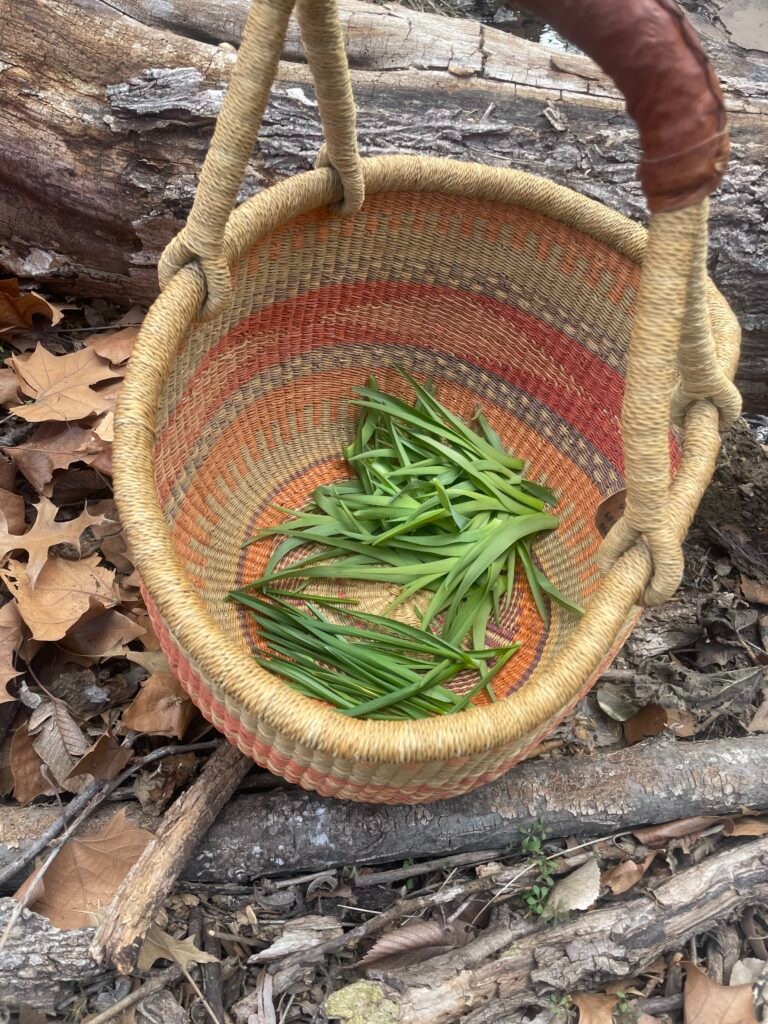
    • Allow the dough to rise at room temperature for 60-90 minutes, or until doubled in size. The amount of time can depend on how warm your kitchen is.
    • After rising, divide the dough into 8 equal pieces. These absolutely do not need to be perfect, but they will each be about 137-140 grams.
    • Roll each piece of dough into balls, flatten them down a bit, and poke a hole in the middle with your finger. Stretch the hole a bit to widen. Cover with a tea towel and place the dough in a warm spot for 30 minutes to 1 hour or until puffy.
    • Meanwhile, preheat the oven to 425ยฐF (218ยฐC), prepare your water bath, and place parchment paper onto a baking sheet.
    • Bring a large pot of water to a boil and add the baking soda and sugar.
    • Using a slotted spoon, gently add bagels to the boiling water. Boil for one minute, flip, then boil for another minute.
    • Shake off excess water and dip into desired toppings (optional). Place boiled bagels on a parchment-lined baking sheet.
    • Sprinkle with sesame seeds, everything but the bagel seasoning, or even some brown sugar.
    • Bake for 20-25 minutes or until golden brown on top. Move to a wire rack to cool.

    Notes

    To achieve that typical chewy crust that bagels are known for, boiling is a must. It seems like a silly step, but they just won’t be the same without it.
    If you are sensitive to baking soda, you can just boil the bagels in sugar.
    The dough may be hard to mix together, but don’t give up. It will come together eventually.
    Tried this recipe?Mention @homesteadlivingmagazine or tag #homesteadlivingmagazine!
  • The Farmer Who Walked Away from Big Ag to Heal His Land

    Will is the 4th-generation owner of White Oak Pastures who risked not only a very profitable income using Big Agriculture practices but the legacy of his family by switching to sustainable, regenerative farming decades before it had a name or became a movement. 

    There is profit in the industrial farming mode. Pesticides, herbicides, hormones for animals, and long rows of monocrops were effective and profitable methods for not only White Oak Pastures but countless other farmers. 

    โ€œI was one of the worst offenders when it came to the industrialized practices that are so commonly used,โ€ Will says during my visit to White Oak Pastures. 

    Will inherited this farm with these practices and was taught how to optimize them further during his time at the University of Georgia. He farmed this way very successfully for nearly 20 years. 

    But when you are in touch with your land and animals, you cannot ignore the outcomes that become evident over time. 

    This complete one hundred and eighty degree turn fascinates me, making this November visit one of my most anticipated interviews to date. 

     โ€œAt first, I wasnโ€™t moving toward something; I was moving away from something.โ€ Willโ€™s slow easy gate matches the cows leisurely chewing the cud in the field before us.

    โ€œEverything I learned was about stopping nature โ€” killing nature. But Iโ€™ve transitioned to supporting nature. I started learning how to make things live. Thatโ€™s what we work on now.โ€

     โ€œWhen did you know things had to change?โ€ I ask.

    โ€œIt happened for me suddenly,โ€ he says, looking down at the grass. His eyes glisten slightly, and he shakes his head. โ€œI just couldnโ€™t do it anymore.โ€ 

    There are consequences for what we eat, though we may not see those consequences until later in life. There are consequences for how we care for the land weโ€™re on, but we may not directly see those consequences either. There are short-term beneficial consequences for running a conventional farm: when you pump cows full of hormones, they get bigger fairly quickly and you have more meat to sell (and a bigger profit margin). 

    For most, it doesnโ€™t make sense to transition to a regenerative farm. Itโ€™s more expensive and, as  Will will tell you, makes less money. When Will transitioned White Oak Pastures away from industrial practices, he took an income hit and he borrowed money, a move his father likely would have balked at. 

    Yet Will is comfortable in his decisions. Heโ€™s okay with less, even taking on debt, because his vision extends beyond the dollar and today. He couldnโ€™t live with the consequences that came with conventional farming and doing things in the present for a better future, regardless of cost, is worth it. 

    โ€œAll those production tools โ€” pesticides, herbicides, hormone implants โ€” are products of reductionist science. In my neighborhood, the best farmers are the best ones at using these technologies. But there are unintended consequences here. In the short run, you will show a profit. In the long run, they cost society.โ€

    Will makes a point that his friends and neighbors who farm this way are good people who are just doing what theyโ€™ve been taught by their fathers or by the university system. These farmers are trying to feed their families, not destroy the earth.

    But large systems and social structures are powerful, and itโ€™s hard to move against the cultural current. Itโ€™s hard to see the consequences of some choices until they are painfully obvious. In some cases, once you realize thereโ€™s a problem, itโ€™s too late.

    โ€œThereโ€™s a huge dead zone [in the Gulf of Mexico] that used to be a great oystering region. Now we canโ€™t oyster there anymore. There’s a moratorium on it because of the runoff of chemical fertilizers and pesticides and probably other stuff too. But the manufacturer of the pesticide โ€” or the guy who applied the pesticide โ€” he is not paying for that. That’s a cost.โ€

    But regardless of who is most responsible, this is a price that everyone pays.

    โ€œYou inherited the practices of Big Agriculture. Thatโ€™s what you were taught and thatโ€™s just the way things were done. So what happened that motivated you to change?โ€ Will and I are walking one of the many pastures at White Oaks, and we stop as he considers my question. He takes a breath, looking off into the distance again. He looks back at me.

    โ€œIt happened suddenly. Itโ€™s hard to say what in particular it was,โ€ he says. 

    He studies the mobile pig shelter with pride. They offer shade for the pigs in the Georgia sun and shelter during rain storms but are easily moved with the pigs who are rotated regularly across pastures. Willโ€™s pigs are allowed to live as pigs were meant to live, with freedom to roam around and root in the ground, not standing on concrete floors with barely room to turn around. 

    โ€œIt became clear that I could not continue as I was.โ€

    We drive back into town, have lunch, and walk over to Willโ€™s office. Itโ€™s maybe a block or two from the restaurant where we ate. Will tells stories of his family, and we settle into chairs by his desk. Eventually, we get to talking about how he used to run the farm.

    โ€œI gave cows a lot of therapeutic antibiotics, used a lot of hormone implants. You put it in their ear; did you know that?โ€ He grabs his ear between his forefinger and thumb.  โ€œYou put it in the skin of their ear and it slowly absorbs in about 90 days. And then you do it again. I mean …โ€ he shakes his head.

    โ€œWe used a lot of chemical fertilizer and pesticides and weed killer on the land. I stopped that. Just quit using all that stuff.โ€

    He describes how they used to feed the cows corn mixed with chicken manure. As ruminants, cattle can turn non-protein nitrogen, from, say, chicken manure, into a protein. It was cheap and easy to do this. Just another way to save on feed and fatten up the livestock. This was looked at as โ€œgood business,โ€ taking a waste material from one animal and turning it into something productive in another animal.

    โ€œI learned how to do that at the University of Auburn, a conference there,โ€ Will says. โ€œI looked at it as an art, and I was good at it. I figured it out. If you put enough molasses in corn with the manure, the cows will eat it.โ€

    โ€œAnd itโ€™s terrible. Itโ€™s terrible,โ€ he shakes his head and crossing his arms. โ€œA cow won’t eat manure on their own; a cow will graze around it. But thatโ€™s what we did. And it was profitable.โ€

    Iโ€™ve been looking for a tipping point, a moment where Will saw or experienced something that meant he couldnโ€™t look back. 

    โ€œWas it the accumulation of living like this that finally led you to change? Or do you remember a moment when the switch flipped?โ€ I ask.

    โ€œWell, I didn’t leave conventional farming because it wasn’t profitable. I left because I didnโ€™t like it anymore.โ€

    โ€œEventually, you just couldnโ€™t do it anymore?โ€

    He nods his head.

    โ€œIt was very sudden. I guess I might have been less and less satisfied with industrial cattle farming, but it was what my college degree was in and what my dad and I had done for 40 years. I was good at it. Made money doing it every year.โ€

    The presence of past generations isnโ€™t only in Willโ€™s words, but the pictures of his father, grandfather, and great-grandfather along with those of his daughters that hang on the wall of his office behind him are testaments to how deeply familial roots grow here.

    He rubs his chin and takes in a slow breath. 

    โ€œI remember I was loading out a load of heifers one morning, each about 500 pounds. Moving about a hundred of them, loading them on the truck. There are two layers on the truck, above and below, and the cows on the top were pissing and defecating on the cows on the bottom โ€ฆโ€ he trails off and shakes his head. 

    His eyes moisten slightly.

    โ€œI had a bad reaction to it. I said to myself, โ€œI wonโ€™t do it anymore.โ€โ€

    โ€œAnd I didnโ€™t.โ€

    Silence fills the office for a beat. 

    โ€œHow quickly did things change after that?โ€ I ask.

    โ€œQuickly,โ€ he says, โ€œI think when I cleaned that feedlot out, that was it.โ€

    Most of us have a clear memory of why we turned to homesteading. But like Will, it wasnโ€™t a singular event, but rather a cumulative effect leading to a tipping point of no return. 

    Will hit a point where he knew, based on what he had experienced, that he couldnโ€™t continue living a certain way.

    โ€œItโ€™s hard to make the adjustment from fighting nature to working with nature. When you are an industrial farmer, you are fighting nature all the time, over and over. Itโ€™s never-ending. If youโ€™re good, you win in the short run. But you lose in the long run.โ€

    Nature isnโ€™t something to be defeated; itโ€™s something to partner with. Working against nature is exhausting, and probably futile. That isnโ€™t to say that working with nature is easy. Far from it. But it is work worth doing: hard work, but good work. Will has reflected on what he can and cannot control. Heโ€™s going to push where he can make an impact. And as a result, heโ€™s going to hand something healthier to his children than what was given to him.

    Today, White Oak Pastures is a regenerative farm. They no longer use any pesticides, hormones, or fertilizers. Their specialty is grass-fed, grass-finished beef, born, raised, and harvested on site. 

    Will knew the answer was to open their own USDA-inspected processing plant on site, where they had complete control from start to finish. It was a gamble, but this plant now allows White Oak Pastures to offer grass-fed, grass-finished beef to customers directly and provides jobs for their previously dying town of Bluffton, Georgia.

    White Oak Pastures is not a small-scale operation. They have over 1,000 head of cattle rotated across their 1,000-acre farm, which is proof that ethical practices are sustainable no matter the size. They raise a small number of hogs, all of which are fed and grazed naturally. 

    Theyโ€™re certainly not a large-scale, high-production factory farm either. Large factory farms often slaughter up to 400 cows every hour. White Oak Pastures humanely processes 25 cows per day, and they find a use for every portion of the animals they slaughter. 

    Like many homesteaders, Will and his family believe in good husbandry and using all parts of the animal. The tallow is made into soap which is sold on their website and the local store. The hides are tanned into leather and made into belts as well as natural dog treats. The bones are used to make broth used in their restaurant. 

    Despite being larger than a homestead farm, Will is a huge advocate of local food. His goal is to help other farms and homesteads produce food in a natural and regenerative way and to educate those who canโ€™t raise their own on how to support and buy from those who do. 

    I went to Georgia to learn why Will Harris radically re-invented his life and business, particularly when he had already been very successful. Why risk change? 

    After a few days with Will, it became clear that this decision has not been easy. 

    The transformation of his farm has meant lots of hard work and long hours. It has cost him lots of money. But this is his lifeโ€™s work. You canโ€™t make these sorts of choices without having something burning deep inside of you. Willโ€™s motivation comes from a deep place, and heโ€™s extremely generous with his time and resources. 

    Heโ€™s also a strong, forceful presence. As I get ready to leave White Oak Pastures, Will says that he hasnโ€™t set out to change the world. All he can do is change what he does on his farm. 

    Yet, as I drive away, Will is changing the world. The ripple of his decision to farm according to his beliefs is changing the world and how agriculture is perceived. Each of us, no matter what kind of homesteader we are or aspire to be, can do the same.  

  • What to Do for Your Garden in Winter: Feed the Soil, Not Just the Dream

    The flurry of the holidays has subsided, and hopefully we are all tucked nice and cozy in our respective hobbit holes remembering the glory days of summer via homemade grape jam on toast while reading seed catalogs and dreaming of all the wonderful things we will grow come spring. We may even mood-board herbs, flowers, and vegetables or ogle some new basil variety. 

    But there is something seemingly far less exciting than seed catalogs that should be niggling in the back of every gardenerโ€™s mind:

    โ€œWhat about my garden soil health?โ€

    Winter might seem like a strange time to dive into this subject, but it really is the best time to think about such things. In the midst of spring and summer, we move from task to task like people possessed. But in winter, we have a bit more time to moodle about, to think, muse, discover, wonder, and maybe even make a plan. 

    Before we go much further, I must acknowledge my roundabout path to fascination with soil health. Years ago, I worked as a nutrition coach for families with children exhibiting learning and behavior challenges. I spent a lot of time reading books on nutrition. I became enamored with the profound connection between the gut microbiome and mood/behavior. I read every book I could find on gut health. 

    One night, my husband and I were doing our nightly reads and chatting about our discoveries. We found we were reading about the same microbial cast of characters: me in the realm of the digestive system, and he in the soil that grows our food. I was astounded to find, time and again, the same microbes populate each of these seemingly disparate ecosystems. 

    This was among my early revelations where I began to understand that soil health is not a compartmentalized concept that merely helps you grow vegetables. Rather, it is the foundation of health for the human body. Thus, an investment in soil health is an investment in your well-being and the well-being of your family and community.

    Here are a few winter-friendly explorations and practical tasks to engage the wonderful world of garden soil health.

    Book Up On Soil Science

    A good book on soil science can read like a whodunit mystery or Russian novel where characters have a few different names, a complex family system, and a dynamic and ever-changing social hierarchy. 

    Imagine scooping up a teaspoon of dirt and magnifying that world until it collides with your own. What drama you would see playing out in front of you! Ancient crustaceans, nematodes, snails, millipedes with passenger mites, and living webs of creeping mold, each with their own niche to occupy in this soil drama playing out under our enlarged and magnified eyes. 

    Most of all, it is important to remind ourselves of what is going on in our soil so that we can be active participants in stewarding the flourishing of life below ground. A few of my favorite reads on this subject are The Hidden Half of Nature (Biklรฉ, Montgomery) and Teaming with Microbes (Lowenfels, Lewis). Some of my main takeaways from these reads are:

    • Good soil is active and bursting with life.
    • We feed our soil life first, then it feeds the food that feeds us.
    • Keep your soil covered at all times.
    • Every gardener should be a microbial shepherd.

    There is so much more to say about the minutiae of our soil-bound neighbors. My aim here is merely to whet your appetite for discovery. For now, we will leave that stone barely turned and move on to a few ways to improve your soil health.

    Make a Plan For Building Compost

    In the same way that we need to grow food to really understand what goes into food production, we should also build some compost to wrap our heads around what it takes to grow soil. This does not mean that you ought to be providing all your own fertility in-house, though it is a worthy goal. That is something we must all grow into. 

    It may sound illogical to ponder hot compost with snow on the ground, but the seasoned composter understands that winter neednโ€™t stand in the way of making a plan, gathering materials, and even building a nice, large pile of future fertility. Dreaming of future compost is often the best way to pull me away from a cozy winter fire. The kids and I will get out on brisk sunny days and gather leftover leaves or do some trimming in the garden. We set all this aside to build a compost pile come spring. 

    There are a lot of different compost methods. Take some time this season to:

    • Research various compost methods. What would work best for you?
    • If you are trying hot composting, look up carbon-to-nitrogen charts to help gauge your ratios.
    • Not into making compost? Research a healthy source of compost in your area and make sure that it does not contain additives like biosolids, synthetic fertilizers, or wetting agents. Be open to the possibility that the shortest path to great compost may indeed be to make it oneself.

    Start A Worm Bin

    One of my favorite ways to add fertility to my garden is with worm castings. Worm castings recycle food scraps into nutrient-dense compost all throughout the year. I must say this very explicitly: worms are great. I have a hunch that once you figure out how to use a worm bin, you will want to expand. You can build your own inexpensive bin, or there are a lot of worm bins available online. 

    My best advice is to find something that matches the space where you want to keep it. My first worm bin was two stacked buckets (one with drainage) that lived under my kitchen sink. Now I keep several large bins in the house through the winter. Once it gets warm enough for the worms to live outside, one of these bins will โ€œseedโ€ a larger worm colony outside. Piqued your interest? Here are some possible next steps:

    • Read up on how to care for a worm bin.
    • Build or buy your bin.
    • Fear not! Give it a shot. Tip: my worm bins tend to be too wet. Make sure you have plenty of good drainage and a supply of brown material to add with every round of food scraps.

    Want to find out more about worms? Check out Worms Eat My Garbage (Appelhof, Olszewski). 

    Worms not your thing? I suspect you may one day change your mind, but in the meantime, look for a local source of worm castings.

    Muse on Mulches

    This is one of the main ways you follow the golden rule of treating your soil how you want to be treated: keeping your soil covered. But what to use for mulch? Winter is an excellent time to make a plan for mulching your garden. Here are a few of my favorite mulches:

    • Living mulch: Cover crops, such as peas or hairy vetch, can double as living mulch. This method works better for transplanting than direct-sowing.ย 
    • Seedless hay or straw: I love working with straw when I can source it organically, but that is hard to come by in my neck of the woods.ย 
    • Leaf mulch: Get out on a sunny day and collect your leaves for use come warmer weather.ย 
    • Wood chips: there are a few caveats to using wood chips in your garden. We have an abundant, free source, so I make use of it by heavily mulching my garden paths. Throughout the growing season, I let it break down, throwing weeds straight on top to decompose. In the fall/winter I take my broken-down chip mulch and mulch my garden beds with it. Then I lay another layer of wood chips on the path and start again.ย 
    • Chop and Drop: Stacking functions at its best. As you weed your garden beds, take the plant material and use it as mulch around your plants. It is best to use the weeds this way before they go to seed. If they have gone to seed, I throw it into the compost pile.

    Consider Cover Crops

    I absolutely love cover crops. They have many benefits: adding nitrogen to the soil, adding biomass, loosening compact soil. Ever popular with farmers and seasoned gardeners, it can be hard to place a cover crop order once your season gets going. I like to anticipate what cover crop needs I might encounter and order ahead of time so I have what I need when I need it. A book I would recommend for a deep dive into cover crops is The Ecological Farm by Helen Atthowe. Also, many seed houses offer cover crop guides that can steer you in the right direction. 

    Here are some of my favorite cover crops:

    • Buckwheat is a catch-all warm season cover crop. If I ever have any open space, I plant buckwheat. It attracts pollinators, conditions soil, and adds biomass. The only downside is that it is not particularly drought-tolerant, so I have moved away from using it where I donโ€™t have irrigation. Your climate may vary.ย 
    • Red clover (and clover in general) is an excellent cover crop for frost seeding. You can broadcast your seed directly onto the frozen ground in the winter, and your clover will germinate when the soil warms up. A consideration with red clover is that it works best when it gets to hang around for a while, so this is not the best cover crop for quick plot turnarounds.ย 
    • Tillage radish is like a living broad fork that loosens and aerates your soil for future planting. Plant in late summer to early fall, harvest some of your radishes for your kimchi, then let the rest decay in the ground for spring or summer planting. Potential downside: decaying radishes smell like kimchi.ย 
    • Hairy vetch can be used for spring or fall plantings. It makes a nice living mulch that can also provide nitrogen. I like seeding in early spring and planting my summer starts into the living mulch.

    Go ahead and order some cover crop seeds and figure out how you might use them in the seasons to come.

    How are you feeling? Excited? Great. Overwhelmed? Donโ€™t be. Follow your curiosity down any of these paths, and itโ€™s hard to go wrong. Remember, any investment in soil health will, in time, yield good fruit.

  • The Abundance Mindset: Joel Salatinโ€™s Lessons from a Lifetime on the Land

    Teresa and I had married on August 9, 1980, living in the farmhouse attic and half of the upstairs. Mom and Dad lived downstairs. We had separate kitchens and bathrooms but shared the house entrance.

    For us, the shared housing arrangement was ideal because it enabled Teresa and I to live beyond frugally. Combined with a cheap car, nearly all our food, and a massive wood stove, we lived on less per year than any of our peers lived on per month.

    We had saved enough to survive for one year without an off-farm paycheck, and thatโ€™s when I returned to the farm full time on September 24, 1982. The big surprise was that by being home, we lived even more cheaply than we had imagined when we had planned our budget. That nest egg stretched into two years. By the end of year three, we could breathe.

    โ€œWeโ€™re going to make it,โ€ I said by the end of 1985. Dad had his diagnosis and was beginning to fail. Heโ€™d never made a living from the farm and was ecstatic that it looked like Teresa and I would actually be able to pull it off. Sometimes it takes a couple of generations to claw back whatโ€™s been lost.

    Then, in 1986, Dad called me into his bedroom, adding โ€œBring a paper and pen.โ€ I went in, and from his sick bed, he explained what he was thinking: โ€œLetโ€™s make a list of all the salaries that could be generated from this place.โ€

    Note that Teresa and I were just starting our fourth year, and finally beginning to believe we would survive. Weโ€™d barely jumped the hurdle of one familyโ€™s full time employment. Rather than celebrate and bask in accomplishment, Dad was already thinking about next steps. Weโ€™d scarcely allowed ourselves to believe we could make it, and now he wanted to look into the future, to write down tomorrowโ€™s possibilities.

    In that session, Dad recorded 22 full time salaries that our little place could offer. It included orchards, babysitting, mechanics, sales, fish, produce, lumber, flowers, crafts, and other things in addition to the beef and chicken we were already producing. Pigs came a few years later. Looking back on that session now makes me realize one of my dadโ€™s greatest legacies to me: hope and opportunity.

    Optimism is too broad, although thatโ€™s certainly included. You can be optimistic but not have a viable plan. Dad envisioned an entire community of families contributing and collaborating under an ever-expanding compensation umbrella. At the time, nobody thought we could make a living on this little place. Imagining 22 more livings was absurd. But today, 40 years later, thatโ€™s where we are. And if I were to repeat the process, it would probably be nearly 100. 

    A legacy of opportunity and abundance isnโ€™t a bad inheritance. That piece of yellowed paper is precious because it represents a can-do mindset. A few years later, when our son, Daniel, turned 8, some friends needed to move from the country to the city and they had three rabbits they couldnโ€™t take with them. Looking for an enterprise of his own, Daniel took the rabbits on as an entrepreneurial endeavor.

    I was dubious. Who eats rabbit? But I was enthusiastic about his desire, so rather than throwing any cold water, I encouraged him. Our farmโ€™s next spring newsletter to our small customer base explained the project and had a new line on the order form for rabbits. The orders came back and, to our utter amazement, our customers ordered 150 rabbits. Who knew? He was up and running with an enterprise Dad and I hadnโ€™t even written down a couple years earlier on that idea list.\

    You can always add something. If you grow corn, you can make compost to feed the corn, save the seed, pick it, grind it, and make cornbread. If you cut a tree, you can sell it for firewood or mill it into lumber, chip the branches for compost, or turn the lumber into childrenโ€™s toys. You could host play days for children to come and pay with your homemade toys. If children are there, mom and dad might be too, and they might want something to eat. Then you add concessions from your garden produce and burgers from your steer. The possibilities are endless.

    A philosophy toward imaginative opportunity keeps spinning and spinning toward abundance. On our farm today, we use the refrain โ€œfill it up.โ€ That means whatever you have and wherever you are, fill it up. People routinely ask me how much acreage they need to make a living on their homestead. Every time I answered with a certain acreage number, I met someone who was doing it on less. I donโ€™t give numbers these days. All I ask is, โ€œHave you filled it up?โ€ I donโ€™t know a property on the planet that is fully filled, including ours. Thatโ€™s a mindset of hope.

    Another of my dadโ€™s greatest attributes was the power of observation without premonitions. One of the hardest things for humans to do, it seems, is to observe without prejudice. A close relative to that idea is not being peer-dependent. Thinking about what others may think if we think differently colors our thinking when we contemplate something. 

    Dad honestly didnโ€™t care what anyone else thought. That doesnโ€™t mean he was obnoxious or socially obtuse; it means he was open to any and all possibilities. Nobody had to endorse his ideas in order to proceed. Convinced he was on the right track, heโ€™d pursue it whether others agreed it was right or not. 

    Sometimes this kind of Lone Ranger mentality does not yield the perfect solution. The best example of that was his dump trailer for hay. We called it โ€œthe shipโ€ because it was a 4-wheeled trailer. Unlike a bouncy hay wagon, this 20-foot trailer floated over rough spots in the field. At the time, we used an old-fashioned hay loader to put up loose hay. Yes, we made loose hay with a hay loader when neighbors had round balers. But Dad conceived of this dump trailer to dump off loads of loose hay, imagining bread loaves stacked on end. 

    It didnโ€™t work. The hay came off in a 10-foot pyramid rather than a 20-foot-tall bread loaf. Rather than try to make it work after all that time and energy, we converted to a square baler decades after everyone else had abandoned the hay loader. He observed and made a change literally in minutes.
    That failure was rare, though. Business circles bandy about โ€œout-of-the-boxโ€ thinking, and thatโ€™s good. But in most organizations, a peer-dependent box still creates imagination boundaries. Dad didnโ€™t care when others teased, laughed, or scoffed. He constantly tried to figure out low-cost solutions. For example: Why do you need a pickup truck? Dad bought a 1957 Plymouth sedan from a neighbor for $100. He took off the doors and pulled out the seats and had a vessel the size of a pickup truck that served as both car and truck. In those days without vehicle inspection, he sat on a bucket for the seat, donned his accountantโ€™s suit, and headed out to clients and back home with calves, chickens, and baler twine.
    Cut from the same cloth, today I donโ€™t have the farmerโ€™s requisite $20,000 side-by-side. I have a 1987 Ford Bronco with the side windows knocked out. I can reach in from either side and take four passengers in a $1,700 git-er-done vehicle. I appreciate that self-respecting farmers are supposed to have side-by-sides, but Iโ€™m not a self-respecting farmer. Iโ€™m free to do other things.

    Today, this legacy shows up in Danielโ€™s enthusiasm over earthworms in the field. Nobody can get as excited about finding earthworms. While others stand around him worried about weeds, heโ€™s on his hands and knees digging through the thick sod and showing off earthworm castings and quarter-inch diameter worm holes. Discarding unimportant things is key to focusing on what is most important. Apparently, growing up listening to me say, โ€œMy real goal is dancing earthworms because if thatโ€™s happening, everything else falls into placeโ€ stuck in his mind.

    Whatโ€™s best for the earthworms? Ultimately, thatโ€™s more important than cattle genetics, weeds, seeds, and equipment. Singular focus and independent seeking tends to yield authentic answers. That doesnโ€™t mean we donโ€™t seek counsel. But seeking counsel is different than seeking approval. Perhaps the greatest blessing in my life was growing up in a home that embraced being mavericks. Ultimately, that liberates us to truly think outside the proverbial box.

    As our farm business continues to morph, weโ€™re privileged to have this wonderful legacy of abundance and creativity. Because farming is such a small fraternity these days, group-think might be stronger in this profession than in any other. Who wants to rock the boat when itโ€™s small? But that smallness can also be insular and incestuous. For sure, too many farmers live in a mindset of scarcity and โ€œit wonโ€™t workโ€-ism. I am so grateful to be liberated from both of those constraints and live instead in a mindset of opportunity and imagination.

  • The Regenerative Health Guide: From Gut Microbes to Movement

    While attending the Modern Homesteading Conference in Coeur dโ€™ Alene this past June, I heard Daniel Salatin (Polyface Farms) speak about rotational grazing. He used the phrase โ€œMob-Mow-Moveโ€ to describe their process for moving cattle through pastures to facilitate healthy soil, pasture regrowth, and to promote a thriving herd. They mob (i.e. group) cattle in one small pasture to mow down (i.e. eat) the grass and then move them on to a new section to allow the field time to rest and regenerate. 

    As I was pondering the concept of regenerative health, I realized there is perhaps some shared wisdom within the โ€œMob-Mow-Moveโ€ concept that can be applicable to humans as well. 

    MOB

    For humans, this can mean maintaining intentional community with others to benefit our health and theirs. Kammie DeGhetto, a good friend of mine whoโ€™s a licensed clinical social worker/counselor and a wise, godly woman, joins me in writing about โ€œmobbing,โ€ human-style. 

    Homesteaders are notoriously resilient, stoic, and independent with a โ€œcan doโ€ attitude hard to match. With the lifestyle of homesteading comes a never-ending list of chores and projects to maintain the health of crops, soil, and animals. In addition to those chores and projects, thereโ€™s the regular day to day living tasks (more if you have children at home), so itโ€™s not unusual for homesteaders to become isolated. 

    We know that one of the biggest predictors of mental health challenges is isolation and loneliness. Research shows that isolation can lead to increased levels of perceived stress, depression, anxiety, and burn out compared to the general population norms. 

    What is one way to protect against isolation and its downstream effects? Participation in community. Building intentional rhythms of community into your life as a practical preventative practice to protect your mental health can be thought of as โ€œimmunizationโ€ against stress, depression, anxiety, and burn out. 

    Here are some suggestions to โ€œmobโ€ (group) with your community: take up a group sport, join a choir, attend continuing education conferences (i.e. homesteaders conferences), get involved with your church, take a class at your local community center, join a hiking group, or start or participate in a group supper club where families host dinner potluck style featuring their homegrown foods. You get the idea.

    No matter what you do, the key is to venture off the homestead! In-person community is best because research shows our nervous systems need connection and community to regulate and repair at an optimal level. If you have children at home, this is also why itโ€™s important to find ways for them to be involved with community to ensure their well-being. 

    We were not built to go through life alone. If you do not have community built into your rhythm of life, this is your gentle invitation to commit to doing so in the new year. 

    MOW

    Before we discuss the โ€œmowโ€ or โ€œeatโ€ portion of this article, Iโ€™d like to share a few highlights on how our gut works. Our gastrointestinal tract is an elaborate system, and the enteric nervous system present within it is the largest collection of nerve cells and complex neural networks outside of our brain, with an ability to operate almost independently from the brainโ€™s input. (1)

    Despite this relative autonomy, there is a constant interplay and two-way signaling that happens between the nerve cells in the gut and the brain that triggers simple messages such as hunger, fullness, and the need to empty your bowels as well as more complex messages such as anxiety (ie โ€œflutteringโ€ in your stomach) and a loss of appetite associated with nervousness or depression. 

    To add another layer of complexity, our microbiome within the gut (composed primarily of diverse bacteria, but also viruses, fungi, and parasites) facilitates the synthesis of key vitamins such as B1, B9, B12 and Vitamin K. It also helps to break down indigestible complex carbohydrates and dietary fibers, which produces a by-product of short-chain fatty acids (SFCAโ€™s) that are integral in helping to keep our gut barrier intact and lessening inflammation in the colon and throughout the body. (2)

    Additionally, 90% of the serotonin (a neurotransmitter important for mood and proper gut function) found in humans is derived from the gastrointestinal tract, and dysfunction of the microbiome has been linked to mood changes, irritable bowel syndrome, and other mood disorders of the nervous system. (3)

    Now, you may be saying, โ€œWhy should I care about any of thisโ€? 

    I would say that there are many aspects of the typical Western diet that can short-circuit or negatively impact the function of our microbiome, our gut, and our overall health. From widespread antibiotic use, microbial resistance to the overabundance of sweeteners (both natural and artificial), highly processed foods, and โ€œfastโ€ foods as well as preservatives and chemicals even a chemist canโ€™t pronounce, the Western diet isnโ€™t usually hailed as the epitome of a healthy lifestyle. 

    What, then, are some simple and practical ways that we can โ€œmowโ€ or feed our gut to optimize its regenerative function and impact upon our immune and nervous systems?

    1. Fertilize your gutโ€™s microbiome with color. Focus on eating more nuts, seeds, fruits, and plants from a rainbow of colors as this diversity of foods typically contains different antioxidants and anti-inflammatory ingredients that plants produce to protect themselves from drought, excessive UV light, and free-radical production.One example would be Vitamin C. Itโ€™s found in many citrus fruits and protects our cells from free radicals as well as aiding our immune system, promoting collagen production, and facilitating wound healing of skin.Additionally, plants often contain various complex carbohydrates and fiber that different gut microbiota need to feed on and produce SFCAโ€™s that help to regulate our immune response in the colon and throughout our body. (4) And by โ€œplants,โ€ I donโ€™t mean French fries or lab-crafted vegetarian meat. I mean a variety of plants, nuts, seeds, and fruits that come directly from the earth, not from a manufacturing plant. (5)
      ย 
    2. Wean your taste buds off overly sweet foods. Have you looked to see the amount of sugar thatโ€™s in your favorite yogurt? Four grams of sugar = 1 teaspoon, and many flavored yogurts contain four or more teaspoons (16 grams) of added sugar per six-ounce serving. Pumpkin lattes, sports drinks, ketchup, even toothpaste: Once you start checking, itโ€™s rather shocking to see how many grams of sugar are added by food chemists to โ€œsweeten the tasteโ€ of something we ingest to make it more desirable and perhaps addictive.

      Excessive sugar intake can lead to weight gain and increase your risk of diabetes and cardiovascular disease and may also promote inflammatory dysregulation and autoimmune diseases such as rheumatoid arthritis, psoriasis, and multiple sclerosis. (6) Artificial sweeteners are a discussion for another time, but in general, they should mostly be avoided as well.
    3. Eat more slowly. Nobodyโ€™s going to steal your food, so slow down. It takes the brain approximately 20 minutes after you start eating to register that you are full. If you shovel your food in more quickly than that, as many of us time-crunched folks do, you often eat more calories than your body really needs. Being mindful of what youโ€™re eating, savoring the taste of each bite, and slowing down chewing can minimize excessive caloric intake and facilitate weight loss or maintenance of an ideal body weight. (7)
    4. Avoid unrecognizable food substances. As Michael Pollen says in his well-written and easy-to-read book Food Rules, โ€œAvoid food products containing ingredients that a third-grader cannot pronounce.โ€ Butylated hydroxyanisole. Tert-butylhydroquinone. Are these household cleaners or common preservatives in processed foods? (8) Common sense should tell us that if we canโ€™t pronounce it or recognize what it is or does, we might be wise to avoid ingesting it and stick to foods that are identifiable as real food, preferably something weโ€™ve grown or animals weโ€™ve raised ourselves. I recommend you begin reading labels and doing your own research on these chemicals, although fair warning: what you discover may cause you to start losing sleep at night.
    5. Add several fermented foods. Along with โ€œfertilizingโ€ your gut with lots of colorful nuts, seeds, fruits, and plants, there is growing evidence that ingesting various fermented foods such as kimchi, crunchy pickles, sauerkraut, kombucha (watch the added sugars), yogurt (ditto), kefir, and others provides an assortment of probiotic species that maintain a healthy balance of beneficial bacteria and diversity within the gut.Promoting bacterial diversity in the colon, especially bacterial species that produce SCFAโ€™s such as Lactobacilli and Bifidobacteria, can help protect your gut lining and may prevent โ€œleaky gutโ€ and inflammatory bowel diseases such as Crohnโ€™s disease or ulcerative colitis. (9) Other potential benefits of fermented foods that are currently being studied include improved blood sugar regulation, lowering of blood pressures, decreased cardiovascular disease and other inflammatory-related diseases.

    MOVE 

    This is simple: We need to move more. Less sitting, more movement. It doesnโ€™t have to entail running or a high-impact sport if your aging knees or hips are yelling at you. Simply walk around your farm or with your spouse and family after dinner in your neighborhood. Or, try riding your bikes together on a greenbelt. MOVE MORE. A sedentary lifestyle will kill you with chronic disease. Cows need to move from pasture to pasture in rotational grazing, and we need to move too if we want to live a regenerative and full life. 

    For this new year of 2024, Kammie and I hope for you abundant joy, challenges, love, good food, time with family and friends (two- and four-legged), and that you are intentional with the choices you make to maximize your overall health. 

    DISCLAIMER: This article is not intended to provide personalized medical advice. Please consult with your physician before embarking on any medical or nutritional changes. 

    REFERENCES:

    1. The Gut-Brain Connection. (2023, September 20). Cleveland Clinic. https://my.clevelandclinic.org/health/body/the-gut-brain-connection.ย 
    2. Al Bander Z, Nitert MD, Mousa A, & Naderpoor N. The Gut Microbiota and Inflammation: An Overview. International Journal of Environmental Research and Public Health. (2020, October 19). 17(20):7618. doi: 10.3390/ijerph17207618.
    3. Huang TT, Lai JB, Du YL, Xu Y, & Ruan LM, Hu SH. Current Understanding of Gut Microbiota in Mood Disorders: An Update of Human Studies. Frontiers in Genetics. (2019, Feb 19). 10:98. doi: 10.3389/fgene.2019.00098.
    4. Golpour, F., Abbasi-Alei, M., Babaei, F., Mirzababaei, M., Parvardeh, S., Mohammadi, G., & Nassiri-Asl, M. Short Chain Fatty Acids, A Possible Treatment Option for Autoimmune Disease. Biomedicine and Pharmacotherapy. (2023, July). 163; 1-19. https://doi.org/10.1016/j.biopha. 2023.114763.
    5. Makki, K., Deehan, E., Walter, J., & Backhed, F. The Impact of Dietary Fiber on Gut Microbiota in Host Health and Disease. Cell Host & Microbe Review. (2018, June 13). 705-715. https://doi.org/10.1016/j.chrom.2018.05.012.ย 
    6. Ma, X., Nan, F., Liang, H., Shu, P., Fan, X., Song, X., Hou, Y., Zhang, D.. Excessive intake of sugar: An accomplice of inflammation. Frontiers in Immunology. (2022, Aug 31). 13:988481. doi: 10.3389/fimmu.2022.988481.ย 
    7. Zelman, K. Slow Down You Eat Too Fast. (2004, Nov 14-18). WebMD. https://www.webmd.com/obesity/features/slow-down-you-eat-too-fast
    8. Myers, I. EWGโ€™s Dirty Dozen Guide to Food Chemicals: The top 12 to avoid. (2022, July 11). The Environmental Working Group. https://www.ewg.org/consumer-guides/ewgs-dirty-dozen-guide-food-chemicals-top-12-avoid.
    9. Mikstas, C. Fermented Foods for Boosting Health. (2023, February 24). WebMD. https://www.webmd.com/diet/ss/slideshow-benefits-fermented-foods.
  • The Discipline of Rest: Why Hard Work Requires Recovery

    We stay busy on purpose with projects in the winter months here in North Carolina. Realistically, weโ€™re looking at maybe two weeks of winter each year. And it is true: our chores are less in the winter months so that makes it easier for us to hire a farm sitter if we travel.

    You want a cure for spring fever? Keep busy! Use the winter to establish new electric lines or perimeter fences, clear forests, harvest firewood, and learn whatever you can learn for the next season. 

    Now, I donโ€™t think you should be a workaholic. But, itโ€™s important to keep some routine in the offseason. You canโ€™t just sit around and wait for spring. Itโ€™s really helpful to keep a steady, consistent structure to your life. I keep a very similar daily routine year round, even when there arenโ€™t as many chores to do. It helps keep me focused and, honestly, itโ€™s what keeps me from burning out.

    Before you think we are maniacs who never take a break to catch our breath, let me tell you a secret: Itโ€™s not just consistency that helps us keep going. We are disciplined with our routines; that is true. But, we are also disciplined about rest.

    Rest Takes Intentional Effort

    You have to work to rest. Some people tend to think that rest is the same as laziness. Thatโ€™s not true. You have to be disciplined in order to make rest a priority. Regular rest and consistent routines help prevent burnout. 

    At 9:30 at night, once the kids are in bed and you’re worn out, you probably want to goof off on the internet. I get that. Maybe you just want to get some productive work done without the usual distractions at the office. Or, you just want to chit-chat with your wife. These are all reasonable things. But, it’s time to go to bed. If you want to keep waking up early, you need to be disciplined enough to go to sleep at a reasonable, consistent time. You can be disciplined enough to find time for those other things elsewhere in your day.

    We take rest seriously. We take a vacation once a year in the winter when the chores arenโ€™t so busy. Weโ€™ll go get some vitamin D and get some sunshine. That’s a big rest once a year, but we’re also very good at resting once a week. We call it a zero day. 

    Sure, the animals need their food and water and they need to be moved, but we don’t do any big projects on that day. We have this rest day built into our plans, and we do the opposite of homesteading on zero days. We get our basic chores done, take care of the animals, and then we rest. We might binge-watch something and sit around for an hour watching TV. Maybe weโ€™ll sunbathe or go for a walk or read a book. But we are intentionally taking time away from work.

    In addition to our yearly vacation and our weekly zero day, I schedule time for self-care every day. Every day after dinner, I take an hour, and sometimes an hour and a half, to rest and recharge. Most days, that includes a nice bath or some time in the sauna. And then, Iโ€™m in bed by 9:30 pm. You want the secret to getting up at 5:30 in the morning? Go to bed at 9:30 every night.

    Now, let me say, getting up at 5:30 am is not my favorite thing. You want the honest truth? I hate it. Trying to get up and be going strong by first light (which is usually about 6:30 a.m.) is awful; I cannot stand it. Iโ€™m depressed for the first 30 minutes of the day. Sometimes I feel so depressed that I want to give it all up, and I worry that the business is failing. I am so tempted to crawl back in bed and try to forget all my troubles. I lose my mind for about 30 minutes every morning, even now.

    But guess what? Iโ€™ve pushed and made it through that 30 minutes hundreds of times. I know Iโ€™m going to hate it for 30 minutes. But, Iโ€™ve built some resilience. If I make it through that 30 minutes, Iโ€™m golden. I’m happy that I got up early for the rest of the day. I’ve never looked back and said, โ€œBoy, I wish I would have slept in this morning.โ€ Once Iโ€™m through my morning madness, Iโ€™m all set. But I can tell you from experience, it does help to go to bed at 9:30 p.m. every single day. 

    So, now weโ€™re back to routine and consistency. Itโ€™s so helpful to be consistent, to go to bed and get up at the same time every single day. That also gives you one less thing to think about. 

    I donโ€™t need to decide when to go to bed. Iโ€™ve got a plan. Iโ€™ve got a routine that works. 

    We plan meals this way as well. We eat at the same time almost every day. We also plan the same meals on certain days of the week. Friday is Fishy Friday. I never think about what we’re having for dinner on Friday; itโ€™s fish. And we’re gonna make enough so that we can have leftovers for lunch tomorrow and only have to make one big meal a day.

    Take Stock of Your Life and Make a Plan

    It took me a while to accept that there are only so many hours in the day and that we are limited people with finite resources. You only have so much time, money, and energy. So, you take what you have and build a plan. Let’s use a block of time for example. 

    Let’s say you have two hours blocked to do your chores. Youโ€™ve got to have a clear and straightforward plan to tackle these chores โ€” or else you better have the best, lowest maintenance farm animals and gardens around!

    If you have two hours to dedicate every day, you should have meat chickens, gardens, egg laying chickens, and some sort of rotationally grazed animal. You should be able to cover that work in two hours. Those are the basics. If youโ€™re finding out that youโ€™ve got way too much to do and you have too little time, youโ€™ve got to find a way to scale back.

    But if you only have one hour per day and maybe half a day on the weekend, well, that’s only 10 hours a week. You probably canโ€™t have a rotationally grazed animal with that limited amount of time. You can probably still have meat chickens, egg laying chickens, and a garden, but it could be tight, especially if your goal is to grow much of your own food. You’re gonna get that done.

    Write Everything Down

    Maybe this is obvious at this point, but here goes: You canโ€™t keep all this stuff in your head. You need systems for everything. When are you going to bed at night? Write it down. Whatโ€™s your plan for the garden? Write it down. What are your goals for this next year? You know what to do!

    I carry my little moleskine notebook everywhere. I use it to jot down ideas so I donโ€™t forget them and to plan out my goals. Youโ€™d be amazed how many ideas start popping into your head once you start writing down goals. When I was just getting started, I was reading books and listening to podcasts and asking people for advice, and sometimes, an idea popped into my head when I was grabbing eggs from the chickens. Iโ€™d write it down so I wouldnโ€™t lose it. I wouldnโ€™t use every single idea I had, but so many times these ideas would evolve into something that I could use on the farm.

    Be Specific

    An important note on goals: Your goals need to be specific. If your goal is to raise 50% of your food, what do you need to do to get there? How much are you currently spending on growing food? 

    If you want better goals, set specific goals and attach a timeline. Now, you write down, โ€œI want to grow 50% of my own food by the end of 2024.โ€ 

    The next question is, how much time do you have each day to accomplish this goal? 

    Well, letโ€™s say you only have an hour a day and then maybe a full day on the weekend. Examine all the things you wrote down to help you get to your goal, then prioritize. What’s the most important thing on your list? What is the easiest? Whatโ€™s the most productive thing you can do? What do you need help with? What are you already familiar with? 

    For example, if you’ve grown meat chickens, it’s not that hard to jump to growing meat turkeys. Turkeys are a little different, but not that much. Adding meat turkeys is way easier than jumping to getting honeybees and buying all sorts of gear for bees. It’s totally different. Look for things that harmonize and complement each other before expanding to something totally different. Donโ€™t try to tackle everything at once.

    Once you have your list and youโ€™ve prioritized, you get to work. You decide, โ€œI’ll go at these things first, and then, if I have time left, I’ll do the rest.โ€ But chances are, if you do two or three of the most important things on your list, you’re gonna get 80% of the result you were aiming for. Thatโ€™s why itโ€™s so important to prioritize. 

    Tips on How to Optimize and Improve

    Okay. Let me get specific for you and practice what I preach. Youโ€™re in the offseason, or youโ€™re starting to plan next yearโ€™s garden or projects. Youโ€™ve got some extra time. Here are five tips that I want you to think about in the offseason.

    1. Write everything down. You have probably already gathered that I find this to be quite important. Get a journal or notebook and write everything down. Youโ€™ll probably end up with different notebooks for different purposes.

    At the end of the season, review everything. Write down what you learned. Write down what you still have questions about. What went well? What didnโ€™t? Work worked? What failed? What could you do to make it better? Where do you need help? Make a list of tools or equipment or gear that you need. Write it all down.

    Get into the habit of doing this at the end of seasons or projects. For somebody who’s just starting out with gardening, after the season is over, write everything down while it’s still fresh on your mind. Believe me, if you donโ€™t capture it when itโ€™s fresh in your mind, it will slip away.

    2. Figure out how to smoothify your existing situation. Isnโ€™t that a nice word? You get what I mean, though. Ask yourself: How can I use this downtime to make my growing time go more smoothly? How can I simplify this process and make it more efficient? Do you need some knowledge or new skills? Do you know anyone whoโ€™s got a smoother system than you? What can you learn from that for your situation? 

    Take what you have and look to optimize everything. Do you need a more convenient access point for water? Maybe you need a hydrant right between the chickens and the raised beds. Would that be easier than lugging a hose or buckets around? Maybe you could get a four-way spigot on your hoses, or maybe you don’t have a frost-proof hydrant that doesn’t freeze. Figure out what would make things easier and more efficient and start making lists. Prioritize and make a plan.

    3. Upgrade and improve! Now that youโ€™ve written everything down and started making lists and plans, you know what you need to do to get better. Maybe you need some new gear. Maybe your chickens were on a moonscape and not on deep bedding. Maybe they were sitting in one spot and it’s nasty. Well, let’s make that better. Let’s put them on deep bedding instead. Or let’s begin to plan a system where we’re moving them around on pasture so they donโ€™t stay in one place.

    When do you begin to prepare for next year? If you have downtime or a quiet winter, thatโ€™s when you prepare. Get started right now. 

    One of the best things we’ve ever done is order more poultry bags at the end of the season. One year, we ran out of poultry bags for harvesting and freezing our poultry, and then we had to scramble. But now, even though we know we’re not going to need them for another year, we go ahead and order at the end of the season. Itโ€™s less frantic when we’re getting ready to butcher in summertime because we know where the bags are, and we know we have enough. That’s one less thing we have to worry about, and being prepared feels so good. 

    One year, our box trailer needed shelves. So we hired our handyman to put shelves in long before we needed them. When it came time to use them, to me it was just so refreshing to have them already right where they needed to be.

    Review this season and give yourself tips. Every day you want to change and improve a little bit. See if you can get 1% better. Every year, you can do the same thing. 

    4. Forget all this and let’s just extend the season. Donโ€™t really forget everything. ๐Ÿ˜‰ But so many people just pack up in August and September, and that’s when you can start strong. That’s your second chance! That’s when you can plant a winter harvest garden. Even if youโ€™re in cold climates, you can extend your growing season. It’s not that hard. 

    Planning ahead to take advantage of extending next year’s season can help you rest later next winter because youโ€™ll have all sorts of extra food. Planning for an extended growing season is a great use of your downtime that sets you up for future success.

    To extend your season, start your seeds in July and plant in August or maybe early September, if August is still too hot. You want to plant quick-growing hearty greens, lettuce, kale, cabbages, and turnips. The trick is to get everything to grow up before your first possible frost date. For us, that’s October 10th. Youโ€™ll need to learn what that is in your neck of the woods.

    Once things are grown, cover them with a low tunnel that you can build out of PVC pipes and plastic sheets. You could buy one of these if you donโ€™t want to build it.

    5. Learn. I touched on this earlier when I mentioned the skills or knowledge you may not have. There are so many resources out there. Go to your local library. There are so many great books you could borrow or buy. You can learn a ton from this magazine youโ€™re reading right now. Abundance Plus can teach you a ton. The School of Traditional Skills is amazing. 

    Once you learn, youโ€™ve got some valuable skills you can pass on to others. Become a continual learner and work hard to find some community to plug into. Finding community is so crucial, and thatโ€™s a key that will help you stay strong when you may be tempted to give up the dream.

    You Can Do This

    I tell people all the time: If I can learn how to do this, anyone can. I didnโ€™t grow up in this life or come into this with all the knowledge and skills I needed – not even close. You can do this! Thereโ€™s lots of work to be done, and at first you may not be able to find time to rest and relax. Youโ€™ll learn. It means being intentional, being disciplined, and taking things seriously. 

    The life you want to live is available, and it doesnโ€™t entail nonstop work. You can โ€” and should โ€” prioritize rhythms of rest and recovery.  You canโ€™t get there in one big step. Just take the first step, and then the next step. And I promise you, youโ€™ll look back a year later and be amazed at how far youโ€™ve come.

  • 8 Reasons Why You Should Consider Keeping Bees (The Natural Way)

    It is also not what most people say who have tried to keep bees and suffered my same fate. Nor is it what most commercial beekeepers are saying as they struggle to stay in the beekeeping business with all of the ups and downs the poor honeybee has experienced over the past four decades.

    That is because in an effort to improve production and find ways to create a profit from nature, industrialization and reductionist science have in actuality complicated the process of keeping bees and, in so doing, have endangered the honeybee to near extinction. 

    So, letโ€™s step back a moment and talk about beekeeping as it was before the advent of the industrial age and see if there is a better way to keep bees and keep our sanity at the same time.

    First, we have to acknowledge that keeping bees in warm climates like Arizona or Texas or South Carolina is a very different thing than keeping bees in cold climates (defined as elevations over 5,000 feet or latitudes above 36ยฐ). This includes the northern part of the Southwest and virtually all of the Northwest and Midwest regions.

    On our college campus, we have the double hardship of keeping bees at a latitude of exactly 37ยฐ 52โ€™ 02โ€ and at an elevation of 7,500 feet above sea level. We generally get about 3 to 4 feet of snow (2022 saw 10 feet of snowfall) when we are not in the depths of a drought, and we see temperatures down as low as 10ยฐF to 0ยฐF (-12ยฐC to -18ยฐC). With these kinds of challenges, we often find the best answers to keeping bees by stopping and looking back rather than forging blindly ahead.

    A Little Beekeeping History

    Keeping bees on a farm in the 1700s and 1800s in the United States and in Europe was very different from what it is now. Even without the benefits of modern movable frame technology, honey bees thrived in the eastern United States and, to a lesser degree, in the western United States for hundreds of years.

    Few records remain concerning honey bees in early America, but what we have indicates that colonies of honey bees were shipped from England and landed in the Colony of Virginia as early as 1622. Other records indicate that honey bees were present and thriving up and down the Eastern Seaboard as early as 1644 and inland from 1698 through 1788. 

    By 1800, honey bees were widely distributed from the Atlantic Ocean to the Mississippi River. Western honey bees were also brought from Russia by Ukrainian settlers around the 1850s.

    Records indicate that the first 17th century Virginia apiary was owned by George Pelton. He must have impressed the locals, for one wrote to England about his apiary in March 1648:

    For bees there is in the country which thrive and prosper very well there; one Mr. George Pelton . . . an ancient planter of twenty-five yearsโ€™ standing that had store of them, he made thirty pounds a year profit of them [$11,515 in today’s dollars]; but by misfortune his house was burnt down, and many of his hives perished, he makes excellent good metheglin (honey mead), a pleasant and strong drink, and it serves him and his family for good liquor: If men would endeavor to increase this kind of creature, there would be here in a short time abundance of wax and honey, for there is all the country over delicate food for bees, and there is also bees naturally in the land. 

    In Europe, Russian author Nikolay Vitvitsky, who kept bees somewhere above the 40th parallel, wrote the following in his 1835 beekeeping manual Practical Beekeeping:

    Peasant families commonly have 1,000 hives. Tending these takes little effort, so the owner can work his fields and attend to other matters.

    Georges de Layens, the French inventor of the horizontal hive in 1864, made a similarly profound statement:

    We cannot improve beekeeping by going farther and farther away from the beeโ€™s natural tendencies. Instead, pick the hive model that is best matched to your locale, populate it with local bees, and the results will speak for themselves.

    There are many more pre-industrial age beekeeping authorities who echo these sentiments. Suffice it to say that there is a natural way to keep bees today that harkens back to proven methods, is less expensive and more resilient, and allows us to build strong and vibrant apiaries while producing plenty of the highest quality honey in the country.

    8 Reasons Why You Should Consider Natural Beekeeping

    There are many reasons why you should consider a natural approach to beekeeping. In this article, we will focus on the most obvious. Most of what we will cover was common sense to past beekeepers but has been lost in our industrial age.

    1. The Common Use of Chemicals

    There are two very important reasons to stop the use of chemicals: They donโ€™t work, and they contaminate the honey.

    Chemical Donโ€™t Work Long Term

    The use of chemicals in the hive when dealing with pests and disease is the accepted and standard approach to beekeeping today. To suggest going cold turkey on all chemicals is considered heresy. But heresy or not, that is exactly what natural beekeeping is recommending. Even with the use of these chemicals, commercial beekeepers are losing the fight to maintain healthy bee colonies.

    Thomas Seeley, author of The Lives of Bees: The Untold Story of the Honey Bee in the Wild, has done extensive experiments and studies of non-chemical approaches with both managed and wild colonies over decades to prove this concept. The results are stunning. By exercising proper natural beekeeping practices to counteract pests or disease, apiaries will survive and thrive. A new pest or disease will initially decrease colony size and operation, even killing some colonies. But, if left alone in a good habitat, within a few years, the apiary will bounce back.

    Honey Contamination

    When these chemicals are administered to the hive, your bees, honeycomb, honey, and beebread become contaminated. More than that, your bees harvest pollen from crops laced with pesticides, fungicides, and insecticides – up to 21 different harmful chemicals. Science is now confirming that these compounds, once thought harmless, are actually sub-lethal or lethal to honey bees (not to mention what these chemicals are doing to the humans who consume this honey).

    Several studies show that at least 75% of the global honey supply is contaminated with measurable amounts of bee-harming neonicotinoid insecticides. North America has the highest contamination rate at 86%.

    2. The Harm of Feeding Sugar Water to Honey Bees

    In the same way that sugar is not the same as honey, sugar water is not the same as honey water or nectar. Our bees are what they eat. Sugar water is not the main ingredient of honey; nectar is. Studies show that sugar has a higher pH than honey and negatively affects bee health. 

    If you have a reason to feed your bees (it happens), use what they would choose and what nature has developed for their optimal health: Feed them honey! I am backing this up with a 2010 Mother Earth News article entitled โ€œFeeding Refined Sugar to Honey Bees.โ€

    3. The Lost Art of Using Feral Bees

    I could write an entire paper on this one. Local or feral/wild honey bees are proving to be more resilient to disease and pests than the ones we purchase from suppliers. They are literally living proof that they are healthier and more resilient. Rather than purchasing bees (with questionable genetics, conditions, and hygiene,) use local bees by trapping feral swarms.

    4. Using The Wrong Hive

    All of the natural beekeeping leaders teach the principle of โ€œthe right hive for your locale.โ€ The vast majority of beekeepers use Langstroth hives. These hives are fine if you live in warm climates but disastrous if you routinely have harsh winters. 

    For areas with long and cold winters, we need insulated hives with deep frames. Layens horizontal hives provide these features and also allow the beekeeper to perform maintenance, add/ reduce frames, harvest honey, and move the brood chamber without molesting the bees at all. Over the last few years, we have switched to Layens hives and use them exclusively on our college campus.

    5. Disturbed Bees Are Unhappy Bees

    If youโ€™re keeping bees naturally, you actually donโ€™t need to disturb them very often. Done correctly, a hive should remain uninterrupted by human contact for the vast majority of the year, with you opening the hive no more than 2-3 times per year. A spring check and a fall harvest are generally all that is needed.

    6. Harvesting Too Much Honey

    The natural approach to beekeeping will likely yield smaller honey harvests per hive as you leave plenty of honey for the colony to overwinter so you donโ€™t have to feed them through the winter. Makes sense, right? 

    However, chemical-free honey sells at a premium, and there are virtually no inputs to the process. So when all is said and done, even though you may have less product to sell per hive, you have a higher quality product, less production costs, and less time invested. 

    And for those who really arenโ€™t sure if smaller harvests will work, simply add a few more hives! It all works out in your favor and in the favor of the bees.

    7. Meddling With Nature

    The principle of landrace beekeeping (a landrace is a domesticated, locally adapted variety of a species of animal or plant that has developed over time through adaptation to its natural environment) is simply this: The more you use locally acclimated bees (feral honey bees), the stronger and more productive your apiary. Instead of spending lots of money on new colonies or requeening (especially purchasing artificially inseminated queens), shift to trapping swarms and introducing proven genetic diversity specific to your locale.

    8. Aggressive Beekeeping Practices Are Disruptive

    Aggressive interventions, like frequent inspections or aggressive honey harvesting, can disrupt your bees’ natural rhythm, and this will cause stress and potential harm to your bees. Stress can weaken your bees’ immune systems and make them more susceptible to diseases and pests.

    These non-aggressive practices are pretty self explanatory:

    • Cooperation, not manipulation – Work to understand what the bees are doing, then adjust your involvement to complement their activities.
    • Pay attention to bee stress levels – A little observation goes a long way. Honestly, if the hive is in the right place to begin with, there is a source of water, and you are seldom in the hive, you just never have fussy bees.
    • Stay away from the brood chamber as much as possible – A horizontal hive allows you to inspect and harvest without disturbing the queen or her brood.
    • Hive spacing – This is subjective, but studies show that hives that are spaced more than 30 feet away from other hives suffer less hive drift and other issues.
    • Hive appearance – Studies show bees can recognize shapes and colors. Decorating your hives will also help with hive drift and allow you to personalize your apiary.
    • Swarming – Swarm traps are a great way to increase apiary genetic diversity at virtually no cost. A few swarm traps strategically placed in the spring can capture multiple colonies to bolster apiary health and increase your honey production.
    • Enter hive at midday – This may not be obvious to all, so let me just mention this quickly. Every colony has bees that fly and bees that have not yet begun to fly. If the beekeeper waits until midday, in most cases the majority of foragers (flying bees) will be out doing their job, which means there will be less bees to get stressed in the hive and less bees to fly around your head.

    Natural beekeeping is easy, rewarding, and harmonious. It requires basically no inputs from you, and you end up with a healthy, resilient apiary. As I sit and watch my girls being busy bees, I find myself relaxing and becoming one with nature. It really is that simple.

  • Creating a Personal Legacy Through Homesteading: The Most Important Skills and Mindset You Need to Get Started Farming

    To me, homesteading comes down to stewardship. I want to be the best possible steward of the time Iโ€™ve been given, my physical health, the land I have, and the animals that have been entrusted into my care. I want to be a good steward of knowledge, skills, and relationships and truly believe that intentional stewardship of those things is the best way forward. 

    Homesteading As A Means Of Creating A Personal Legacy

    I never set out to be a โ€œhomesteader.โ€ 10 years ago, I was newly married and totally broke, living in a new city and very lonely, working a corporate job, commuting, and spending most of my time in front of a screen. On sunny days, I couldnโ€™t help but look out the window 3 cubicles over and long for something different. Exactly *what* I wasnโ€™t sure, but something deep inside kept nagging at me. 

    Money was so tight back then that most of our food was coming from my volunteer job at the food bank. Seeing how much waste there was, even in a setting like that which utilized past-date groceries and restaurant cast-offs, a harebrained scheme was hatched: I was going to get some chickens, feed them the scraps we couldnโ€™t utilize, and create a free, fresh egg factory right in my backyard. 

    Iโ€™d never had access to many tools, but I had been interested in building and growing things since childhood summers spent with my grandfather in his workshop and garden. A survivor of the Great Depression and two wars, Grandpa fixed, reused, and recycled everything himself. He built his own house and most everything in it, grew a huge garden every year, bartered and traded all manner of items with neighbors and friends, and prided himself in only throwing away one black plastic bag of true garbage per year. 

    Because my parents are missionaries and we constantly moved from place to place, Iโ€™d never even had a dog or a cat, but I mustered the dumb confidence to bring 4 chicks home from the feed store and put them in my bathtub. I scoured Craigslist and found a couple tools I could afford, raided my neighborโ€™s trash piles for a few weeks, and eventually hobbled together a little chicken coop built entirely of scraps. 

    Fast forward 10 years and I now travel the country teaching folks like me how to pick up their first tool and plant their first seed in an effort to grow a totally different life. Iโ€™m self-employed and even got to retire my husband from his corporate career to work alongside me in our marketing and consulting business. In the mornings, evenings, and weekends, I farm 30 acres in Tennessee raising beef, dairy, pork, and poultry and am currently building a school to teach disappearing life skills. 

    I grow/build/raise a lot of what we need, but to me, the word โ€œself-sufficientโ€ is a farce. My best friend Tyler and I run a small raw dairy selling yogurt at the farmerโ€™s market. We tag team everything from cow care to kiddo care to make room to farm in the margins. 

    I trade duck eggs for dollar credit at my favorite restaurant. I trade goat milk for duck meat from one of my neighbors. A few steaks earn me a nice stack of venison every year for the freezer from another neighbor. I get food scraps from our local CSA to feed my pigs and help them with spring planting and fall harvest in exchange for all the produce I need for canning and preserving. I help another neighbor utilize the waste from his commercial mushroom growing business and create incredible compost to share with our local farmers. 

    I help a friend prep stock and occasionally help teach woodworking classes at his school in exchange for wood from his sawmill for various farm projects. Another friend owns an arborist company who saves dumping fees by leaving all his wood chips and logs at our farm. We use the chips for our composting and another friend helps me cut and sell firewood. 

    But this didnโ€™t all happen at once. It started right where I was a decade ago with what I had: the Dave Ramsay method of getting out of debt and squirreling away a few dollars, a few illegal chickens, and a couple raised beds built from fencing scraps. Then came the meat rabbits and the bread baking, learning to patch my clothes and thrift instead of replace, the fruit trees, a few more tools, and hosting weekly โ€œfamily dinnerโ€ nights to cultivate new relationships while sharing the spoils from my 1/8th acre backyard โ€œfarm.โ€ 

    If you need permission not to do it all, here it is: itโ€™s far better to do what makes sense for us, wherever weโ€™re at in our current season of life, in a way that pushes us towards (rather than distracts from) our own unique goals. Itโ€™s better to build our skills slowly and intentionally as we learn to barter for, trade for, and buy the rest; support and take part in our local community; and be good stewards of what we have (time, money, energy, and capacity) than to burn ourselves and our families out and suffer alone.

    Even though the phrase โ€œself-sufficiencyโ€ was popularized during the Homestead Act, you better believe the original homesteaders knew who, how, and when to ask for help and when to lean into and show up for their local communities. As modern homesteaders, we will all be far better off if we realize that no matter what our own personal motivations to homestead are, being part of a community means being able to love those who are different from us, learn to meet them where theyโ€™re at, and practice living in service of those around us regardless of race, religion, or political view. 

    Moving from one very extreme political climate to another opposite extreme and farming in both places was a stark reminder that we are all just doing what we believe is best for our families. Itโ€™s easy to sit at the table and have genuine, face to face conversations with our neighbors no matter what signs or flags they hang in their yards. When thereโ€™s a cold snap, our plants all freeze together. When someoneโ€™s tractor breaks down on the side of the road, we all stop to help. When a family suffers a tragedy, we all come together in support. 

    Though I ditched the corporate career and the paycheck that accompanied it, today my life has a far greater sense of purpose and meaning than it ever could have with my prior trajectory. I work hard every day and go to bed tired with a full heart. Iโ€™m far from lonely; Iโ€™m never bored. I started โ€œhomesteadingโ€ unintentionally but soon started dreaming about creating a more meaningful life for my husband and the children Iโ€™ve wanted my entire life but still havenโ€™t come. 

    Our Sunday โ€œfamily dinner nightsโ€ have a unique and wonderful cast of characters. I get to be an auntie to all the kiddos on the block. A few times a year we get to help with our neighborhood square dances. My best friend got married in our half-built barn and the whole community came together to make it beautiful. 

    I still have to spend some time behind a screen every day to make ends meet, but itโ€™s on my terms, on my schedule, and on my farm. And I think itโ€™s important to practice moderation too: we eat really great food at home, but Iโ€™m not above stopping at a Taco Bell on a road trip. And you certainly wonโ€™t catch me refusing a slice of store-bought cheesecake that my non-farming neighbor serves me in their living room either. 

    The last decade has brought a whole lot of smiles, scars, and tears. This homesteading life weโ€™ve chosen certainly isnโ€™t easy, but it is absolutely worth it. 

    Goose eggs in the hands of a man. Selective focus. Food.

    II. The Mindset of a Homesteader

    Never Stop Learning

    As Iโ€™ve gotten older, the more I learn about any given topic, the more I realize I still donโ€™t know. My first year with dairy cows gave me a lot of confidence, but years 2-4 really humbled me and forced me to learn a lot more. As homesteaders, we will find the most success if we adopt the mindset of a perpetual student. 

    10 years ago, I started carrying around a little pad of paper and a pencil with me at all times. I developed a habit then that has served me incredibly well ever since: I am constantly observing, taking notes, asking questions. I learn more sitting in a field with my animals and observing their behavior than I could learn in a month of classes. I know I canโ€™t trust my brain to remember things, so taking notes and then reviewing those notes once a week and adding pertinent data to various spreadsheets, calendars, trackers, etc. has made tracking farm expenses, breeding schedules, heat cycles, medication delivery, ordering supplies, planting times, and feed/seed/garden planting needs SO easy. 

    The phrase โ€œreaders are leadersโ€ has always stuck with me. I am severely dyslexic and really only learned to read well as an adult. When I started building and growing my own food, I was so motivated to learn, I forced myself to figure it out. There werenโ€™t a ton of other resources available, and I happened to live across the street from the library, so I started checking out books on regenerative agriculture, composting, animal husbandry, and becoming more self-sufficient by the stack. I developed a system of highlighting and note-taking that not only helped me to understand the material, but also to synthesize and retain the things I was learning. 

    YouTube wasnโ€™t really a thing yet, and in retrospect, Iโ€™m pretty grateful that thatโ€™s the case. Itโ€™s become an incredible resource over the last decade, but thereโ€™s also a ton of bad advice and untested theories being shared around the online community. And, the sheer volume of options available can be crippling to a beginner who doesnโ€™t yet know how to filter through it. I will say, though, that starting my own YouTube channel was super helpful for me in my own desire to learn at a faster pace because the best way to learn anything is to turn around and teach it. 

    To date, the books that have helped me most are The Urban Farm Handbook by Annette Cottrell, You Can Farm by Joel Salatin, Restoration Agriculture by Mark Shepard, Dirt to Soil by Gabe Brown, Holistic Management by Allan Savory, and The Intelligent Gardener by Steve Solomon. 

    As audiobooks became more popular, Iโ€™ve started listening to audiobooks while driving my car, when working in the garden, or when Iโ€™m on my tractor. Iโ€™ll often listen to a book once through and, if itโ€™s got good info in it, Iโ€™ll buy a hard copy of the book so I can highlight, write notes in the margins, and use it as a reference moving forward. 

    There are also tons of in-person options to learn: local farm classes, The Natural Resources Conservation Service, my local agriculture extension offices, and homesteading conferences seem to be popping up all over the place.

    One of the best tips I got early on was from my vet. She told me to go hang out at my local farm co-op and talk to the folks that shopped and worked there because they tend to have a really good handle on whatโ€™s going on, what works where, whoโ€™s doing what, and how. I used to go to the co-op and spend hours reading labels, drinking free coffee, and asking LOTS of questions. 

    The Importance of Meticulous Record Keeping

    I alluded to this above, but because I donโ€™t trust my brain to remember anything, becoming a meticulous notetaker and recordkeeper has been my key to success with learning, time management, financial management, and managing our animals on the farm. 

    I always have a stack of 3×5 notecards and a pen in my pocket. Anytime Iโ€™m out with the animals and notice signs of heat or interesting behavior or anything else noteworthy, I jot down a quick note about it. When Iโ€™m in my barn and realize Iโ€™m getting low on a certain type of feed or minerals or that Iโ€™m almost out of paper filters for our raw dairy, I take a note. When I administer medications, I put a note on the calendar. With recurring monthly medications, I have several monthly alarms set to remind me to administer them.

    If Iโ€™m reading and a specific quote or factoid pops out at me, you guessed it: another note. I keep track of how long each chore takes me in the morning and count how many steps Iโ€™m taking between point A and point B when doing repeated tasks. Iโ€™m always on the lookout for a way to make repeated tasks easier, quicker, or better yet, automated. 

    On Friday mornings, I review all my notes and receipts from the week and input them into a farm/business/personal life/learning database Iโ€™ve built out on my computer using the free app called Notion. It makes everything keyword searchable, and has โ€œadd to calendarโ€ functions and project management software built right in. Itโ€™s been a huge game changer for me both personally and professionally. Itโ€™s helped me bring clarity to chaos and has trained me to be a far better observer. The best farmers I know are really good at being intentional observers. 

    Flexibility and Adaptability: Clarity in Chaos

    The motivation to continually improve my observation skills, note taking, and recordkeeping (and boy howdy, do I need that motivation because NONE of this comes easily to me) comes from the fact that farm life tends to present a certain level of chaos. The first few years of farming felt like I was constantly putting out fires. I rarely felt like I had the time or even the clarity of mind required to work ahead or do anything more than simply attend to whatever fire was burning hottest in that particular moment. 

    But the antidote to chaos is clarity. Having cold, hard data to look at (hence the need for meticulous recordkeeping) helps us cut through the emotion and sunk cost bias we often face, especially when farming, and make data-driven decisions that will serve us and our long term priorities and goals. 

    Pace Yourself: Minimalism vs Chaos

    Less is better. Iโ€™ve learned a lot of lessons about the value of minimalism by being a maximalist for most of my life. If I *could* impart one thing to you as youโ€™re getting started, it would be this: take things slow. Be patient and intentional. Master one thing at a time, build infrastructure as you go, and use a systems-based approach to streamlining every task you regularly tackle. Become a professional observer. Learn to track everything from finances to time to the number of steps you take doing repeated tasks. Donโ€™t buy land without fences or water systems and get a whole bunch of animals right off the bat and hope for the best. 80% of farmers quit within the first 18 months of purchasing their land because they get in too deep too quickly and donโ€™t know how to get themselves out.

    My friend Daniel Salatin says, โ€œIf youโ€™re spending more than 30% of the time you have allocated to do a task (2 hours for chores, for example) doing something youโ€™re going to have to do again tomorrow, youโ€™ll never be able to get ahead.โ€ And heโ€™s right. Getting animals before we have infrastructure to support reliably containing and caring for them in a time and effort-efficient manner is a recipe for disaster. 

    Multi-tasking is a myth. Juggling ten things at once can often *feel* productive because there is a sense of urgency that directs action, but true productivity and efficiency come from focus. Juggling too much makes us feel busy, often a lot busier than we actually are, and it also guarantees some things will get dropped. Often those dropped balls come back to bite us later, forcing our full attention whether we have time in the moment they need us or not. Things like putting off donkey hoof maintenance today can turn into three weeks, and then, before we know it, theyโ€™ve got an abscess in their foot and the vet needs to be called. All of a sudden, we have to find several extra hours a day to soak hooves and wrap legs. 

    Giving something my full focus and seeing it through to completion is still one of the hardest things for me to do. But I also know, beyond a shadow of a doubt, that itโ€™s worth forcing myself to push through and finish. That doesnโ€™t mean Iโ€™m not managing multiple projects short and long term on the farm on any given day/week/month/year, but it does mean that Iโ€™m intentional about what I choose to do and when. And once Iโ€™ve chosen it, Iโ€™m *only* doing that one thing, giving it my full focus either until Iโ€™m finished or until my alarm rings to let me know itโ€™s time to move onto the next item on my calendar. Implementing a system of time blocking, personal deadlines, and calendar/priority management has been absolutely life changing for me. Iโ€™d love to write more on it, but thatโ€™s a whole other article for another time. 

    In my dream world, youโ€™d take my advice and take one season with your only goal being to plant a small garden. Youโ€™d get only a couple of one entry-level animal species at a time, and youโ€™d try to learn one new skill at a time. Youโ€™d have success and find greater joy and hope and confidence to tackle the next thing with each new endeavor in turn, growing as you learn and develop systems, speed, and infrastructure to support the enjoyable and efficient management of each endeavor as you go. 

    The greatest benefit of starting where we are at right now with what we have available (aside from the obvious financial savings) is that we are forced to be more resourceful. We start more slowly and intentionally. Learning to bake bread is super intimidating at first, and each loaf takes time, mental energy, and focus. But after a few months, baking bread is just an automatic habit, part of your meal prep strategy. A few months in, you can talk on the phone while baking, put a pot of stock on to boil while you knead, and clean the chicken coop while you let the bread rise. But if you try to do all of those things for the first time all at once, disaster and overwhelm is likely to strike. 

    If Iโ€™d waited *until* I got out of the city to get my very first animals, build fences and infrastructure, start cooking from scratch, pick up my first tools, plant my first huge garden, and start investing in my community and tried to do it all at once, I very likely would never have even made it out of the city in the first place. 

    One of my favorite books is called The Compound Effect by Darren Hardy. That book, paired with the book Atomic Habits by James Clear, has had a massively positive influence on the way Iโ€™ve looked at how I tackle everything on the farm. 

    Iโ€™ve always struggled with patience and consistency. I was told I should never get a milk cow because I wouldnโ€™t be able to consistently milk her. But I knew myself, and I knew that having a milk cow would help me to become more consistent. My love and care for my animals goes far above and beyond my need for personal comfort. I knew that if I had a cow standing by the gate waiting for me to milk her every morning, Iโ€™d show up, and I did. And showing up to milk my cow every morning also meant I was ready and able to show up for a whole lot of other good, important things for the rest of the day too. 

    Commitment and Determination: Understanding the Dedication Required

    In case you didnโ€™t catch this above, I was the one who got land and a ton of animals Iโ€™d never had and tried to learn and do all the things all at once. It resulted in a whole lot of heartbreak, hard-learned lessons, and a few years of absolute chaos and unrest, physically and mentally. I nearly lost everything important to me in the process. 

    It is because of sheer stubbornness and the fact that I had an excellent support system at the time that I didnโ€™t lose it all. We all need a certain amount of grit and stick-to-it-ness as farmers, but it also doesnโ€™t have to be hard and miserable all the time. 

    There are going to be hard things. That is unavoidable. But itโ€™s been my experience that when one thing falls apart, without the right fail safes in place, the attention required to fix that first thing in that moment has a cascading effect on other important things getting neglected. Pretty soon, itโ€™s all chaos, all the time. 

    Mental Toughness, Identifying Our โ€œWhy,โ€ and Staying Focused on the โ€œHowโ€

    When youโ€™re delivering a stuck baby in the barn in the middle of the night with very little sleep, or when a hail storm in July obliterates your entire garden, or when your tractor breaks down and your roof is leaking and thereโ€™s not enough money to fix either, or when you have to bury a beloved animal or let go of a dreamโ€ฆ those are the moments it is absolutely crucial you have, in a more peaceful moment, identified, said out loud, written down, and shared with loved ones โ€œwhyโ€ you are doing this. 

    Excitement, energy, and passion fade. A sense of purpose carries us through the hard moments. 

    The โ€œwhyโ€ informs the โ€œhow.โ€ I often get asked about how I maintain my motivation, how I seem to have superhuman time management skills, and how I seem to do โ€œall the things, all the time.โ€ Motivation isnโ€™t something that we wait on to get started. It shows up amidst positive feedback as weโ€™re learning new things and enjoying the process, as weโ€™re experiencing the pride of a job well done, as weโ€™re gaining momentum. Motivation isnโ€™t how we start; itโ€™s how we keep going. 

    Time management happens pretty naturally when we are crystal clear about what is important to us, how much time we have available, and how long things *actually* take. Thatโ€™s where time tracking comes in super handy. We are really good at making time for the things that we are passionate and excited about; stalling or procrastinating is usually due to a lack of clarity about next steps. 

    If you find yourself getting stuck, break your tasks into smaller, more actionable steps. If you canโ€™t do that on your own, ask for help. I often get stalled on farming projects because Iโ€™m just not sure what to do next or who I should call. When Iโ€™m really stuck, I do what my vet told me to do years ago: I drive over to the co-op and start asking questions to whoever happens to be there. If they donโ€™t know, farmers are pretty good about referring us to someone who might. 

    As for doing โ€œall the things, all the time,โ€ remember that multitasking is a myth. Donโ€™t compare where you are right now to where you see someone else whoโ€™s been at this a while. Slow is steady; steady is fast. Practice patience, develop consistency, and always be on the lookout to make the things you do every day more efficient, or better yet, more fun. 

    There is so much goodness we can squeeze out of this one, beautiful life weโ€™ve been given. Letโ€™s go outside, get our hands dirty together, and find it. 

  • How to Train Your Livestock Guardian Dog to be Your Ultimate Coworker

    The Working Partnership: Training Beyond Instincts

    For a homesteader or farmer, a working partnership is not foreign. The synergy between humanity and nature synchronized with the rhythms of seasons forms the crux of agricultural triumph. Similarly, training an LGD involves nurturing a working partnership that optimally harnesses their natural instincts.

    Consider the case of Toby Dog, a young maremma LGD welcomed onto our farm. Toby seemingly epitomized the ideal guardian dog. He swiftly absorbed basic commands, exhibited respect, and integrated seamlessly with the livestock. It’s easy to be lured into the belief that all LGDs will follow Toby’s trajectory.

    Adapting to Individuality: The Tale of Abby Dog

    Then enters Abby Dog, an entirely different narrative. She unveiled the distinctiveness inherent in every canine. Similar to humans, dogs possess distinct personalities, learning curves, and preferences. What worked effectively with Toby turned into a formidable challenge with Abby.

    Abby’s self-assured demeanor defied conventional training techniques. Despite showcasing keen instincts, her responses often defied norms. Here lies the pivotal insight: LGD training is far from a one-size-fits-all affair.

    The Blanche Incident: A Cautionary Saga of Unsupervised Access

    A cautionary anecdote surfaces in the form of the Blanche Incident. Abby demonstrated a promising bond with the chickens, yet an episode of unsupervised access culminated in a catastrophe. This stark reminder of the fine line between coexistence and calamity underscores the indispensable significance of vigilant oversight and gradual training.

    The Blanche Incident doesn’t highlight Abby’s shortcoming as an LGD, but rather underscores the critical step of comprehending individual dog personalities and adapting training approaches accordingly. As a discerning handler, it’s paramount to tread cautiously and avert the impulse to hasten the process.

    Positive Reinforcement: Nurturing Trust and Bonds

    Fostering a thriving partnership with your LGD rests on positive reinforcement. Just as you would reward a child for commendable behavior, incentivizing your LGD for desirable actions reinforces their comprehension of their role. Treats, toys, and affection emerge as potent tools to mold behavior.

    Remember: aggression and violence never nurture a productive partnership. Techniques like binding deceased birds to a dog’s neck or deploying intense electric shocks are not just inhumane but also counterproductive. Trust corrodes when brutality replaces understanding.

    The Vibrations of Connectivity: E-collar Training with Abby Dog

    In Abby Dog’s case, innovation was imperative. The introduction of an e-collar, endowed with a vibration feature, redefined her training trajectory. The subtle buzz metamorphosed into a potent tool to redirect her focus, schooling her that certain behaviors were undesirable. Yet, it wasn’t a shortcut; endurance remained the cornerstone of her training program.

    Harnessing Instincts: Specific LGD Training Methods

    LGDs possess innate instincts for guarding, but these instincts need to be honed and directed. Here are specific training methods that reinforce their natural abilities:

    1. Supervised Access: Just like you wouldn’t hand a chainsaw to an inexperienced person, don’t give your LGD unsupervised access to your livestock too soon. Initially, train your dog while leashed and closely supervise their interactions with the animals. This prevents unwanted behaviors and allows you to correct any undesirable actions promptly.ย 
    2. Positive Reinforcement: Reward-based training is effective in fostering positive behaviors. When your LGD behaves appropriately around livestock, offer treats, praise, or play to reinforce the behavior. Positive reinforcement builds a strong bond and encourages the dog to repeat desirable actions.ย 
    3. Adaptability: Each LGD is unique. Toby Dog’s success story might involve quick learning, but Abby Dog’s journey was different. While one method works well for one dog, it may not be as effective for another. Adapt your training approach to suit your dog’s temperament and learning style.ย 
    4. Learning from Mistakes: Sometimes, things don’t go as planned. Abby Dog’s accidental killing of Blanche the chicken serves as a cautionary tale. Mistakes happen, but they offer opportunities for growth. Analyze the situation, adjust your training strategy, and be patient as your dog learns.ย 
    5. E-Collar Usage: Some situations require more than positive reinforcement. For dogs like Abby who struggle with certain behaviors, using an e-collar’s vibrate function can redirect their attention. However, it’s crucial to use it ethically and with guidance from professionals. An e-collar should never be used to inflict harm or pain.

    The Investment of Time and Patience: The Ultimate Key

    As a custodian of a livestock guardian dog, you metamorphose into both a mentor and a scholar. The bond forged with your LGD is an ever-evolving entity that craves time and patience. Just as you unravel the intricacies of your terrain and livestock, you must delve into the complexities of your dog. Your LGD isn’t a static tool; they’re living beings endowed with sentiments, instincts, and unrealized potential.

    In Conclusion: Guardianship through a Collaborative Effort

    Training your LGD for peak performance is a pragmatic journey devoid of poetic metaphors. The hypothetical box cannot be simply opened, nor can a manual be meticulously perused to yield immediate results. Your dog isn’t a mechanical instrument, but a sentient companion with emotions, instincts, and latent aptitude.

    The stories of Toby Dog and Abby Dog underscore that while the path might be arduous, the destination is attainable with the right approach. Flexibility, positive reinforcement, and perseverance are pillars of your training voyage. It’s a voyage that solidifies your role as a guardian, collaborator, and steward of an exceedingly effective working partnership.

  • Seasonal Cheesemaking: How Winter Can Shape the Perfect Wheel

    I am a wife, mother to small children, cattle rancher, homesteader, business owner, and cheesemaker. My hats are numerous, but I am fortunate enough to be able to wear them almost all at home. 

    On our Canadian homestead and cattle ranch, winter mornings are the same as the summer mornings, just colder. There are chores, some more seasonal than others. Each morning, my first order of business after my feet hit the cold floor is coffee. Then, I stack the wood stove and pull on my insulated coveralls. I fill a thermos with hot water and rags, grab my bucket, and head to the barn. 

    In the summer, these treks to the barn are filled with light and the sound of song birds. In the winter, they are dark. A headlamp on my head is the only light, and the only sound is my feet crunching through the snow. 

    At the barn, I pull off my gloves and pat my good cow. In this northern climate, fresh vegetables are shipped in for at least six months of the year. Having a milk cow provides us with a fresh food source nearly year round. I sit down on my stool beside her, dipping my hands into the thermos I brought to retrieve a warm rag before washing her and beginning to milk. Her body warmth warms me, and as the milk hits the bucket, steam rises up. 

    After milking, she is pitched fresh hay, the ice in the water trough is broken and scooped out, and I am back to the house. The house is warm and cozy from the wood stove, and before I do anything, I peel off layers of barn clothes, suddenly claustrophobic with the heat. The milk is strained into glass jars and most of it is placed in the fridge with the exception of a pint that I save to feed to my clabber culture. 

    Clabber, referred to in its German name, is a raw milk culture I keep on the counter and use as a starter culture for cheesemaking. I feed it everyday, discarding most of it, keeping only a little back to feed with new, fresh milk. In the spring and summer months, the clabber discard is plopped into the cheese pot each day along with the morning’s milk. It acts as a bacterial starter culture that will inevitably start my milk on its journey to becoming cheese. 

    In the winter, however, the discard itself is the prize. Instead of using it for cheese, I stir it into batters: pancakes, waffles, muffins, breads of all kinds. I mix it with jam and feed it to my children as yogurt, strain it through cheesecloth and spread it on toast, heat it and suddenly it becomes cottage cheese. My clabber is used fresh in the winter because the season has passed for cheesemaking. 

    Winter is our season for rest on our homestead. As cattle ranchers, we send our calves to the sale yard at the end of November. For 2 months, until the cows begin to calve again in early February, a peacefulness falls on the ranch. Sure, there are chores: our house cow must be milked, a few eggs collected from the resting chickens, the big herd of cows fed each day with the hay we put up in the summer. But once the chores are done, we restโ€ฆ.. and we eat. 

    The days of quick, simple meals are behind us. It’s not uncommon to walk into our little house and smell fat roasts dripping in the oven, bread baking, and to be offered a spot at a long table laden with a year’s worth of bounty. 

    It feels rich to lay a whole wheel of cheese on the table and hand out thick slices to accompany each meal. My family enjoys cheese like anyone enjoys cheese: a simple pleasure, perhaps dolled out a little more frequently in our home than in others. I, of course, enjoy eating cheese. But more than anything, I enjoy the treasure hunt of opening up a new wheel. 

    I scan each cheese with the eyes of a cheesemaker, a student of my own work. I see the crystals forming, the knit of the curds, the occasional hole (or, as we call them in the cheesemaking world, โ€œeyes”). I scan each eye closely to determine if it’s made from an error in my cheesemaking or from a bacteria gone wild that left behind a carbon dioxide bubble. Winter is a time to assess my work and make mental notes for next year. 

    Some of these cheeses were made over a year ago, some as recently as September. Depending on the type of cheese, I will let it age longer or shorter. It mostly has to do with how hard or soft the cheese is and what cheese making techniques I used to make it. For instance, cheeses like gouda and colby I stock up on at the end of August and September. Their higher moisture doesnโ€™t lend well to years of aging; they do better when you eat them between six weeks to six months. We want to eat them throughout the winter, and they always taste better if our cow is eating fresh grass when they are made. So August and September it is. 

    Fresh grass almost always makes the best cheese. As winter sets in and we begin to feed our cows preserved hay from the summer, I sometimes run into contamination problems in my cheese. A cow fed haylage (a fermented hay) is more likely to produce cheeses that contaminate during aging with large eyes and a putrid vomit smell (butyric acid) that is most likely caused by botulism. 

    As with anything on the homestead, you often have to learn from experience. After you have seen this once and had your nostrils invaded by the terrible smell of butyric acid and dumped a few wheels for the chickens, you tend to be more careful about when and how you make your cheese. So I donโ€™t often make cheese if my cow is on fermented feed; it’s not worth it to me. 

    Dry hay is a different story; it makes fine cheese. But, depending on the summer weather, it is always a toss up of how much dry hay we can put up. You need stretches of weather with no rain to make dry hay, and sometimes we donโ€™t get these stretches when the crops are ready to be taken in. In these cases, we have something called a bale wrapper, which means we can bale our hay when it is too wet and wrap it in long plastic rows that lock out the oxygen and cause fermentation to occur. We call this haylage. Itโ€™s quality feed; it will keep our cows well conditioned and healthy, even if it doesnโ€™t lend well to cheesemaking. Thatโ€™s OK. 

    As a cheesemaker, I recognize that just as a cowโ€™s milk will change as her lactation changes, there is a seasonality to cheesemaking. The more we work with this seasonality, the easier cheesemaking becomes, something that I hope to talk a lot about in my upcoming book, which will be released sometime in the next two years.  

    As a cheesemaker, I am always thinking about the similarities that cheese has to the real world. This process of fermenting hay is very similar to how I vacuum seal my cheeses for aging. The hay is wrapped so no mold can grow, and so is the cheese. 

    One look in my cheese cave (an old fridge turned to the warmest setting) and you will see that most of my cheeses are vacuum packed. These vacuum-packed cheeses will age with little effort from me. The hardest part of making them was, in fact, making them. That part took the most time, but no more than a morning at the cheese pot.

    Now that they are sealed in the cool environment of my cheese fridge (50-60ยฐF or 10-15.5ยฐC), my job is done. I will flip them every few weeks, inspecting the packaging for whey. As long as I donโ€™t see any liquid on the inside of the bag, these cheeses will age with no help from me for the next weeks, months, and years.

    Occasionally, I will want a different outcome for a cheese than what can be provided in a sealed bag. Vacuum sealing locks in the moisture, and once in the bag, nothing moves in or out. My children and my Wisconsin-born husband prefer my vacuum-sealed cheeses to anything else. They want simple cheese, nothing too harsh on the palate, something quite similar to what you would buy at the store for eating each day: colbys, mozzarellas, cheddars, all cheeses that lend well to vacuum sealing. 

    However, sometimes I crave the nuances that natural aging brings: the stinky softness of a washed rind cheese or the dry crumb of a parm. So the space in my cheese fridge that is not taken up with vacuum-packed cheeses is filled with their more naturally aged cousins. Ripening boxes (just a fancy word for plastic containers) line the shelves. These little boxes act as chambers to help me control the humidity of each cheese. 

    Weekly, sometimes daily, I pull these boxes out and spend 15 minutes puttering away, giving each cheese what they need. Some need to be scrubbed with a brush to remove any new mold; others are washed in a brine. They are flipped and inspected. I gauge the humidity by what type of mold I see and how much condensation is on the top of the box lid. 

    You see, the hardest part of making a naturally aged cheese is not the making part, but the aging part. It is a labor of love and one that I donโ€™t always have time for. But, come winter, when rest and eating has set in, these are the ones I am most excited to open. 

    Come winter, when cheesemaking season is over, these 15 minutes of puttering donโ€™t seem so long. The cheeses eventually develop a strong rind that is easier to maintain, and by the time Christmas rolls around, there is really little left to do other than sit back and enjoy a good book and a slice of well-made cheese. 

  • A Beginnerโ€™s Guide to Extending Your Planting Season by Starting Seeds Indoors for Your Most Productive Harvest Yet!

    Right now, calendars are empty; itโ€™s your choice what you put on them, especially in the garden. Letโ€™s take a look at how to find the right set up, timetable, and strategy for starting seeds indoors.

    Set Up

    Starting seeds indoors is very simple and effective. This process gives seeds a controlled environment to germinate and start off healthier than seeds planted directly outdoors. Too often in spring, seeds that are directly sown encounter less than ideal circumstances: they are washed out of their proper spacing, the wind interferes, sunlight is low, birds eat seeds – the list goes on. Most of these problems are out of your control, whereas starting seeds indoors allows you to control the environment as much as possible.

    To get started, there are several options available for seed trays, lighting, and soil. Here is a look at what I find to be inexpensive products that can be found most places.

    • Seed Trays – 72 cell trays are the most common. You will want a set that has a bottom tray to hold water and a top dome to create humidity.
    • Lighting – You can get as fancy and expensive as you want in this category. The University of Maryland Extension explains, โ€œMany gardeners use inexpensive and widely available โ€˜shop lights,โ€™ 4-ft. long lightweight metal fluorescent fixtures that take two T-8 fluorescent tubes. T-8 fixtures and tubes are more energy efficient than T-12 fixtures and tubes.

      T-5 fluorescent fixtures and tubes are another option. They are relatively expensive but typically allow for more rapid and robust plant growth. Unlike T-8 tubes, the T-5 tubes canโ€™t be used in a T-12 fixture (common shop light).โ€

      Several sites and stores have great options for lighting. I like to add a lighting timer to make sure the lights stay on for a set amount of time every day and it stays consistent day after day.
    • Soil – Seed starting mix is so named for a reason. Several ingredients go into this mix to create loamy, nutrient-rich soil that is best for seeds to germinate and grow roots. Pellets are another option to use. As long as it is marketed for seed starting, it should work. Regular soil or potting soil is not your best option at this point of the process.
    • Shelving & Lighting Stands – Shelving units are necessary for rigging up the lights and having somewhere to put your trays. Do not pick anything with drawers or bookcases that will block light. Consider the amount of water that will drip and spill on this set as well and make sure your shelving is conducive to that.
    • Seedling Mat – With warm season crops, heated mats can help with germination. However, if your seed room is above 60ยฐF (15.5ยฐC), it is not necessary.
    • Plant Markers – Make sure to mark not just the type of crop you are growing, but the variety.
    • Spray Bottle – Before germination, use a spray bottle or mister to moisten the soil. Streams of water displace and damage seeds. Spray bottles are the best way to hydrate the seed without any force. 
    • Watering Can – Once seedlings emerge, you will want to use a watering can to water from the bottom tray so the roots can soak up the water.

    Timeline

    Planning spring and summer harvests starts with the right timeframe to make the most of every square inch of your garden. Getting an early start is key to maximum production, especially in areas with shorter growing seasons. The most important part of this process is properly identifying your USDA Plant Hardiness Zone. These zones provide a standard way for gardeners and growers to know which plants are most likely to thrive at a location.

    If you are not sure what your USDA Hardiness Zone is, a quick Google search for โ€œUSDA Hardiness Zoneโ€ + โ€œ[your area]โ€ will tell you.

    This information will not only tell you which plants thrive and are hardy in your growing zone, but it will get you to the most important date for planning spring gardens: your last frost date. While the last frost date may not always be 100% accurate to the day, it is extremely helpful in knowing when to plant your garden. After your last frost date, it is safe to plant annuals. Vegetables and crops are mostly considered annuals because they do not last year to year.

    The difference indoor sowing can make is a head start of 6-8 weeks. You can plant seeds in the ground after the last frost, or you can have seedlings germinated and leafed out. Some can even safely get to the flower stage and are ready for pollination by the time they get planted outside!

    Seed packets will say what temperatures the plants grow best in and will give you a days-to-harvest date. Ideally, you will want your seedlings to be 6-8 weeks old when you move them outdoors. If it is a crop that does not tolerate frost, starting seeds 6-8 weeks from your last frost date will be the best way to find the seed-starting date. Cold-hardy plants can be planted outside 2-4 weeks before your last frost date. 

    Succession planting is key to maximizing production. Plan to sow seeds outdoors every 2-4 weeks after the initial planting. That way, when the crop is finished producing, another round is ready to pick.

    Another important step to add to the timetable is 7-14 days for plants to โ€œharden offโ€ before you plant them outdoors. โ€œHardening offโ€ refers to a period of time the tender plant can gradually get acclimated to wind, sunlight, temperatures, and outdoor trauma. To do this, expose the seedlings to the outdoors during the day and bring them in each evening. Youโ€™ll want to expose them for only a few hours on the first day and gradually increase the time they spend outdoors until theyโ€™re acclimated to the outdoor environment.

    Your timeline should have dates marked for the last frost date, seed starting, succession plantings, a hardening off schedule, and planting date.

    Strategy

    Your overall strategy will include selecting seeds, preparing equipment, setting a schedule, and monitoring for seedlings.

    While monitoring, keep in mind:

    • Seed room humidity should range around 65-75%.
       
    • Seed room temperatures should be 68-77ยฐF (20-25ยฐC). 
    • Make sure there is good air movement. You may need to bring in a fan. 
    • Be prepared to adjust the height of the lights. The lights need to start very close to the plants. You can choose to hang your lights so that they can be raised above the plants as they grow, or you can stack things under your plants that can be removed as the plants get taller. Once leaves form, you will not want the lights close enough to burn the leaves. 
    • Be prepared to adjust the timing of the lights. At the beginning, the plants will need 16 hours of lighting. Once they sprout and form leaves, timing will need to gradually decline to lesser hours so the leaves wonโ€™t burn. 
    • Make sure watering is convenient. You will need to water nearly every day because the amount of soil per seedling is small and dries out easily. Seed rooms near bathrooms and sinks will serve you well as it saves you time and steps each day. 
    • Once seedlings are getting close to the hardening off stage, introduce an oscillating fan. The fan will simulate wind and allow the plants to create a stronger root system. 
    • If flowers form, you can use Q-tips to hand-pollinate so that fruit will start to develop.

    Learn as You Grow

    Like gardening outdoors, seeds rooms require a lot of monitoring and adjusting. Fungus gnats, bacteria issues, and leggy seedlings are all issues (among others) that may creep into your indoor plantings as well. If you monitor, remain adaptable, and respond to any issues early on, your indoor seed starting will be successful. 

    Growing plants is a journey gardeners love. Although growing indoors is more controllable, we must remember that when we work hand-in-hand with nature, we canโ€™t control everything. Learning from and following homesteaders in your area will definitely increase your knowledge and perhaps even save you from some hard knock lessons. Enjoy the process and reap the rewards of an extended garden season by starting your seeds indoors. 

  • Homesteading Is a Mindset: The Traits That Build a Truly Resilient Life

    As the year winds down and many of us take time to reflect on our goals, our challenges, and our hopes for the future, it’s worth asking: What really makes someone a homesteader?

    Is it acreage? Livestock? A pantry full of home-canned food? Those things are nice, but theyโ€™re not what define a homesteader.

    I am a homesteader. My family and I live on three acres, grow a large farm-to-market garden and a small orchard, raise chickens for eggs, and make many things from scratch. After interviewing hundreds of homesteaders over the past two years on my podcast, A Tiny Homestead, Iโ€™ve come to believe that homesteading isnโ€™t so much about what you have as it is about who you are.

    The people drawn to this lifeโ€”whether they live on 40 acres or in a rented apartmentโ€”share a few core traits. These are the qualities that carry them through the trials and triumphs of homesteading life, and they are the very same qualities that anyone can cultivate, wherever they are. 

    In an age of convenience, fast food, and smart technology, the idea of homesteading might seem like a relic of the past. But for a growing number of people, it represents a return to meaningful work, self-sufficiency, and a deeper connection with the land.

    Whether practiced on a sprawling rural farm or a small suburban plot, homesteading requires a unique set of qualities. These arenโ€™t just skillsโ€”theyโ€™re values, attitudes, and character traits that define the heart of a homesteader. 

    Letโ€™s explore the essential qualities that successful homesteaders possess and how these traits shape a life built on hard work, independence, and resilience.

    Core Character Traits That Define the Homesteading Spirit 

    1. Tenacity & Resilience

    Homesteading is not for the faint of heart. Animals get sick. Gardens fail. Freezers die. Houses burn down. Despite preparation, there will always be unexpected challenges. And still, homesteaders show upโ€”every day. In the snow, in the mud, in the middle of sickness or stress. Tenacity is the quiet, daily decision to keep going, even when it would be easier not to.

    Likewise, resilience is the ability to bounce back from setbacks. Resilient homesteaders donโ€™t give up when things go wrong. They learn from their mistakes, adapt their methods, and press forward with patience and grit. Resilience also means accepting that some things are beyond your control, and focusing instead on what you can influence.

    2. Resourcefulness & Self-Reliance

    At the core of homesteading are resourcefulness and self-relianceโ€”the ability and confidence to meet your own needs without depending heavily on external systems. This doesnโ€™t mean homesteaders live in isolation, but rather that they cultivate the capacity to grow their own food, raise animals, repair their tools, and even produce energy.

    Resourceful homesteaders prioritize needs over wants and find satisfaction in making do with what they have. Itโ€™s a deeply intentional way to live.

    3. Patience & Adaptability

    Homesteading moves at the speed of nature. Seeds take weeks to sprout, chickens take months to lay eggs, and fruit trees might not bear produce for several years. In a world used to instant gratification, homesteading teaches the power of patience.

    Homesteaders understand that good things take time. They appreciate the slow processes and the anticipation that builds with each season. This patience also extends to learning new skills or starting with limited resources. Being patient means staying flexible, thinking creatively, and adjusting quickly. It also means embracing changeโ€”shifting goals when needed and letting go of perfectionism.

    Adaptability means staying flexible no matter what comes at you. Whether itโ€™s adapting to the seasonsโ€”some seasons are slower and require more patience, while others are busy and chaotic and require more energyโ€”or adapting to changing circumstances when plans are upended: A dry summer might demand water conservation tactics; a surprise frost might kill seedlings overnight; animal behaviors might change without warning. The ability to adapt as needed is an integral part of homesteading.

    4. Work Ethic & Lifelong Learning

    Homesteading is physically and mentally demanding. From early morning animal chores to late-night canning sessions, thereโ€™s always something that needs doing. Those who romanticize the lifestyle quickly realize that homesteading is built on hard, consistent effort. Homesteaders arenโ€™t afraid to work hard. They take pride in their labor, knowing that every egg collected or tomato harvested is the result of their dedication. This quality separates those who thrive from those who burn out.

    Homesteading is also a continuous learning process. No one is born knowing how to build a root cellar, rotate livestock pastures, or identify the best time to tap a maple tree. Even seasoned homesteaders find themselves learning new techniques or troubleshooting unique problems. Whether through books, YouTube videos, local extension offices, or hands-on experiments, homesteaders constantly seek knowledge. 

    They arenโ€™t afraid to ask questions, fail, or try something new. This curiosity fosters innovation and improvement.

    Successful homesteaders embrace hard work while continuously learning, experimenting, and problem-solving. Their willingness to put in the effortโ€”and keep growingโ€”sets them apart.

    5. Integrity & Stewardship

    Homesteading is not just about independenceโ€”itโ€™s about responsibility. Integrity means honoring your commitments to your family, community, and land. Stewardship means treating the soil, animals, and ecosystems with care, aiming to leave them better for the next generation.

    At our place, integrity means transparency. We invite people to ask questions or visit our homestead, and we show and tell them what we do. We also tell them the why and the how of it all. 

    And stewardship means knowing when to hang on, and when to let go. We honor the lives and deaths of everything here. And we do everything we can to promote the growthโ€”and healthโ€”of every living thing. 

    Cultivating a Homesteaderโ€™s Mindset in Everyday Life

    Modern homesteaders are more than gardeners, builders, and cooks. They are resourceful problem-solvers, lifelong learners, and resilient caretakers of their land and families. These qualitiesโ€”self-reliance, patience, adaptability, and purposeโ€”are not only vital for homesteading success, but also deeply relevant in an unpredictable world.

    Whether you’re dreaming of a full-scale off-grid farm or just growing herbs on a city balcony, cultivating the qualities of a homesteader can transform your life. It’s not about where you liveโ€”it’s about how you live.

  • The Art of Slowing Down: Lessons from the Garden and the Year

    Here in this garden, I remember all the things that I have done and all the things that were left undone. I think about the butternut that we will not be storing in the rafters this year because I did not keep up with the squash bugs. I also think of the mounds of grape jam that we have laid up because this year we had more grapes than ever before. 

    I remember the juicy peaches of summer and the boxes of apples and pears set aside for the winter. I did not plant the napa cabbage in time for a fall harvest, nor did I pickle a single cucumber. 

    I know a gardener’s work is never done. But there is a point where we do stop. We must pause, lay down our tools, and enter into rest. This is it. 

    ******

    It is a crisp early spring night in England. I have arrived as part of a rag-tag team of twenty-somethings at a tiny rectory in the small town of Dukinfield. We have come for the next week to help lead a kid’s camp hosted by the local Anglican church. 

    We have just finished laying out our sleeping bags on the floor. An elderly deacon arrives and passes out small, poorly printed, hand-bound prayer booklets. I read the front of the book: โ€œPrayers for COMPLINE.โ€ 

    I am utterly unfamiliar with liturgy, but my tongue takes to the gentle words like long-lost friends. All road and soul weariness are set aside for the moment. The last rays of light have faded. We end on the final words: โ€œGuide us waking, O Lord, and guard us sleeping; that awake we may watch with Christ and asleep we may rest in peace.โ€ Then the elderly officiant ends our time with โ€œThe almighty and merciful Lord, Father, Son, and Holy Spirit, bless us and keep us, this night and evermore. Amen.โ€

    This normally rowdy crew is silent. We say quiet goodbyes to the deacon and settle into our sleeping bags on the creaking wooden floor. I do not fall asleep immediately. I mull over this โ€œnewโ€ world I have stumbled into where poetry meets prayer and the night is situated within an ordered, albeit still fraught, world. I roll the words over silently in my heart: โ€œrest in peace.โ€ 

    For as long as I can remember, the act of rest has been a challenge. For me, rest, silence, and sleep represent a place of fear. I have had night terrors all my life. Each night, as the light fades, dread grows. I began to avoid the dreaded silence of the night by reading or listening to audiobooks until my body would tuck me into sleep, far from the reach of my troubled thoughts. 

    The next day, when I saw the deacon again, I asked if I could have a copy of the compline prayer. He handed me one of the booklets, and for the next several years, it became a constant prayer before bed. As a young twenty-something, I lived in a tumult of space, tossed by needs, demands, and desires. 

    This prayer of compline became a signifier to my mind and body that now is indeed the time to sleep. Slowly, my mind and body learned to enter into the rest of night, and I learned to rest in peace. 

    ******

    I could work hard for the garden all winter, sharpening tools, honing spreadsheets, perfecting planting plans, and researching new growing methods. Farms and homesteads have a gravity, and they want to be all-consuming. They will be all-consuming. But if we truly want to be a people who live sustainably with and on the land, we must learn rhythms of rest.

    I use the term rhythms of rest because each person, family, land, and culture are vastly different. Our family has a yearly rhythm of rest that happens in the winter. If you are a family working in a warmer climate, that may not be an appropriate rhythm for you. Our familyโ€™s daily rhythms in the summer are very different than in the spring or fall. 

    I have come to learn that rest is not something you do or take but something that must be enacted. Rest requires planning, intentionality, and a lot of tenacity. It’s okay if you are not good at those things; I certainly am not. But it is as vital as watering your plants or animals. Nothing else will thrive without it. 

    The prayer of compline is the last of a series of prayers that happen throughout the day called the Prayers of the Hours. Each prayer time practically matches the time of day. In the morning, the prayers are more lengthy and thoughtful. In contrast, the midday and afternoon prayers are short and sweet. 

    The prayers also contain elements appropriate to what might happen during the day. For example, in the morning, there is an element of anticipation and newness. However, by the time you get to afternoon prayers, there is an acknowledgment of limitation, of incompleteness, and the desire to finish well.

    I feel a similar rhythm as I move through our year. Spring reminds me of morning prayers with all of its hope and anticipation. Summer is by far our most intense and rigorous season. Our rituals of rest during this time are most needed, and they are also pared down to their bare essentials. In the fall, we slow down just a little bit; we begin to acknowledge our limitations. And in the winter, we rest. 

    Here are a few of our yearly, seasonal, weekly, and daily rhythms. If you are tired, overwhelmed, and overrun, I hope this can be a picture of possibility. I also want to say that rest and peace are not the exclusive domain of a few with the right kind of cash flow. I believe that there is rest and peace that is deeper than circumstance and available to all. 

    Yearly

    • Look over the whole year and ask: What do we/I need for well-being this year?
    • Take a vacation: This can be a staycation, a house trade, or something more extravagant. Play and have fun.
    • Set a time to review what you said you need for well-being. Are you doing those things?

    Weekly

    • Take a day of rest.
    • Remember the previous week and look forward to the following week.
    • Plan intentional time with each person in your household.

    Daily

    • Break your day up into sections that make sense to your life. Take an intentional pause at the beginning of each section.
    • Make a morning and evening chores list. Be faithful to completing the list.
    • Take intentional time to remember what happened during the day. Notice what brought joy. Notice what was hard.

    Seasonally

    • Spring: This is our time for planning, organizing, and building systems. This is a great time to clean up and get rid of junk. I also use this time to restore my body. I focus on herbs and teas like nettle, red raspberry, and cleaners that are replenishing and also move lymph. During this time, we eat the last of our stored food while adding early spring greens, asparagus, and radish.ย 
    • Summer: This is all hands on deck, running hard and strong; it is the time of growing the harvest, of storing up. During the summer, I make teas of bright, refreshing herbs like lemon balm, lemongrass, and ginger. I also hone in on adaptogenic herbs such as tulsi and maca for my energy and stamina. During this time, we eat more cold food: quinoa salads, quick sandwiches, and leftovers from the grill. We cook outside a lot to keep our house cool.
    • Fall: This is when we begin to slow down a little. We are still harvesting and preserving, but we turn our attention to buttoning up the garden, planting cover crops, and finishing well. This is when we begin harvesting herbal roots. We start to drink roasted root teas and spicy herbal chai. Our meals are more soups, breads, and braised meat with lots of sautรฉed greens and salads.
    • Winter: This is our time for rest. We still have work to do; however, we move at a slower pace. We take time to read books and study. We do most of our focused writing during this time. We also have a lot of winter celebrations. Each week in December holds a different celebration: the Feast of St. Nicholas, St. Lucia Day, Winter Solstice and, of course, Christmas and New Years.ย 

    During this time, I drink marshmallow tea to soothe dryness that comes from running a wood stove all winter, and I often start the day with a shot of fire cider or a bit of elderberry syrup to boost immunity. My kids make sure I do some extra baking, and the added heat helps warm the house. 

    ******

    The almighty and merciful Lord, Father, Son, and Holy Spirit, bless us and keep us, this night and evermore. Amen.

  • The Coop Episode #12: Time Management Tips for Modern Homesteaders w/ Jill Winger

    What if โ€œbalanceโ€ isnโ€™t the goal at all?

    In this episode of The Coop, homesteader, author, and creator of The Prairie Homestead, Jill Winger, makes a compelling case that real productivity comes from seasons โ€ฆ not perfectly portioned days. She shares why modern homesteaders shouldnโ€™t expect tidy time blocks, why guilt-free reprioritizing is essential, and how to accomplish big goals in a busy world.

    Jill also opens up about the deeper โ€œwhyโ€ behind homesteading today: staying human in a culture pushing us toward constant distraction and artificial living. From adrenaline-filled business seasons to quiet evenings in the garden, she explains why embracing contrast (not chasing balance) is the key to a grounded, meaningful life.

    Get your copy of Jillโ€™s 2026 Old-Fashioned On Purpose Planner right here!

    In this episode, Anna and Jill discussed:

    • Why true balance is a myth
    • How homesteading keeps us human
    • Seasonal productivity vs. daily perfection
    • Managing big goals with real-life constraints
    • Brain-dumping, prioritizing, and building momentum
    • Using a planner that reflects actual homestead life
    • And much more โ€ฆ

    About Jill Winger

    Jill Winger is the founder of The Prairie Homestead, a long-running online hub that helps modern families grow their own food, think independently, and step outside the rat race โ€ฆ whether they live on acreage or in town. A pioneer in the homesteading space since 2010, sheโ€™s the author of the bestselling Prairie Homestead Cookbook and Old-Fashioned on Purpose, and host of the Old-Fashioned on Purpose podcast, with millions of downloads.gh simple food, flowers, home, and everyday rituals โ€ฆ whether sheโ€™s in her farmhouse kitchen or cooking in a borrowed kitchen in Italy.

    The show notes โ€ฆ

    00:00:37 Homestead Living Gift Guide
    00:03:44 Intro
    00:08:52 The habit of writing things down
    00:09:46 The goal is a well-used planner
    00:10:30 Defining homesteading, in a modern context
    00:12:35 What does that look like for Jill today?
    00:19:01 Lean into what lights you up
    00:21:48 A day in the life of Jill Winger
    00:23:42 Managing multiple priorities
    00:29:17 Crossing off everything on the list
    00:32:16 Brain dumping to create actual checklists
    00:40:10 Granular Tasks vs Bigger Priorities
    00:44:35 Building out your days strategically
    00:47:10 Shifting priorities seasonally
    00:50:19 Using a paper planner vs a digital one
    00:55:38 What problems does this planner solve?
    00:58:34 Do I need to plan in advance to use the planner?
    01:00:50 Jill’s word of the year for 2026
    01:04:02 Coming back to the planner if you get out of the habit
    01:07:03 Jill’s favorite pens for planning
    01:10:06 Final advice on project and time management

    Episode Transcript

    Jill Winger:

    I would say to me, homesteading is a way we can stay human in a world that’s trying to get us to be less and less human. I’m an adrenaline junkie and I like the stress and I like the pressure, and I know not everyone’s like that. I think that the biggest thing I’ve just been thinking about a lot right now is just that idea of really balanced being a myth and it’s not going to look balanced all the time. And I think we have this perception that our days have to have perfect little blocks and chunks of everything equal. And it just, in my experience, I get a lot done. I consider myself a pretty productive person. It’s never looked like that.

    Anna Sakawsky:

    Are you looking for the perfect gifts for the homesteaders in your life? If so, we have curated something special for you. The 2025 Homestead Living Holiday gift guide features dozens of our trusted partners with exclusive discounts for our audience as seen in the November December issue of Homestead Living Magazine. You can check out the full collection online by heading to homestead living.com/holiday-gift guide. But first, lemme take a moment to highlight three of our premier partners. First up, brunt work wear, whether you’re splitting wood, checking on the chickens, or tending to the garden in a downpour, you need gear that won’t quit on you. That’s where Brent Workwear comes in. Their rugged waterproof boots, stretch canvas pants with reinforced knees, weather resistant jackets, hoodies and outdoor ready gear is designed to stand up to farms, workshops, or job sites with all day comfort and durability. Brent makes work wear you can trust for even the toughest jobs.

    And right now they’re offering $10 off your first order with code Homestead 10. So you can check them out@bruntworkwear.com and gear up for whatever the day brings. Next up is Irish Eyes, a family owned and operated organic farm specializing in high quality non GMO seeds with a focus on potatoes and garlic, as well as a wide selection of vegetable flour and herb seeds. This holiday season, start your seed shopping early or give the gift of an Irish Eyes gift card. Plus you can save 15% off your first purchase when you join their newsletter. So you can head to Irish eyes garden seeds.com to sign up and get your discount. And last but not least, our friends at Rustic Strength believe that the safest level of carcinogens in your home is zero. They make non-toxic refillable cleaning and body care products like detergent, dish, soap, candles, shampoos, and more with no added dyes, sulfates, parabens, phthalates, pi, FFAs, and more than 600 other carcinogens commonly found in conventional home and body products so you can feel good about what you’re bringing into your home and putting on your body.

    And right now they’re offering listeners of the coop 25% off your order with the code Homestead 25. So check out their full product line and stock up for 25% off at rustic strength.com/homestead. So these are just of the incredible brands that we have partnered with for this year’s Homestead Living Holiday gift guide From books and Kitchen tools to Farm and Garden Gear to Home Goods, you’ll find everything you need to hit the ground running on your homestead in 2026. So you can check out the show notes for the link or visit homestead living.com/holiday-gift-guide to shop all the offers and support the companies that support us. Now back to the show. Hello friends, and welcome to episode 12 of the Coop, where we host practical and inspiring conversations with the homesteaders we feature in Homestead Living Magazine, the trailblazers who are redefining what modern home setting looks like and leading the way for the rest of us.

    My name is Anna Sikowski and I am the editor in chief of Homestead Living Magazine. I am here with yet another guest who has been a personal inspiration and mentor of mine over the years. Someone I have looked up to since I began my own the homesteading journey nearly a decade ago. And who has set the bar high, not just when it comes to managing a homestead, but also with managing the many moving parts of modern life while also running a homestead and pursuing the many projects and passions that so many of us hold dear to our hearts and doing it all without burning out. So our guest today is someone you probably already know well as she’s been at the forefront of the modern home setting movement for around 15 years now, and her blog books and online programs have been a reliable resource for millions of people over the years.

    Jill Winger is a home setter, rancher, author, multiple business owner and creator of the Prairie Homestead Blog and the Old Fashioned on Purpose Podcast where she teaches old fashioned skills for a modern life. She’s also the creator of the Old Fashioned on Purpose Planner, a good old fashioned paper planner that was created with homesteaders in mind add with space for planning out not only your months, weeks and days, but also space to plan your garden, keep track of your pantry and food production, and integrate it all in as seamless away as possible because Jill knows better than anyone that home setting doesn’t happen in a vacuum. We are no longer living in Laura Ingalls time when home setting was the main. And in many ways, the only focus of our days in today’s world we’re juggling busy schedules outside the home, work extracurriculars, side hustles constant connectivity through technology and social media, and of course never ending distractions that can easily pull us off course if we’re not careful.

    And then we’re trying to homestead on top of that, which can easily lead to overwhelm and burnout, which of course we all want to avoid. So Jill has so graciously agreed to come on the show today to talk about the ever elusive concept of time management and productivity and organization both on and off the homestead, and to share some insights into how she plans and organizes her days, weeks, months, and even years in order to accomplish big goals and keep all of the balls in the air. As someone with a DHD tendencies myself, who has struggled with time management my whole life, this is a topic that I’m always interested in learning more about from others who have found strategies that actually work. So I’m so excited for this conversation today. I’m sure you’ll get so much of it out of it as well. So without further ado, welcome Jill Winger to the show.

    Jill Winger:

    Thanks for having me. That was a lovely introduction. Thank you.

    Anna Sakawsky:

    Oh, awesome. Well, you and I go way back. We do in many ways farther back than you probably know because like I said, I’ve been following. You were one of the first homesteaders, I feel like, who was doing this online and sharing everything that you were doing. I believe you launched your blog back in 2010, so 15 years ago now, and that was really when modern home setting was coming onto the scene through the online space, blogs, that sort of thing. You’ve been somebody that I’ve looked to since the very beginning, and I know that a lot of our listeners, it’s probably the same case for them. I have read your books, your book, old Fashioned on Purpose. I love that one. Your first cookbook, the Prairie Homestead Cookbook is hands down the most used cookbook in my kitchen, most cooked through. I love it.

    But I was also part of, you did a couple courses and membership programs a few years ago. One of them was more focused, a little bit on business, and one of them was really on home setting. And I remember talking so much with you at that point about time management strategies, productivity, how to grow and evolve in both those spaces. And you really have helped me on a personal level. So I’m really excited to bring you here today to share some of those insights with other people because again, this concept of time management, trying to keep all the balls in the air and get everything done, especially when we are living a busy modern life with a busy schedule and trying to home set on top of it, can definitely leave us feeling like it’s just too overwhelming and how are we all going to get it all done?

    And one of the things we’re going to talk about today too is your planner, because since I was part of one of those programs, that was the same year back in 2020 when you first released the first version of the Old Fashioned Purpose Planner. And I was just showing you before the show, I have the very first, you have the one iteration of that, it was the BA’s, it’s come so far, do you have Dogeared and Post-It notes and everything. And then I’m so excited for any Canadian listeners because the past few years, just logistically you haven’t been able to shift to Canada. So I have the first version, but I wasn’t able to get any of the other versions because I am located up in bc. But this year we released a brand new version of the planner through Homestead Living. So this is the brand new old fashioned on purpose planner, which is absolutely gorgeous. So I’m so excited to have my hands on this. So we’ll talk more about this as we go. I got to ask though, did you use your planner to schedule this in today or do you do what I do and have the best intentions and then keep it in your head?

    Jill Winger:

    No, I did, and I’m going to confess, I’ve had a weird year. It’s just been a transitory year. And so there was a couple months where I didn’t use the planner as heavy. I feel like I had a lot going on, but it wasn’t scheduled stuff. It was just a weird season. And so I got out of the habit, which I haven’t done in five years or more. I got out of the habit of writing things down and I totally missed appointments, I missed calls, and I was like, whoa, whoa, whoa, we got to get back on track. So no, I had this in the planner, which is why I didn’t forget it. And yeah, I use it. I was taking pictures, I was writing a blog post about the planner right before we got on and I was taking pictures of the pages and it’s like dogeared, there’s cat footprints on it, it’s dirty. I don’t have, my planner is not Instagramable. It’s not like one of those pretty planner girls with the stickers and the drawings, which is fine. I love to watch those online, but I don’t do it, but it’s like my brain. It’s literally my external hard drive.

    Anna Sakawsky:

    Well, I was re-listening to a couple podcast episodes that you’ve done over the years on using your planner and how you use it the other day. And you said something about that by the end of the year, it looks like your planner has been through World War ii,

    But that means that it’s been used well. Right. And I think that that’s important to remember because I have tried those planners with the fancy stickers and the really, I’ve tried to do it really pretty and it just takes more time. It actually has the opposite effect of productivity trying to get, and then if you scratch something out and then you ruin it and you feel like I got to get a whole new planner and start over, I love that your approach is just like if it’s dogeared, if it’s messy, if there’s popin on it, that is a sign of a well-used planner and that you’ve put it to good use.

    Jill Winger:

    Yep, absolutely.

    Anna Sakawsky:

    Okay. Well, I’m super excited to dive into this topic because like I said, this is something that I have struggled with my whole life. I’m sure many of our listeners feel the same. It’s something that seems to be something that we’re all chasing, but that just seems to be elusive for many of us. And I have found that as somebody who struggles, again, I would say A DHD tendencies, once I have too many balls in the air, that’s when things get overwhelming and I forget things and I really need the planner. But that’s also when I don’t use it because I’m like, oh, I just have to do the things right. So I’m excited to get into more strategies on how you actually make this a part of your daily life. But before we really get into it, I want to ask you a question that I ask every guest, and that is how do you define home setting in the modern context and what does that look like for you over the years? So maybe where did your journey start and what does life look like for you today?

    Jill Winger:

    Yeah, that’s a great question. And it has changed a lot over the years. Like you said, I first started 2010 back then home sitting was barely a term in the public vernacular. It just wasn’t well known. And if I tried to explain to people what I was doing, I was making yogurt, I was getting my chickens, I was trying to build a compost pile, they looked at me like I was crazy. And then I learned over time that it was just easier to call it home setting. They still didn’t really understand. And they’d be like, are you getting free land? Is the government giving you 60 acres? But I could at least try to put it in this package. And so I think a lot of people are in that same boat. We started calling it home studying, and it has a lot of different weight and connotations and maybe even baggage now, but to me, if I have to define it now 15 years in, I would say to me homestead is a way we can stay human in a world that’s trying to get us to be less and less human. It’s a world that’s putting us into artificial and industrial boxes and categories, and I think homesteading is a way we can meaningfully opt out of that. So there’s other ways to do it too, but this is just a nice neat way we could say, I’m doing this to help me stay grounded, to help me stay real, to help me stay human. And that’s how I kind of think of it these days.

    Anna Sakawsky:

    Yeah, that’s a really good answer, especially very timely answer for sure. Right. And how has that looked for you over the years? Let’s compare and contrast when the first year you really got into home setting and started doing this, and your motivations then and what life looked like for you versus today and how home setting fits into your life with your schedule today.

    Jill Winger:

    Yeah, so I think a lot of people come into home sitting as a young families, young mothers, young fathers. That was definitely my experience. We bought this property. I didn’t buy it with even the word homestead in mind. I bought it for horses. A lot of people know I’m a horse person. And so I wanted horse property. And then almost immediately it was almost supernatural. I just was hit with this wave of I need to be productive. I want this land to mean something. I want to have a connection to the land beyond just horses in the corrals. And so that’s what really prompted the journey of food production and getting back to nature, which I hadn’t cared about at all up to that point. And of course, I started having the babies a year or two later, which when you have your first children or child come into your life, it makes you rethink your motivations and what you’re doing.

    And so it went hand in hand and we built this baby homestead as we were raising the babies. And I think that’s a lot of people’s experience. Everything is fresh, you’re really getting your start in life. It’s new. There’s that honeymoon period, and it was really my primary focus for a good number of years, especially as you’re learning the skills. There’s such a stretch from what we’re used to as modern people. So it takes a lot of energy and brain power. It’s a lot of challenge, and it was awesome. And then we all, I think shift, if you do it for a while, if you stick with it, you shift into this idea where it just becomes a little more steady, a little more in the background. And so we went through that period and that allowed me to build my businesses, which were still homestead related and build out our property.

    And then now I find myself in this new stage of life. My kids are older. I have a 15, 13, and 10-year-old. We’re more forward facing into the community. I found I needed more in my life, more connection than just being at home alone all day with the kids. I just really needed people. And I’d never would’ve thought that prior because I was like, I don’t like people. And then I’m like, actually, I think I do like people and I need them. I don’t want to be a hermit forever. So now our life more forward facing the homestead runs in the background, but it’s not our primary focus, which is an interesting place to be to see that shift. Sometimes the homestead is less of a priority than it used to be. And so I’m kind of in that stage of life where I’m navigating what that looks like and what that feels like.

    Anna Sakawsky:

    Yeah, I’ve heard you actually say this before multiple times about there are a lot of people who come into this lifestyle because they have dreams of spending all day in the kitchen, in the garden and really leaning into the perceived simplicity, maybe the domestic aspects of it. And there’s nothing wrong with that. I think that that is a part, at least of why most of us want this, at least at some point, like you did at the beginning of your journey. But you have said kind of what you said just now that you are kind of wired to want more. You love big audacious projects and challenges. You seem to thrive on a busy schedule with what some, and I know I can speak for some, I look at you sometimes and I think, wow, that looks like a lot of extra stress and pressure, and I look up to you with that.

    But then I also think for myself, I’m like, is that for me? I don’t know. I think you are wired a little bit differently. So tell me a little bit about that. What lights you up and what is, I guess your motivation to homestead now or to continue having that as a piece of your life as you have evolved beyond that, if you’re not just leaning into that kind of domesticity and simplicity like many others are, what is your motivation to continue homesteading now and what are the things that are really lighting you up in your life now?

    Jill Winger:

    Yeah, absolutely. So I think this is a question I really struggled to answer or I think I always knew the answer, but it was hard to say it out loud. Sometimes there’s those societal expectations of what you should feel or what you should love. And so I’d say now I can admit it to the whole world, including myself. I love hard things. I love a challenge, and if I don’t have challenge in my life, I will create it. And for many, many years I made excuses for that and I made it look like I was just like a, I don’t want to use the word victim, but kind of like a victim of it just happened. This challenge just found me and here I am. And now I’m like, no, I went and sought it. I wanted it. I found it. I will create it if I don’t have it.

    So our restaurant’s a good example. I have the restaurant to a point now where it’s pretty manageable. I have a good manager, we have a good team. I have the recipes down to a science. My processes are in place, my food costs are in place. It could run on its own. We created these crazy fancy high-end supper nights once or twice a month because that got boring to me. And we needed a challenge. And could I say, oh, I need more revenue? Sure, could I say that I wanted to expand my culinary skills, but when it all comes down to it, I’m an adrenaline junkie and I like the stress and I like the pressure, and I know not everyone’s like that. But now I can finally admit, yeah, I will purposely put myself in those situations and I love it. And that’s what lights me up, and that’s what keeps me motivated.

    Now, to answer the second part of your question about the motivation around homesteading, especially in this stage of life, I also need the contrast. We all contain multitudes. We’re all multidimensional. And so for as much as I love adrenaline, and I love the nights where we have 70 covers and I’m doing five courses in two hours and we’re like, go, go after that, I am still an introvert. I need to decompress. And that’s where the homestead comes in. And so I will have those days, late nights, high stress, high adrenaline, and then for two days after that, I will light a candle and I will sit by the fire and I will read a book and I will bake bread and I will be in the garden and I don’t want to talk to anyone. And so I need that contrast and I love that contrast. And I think if it was all one of either kind or all one or the other, I would feel like something was missing. And so I think that’s really the role of the homestead for me now. I still love the days where I’m just piddling in the kitchen all day, or I have a quiet winter day where it’s snowing and I’m baking and I’m experimenting and I’m cleaning and it feels so good. But if I have two weeks worth of that, I start to get antsy. So I love the contrast.

    Anna Sakawsky:

    I feel that a hundred percent. And while I might not personally take on as big or as many, I think you have so many irons in the fire at a time that that’s where I look at you. I’m like, that’s amazing. I don’t know if I could do that because I know myself too and know that I love the big projects, the big things, but I like to be, I’m very narrow focused. Let’s do this one thing, then when that’s done, get that out of the way, then the next thing and so on. But I love that you just give permission to people to lean into whatever does light them up. I think sometimes, like you say, it took you a while to feel like you could admit that, which is such a silly thing to say, okay, this is who I am. I love challenge.

    That’s a great thing. But you’re right, I think there’s maybe societal expectations or what you should want to do or what home setting should look like or whatnot. And on the other end too, I think that looking to you as an influence isn’t just about saying, well, Jill’s doing all these things, so I need to be doing all these things. It’s like, wow, Jill’s leaning into who she is and what really lights her up and finding that balance that works for her. And so that gives permission to the rest of us to do the same, which is really cool. And I would even argue that the home setting part, I’m the same after a busy work week. I love a Saturday or Sunday just in the kitchen where I just have jazz on in the background and it’s just calm. And I love to putter. Puttering is my favorite thing in the world, but it’s also about productivity. I love seeing the finished product at the end. I love being like, I could go buy that stuff with this. Why do I have to do it because I did it. There’s something about that, and I think most home setters, even if we want to lean into the slower, simpler life, there’s something about that productivity and that creating something that lights most of us up. And that’s probably why a lot of us do this. Oh, yeah,

    Jill Winger:

    Absolutely. I think it’s a very human thing is to find that satisfaction in the work of our hands. Also, I think some of us, I’m guessing you’re wired like this. I think most homesteaders are, I know I certainly am. I relax by gentle movement more than I relax by sitting. So there was a period of our life we were with a company and we would always go on these really cool trips and everyone always wanted to sit on the beach for all the trips. So we’d go three weeks out of the year, we’d sit on beaches all over the world, and I got, this sounds such like a spoiled brat, but I’m like, I got so tired of it. I don’t really relax by sitting on the beach maybe for a day. And then I’m like, I start to get antsy and for deep relaxation, for me, I just need gentle movement. Not like running a marathon, not even a supper night, supper night’s not relaxing. That’s fun in a different way, but just like you said, puttering around needing some bread, playing with a new recipe, maybe lightly weeding. That’s truly how I get my body into that deep state of relaxation, which is hard to explain to the average modern person, but I think as homesteaders we get that.

    Anna Sakawsky:

    Yeah, a hundred percent. Okay. So what does an average day in the life look like for you these days?

    Jill Winger:

    I have no average days. They’re all different. And it’s funny, people are always do a day in the life video. I’m like, they’re all different. I don’t know.

    I’d say right now, well, my kids are in school. We have a charter school. We helped to start in our town. I’ve told that story a little bit online. So I went from homeschooling mom to my three kids are in school, so that definitely changed my days a lot. So now I spend a little more time at the restaurant. Then honestly, I wouldn’t have to spend that much time there, but I have the time available, so I’ve been investing creative energy there. So I might get the kids off to school, and then I’ve been spending more time at the restaurant. There’s days I ride, there’s days I garden depending on the season. Now that I just finished another cookbook, it’s not out yet, but I’ve finished the manuscript. And so I was really focused on that for a while. And now that it’s kind of turned in, I’m able to focus on some content creation. I’m starting my podcast backup after a long break. So I just think that’s a really, a big piece of this balance conversation is that balance to me is not a day that’s balanced. If you look at my day today, it’s imbalanced, but my seasons end up balancing themselves out, and I think that’s really how I look at productivity now in my calendar and just life in general.

    Anna Sakawsky:

    Yeah, I think that’s something, I mean, it’s really at the heart of home setting because it is so seasonal, but it’s something that I feel like in general, we’ve gotten away from, and maybe it started all the way back in the start of the industrial age with the eight hour workday and more structured days rather than leaning into seasons. Because even now I feel like, okay, we’re going into winter and I need that rest. I used to hate January for example. It was dark and depressing and boring and whatever.

    I need that now. Like you said, the contrast of the busy spring, summer, fall. I need that rest time in January and February, but it’s at odds almost with the modern day because life doesn’t stop, work doesn’t stop. There’s always things going on. And so I mean, I’m still trying to find ways to actually lean into that seasonality. How do you do that with so many things? And they’re like, how do you, I guess, schedule or make sure that you are finding that balance and taking those intentional breaks and leaning into seasonality when you could just keep going and going, going.

    Jill Winger:

    Yeah, absolutely. And that is something people joke around, oh, you must not sleep or you burn the candle at both ends. I really don’t. I mean, there are times I’m pretty much a stickler. I’m in bed by 10, I don’t care how big the project is. I don’t burn the midnight oil. I just can’t.

    But as my life has gotten more complicated, especially we’re talking seasons like the winter, like you, I used to hate winter. I’d have anxiety over it. I dreaded it. It was so long and so depressing and so boring, and now I love it. It’s probably my favorite season. I kind of like that the garden is dead for a while. I like that it’s dark. I like that I tuck in. I find my body and my mind really, really need that. And I find here’s actually my current struggle and I don’t have a great answer for it because I’m still trying to figure it out. I’m really good at making my projects fit that what I’m struggling with, this is my kids’ activities right now because

    My husband and I have been talking about how much we need winter this year. We need the fire, we need candles, we need those quiet nights. And basketball just started up, so there’s practice every night and I’m like, it feels wrong to me to be getting in the car at five 30 in the dark and driving to town. I don’t want to do that. So we’ve been trying to figure out how we can split it or we can balance it or we can still build those intentional evenings in because we’re like, we both need winter. And if we go through those whole winter and don’t have those down evenings where spring’s going to be bad, we’re going to start in a deficit. So I guess it’s for my own projects, I’m able to slow down in the winter, I slow down around the holidays, I take breaks. I don’t plan as much. It’s a little trickier when you have those outlying schedules. So I guess I’m still TBD on that one.

    Anna Sakawsky:

    Yeah, I think a lot of us are. I know I’m certainly in that stage too. I have a 9-year-old daughter and she’s busy with cheer and dance and all the things, and we’ve been having none of those same conversations where we don’t want to restrict her and her passions, but we also have to think about the family as a whole and what’s good for everybody. And and this kind of leans into a bigger question of priorities, but how do you decide what to lean into and what to maybe let go of in a particular season?

    Jill Winger:

    Yeah, so I know for myself, I’ve learned to really stop operating as much out of obligation. And it’s tricky because it’s easy to go. I don’t do that. But then if you start to look at your schedule, you realize a lot of the things you say yes to, or at least I know I did. I was doing it to save face or to make other people happy or to just keep people placated with what I should do or what they want me to do. And I’ve realized I had to get really honest of like, is this lighting me up? Is this fitting my goals? And you disappoint people? I say no, a lot disappoints people. It frustrates people. But I just listened to my body and go, if when I said yes, was it like a full body? Yes, or it was like a, oh, sure, I guess I’ll help you out.

    And just really paying attention to what feels forced and what feels organically good. And so right now I have my goals, which I’ve even shortened down my personal goals over the years. I used to just be so many things and we’ve purged and pruned, and now if something is not in direct alignment with that, I say no. And I even will say no. I focus on different projects in different seasons, and so this past season has been a restaurant soda fountain season where I’ve really wanted to grow that and focus on that. And so I didn’t do my podcast during that time. I didn’t write much on the blog and social media when I was really focused on the cookbook. And so I’m even saying no to myself within those projects. I think the trickiest part is, we just mentioned a minute ago the kids, because we still, like you say, you don’t want to hamper their passions and their interests, but also you have to think about the family.

    And so it’s definitely a season of selfless of me going, I really don’t want to leave at night, but you love basketball and you have potential to do big things with basketball, so we’re going to sacrifice some family dinners, but then also maybe let’s say no to this other thing that you’re not as into to leave space for family dinners and basketball. So it’s like that constant conversation with the kids. Do you really love this? Are you just doing it? Your friends are doing it? Are you doing it because you think you have to? So just, I don’t know. I don’t have a great solution. It’s just a lot of talking and a lot of conversations right now about that.

    Anna Sakawsky:

    Well, it’s just reassuring to hear for me too because yeah, we’re definitely in that same season. I was speaking of basketball. My daughter came home the other day and had the basketball forum from school and it’s like 7:00 AM Friday practices, and I just said, I would love to support you in this, but let’s be real. You’ve got between cheer and dance like three or four nights a week already in competitions and you want to go competitive with dance. And we have to. And I think that those are good lessons for kids to learn though too, is that you have to sometimes priorities and you can’t do all the things, but okay, so one thing I have struggled with when trying to plan out whether it’s my weekly schedule or projects, tasks, some things like what we’re talking about, if it’s an extracurricular activity or an appointment, it’s a little bit easier to schedule.

    Like, okay, this time we have this, you can block that off and you kind of know how long it’s going to take. But with a lot of the things in life, whether you’re home setting or not, we have, some of ’em are smaller tasks, daily things that we just need to knock off the list or some of them are bigger projects that we’re needing to break down and know I personally have a bad habit of chronically underestimating the amount of time something is going to take. Is this something that you’ve ever struggled with? Do you often find that you get to the end of your day and maybe you have things scheduled in your planner and you’ve only checked off half of them? Or have you gotten pretty good at being able to prioritize and only put down the things that you know can get done in a day? Because that is one of the things that I find disheartening about using the planner is it’s really exciting to plan it, but when you go back and in the end I always find long-term, I go back and I look, I’m like, oh yeah, I checked most of these things off. But in a day it feels disheartening sometimes to be like, oh, I had all these things on my list and I only got to two. How do you manage that?

    Jill Winger:

    That’s a great question, and I think that’s a really important one that maybe we don’t give enough credence to because I’ve totally been there and I’m really particular now almost psycho about, I only put things on my day that I know I can get done even if I’m slightly undercutting because I found something happens in my brain. I think it does with most of us. Like you said, you get to the end of the day and you cross some of it off and for whatever reason didn’t get the rest. Sometimes there’s extenuating circumstances, emergencies, whatever, that’s fine. But you kind of know when you put stuff on a list if you’re really going to do it or not, we all have that little conversation like, oh, I’m going to put this on here. It’s going to look good. I’m probably not going to do this one, but whatever. I’m going to put it on there. It hurts me internally to do that. It’s like breaking a promise to myself, which sounds silly, but it is disheartening and it almost teaches your brain you can’t trust yourself or we don’t really believe what we say. And so I’m a stickler now that if I put it on that day, barring an act of God or some sort of catastrophe, it gets done.

    But that means I don’t put an insane amount of things on that day unless I think I can actually do them. So what will happen is I get those whatever things that are reasonable, I get them done. If I’m still feeling good, and I usually am because pumped up, I got everything done, I might add a few extra things on and get ahead for the next day or the next week, but I find I have to keep that commitment to myself. It’s really, really important. And maybe to some people that will sound too restricting or too strict, but there’s something about keeping those things we speak over ourselves and those things we promise to ourselves. It changes something in our psyche. I’ve even taught that to my employees at the soda fountain. There was a time where they would, we all make a tunnel lists at the soda fountain all the time, and they would put these massive to-do lists, and I was like, whoa, whoa, whoa, whoa. There’s no way we’re going to do all that on Tuesday. Well, we could try. I’m like, but we know we’re not, so we’re not going to say it out loud unless we actually intend to do it. It just shifts. It just totally shifts.

    Anna Sakawsky:

    So were you somebody then who will do a brain dump of a bunch of things and then choose from there? I think where I get tripped up is I do my brain dump, but I do it on the day. So it’s like I’ll start with the prayer and then I’m like, oh, but ideally, oh, I should get this on paper. And then it all becomes this running list rather than how do you separate that? Or do you have somewhere else? And I actually love, I’m just looking, flipping through the planner right now that there are, the way you have it designed and formatted, if you can see it on screen, but that there’s space, just open space at the bottom rather than feeling like you have to slot everything in, but what’s your approach to what goes on a brain dump, and then how do you actually then schedule that stuff in?

    Jill Winger:

    I’m a huge brain dumper. I have to brain dump, and I actually have two spots in the planner for it. So we have monthly brain dumps after each tab. So you can do, and people ask me how to use this page. I just wrote a blog post explaining it. They asked me all the time how to use it. So on those monthly pages, and you could do this without the planner, but if you have the planner, it’s even easier. I write down everything I want to do that month. Business personal.

    Anna Sakawsky:

    Yep. This space, just the wide open space. I love that. Love a blank. And then

    Jill Winger:

    Well, is that the one that says brain dump at the

    Anna Sakawsky:

    Top? Oh, it might. Oh no, this one’s just a wide open space. We do

    Jill Winger:

    Have wide open spaces in there too.

    Anna Sakawsky:

    Yeah, there’s a few. And I do like that. Oh yeah, brain dump and then you cans a

    Jill Winger:

    Space for, yeah,

    Anna Sakawsky:

    That’s cool.

    Jill Winger:

    So I put all the month stuff there. You kind of have an idea of what needs to happen. Then I just brain dump it. It might be a little big, it might be silly. It might be super crucial. I just get it all out of my brain because when it’s swirling around in there, that is when you lay awake at night stress, or at least I do. That’s when I wake up at 3:00 AM going, oh my gosh, there’s this and this and this and this. So I get it out of my brain, I put it on the paper and then I prioritize because the stuff you think about at 3:00 AM a lot of it isn’t actually really that priority. It’s just floating around. So then I pick the things that have to happen, and then I pick usually two, sometimes up to four, but I wouldn’t.

    Four is pushing it. And then on that page next to what has those four boxes, that’s where I take, let’s say it’s a soda fountain supper night. I’ll put the project is plan soda fountain supper night. But that’s a huge hairy thing. What does that even mean? How do I start that? If I just sit there at 3:00 AM and think about that? I don’t have a way out of that. It just feels like a lot. So then I take those four boxes and I’ll write pick one, and I’ll then say, what does that look like? What does it mean to plan a soda fountain supper night? Well, I need to figure out the menu. I need to test it. I need to make the graphic in Canva. I need to market it. And you talk to my staff, I need to count the dishes. And so then I start getting those baby steps. That’s where you get the big projects turning into getting it done, actionable stuff. And that’s when I go into the brain dumps on those weekly spreads, which you pointed out, those little columns at the bottom. Those are my most used section of the whole freaking planner I take, there’s four of ’em on the week,

    And one column for me is work, one is homestead, one is soda fountain, and then one’s just random. So I’ll open up the planner on Sunday or Monday and I’ll go, well, this needs to happen on my homestead this week in no particular order, and this needs to happen in my business and this needs to happen at the soda fountain. I had to brain dump there. And that’s when I go and start to assign those tasks into the individual days. And that’s how I can turn it from brain swirling into actual checklist without having to use each day is like, oh my gosh, it’s this weird brain dump, but I don’t know what goes where and if I can actually get it done. Does that make sense? Right.

    Anna Sakawsky:

    Yeah. So with those sections, and I don’t think they’re not actually labeled homestead, you do that yourself.

    Jill Winger:

    You can do that yourself,

    Anna Sakawsky:

    Which I kind of like because that means, I mean, this is why this is great for, you don’t have to be homesteader to use this planner or whatever categories work for your life. I know we’ve talked obviously about you leaning into certain seasons and that there’s not necessarily a balance to every single day where you’re doing a little bit of this, a little bit of that. But do you generally keep those sections as the same homesteading business, personal, whatever, is that kind of every week and then you’re more or less balancing what needs to be done in each of those categories per week? Or are there weeks where you’re like, I don’t have anything home setting related this week, and I’m not even going to include that as a category? How do you try to balance out those different areas?

    Jill Winger:

    So I’ve pretty much used those categories and you could put ’em in any spot, but I always do home work, soda fountain. I’ve used those same categories in that order for years and years and years. There are definitely weeks where I have way more in the home column than the work column, or maybe the soda fountain has nothing or home has nothing, and it’s all in the work. But I usually keep those, it’s usually the same categories, I suppose, but it could depend on your season and your workload. Maybe sometimes those would switch around, but for me, they’ve always been the same. It’s kind of always stayed that continuity.

    Anna Sakawsky:

    Okay. So you did kind of mention about the big goals and breaking them down a little bit more. What is usually your strategy for that? How do you I always find when I’ve got something big to do, it almost is the mental aspect that has me feeling blocked, and then that’s when I tend to procrastinate. I said, it’s actually the most productive time for me in all the other things I don’t want to do because I will find anything else. I’ll be cleaning my bathroom, anything to not have to sit down. But then once I get into it, then it’s usually not that bad because again, it’s just baby steps, one step at a time. What’s your kind of approach or how do you just start that process? Do you just go, okay, I’m just going to sit down and just make that list? How do you figure out this is the first thing I got to do? What’s your strategy around that?

    Jill Winger:

    Yeah, it’s definitely the brain dumping

    And there’s always, I totally relate with you. There’s that resistance, internal resistance of, it’s still so big in hair. You’re like, I don’t even know where to start and I don’t really want to do this, and I’d rather go clean, right? Cleaning is like, I love cleaning. I turn my brain off. It’s like easy or making a graphic. That’s what I’ll do when I want to get, I’m going to go make a graphic. I’m like, Jill, come on. That’s not important right now. What are you doing? Come on. So brain dump is big for me, and I’ve taught this when we started the charter school. We use this with a team. I use it with the soda fountain. We have whiteboards everywhere. I’m obsessed with whiteboards. So if you’re doing this with other people, whiteboards are magic. But you can also, if it’s just for you, use your brain dump section in the planner.

    But when we started the charter school, I don’t know, some people know the story, but it was the biggest, most giant project we’ve ever undertaken. And so overwhelming and so stressful, and we all cried a lot, and it was just so much. But we whiteboarded insane amounts. The team would get together and we would just write, and everyone would just shout out, we need to do this, we need to do this. And oh my gosh, we need to do this and this and this. And so we just write it down. And then we’d all take a deep breath and then we’re like, okay, what is actually priority? What’s do or die? And then we start, I grab a different color and we’ll write number one, and we’ll write stars. And then we pull all of those into another column and we like, okay, now which ones are number one?

    And we do that. And then we go, okay, so we got to call this committee and get this red tape on this government application. Okay, who’s going to do it? We assign it, okay, you’re going to do it. What’s your first step? Do you have the phone number? You Google it, okay, here’s the phone number. And then it starts like, oh, I can do this. And then you start, there’s something in our brains, we get that little bit of dopamine, the dopamine snowball, and you Google it. You Google and get the phone number that was harder than you think that first step, but you did it. And then you start to get that motivation to do the next one and the next one. And then before you know it, you’re mid project. And it’s not self-fulfilling, but it’s keeping you motivated, getting the dopamine, and then it starts to get easy and exciting. But it all starts with the brain dump. If you can just get yourself to sit down and brain dump it, reward yourself with coffee or a walk or a good book or something afterwards, that to me is the magic.

    Anna Sakawsky:

    So how granular do you get when you’re actually putting things in your planner? If it is something like a big project and you’re breaking it down to smaller goals, and some of those goals could be as little as get the phone number, does that go in your planner and check? It does. Hey,

    Jill Winger:

    Yep. Absolutely. And not everyone’s like this, but I am addicted to checking things off. I have a dopamine addiction, so if I can just check off today, I have to get the phone number. The other week I needed to make a phone call. I didn’t want to make the phone call. I was dreading it. It was stupid. It was like scheduling a dentist appointment. I just didn’t want to. I put it off and put it off. I’m like, stop. So I, I wrote it in there with a little checkbox, call the freaking dentist. And then once I did it, I felt so good and I got to check the box. And it is stupid, but it gave me a boost to go do the rest of the things that day. So I don’t know, it’s just a weird, I think it’s a lot of times just figuring out our brain’s quirks and almost playing little games with our brain. That’s been a lot of it for me.

    Anna Sakawsky:

    Yeah. Yeah. I’m the same. And I think the dopamine addiction is real for so many of us. And it might seem like a nothing task, but if we can actually check it off, it feels like you’ve accomplished something. And if you can accomplish phoning the dentist, then God, you can accomplish anything, do any.

    Jill Winger:

    I also don’t think we give enough credit to those little cobwebs in our mind and how much they weigh us down. Have you ever, I do this all the time. Have you ever seen something laying on the floor like a sock? My kids have socks everywhere all the time, and it’s not big enough to really address, but you walk by it and it bothers you, but you don’t pick it up and then you walk by it again and it bothers you. And then you walk by it again and pretty soon it’s like three days in and it’s barely crossed your mind, but just enough. It makes you feel a little agitated every time you walk by it and then you finally clean it up. You’re like, why didn’t I do that? It was weighing on me. I didn’t realize it. Totally. And I think those little tasks do the same in our mind. So I’m like, if I can clean up those mental cobwebs, everything feels better.

    Anna Sakawsky:

    Yeah. Do you ever feel like those kind of things maybe not hold you back? I know what you’re saying, that they can get mentally overwhelming. I get, for example, really, really overwhelmed with all the little things. I feel like I can’t focus on the big projects. If I have, I got to email that person back and I have this little administrative task to do, and my desk is a mess. And for example, I’m one, my husband can cook dinner in the kitchen, even if the sink is full of dishes. He’s like, just cook it. I’m like, no, you can’t. You have to clean the kitchen first. I can’t. And that works for me. But I also struggle finding the balance sometimes of just tackling the project that really needs to be done instead of getting caught up in all those little things. But I know I operate so much better if I can get all those things off my mind. So what’s kind of your approach to that, or how does that affect you? If you’ve got something big that this is the priority, but there’s a sock on the floor and of dishes and the desk is a mess or whatever, do you take the time and just tackle those little things to clear up that mental space? Or are you like, no, that is not the priority today, and that sock is just going to be there until it’s going to be there? No. Does that personally affect you?

    Jill Winger:

    Great question. And so I really let, honestly, the time of day and how heavy, not heavy in a bad way, but how important my projects are really lead the way. And so today, for example, I woke up and I knew I had a lot of creative work today, and I love creative work, but it also takes a lot of mental lifting. So I really have to be in the zone. And I know morning is my best time for that. Way better than any other time of day. So I knew I had to prioritize writing my blog post. I recorded another podcast before this one, and then talking to you, those were my three big things this morning. My house is a mess right now. It’s not great. And it bothered me when I woke up and it bothered me last night, and I’m like, I really want to clean the house, but if I use all of my Good morning energy for that,

    The blog post is going to weigh on me. The podcasts are going to weigh on me. I’m not going to enjoy the cleaning, and I’m not going to be as good doing the newsletter in the podcast later in the afternoon. So I literally walked by, shredded the dog, shredded some toilet paper. I can’t remember. I walked by the toilet, it’s still in my room right now as I speak. I walked by the toilet paper so I could get this newsletter done. I was kind of trying to put off the newsletter, and I knew my tenancy. So I got the newsletter done. I got the podcast recorded while I’m fresh. And then this afternoon, maybe this sounds really sad, but I’m going to put in a podcast and light a candle, and I’m going to probably really enjoy cleaning. It’s going to feel like simple and good, and I know I got the hard things done first. And so that’s kind of how I balance it. But I’m like you. I don’t love cleaning in a mess, but sometimes you just got to triage it to get the big stuff done.

    Anna Sakawsky:

    Yeah, that’s a really good way to put it. Triaging. And yeah, I operate very similarly and same thing. My creative juices flow in the morning, so there’s like, I am not writing anything worth writing or doing anything like that after 3:00 PM It just does. I can’t, will it to happen. There’s just no way. So I am very similar like that. So on that note then, how do you typically structure your days if you’ve got some creative work, some other maybe more administrative business work, some home stuff, that sort of thing, things that, obviously I would imagine that if you have certain things that are scheduled at a certain time, you probably start there and then build around that. And then how do you approach where you slot things in your day? If you could put them anywhere?

    Jill Winger:

    Yes. Yes. So I’ve learned, and sometimes it doesn’t work, but I’ve learned over the years, I used to schedule my podcasts and stuff first thing in the morning when I wasn’t doing school. In the summertime, I would do homeschool. When I was doing homeschool. We do homeschool first, and then I would schedule podcasts. And then I realized by the time I got homeschool and podcast done, it was like one o’clock. And like you said, I had nothing left. And I’m like, I have to write a blog post. I don’t want to, don’t have anything. So now that the homeschooling is off the table in a charter school, I’ve learned to not schedule my podcast interviews until later in the morning so I can give my personal writings and things the most brainpower. So I am careful with that. Sometimes it’s unavoidable, but for the most part, but I find that hour or two right after eat breakfast, the house is quiet.

    I have my coffee, man, I can hammer stuff out. So I get the big stuff done for the week, the newsletter, the blog post. And I’m just talking as a content creator, people listening might have other businesses or tasks, so adjust accordingly, but I’m going to get that thing first. It’s like that Eat the Frog approach. Have you heard of that book where you just do the thing you really don’t want to do? It’s like takes the most energy and I just like, we’re going to get this done today no matter what. Maybe if I don’t get anything else done, I guess it’ll be okay, but this has to get done and I know if I get this done, it’s going to feel good. And once I get that done, generally I have time and I’ll do the other little, the tasks that are easier for my brain, but I make sure I always am blocking it into my schedule. The big important harder thing first. Then I roll into maybe graphics or maybe answering emails. I don’t love answering emails, but I know if I sit down for 10 minutes I can just hammer out answering a bunch of emails and I’ll feel good. So I do those filler tasks in the afternoons or once the big stuff is done and I feel like I have a little more mental space. Does that answer your question?

    Anna Sakawsky:

    Yeah. And as far as home setting is concerned, that aspect of it, and I know that you’ve maybe scaled that back a little bit in recent years because you’ve got all these other things on the go to and I think that’s great. Again, I think it gives us permission that I think it was Justin Rhodes who at one point told me, you shouldn’t work for your homestead home, saying should work for you. If it’s causing more stress than it’s really worth, then maybe scale it back. So I like that you’ve been able to do that, but it is still a part of your life. It has been a big part of your life over the years and it is very seasonal in that we literally have to make hay. Well the sun shines. And so I have struggled with that, especially this year. We had some really big projects we were tackling and it was like they’re really weather dependent and we knew we had a limited time and I had to balance that with, I still have work that needs to be done and other things. And how have you balanced that aspect of life with all the other stuff that you have going on over time when it is things that are like, this is a project that needs my attention and it is weather dependent or seasonal, the tomatoes are going to rotten the garden, whatever it is if I don’t get on it. But I also have these other big things. Where do the priorities lay then for you? How do you balance that in that season?

    Jill Winger:

    You’re right, it’s very seasonal. And so this summer was tricky. I had the soda fountain and the book deadline and the garden right now it’s easier because the garden’s dead, but there were days I literally would schedule in. I made sure the soda fountain wouldn’t implode and I made sure my book deadline was monitored and managed ish and then I’m like, I am doing garden all day today. I’m literally just in the garden and I would just try to knock out as much as I could. Or there’s days where today is a canning day, I have to get these pears dealt with. I have to get these tomatoes dealt with and I’ll just try to knock that out. I find the day to day homestead stuff to me is more the bookends of my day, especially in the evenings. In the summertime, I find, again, I’m not going to do creative stuff in the evenings.

    I’m not going to do big projects, but my favorite time to be outside in the summer is dusk. So that’s when I’d be like, I’m going to spend 30 minutes in the garden. And that felt restorative to me. That felt not super stressful and I found I’m not perfect at this. But my best trick for gardening in a busy life, I look at the gardening accounts on Instagram and I admire them so much, but I cannot be in my garden all day. They’re in their gardens all day. That is their number one thing. It is not my number one thing. I mean, I’m just not able to do that. So if I can just spend 15 minutes a day, usually in the evenings, in the garden and I break it up into little zones, like seven zones for one for each day of the week, and I focus on one zone each day, like a zone can be a row or a box or an aisle in your garden and I can just do that pretty consistently. It doesn’t take me an entire Saturday or a whole weekend to keep up on the garden within reason. It really doesn’t. So that’s my best strategy there. And I find it’s also just good for my mental health. So while there are the days where I’m like today is planting day, planting day and harvesting days are usually long, but the maintenance and the upkeep is just a little bit every day and that keeps it manageable.

    Anna Sakawsky:

    I love that you said that your favorite time to be in the garden is at dusk because there’s so many people that are mornings in the garden and it looks lovely and I actually, I love a early morning in the garden when the sun’s just coming up, but I have had to admit to myself that that is not the time I should be in the garden because again, that’s when my creative juices are flowing for other things. I just feel like I’m mentally not there anyway. I have all these other things I need to do. Totally. I love getting out in the evening when I’m done the rest of my day and I can just let my mind just go blank. And it’s funny, we even installed, we finally installed some of those lights, strings of lights this year because I always sound, it’s like 9:00 PM in the summer and it’s getting dark and here we are outside in the garden again, so now we can garden at midnight if we want.

    And I’m like, I tried to resist that I guess, or fight that for many years. And that is one of those aspects that I’m like, Nope, I’m going to lean into it. That’s the time. And so again, I think this comes back to getting to know yourself. What works for one person isn’t necessarily going to work for another. There’s no one right way to schedule things. Figure out what times of day you shine at different things and then plan them accordingly. Speaking of that, actually, so your planner is a good old fashioned paper planner. As I said, I would imagine that you prefer a paper planner and that’s probably why you created it. Do you think that it is inherently better than say a digital planner or another way of approaching planning or is that something else that you think is really

    Jill Winger:

    Individual? I think it’s really individual. For me, paper is 100% the way to go and I’ve tried Google Calendar and I’ve tried the different apps and I just physically can’t stick. I just don’t stick with it. Also, I think most people, as soon as I open my phone, I’m drawn by an outside force into the internet or social media and I start scrolling and then you wake up in 10 minutes, you’re like, what did I open my phone for? So I’m very easily distracted by my phone and I’m on my phone a lot with just the nature of what I do. Some days I’m like, I just need one less reason to be on my phone. There’s something that feels good about pen and paper, but I think it is dependent on you. And I know people who they have beautiful, they have an iPad that you write on or a paper, a fake, what do they call the fake paper?

    IPad thingies. And they have planners there and I’ve seen them use like that’s really cool. They look awesome. I don’t think I’d stick with that, but that’s good. Or I know so many people just have, they’re in a groove with Google Calendar or something like that and they have all the reminders and schedules and that’s awesome. I cannot, I just tried 20 different times over the years and I just do not use it. So for me it’s paper, but I think it just depends on you and what works and if you find something that works, then do that. Stick with it.

    Anna Sakawsky:

    Okay. We’re going to talk a little bit more about the planner specifically in just a sec, but I do want to just quickly come back to, you mentioned distractions. This is a huge one. We’re living in the age of distraction. What are some strategies, I guess, for managing some distractions and what some of the biggest distractions or temptations for distraction in your life?

    Jill Winger:

    Yeah, I think, well the phone of course, I think that’s our biggest, most people’s biggest distraction. And so I’m not saying I have that figured out by any means. I think the best method I’ve found is just to keep the phone separate for me when I’m trying to focus. So sometimes when I’m in this office doing stuff or I’m writing a book, I’ll literally put my phone in the other room or in the house and I believe my kids will be like, mom, you left your phone in the house. I’m like, no, no, get it away. Get it away. So I think it’s just the phone is an ongoing struggle and I’ve debated going into the different phones that are less appealing, the light phones or the different, there’s so many different tricks and you can put your phone in a box or lock it down.

    I dunno. I just find that just some self-control with that. So just keeping the phone away from me when I’m trying to focus is key. Even if it’s like I plug it in and it’s on its charger in the other room while I’m doing something, it helps because when you see it, it just like, we want to pick it up, we want to check it. And I don’t have any sounds on it. It makes no sounds. My husband is the only one who can get through on it because the dings, as soon as I hear a ding, I’m like, Pavlov’s dog, I have to check it. I cannot stop thinking about it. So it’s always on silent. Other distractions, I don’t know. The kids are definitely a distraction. I think they’re older now, they talk so much. I’m like, you all talk a lot. So I don’t know how to, I feel like at that point I’m in a project and they’re like, mom, mom, mom, mom. I just like, this is a season of life I’m going to enjoy and I’m going to try to just lean into this. Although there are times I’m like, I need to focus guys, so off you go. So I dunno. But the phone’s definitely my biggest struggle

    Anna Sakawsky:

    For sure. And I think that is with so many of us and math, I think we’re also trying to figure out how to manage it and that means I know some people will get rid of apps, like social media apps off their phone and that sort of thing, but I am sure it is harder as a creator and somebody who uses those things too or using a dumb phone or whatever. Okay. So back to the planner and using a paper planner, you created this back in 2020. So first off, why did you create it when there was already, there’s already market saturated with different planners, and what problem were you trying to solve specifically when you created this planner?

    Jill Winger:

    Yeah, so I’d used a bunch of different paper planners and I just couldn’t find one that fit my hybrid life just because like we’ve been talking about, I have this weird old fashioned and modern life mixed together. And so at that point there were no homestead planners on the market. It was the first one, often imitated but never duplicated. And it was just something I was like, I think there could be a way to take the best parts of the planners. I was using some planners. I loved how they helped me stay productive on my weeks and my business, but it was missing the other parts and I’m like, I’d love to bring it together. So that was really the impetus for it and it’s gotten better over the years. We’ve listened to a lot of feedback, hearing what folks liked or disliked, so it’s really kind of taken on a mind of its own and it’s really

    Anna Sakawsky:

    Fun. How has it evolved over the years? What have you realized through multiple iterations of it now that like, oh, we changed this or added this or took this away or what were some of the kind of key things that have changed with it over the years?

    Jill Winger:

    Yeah, so I’d say we added more goal setting, especially recently, the tabs were a big one. We’ve learned how to have the right paper and the right cover materials. We had a lot of learning curves on those. I think the weekly spreads have really stayed the same just because it’s works. I love the hourly and I know everyone’s a little different. I love having hourly slots and I love the columns at the bottom. And every year we go in and we were like, do we redesign? And I’m like, no, it works. So we changed some of the stuff in the back because we have a farm, a kitchen and a garden section, and anyone listening, if you don’t have animals or you don’t have a garden, you don’t have to use those sections. You’ll still get a ton of value out of the planter, just even leaving those blank. But we’ve just tweaked those and made them a little more useful in just how we have the inventories set up or what we’re tracking, things like that. But people seem to really resonate with it.

    Anna Sakawsky:

    Yeah, I do. I really like, because I am one that I have so many different planners. I’ve always been searching for the right one that does integrate all these different things. And even on the other end I’ve had garden planners, but it’s just for the garden and it’s like just to journal your garden, I’m like, I don’t have time for this. I just want one place where everything can live. So I think specifically, obviously for homesteaders, this is great because it does take into account all the different areas of life, but you also have things like your book list of books you want to read in the air and habit trackers and so much beyond just the home setting aspect, which I think is cool. I mean, this is a great time of year to be talking about planners because we’re about to head into a new year and that’s when most people get really excited about a fresh new planner with blank pages and the promise of a productive year ahead. So how do you set up your planner at the beginning of the year? I know I’ve heard you talk on a podcast too about that magic week between Christmas and new. Isn’t it the best week? I love it. Love it so much. I do too. So what does that look like for you? How much time do you take? What does it look like actually setting up the planner and how far ahead are you typically planning when you’re looking at big picture planning for the year ahead, and how granular do you get with that?

    Jill Winger:

    Yeah, so honestly, you could open the planner and just go. You wouldn’t have to make an ordeal of setting it up. I do that just because I love it. It feels good and I get new markers and highlighters and it just is fun. But I’ll spend a couple hours before the new year, I do my word of the year, which last year we added finally a word of the year page. And then I’ll go in the back on some of the blank pages and write out my big goals for my business and my big goals for the homestead and my big goals for the restaurant and kind of break those down. It’s the funny part is sometimes I forget to even look at them throughout the year and then I’ll go back at the end of the following year and be like, wow, a lot of these came true and I totally forgot I wrote them down. I’ll go in maybe and add my seed inventory. Sometimes I just leave that from year to year and just kind of keep a running tally as I go. But yeah, you don’t have to take a lot of time. It’s really up to you on how fancy you want to get or just jump in and start using it. But I dunno, like you said, that week between Christmas and New Year’s is very magical, I think.

    Anna Sakawsky:

    Yeah. But I like that idea of the big picture. What are your big goals for the year? And even if you write them down, I, it’s kind like that idea of using a vision board. I have found that when I’ve done that before, I think it’s just making it something tangible and I don’t even have to look at it for the rest. I’ve kept old and I’m still, I like to cut out the catalogs, paste it. I don’t do it on Pinterest or anything still, if I’m going to do a vision board, I actually find photos and do a collage. But I’ve looked at past ones and I’m like, oh my God, a good portion of those things happen this year. Or maybe it’s over the course of a couple years. I think there’s something to be said about just getting it down, whether it’s writing it on paper or putting it visually into something tangible that you’re just more likely to achieve that even if you’re not following it daily. Right. Do you feel that? I

    Jill Winger:

    Totally agree. Something

    Anna Sakawsky:

    About putting it down.

    Jill Winger:

    I remember when I used to do vision boards a lot, and I still do sometimes, but they would be like, you have to look at it every day and study it. And I think that’s fine. It keeps it at the forefront. But like you said, just having that moment where you put it down, you cut out pictures or you write it down, it just puts it in your brain. And it’s funny how I’ll even, I’m like, I forgot I wrote that down, but I still somehow did it. It still somehow happens. So that’s not always how it works. Sometimes we have to really hit it with intention, but yeah, there’s something about just saying it out loud or writing it that just cements it for us.

    Anna Sakawsky:

    Yeah, I think it is something about that intentionality and being really purposeful with what we’re doing. Okay. Have you decided on your word of the year for 2026?

    Jill Winger:

    I have. And usually, I don’t know, but I think it’s becoming, that’s my word of the year becoming, because I feel a lot of, I just recorded another podcast on this, so i’s fresh in my mind, but turned 40 this year. I, I’m just feeling lots of things and shifts and I’m like, I feel like I’m just unraveling in a good way. Or maybe shedding is a good better word of pieces of me that weren’t really me and really letting myself step into who I actually am. So becoming, I think is the word.

    Anna Sakawsky:

    How do you choose your word of the year? Is it kind of something that you just intuitively feel and lean into or do you strategize it?

    Jill Winger:

    It’s definitely intuitive. It just comes and sometimes it doesn’t come to the last minute or a couple weeks into the new year, but it just comes.

    Anna Sakawsky:

    I love that. Okay. Let’s just quickly hit on meal planning because I know this is something that you talk a lot about too. You have a program called Meal Craft where you help non meal planners learn how to meal plan. You have mentioned many times that you’re not a meal planner in, you’re not writing out 30 days of meals for the month, but this is something a, that you have space for in the planner, which I love because we all have to eat homesteaders or not. But especially as homesteaders, most of us are doing quite a bit of cooking from scratch and that does take forethought and everything. What is your approach to meal planning? And again, how granular do you get with how much you plan out when you write it

    Jill Winger:

    Down? Not much, but I do love that is my other part of the planner I absolutely love is having the breakfast, lunch, dinner spots right at the top of each day and everyone’s different. Some people find so much security in having it 30 days at a time. I cannot do that. My life does not allow it. I have tried so hard, so hard and it’s too fluid. I’m way too fluid. Even tonight I have an idea of what I’m making, but I don’t know for sure who’s going to be home. I think my daughter might have a sleepover. I think my husband might take her to basketball or I might take her to basketball. So I’m just like, I have no idea. I can’t plan out a fancy meal tonight. And most nights are like that. So what I do do, however that does save my bacon is I just do quick sketches.

    And so I use those spots in the planner, especially the supper slot. I don’t plan out my lunches like ever are leftovers and breakfast is usually the same three options, recycled oatmeal, yogurt, eggs, oatmeal, yogurt, eggs, but supper. I’ll take a few days at a time and go, okay, this could be roast, this could be a skillet meal, this could be stir fry. And I just write that out and it’s like, that’s it. I don’t go elaborate. I don’t get fancy. I don’t do dedicated shopping trips. Usually the three or four days I plan out ahead of time, take 30 seconds and it’s judged on what I have in the freezer, what is needing to be used up or what’s in the garden. But just those little bits of forethought, it really makes a huge difference, especially if you are cooking from scratch. You are trying to use food, you’ve grown yourself. You’re not trying to do takeout all the time. So it’s not a robust meal plan by any means, but it’s just, I love having those spaces on the days where I can just jot that down. It makes all the difference.

    Anna Sakawsky:

    Yeah, for sure. Yeah, I think that’s kind of how I approach it as well. And I like that it’s because for us, again, it is different than maybe someone who’s not growing things or doesn’t have a freezer full of meat or whatever, where they’re looking at specific recipes, then I have to go get this and that. For us, it is a lot more like, well, what I have to base things off of what I have. So as we head into the year, so of course that week heading in is when everybody likes to do the planning. Everybody’s excited about it. We got the fresh planner, we’re starting with a blank slate. How do you keep up with the planner throughout the year as things get busy? Do you have time set aside each week to actually plan out your weeks? How far ahead are you planning? What do you do if you fall off? How do you get in the mindset to pick it back up? It seems so silly, but I know it’s been a huge mental hurdle for me that if I fall off for say a month, then I dunno what it is about just the concept of years, but it feels like I have to almost wait till, oh, next year, next year I’ll use my planner. And it’s July. Right? So how do you stay on track with it throughout the year and hop back on if you fall off?

    Jill Winger:

    Yeah, no, I think a lot of people fall off and I think a lot of are in the same boat as you where they’re like, I’m done. I can’t finish or can’t restart until January 1st of the next year. I think that’s a huge mental hurdle. I know for me, I keep mine open and out on the counter, the kitchen island, the kitchen table or my desk, which is kind of in a central living space all the time. It is always open. I am a checklist person we talked about, so I put my checklist in the planner. I found if I put my checklist for, I don’t know, for a weird time this summer, I was putting my checklist on a yellow legal pad and then I wasn’t using my planner as much and then I got really discombobulated. Nothing wrong with legal pads, it’s just I needed the checklist in the planner to stay on track.

    So I found I keep those, and I’ll even use the days as a checklist. I write little boxes in front of things. I dunno if anyone else does that. It’s kind of crazy. But I write little boxes and then I check ’em off and I go back to the planner all day to get the little dopamine from checking out the boxes. And that just, I don’t know, I just have found, I kind of created that habit. So it’s out, I see it, it triggers me to use it, and I’m using it as my checklist and that’s what keeps me in the planner. But if you fall off, I mean, just start it again. And like I said, for the first time in five years, there was a couple months this year where I didn’t use it as much, and there are weeks where they’re blank and I was the same as you.

    I opened it up, I’m like, oh, I feel so bad. I’ve made a planner and I don’t even use it. And I’m like, oh my gosh. I was like, all the guilt and the shame and I’m like, this is silly. So I opened up the next week and I started writing stuff down and got back in that routine. So I think maybe we’ve absorbed too much of the planner culture on social media where there’s nothing wrong with a beautiful planner or art planner where you’ve drawn in it, but I’m more of like, your planner is still a success for the year. If it kept you on track, if it’s dirty, if it has grime and grit and it’s half used or half not used, it’s okay. It’s still serving a purpose.

    Anna Sakawsky:

    Totally progress over perfection, rightly. It doesn’t need to look perfect if it’s helping you to keep progressing. That being said, we all love a beautiful planner. Tell us about your pens. I have heard you talk about the pens that you used before and I need to know more about these. You said that you use pens, not pencil, right, but it’s an erasable pen, which I find really intriguing because I am the same as you in that I don’t, and probably most people don’t really want to have scribbled out things and use white out and that sort of thing. But there’s something about a pen rather than a pencil on your paper. So what pens do you use? Tell us about this.

    Jill Winger:

    Yes, I love them and I’m not affiliated with them, but, and a lot of the erase pins are not good, but these are called friction pins and it’s F-R-I-X-I-O-N, I think something like that. You can get ’em on Amazon or of your normal everyday stores will have them in the office supplies, but they come in different colors. I like the darker colors the best and they are so smooth and so erasable. They just are beautiful. And so like you said, I don’t know why I don’t like crossing it off. I don’t like scribbles. It just hurts my heart to have scribbles in my planner. And actually this morning, confession, I was using a normal pin. I messed up and I had to use white out and it was lumpy and it was fine, but it was lumpy and crusty and so no, they’re really good. And I don’t know, I really enjoy them. So friction pins, they weren’t good. My only caveat is they erase by the heat, hence the friction name.

    Anna Sakawsky:

    Okay. Yeah.

    Jill Winger:

    So if you leave your planter in a super hot car for a long period of time, it’s like disappearing ink.

    Anna Sakawsky:

    Oh, weird. Okay. We learned

    Jill Winger:

    That the hard way. My husband, he was keeping track of all of our cattle numbers in these tiny books that ranchers use. Tons of numbers, tons of details. And he had stolen one of my friction pins to write in it and he left it in the dashboard and it erased all of his numbers. So we learned that the hard way

    Anna Sakawsky:

    Learned not to steal your pins, I guess. Don’t steal my pins.

    Jill Winger:

    Karma.

    Anna Sakawsky:

    Oh my goodness. It is funny though. I had to ask because it is true. A good pen makes all the difference whether it’s relatable or not. I have my favorite pens and I get so angry when my kids take them. I have the one that I’ve got right now, it’s all chewed on. I fiddle with it and everything and it’s just from, it’s a free pen, but my brother-in-law gets them from this little club that he’s part of and that’s what I want for Christmas every year. I’m like, get me more of those club guests because they make a way it feels, makes a difference. It the weight in your hand. Yeah, totally. Okay, before we wrap up, another question that I like to ask everybody at the end is just, do you have any final words of wisdom or advice you’d like to leave listeners with on the topic of time management productivity? Maybe it’s something that you’ve learned over the years that has been a real game changer for you. Maybe it’s a favorite quote, maybe it’s something like an Eat the Frog, that type of thing. What’s one of your top pieces of advice for how people should go about tackling their days, being productive, staying on track?

    Jill Winger:

    Yeah, I think the biggest thing I’ve just been thinking about a lot right now is just that idea of really balance being a myth and it’s not going to look balanced all the time. And I think we have this perception that our days have to have perfect little blocks and chunks of everything equal. And it just, in my experience of I get a lot done. I consider myself a pretty productive person. It’s never looked like that and not all of the things in my life happen simultaneously, which I think is another thing. We assume that maybe people think I’m milking the cow and canning and baking the bread and writing the blogs and the cookbooks and running the restaurant all equally all the time. And it, there’s seasons that are heavy on each one. And I think giving ourselves permission sometimes to let balls drop while we’re focusing on other things is okay. And that’s been really my only way to survive. And for a while I used to think that was just a mistake or it was just the only way I was getting it done. And now I’m like, I think that’s okay. I think that’s actually normal and natural and I’m not going to be skittish or squeamish about that anymore. So I think it’s just kind of owning that fact, that balance doesn’t actually look like balance all the time.

    Anna Sakawsky:

    I love that. I’ve heard it said that it’s not, the way we should look at it is maybe not so much as trying to achieve balance, but harmony. How do we have the different parts of our life work together in harmony? Right.

    Jill Winger:

    Absolutely.

    Anna Sakawsky:

    Well, thank you so much for taking the time out of what I’m sure is another very busy day for you and joining us here, sharing your wisdom, practical strategies for time management, organization, productivity. All the rest, every time I talk with you or listen to you, I walk away feeling like I can tackle the big things. Like nothing is too big, and I’m sure our listeners are feeling the same way and friends who are listening. If today’s conversation lit a fire under you to get organized, stay focused, and bring some attention back to your days, then of course I can’t recommend Jill’s Old Fashioned on Purpose Planner enough. Again, it’s the perfect time of year to get your copy before we head into 2026. So if you want to grab a copy and start the new year with a tool that will actually help you to stay on track and head to homestead living.com/planner to get your copy. Again, that’s homestead living.com/planner. Alright, well thank you so much, Jill for being here. And thank you to all of our listeners for tuning in to episode 12 of the coop. If you enjoyed today’s conversation, then please follow the show, leave a review, share this episode with a fellow homesteader who could maybe use some encouragement heading into the new year. And I will see you all back here on the next episode of the Coop. Bye for now.

    Resources/Links

    Brought to you by

    THE OLD-FASHIONED ON PURPOSE PLANNER by JILL WINGER

    The 2026 Old-Fashioned on Purpose Planner is here to help you juggle the beautiful chaos of your old-fashioned life. Designed by a homesteader (our great friend Jill Winger) for homesteaders, this isnโ€™t just a planner โ€ฆ itโ€™s your partner in turning big dreams into reality, one checked-off task at a time.

    HOMESTEAD LIVING MAGAZINE

    This beautiful monthly print + digital magazine delivers the best insights from the modern homesteading movement. Written by homesteaders for homesteaders, it offers practical advice, inspiring stories, and expert wisdom from contributors like Joel Salatin and Melissa K. Norris to help you create a healthy homesteading lifestyle.

  • How to Declutter Your Home, Month by Month

    But there’s more to homesteading than just the tasks that take place outdoors. It’s also about simplicity. It is pairing down and scaling back so we can live a more intentional lifestyle.

    Today we’re going to talk about simplifying the inside of our homes. We will look at the items we have so we can streamline our rooms to be more efficient. 

    Yes, we will talk about decluttering (for a great resource, check out my ebook here), but please stick with me! My goal is to make this an easy project that you can do without sacrificing the time you spend on homesteading projects.

    Before you start working in a room, stop and ask yourself these questions. What is the purpose of this space? What activities routinely happen in this area? 

    Knowing the answer to these questions will help you to more easily identify the items that will stay along with any items that can go.

    For example, let’s take a look at the family room. The activities in this area most often center around entertainment, like watching TV, playing games, working on crafts, or reading. That means any items that do not support those activities; can be moved to another room or area. 

    A few examples of items that belong in another room are:

    โ€ข Clothing

    โ€ข Boxes of paperwork

    โ€ข Toys

    โ€ข Stacks of old newspapers

    โ€ข Empty food containers 

    โ€ข Pet toys

    โ€ข Dirty dishes

    These items belong in another room, and by putting those things where they belong, you will significantly reduce the amount of stuff you have left lying out.  

    Another helpful task before starting a decluttering project is completing the 3 Core Steps. These three steps are easy to do, cause no stress or overwhelm, and give massive results. 

    How the 3 Core Steps work:

    Core Step #1. Trash:  Arm yourself with a plastic shopping bag and walk the room looking for anything you can throw away. Please do not overthink this step; look for any garbage or trash, tossing it into the bag as you see it. 

    Core Step #2. Recyclables:  Arm yourself with another bag and gather any recyclables in this spaceโ€”empty water bottles, soda cans, paper, cardboard, Etc.

    Core Step #3. Put Away: You will want to use a laundry basket this time because it is easy to carry as you fill it up. Again, walk this same space looking for items that belong somewhere else, things that you keep in another room. 

    A few examples of “put away” items are: 

    Clothes – belong in the laundry room.

    Toys – belong in the playroom.

    Dishes – belong in the kitchen sink.

    Food – belong in the pantry. 

    Once you finish gathering items and putting them into your laundry basket, walk through your home and put things away until your basket is empty. 

    When the 3 Core Steps are complete, go back into the room and take another look. You should find a space that is less cluttered and messy. 

    Declutter Your Home Month by Month 

    I love small steps, and the plan I will share with you now is full of them! A list of easy things you can work through each month for each room in your home. 

    The goal is that by the end of the year, you will have worked through each space, decluttering and organizing your way to a home you love. 

    January

    It’s the new year, and that means you’re motivated to start fresh by creating a home that is organized and free of clutter and mess. Let’s start with a room used by everyone in your home, the family room. 

    Things you can declutter in the family room: 

    • Donate old movies – DVDs or VHS.
    • Donate old blankets or pillows to the pet shelter.
    • Donate games to local shelters.
    • Toss any broken toys.ย 
    • Remove extra knick-knacks.ย 
    • Toss old or damaged pet toys.

    February

    February is a good month to work in the master bedroom. Spend time creating a space to help you unwind at the end of a busy day. 

    Things to declutter in the master bedroom: 

    • Donate extra Linens.
    • Toss old or worn pillows.
    • Donate clothes you no longer wear or need.
    • Toss old or worn-out shoes.
    • Remove extra knick-knacks.ย 
    • File any receipts.ย 
    • Donate excess magazines.

    March 

    With taxes right around the corner, this is a good month to work on paperwork and other items in your home office.

    Things to declutter in the office: 

    • File away old paperwork.
    • Shred any papers you no longer need.
    • Toss dried-up markers and pens.
    • Donate extra pads of paper and other excess office supplies.ย 
    • Remove extra knick-knacks.ย 
    • Bundle up receipts for the previous year and label them.ย 
    • Replace broken office equipment.ย 
    • Toss old notes on your desk or bulletin board.ย 

    April

    April is a good month to work on the kitchen. With the temperatures warming up, you can open up the windows in this space and bring in some fresh air. 

    Things to declutter in the kitchen: 

    • Donate any unopened food you no longer want to the food pantry.ย 
    • Toss any stale or outdated food.ย 
    • Toss any plates or glass that are cracked or chipped.ย 
    • Donate extra tools such as measuring cups, serving dishes, or cooking utensils.ย 
    • Remove extra knick-knacks.ย 
    • Toss torn or ratty potholders.
    • Replace damaged cookware.ย 
    • Donate any cookbooks you no longer use.ย 
    • Donate small appliances you do not need.ย 
    • Safely dispose of expired medicines or supplements.ย 

    May

    Let’s face it; May is a busy time on a homestead, so bathrooms are a great project to tackle this month.

    Things to declutter in the bathrooms: 

    • Dried-up makeup, face lotion, or hair products.ย 
    • Donate torn or ratty towels to a pet shelter.ย 
    • Replace broken combs or brushes.ย 
    • Toss moldy or broken bath toys.ย 
    • Replace razors, sponges, or loofahs if they are over a month old.ย 
    • Remove extra knick-knacks.ย 
    • Toss any magazines or old newspapers.ย 

    June

    Enlist the family to help you work on the remaining bedrooms. If your children are teenagers, encourage them to work on these areas independently. If you have a guest bedroom, this is a good month to work in this space.

    Things to declutter in remaining bedrooms: 

    • Toss any broken toys.ย 
    • Donate any toys that your children have outgrown.ย 
    • Donate stuffed animals to Alzheimer’s center.ย 
    • Toss any stained or torn pillows.
    • Donate clothes or shoes that no longer fit.ย 
    • Remove extra knick-knacks.ย 
    • Toss any stained, torn, or damaged clothes or shoes.
    • Toss any dried-out pens, pencils, or broken crayons.ย 

    July

    The holiday season is coming quickly; let’s clean your creative space, so you have more room to make gifts this coming holiday season.

    Things to declutter in your hobby room:

    • Donate extra material.ย 
    • Toss used-up spools of thread.ย 
    • Toss dried-up paint.ย 
    • Donate excess supplies.
    • Remove extra knick-knacks.ย 
    • Donate old patterns.ย 
    • Replace damaged brushes or tools.ย 
    • Toss dried-up pens or markers.ย 

    August

    Since August is a busy time in the garden and the kitchen, let’s focus on an easy space: the laundry room.

    Things to declutter in the laundry room: 

    • Toss empty bottles of detergent or other supplies.ย 
    • Toss any clothes that are in this room that you no longer need.ย 
    • Toss any cleaning supplies that are old or used up.ย 
    • Replace broken laundry baskets.ย 
    • Donate excess hangers or clothes pins.ย 
    • Remove extra knick-knacks.ย 

    September

    The weather is starting to get a bit cooler; spend this month going through your clothes and swapping them out for things you will need to wear in the upcoming cold weather.

    Things to declutter in the master closet: 

    • Donate clothes or shoes you no longer wear.ย 
    • Toss anything that is stained, snagged, or torn.ย 
    • Donate excess jewelry.ย 
    • Donate excess belts or other accessories.ย 
    • Donate excess hangers.ย 
    • Store away out-of-season clothes.ย 

    October

    You spent the entire summer gardening and the start of fall canning; let’s streamline your food storage area so you are rotating your food efficiently. For food storage areas, you will work in your kitchen pantry, your root cellar, and any freezers you use. 

    Things to declutter in the food storage area: 

    • Toss any cracked jars or jars where the seal is compromised.ย 
    • Toss any rusty rings.ย 
    • Toss any dented lids.ย 
    • Toss any stale or outdated food.ย 
    • Toss any freezer-burned items.ย 

    November 

    November is when many folks decorate for the holidays making this a great time to declutter and organize storage areas.

    Things to declutter in the garage, basement, or other storage space:

    • Toss anything that is broken, stained, or damaged beyond repair.ย 
    • Donate anything you no longer need or use.ย 
    • Safely dispose of anything that is dried up or outdated.ย 
    • Donate excess lawn care items or garden tools.ย 
    • Toss any broken toys or recreational items.ย 
    • Toss cracked buckets or other containers.ย 
    • Replace worn car cleaning tools.ย 
    • Donate excess tools that you do not need.ย 
    • Replace boxes in your storage areas with plastic totes.ย 

    December

    Finish the year strong by decluttering your entrywayโ€”welcome guests in a clean and organized space.

    Things to declutter in the entryway or mudroom: 

    • Donate shoes or coats that no longer fit.ย 
    • Toss anything that is stained, torn, or snagged.ย 
    • Toss single gloves or mittens.ย 
    • Donate extra hats, scarves, or other cold-weather gear you do not need.ย 
    • Remove extra knick-knacks.ย 

    As homesteaders, we love to plan so we know what needs to be done every day, week, and month. There’s a lot of work when it comes to homesteading, and when you’re able to follow a plan, it helps you to be more productive and get more things done.

    Every month starts with a new plan.

    1. Work on the room designated for the month.ย 
    2. Decide what activities happen in this space.ย 
    3. Put any items that belong in this room away.ย 
    4. Do the 3 Core Steps.ย 
    5. Refer to the checklist for the month and declutter the things on that list.ย 
    6. Keep repeating the steps until this room is free of clutter.ย 

    Finally, I would like to leave you with one last tip. A tip from our grandmothers that is so effective it will change the entire look of your home.  

    Be sure to put your things away whenever you finish using them to reduce items you see lying out. 

    Refer to this tip throughout your day, and you will watch the clutter disappear, never to return. 

    If you want more decluttering help, you can get your own copy of our FREE started plan by clicking right here!

  • From My Great-Grandmotherโ€™s Kitchen to Yours: Homestead Cooking From Scratch

    My great-grandparents were homesteaders during the hardest leanest times. While modern conveniences can be useful, there is tremendous value in knowing how to cook from scratch.

    My parents and grandparents took the time to teach me the importance of and the joy of cooking from an early age. I began, in turn, teaching my young children the basics of baking and cooking and they help me on a regular basis.

    The health benefits of fueling your body with real, whole foods in invaluable. Overall, it leads to a healthier lifestyle. The best part about homestead scratch cooking is that you still can eat delicious ingredients and even tasty treats, but you control the ingredients!

    With the number of handwritten recipes, we had accumulated from relatives, we had quite a selection of delicious food choices. The recipes however were beginning to crack and fade with age and handling.

    Iโ€™m not sure what other folks would do but I designed a cookbook! The beautiful antique recipes are included in the book, too. The cookbook is designed to shed light on the history of homestead cooking from scratch. While cooking from scratch has evolved over the years, we can always learn something from the generations before us. Did you know that chicken grease was used in baked goods too? Waste not, want not!

    Homestead Scratch Cooking was created for people who love to cook, people who may not know how to cook, and those who love a good old-fashioned meal or dessert. You can use traditionally canned foods or foods from the store. Older terminology is explained, and you are encouraged to dig out the old family recipes you may have hidden in a drawer and get back to cooking from scratch.

    Here are a couple of examples of the delicious food you can make from scratch during this winter season:

    SNOWDROP COOKIES

    Snowdrop cookies are a delicious addition to your holiday baking! They have a great flavor and texture and are a great cookie to bake with the kids! This recipe should give you about 3.5 dozen delicious cookies.
    Print Recipe Pin Recipe Rate Recipe

    Ingredients

    • 2 cups flour
    • ยผ teaspoon salt
    • 1 cup butter room temperature
    • ยฝ cup sifted confectionerโ€™s sugar plus extra for dusting
    • 1 teaspoon vanilla extract

    Instructions

    • Preheat the oven to 350ยฐF.
    • Sift flour and salt together in a mixing bowl.
    • In a separate bowl, beat butter, sugar, and vanilla in a bowl until light and fluffy. Work in dry ingredients, gradually, until the mixture is smooth and well combined.
    • Pinch off small pieces of dough, and roll gently between the palms of your hands to form balls 1 inch in diameter. Place dough balls 1 inch apart on ungreased cookie sheets.
    • Bake for 12-15 minutes or until the edges are light golden brown.
    • Place freshly baked cookies on a rack over waxed paper (or I like to put my cooling rack on top of another cookie sheet).
    • Allow cookies to cool slightly and sprinkle lightly with confectionerโ€™s sugar. Then, cool the cookies completely and sprinkle generously with confectionerโ€™s sugar.
    Tried this recipe?Mention @homesteadlivingmagazine or tag #homesteadlivingmagazine!

    Sour Milk Nutmeg Cake

    Hereโ€™s another recipe from days gone by! I loved the moist but dense nutmeg cakes my grandmother made growing up โ€” so Iโ€™ve slightly modified her recipe to create this wonderful nutmeg cake! Itโ€™s a big hit in our household.
    Print Recipe Pin Recipe Rate Recipe

    Ingredients

    • ยฝ cup unsalted butter
    • 1 ยฝ cups sugar
    • 3 eggs beaten for several minutes 1 cup rich sour milk stirred (or substitute*) 2 cups all-purpose flour
    • ยผ teaspoon salt
    • 1 level teaspoon baking powder 2 teaspoons nutmeg
    • Additional sugar and nutmeg for topping

    Instructions

    • Preheat oven to 350ยฐF. Grease 2 round 9-inch cake pans.
    • Cream butter, add sugar and cream together.
    • Add eggs and beat for a few minutes.
    • Add sour milk and continue to mix well.
    • Combine flour, salt, baking powder, and nutmeg.
    • Add flour mixture to the batter and beat well.
    • Pour batter into greased cake pans and sprinkle generously with sugar and a good sprinkling of nutmeg. This will make a crispy crust.
    • Bake in preheated oven for 25-30 minutes, using a toothpick in the center to test when it is done.

    Notes

    *Sour milk substitute: 1 tablespoon of white vinegar OR lemon juice in a measuring cup, fill the rest to the one cup line with milk, let sit for 5 minutes.
    Tried this recipe?Mention @homesteadlivingmagazine or tag #homesteadlivingmagazine!

    OLD FASHIONED OATMEAL COOKIES

    If snowdrop cookies arenโ€™t your thing โ€” hereโ€™s one more holiday cookie recipe! And itโ€™s another classic recipe from one of my grandmothers. This recipe is my absolute favorite for oatmeal cookies. I love the flavor and texture of these cookies. Eat them warm with a cold glass of milk and youโ€™ll be sure to enjoy them too! In fact, these cookies donโ€™t often have too much time to cool in our house! Sometimes I leave out the nutmeg and add in mini chocolate chips for a delightful change.
    Print Recipe Pin Recipe Rate Recipe

    Ingredients

    • 1 cup butter room temperature
    • ยพ cup packed brown sugar
    • ยฝ cup granulated sugar
    • 1 egg
    • 1 teaspoon vanilla
    • 1 ยฝ cup flour
    • 1 teaspoon baking soda
    • 1 teaspoon salt
    • 1 teaspoon cinnamon
    • ยผ teaspoon nutmeg optional
    • 3 cups oatmeal
    • Optional: Add in 1 ยฝ cups of chocolate chips or raisins leave out the nutmeg!

    Instructions

    • Preheat oven to 375ยฐ F.
    • Cream together butter, brown sugar, and granulated sugar.
    • Beat in egg and vanilla.
    • Combine flour, baking soda, salt, cinnamon (and nutmeg if using).
    • Add flour mixture to butter mixture and mix well.
    • Stir in oats.
    • Drop by rounded tablespoons onto ungreased cookie sheets.
    • Bake 8-9 minutes, until lightly golden.
    • Cool for 1 minute a on cookie sheet before removing to a wire rack to cool completely.
    Tried this recipe?Mention @homesteadlivingmagazine or tag #homesteadlivingmagazine!

    My hope with the original cookbook, and the recent volume of Homestead Scratch Cooking Desserts! is to inspire you to take a step back. Rediscover the joy of cooking from scratch and let the smell of homestead scratch cooking fill your home.

  • The Power of Rest: How Rotational Grazing Revives Your Land

    Perhaps the most common ecological weak link on farms and homesteads is pasture management. My mentor Allan Nation, founder of The Stockman Grass Farmer, said that if someone could have flown a drone over North America prior to the Europeansโ€™ arrival, the pictures would indicate fences all over the Great Plains. 

    Of course, we know fences did not exist then, and neither did fire departments. When prairie forages became too old due to over-rest, the lignified (rigid and woody) carbon burned easily. Native American-lit fires and naturally-lit fires (from lightning strikes) burned in these carbon-accumulated areas, but not in straight lines. An area would burn until it got to a place without enough accumulated carbon to sustain the fire. The fire worked around these edges as precisely as if someone were steering it.

    Bison liked the freshened grass; they disliked the old, tough, lignified grass. As a result, these massive herds followed the burn lines to eat the more tender forage. From the air, their grazing patterns would make you believe fences controlled the herds. These patterns created a precise mosaic on the landscape, a tapestry of old grass, freshly burned grass, and new grass. The bison followed the fresh grass.

    The native prairies, like all grasslands around the world, existed symbiotically with herbivores and the predators that bunched and moved them and the fire that freshened things up from time to time. Often, it took a couple of years or more before enough lignified, cardboard-type biomass accumulated to support a fire. Bison would move through an area only occasionally, which is why the Native Americans who depended on them lived a nomadic existence.

    The fire/grazing/rest cycle ensured energy equilibrium in the forages and therefore maintained growth and fertility. Forages, which include all the succulent, edible grasses, clovers, forbes, and herbs, store energy in their plant crowns. This carbohydrate bank account, if you will, supplies the energy to send out new shoots when the top of the plant is pruned. Whether that pruning is by an animal, fire, or a mower, the initial shoots that grow out of the crown pull energy from plant reserves.

    As they elongate, the shoots (solar panels) begin to function and start sending carbohydrates back into the plant crown. Over time, the forage leaves replace the energy lost in the initial regrowth phase. At this point, the plant is at energy equilibrium. If the new blades are sheared before that energy is replaced, then the plant enters an energy deficit. The longer a plant stays in an energy deficit, the weaker it becomes. If it stays long enough in that state, it can die.

    In natural systems, predators, flies, fires, human hunting, and the natural search for fresh forage propel herds to new ground, vacating old grazed-over land. Allan Nation said that these large native herds move like giant waves. The animals near the front will fill up and lie down. The animals behind them then become the front ones until they get full and lay down. Finally, the rear ones become the front ones. By that time, the original front ones will be hungry again and join the mob in a never-ending rotating wave of eating and resting.

    The French grazing guru Andre Voisin documented the rest cycle in what is still the bible of grazing management: Grass Productivity. What he observed and popularized that was truly new was the need for rest. Domestic livestock tend to stay in one place due to fencing. But wild herds, he observed, move constantly. They donโ€™t stay in the same field.

    Interestingly, Voisinโ€™s book title captured the objective of the rest requirement by using the word โ€œproductivity.โ€ In other words, plants that are not allowed recovery time to achieve energy equilibrium are not nearly as productive as plants that rested long enough between prunings to maintain their carbohydrate stores. 

    A good way to think of forage productivity is rest and exercise. We all know exercise is good. But, if we exercise all the time without resting, we tear our bodies down. In fact, Army Delta Force members and Navy Seals rotate out of those elite forces in just a couple of years. To maintain the body in that condition takes too much energy and eventually wears the body down. Replacements constantly rotate into these extremely demanding units because remaining too long destroys the body. 

    The same is true with grass. Pruning is like exercise. A forage plant never pruned gets old, turns brown, and lignifies (turns to cardboard). At that point, it doesnโ€™t take in solar energy. It doesnโ€™t grow anymore. In fact, it oxidizes, or, in direct opposition to our Navy Seal metaphor, it becomes a couch potato. 

    Just like too much exercise can be detrimental, too much rest can be detrimental too. We all enjoy rest, but if all we did was lie around, our muscles would soon atrophy. Brown forage is like atrophied muscles. Itโ€™s worthless, which is why when an area in nature accumulates too much of it, a fire comes in to restart the growth process. A plant in full senescence doesnโ€™t contribute anything to the ecosystem; it takes up space that ideally would be occupied by something green and growing, something actively converting solar energy into biomass.

    This is why herbivores exist around the earth. They are not here because theyโ€™re cute; theyโ€™re here to prune vegetation, freshen it, and keep the plants from becoming senescent. If the animals canโ€™t keep up with the forage, then eventually fire will help catch up. 

    Probably no one has ever or will ever do more research and practical application in this arena than Allan Savory, founder of holistic management, a systems thinking approach to managing resources. He is quick to recognize Voisinโ€™s rest component as the key to his platform. 

    On his own ranch in Zimbabwe, Savory illustrated that the problem of desertification and land degradation was not because too many herbivores existed. It was because they were not managed in a nature-mimicking protocol to make sure plants were pruned dramatically but then left alone to recuperate.

    My iteration on this theme is moving, mobbing, and mowing. Thatโ€™s what the animals do when they occupy a pasture. But between cycles is the necessary rest period. That rest period can be a couple of years in a brittle environment like Nevada, or it can be as short as 30 spring days in Alabama or Tennessee. 

    Forage does not grow consistently throughout the year. In some places, forage growth stops not because of dryness, but because of cold. In our area of Virginia, for example, grass stops growing by Thanksgiving and then starts again in late February or early March. That means a plant pruned Nov. 15 will have to rest until at least Mar. 15 before being re-pruned. 

    Interestingly, while the East Coast can grow more forage per acre than a brittle area like Nevada, the silver lining for Nevada is that humidity does not desiccate the plant when it matures.

    In high-humidity areas, mature forages deteriorate rapidly since their nutrients are literally sucked out by the moisture in the air. But in arid areas, those plants can remain upright and highly palatable, like raisins, for up to two years. In Virginia, if we donโ€™t harvest mature forage within about 100 days, all the nutrition leaves. We canโ€™t make raisins.

    Voisin, who called his approach โ€œrational grazingโ€ because youโ€™re rationing out the forage just like youโ€™d ration out hay, warned aggressively about โ€œthe law of the second bite.โ€ What he meant by that was that the key is to never let an animal graze regrowth until the plant reaches energy equilibrium. In other words, the art of grazing is the science of regulating when the pruner and the plant meet. 

    On our farm, we move the cows daily in order to simulate the kind of mobbing wild herds demonstrate and to make sure no plant is pruned twice in one graze cycle. We prune and then exclude. 

    How do we do that? With the magic of an electric fence. 

    High-tech fencing is the tool that becomes the steering wheel, accelerator, and brake on the four-legged mower; we can steer a herd of 1,000 or 2,000 across a ranch or homestead with the same precision as a zero-turn mower on a golf course. Goodness, what a wonderful time to be alive! Our grandparents would have given their eyeteeth to have had this kind of technology.

    Hereโ€™s the bottom line: in a properly managed grazing program, most of the land is at rest. Itโ€™s not being impacted, pruned, stomped, mobbed, or exercised. Most of it is recuperating from being grazed or is waiting to be grazed. Silence and emptiness dominate the landscape. Just like we function better when we have adequate rest, the forage plants do too. 

    Each day, we meter out only enough forage to feed the herd for one day. That area is called a paddock. Tomorrow, we will give them another paddock. This technique gives the forage time to fully express its genetic potential before being pruned again. 

    The result, on our farm, is productivity three times the average for our area. No seed planting. No chemical fertilizer. Animals, rest, exercise. Thatโ€™s it. Itโ€™s natureโ€™s template and produces abundance unimaginable by conventional set-stocking where the animals have a field for long periods of time. 

    One final thought. With rest, many plants bloom. Suddenly, you have a continuous feed source for pollinators while your forage is waiting to be grazed. The dense, lush vegetation shades the soil, keeping it moist for earthworms. When you increase pollinators and earthworms, abundance is on the way. 

    Rest is built into the natural structure and cycle of life. Paying attention to these cycles is the key to unlock many benefits for yourself and your homestead.

  • The Art of Foraging For Food in the Wild

    Wildcrafting, also known more commonly as foraging, simply means harvesting wild plants in their natural habitats. While harvesting wild plants for food and medicine has transpired since there have been people on earth, it fell out of favor during the mid-20th century as common health practices gave way to relatively inexpensive modern medical conveniences of over-the-counter pharmaceuticals and easily accessible doctor visits. 

    In the 1970s, the back-to-the-land movement presented a culture of folks who brought back the older, healthier ways. However, this was not mainstream. For decades, the foraging movement has been counterculture and practiced mainly in areas where there are populations of less advantage, such as in the Appalachians. 

    But in the advent of todayโ€™s social media and its far reach, foraging for plants in the wild has once again become popular. With this rising popularity, there has been a resurgence of folks foraging plants for home use, small herbal businesses, and commercial trades. 

    To harvest sustainably and with clarity of purpose, itโ€™s important to know some valuable rules before you begin your wildcrafting journey. The central requirement is to locate clean land that is free of garbage, herbicides, and biosolids use. The result is healthy plants with strong medicinal and nutritional value. 

    Personally, I prefer to forage as far away from the masses and their footprints as possible. Finding new harvesting places is always so much fun for me; I call it herbal reconnaissance. The land where one forages is held very dear as the wealth of food and herbal medicine, exquisite views, fresh air, sun, and clean water all combine to create incredible harvesting experiences without worrying whether others will come behind to harvest in the same stands. Wildcrafting locations are sacred and a privilege to the person who took the time to find them.

    Why forage? 

    Before we pick our first plant, we are brought into the exquisite beauty of nature. Itโ€™s the peace and quiet that first draws attention, the utter calm that is so different from the jarring electricity of the urban or suburban areas where many of us live. After appreciating the freedom from disturbance for a few moments, we begin to notice the sounds of the area: birds calling, insects buzzing, whispers of larger animals moving just out of sight, sounds of water from waves on the beach, creeks and waterfalls up in the mountains, wind rustling leaves and branches. 

    Foraging gives a sense of food security and self-reliance; There is so much food to harvest in the wild, each and every season. Find a good field guide that shows the wild foods in your area. It will provide information about the plants that you can glean from the land that are healthful and plentiful. 

    Before you get started, some simple rules apply to make foraging a rewarding adventure. 

    When harvesting any plant in the wild, follow these simple rules:

    1. Keep in mind that it is of utmost importance to be 100% certain of plant identification before doing ANY harvesting. Pictures or artistsโ€™ renderings of plants in field guides and identification apps donโ€™t always provide enough information to correctly identify a plant in the wild. There are look-alike plants, which can be confusing to both the novice and experienced alike. If you are unsure of the identification of a plant, donโ€™t harvest it! Take classes from reputable wildcrafters or bring one with you on your harvesting searches until you become adept at identifying plants on your own.
    2. Take time to get to know the plants. Ask yourself why you wish to harvest a particular plant. It is the gathererโ€™s responsibility to research the intended plants before harvesting, examine the habitats in which they live, the relationship the plants have with the neighboring wildlife, and her/his impact on the plant stands and surrounding environment. Find out what part of the plant is used, when the best time of year is to harvest, and any cautions and concerns about harvesting or using the plant.
    3. Harvest only enough for your needs. If you are uncertain about how much youโ€™ll require in a year, start small and gain experience. If you plan to preserve your harvest, make sure to know which method is best before gathering. Make sure to process the harvest as soon as possible. Plants that are left on the porch awaiting processing are plants that are swiftly losing their medicinal and nutritional value.

    Where to Go Foraging

    Check with your local Forest Service for topographical maps and locations where plant harvesting is allowed. Cultivate a friendly relationship with them, and theyโ€™ll often show you on the maps where to safely go and discuss harvesting limits and what to expect while on the land.

    Private land. Always check with the owners before entering private spaces to harvest. My students and I enjoyed harvesting dandelions on an organic farm for many seasons because I knocked on the owner’s door one spring day and asked permission. After they got over their initial shock that we wanted to โ€œweedโ€ for them, they heartily agreed to allow us access to 40 acres of prime riverbed soil. Digging dandelions there was so easy and fun! We were happy to know that the dandelions we gathered were free of herbicides, pesticides, and synthetic fertilizers, and they received the benefit of free labor. The vibe was great all the way around!

    State Parks. Look up the regulations for harvesting in parks in your state. Rules can vary from state to state and park to park, so itโ€™s best to know for certain what is allowed. In some states, harvesting up to a gallon of plant materials at a time is permissible at some parks and at certain times of the year. This usually means nuts, berries, and mushrooms. Make sure to ask whether chemicals of any kind have been sprayed in the park where you wish to harvest. If so, do not harvest there. Plants take up and hold on to harmful chemicals.

    Tree farms. For many years before I moved to North Idaho, I had a key to the gates of 100,000 acres of land that had been a timber farm for over a century. The pioneer plants that sprout and thrive where trees have been cut are abundant. The trees on parts of the land that have not been harvested in decades provide fertility, as the deciduous plants and conifers drop their leaves in the fall to decompose and add to the richness of the soil. The plants at the tree farm are happy and robust. Iโ€™ve fostered a very good relationship with the owners by respecting their rules and taking care of the land like it was my own.

    What to avoid when choosing harvest sites

    Avoid harvesting in places where there are posted signs of chemical spraying and/or biosolids, where there is presence of garbage, or where there is evidence that people have dumped vehicle liquids such as motor oil and antifreeze coolant on the ground. The plants growing near will be poisoned and rendered unusable for medicine or food. 

    Do not harvest where harvesting has already been done. You do not want to be the person who tips the balance of the plant community’s ability to thrive into the negative. Same with high-trafficked trails. There may be many people who want to be out in nature, but donโ€™t know how to respect the land.

    What to harvest

    Iโ€™m always on the lookout for foraging opportunities in the spring. Dandelions, nettles, mushrooms, early berries, and edible leaves beckon. Two of my favorite plants to harvest in the spring are dandelions and nettles. These plants in particular are normally plentiful and are thought of as invasive weeds. To me, theyโ€™re tasty food packed with nutrients! 

    Dandelion, Taraxacum officinale. All parts are edible. Dandelions include a wealth of nutrients that are fuel for all of our bodyโ€™s functions. My dad remembered his grandma sending him out to pick dandelion leaves every spring. She sautรฉed them up with onions and garlic in bacon fat; she understood that food is medicine. The acidic nature of the bacon fat aided the calcium and iron to be better assimilated in the body. She didnโ€™t know the science, but she knew her plants. 

    My favorite way to use dandelion roots is to roast them. The roots are dug, cleaned well, and chopped as small as possible by hand or food processor. The chopped roots are placed about 1/2 inch thick on a cookie sheet and roasted in a 250ยฐF (121ยฐC) oven for 3 – 4 hours until they are completely dry and dark brown. Roasted dandelion root decoction is tasty with your favorite dairy or nut milk. 

    Stinging Nettles, Urtica dioica. In the spring, nettles are early to arrive, heralding the return of longer, warmer days. I tell my students that if they see nettles in the early spring, theyโ€™ve made it through winter and itโ€™s a time to rejoice. Nettle tops can be pinched about a third of the way down the plant, allowing the plant to recover and enabling it to continue its life cycle to produce flowers and then seeds, ensuring the continuation of the species.

    Itโ€™s important to harvest nettles before they flower, as once the flowers emerge, calcium carbonate pebbles called cystoliths develop, which may irritate the urinary and digestive systems. And of course, wear gloves! Theyโ€™re called stinging nettles for a reason, and gloves, long sleeves, pants and close-toed shoes are a must.

    Gathered within a month of their emergence, nettles provide a wealth of iron, calcium, zinc, and antioxidants to name but a few of its nutrients. Nettle leaves can be dried for teas, or added to soups, stews, and sauces. The stinging hairs on nettles are neutralized when cooked or dried. 

    Nettles can even be made into a tasty pesto! Since nettles also contain natural lactones which neutralize the acidic sting, pesto made with fresh nettles will not sting as the food processor will break down the plant to release those lactones. This is especially beneficial as fresh nettles have more nutrients than a pesto made with blanched nettles as blanching destroys some of the key nutrients.

    Ingredients

    • 4 cups fresh spring nettle tops
    • 2/3 cup extra virgin olive oil
    • 2 to 6 cloves garlic to taste
    • 1/2 cup nutritional yeast

    Instructions

    • Place all the ingredients in a food processor and process on high until nettles are completely incorporated and the mixture reaches a creamy consistency. The pesto can be eaten fresh or frozen for later consumption.
    Tried this recipe?Mention @homesteadlivingmagazine or tag #homesteadlivingmagazine!

    Foraging for your food is such a fun and rewarding adventure in self-reliance and food security. Just remember to respect the rules and the earth will give you its bounty. Bon appetit! 

  • Rabbits: The Overlooked Powerhouse of the Modern Homestead

    In the last two generations, our society has made the thought of consuming the flesh of a cute, cuddly, fuzzy bunny nearly abhorrent. When we were first introduced to the idea of raising rabbits for meat, I am sure our reaction was the same as many who have never considered the practice before. 

    It is a stretch for most average, modern North Americans to wrap their minds around the fact that these animals can play an important role in our diet and the management of our properties. (For those readers outside of North America, your culture may be more accepting of this fact.)

    The first thing to consider is why rabbits have been missing from many homesteads and farm plans.

    There are many facets to this answer. Societyโ€™s view of rabbits has changed drastically over the last eighty years. Up until the 1950s, the rabbit was seen as a common source of protein and regularly appeared on dinner tables. Two factors influenced this change. 

    First, the rise of industrial agriculture and the decline of the fur industry. Second, and around the same time, the rabbits were โ€œhumanizedโ€ in the form of cartoons. Millions of children and families were waking up on Saturday mornings to the vision of animals walking, talking, playing, singing, and living in a house just like they did. 

    In the following decades, as rabbit meat became more and more uncommon, it was relegated as food for someone of โ€œless privilegeโ€. While this assumption was made in North America, rabbit continued to be placed on the menu of some of the most prestigious five-star restaurants around the globe. 

    The final turn that pushed rabbits out of consideration as a meat source was the big โ€œcruelty-freeโ€ campaign in the 1980s. Rabbits became the poster child of this movement and to this day are featured on cosmetic, hair-care, and even toothpaste packaging to show that the products are not tested on animals. 

    From the 1980s through the beginning of the 21st century, these mindsets dominated the landscape. Commercial rabbit lines were maintained mostly by small farms and backyard breeders in North America.

    The acceptance of rabbit as a meat source has gained traction worldwide in the last 20 years. A few European countries have had a consistent production and demand for rabbit meat throughout the 20th century. Spain, France, Greece, and Germany had a fairly steady rate of production and consumption from 1950-1990. Over the last two decades, Italy, Bulgaria, and the Czech Republic have seen an increase in demand. 

    Eastern Asia has also seen an increase in demand. China and North Korea lead this region in the production and consumption of rabbit meat. These two countries account for nearly 70% of the 1.5 million tons of rabbit meat consumed around the globe. 

    The global market demand has grown annually by an average of 2.8% from 2007-2017 and is expected to grow by 2.3% in the next few years. North America is almost dead last in its production and consumption. Keep in mind that these numbers are almost solely commercial production numbers and not figures from backyard or small farm production.

    Recent global events have led to a renewed interest in meat rabbits. 2020 brought in a wave of people seeking breeding stock for their homesteads and backyard operations. Individuals began to see holes in the supply chains and in their own ability to meet their familyโ€™s and communityโ€™s needs. 

    Rabbits have some unique qualities that can help to fill these gaps. The meat harvested from the carcass shines above other home-raised meats and the byproducts can assist in enriching other areas of your property.

    The primary purpose of a meat rabbit is, well, meat. Oh, and what a meat it is! A healthy domestic rabbit produces a high protein, low fat, mild-tasting flesh. Some have said, โ€œIt tastes like chickenโ€, however, we feel it is closer to a white pork/white turkey hybrid. 

    It has just enough flavor to stand on its own when needed or it serves as a constant companion in flavorful soups, stews, and ethnic foods. Pair the nutritional value of the meat with the sustainability factor, and you should have a slam-dunk winner for anyone seeking to maximize the production of meat on a property.

    A breeding trio of commercial-type rabbits can produce 250-300 pounds of meat following a

    conservative mating schedule. This amount can be throttled up or down depending on the needs of the family or community. It can be brought down to just a litter or two a year and up to a litter every 45-60 days if required. And if one needs to increase production further, a quality doe can be held back and introduced into the breeding schedule within 6 months. 

    This is one of the factors that lend to the sustainability of meat rabbits โ€ฆ once a breeding herd has been established, it can continue for years with no external input. There is no need to purchase new stock every year. The use of line breeding with rabbits is an accepted practice and can be used to strengthen the desired qualities. The qualities include temperament, body type, coat condition, coat color, litter size, and growth rates.

    Another factor leading to the sustainability of rabbits is the reduced need to purchase equipment to raise or process the rabbits. The mothers will sustain the bunnies until they reach weaning age. No incubator, no brooder, no heat lamp, and no need to purchase separate feed for the young. The mother rabbit, while appearing inattentive and uninterested, will do what is necessary to care for the young rabbits. 

    She should build an appropriate nest out of hay or straw and line it with fur she has pulled from her own belly. She will enter the nest one or two times a day to nurse the babies. And when it is time for them to begin eating solid food, the babies will eat and drink when she does. 

    When it is time to process the rabbits, usually around twelve weeks or five pounds live weight, a sharp knife is all you really need. The processing is quick, producing little mess and smell, and can be accomplished by most people.

    Rabbit byproducts provide another reason to make space for them on a homestead and small farm. Rabbit manure is probably one of the most well-known of these byproducts. Their manure is โ€œcoldโ€ and can be used directly in the garden and landscape as a fertilizer, reducing the need to purchase commercial soil boosters. 

    Due to its immediate use and outstanding N-P-K (Nitrogen, Phosphorus, and Potassium) value, 2.4-1.4-.60, it is sought after by gardeners and in some areas can be sold at rates that may cover feed costs. Rabbit manure can also be combined with the native soil to create a powerhouse seed-starting medium. Besides the amazing plant nutrition it provides, it has fibrous material to assist with maintaining moisture. The manure alone has convinced some to raise rabbits.

    The other byproducts consist of the parts of the processed rabbit not included in the finished carcass.

    The pelt is one of the obvious parts that have value. If of sufficient quality, the pelt can be tanned and preserved for leather goods. The pelts of younger rabbits or ones that are in a molt may not be usable for crafting, but can be dried and used as dog treats. Similarly, organs such as the liver, kidneys, heart, and lungs can be dried or used in a raw-feeding program. 

    Raw-feeding for dogs and cats has seen a rise in the last decade and there is demand for parts, whole processed carcasses, heads, or even whole rabbits that have been dispatched. The remaining parts can be fed to other omnivorous livestock, used as bait for hunters, or added to a balanced compost pile.

    Housing rabbits can be as simple as a stand with a few cages or as complex as a purpose-built building. Domestic rabbits have successfully lived in hutches and cages for over six hundred years and really donโ€™t need too much space to thrive. They only need to be protected from the elements, have sufficient air movement, and have six square feet of floor space per adult rabbit.

    Grazing tractors can help reduce feed intake, but are not necessary for healthy rabbits. Most commercial rabbit pellets are a complete food source and nothing else is required. However, if you are able to meet their nutritional needs with items grown on your property, it is possible to close the loop and have a truly self-sustaining meat source, especially if you are using rabbit manure to nourish the plants.

    Whether you are looking for protein-packed meat for yourself or a nutrient boost for your garden, rabbits can fill that void. No other commonly raised animal checks all of the boxes. 

    These furry creatures require little space, grow swiftly, have a feed-to-weight ratio only beat by Cornish Cross chickens, have the potential to bring in some extra income, and provide manure that can help your gardens thrive. Rabbits can be that missing link to help you achieve your self-sufficiency goals!

  • Creamy Chicken And Wild Rice Soup

    I am often asked how I have the motivation and energy to cook three meals a day, from scratch, every single day. It can really seem like a lot โ€“ especially when it comes to the dishes โ€“ but eating โ€˜realโ€™ food is very important to our family. 

    Over the years, Iโ€™ve learned a few tricks to make things easier. For instance, we frequently rely on leftovers. I love making a few whole chickens at a time, then saving the meat for later meals like southwest chicken salad, sourdough chicken pot pie, or a quick soup.

    During the fall and winter months, you will often find a pot of soup or chili bubbling away on my stove โ€” all day long. We eat it for lunch and dinner. If someone is hungry between meals, they can grab a ladle of hot, delicious soup!

    This particular recipe โ€” Creamy chicken and wild rice soup โ€” tastes the best when it has had the opportunity to sit for a while. So please feel free to let it simmer away on the stove for a few hours, if you so desire. 

    Thereโ€™s so much flavor packed into this rich, creamy chicken and wild rice soup. Even though this soup is very filling, I highly recommend serving it with a side of sourdough bread. Nothing beats dipping warm sourdough bread, smothered with butter, into your piping-hot bowl of soup! 

    This soup will warm your heart (and your insides) on those cold winter days!

    Tools you may need:

    • Dutch oven
    • Knife
    • Cutting board
    • Zester
    • Measuring cups and spoons

    Tips For Making Creamy Chicken And Wild Rice Soup:

    • You can use homemade or store-bought broth. I highly recommend making your own bone broth. Not only does it taste better, but it is packed full of trace minerals and healthy collagen. It is a much more satisfactory product overall.
    • You can use fresh herbs if you have them in your garden.
    • The longer the soup sits, the more the flavors develop. So if youโ€™re able to make it earlier in the day and have it sit for several hours before reheating it, the lemon flavors really come out best. Store in the fridge or continue to simmer on the stove.
    • Use organic lemon, if possible, when youโ€™re using the zest.

    Creamy Chicken And Wild Rice Soup

    Print Recipe Pin Recipe Rate Recipe
    Servings: 8

    Ingredients

    • 2 tbsp butter
    • 2 cups carrot chopped
    • 1 cup celery chopped
    • 2 cups leek white parts (or two large onions), sliced
    • Salt and pepper
    • 1/2 cup wild rice
    • 4 cups chicken stock preferably homemade
    • 1 tsp dried rosemary
    • 1 tsp dried thyme
    • 1 tsp celery seed
    • 2 bay leaves optional
    • 2 chicken breasts about 12 oz cut into small cubes
    • Zest of one lemon
    • 3 tbsp lemon juice
    • 1 cup whole milk
    • 2 cups whipping cream or light cream
    • If you need to thicken use:
    • 1/4 cup butter
    • 1/4 cup flour

    Instructions

    • In a large pot, cook carrot, celery and leek (or onion) in the melted butter over medium heat until the vegetables are tender. Cooking the vegetables first, before adding stock, adds a lot of flavor.
    • Season with salt and pepper. Add the wild rice, chicken stock, rosemary, thyme, celery seed, and bay leaves.
    • Raise the heat slightly to allow soup to simmer, covered, for 20 minutes.
    • Add chicken pieces, and simmer for approximately 20 minutes more until chicken is cooked and rice is tender.
    • To finish the soup, add the zest of one lemon and lemon juice, whole milk, and cream. Season with more salt and pepper to taste.
    • To thicken the soup, melt 1โ„4 cup of butter in a separate small pot and whisk 1โ„4 cup of flour into it and stir for a minute or two.
    • Add this flour and butter paste to the soup to thicken. Repeat if you like your soup extra thick.
    • Bring the soup back up to temperature and serve with fresh thyme sprinkled on top.
    • Unfortunately, this soup doesnโ€™t freeze well because it contains cream and rice. The cream may curdle and the rice can get mushy.

    Notes

    When youโ€™ve had your fill, place the leftovers in an air-tight container in the fridge for up to two days.ย 
    I highly recommend using homemade bone broth for superior flavor and nutrition.
    The longer the soup sits, the more the flavors develop, so if youโ€™re able to make it earlier in the day and have it sit for several hours in the fridge before reheating, it really enhances the lemon flavor.
    Tried this recipe?Mention @homesteadlivingmagazine or tag #homesteadlivingmagazine!

    Can you make this soup gluten-free?

    Yes. Instead of making the flour and butter roux, create a cornstarch slurry. Youโ€™ll need 1-2 tbsp of cornstarch with a few tablespoons of cool water. Stir until the cornstarch is dissolved. 

    Add a little bit of the cornstarch slurry to the bubbly soup a few minutes before serving. Stir and allow it to come to a simmer, and watch it thicken. Keep adding a little more slurry until it reaches the thickness you prefer.

    Can you make it in the slow cooker?

    Yes. Add all of the ingredients (except for the flour, butter, cream, and milk) to the slow cooker. I would recommend leaving the chicken breasts whole. Cook on low for five hours. Take out chicken and shred. Add it back to the slow cooker.

    Create the roux in a separate pot and add it to the slow cooker. Add the cream and stir until the soup has thickened, and then serve.

    So there you have it!  

    Creamy chicken and wild rice soup is a vegetable, bone broth, and herb-filled meal. Itโ€™s the perfect soup for simmering on these chilly evenings. This is a seriously delicious meal, so you will want to copy this recipe and make it over and over again. Enjoy!

  • The Homesteaderโ€™s Herbal First Aid Kit

    The homesteading lifestyle is a wonderful journey into honest living, independence, and self-reliance. One of the most important skills needed by folks living out in the country is the ability to address first aid emergencies. After all, homesteaders rarely live in the middle of town. As a result, emergency services may not be close at hand and, frankly, if one has the proper tools and training, those services may not even be needed for some issues.

    Through many years of practice as a veterinarian and a traditional naturopath, Iโ€™ve seen about every first aid emergency you can imagineโ€ฆ and many you canโ€™t imagine. During those years of rendering aid I found, more often than not, that medicinal plants and age-old, traditional healing techniques were often vastly more effective than the drugs and other medical interventions that were also close at hand. There were just a lot of things I could do with plants in an emergency that I couldnโ€™t do with drugs.

    So, letโ€™s talk about what sorts of herbs and herbal remedies are essential to have on hand for first aid emergencies. In other words, what are the โ€œessentialsโ€ in a homesteaderโ€™s herbal first aid kit? Iโ€™ll cover the bases of likely scenarios, and the plants that can make all the difference.

    Disclaimer: Herb Safety & Use in Strangers

    Before we start, understand that some herbs can cause real problems with pregnancy and/or nursing mothers. Also, herbs donโ€™t always play well with pharmaceuticals. As a result, herbs shouldnโ€™t be used internally in those cases unless that use is guided by experienced and qualified persons that understand those interactions and risks. That, of course, makes herb use in strangers a really bad idea. If you donโ€™t know their pregnancy/nursing status, their health conditions, allergies, medications, etcโ€ฆ itโ€™s unwise to give them herbal medicines internally. As a result, the things weโ€™re going to say from here on should only be used with family members and others well-known to you.

    Shock

    Shock is a condition in which the circulatory system collapses and oxygenation of organs and tissues is significantly compromised. Left untreated, it can be life-threatening. It can be caused by a number of different things. Symptoms can include feeling very weak, dizzy, confused, and having cold, clammy skin. Elevating the feet (except in cases of bleeding from the head or chest) and keeping the person warm are very helpful. From an herbal standpoint, cayenne pepper (Capsicum annuum) is a rock star for treating shock. Iโ€™ve used it countless times in my veterinary practice on shock cases and it has become my first grab for that condition. If I could only have one tincture bottle on my shelf for emergencies, it would be cayenne.

    Bleeding

    Another important tool in the first aid kit is something to stop bleeding. My favorite plant for that is yarrow (Achillea millefolium). One of the common names of yarrow is โ€œsoldier wort,โ€ because it has been carried into battle by soldiers for centuries to staunch bleeding wounds.

    Either the fresh plants or the dry powdered herbs can be applied to the wound and covered with a bandage. I usually mix the dry powder with a little water to make a thick paste, but the powder or fresh plant alone is just fine. Using a tincture or tea topically for bleeding isnโ€™t the best choice. First of all, the alcohol content of a tincture is pretty zingy in an open wound, and secondly, a liquid will wash away the clotting factors that are trying to do their job. Tinctures or teas can certainly be used internally for internal bleeding cases, but for wounds, I recommend using the powders or fresh plants. By the way, our friend cayenne pepper can be used for bleeding in the same way.

    Breathing Emergencies

    Breathing emergencies are also time-sensitive issues. Asthma and other conditions that interfere with the airways need to be resolved immediately. To do this we want something that will relax the bronchial muscles. One of my favorite plants for this is cramp bark (Viburnum opulus). A good expectorant like mullein (Verbascum thapsus) is also helpful. And, in cases where allergies are at play, Brigham tea (Ephedra viridis) is amazing. For all of the above, a tincture is going to be fastest. Itโ€™s no fun to wait for someone to make you a cup of tea when youโ€™re having an asthma attack!

    Burns

    Everyone seems to know about the wonderful burn-healing properties of Aloe vera, but there are some other great plants that work just as well. Hen and chicks (Sempervivum spp.), prickly pear cactus (Opuntia spp.), and even the little succulent weed purslane (Portulaca oleracea) all contain similar, soothing gel that can be applied topically to burns.

    While one can and should certainly have a bottle of Aloe vera gel in their first aid kit, having the plant on hand is even better. It wonโ€™t over-winter in cold climates but does very well on a kitchen window sill. Hen and chicks and prickly pear both have the advantage of being more cold-hardy. In fact thatโ€™s where hen and chicksโ€™ Latin name Sempervivum comes from. It means always alive. So, if you burn your finger getting the turkey out of the oven on Thanksgiving day, just go outside and dig into the snow drift and grab a few leaves of hen and chicks for your burn.

    Lacerations

    The first thing to do for a laceration is stop the bleeding. We already talked about that, so whatโ€™s next? Well the next thing is to clean out the wound and close it up. Lots of herbs have antibiotic properties and make good wound irrigation teas. Calendula (Calendula officinalis) is probably my favorite. Not only is it an antibiotic, but it also has anti-inflammatory properties and accelerates healing. Thatโ€™s a nice package for a cut! A strong tea of calendula makes a good wound flush.

    After that we can use herbs to accelerate the healing of the wound. Comfrey (Symphytum officinale) is an amazing choice for accelerating wound healing. Just mix the dried comfrey powder with some calendula, a pinch of cayenne, and a little water and youโ€™ll have a nice poultice for healing up that wound.

    Bites & Stings

    Living and working in nature sometimes brings us into conflict with grumpy plants and insects. My first grab for soothing anything from stinging nettle irritations to mosquito bites to hornet stings is plantain (Plantago major). The fresh plant or tincture applied to any of those issues provides almost instant relief.

    For more serious bitesโ€”from brown recluse or hobo spiders to venomous snakesโ€”I use plantain as well, but I combine it in equal parts with echinacea (Echinacea purpurea), marshmallow (Althea officinalis), and dandelion (Taraxacum officinale). I call that formula โ€œVenom and Sting,โ€ and have used it on lots of brown recluse, hobo spider, and rattlesnake bites over the years with great success.

    Toothache

    Few things are more miserable than a toothache. Add to that the fact that toothaches love to show up on a weekend, giving you good reason to have something on hand to make them quit hurting until you can get
    to a dentist.

    There are several plants that are great for toothache. One of my favorites is cloves (Syzygium aromaticum). Cloves tinctureโ€”or even the powder from your spice drawerโ€”applied topically to the gums around the sore tooth will immediately numb even a really bad toothache. Yarrow root (Achillea millefolium) is quite good too, but no one sells it. If you have some of your own to dig up and use fresh or as a tincture, youโ€™re good to go.

    Pain

    One of my favorite herbs for general pain is hops (Humulus lupulus). Hops tincture sprayed on just about anything painful often works wonders. It contains constituents that have a marked calming effect on pain pathways. There are lots of other good plants that can also have good effects on pain via topical tinctures. Skullcap (Scutellaria lateriflora), valerian (Valeriana officianlis), sagebrush (Artemisia tridentata), pine needle (Pinus spp.), and teasel (Dipsacus spp.) to name a few. Having one or more of those in your herbal first aid kit is a good idea.

    Another way to approach pain is with anti-inflammatory herbs like willow bark (Salix alba) or meadowsweet (Spirea ulmaria). These herbs have anti-inflammatory actions very similar to aspirin, and work best when taken internally.

    Fevers

    Fevers are very responsive to herbs as well. There are two ways to break a fever: One is to turn it off, and one is to speed it up. As mentioned above, herbs like willow bark and meadowsweet have actions very similar to aspirin. Those anti-inflammatory constituents can be good for shutting down fevers.

    Diaphoretics are a class of herbs that address fever in a different way. Instead of turning it off, they accelerate it to completion. Yarrow is the one I use most. A nice cup of warm yarrow tea followed by wrapping up in a warm blanket will induce a sweat that finishes up the feverโ€™s work quickly so that things can get back to normal.

    Cramps

    Oftentimes when we pinch a nerve or have other injuries, the muscles surrounding the area contract vigorously. Theyโ€™re doing this to immobilize the area (after all, last time you moved it, it really hurt!). Unfortunately, the intense cramping is often more painful than the original issue. The good news is that there are some really great plants for relaxing muscle spasms.

    One of my favorite herbs for easing muscle spasms is the appropriately named cramp bark (Viburnum opulus). Itโ€™s a great antispasmodic for overenthusiastic muscle cramping anywhere in the body. It can be used for back spasms, menstrual cramps, preterm labor, diarrhea (yup, thatโ€™s just hyperactive intestinal muscles), and even asthma or a bad cough (also caused by muscles being naughty). It can be used topically (as a tincture), and/or internally.

    Stocking Your Herbal First Aid Kit

    So there you have it. Thatโ€™s a good list of herbs to have on hand to resolve all sorts of first aid emergencies. You probably noticed that several of them have applications for more than one issue. Herbs tend to be a bit indecisive that way. But the good news is that their obsession to be great at more than one thing makes it so that you need fewer plants in your first aid arsenal.

    Weโ€™ve only just scratched the surface here on the topic of herbal healing. If youโ€™d like to dig deeper, have a look at The HomeGrown Herbalist School of Botanical Medicine. Iโ€™d love to join you on that journey! If you want to stock up on some of these herbal remedies but youโ€™re not quite ready to make your own, we also have some remarkable herb kits including first aid kits and wound kits for purchase. You can find information on the school and on our amazing herb kits and other products on my website www.HomeGrownHerbalist.net

    So go out and enjoy the great outdoors! If you have any trouble, youโ€™ll know what to do.

  • Bananas in December? How to Grow Tropical Crops in Cool Climates

    Winter is my favorite time of year, because in most southern states thatโ€™s when the gardening can begin. The weather cools and the days get rainy, but we still get plenty of warm daytime temperatures and clear skies, perfect for growing various crops.

    While many of our northern compatriots are putting their gardens to bed this time of year, those of us who are lucky enough to live in a warmer southern climate are just getting started. So donโ€™t listen to what a lot of the gardening wisdom says out there, if you live in the south, the winter is the perfect time for growing.

    I could easily jump into all the crops you could grow in southern climates that most other gardening wisdom puts out there, like how the winter is a great time to grow greens, potatoes, lettuce, beets, radishes, onions, and garlic. And thatโ€™s all true.

    However, many tropical and subtropical fruits and veggies will grow well in southern climates that most people overlook. Thatโ€™s right, you could be growing bananas or pineapple under the right conditions. I once managed a small farm in Malibu, CA that grew papaya, coffee, pineapples, sugarcane, and more. The best thing is, this is the perfect time to plant many of these plants, given that you provide a good microclimate.

    What Growing Zones Are Best for Growing Tropical Plants?

    Under the right conditions, tropical plants can be grown almost anywhere. I once visited an arboretum in Massachusetts during the middle of winter that had pineapple and taro growing. They were growing inside of a temperature-controlled glasshouse, but they were growing nonetheless. Most of us donโ€™t have those resources; weโ€™ll most likely be growing outside. In that case, the best-growing zones for tropical plants tend to be anything from Zone 9 and up. You may get away with Zone 8 if you grow the hardiest of varieties, but Zone 9 and up is better overall for growing tropical plants. Zone 9 and up tends to be located in the southern part of the southern states.

    Using Microclimates To Grow Tropical Fruit

    Most tropical plants do not like freezing temperatures, not even for a little. They can tolerate cold, but not freezing. That said, you can create microclimates to help your tropical plants thrive.

    One way is by the use of sun traps, which can be on the south side of a building, or on the south side of a windbreak that you plant. This can help harness the heat of the sun as well as protect your plants from the wind. I once visited a site in a cooler part of Northern California that was successfully growing citrus because it was located at the edge of a pond on the south side of an earthen house. The pond, because of its location, would reflect the sunโ€™s rays and heat the earthen walls.

    Those earthen walls would slowly radiate heat all night long until the walls were heated again the next day. This kept the citrus warm, even during the coldest months. You can also utilize natural microclimates on your site. For example: a shallow gully would be a great place to protect tropical plants from cold winter wind and trap in heat, whereas a southern-facing slope will be warmer than a northern-facing one. If your area tends to frost, planting a larger tree to provide cover or using a mechanical cover to protect your tropicals on a frosty night would be necessary.

    The best thing you can do to boost your microclimate is to utilize a greenhouse. A simple hoop house will do; it doesnโ€™t have to be temperature-controlled. A clear plastic roof in the winter and a shade cloth in the summer are all you need to grow a variety of tropical edibles.

    This not only helps you keep your tropical plants warmer, but you can control the water flow as well. This is especially important if you have really rainy winters where you live. We had a hoop house in Malibu that grew pineapples, papaya, coffee, bananas, dwarf mango, cassava, perennial tropical greens, sweet potatoes, and more. It was the ideal climate for growing plants that did not want to grow outside.

    A greenhouse helps but you do not necessarily need one. We still grew all of the same crops outside that we grew in the greenhouse, the greenhouse just gave us a warmer climate to work with.

    Planting Tropical Fruits and Veggies In the Fall and Winter

    Now that you know how to be successful growing tropical plants in a not-so-tropical growing zone, letโ€™s find out what types of tropical plants we can grow. Letโ€™s start with tropical veggies. It is important to note that when it comes to the tropics, most veggies are perennial, but you may have to grow them as annuals.

    Some of the easiest to grow over the winter would be Asian Greens. Best planted in early fall, you can seed bok choy, pak choi, daikon, chinese broccoli, collards, tat soi, and have a harvest of greens all winter long. If you wait until late winter or early spring and ensure theyโ€™re planted in a warm microclimate, you can start cassava, chaya, katuk, lemongrass, turmeric, ginger, sweet potato, and even sugar cane, and have a harvest ready by the following winter.

    Tropical fruit trees love heat, but they also love water. They can tolerate a little cold, but too little water and theyโ€™ll shrivel up and die.

    By planting tropical fruit trees in the fall in the southern states, the weather may be cooler, causing your tree to grow slowly, but the root zone should be getting plenty of moisture, giving your new plant a few months head start to spread out their roots before the dry season hits. Ensure that you mulch your trees well to keep the soil temperatures warmer during the winter months and retain moisture over the summer months. Installing supplemental drip irrigation is advised as well.

    And remember, tropical plants love to eat. Add as much compost, manure, and organic matter as you can. You can never have too much.

    Enjoy Tropical Edibles All Year Long

    So what types of harvests can you expect over the winter by adding tropicals into your southern garden?

    Let me just say, youโ€™ll be the envy of all your neighbors. Avocados and citrus trees produce fruit all winter longโ€”from fall to early springโ€”with some varieties even lasting into summer! You can also harvest sugar cane and bamboo shoots (depending on the variety) in the later winter months. Bananas and papayas are possible as well, depending on how warm you can keep them during the winter.

    We harvest macadamia nuts every fall at that farm in Malibu, with longons ready to harvest in the spring. I have friends in Florida who report harvests of abiu, ackee, jackfruit, egg fruit, guava, pineapple, coconut, cacao, mango, and others.

    There is a wide variety of tropical fruits that you could be growing to expand your available harvests over the winter months.

    How to Get Started Growing Tropical Edibles

    Hopefully by now youโ€™re excited to begin growing some tropical edibles in your southern garden. But before you set off and start planting, start slow and make a plan.

    Take time to find the warm spots in your garden. Donโ€™t go overboard with plantingโ€”just plant a few. The majority of your plantings should focus on what grows best in your microclimate; these are just for fun if you have a little extra wiggle room.

    Last, make sure you start off with good plant stock. I sell fresh viable tropical tree seeds and perennial plant cuttings through my store on Etsy.com/shop/HomesteadInHawaii.com. By purchasing your plant stock through me, I can ensure that you are getting the best quality plant material personally prepared by hand and inspected by the USDA. That way youโ€™ll have the best start possible to ensure success with growing your new tropical edible plants.

    Have fun pushing the envelope in your garden!

  • I Said Iโ€™d Never Raise Sheep โ€ฆ Now I Canโ€™t Imagine Life Without Them

    Fast forward. Another animal arrives that I had previously said I did not want to raise. Yes, sheep. For a variety of reasons, I had chosen fiber goats to supply our raw fiber. Mohair and cashmere are beautiful fibers. For many years we followed this path and the yarn sold very well.

    Still, the question remained. Why not sheep?

    First, I thought we would have to have substantial pastures to include sheep on our farm. While we had some, our farm is mostly woodland and is in a forestry program. Weโ€™ve always fed hay primarily and it didnโ€™t occur to me that hay was just dried grasses. Duh. 

    Second, my vision of sheep tended to see open ranges and grassland for miles. I could not picture how sheep would fit in here. 

    I want to add this background. I was formally trained in animal science at a large state university in the 1970s. That era was entirely committed to big agriculture and the universities were training us to go forth and produce more food at lower costs. 

    I knew even then that something wasnโ€™t sitting right with what I was being told. No one spoke about the movement that would make a huge impact on my life in a few years. 

    The third reason that I hesitated to bring in sheep was the old adage that sheep spend their lives trying to die. Who in their right mind would want to take on an animal that has so much trouble staying healthy? 

    In reality, none of these arguments were true for the small flock shepherd.  If youโ€™re feeding hay to goats, you can also feed hay to sheep. Grain ration, if used should be species-specific to ensure the sheep and goats are receiving the proper balance of minerals. 

    Sheep will also play an important part in regenerating any pastures or grassy paddocks you have on your property. Once you learn the basic principles of regenerative agriculture, pasture rotation, and managing the growth of the forage, you will be able to branch into grazing in addition to feeding hay when necessary. It doesnโ€™t happen overnight, but it does happen and sheep play a vital role in bringing health back to the land.

     Sheep Arrive on the Farm

    A nearby farm reached out looking for a home for lambs. The ram had accidentally bred all the ewes and an overpopulation had occurred. 

    I had a weak moment and agreed to take three lambs. Sadly, one died the first week. See I told you they wake up trying to die!

    The truth was actually much deeper. The previous owner had many more problems than too many lambs. The sheep were loaded with parasites. Not only did I now have sheep, but I also had very sick sheep.  Two survived and one did not. 

    Fast forward past years of learning, observing, finding mentors, readjusting the fields, readjusting gates, barns, and my thoughts. Guess what we are predominantly left with on our farm โ€”sheep and chickens!

    As the horses, cattle and pig years ended a new priority was taking shape. A dream that started with fiber goats was growing with wooly sheep. 

    New systems were built, starting with fencing and gates that allowed me to work the sheep by myself. Once we had the proper infrastructure, fencing around fields was added, allowing the sheep to begin the restoration of grass pastures. 

    Fields that had been compacted by beef cattle and then rooted up by hogs began turning green with perennial grasses. 

    Sheep have definitely added more than poop to the land. Along the way, they worked their way into my very being. I observed them each day and spent time just sitting with them while they grazed. I found a gentleness in farming that had been waiting to be uncovered. Instead of handling the sheep by force, I worked on methods that convinced them everything would be ok. Basically, I limit their options and remain calm. 

    I didnโ€™t know it was possible for me to be this patient and calm. Observing the flock closely allows me to see when one isnโ€™t acting quite right. I can understand where the misconception about sheep dying easily came to be. Yes, they can go downhill with illness suddenly. And Iโ€™ve lost a few even though Iโ€™ve tried to stay aware. But largely, developing a keen sense of what looks ok and what doesnโ€™t will help keep your sheep healthy. 

    Of all the different things weโ€™ve brought to the farm, sheep have done the most for my personal growth. Becoming a shepherd will result in more than mountains of fluffy fleece each spring. You will find patience, adaptability, and resourcefulness along the way. Your heart will break with the losses and soar when you successfully fight off a parasite load or heal an injury.

    When a sheep trusts you enough to allow kisses and ear scratches you will smile from the heart. Catching that rowdy scared lamb and feeling him relax under your hands, giving injections followed by cookies, and helping a ewe deliver her lambs. So many moments but the best of all is seeing the flock learn to trust me. Itโ€™s in their eyes and itโ€™s a beautiful experience.  Yes, I do want sheep after all.

  • The Beginnerโ€™s Apothecary: Herbal Medicine from Your Own Kitchen

    Many people donโ€™t realize when they set out to create a home apothecary, they are already equipped with many of the important tools and herbs they need. The thought of herbal medicine may sound intimidating, but beginning in a familiar space can alleviate some of that uncertainty.

    Your kitchen is where herbal medicine begins. Open your cabinets and start with what you have: bowls, measuring cups, measuring spoons, cutting boards, knives, jars, funnels, amber bottles, and items like cheesecloth have been invaluable tools in my own home apothecary. I only had to purchase a few items to stock my repurposed old china cabinet. Once used to store hand-me-down plates for special occasions, it now holds jars of dried herbs that I grew and foraged, tea blends crafted for my familyโ€™s health, spices to enhance my meals, salves for my tired hands made from the cherished beeswax of my honey bees, and tinctures for various ailments. The kitchen is the heart of the home, and just as cooking is done with love, so too should crafting with herbs.

    What is an herbalist anyway?

    When studying herbs, I was hesitant to claim a title that I wasnโ€™t sure I was prepared for. I grew up in a home where the use of common herbs like catnip for tummy aches, ginger for warming the body, thyme and oregano for fighting colds in soup broths, and calendula for skin irritations was a normal practice. There was an uncertainty as I knew that I still had a lot to learn, but there was also a sense of ease in the beauty of forever being a student. Even my teacher, Teresa Boardwine, RH (AHG) of Green Comfort School of Herbal Medicine shared that she continues to learn, even with many years of being a clinical herbalist under her belt.

    At what point do you call yourself an herbalist? As I was writing in my herbal journal, I looked up the proper definition of an โ€œherbalist,โ€ and my mouth dropped. I had been an herbalist much of my life, even from an early age. Websterโ€™s Dictionary defines an herbalist as:

    Herbalist โ€ขหˆ(h)ษ™r-bษ™-list, n.

    1. a person who practices healing by the use of herbs
    2. a person who collects or grows herbs

    The sense of encouragement that came over me after reading this was eye-opening, and one that I believe is so very important to the individual who may be too intimidated to begin diving into the world of herbal medicine. We often allow fear to stop us from beginning anything โ€œnew,โ€ but if you already have herbs in your kitchen, then fear has no place here. You can begin with herbs that you cook with, possibly grow, and are already familiar with. Here are some familiar kitchen herbs that also pack potent medicinal properties:

    Thyme

    Thyme is antimicrobial, antifungal, supports respiratory health, and can improve immune function. Remember when you were sick and homemade soup was brought to you in your bed? The herbs were prepared and added not just for flavoring.

    Garlic

    Garlic is antimicrobial, antiviral, antifungal, boosts the immune system, and supports heart health. My grandfather swears by garlic and he often joked that it would โ€œkeep the bugs away!โ€ I would chuckle that it would keep everyone away.

    Rosemary

    Rosemary has antioxidant and anti-inflammatory properties, improves concentration and digestion, and can enhance memory and mood. During the winter months, my mother would often add a rosemary tree inside our kitchen, and not only was the fragrance of the tree uplifting, but seeing green during the gloomy months was very helpful to keep the blues away.

    There are many more herbs and spices that sit in jars in my apothecary, but as for which herbs you choose to stock in yours, I encourage you to explore this for yourself. We live in a world of dependency, and my goal as an herbalist is to show you that you can do this!

    Understanding herbal actions

    Herbs are defined by the actions they produce, and actions are the effects that the active components of the herbs have on the body. A simple way to look at it is by going to your medicine cabinet and seeing what you have and if there are herbs that could offer an alternative solution.

    Take Tylenol, for instance. Even though it has been available for 60 years, scientists still are not entirely sure how the drug controls pain. They have found that in some way it works by blocking a specific class of enzymes, called cyclooxygenase (COX) enzymes. Medicine is a practice and herbs are a part of it. The action for controlling pain is analgesic and many herbs are supportive in that way. Ginger is a common rhizome that aids in relieving muscle pain, migraines, and even menstrual cramps.

    Once you understand the definitions of common herbal actions, you can gain a better understanding of how to incorporate medicinal herbs into your life. You may also start to familiarize yourself with the active constituents in the herbs that cause the actions. A few herbal action definitions that are helpful to understand are:

    Adaptogen

    Adaptogens support and nourish the adrenals, which put the body into a state of non-specific heightened resistance in order to better resist stress and adapt to extraordinary challenges. Examples include ashwagandha, astragalus, cordyceps, ginseng, licorice, reishi, and tulsi (holy basil).

    Anti-inflammatory

    These herbs help the body to combat inflammation which helps to maintain optimal health and, ultimately, reduces the risk of illness and disease. Examples include ashwagandha, blue violet, calendula, catโ€™s claw, chamomile, reishi, St. Johnโ€™s wort, turmeric, and wild yam.

    Antimicrobial

    Herbs with antimicrobial properties can help the body destroy or resist pathogenic microorganisms. Examples include calendula, cloves, echinacea, garlic, oregano, and thyme.

    Carminative

    These herbs are rich in volatile oils and expel gas from the stomach and bowels. Examples include cardamom, chamomile, cloves, fennel, ginger, lemon balm, peppermint, and star anise.

    Demulcent

    Demulcent herbs are usually rich in mucilage and can soothe and protect damaged or inflamed tissue. Examples include fenugreek, licorice, marshmallow root, and slippery elm.

    Expectorant

    These herbs assist the body in expelling excess mucus from the respiratory system. Examples include elecampane, hyssop, mullein, and usnea.

    Tonic

    Tonic herbs nourish, tone, balance, and restore natural function, vitality, and flexibility to tissue for either specific organs or the whole body through nutritional stimulation. Examples include ashwagandha, astragalus, alfalfa, oats, red raspberry leaf, and stinging nettles.

    Vulnerary

    These herbs are wound healers for internal or external uses. Examples include calendula, comfrey, plantain, St. Johnโ€™s wort, and yarrow.

    How to use the Herbs

    There are many ways to use herbs outside of your kitchen. You can prepare herbs as infusions, tinctures, capsules, salves, and more. However, itโ€™s important to note that personal preference does factor in when you decide what herbs are best for youโ€”a cup of rosemary tea may not taste delicious, and trust me, if it doesnโ€™t taste good, you may not drink it.

    Some herbs like arnica are for external use only, which is important to take into consideration because our goal in anything we do is to do no harm. Taking herbs improperly can cause unwanted effects, and this is where it is important to do your own due diligence and research for yourself as it will only make you a better herbalist.

    A few points to be mindful of when researching are which parts of the plant can be utilized, whether it may be the root, bark, berry, flower, leaves, or stem. This is important to know as you learn about herbs, ensuring you prepare the correct part properly. Dosing varies with each individual, and with each herb, and also depends on how the herb is prepared.

    Types of Herbal Preparations

    Infusions (Teas)

    Infusions are made by steeping herbs in hot water. This method is commonly used for leaves and flowers. For example, chamomile tea is a popular infusion.

    Tinctures

    Tinctures are concentrated herbal extracts made by soaking herbs in alcohol or vinegar. They are taken in small doses and are convenient for those who need a quick and potent remedy.

    Capsules

    Herbs can be ground into powder and encapsulated for easy ingestion. This is a good option for those who dislike the taste of certain herbs.

    Salves and Ointments

    These are used for external applications. Herbs are infused into oils and then mixed with beeswax to create a healing balm. For example, calendula salve is used for soothing skin irritations.

    Poultices and Compresses

    Poultices are made by crushing fresh herbs and applying them directly to the skin. Compresses involve soaking a cloth in an herbal infusion or decoction and applying it to the affected area.

    Essential Oils

    Essential oils are concentrated extracts from aromatic herbs and are used in aromatherapy, massage, or diffused into the air. They must be diluted properly before applying to the skin.

    Now to the topic that holds many back: โ€œcontraindications.โ€

    What are contraindications?

    A contraindication refers to a specific condition or situation in which the use of a particular herb could be harmful or produce adverse effects. We are all very unique in our own way and not every herb is right for every individual. Many factors should be taken into consideration when looking at herbs as alternative medicine. Factors like a personโ€™s age, health status, medications they are currently taking, allergies, whether they are pregnant, and other underlying conditions should be taken into consideration before introducing herbs for medicinal use. All of this information is typically recorded in a materia medica, and may vary depending on the books you are referencing.

    Books on herbalism cover a wide range of topics, from foraging and scientific research to common remedies, encyclopedias, and the specific uses of herbs. I recommend visiting your local library to explore different types of books and see what resonates with you and your needs. I prefer scientific-based books like Medical Herbalism by David Hoffman and books on foraging, like the Peterson Field Guide To Medicinal Plants & Herbs by Steven Foster and James A. Duke.

    As you learn more about herbal medicine, do not be afraid to share the knowledge that you have gained. Even if it is one simple fact about a single herb, that one seed that you planted may inspire or spark a desire for someone to want more. You may have children that are watching, a family member that needs help, or even a friend that you could learn with. I have found that the most precious gift of herbalism is that you do not have to do it alone. The beautiful lesson in all of this is that while I have seen how the herbs have helped my health, creating a community has healed me so much more.

    Forever a student,
    Kaylee Richardson
    The Honeystead

    Apothecary Staples

    When it comes to setting up a home apothecary, there are a number of tools that can be quite beneficial to keep on hand. The following list is a good starting point as you build your collection of herbal remedies and supplies.

    • Sealable jars for storing dried herbs and making tincturesโ€”Mason jars work well
    • French press for steeping herbs
    • Measuring cups/spoons for formulating blends
    • Bowls and spoons for blending herbs
    • Amber-colored glass bottles for preventing the sunlight from breaking down the medicinal compounds of a tincture
    • Cheesecloth for straining
    • Funnels for pouring
    • Drying racks for drying herbs
    • Labels for recording names and dates
    • Journal for recording recipes and notes
    • A variety of dried herbs with varying medicinal properties*

    * You can stock your apothecary with your own homegrown herbs, or purchase dried herbs from companies like Frontier Co-Op, Starwest Botanicals, Mountain Rose Herbs, and Pacific Botanicals. It is also helpful to look to your local health food store as they may offer many herbs that you can purchase in smaller quantities before you buy in large amounts.

  • Navigating Cottage Food Laws: Turning Homestead Goods Into Income

    Homesteaders have always been an industrious bunch, filled with grit and determination to build something good for themselves, their families, and their communities. So, itโ€™s only natural they would want to be rewarded for their hard work, allowed to sell or trade food products to earn a profit or defray operating costs. For a long time though, homesteaders in the United States and Canada could not legally produce and sell food products to others. In recent years, this has started to change.

    How we got here

    As western lands were settled in the 19th century, industrialization replaced the cottage industry model of agriculture. Businesses consolidated and grew into monopolies, government regulation and taxation increased, and a new system emerged, focused entirely on large-scale, commodity food production for global trade.

    Inefficient small-scale farmers were eventually pushed out during World War II, when a U.S. Supreme Court decision made it illegal for individuals to control their own agricultural production for personal use, barter, or direct sale.1 Similar measures arose in Canada and the United Kingdom, where farmers could actually lose their land if they failed to modernize and meet government production quotas for commerce. This change enabled a swift government and corporate takeover of agriculture that continues to affect us today.

    New priorities and opinions

    Skipping the broader history and economics lessons, it took another 80 years for the novelty and convenience of industrial, war-time food production to lose its shine, and for people to question the wisdom of prioritizing efficiency and profit at the expense of consumer health. Now there are growing concerns that wholesome food, free of chemical poisons and cheap, addictive fillers, is beyond the reach of ordinary people. This is one reason homesteading and hobby farmingโ€”though technically illegal for so longโ€”have become more attractive in recent years.

    Public pressure for governments to recognize Food Sovereignty (the right of peoples to healthy and culturally appropriate food produced through ecologically sound and sustainable methods, and their right to define their own food and agriculture systems) is increasing. But change has been slow, and regulatory horror stories abound.

    A patchwork of exceptions and new regulations allow individuals to produce and sell certain food products on a limited basis once again. But even under these new โ€œcottage foodโ€ laws, legally producing and selling food on a small scale now depends entirely on where you live. And the overlap of local, state, and federal regulation means that small producers still fall into many legal โ€œgray areas.โ€

    Many homesteaders think they should just be able to make and sell whatever they want, with no regulation, imposed liability, or taxation whatsoever. Sadly, thatโ€™s just not realistic. With modern advancements in product safety and consumer protection, nobody really wants to go back to the โ€œgood old daysโ€ of poisonous bread, arsenic wallpaper, and lead-based paint. So, in this context, food regulation is vitally important, if imposed
    rationally and fairly.

    To complicate things, however, interpretation and enforcement of these measures is wildly inconsistent, sometimes even in the same state. For homesteaders to successfully navigate cottage food laws, they must educate themselves, hold government officials accountable to a fair and reasonable application of the rules, and sometimes, advocate strongly for more change.

    Common provisions and limitations

    Cottage food laws generally regulate:

    • The type of food sold: shelf-stable foods at low-risk for food-borne illness
    • How it is sold: at roadside stands, farmersโ€™ markets, direct sales, or online
    • When or how often it is sold: continually, periodically, or seasonally
    • Where it is sold: on the property where it was produced, at retail stores, delivered, or shipped
    • To whom it is sold: local consumers, in-state, or county residents only
    • How much can be sold: annual quantity or sales caps

    Allowable foods include cleaned, raw vegetables; culinary herbs and packaged spices; properly-canned, high-acid, pickled, or fermented foods; jams, jellies, and syrups; and sometimes, breads and refrigerated baked goods.

    These statutes often cite the published guidelines of the USDA National Institute of Food and Agriculture Cooperative Extension System.2 The university-affiliated Cooperative Extension System guides are extensive, and many states require cottage food producers to comply fully with their food preparation and safety instructions. For example, North Carolina State University has a comprehensive โ€œFood Businessโ€ website, and the Carolina Farm Stewardship Association publishes a helpful model guide on starting and growing food businesses there. Similar resources exist elsewhere and in Canada.

    Even so, production of fresh eggs, milk (especially raw, unpasteurized milk), butter, cheeses, honey, and medicinal herbs is usually restricted, with many states barring their production on a โ€œcottage foodโ€ level. The sale of domestic and wild game meats and poultry (raw, frozen, cooked, or cured), and rendered animal fats (tallow, lard, schmaltz, etc.), are also prohibited under state and federal licensing, inspection, and grading requirements.

    A few jurisdictions even require cottage foods to be produced by regularly-inspected, licensed, and insured commercial kitchens, and only by individuals with valid food safety certification. Some even forbid cottage food producers from owning pets.

    U.S. Food and Drug Administration (FDA) nutrition and labeling rules also apply in most cases, placing these foods squarely in the realm of large, commercial operations. There are exceptions though, so check the rules in your state.

    Is it worth the effort?

    I wonโ€™t sugar-coat it: small-scale agribusiness is a disadvantaged, niche industry. With all of these overlapping restrictions, it might seem that cottage food laws arenโ€™t all theyโ€™re cracked up to be either. In some places, you would be right. Where the costs of business licensing, inspection, certification, insurance, and taxation reaches the sales cap of a cottage food statute, it might not be worth the effort, or liability, of selling your products there (think California).

    But you shouldnโ€™t be discouraged to hear any of this. You canโ€™t skate through on nostalgia and willful ignorance until the regulatory shoe comes crashing down with charges and heavy fines. With knowledge, dedication, and creativity, you can thrive in the modern food economy, and understanding the legal landscape will help you do exactly that.

    Learn to D.R.E.A.M.

    As Ben Franklin famously said, โ€œBy failing to prepare, you are preparing to fail.โ€ Even if youโ€™re not looking to become the next Auntie Anneโ€™s or Cinnabon (yes, they both have cottage food roots), careful planning of your approach can mean the difference between an expensive hobby and a viable business. Here is a basic outline to help get you started:

    Decide whether cottage food is a good fit for you. Learning to garden, raise animals, and make things yourself gets the mental wheels turning. Figuring out how cottage food production fits into your overall homesteading plan is the next step. From eggs to sourdough, almost everyone who has an oversupply on the farm, or gets really good at making something at home, starts thinking about selling it for extra money. For me, it started with jams, and my wife became our resident sourdough expert. If you love growing fruit, consider making fresh pies. Use your abundance or follow your passions to find the best product for you.

    Research applicable laws to learn what foods you can sell in your state. Before you fully commit to a cottage food business, see if your product or specialty is something that can be legally sold. Some foods are less heavily regulated than others, and you may be able to jump straight into production. Even if it isnโ€™t, explore other available options to make your interests work. For example, if you canโ€™t legally make pumpkin butter, pivot to pumpkin pies and fall centerpieces. There are some great cottage food websites to start with these days, like forrager.com and cottagefoodlaws.com, among others. Never rely solely on second-hand information though. For the latest requirements, confirm the rules directly with your stateโ€™s cottage food regulators. Donโ€™t forget about local food safety, inspection, business licensing, and sales tax requirements either.

    Explore the options on your own terms. Like homesteading on small acreage, your food business aspirations might just be for personal enjoyment, socialization, or a sense of belonging in the broader homesteading community. Donโ€™t feel pressured to expand more than you want to. Starting out small and staying small, or slowly growing your business, can reduce your stress and help build confidence. You might find your joy in small-batch, gourmet products that sell out within an hour, giving you a few dollars and more time to enjoy the farmers markets yourself.

    Assess the risks and benefits of a cottage food business. Setting goals, identifying resources, and getting feedback from potential customers, suppliers, and friends will provide a realistic picture of the demand for cottage food products in your area. Visit other vendors and food stands to see what and how theyโ€™re selling. Seek advice, listen, and learn from the challenges and triumphs of others.

    Make a small business plan to outline the liabilities, expenses, and potential profits of a cottage food business. Understanding your supply chain and workflow, learning how to affordably create the best products, and effectively brand and sell to your potential customers is essential to the success of any homestead food business. Having a small business plan is often required for financing (with banks or hesitant spouses and partners), and a detailed, well-researched prospectus showcases your commitment.

    Key Takeaways

    I know it can be overwhelming to read all of this for the first time. What I hope you take away from this article is that cottage food laws are continually-evolving, understandable, and useful tools. Although they can seem convoluted and restrictive at times, they are actually intended to encourage the growth of small-scale food producers in a safe manner. If done properly, the cottage food experience is a valuable path to an enjoyable and lucrative food business, as many homestead entrepreneurs have already discovered.

    As modern homesteaders, we have knowledge and resources available that previous generations never had. The internet and social media have given us access to new customers and unimaginably powerful collaboration, marketing, and sales tools. As humanity re-examines its approach to corporate agriculture and industrial food production, we also have the growing support of consumers seeking healthier, more sustainable food products.

    Even in the most restrictive jurisdictions, there is usually something that homesteaders can legally and profitably sell. Sure, it takes a little more research, planning, and commitment than it used to. But the rewards can be greater than ever before.

    Legal Disclaimer: This article is for educational and entertainment purposes only. It is not business or legal advice, solicitation, or legal advertising. It does not create an attorney-client relationship. Always consult a licensed attorney in your area for legal advice or representation.

    Works Cited:

    1 โ€œWickard v. Filburn, 317 U.S. 111 (1942)โ€ Oyez,
    www.oyez.org/cases/1940-1955/317us111

    2 National Institute of Food and Agriculture. โ€œCooperative Extension System.โ€
    www.nifa.usda.gov/about-nifa/how-we-work/extension/cooperative-extension-system

  • The Coop Episode #11: Cultivating a Beautiful Life: Homemaking, Homesteading & Travel w/ Shaye Elliott

    Homesteading isnโ€™t just about full pantries, dairy cows, and never-ending to-do lists.

    In this episode of The Coop, homesteader and homemaker Shaye Elliott reminds us that a truly beautiful life is more than maximum production. Itโ€™s about cultivating a home where people feel cared for, creating moments that feel almost magical, and letting your homestead serve your family โ€ฆ not the other way around.

    From simple daily rituals to trips abroad, Shaye shares how she weaves beauty, practicality, and purpose together in real life.

    In this episode, Anna and Shaye discussed:

    • How Shaye defines homesteading (youโ€™ll love this)
    • Letting your definition evolve as seasons change: kids, business, capacity, and real life
    • The overlap and differences between homesteading and homemaking
    • What it actually means to โ€œcultivate the beautiful lifeโ€ in an ordinary week
    • Using the five senses โ€ฆ music, scent, texture, light, and taste โ€ฆ to transform daily chores
    • Simple non-negotiables: making the bed, cooking dinner, and โ€œputting the kitchen to bedโ€
    • Learning whatโ€™s worth preserving (and what isnโ€™t) for your actual family
    • Cooking with fewer ingredients, more pleasure, and what you already have on hand
    • How travel (especially Italy) has shaped Shayeโ€™s home, cooking, and aesthetic
    • Practical strategies for traveling while homesteading โ€ฆ without burning out
    • Why your homestead is here to serve you, not the other way around
    • Holding onto whatโ€™s good, true, and beautiful in a home-centered life

    About Shaye Elliott

    Shaye Elliott is a homesteader, homemaker, wife, and homeschooling mom of four. From her small farm in central Washington, she shares her life and work through The Elliott Homestead blog and YouTube channel, her online cooking community, and as co-host of the Homemaker Chic podcast. Her work centers on โ€œcultivating the beautiful lifeโ€ through simple food, flowers, home, and everyday rituals โ€ฆ whether sheโ€™s in her farmhouse kitchen or cooking in a borrowed kitchen in Italy.

    The show notes โ€ฆ

    00:00:00 Intro
    00:01:25 Plain Values Podcastโ€จ
    00:04:44 Shayeโ€™s trip to Italy
    00:08:57 A shift towards and agrarian lifestyle
    00:12:53 We’re all on a journey
    00:16:42 Grief with letting go of dreams
    00:20:38 Homemaking vs Cowboy Culture
    00:25:34 Mission statements for our homes
    00:28:38 From labor some to beautiful
    00:36:48 Value in ‘getting ready’ to do the work
    00:41:00 Putting the kitchen to bed
    00:44:32 Food, cooking, and the heart of homesteading
    00:53:54 Preservation, and eating in season
    00:57:51 Homemaker Chic Podcast
    01:06:13 Loving where you live, and loving other things
    01:09:01 Creating space to take time away from your homestead
    01:13:20 Advice to inspire in this season

    Episode Transcript

    Shaye Elliot:

    When you build a beautiful life, it’s never going to be in isolation. It’s always going to involve other people. The mountaintop moments give the everyday life perspective, and the everyday life gives the mountaintop moments perspective. I think it’s important in the home steading lifestyle to remember your homestead is here to serve you. You are not here to serve your homestead.

    Anna Sakawsky:

    So hello everyone and welcome to episode 11 of The Coop, where we host educational and inspirational conversations with the incredible homesteaders that we feature in Homestead Living Magazine, the ones who are at the forefront of the modern home steading movement that we are all a part of. So my name is Anna Sakawsky and I am the editor in chief of Homestead Living Magazine. And I’m so excited to be here today with someone who has been a big inspiration to me on my own homestead journey, someone whose advice and encouragement regularly helps me see through the drudgery of life’s never ending to-do list, and whose example I’ve followed as I’ve evolved beyond simply growing food for sustenance and now dedicate part of my garden to growing flowers for beauty and growing food that I genuinely love to cook with. This person regularly reminds me that there is more to this life than just producing and preserving as much as possible simply for the sake of having a full pantry.

    But before I introduce our guest, I do just want to take a moment to thank today’s sponsor, and that is the brand new Plain Values podcast hosted by Plain Values Magazine publisher Marlon Miller. The show features faith-based conversations with inspiring people, many of whom are also contributors to Homestead Living Magazine, who share their journeys, struggles and triumphs as they navigate life, living a life true to their Christian values and share stories, wisdom and advice we all need to hear from growing food to building strong families and communities to keeping the faith even in difficult times. This podcast covers it all. You can subscribe today for free and watch or listen by heading over to plainvalues.com/podcast. Again, that is plainvalues.com/podcast. Alright, so back to today’s guest. Shaye Elliot is a homesteader, homemaker wife, homeschooling mom of four, creator of the popular blog and YouTube channel, the Elliot Homestead and co-host of the Homemaker Chic podcast from her small farm in central Washington, she’s built a life and a following around the idea of cultivating the beautiful life, whether she’s arranging bouquets of flowers from her garden, cooking up a rustic meal that’s as visually appealing as it is delicious, or sharing her adventures abroad in Italy.

    Shaye’s approach to home steading helps remind us that there is more to this lifestyle than the practical aspects we tend to think of. And then it’s also about creating warmth, beauty, and memorable maybe even magical moments in our everyday lives. So Shea, thank you so much for taking time out of your day to join me for the second time, actually in almost as many months. The first time was for an interview for Homestead Living Magazine. Earlier this summer, we talked all about what it means to cultivate a beautiful life, why beauty matters as much as pragmatism and how you approach both home steading and homemaking in your own life. So this interview is actually available in the brand new November, December, 2025 issue of Homestead Living. But today I’d love to dive a little bit deeper and talk about more practical ways to integrate the art of homemaking with the more utilitarian aspects of home steading, how to bring beauty into your daily life without it feeling overwhelming and how to balance other passions like traveling with the realities of home steading, being very rooted at home. So Shay, welcome to the coop.

    Shaye Elliot:

    Thank you. Thank you. I loved all of those things you listed. I’m like, yes, let’s talk about that. That’s great.

    Anna Sakawsky:

    Well, I’m so excited for this conversation because I find that your approach to home steading is so different and kind of dynamic and there’s so many elements that are a part of what you do and a part of your life that maybe aren’t what a lot of people think of when they think about home steading. So one of those being that you actually just got back from a trip to Italy, and obviously traveling is one of those things that can be really tough as a homesteader. So we will get into a little bit of that and some of the practical ways that you have managed to make traveling a part of your life with a full on working homestead. But I would love to just quickly know what were some of the highlights of your trip? I just love hearing travel stories. I traveled so much in my earlier days, but it’s a lot harder now that we are home steading ourselves. So I love living vicariously through other people. So what was the highlight for you?

    Shaye Elliot:

    Well, this was the first time I’ve been to Italy many times, but this was the first time that I’d ever hosted a group. So we took a group of 10 guests and then Stuart and I, and we had two helpers with us. So this was the first time I was ever in charge, and I think that was a highlight, even though it was stressful, it was not a restful beach vacation. We were up at dawn in bed way late. But to me the highlight was kind of repositioning. I don’t know if other homesteaders can relate to this, but I like to put effort into things. I like to work. That’s why I have gardens. If you don’t like to work, don’t have gardens. And so sometimes even things like vacation can be, or travel can be difficult for me because I want to sink my teeth into something. I don’t want to just eat out at restaurants. I want to get into some’s kitchen and make broth and make bread, those pieces of things that you miss when you’re traveling. So to me, a big highlight was just actually getting to do that. I went there, I had a kitchen, I cooked food for people, I served it to them, I made them drinks, I joined them in conversation. And so the highlight was getting to recreate that beauty, that piece of things that we love here somewhere else that we love. It was fantastic.

    Anna Sakawsky:

    Well, that’s awesome. Yeah. It’s so funny because when I think back to where I first got into, I wouldn’t say it was home steading at the time, but it was really the seeds of home steading were planted when I was traveling. And that started with learning to cook from scratch. And that was because in our early days, my early twenties, we didn’t have a lot of money. And when you’re backpacking and everything, you have to find ways to make a dollar stretch. And so it was often cooking at the hostels or wherever we were living at the time it was preparing food at. And my husband and I actually both lived abroad together in Australia before we got married. And that was some of the things that we bonded over and discovered that we both had a passion for was really good food. And we didn’t want to eat poorly just because we didn’t have a lot of money. So we really got into how can we make a dollar stretch and create these beautiful meals? And that really did plant the seed. And then when we came home, we got really into cooking once we really had our own kitchen. And then that really evolved into eventually the whole homestead thing.

    Shaye Elliot:

    And I imagine if you were traveling and you were looking for food to cook, that sort of led you to markets and stores, and so you got to actually experience your travels there probably in a completely different way than just getting on the tourist street and hitting up the local restaurant. Did you find that?

    Anna Sakawsky:

    Absolutely. And we love that. I mean, first of all, we love going down the road less traveled. The last time we went away, we just went to Mexico and we kind of got off the beaten path and we wandered and wandered until we started seeing only locals and chickens roaming the streets. I’m like, that’s when you’re hitting the good stuff and all this little taco joint, and it was only locals and meat hanging in the window. I’m like, this is where we’re going.

    Shaye Elliot:

    That’s right.

    Anna Sakawsky:

    And we’re actually going away to Mexico again next year, and we’re actually, there’s going to be a chef and everything there, but there’s the optional opportunity to go to the market with them. I’m like, I am all in for that. I want to be part of it. I want to learn the dishes and cook alongside them. So yeah, I think food actually has been one of the biggest pieces of travel for me. I know other people who travel and just the food is like whatever. It’s for sustenance and it’s the other things, it’s the sightseeing and everything, and those are important, but for me, food is at the heart.

    Shaye Elliot:

    Yeah, yeah, absolutely. And if you go to a grocery store, at least I have found this, even abroad, these different countries, you’re still getting this prepackaged, polished version of things at a supermarket. When you go to an actual market, that’s where you see the good stuff. That’s where you see the road less traveled, culinarily.

    Anna Sakawsky:

    Absolutely. Yeah. As soon as you start stumbling upon ingredients too that you don’t recognize or have never cooked with. Right. Yes. Awesome. Well, we’ll talk a little bit more about traveling a little bit later, but to start, I want to ask you a question that I have started asking everybody on the show or that I plan to continue asking, and that is just how you actually define home steading.

    Shaye Elliot:

    Oh, I hate this question, Anna. It’s so hard.

    Anna Sakawsky:

    Well, yeah, and that’s why I want to, because I expect everybody’s definitions to be a little bit different. And when you actually look up what is the definition of home sitting, you still find dictionary definitions that reference the homestead act like we haven’t quite caught up with what this modern home sitting movement means. And it does mean something a little bit different to everyone. So yeah, I’d love to hear your take on

    Shaye Elliot:

    That. Yes, it is interesting because when you say the word homestead, people tend to know what you mean, but it’s not easy to define. In my mind, it is a shift, a shift towards an agrarian lifestyle. So I don’t think it’s about out having food saved up for years on end. I don’t think there’s no animal count that you hit that now, oh, now you qualify as a homesteader. I think it is a mental and a physical shift towards a connection, a particular type of connection with the agrarian world. So I have friends who live in the city, but they plant a little garden and they have a little tomato in a pot and they make their bread and they become more aware of ingredients, they become more aware of seasonal things, they become more aware of even the weather and the markets and all these sort of wonderful things.

    And to me, that’s fine. I don’t like the way that it gets fenced off sometimes. And I say this because maybe you’ve experienced this as well, but we’ve been fenced out. So when we sold our dairy cow, we found out our daughter was intolerant to dairy. It doesn’t really make sense to have a cow when no one can have it. And we did receive sort of feedback from the homestead community. It was like, well, you’re not a real homestead anymore. I liked you better when you were a real homestead. And I think that has such a disservice to quote our movement because I started in a teeny little rental house with one little garden bed just starting to think about what kind of ingredients were in my food. That’s where it started. It was so simple and looking back silly. I mean, I looked for raw milk, I learned how to make bread. I learned how to cook a whole chicken, these very small things, but they were pieces that connected me back to the agrarian mindset. And so I guess that that’d be my best take at it. I don’t know.

    Anna Sakawsky:

    Yeah, I love that. And that is something that I do find comes up a lot when you do ask people, they have different variations of their definition, but almost all of them mentioned that it’s about a mindset first and foremost. And same with, like I say, we weren’t homestead when we were traveling, we weren’t. Were just cooking. But that was still, I would really say that that was the beginning of the journey. And again, it’s just that reconnection to what nourishes us and where our food comes from and all of that. Has your definition changed or evolved at all over the years because your journey has changed a bit. What home steading looked like for you at first versus what it looks like today? Do you think your approach to it or your understanding of it has changed at all?

    Shaye Elliot:

    I think most things, when we start on a journey, we tend to go through what I call the cage stage. The cage stage is when you get really excited about something and you should be just kind of kept away from the general public for a while while you calm down, because you get so excited and enthusiastic that you just want to shove it down everybody’s throat. I think I definitely went through that when I first started. I was so excited. The first time I dehydrated tomatoes, I wrote this blog post and my husband read and he was like, you got to dial it back. Oh my word.

    You cannot expect everybody to a love this as much as you do, but drop everything in their world and start to live now you think it’s this best way. And so I think when you start off on something like this, it comes with a lot of enthusiasm and probably a little bit too much dogma where you just draw these lines that really don’t need to be drawn, that aren’t helpful to be drawn at all. And so I would say maybe my definition hasn’t changed because I do think it was still that reverting back to being aware of the agrarian world. But I do think that when I started, I felt more valid the more I did. And I think that’s died away partly because just realistically, it’s really difficult to maintain a particular level when you’re also growing a family. So I think we talked about this the last time we chatted when the kids were little and I could just stick ’em in a wagon and take ’em with me wherever I wanted on the property to do anything. This lifestyle was a lot easier in a lot of ways. They were just excited to be out in the dirt. They didn’t, they’re their own people now. They’re teenagers now. They have their own lives, they’re doing driver’s ed. They’ve got time and things with friends. And so I’ve had to loosen my grip as it were, on what I think this is supposed to look like. And so definition, the same application, probably quite a bit gentler and kinder and more open for myself and for others as well.

    Anna Sakawsky:

    Yeah, yeah. I actually listened to one of your recent podcast episodes where you read, there was a reader or a listener I guess, who had written in and said, oh, are you still home steading? I haven’t heard you talk about some of the particular home steading things that we tend to think of raising animals, gardens, that sort of thing in a while. And you had talked about this and how you are still doing some of those things and you’re still raising shape and you still have your gardens and all those things, but that you had got rid of the dairy cow and that your children are older and life looks different and that you don’t have the same capacity with running businesses, everything else you’re doing that you don’t have the same capacity that you did when you maybe first started. And again, and I hear this a lot, and I think this is a natural thing that happens to everyone. We grow and we evolve and we develop new passions and we enter different stages of life. And there is a little bit of dogma around lots of different things, but home steading in particular where, like you said, you almost get pushback when it’s like, well, you got rid of the dairy cow. You’re not really a home setter, or you have a smaller garden this year or whatever. What about you personally? Did you have any feel, any guilt or grief about letting go of any of these parts of it?

    Shaye Elliot:

    Oh, absolutely. Not guilt, but sadness. We used to keep breeding pigs and I loved them. And we just hit capacity. I don’t know how your capacity works, but it’s like we’re good, good, good, good. We are not good all of a sudden. And it’s usually at those times where it’s just something requires a change. Seasons change. So we decided to get rid of the pigs, and I just wept. I was so sad because we’d worked hard to get this breeding stock where we wanted them to be. I very much delighted in them. We’d put a lot of effort into setting up our property to be able to have them, but it wasn’t the right thing for us. And I think that is actually a really important point, saying no to things because you’re at capacity, because it’s not the right season doesn’t mean you don’t love those things.

    It just means you’re saying no right now. And so even when we got rid of cc, that was a really tough one for me. We’d had her for 10 years. She went to a wonderful family that we could not be happier about, but I cried. I just wept openly. And at first it was this initial, I’m letting myself down, I’m letting her down. I’m letting these people down who a lot of people have a cow, because we had a cow and talked about how wonderful it is, and it is wonderful. But things change. And I don’t know if you’ve noticed this, but I feel like in a way, we’re like the trial group of people because I’m 15 years, I think a little over 15 years into this online homesteading thing. And you’re right over that course of that amount of time you change a lot. 15 years is a significant amount of time. So we shouldn’t expect anything other than that for ourselves or for other people. But at the same time, we also went through a poor stage in our early twenties, and I’ve gotten comments from people before. I liked your content better when you were poor. And I just thought, well, didn’t, I’m glad that you found that helpful, but that’s not where I want to stay.

    Anna Sakawsky:

    Thank

    Shaye Elliot:

    You. So it’s interesting. It is interesting to live it out too, in a place where people have opinions about it. Even if you make peace with it, that doesn’t mean your following has made

    Anna Sakawsky:

    Peace with it. Yeah, someone’s going to have a problem with it. I think we just hold on so tightly to our identities. We define ourselves by what we do. And it’s funny because when you’re talking about being sad about letting go of the pigs or the dairy cow or whatever, and back to traveling, I kind of felt that when we entered this lifestyle that was a previous life and it’s sad, but that door has closed and now we are homesteaders and I why your content is actually so powerful because you show that you can do this and that you can have elements like home sitting doesn’t happen in a vacuum. It happens along with real life. And there are other things as well. I mean, another big part of what you do, obviously, and a lot of the content that you do put out through the blog and through your podcast especially, is more kind focused on the home making aspect rather than homesteading. But I think that there’s a lot of crossover as well. I mean, they’re both obviously home centric. And I would love to know too, we talked about your definition of home steading. What would your definition of homemaking be? And if you were to imagine almost like as a Venn diagram, where are the similarities and where does homesteading and homemaking maybe differ?

    Shaye Elliot:

    Oh, man. Yeah. I mean, when I think about homemaking, I do think just about a focused effort, A focused effort at cultivating a home. Because we all know, we’ve all been in houses that are houses, they’re not homes.

    And to me, the things that make a home is when people enter, they feel cared for, they feel loved, they feel safe. Now, whether or not that’s your biological children, adopted children, guests, family, sisters, it doesn’t matter anybody who crosses this threshold, I want this to be a place where they feel cared for, heard loved. That’s my goal. And so bread does that really well. Big pots of soup do that really well. A set table does that really well. There are things that say to people, there’s life here and you’re welcome. You’re welcome in. And so I think where they cross over is that homesteading, it is a home centric activity. You’re going to put your gardens in somewhere and you’re not really going to take them with you, right? You’re going to have livestock, or even if it’s just chickens or whatever it is, it’s going to stay in one spot. It’s going to be there. And so the nature of it is that all of those activities end up revolving around this particular place. In my mind, that would be the crossover. We can spend a day in our home just focusing on homemaking, where I’m just tending to things in the kitchen, mopping floors, washing clothes. I can also spend the day outside rebuilding fence, cleaning out the chicken coop, moving the sheep to different pasture, whatever it may be. So a physical space to me is where they cross over

    Anna Sakawsky:

    For sure. And then I guess, yeah, and I think that obviously there are many similarities, but it is also possible to do one or the other without the other element.

    Shaye Elliot:

    Absolutely. It’s

    Anna Sakawsky:

    Obviously possible to be a homemaker without doing all the home steading stuff, but it’s also possible to homestead and maybe not put that same effort into creating a beautiful space or a welcoming space. You’re really just doing it for the sustenance, that sort of thing. Yeah.

    Shaye Elliot:

    I studied beef production in college, animal science, beef production, and there were lots of springs spent calving in a cow calf operation where you’d just be living in a trailer and it was freezing cold, and you’d have to get up in the night and go check every few hours and see how everyone was doing, et cetera. That was not a home. That is falls into a different category. This, I call it cowboy culture. Cowboys we’re very much on the move. They follow the cattle, whether it’s to summer pasture, winter paddocks, whatever it is, that is a much different movement than a homestead. And so they are fundamentally different in the principles that kind of sit behind them.

    Anna Sakawsky:

    It almost makes me think of it as almost more of a spectrum. If you think about farming, and then there’s like hobby farming, a farmstead, a homestead, and then homemaking, right? And there’s just kind of small differences between each one. But then when you look on the spectrum, homemaking versus farming and ranching are, yes, much different part, but they’re just small variations to get there, depending

    Shaye Elliot:

    On much different. And the good news is that it doesn’t matter. Do whatever you want. Don’t let anybody else say, well, now this doesn’t classify as a farmstead anymore. Now it’s this. Now it’s that. Who cares? Who cares? I think that’s so unhelpful. Yeah.

    Anna Sakawsky:

    Well, and so many people too, and I know a lot of our listeners and our readers, they don’t have acres upon acres. We are on just over a quarter acre. What are you guys on

    Shaye Elliot:

    A top? We’re on just two and a half.

    Anna Sakawsky:

    Yeah. So it doesn’t always have to be this, I would say the 10 acres in the milk cow, it doesn’t need, it can be, but it doesn’t need to be for you to be a home setter and certainly not a homemaker. I mean, anywhere that you rest your head and call your home, you can make it a nice space. And that is obviously something that you’re really focused on doing. Your approach to homemaking is about what you call cultivating the beautiful life. And so I would love to know, and again, we talked about this a little bit for the magazine earlier this summer, but for maybe anybody who hasn’t read that or doesn’t follow your content, can you explain what that means? What you actually mean by cultivating the beautiful life? What does that look like for you?

    Shaye Elliot:

    Well, what I love about this saying is that I didn’t actually pin it down until a couple of years ago. I was just doing my thing, just doing what I love to do. And then it sort of dawned on me like mission statements might seem a little cliche, but they can actually be really helpful when you’re making decisions even for a family. We have a family mission statement that we can revert back to when we face a question, is this good for us? Is this the right decision? Well, does it fit our family mission statement? And if it does, okay, so the thing about the beautiful life is that it takes on a lot of different forms. And it was really important to me to keep it broad because I want people who live in a city apartment to still feel like it’s worth tending to their home. Again, creating that safe, inviting, beautiful space for them and for other people. Because what that does is it builds community. When you build a beautiful life, it’s never going to be an, it’s always going to involve other people. So my hope in that was that it in a way pulls us out of ourselves,

    Out of this culture of, my husband calls it navel gazing, where people are just so busy staring at their own navel that they sort of let the world around them pass them by. I believe that the beautiful life involves other people because it involves cultivating something that you want to share. Now, cultivating is an important word because it takes action. I think we’ve done multiple seasons now on my podcast called, it doesn’t just happen. You want it to, I want it to every day. Can’t this stuff just get done? Can’t things just be naturally beautiful? They just take care of themselves? No, I wish. But no. So it was important that it was an active verb, which means that you have to get up every day and you have to decide, I can microwave a hot pocket, and that might be what your day looks like that day. Or I can do this other thing. Either way, we’re doing something. And so it comes down to making these intentional decisions to say, this is what beautiful is, and this is what I’m going to strive for.

    Anna Sakawsky:

    And putting the effort into the upkeep, right? Because I mean, anybody who has a home, and especially if you have a family, children and everything, every time you turn around, it’s like, didn’t I just do the dishes? I just do lunch. I just cook a meal. But it’s the same thing with homestead gardening. I just muck out this pen. I just weed this garden. But it does take active upkeep and

    Shaye Elliot:

    And that in and of itself, labor in and of itself is really unmotivating to me. I find it laborsome. Now, if I am mucking out the chicken coop and I have some fun music on the speaker, and I’ve got my boys out there with me and we’re appreciating the sunset, we’re nibbling on something from the garden, whatever. That’s beautiful.

    And so it takes these things that we have to do. Anyway, a great example of this is, I’m trying, I think I told you this earlier, this summer, we’re trying really hard to eat through everything in our root cellar that we’ve stored up over the years so that we can redo the shelving and take care of some things that need to be taken care of down there. And it gets a little boring when you’re like, oh, look, another jar of rhubarb curd, yay. Oh, look. And so what I’ve been doing is I’ve been going to a little local market. It’s a little bit out of the way, and all of the vegetables and some of the, they’re a little bit more per pound than I could get at my big grocery store, but the pleasure of shopping at that market is worth a few extra dollars to then come home. And I put out the few little inexpensive things I got, and that is enough to motivate me to be like, okay, let’s go get another thing of dried beans. Okay, let’s get through that rhubarb curd. Let’s use up those weird pieces of meat in the freezer. And so it’s not tricking yourself, but it’s finding beautiful ways to make the mundane or the everyday sorts of things enjoyable because the majority of our life is just those things. Yeah.

    Anna Sakawsky:

    Yeah, absolutely. So I mean, you kind of mentioned a few of the things that you do that bring beauty, and I like that your definition of beauty. I think people think of aesthetically something that’s beautiful and that can be part of it, but it’s more about the vibe, the atmosphere. It’s a vibe. So many things. It’s your perspective, it’s everything. What are those, some other maybe tangible things that you do on a regular basis to create beauty in your home, to go beyond just the basics of keeping up a house and keeping up homestead running that actually intentionally bring beauty to what you’re doing?

    Shaye Elliot:

    Yeah. Well, sometimes I do try to trick myself because we have five senses.

    And so my mind may be in a bad way that particular day, because you’re right, you wash dishes and guess what? They’re going to come again. You clean the bathroom floor, somebody’s going to walk through with muddy muck boots. And that can be really, really stressful and frustrating. And so sometimes I just play tricks on myself and I say, okay, this sense, let’s say your visual stuff is overstimulated. You’re frustrated. So let’s do something with scent so that sense is happy. Let’s do something with sound so that that sense is happy. Let’s make a beautiful cup of tea. So that sense is happy. And so I focus on creating environment where my body can be like, yes, I got to do this thing, but this is good. And this can be so simple. I mean, I get happy all you young ladies listening. This is where your life is headed.

    So just be warned. I get excited at a new sponge. Okay. I’m like, look, a fresh clean sponge, a fresh, clean sponge. Yay. I can’t wait to wash these dishes because look at this beautiful sponge. Even something like that, I keep a little tray by my kitchen sink. I put my dish soap into a little beautiful, sweet vintage enamel pitcher. I put a plant there. I put a little statue of a rooster that I find to be quite charming. I put my new sponge and I keep it all on this tray so that even something completely mundane and utilitarian like washing the dishes is an opportunity when I get done and I wipe off the counters and I water the plant and straighten everything up, it’s beautiful. And so that probably is going to look quite a bit different for each person. But I would just say hit the other senses.

    I think truly one of the most powerful tools that the homemaker has in her pocket is sound, which is so funny to think about, but we all know what music can do, what type of music that you play in your home completely changes the atmosphere faster than anything else, faster than anything else. Yesterday I was outside just grilling up a ton of ground lamb kind of burger patties, just protein for the teenagers. I’m not at the Blackstone. I’m just doing this. It’s raining. I’m not really having that great of a time. I know the kitchen’s a reconciled, so I put on a new kind of blues rock southern album that I love. I put it on the speaker nice and loud. All of a sudden I’m having a good time.

    I didn’t change anything about my circumstances. I just tricked myself. I fed into a different piece of myself that said, yeah, you have to do this thing. So maybe for the homemaker, what this could look like is having a different go-to album or playlist that they can pull up when they’re feeling a particular way. So sometimes when you need to clean the house, you need some energy. So I have a pretty great nineties playlist that’ll get me motivated. I think it’s so fun when I’m shooting, filming, or doing recipes, it’s always classical because I find that it conjures up creativity in my mind, nothing else. So that’s going to be individual. But to me, that’s one of the most tangible ways that we miss.

    Anna Sakawsky:

    Yeah, I so agree with you. And actually, one of the things that I love to do is listen to podcasts actually while I’m doing my work, right? Because a little treat then and maker chic is one that I often listen to, well, genuinely. And I do find that it can change my mood completely. I can go from being like, oh, I have all these dishes to do, or I have whatever the work is in front of me. But then it kind of helps me to again, see beyond that drudgery and remember the bigger picture. And so that’s one thing that we do. But I definitely do similar to you, and I’ve probably taken a lot of the influence from you. We’ll put on some jazz with dinner or if the kids are just being crazy, we put on, we’ve got a little soundtracks called Peaceful Piano. Oh, there you go. Everything down a notch, right? So yeah, for sure.

    Shaye Elliot:

    I’ve also done the opposite, Anna, where I will put on just something ridiculous that I know that they’re going to dance to. And I’m like, you get 15 minutes and I just crank it, get it out, whatever it is, get it out, go crazy. And then the piano music’s coming on.

    Anna Sakawsky:

    So are there any other rituals maybe that you have or certain things that you try to, certain standards that you’re like, if nothing else, this needs to get done on a maybe daily basis just to avoid what you call sliding into the ditch or whatever. We just want to stay between the ditches on either side. So what are some kind of must do things or things that you are like, if everything else falls apart, I just want to maintain this level in my home.

    Shaye Elliot:

    If I had to boil it down, I always get ready in the morning always. I brush my teeth, I wash my face, I put on a little bit of makeup because I like it. I do my hair. It’s not fancy, but I get ready for the day. That is the biggest. I think we did a season on this too, on the podcast because I think it is so valuable because you’re saying so much to yourself when you do that. Even if I’m going to go gardening and I’m going to put on my Carhartt overalls and my muck boots and I know it’s just going to be a filthy day, I still get ready because then I feel ready to do the work ahead of me. And the second you don’t do that, that’s when one of your kids is going to have to go get stitches or something.

    Totally. That’s where it starts. For me. The second thing that I try to do always, always, always is keep my bed, have clean sheets and keep my bed made. Because if I’ve had a day and we’ve all had them, and I come downstairs and there’s two loads of laundry that needs to be folded on an unmade bed with dirty sheets, it feels almost like a ditch you can’t get out of in that moment. And so it’s a real kindness to yourself, to the signal, to your body of saying, Hey, this is a safe space. You did good today. Did you get it all done? No, you didn’t. You’re never going to get it all done, but that’s okay. Just rest. Here’s a wonderful, safe, clean place to rest, and then we’ll get it tomorrow. The third thing would be, I always cook dinner,

    And I know that this is just crazy in the modern world. Oh, we have families going everywhere. We’ve just made the decision. If it’s something that interferes with supper time, we’re most likely going to say no. Because to me, we have a very short window with our children. When I was pregnant with one of my kids, I went through this really crazy Pinterest freezer meal stage, and afterwards, after they sat in the freezer freeze, everybody goes through that. Every mother goes through, I know it’s just something you got to do. Years later, I pulled them out of my freezer and threw them all away. It was a complete waste of effort and ingredients because I realized that I really like the act of making dinner. And listen, sometimes it’s like popcorn and cheese and pickles or something. Sometimes it’s nothing to write home about. A lot of times it’s eggs.

    But the act of stopping the day and saying, you know what? Productivity is done now. Work is done. Now you know this. You work at home. It’s very difficult to have delineated lines as a homeschooling work at home family. And so you have to create them fake. You have to fake create them in your head and say, look, it’s four 30. Email is done for the day. We’re clocking out. We’re lighting a candle, we’re making whatever we’re going to make for dinner. This is now home time, family time. And I would say those are kind of the three that those are like my ride or dies. They get off the tracks, they get real sloppy real fast.

    Anna Sakawsky:

    Yeah. Yeah, I love that. And that’s so true. But the delineation, I’m the same as soon as I go out that door and walk into the kitchen at the end and it’s like, Hey, what are we doing for dinner? That marks the end of work and the beginning of home. Another one that you didn’t actually mention, but I know that you have talked about before to bookend. The getting ready at the beginning of the day is, and I don’t know, maybe this isn’t something that you’re still doing, but I think it is putting the kitchen to

    Shaye Elliot:

    Bed. Oh, yeah,

    Anna Sakawsky:

    You talk about that. That I find makes all the difference.

    Shaye Elliot:

    What blows my mind is I have talked to so many people who are like, oh, I don’t clean up after dinner. I do it the next morning. And I cannot, in my mind, even imagine trying to get up and get started and get going for the day at the pace that our family lives right now and having to deal with the dishes from the night before. It makes me crazy to think about. But yeah, putting the kitchen to bed, I don’t remember where that term originally came from. It’s been a part of our lexicon for a very long time. But it’s this idea that at the end of a meal, hopefully you’ve sat down and you’ve genuinely fellowshipped with the people at your table. You’ve talked about your days and asked good questions and engaged and eat some wonderful food and had a glass of wine and had a very restful, rejuvenating time. And then after that, you put your kitchen to bed, which means you do your dishes, you wipe off your counters, you put the food away, you put out a fresh towel, take out the trash so that when you come into the kitchen in the morning, it’s a new day. It’s a new day that’s clean and beautiful and possible. To me, it sets the homemaker up for success the next

    Anna Sakawsky:

    Day. I hear you, and I will fully admit it doesn’t always happen in our house, and it certainly doesn’t always happen where everything is a hundred percent put away. All the clean dishes are put away at that night, but at least they’re clean for the next morning. But I cannot go into the kitchen and cook a meal when the kitchen’s a mess. My husband’s like, I don’t understand. Just move it. Can you? I have to clean the kitchen first. And I hate that because again, when you want to cook, you’re feeling inspired. You want to just go in and do it. And when you have to clean first, it really takes the joy out of it. And same with home steading. I find if I’m going to be bringing in baskets of things from the garden and bringing in what will essentially cause a bit of a mess, I always tell my kids this. I’m like, it’s important to always clean up because life is messy. We’re going to create more messes. But if we’re creating mess on top of mess, that’s what it gets out of control. And mom loses her mind, but I can handle the revolving mess as long as it’s always getting cleaned up at the end.

    Shaye Elliot:

    That’s right. A joke. We have a joke in our family. It’s know thyself.

    Anna Sakawsky:

    Well,

    Shaye Elliot:

    It’s as easy as a mom. It’s easy as a homemaker to get overstimulated just to get overstimulated when there’s mess on top of mess task, on top of task, this looming thing, this looming thing. You’re just human. You’re not a robot. You can’t just be like, okay, well, don’t worry about any of it. No, that’s not the way that it works. So the only thing really that you can do is intentionally cultivate your day in a way that sets you up for as good of a day as possible, and it’s going to get derailed. Right now, my husband’s at the vet with our dog who swallowed a chicken bone last night. There’s always going to be these unexpected pieces of life. If it’s the chicken bone and the laundry’s piled and my bed’s unmade, and I’m in my yoga pants and I haven’t brushed my teeth yet today, and a kid is playing something annoying on the piano, it’s done. There’s no recovery at that point.

    Anna Sakawsky:

    Let’s talk about food for a minute, because obviously that’s a big part of what you do in your personal life, but also the content that you share. You have an online cooking community, and food is at the heart of home steading in so many ways, but there’s different approaches to food as well. There’s a lot of people out there that are just three, we’re getting three meals on the table, doesn’t matter. Doesn’t have to be fancy, simple, doesn’t have to look nice, whatever. And that is fine. And there is nothing wrong with that as long as everybody’s fed and happy. But your approach to food is a little bit more elevated, I guess. It’s kind of like everything that you do, you put more attention into wanting to plate it beautifully and use beautiful ingredients and all that stuff. How do you manage to get three meals on the table, or even if it’s just a dinner every day and elevate those meals without it making you crazy? And I know you’ve talked about just having simple things, but how do you stay inspired? What’s your kind of approach to meal planning, getting dinner on the table, creating beauty in what you’re doing?

    Shaye Elliot:

    I met this chef in Italy, and she instilled in me this idea of trying not to use more than five ingredients per recipe and to the American mind. I think that sounds pretty wild because we have access to everything. Think about how many condiments we have in our refrigerators. It’s almost endless. But I really took on this concept seriously, and it sounds overly simplistic because it’s not a big complicated, and here’s how to do it. I think we actually need to do less. We need to allow things to be simpler. So a few weeks ago on my YouTube channel, I shared this recipe that I’d eaten in Italy, and it was beans. Now these could be just good old Walmart bagged beans. They could be beautiful heirloom beans, but they were soaked in water, boiled in just water until they were tender. And then I doused them in olive oil and roasted them with bay leaves and rosemary and lemon salt.

    And then I bake them really, really hot. So they go almost crispy, and that’s, it could not be simpler. There’s not skill involved, there’s not a lot of money involved, but something like that. And then you eat it and you realize, I’m tasting a bean. I’m tasting crispy rosemary. I’m tasting olive oil. That is what motivates me because you can, I love ranch dressing, by the way, but you can drizzle anything with ranch dressing or ketchup or soy sauce or any number of these things. And it will taste like that thing. It won’t taste like itself. So to me, what’s motivating is continuing to take back these recipes further and further and further into their almost like truist state. I think that’s really great news actually for the homesteader, because we put a lot of effort into growing food and beautiful varieties of tomatoes and cabbages and carrots, and then we don’t know how to cook them.

    And that’s a ton of work to just kind of end up where you would’ve ended up anyway if you just bought it. So I think it does service to our efforts in order to do that. My cooking community has actually been an incredible inspiration for me. We’ve been doing it for seven years now, and in that time we’ve built up an archive of these whole food from scratch recipes. So I think there’s like 430 some recipes now. So that’s where I go. That’s how I actually function in my kitchen. I will open up the app and I will scrub through main dishes, and I’ll say, okay, I’m picking out these three and here’s what I’m going to make for breakfast. And here’s that bread recipe. And again, this is a pleasure point. Think about when you search for recipes online, there are ads, lots of video ads.

    You can almost not even see the ingredients through all of the ads that takes something that’s supposed to be pleasurable and turns it into something very noisy. And so we have to create these pockets for ourselves, which is what we’ve tried to do in the cooking community. But there’s people in there who do things a lot differently than I do. People, people, there’s people who work full-time. There’s people who have no kids, there’s people who have a ton of kids, but everyone kind of shares their experiences. Here’s how I adapted this, or here’s what I did instead. There’s a lot of people who hunt, and so they’re substituting in wild game while I’m cooking lamb and beef, they’re cooking elk or venison. I find that to be incredibly encouraging because you’re trying to build an ethos. That’s what you’re going towards. It’s not just a paint by numbers, do this, do this, do this. So I find watching what other people do to be incredibly motivating. Also, I’ve learned by airing and falling into the ditch on the other side, I can only take menu planning three days at a time.

    Life changes very quickly, circumstances changed. We cook a lot for YouTube and for our cooking community. So there’s food coming in at weird times right now, it’s Christmas in my kitchen because we’re preparing for the cooking community. So that’s tricky. And so again, I think when people think, oh, I’m going to cook from scratch, here’s my monthly menu plan. That’s hard. That’s heavy lifting. It’s a lot lighter to just think even a meal and a half right now with where we’re at in our week, I’m thinking a meal and a half a hit. Do I know what’s for dinner? Have I pulled meat out from the freezer? What’s going to be leftover that I can flush out for breakfast tomorrow as far as I’m going ahead? So my encouragement to people would be to keep it really, really simple, keep it really simple, and then don’t feel the need to build Rome in a day. It’s not going to happen. You’re just going to stress yourself out burnout and go get pizza for dinner.

    Anna Sakawsky:

    Yeah, yeah. That’s so true. And I mean, I would imagine that doing what you’re doing with the home steading aspect as well, with growing food and obviously stocking certain ingredients on hand and eating through your root cellar and that sort of thing, you’re probably approaching a lot of your meals, not necessarily with like, okay, I want to cook this recipe. And then going out and finding the ingredients. It’s probably a little bit more reverse where you’re like, what do I have that’s in season? What do I have that needs to be used? And then building meals around that.

    Shaye Elliot:

    And what’s fun is some of these things, they’re not instant friends. So for example, for December, I’m teaching my cooking community to roast parsnips. And we’ve done parsnips a few different ways in the past, but parsnips aren’t. If you ask somebody what their favorite vegetable is, it’s not going to be parsnips. But what you find over time is that you’re going to bump into these ingredients over and over again. Even at the supermarket, you’re going to see pomegranates in winter, you’re going to see parsnips, you’re going to see radicchio, you’re going to see arugula. You’re going to see these things that you might just go for the iceberg and the apples and the bananas, but you’re going to bump into them. And some of them you can just become instant friends. With some of them. It comes over time. And I do think that ingredients have personalities. You’re right, it’s absolutely backwards. So when I go to the little market I mentioned before, I go and I see what they have, and if they have really beautiful radi, then I get it. And again, I just menu plan a few days out, not a ton. I try to go to the market twice a week so that I have fresh something. Even at the winter, a lot of times this is like microgreens or we have a really great mushroom farm here, these sorts of things. But just something that makes me want to get into the kitchen.

    And I think most home cooks know this feeling like if you get a beautiful new bottle of olive oil or a flaked sea salt, you’re excited. I get excited about that kind of stuff. So you are working, you’re working backwards, you’re seeing something and then creating something from it.

    Anna Sakawsky:

    Do you do a lot of preserving in the summer with the ingredients that you guys are growing and raising? I

    Shaye Elliot:

    Do. I’ve learned a lot in what I like to preserve and what I don’t like to preserve. And I think this is an important lesson for anybody who wants to go to the effort, because preserving is a lot of work. Your community knows it’s a ton of work, which is so great in the dead of winter when you can go and pull a jar of apricot jam off your shelf, unless nobody in your home wants to eat apricot jam, then you’ve just wasted a ton of time and effort.

    Ask me how I know. So what I like to do in the summertime is to prioritize preserving, because again, also things come up or seasons get busy. We had an incredibly busy season with work this last summer. So preserving time was really limited. So my top of my list always, always, always is tomato posada, like a homemade tomato sauce. That’s number one. Things I can’t buy are number two. So I make a tomato jam with onion and honey and spices can’t really buy it. So that’s number two. I’ve had to let go of the guilt, the homesteading guilt. If you have fruit trees or a really good bumper crop, sometimes you feed ’em to the chickens. And old Shea would’ve been just devastated at that idea because it was like every apricot, every carrot was going to make a difference unless they go moldy in your pantry and you end up throwing them away. So there’s a lot of preserving, tapered with a lot of experience now knowing what’s worth it to our family to preserve.

    Anna Sakawsky:

    And I think that’s part of the evolution that we talked about earlier is I think a lot of homesteaders start out with just when it comes to preserving, it’s like just preserve all the things. And I know when we started too, so much of what was coming out of our garden or food that we were bringing in, it was like, how do we preserve this? And we were preserving more than we were just enjoying fresh where it really should be like we’re preserving the excess. And so our mindset has shifted now too, where this year mostly it was about just cooking fresh with those ingredients. And if we had excess of something or there was something really specific that our family likes, I do a low sugar strawberry jam, and there’s certain things even throughout the year, I’ll can beef broth and chicken broth and that sort of thing because I like homemade and I like to just have it on hand and easy. But it’s taken a decade of, I’ve still got jams sitting on my shelf from five years ago that I’m like, I’m still trying to give them out to people or think, how am I going to use these? And at some point you just go, I’m just not going to, and that’s okay. I’d rather just get the jars back. Please take the shelf space back.

    Shaye Elliot:

    And I think you hit the nail on the head. It’s both. Two things can be true. We can hold two truths at the same time. Preserving is valuable, good, resourceful, economical. It’s also a true delight to just say, you know what I love? I love eggplant. Eggplant is my favorite vegetable, and I’ve preserved it in a lot of different ways. I freeze dried it, I’ve pickled it, I frozen it. Nobody really likes it preserved. We like it freshly grilled in the summertime next to some charred lamb on the grill, bas it with olive oil and fresh mint and all these wonderful things. That’s how we like it. So it’s okay to just enjoy that beautiful thing and that beautiful moment and let that be enough. That’s good too.

    Anna Sakawsky:

    Yeah. Yeah, absolutely.

    Okay, so let’s talk a little bit about your podcast and then we’ll kind of bring it back to travel before we wrap up. But so you again host the Homemaker Chic podcast with co-host Angela Reed of the Parisian Farm Girl blog and YouTube channel. And so I mentioned this is one of my personal favorite podcasts just because of, I love the content that you guys share, but I also just love the kind of conversational tone. And I think that from what I’ve heard, you get a lot of feedback on that, that people just love that you’re just having a conversation. It’s like hanging out with a couple girlfriends and it makes me feel like I’m right there with you. And I probably laugh out loud with you guys more than with any other podcast. Love that. But it is, I would say that it falls into the homesteading category because it does touch on those subjects. And you guys are both homesteading in your own. And probably a lot of your listeners are doing the homesteading thing as well. But again, it’s a little bit more focused on the homemaking aspect. So for anybody who maybe hasn’t had a chance to check out your podcast before, especially are listeners who are more focused on the home steading aspect, what can they expect to take away from the podcast and how might it compliment some of the work that they are doing?

    Shaye Elliot:

    The podcast was one of those things that we just started because we wanted to, and Angela and I have always kind of just done what we want. We don’t go into these things with business plans or goals or any of these kinds of things. We both are creators, so we both really delight in creating. And so the podcast has definitely gone through seasons where we’ve thought, how can we be the most helpful to homemakers and we’ve given tips, or here’s how to whatever, dry, clean your clothes at home. But what we find that we keep going back to becoming and being just a place for other people who value the things that we value to come and hang out, to come and just listen. And we might be telling a travel story or we might be sharing a recipe, or we might be lamenting over something that’s happened that week.

    It could be any number of things. But our hope is that it’s just kind of a place where people can come and hang out and just be for an hour. I picture people listening while they’re vacuuming their floors and washing their dishes and ironing their tablecloths and these kinds of things. So the goal was to kind of revive this homemaking movement, which it seems a little silly now, but we started this six years ago, almost six years ago. And so homemaking, I think in general has experienced a resurgence where women are saying, no, I like doing this.

    Anna Sakawsky:

    I

    Shaye Elliot:

    Actually doing this stuff Six years ago, I think it was in a little bit of a different position, homemaking in general, the way it was seen. So our goal was to encourage women and say, look, you can be home making bread, raising children, working, doing all these things, and it can still be fun and beautiful. It doesn’t have to be this dreary, drab, oh, poor me. Sort of a situation. And so that’s sort of what we’ve continued to try to bring to the podcast is like a, you’re not alone. And just these encouragement. Angela has six kids. I have four kids. It’s loud and crazy life that we’re both living right now. But the point is you’re not alone. And we’ve discovered a lot of truths in our lives so far. It doesn’t just happen. We did an entire season on just getting up and making sure you make your bed. Just make your bed in the morning. That was the theme. Make your bed, deal with the stuff you got to deal with. You don’t like, it Doesn’t matter. You’ll like it tonight when it’s made. Yeah, totally. We kind of just try to become the hum in people’s ear of just reminding themselves like, Hey, okay, I can do hard things. Hey, homemaking is meant to be fun. Hey, if I just make my bed, I’ll be really glad I did that. These sorts of things.

    Anna Sakawsky:

    And again, so much of that crosses over into the home steading world as well. Not only are you guys talking about that as well, and you have all episodes where you talk about gardening and raising and that sort of thing,

    Shaye Elliot:

    But

    Anna Sakawsky:

    That again, when you’re so many years into it can feel like a bit of drudgery sometimes too, that I got to milk the cow again. I got to get up and do this and do the chores. But I like that your message is more that it is worth it. There’s a bigger reason. And with the homemaking too, it’s interesting. I think I heard somebody else say this on a YouTube video the other day that we’ve been told for so long that it’s not valuable what we do in the home. And I think that this, maybe she had mentioned that she thinks maybe it shifted when we started buying into a lot of more convenient stuff. So maybe women that were at home we’re now not cooking from scratch and not doing all these things that were the things that were adding value, and so then they couldn’t see what the value was.

    If you’re just going to go out and purchase everything and have somebody else do everything for you, and you’re literally just home, then what is the value? And then I think we’ve lost, like you say, I think a lot of people, I’ll say mostly women probably, but people in general, we like that. And it’s okay to like that, and it’s okay to put your hand to those tasks and get back to that. So I think it’s nice that you encourage it, but also give people almost permission. Not only is this good, but it’s okay to like it. Yeah.

    Shaye Elliot:

    And do it and be fabulous Again, who cares? Who cares? It’s incredible how much of our life we decide to live on somebody else’s terms.

    Anna Sakawsky:

    Yeah. Well, and it reminds me of our last episode was with Joel Ton, and he was talking about homesteading and I think being kind about living a home centric life and that we are told nowadays that a home is just a place to kind of check in and rest your head at night and that life happens out there. That’s right. And so it’s really about bringing life back to your home. And I think again, that’s where home making and home steading really cross over. Yep. Creating life, your life at home. But of course, life does happen out there as well. And so that brings back to your traveling. And I love again that you share some of this on the podcast because again, and through your substack and your blog and everything, because it does give people then permission that like, Hey, it’s okay. I can be rooted at home.

    I can be baking this Howard of bread and be a home baker, but hey, I can also have this passion for travel or for learning a new language, or whatever it is. Those things can coexist. So first of all, you just got back from Italy. Italy is a place that has now really captured your heart. And you’ve talked about how it not only has captured your heart in the sense that you love to visit Italy and the culture and learn the language and everything, but it has also influenced a lot of what you are doing in your home, whether it’s meals that you’re cooking, the ingredients, your stocking, your aesthetic, whatever. What is it about Italy specifically? Gosh.

    Shaye Elliot:

    I mean, I wish I could answer that question. I first went when I was 20 years old and I went backpacking through France and Italy and Spain, and there were wonderful things about each of those countries. But when I went to Italy, I didn’t know anything about anything. I didn’t know about gardening. I didn’t know about food. I didn’t know about my life or the kind of life I wanted to create. But I loved that place. I loved it aesthetically, I loved it. I loved the gardens that everybody kept. I loved the potted herbs and things that were on every single doorstep. I love the welcoming feeling that you had coming into a restaurant. I loved that they wanted to take care of you. I loved the food. I loved the simplicity of the food, the ethos of, and just the general vibration of the people, particularly in little rural communities. I felt for being a complete foreigner. I felt like it was a place that I should have been.

    I’m glad. I live in the United States, by the way, and I love home. I live in the town that I was born in. I live near my family, but I go every single chance that I get, and I never come back the same again with that idea of holding two truths, it’s interesting. Again, when you live in the public eye, it’s incredible the things that people feel like they can say to you as if you’re not a human, right? If you’re home and you’re promoting these home centric things, they say you need to get out and see the world. You only think that because you haven’t left or whatever. They think you’re regressive or you’ve regressed somehow as a woman, if you want to be home and you want to be doing these things, then you go somewhere else and they just think, well, why aren’t you home?

    Why aren’t you taking care of your things at home? I like you better. This is real. I like you better when you’re not cos playing Italian. And when you’re in your kitchen, it’s incredible. And so what you realize is you cannot live your life based on somebody else’s standards. You are going to love, you might not love Italy, but you might love something else. And two things can be true at the same time, we can love home and find ways to create beauty in that every day in that mundane, I’ll tell you what, you’re going to have a lot more mundane Mondays, Tuesdays, Wednesdays, Thursdays. Then you’re going to have what I call mountaintop moments. That moment when you’re on the pinnacle and you’re like, what? I’m in Italy and I’m drinking wine in this dungeon over a restaurant and eating prosciuttos, beautifully shaved off. Those are mountaintop moments. They’re rare. You have to climb to get there. You don’t get to stay up there. That’s not where you get to live. But they’re so wonderful to have and they give the mountaintop moments, give the everyday life perspective, and the everyday life gives the mountaintop moments perspective. So to me it’s both. It’s not either or. So I hold both very important in terms of just the human experience of truly appreciating both.

    Anna Sakawsky:

    So back to the practical aspects of everything, what are some maybe tips or advice you have to share with somebody else who’s maybe homestead very rooted at home, has all these functioning parts of a working homestead, maybe has animals, they’re raising gardens, they’re growing things that are constantly in motion at home and maybe want to travel. What are some ways that you’ve actually been able to do that?

    Shaye Elliot:

    Okay, we had another great podcast theme. If I do say so myself called, it doesn’t just happen. So if you’re waiting to have the money, have the time, have the space, have the capacity to go on a trip, to travel away from home, you have to plan for it. So when we took our family last spring, we started the process 18 months prior, and that looked functionally like saving squirreling away money every single month, getting the kids their passport and then intentionally not planting certain crops because we were going to be gone for a month. There was no way for us to take care of those things. So we delayed our delivery of chicks and we dried up the sheep and we went without a spring garden that year because for us, that was one season that’s already done and dusted. It’s gone. But we remember that trip.

    Our kids remember that trip. It was really important that we pulled it off. So I think it’s important in the homestead lifestyle to remember, your homestead is here to serve you. You are not here to serve your homestead. If it ceases to serve you where you’re at as a family or as a person, it might be time to reassess. If you’re saying no to an opportunity because of your obligations, that could, there’s one sense in which that’s responsible in another, it’s good to check it. So for having a dairy animal, for example, we’ve always traveled, we’ve done this by milk sharing, calf sharing. So we would separate, we’d milk in the morning. So basically we always kept the calf on the cow, and this meant we could leave for the weekend. We could drive up and see Stew’s brother or fly down south to seek his family or go away to a cabin for the weekend. You got to be realistic because we’ve also done the other thing where we just burned ourselves down, milking, gardening, preserving everything, not letting an egg go to waste. And you burn out pretty quickly that way. So whether it’s finding a farm hand, whether it’s taking things back to a notch that you can just manage them, whether it’s steading things up in a way. So we have our sheep that go to a summer pasture. Other people keep their eye on them when we’re kind of second string for keeping an eye on them over the summer, whatever it is, finding a way so that this lifestyle continues to be a blessing to you.

    Anna Sakawsky:

    Yeah, absolutely. Yeah. It is funny because like I had mentioned earlier, we’re only on just over a quarter acre and I have dreams of having more land and having more animals and all the things, but at the same time, I’m like, when you say yes to something, you’re saying no to something else. That’s

    Shaye Elliot:

    Right.

    Anna Sakawsky:

    And this is enough for us, quite honestly right now, where it still allows us to be able to do some of those other things. And I’m like, if we do get to the point where we take on more, then we’re saying no to being able to go on a road trip with our kids in the summer or whatever. And so I’m like, I don’t know that we’re in that state. Maybe we’ll be in that stage eventually, but right now I want to balance that with the freedom to be able to do other things.

    Shaye Elliot:

    And by the way, that changes that over and over and over and over again. So time changes

    Anna Sakawsky:

    Things. Yeah, absolutely. So when is your next trip to Italy and how can people find out more if this is something they’re interested in

    Shaye Elliot:

    Joining you? Our next trip’s going to be in April. We’re going to take another 10 people. So couples, we had a mother daughter come with us in October, which was really delightful. So we’ll be going again in October and you can learn more about it just@theelliothomestead.com. Everything that we do is linked there. That’d probably be the best way.

    Anna Sakawsky:

    Perfect. Okay. So before we wrap up, do you have any final words of wisdom you’d like to leave our listeners with? So maybe it’s a favorite quote or a piece of advice that stuck with you or just something that’s inspiring you in this season?

    Shaye Elliot:

    It’s interesting. As a family, we keep coming back to this idea of beauty. I think for whatever reason, this is just kind of the pond that we swim in. I think a lot of times we put a lot of effort into pursuing what’s good, and we put a lot of effort into pursuing what’s true. We put a lot less effort into pursuing what’s beautiful. But I think when those three things come together is really when we have a very balanced life and perspective. And so my encouragement, I think to people would be if they find themselves, if you’re running a tight ship, you’ve got your schedule down, you never miss a beat, that’s a really wonderful thing. I would say add some beauty. Make sure that you’re making time for all three of those things because this is what it means to be a human, to pursue what’s good, to pursue what’s true, but also to pursue what’s beautiful.

    Anna Sakawsky:

    Perfect.

    I love that. What a great way to wrap up. Well, thank you so much for being here with me again. Always such a pleasure getting to talk with you. And I’m sure our listeners will walk away feeling inspired to create more beauty and purpose in their own lives. So for anybody who does want to check out what Shay’s doing, get maybe a peek at her beautiful home, see behind the scenes, but you can find her@theelliothomestead.com or on YouTube at the Elliot homestead or on Substack or cultivating the Beautiful Life, a Substack page, which I subscribe to now. Love it. Nice. So that’s shade substack.com.

    Shaye Elliot:

    And

    Anna Sakawsky:

    Then also, of course, if you haven’t had a chance to check out the Homemaker CH podcast, you can listen to that wherever you listen to podcasts. And of course, don’t forget to check out her full feature in the latest issue of Homestead Living. It’s called Cultivating a Beautiful Life. And again, that’s in the November December, 2025 issue of Homestead Living Magazine. So if you are not yet subscribed, you can visit homestead living.com/subscribe to learn more. So thank you Shay, so much for being

    Shaye Elliot:

    Here. Thanks for having me. It

    Anna Sakawsky:

    Was a delight. Next time on the Coop.


    Resources/Links

    Brought to you by

    HOMESTEAD LIVING MAGAZINE

    This beautiful monthly print + digital magazine delivers the best insights from the modern homesteading movement. Written by homesteaders for homesteaders, it offers practical advice, inspiring stories, and expert wisdom from contributors like Joel Salatin and Melissa K. Norris to help you create a healthy homesteading lifestyle.

  • The Case for Apple Orchards: Why the Future of Food Grows on Trees

    There is no fruit so intricately and tightly woven into the fabric of American history and culture as the apple. While this complex and ultra-versatile fruit is not native to the North American Territory, the destiny of American apple cultivation arrived early on with many waves of fur trappers, travelers, and nurserymen. A more intentional and focused emergence of apples would be set in stone by the English as they settled at Plymouth in 1620. Merely three years after settling on land, the propagation of apples in New England began. In the late 1700s, John Chapman would inherit his noble title as โ€œJohnny Appleseedโ€ and further accelerate apple cultivation across the midwest for the coming of the frontiersmen, homesteaders, and pioneers.

    It is no surprise, then, how and why the apple has risen to become a simple, yet beloved American icon. For this ever-evolving, wild-spirited apple orchardist, I find that there is no better time than now to make an appeal to those who may be seeking the sort of stewardship that only an apple orchard can provide.

    A Call to Future Orchardists

    First and foremost, throw away any modern convention you may believe to be the topic of apple orcharding. Everything you know or think you know about the stewarding of this fruit is likely a half truth, untruth, corporate, high volume, or overly-managed approach, or something vaguely in between. Secondly, this is not โ€œInstacartโ€ where you fill your digital list of orchard dreams and someone else comes in to deliver it in a convenient peck bag. Itโ€™s a long-term commitment and you are going to work your proverbial knuckles to the bone. You will fall in love with your vibrant sanctuary teeming with life.

    An apple orchard celebrates the most quintessential, humble, and versatile of all fruits, as well as the diverse ecosystems that support them. Establishing a wild, regenerative, and self-sustaining apple orchard is not only possible and honorable, it is absolutely essential and necessary in these times we find ourselves in.

    The modern methods of cultivating and marketing apples do not represent the product of nurserymen-of-old. In deep contrast, modern apples at the grocery store are what many old apple enthusiasts would call โ€œdesigner apples.โ€ The apple industry simply uses the natural worldโ€™s process of cross-pollination to produce a specific genetic outcomeโ€”mostly fresh-eating, dessert-quality applesโ€”and that is what the grocery stores sell.

    Orcharding isnโ€™t easy, but it is also no more difficult than gardening or stewarding livestock. It is a long-game endeavor requiring investment, patience, and observation. Orchards can be grown in urban settings, in the smallest of backyards, on acreage, along fences, and even in pots. For the sake of simplicity, I will bring you on the journey my family and I took back in the autumn of 2016. We had recently purchased 10 acres of very rural land with a decently-sized home. While it was not our dream property, it did have something to offer that I personally could not refuse: a historic homestead orchard site, and a year-round, spring-fed creek that borders the north end of the property.

    Establishing An Apple Orchard

    The first and most vital elements you require are earth and water. You donโ€™t need acres upon acres, as there are varying types of rootstock that can maximize an apple treeโ€™s productivity with minimum space. Locate an area on your land that has the most south-facing exposure and decent topsoil. If itโ€™s too rocky, youโ€™ll want to do your best to clear that away. No need for unnecessary obstacles, and youโ€™ll need that clear canvas for future cover. Youโ€™ll also want to avoid low-lying areas as they are prone to collecting standing water from rainfall, snow melt, etc.

    Find your nearest county agricultural extension office and ask if they offer soil-testing. The results of this testing will give you an accurate reading of your soil composition. Rather than remediating a crisis where youโ€™ve hastily planted 10 to 20 apple trees only to see them fail to thrive, hit the ground running by investing this little bit of time and effort. Itโ€™s a simple task and will set your orchard up for a long, abundant future. Whatever that soil test tells you, you will then amend your ground if needed. Keep in mind that you will be building upon the health of that soil over the lifetime of your orchard.

    The importance of water cannot be overstated. If you have yet to invest in property, I implore you to seek out property that has water, be it a creek, stream, spring, pond, or lake. This protects you from neighboring farms or entities that could drain your water aquifer and leave you in a dire situation. If you are established on land already, I suggest investing in a cistern. This enables one the ability to store thousands of gallons of water so the resource will be available for growing food and eliminates the potential of a well going dry during the most crucial time of the season. If youโ€™re in a more urban setting, a smaller cistern can still be incredibly effective for smaller scale orcharding.

    Mimicking Nature

    One of the most beneficial steps we made within the last three years toward soil health and holistic pest management has been adding fowl to our orchards and moving to top-watering with traditional brass rainbirds. If Mother Nature waters from above, why couldnโ€™t we? The results were astounding! The growth rate of our trees exploded, the onset of fruit was much more consistent, and it established a lush, regenerative living carpet of white Dutch clover, red clover, along with local native forage such as plantain, yarrow, and St. Johnโ€™s Wort, which helped the orchard landscape to stay cool and green all summer long. This, in turn, invites and attracts the native pollinators; mason bees, leaf cutter bees, bumble bees, fairy bees, butterflies, hummingbirds and so many more. The endless forage blooms also help support our own honey bees which in turn provide us with premium, raw orchard and wildflower honey, beeswax, and propolis.

    With all the pollination activity and rich soil in abundance, we also took to planting rows of heirloom pumpkins in between the apple trees. They are a tremendous partner in companion planting within the orchard setting. In late autumn when the forage dies back and the orchard sinks into a deep winter sleep, the decaying carpet provides much needed food, nitrogen and other nutrients to the soil for the coming spring.

    An orchard environment such as this also provides a brilliant and symbiotic environment for our feathered friendsโ€”laying hens, ducks, and meat birds. The birds graze on the native grasses, clover, and grains, annihilate populations of orchard pests like codling moth, earwigs, grasshoppers, and slugsโ€ฆand then they poop, providing my orchard grounds with the most natural, completely free, God-given nutrients which significantly reduce the need for multiple feedings through the growing season.

    Our final step was to establish fencing around our orchard that would protect against potential invasions. Eight-foot wooden posts and a six-foot graduated field fence was our solution. The graduations in the grid pattern of the fencing prohibit any sorts of small animalsโ€”raccoons, rabbits, skunksโ€”from entering the orchard at the ground level. We buried the eight-foot posts approximately two feet to ensure they had a strong sturdy set. Fencing went up, and we finally had our blank slate to begin establishing our orchard.

    Selecting the Right Varieties

    When the time came to select the varieties of apples weโ€™d be investing in, I did some conscientious planning. What sort of apples did I want to plant? What was available at local nurseries? Did I even want to grow varieties already available at the local grocery stores or nurseries? Most importantly, what did I plan on doing with these annual harvests? This is where your orchard begins to become your own personal food sanctuary. What begins to take shape is an intimate, consciously-orchestrated landscape. For me, the wild apple orchards of my childhood were calling.

    The main focus should be to select varieties for purpose; many traditional purposes and not just a few. Do you love baking pies? Plant pie apples. Love sweet or hard cider? Put in cider varieties! Do you love putting up food and canning for the winter months? Plant sauce apples for your applesauces and spiced apple butter. Do you want to have fresh apples stocked up during the cold winter months and not rely on any outside source? You plant โ€œkeepers,โ€ or storage apples for your basement or root cellar. Simply put, figure out your โ€œwhyโ€ and go from there. In other words, donโ€™t plant common grocery store varietiesโ€”leave those to the commercial growers.

    The ideal homestead orchard should have at least three to five varieties for every purpose. Our preservation orchard collection has grown to currently 120 apple trees, with roughly 85 distinct, historical varieties containing complex genetics spanning all uses. Because of this vast collection, the cross-pollination takes care of itself. Youโ€™ll need to source your varieties on the type of rootstock that makes sense for your region, climate, and needs.

    Leaving A Legacy of Food Independence

    While I blissfully write this appeal of apple orcharding to you, it would be short-sighted of me to not mention the current state of the general food supply chain in America and the concerns I have for the future. Orcharding as a means of growing food is extremely pertinent when speaking of food sovereignty within our communities. When things are good, produce is stacked and shelves remain stocked. We never question what we see down the vast rows at the grocery store or in the dairy, produce, or meat departmentsโ€”until itโ€™s not there.

    Present-day Americans saw the first glimpse of what a supply chain failure looks like during the pandemic. It taught us that we should never rely on outside entities to feed and nourish our families and our communities; it is not absolute; it is not sustainable. If we look to history books or even talk to our grandparents or great-grandparents, we will see that not so far in the distant past, the reliance on modern grocery stores didnโ€™t exist. We had farms; both rural and urban. We had backyard gardeners, cattle ranchers, hog farms, poultrymen, dairies, and nurserymen. Our communities teemed with fresh, organic, and clean food every growing and harvesting season. If you needed something that you yourself didnโ€™t grow or produce, you knew someone who did.

    As a traditional and unconventional apple orchardist, I make one final and humble plea. There is a vibrant, strong, and growing community nationwide of modern homesteaders rising to meet the needs of their own families and communities. Our time has come, and our communities need it now. Growing a garden has once again become an effective, productive, and sustainable lifestyle. While growing food is in no way an easy endeavor, it is extremely honorable and gratifying in so many ways. Just about anyone can choose to grow their own food. If they arenโ€™t in the position to, most communities nationwide have a growing list of local growers and producers.

    The one element I see that is sorely lacking across the American landscape? You guessed it. Orchards. In my case, apple orchards. While we need the gardens for sustainable seasonal produce, letโ€™s not forget what orchards provide: apples, peaches, plums, pears, cherries, nectarines, and apricots. If you are going to go all in on homesteading, make a commitmentโ€”a long-term commitment, because thatโ€™s what orcharding is. While gardening is much more of an annual practice that provides a harvest and then seeds to dry and put up, orcharding is a long game. It is beautiful, extraordinary, and will provide a perennial blessing upon your family and community for generations. In an apple orchard, you will find an abundant and diverse sanctuary you never knew you needed.

  • Let Food Be Good Medicine: Using Everyday Herbs & Mushrooms

    Hello, Kristen Davidson here from Laird Woodland Farm, a smallish herb farm on old Kiowa territory in the Southern Great Plains.  I wonโ€™t spend a lot of time on introductions, but one thing you must know about us is that we are a food-people first. Everything we do is because we love good food and tasty ingredients.  We cry watching Chefโ€™s Table.  

    I worked as a chef for many years, and through that process, I realized that, while I have the ability to make bad food taste alright, it is a far more worthy pursuit to seek out the best ingredients, and get out of the way.  Also, I have found that the more I seek out the best ingredients, and the nearer to my home from whence they come, the more they contribute to the health of our family.  I call this a win, win, win โ€” flavor, health, and community.

    As I said, we are a food-people first, but we are an herb-and-mushroom-people as a close second.  As we began learning about the healing properties present within the things we eat every day (sage, oregano, thyme, basil, ginger, turmeric, peppercorns, shiitake, oyster, and lionโ€™s mane mushrooms) we were blown away.  I wanted more of these herbs in all my food. I wanted to drink them.  I wanted to bathe in them.

    Now pause with me for a moment.  Can I tell you about an herb I have disliked my whole life?  Sage.  Cloying, moldy cardboard, I would call it.  But I finally figured it out: sage is a distinct herb most associated with the stereotypical Thanksgiving meal, only pulled out once a year, and no one ever seems to notice that itโ€™s six years old.  

    Thus, the moldy cardboard aspect.  Real, fresh garden sage from your fall harvest, on the other hand, is a different story.  When brewed as a tea, it is fruity, full-bodied and slightly minty.  In recipes, it is out of this world.  All this to say: donโ€™t judge an herb by its stale, grocery-store, back-of-the-cupboard reputation.

    Before we get into the culinary aspects, letโ€™s clear up a common misconception.  Herbs canโ€™t heal your body.  They partner with you to help your body heal itself.  It is easy to look to herbs when we are feeling under the weather, and then ignore them the rest of the time.  The reason herbs are amazing is that they donโ€™t intrinsically function in an acute way (although they can).  Often the way they work is much more gentle or gradual, slowly turning the body toward balance.  

    They nourish, bring rest, calm the nerves, gently stimulate the immune system, reduce inflammation, and bring hormones into balance. This is why herbs are at their best when they are โ€œeveryday herbs.โ€  Now, by everyday herbs, I donโ€™t mean that you take all these herbs every day, or that they are the most common kitchen accouterments.  Instead, I mean that they are incorporated into your everyday drinks, meals, routines and rituals. Here are a few simple ways:

    Marshmallow root can be integrated into your daily routine simply by making a cold brew. Add a tablespoon of marshmallow root to a quart of water and let it sit in your fridge overnight.  Strain and drink over the next couple of days.  This is especially great when you have a dry cough. It also helps your mucous membranes stay moist.  

    When your mucous membranes are healthy and moist, they are at their best to protect you from all manner of intruders.  We heat our home with a wood stove, so marshmallow root is an excellent way to avoid feeling dried out.  Before you get going with marshmallow, note that it can change the way your body absorbs medication, so I am obliged to suggest a chat with your healthcare provider.

    For a fantastic liver-supportive beverage, try roasted dandelion root tea.  Add a little honey and coconut milk for a Dandy Latte (as my son likes to call it).  Feel free to throw in some burdock and astragalus for added immune support.  That is, if the children havenโ€™t eaten all the dried burdock out of the jar already.

    I love to add astragalus and burdock to my winter broths.  Burdock makes a full-bodied and delicious broth, and it is packed full of nutrients.  Astragalus is a fantastic companion for winter health support.  I also toss in wood ear mushroom for added nutrients and subtle umami โ€” wood ear dried in the sun is a fantastic source of vitamin D, perfect for winter wellness.  Reishi is a great add-in for immune system care.  And the simplest of kitchen ingredients: peppercorns, thyme and rosemary are amazing herbs in their own right, aiding in digestion and supporting respiratory health.

    Ingredients

    • 1 tsp olive oil
    • 1 large Onion chopped
    • 2 Celery stalks chopped
    • 2 Carrots chopped
    • 4 cloves of Garlic
    • 1 Wood ear mushroom
    • A bit of Reishi mushroom
    • 1 oz dried Oyster or Shiitake mushrooms
    • 1 TBS dried Astragalus root
    • 1 TBS dried Burdock root
    • 1 TBS dried Marshmallow root
    • 1 tsp Peppercorns
    • 1 tsp dried Thyme
    • 1 tsp dried Rosemary
    • 4 Quarts of good water
    • Salt to taste.

    Instructions

    • Sautรฉ the onion, celery and carrots in a little oil until they are slightly caramelized (about 10 min).ย  Add the water to the pot, then add all the other ingredients.ย  Simmer on low for 1-2 hours, or just let it roll in the crock pot all day โ€” your choice.ย  Strain the broth into clean jars, and give the solid bits to the chickens.ย  Salt broth to taste. For Winter Support Broth with Chicken, use the same recipe as above and simply add the carcass of a roasted chicken.
    • Now after singing the praise of sage I would be remiss not to include a recipe featuring this wonder of an herb.ย  There is nothing as cozy in the winter months as a steamy bowl of risotto.ย  I often have a surplus of butternut squash tucked up in the rafters, and this is a simple, delicious way to use it.
    Tried this recipe?Mention @homesteadlivingmagazine or tag #homesteadlivingmagazine!

    Easy, creamy, cozy Butternut squash risotto with sageย 

    Print Recipe Pin Recipe Rate Recipe

    Ingredients

    • 1 TBS oil of choice I use olive oil and lard
    • 1 large butternut squash peeled and diced
    • 1 large onion finely chopped
    • 5-6 dried Oyster mushrooms reconstituted in 1/2 cup hot water and thinly sliced add strained soaking water to the broth
    • 3 cloves garlic
    • 2 cups of short-grain rice
    • 1/2 cup dry vermouth or white wine*
    • 5 cups Winter Support Broth
    • 3 TBS butter**
    • 1 cup grated parmesan cheese**
    • 1/2 cup heavy cream**
    • Salt and pepper to taste
    • 10-20 leaves of fresh or dried Sage chopped

    Instructions

    • Preheat your oven to 400 degrees Fahrenheit.ย  Line a large baking sheet with parchment paper for the butternut squash.ย  Toss the butternut squash pieces with a drizzle of olive oil and sprinkle lightly with a little salt.ย  Arrange in a single layer on the pan.ย  Roast for 40 min or until tender and caramelized.
    • Next, In a pot, bring 5 cups of broth to a low simmer.
    • Heat 1 tablespoon of oil or lard in a medium Dutch oven over medium heat.ย  Add onion, mushrooms, and a pinch of salt.ย  Cook, stirring occasionally until onions have softened and are slightly caramelized, about 5-7 minutes.
    • Add the minced garlic and cook until fragrant, 1 to 2 minutes.ย  Add your rice and cook 2-3 min or until slightly translucent.ย  Add 1/2 cup of vermouth and stir thoroughly.ย  Add all but one cup of hot broth to the rice mixture.ย  Cover the Dutch oven and bake on a lower oven rack until rice is tender and cooked through, about 1 hour.ย  Rice should seem a little dry at this point.
    • Carefully remove the Dutch oven from the oven.ย  Remove the lid and pour in the remaining cup of broth, parmesan, butter and cream.ย  Stir vigorously for 2 to 3 minutes, until the rice is thick and creamy.ย  Stir in the salt and pepper.ย  Stir in roasted butternut. Taste, and add salt and/or pepper, as needed.ย  Divide risotto into bowls and top each with a generous sprinkle of sage.

    Notes

    *When I worked in restaurants, we often used dry vermouth instead of white wine because it is easier to have on hand and it does not go bad as quickly as wine.ย  Besides, I would rather drink my wine.ย 
    **To make dairy-free, you can add 3/4 cup coconut cream in place of cream, butter and parmesan, or just add extra broth.
    Tried this recipe?Mention @homesteadlivingmagazine or tag #homesteadlivingmagazine!

    I really love this simple ramen on a day when I am feeling under the weather โ€” the burdock, ginger, roots, vegetables and miso are incredibly nourishing and restorative.  This is an intentionally sparse recipe to allow you to add the vegetables that you simply have on hand.  I will often add kimchi or some greens I have frozen for the winter.  

    This soup can bend and flex with what you have available.  I have a recipe collection of braised pork shoulder three ways, and this is one of the recipes.  You could also sub in chicken or beef for the pork, but the pork makes it extra delicious.

    Ingredients

    • 1 tablespoon sesame oil
    • 1 medium daikon radish root
    • 2 small carrots
    • 6 slices dried shiitake mushroom reconstituted for 5-10 minutes in hot water
    • 1 ounce burdock root* about a 4-inch piece (or you can use 3 TBS of dried root – reconstitute with the mushrooms)
    • 1 small onion
    • 1-2 tsp grated ginger root
    • 1/4 pound braised pork shoulder
    • 4 cups Winter Support Broth
    • 4 tablespoons chickpea miso
    • 2 cakes organic ramen noodles I use a rice-based noodle. You can also skip noodles altogether and just add extra vegetables.
    • 1 green onion sliced
    • 3 soft-boiled eggs peeled and marinated in tamari

    Instructions

    • To soft-boil 3 eggs: Put eggs into a pot of room temperature water and bring to a boil.ย  Cover and let sit for 8 minutes.ย  Cool the eggs under cool water.ย  Remove and peel eggs and place them in a container with 1/2 cup tamari for 1 hour or overnight.
    • Tip: use older eggs or store-bought eggs, as super-fresh eggs can be hard to peel.
    • Cut daikon radish and carrot into 1/8โ€ quarter rounds. Wash burdock and cut thick slices at a diagonal. Cut onion into thin slices.
    • Heat sesame oil In a medium pot over medium heat.ย  Add daikon, carrots, burdock, onion and shiitake mushroom.ย  Stir-fry until daikon and onion become semi-translucent.ย  Add ginger and cook for another 1-2 minutes.ย  Add pork and stir-fry 2-3 more minutes.ย  Add Broth and bring to a boil.ย  Turn the heat to low and simmer until the veggies are tender.
    • Turn off the heat.ย  Ladle out 3/4 cup broth and combine well with miso, using an immersion blender if you have one.ย  Blend until smooth, and return mixture to pot.
    • Bring a large pot of water to a rapid boil.ย  Add noodles, stir, and cook in boiling water until done (time varies by noodle).ย  Drain well.
    • Divide noodles between bowls.ย  Pour soup over noodles.ย  Top with green onion, soft-boiled eggs cut in half, and add whatever fresh or fermented veggies you have on hand.

    Notes

    There are so many ways to incorporate more yummy herbs, roots and mushrooms into our daily lives.ย  The key is to simply grow and keep fresh and freshly dried herbs, mushrooms and teas on hand.ย  Enjoy!
    Tried this recipe?Mention @homesteadlivingmagazine or tag #homesteadlivingmagazine!
  • How to Make Skin-Nourishing Goatโ€™s Milk Soap

    One of the most rewarding ways I have found to serve my family is through soapmaking. Making my own soap using milk from our goats has cut down on the chemicals that enter my home while helping to ensure that none of the milk goes to waste. Plus, itโ€™s a fun and creative outlet for me! I love walking into a room and seeing my soap bars sitting in pretty dishes by the sinks and in the shower.

    I began making goatโ€™s milk soap in 2015, when my husband and I brought home four Nigerian Dwarf goats. Excitement was high because these were the first farm animals we had ever brought home besides a few chickens. We chose small goats as, at that time, our property was under an acre, and they needed little space.

    The main reason for adding goats to our homestead was for the benefits of raw milk. We especially wanted it for our baby daughter as she grew. However, we quickly learned that this was more milk than a family of three could drink! I researched all kinds of things I could make with it, from cheese to kefir and yogurt, but my favorite product quickly became soap.

    Soapmaking wasnโ€™t completely foreign to me. It took me back to when I was a little girl growing up in the Plain community here in Indiana. Wintertime brought butchering which brought lye laundry soap made from lard. I can vividly remember my mom making it in the back room of our basement to keep it out of reach of my sisters and me. She would let us watch her stir it occasionally. We certainly didnโ€™t have an immersion blender or fancy molds, so it was much rougher in texture than the soap bars I make today. It was roughly cut or broken into pieces to use in our Maytag wringer-washer along with some Tide. It worked well in cleaning clothes.

    With this history of soapmaking, I didnโ€™t have the fear of lye that some beginner soapmakers have. Even so, it is not something to be careless with; it can cause burns. Leave your gloves on even through clean-up. I use vinegar and water to wash up the dishes. An old sock or washcloth that I can just dispose of is my preference for a rag. Vinegar for clean-up is a bit of a controversy but it has worked well for me.

    I love the simplicity of a bar of homemade soap. It serves many purposes. It can be used for hands, body, baby wash, and laundry. Rubbing a bar across stains as a pre-wash treatment is effective as well. When a batch doesnโ€™t end up looking quite the way I would like, I will grate it up and toss it into the washer to give the laundry a pleasant, clean scent. It is also a fun addition to gifts and the perfect stocking stuffer for Christmas!

    Overall, itโ€™s not a difficult or time-consuming process. Itโ€™s my favorite project for a chilly, blustery day. I hope this inspires you and gives you the confidence to try making your own soap. In my opinion, this nearly lost art is making a comeback, and I am here for it!

    Benefits of Goatโ€™s Milk Soap

    An obvious motive for choosing to make goatโ€™s milk soap is having an abundance of milk. Upon delving further into the benefits of this key ingredient, I found that people with sensitive skin often have success with it. It is gentle due to the pH of the soap being similar to that of our skin. The milk contains vitamins that are beneficial for our skin, especially vitamin E.

    Cold Process Vs. Hot Process

    There are two ways to make soap: the cold process and the hot process. I use the cold process method. It does take patienceโ€”cold process soap requires weeks of curing. However, the texture is smoother than hot process soap. Because you arenโ€™t heating the ingredients, it preserves their quality and properties, so you can use high-quality ingredients and expect them to stay that way.

    Tips on Choosing Oils

    In the recipe that follows, Iโ€™ve included the combination of oils that I like to use. You can research other oils and amounts to use if there are others you would prefer, however the total weight of the oils needs to remain the same. Here are my choices and the reasons behind them.

    Olive Oil

    I use mostly olive oil because it creates a hard, long-lasting bar; however, if you use olive oil alone, your soap would be low in lather.

    Coconut Oil

    Coconut oil is full of antioxidants and vitamins. This oil will add lather as well as hardness to the bar. Contrary to popular belief, using too much coconut oil in your soap can actually be drying to your skin.

    Shea Butter

    I use organic shea butter. I had to find a way to include this because it seems so luxurious. Shea butter gives your soap a rich, creamy lather as well as being gentle and moisturizing to your skin. It has vitamins A and E and promotes collagen production. It is expensive so I only use a small amount.

    Castor Oil

    Castor oil will produce a nice lather while adding moisturizing properties. Use in small quantities to avoid a soft bar.

    Optional Ingredients

    You can make plain, unscented soap, or you can add fragrance and color to your soaps with a variety of optional ingredients like dried herbs and essential oils.

    When using essential oils, I always use less than the recommended amount. Our family prefers to not have strong scents. Each essential oil has a different overall percentage that is deemed safe. Too much can irritate your skin. Some of my favorites are lavender, eucalyptus, spearmint, peppermint, and patchouli. Citrus oils and some others need to be paired with a base-note oil or the scent will fade during the saponification process. Some base-note oils are patchouli, ylang ylang, and vetiver.

    Dried herbs are optional of course. I occasionally use a small amount for aesthetic purposes as I donโ€™t feel they would add much to the scent. Fragrance oils and dyes are also optional, but I avoid those because we try to keep our home as free from them as possible.

    Cold Process Goatโ€™s Milk Soap

    This goatโ€™s milk soap recipe using the cold process method is perfect for both beginners and experienced soapmakers, and will allow you to create nourishing and luxurious bars of soap that are a blessing to your family, and to anyone you choose to gift them to!
    Print Recipe Pin Recipe Rate Recipe
    Servings: 14 bars

    Equipment

    • Digital kitchen scale
    • Thick plastic or stainless-steel bucket
    • Stainless-steel stockpot
    • Immersion blender
    • Spatulas or spoons for stirring
    • Rubber gloves
    • Silicone molds*
    • Safety glasses (optional)
    • * For hand-cut soap, a rectangle mold set in a wooden box is perfect. Amazon and soapmaking websites carry these. One batch will fill it just right. The molds with individual cavities shaped like rectangles, ovals, snowflakes, flowers etc. are fun, too. These can often be found on the clearance racks at craft stores for different seasons and holidays.

    Ingredients

    • 22 ounces olive oil
    • 7 ounces coconut oil
    • 2 ounces shea butter
    • 1 ounce castor oil
    • 9 ounces goat milk frozen or slushy
    • 4.5 ounces sodium hydroxide lye
    • Essential oils and/or dried herbs optional

    Instructions

    • First, I always begin by weighing out my milk and then freezing it so that it is at least slushy. I like mine frozen almost solid. This is to prevent the milk from burning as the lye heats it up. Transfer the frozen milk into the thick plastic or stainless-steel bucket.
    • While the milk begins to thaw a bit, mix the oils in the stockpot and heat just until the coconut oil and shea butter are melted. Remove from heat. I have a double kitchen sink and it works well to put the milk in one side and the stockpot of oils in the other.
    • At this point, I put on my gloves to protect my hands from possible splatters. Weigh out your lye into a dry container. Slowly begin adding small amounts of lye to the milk while stirring. (A spatula or a stainless-steel spoon works well for this.) Continue stirring until the milk has thawed a bit, then add a little more. I repeat this step five or six times until all the lye has been added. NEVER add your milk to the lye, always add lye to milk. When the lye is completely dissolved, stir it into the oil mixture.
    • Using an immersion blender, blend the mixture until the soap has been brought โ€œto trace.โ€ Trace is when the oils, milk, and lye have emulsified and the mixture is thick enough to easily see the marks of the blender after lifting it out. Be sure to turn the immersion blender on for a bit and then off for a bit as you blend, as using the blender constantly can create a false trace.
    • Add any essential oils or fragrance oils at this point, along with any dried herbs. Mix well with a dedicated soapmaking spatula or spoon, and pour into molds.
    • I like to pop my molds into the freezer, so the soap doesnโ€™t darken during saponification (the chemical reaction in which the oils react with lye to form soap). I usually leave it in the freezer for a day and then at room temperature for another day before removing the soap from the molds. To help the soap pop out cleaner and with less smudging, stick it back into the freezer for an hour before removing the soap from the molds. At this point, if your bars require cutting, the next few days are best. In my experience, waiting too long can make cutting difficult as the bars harden. A crinkle cutter blade adds a fun touch.
    • Let bars of soap cure in a dry place at room temperature for at least 4 weeks before using or gifting.

    Notes

    Note: All of the ingredients are by weight
    Tried this recipe?Mention @homesteadlivingmagazine or tag #homesteadlivingmagazine!
  • Holiday Gift Guide 2025

    Irish Eyes

    This family-owned organic farm is known far and wide for their garlic and potatoes

    Rustic Strength

    Detox your laundry & home with powerful plants

    BRUNT Workwear

    Built for the trades, tough enough for the Homestead

    Bogs Footwear

    Earthley Wellness

    Little Dutch Maid

    RMP Co Finishes

    Wire Monkey

    Azure Standard

    School of Traditional Skills

    Seed Savers Exchange

    Skyline Enterprises

    Eaton Pet and Pasture

    Henson Shaving

    SeedTime

    Homestead Brand

    All American 1930

    Fertrell

    The Heart of the Homestead

    The Homestead Canning Cookbook

    Orion Metal Exchange

    The Poultry Supply Co.

    The Homestead Sourdough Cookbook

    Mountain Meadow Herbs

    Vermont Evaporator Company

    Vermont Lanterns

    Green Pasture

    Homma Homegoods

    Premier Bee Products

    The Chicken Coop Company

    Johnnyโ€™s Selected Seeds

    Black Clover Country Coffee Roasters

    WreathCo

    Everything Worth Preserving

    Cheese from Scratch

    Daily Sourdough

    Freeze-Drying the Harvest

    The Beekeeper’s Apothecary

    The 2026 Old-Fashioned on Purpose Planner

    Plated by Season

    Irish Eyes

    This family-owned organic farm is known far and wide for their garlic and potatoes

    Irish Eyes is a family-owned, organic farm specializing in high-quality, non-GMO seed stock, with a strong focus on potatoes, garlic, and a wide selection of vegetable, flower, and herb seeds. They serve both home gardeners and wholesale markets, committed to sustainable practices, seed integrity, and the preservation of heirloom varieties.


    • Family-Owned & Organic: Renowned for premium seed garlic and potatoes.
    • Heirloom & Non-GMO: Trusted source for high-quality, sustainable seeds.
    • Rooted in Tradition: Preserving heirloom varieties and the art of homegrown food.
    • 15% Off: Join their e-newsletter at irisheyesgardenseeds.com.

    Read More

    This holiday season, give the gift of growing. Irish Eyes Gift Cards are a thoughtful, eco-friendly way to share the joy of gardening โ€” perfect for seasoned growers, aspiring homesteaders, or anyone who loves fresh food from the earth. Whether itโ€™s a single packet of heirloom tomatoes or a full garlic garden starter, your recipient can choose exactly what inspires them. A simple, meaningful stocking-stuffer that grows into something beautiful.

    Rustic Strength

    Detox Your Laundry & Home with Powerful Plants

    Rustic Strength believes the safest level of carcinogens in your home is zero. 

    Their team uses purity-verified, biodegradable ingredients and full transparencyโ€”so one smart swap helps break the cycle of compounding toxins.


    • Plant-Based & Pure: Non-toxic home care made with verified, biodegradable ingredients.
    • Zero Tolerance for Toxins: Free from all 624 carcinogens and 323 reproductive toxins.
    • Family-Run in the Ozarks: Small-batch, American-made, rooted in integrity and care.
    • 25% Off: Use code Homestead25 at rusticstrength.com/homestead

    Read More

    The Rustic Strength Story

    After her baby faced serious health issues, founder Alicia Adamson dug into regulations and learned that the U.S. government allows up to a โ€œsafeโ€ amount of certain cancer-causing agents in your personal care and cleaning products. She and her husband built Rustic Strength to be the solution.

    What they leave out matters:

    Dye-free โ€ข SLS/SLES-free โ€ข Sulfate-free โ€ข Paraben-free โ€ข Phthalate-free โ€ข 1,4-dioxane-free โ€ข Ethoxylated-alcohol-free โ€ข Optical-brightener-free โ€ข Petroleum-free โ€ข Formaldehyde-free โ€ข PFAS-free โ€”and free of all 624 listed carcinogens and 323 reproductive/developmental toxins listed by Prop 65.

    โ€œAfter a dear friendโ€™s cancer diagnosis, I made a change. Rustic Strength gets my laundry truly cleanโ€”even on a farm where dirt is daily. I even sent the Unscented to my daughter with eczema and a newbornโ€”no breakouts.โ€
    โ€”Dana R., Chicago, IL

    And this holiday season, enjoy a classic Christmas scentโ€”without the harmful chemicals.

    Silver Spruce is back in their bestselling non-toxic essentials: Laundry Detergent, Hand Soap, Dish Soap, Room Spray, and Candles.

    โ€œIt smells like Christmas morning back at my parentsโ€™ house when I was a kid. I was originally going to gift the second one, but I love the smell so much I couldnโ€™t part ways.โ€
    โ€”Kristie R., Menifee, CA

    Made in small batches in our family-run factory in the Ozarks, USAโ€”in the town where Laura Ingalls Wilder wrote the Little House booksโ€”every purchase supports American jobs and families.

    Brunt Workwear

    Built for the trades, tough enough for the Homestead

    Whether you’re splitting wood, checking on the chickens, or tending to the garden in a downpour, you need gear that won’t quit on you. That’s where our friends at BRUNT Workwear come in.


    • Built for the Tough Jobs: Durable, waterproof workwear made to handle life on the homestead.
    • American Made: Marin Welted Boots crafted in San Antonio with USA-sourced leather.
    • Comfort Meets Grit: BRUNT CUSHโ€™Nยฎ insoles keep you steady from dawn to dusk.
    • $10 Off: Use code HOMESTEAD10 at bruntworkwear.com.

    Read More

    Their flagship USA-made Marin Welted Waterproof boot is assembled in San Antonio, Texas, crafted with waterproof leather sourced from American cattle. These boots are built to take a beating on the most demanding jobsitesโ€”providing exceptional durability, stability, and best-in-class waterproofing. They can stand the test on your homestead.

    What started as BRUNTโ€™s mission to build better work boots has grown into a full workwear lineupโ€”flannels, hoodies, jackets, and pants designed with the same uncompromising quality. Every piece reflects the dignity of honest labor.

    Founder Eric Girouard puts it best: “I’m proud to be building a brand and community with and for the men and women across the country that are doing the hard work and making their own way.

    As you make your own way with your homesteading journey, BRUNT boasts reliable quality.

    For the homesteaders who work dawn to dusk. The BRUNT CUSH’Nยฎ insole system means you can go from morning milking to evening chores without your feet giving out.

    Every BRUNT boot also features their proprietary waterproof membrane and BRUNT FARMGUARDโ„ข leather that repels rain, mud, oil, and barnyard mess, along with slip-resistant, oil-resistant outsoles that handle high heat up to 572ยฐF. 

    Hereโ€™s to gear that honors the tradition of hard work and self-sufficiency.

    Join the BRUNT familyโ€”a community of tradesmen, homesteaders, and hard workers who refuse to settle for second-rate gear.

    All American 1930

    American-made cast aluminum cookware & canners built to last

    Give the gift of self-sufficiency this holiday season with an All American 1930 Pressure Canner. Perfect for homesteaders, it preserves homegrown harvests safely and efficiently. Built from durable cast aluminum, itโ€™s a lasting heirloom for those who value quality, tradition, and sustainable living.

    Get 7% off your order with code HOMESTEAD7

    The Fertrell Company

    Natural & Organic Fertilizers, Livestock Nutrition, & Agronomy Consulting

    Whether you raise chickens, goats, or grow your own garden, Fertrell helps you farm naturally. Their organic fertilizers and animal nutrition products build healthier soil, stronger plants, and thriving livestock. Give your homestead the gift of balance this seasonโ€”grown the natural way with Fertrell.

    The Heart of the Homestead

    RuthAnn Zimmerman shares timeless wisdom and traditional values

    RuthAnn Zimmerman invites you to slow down, focus quietly, and listen closely to the heartbeat of the homestead as she offers insights on working together as a family, enjoying good food and fellowship, growing and preserving food, appreciating what you have, and finding contentment by doing more with less.

    The Homestead Canning Cookbook

    Bless Your Family with Healthy, Organic Food

    Certified master food preserver Georgia Varozza wants to show you how safe and easy canning your favorite foods can be. She will teach you the basics, including how to fit the process into your busy life, the equipment youโ€™ll need, and step-by-step instructions for both water-bath and pressure canning.

    Orion Metal Exchange

    Orion gives you more precious metals for your money

    History shows precious metals help to provide financial security for families across generations. Orion Metal Exchange offers investment grade gold, silver, platinum and palladium at a fair price. Theyโ€™ve built their business by building relationships, and right now are offering a Free Investor Kit and up to $20K in free metals through the end of the year.

    The Poultry Supply Co.

    Built for Real Life, Season After Season

    Your flock deserves gear that keeps up with them. The Heritage Duo is built from HDPE tough enough to withstand sun, frost, and daily wear. With large capacity, adjustable height, and a spill-free design, it grows with your birds and simplifies poultry care season after season.

    For 15% of your order, enter code homesteadliving15

    The Homestead Sourdough Cookbook

    Over 100 recipes for delicious sourdough breads, buns, and more

    Join Georgia Varozza as she teaches you everything you โ€œkneadโ€ to know about making craveable sourdough creations from scratch, including how to make or source a quality sourdough starter, what tools and supplies to collect and where to locate them, and of course, how to make a basic sourdough loaf.

    Mountain Meadow Herbs

    Nature grows it, They bottle it

    From mineral support with Herbal Calcium to immune-boosting and organ-specific support, MMH products offer effective natural healing at its best!

    And from now until December 21, use code PVGIFT25 for BUY ONE, GET ONE FREE! 

    Enjoy one FREE item (of equal or lesser value) with your order – just in time for the season! Restrictions apply.

    Vermont Evaporator Company

    Online, One-Stop-Shop for the DIY Maple Syrup Maker

    Did you know you could make your own sugar from maple trees? Would you like to give the gift of DIY maple-making this year? The Vermont Evaporator Company has everything the beginner needs!

    As an introductory offer, please take 5% off your first purchase at www.vermontevaporator.com with coupon code FIVEOFF.

    Vermont Lanterns

    Family-owned, Authentic Brass Oil Lamps and Hurricane Lanterns since 1998

    Vermont Lanterns offers the largest selection of Brass Oil Lamps and Hurricane Lanterns. Authentic, handcrafted designs provide beautiful firelight for country living. Timeless ambiance for camping, outdoor adventure, and emergencies. Large selection of parts and accessories.

    Free Shipping over $99 (48 US states).

    Green Pasture

    Give the Gift of Nourishment This Season with Their Time-Honored Supplements

    Green Pasture Products honors tradition and nurtures well-being this holiday season with traditionally crafted Fermented Cod Liver Oil and Butter Oil. Made using time-tested methods, they offer naturally occurring vitamins A, D, omega fatty acids, and more. Give the gift of nourishment with 15% off your first order! code: TRADITION15

    Homma Homegoods

    Skincare Remedies Your Great-Grandmother Would Recognize (And Approve Of)

    Homesteading mom Haley Larson created her homemade salves as a way to bring ancestral remedies back to her modern family. 

    Handcrafted in small batches in Spokane Valley, her best-selling tallow balm and magnesium balm support local farmers and keeps time-tested traditions alive. Get back to your roots and moisturize like itโ€™s 1899!Support a maker this holiday season who believes your family deserves better than Big Beauty’s chemicals.

    Use the code HOMESTEAD15 for 15% OFF your first order:

    Premier Bee Products

    Beekeeping Supplies Built to Work With Nature, Not Against It

    Bees deserve better than cheap imported plastic, cruddy wax, and unreliable woodenware.

    After years of dedicated study, Premier has perfected hive equipment โ€” from foundation to frames to hive bodies โ€” that truly mimics what the bees desire in nature.

    And itโ€™s all made in the USA!

    Discover why the bees (and beekeepers alike) choose Premier.

    Ready to start your apiary? Take a friendly 15% OFF your first order: Homestead15

    The Chicken Coop Company

    Finally, an online chicken coop company that doesnโ€™t cut corners

    This family owned company was born from a simple idea: coops should be beautiful, functional, and accessible. They design coops that blend quality craftsmanship with modern style. Perfect for every backyard, big or small. 

    Bring the charm of the farm to your backyard with one of their quality coops! 

    Johnnyโ€™s Selected Seeds

    Give the Gift that Grows: Kits, Tools, and Inspirations

    Johnnyโ€™s Seeds can simplify your holiday season with gifts for every growerโ€“from ready-to-grow kits for beginners to top picks for master gardeners. They organized their most popular gift items into easy-to-shop categories. Give the gift of growing to the people on your list! Satisfaction guaranteed.

    Black Clover Country Coffee Roasters

    Farm Roasted Coffee for Hardworking Folks Like You

    Founded on a little farm outside of Seattle, Black Clover Country Coffee Roasters was born out of a love for honest, strong, no-frills coffee. This coffee isnโ€™t ironic, pretentious, or trendyโ€”itโ€™s the coffee you expect to find on a fencepost, in the cab of your truck, or next to your tools in the shop. Every batch is roasted on the farm and infused with the care and dedication only a family-run business can provide.

    Use the discount code HOMESTEAD for 15% off through New Yearโ€™s Eve.

    WreathCo

    Handcrafted wreaths that make your door the talk of the porch

    WreathCo handcrafts wreaths so pretty youโ€™ll wish it were the holidays all year. Natural materials, timeless style, a dash of charm. Perfect for giftingโ€”or keeping (we wonโ€™t tell). Made to order and shipped fresh. Order early for limited seasonal designs and guaranteed holiday delivery.

    Everything Worth Preserving by Melissa K. Norris

    Expert tips, detailed instructions, and easy-to-use recipes to preserve your food

    Get ready to learn everything you need to know about cold storage (a.k.a. freezer), water bath/steam canning, pressure canning, dehydrating, fermenting, freeze-drying, root cellar, infusion, and salt/curing!

    Cheese from Scratch by Robyn Jackson

    The Complete Guide to Natural Cheesemaking from Home

    Cheesemaker Robyn Jackson, creator of the Cheese from Scratch blog and The MilkMaid Society has collected ALL of her cheesemaking wisdom, advice, and recipes into one beautiful book: Cheese From Scratch!

    Daily Sourdough by Lisa Bass

    A simple and easy approach to making healthy and delicious sourdough meals

    Daily Sourdough includes the benefits of sourdough and the tools, flours, pantry items, and recipes youโ€™ll need to make delicious sourdough meals and treatsโ€”every day!

    Freeze-Drying the Harvest by Carolyn Thomas

    The freeze-drying universe is big, but this book will answer all of your questions

    Freeze-Drying the Harvest will walk you through the seven essential steps of freeze-drying at home, ensuring the safe preservation of a wide variety of foods for your enjoyment year-round.

    The Beekeeperโ€™s Apothecary by Kaylee Richardson

    The most fundamental and easy-to-use resource for becoming a home herbalist

    Tired of synthetic solutions? Whether youโ€™re battling common ailments or seeking overall wellness, The Beekeeperโ€™s Apothecary offers both the knowledge and the tools to start your healing journey.

    The 2026 Old-Fashioned on Purpose Planner by Jill Winger

    Everything You Need to Keep Your Homestead Thriving in 2026

    The 2026 Old-Fashioned on Purpose Planner is here to help you juggle the beautiful chaos of your old-fashioned life. Itโ€™s your partner in turning big dreams into reality, one task at a time.

    Plated by Season by Melissa K. Norris

    Every meal on the table in 30 minutes or less

    Seasonal Cooking, Made Simple. Fresh. Fast. From Scratch. Bring home the joy of real foodโ€”without the overwhelm. Over 75 wholesome, family-approved recipesโ€”every meal on the table in 30 minutes or less.

  • The Art of Offal Cookery

    The argument for offal usually focuses on nutrition. Certainly, offal provides nutrients that are unavailable elsewhere in such high concentration and digestible form, but the premise of the nutritional campaign for offal is that the flavor is lacking. Offal doesnโ€™t taste well, so we must dutifully consume it while firmly holding our noses, or worse, reduce it to a pill or desiccated powder.

    This is how we bypass the sense of taste, denying an elemental and distinctly human part of our nature. Unlike animals, we are not physically equipped with fangs and claws for acquiring our nutriment. Instead, we were given the power of reason. Therefore, any โ€œfood, not treated by art, is unbecomingโ€ to man (Avicenna qtd. in Aquinas 78)1. Culinary art is the exclusive prowess of the rational soul. We eat pigs, but we do not eat like pigs. It is therefore not just our pleasure, but our nature to prepare offal well.

    Our distaste for offal is learned, caused by artless offal cookery and bad provenance; it can therefore, be unlearned. The antidote is regularly preparing fresh offal in a manner more becoming to the โ€œnobility of manโ€™s natureโ€ (Avicenna qtd. in Aquinas 78)1. Artfully prepared offal satisfies the entire person by feeding the soul as well as it nourishes the body.

    What is Offal?

    Etymologically, offal is exactly what it sounds like: that which โ€œfalls offโ€ the carcass when opened. The cascade of intestines and internal organs are what make up offal. The lungs, sweetbreads (thyroid and pancreas), liver, kidneys, spleen, testicles, and brain are the soft-tissue organs. The stomach and both the small and large intestines and the bladder are offal too. The heart, the caul fat, and the skirt and hanger steaks make up the muscle and fatty tissue of offal meats. All these innards are known as the โ€œfifth quarterโ€ of the animalโ€™s yield. On ruminants, the offal accounts for almost half the live-weight. In pigs and poultry, it is closer to one quarter of the live-weight. And it is all delicious.

    This article will focus on the soft-tissue organ meats. The various tubes and sacs of the gastrointestinal tract have near limitless use and interest, so they will need a treatise of their own.

    The organs can roughly be categorized by species. On a flavor scale ranging from mild to strong, the organs of poultry are at the beginning. The livers of chickens and waterfowl are delightfully mild and the most tender. As you move up the scale in flavor, you also get a gradual increase in toughness. Pork is next, but it often competes with poultry for the least potent slot on the scale. Next is goat and then sheep which brings an unmistakable caprine richness that you recognize as the distinct flavor of grass-fed lamb. Beef takes the top of the scale both in richness and toughness. This is due as much to the age of most cows at slaughter as it is to bovine physiology. The offal of milk-fed veal, for example, barely surpasses poultry in flavor intensity.

    Regardless of species, the basic principle for tasty offal is freshness. We are, therefore, rightly repulsed by previously frozen morsels. The structure of soft-tissue offal is so delicate that the expansion of freezing water molecules utterly unknits them. Liver becomes pasty; kidneys turn rubbery. Even worse, offal stored for over a week (especially in a sealed bag) marinates in blood and other unsavory fluids, resulting in a metallic flavor relished only by furtive canines under the dinner table.

    This is not the flavor of offal. Fresh liver from a healthy animal has the texture of soft mozzarella and a gentle sweetness that is irrevocably destroyed by long keeping. Not even a complicated recipe with esoteric ingredients can restore good flavor to an old liver. On the other hand, the simplest recipe of fresh liver will be effortlessly delicious.

    How to Prepare Offal

    The best offal you will taste is that which you cook immediately after lifting it out of the animal, still warm. It is not necessary to cook all offal on the day of slaughter, but it is a wise tradition to cook some of it at its peak, right after evisceration. (The recipe for Pig Cheer that follows serves this purpose admirably.) The soft-tissue organs can be refrigerated for up to five days before quality noticeably diminishes. This is not to say that they spoil after five days, only that they will not respond so well to simple cooking methods.

    The best way to keep soft-tissue organs in the refrigerator is on a dry plate or roasting pan, covered with a clean dish-towel. Storing them in a plastic bag or in cling wrap will hold them in fluids that do not age well. Keep the pan or plate dry and flip the offal every day. This allows the fluids to drain away while preventing excessive dryness on the surface of the meat. Enjoy the soft-tissue offal within a week of slaughter and donโ€™t even bother to freeze any of it.

    The heart, the caul fat, and the muscles of the diaphragm (the skirt and hanger steaks) can bear freezing, unlike the soft-tissue organs.

    Frying offal makes quick use of all the soft-tissue organs. As you will be able to deduce from the recipe for Pig Cheer, fresh organ meats need only to be sliced and pan fried in salubrious fat like butter or lard. Season them with salt and pepper, and serve with mashed potatoes, bacon and fried onions, or with fried sourdough bread and chรจvre.

    Some Organs Require Special Preparation

    Kidneys

    To fry the kidneys, first extract them gently from the suet or leaf fat inside the body cavity. Pierce the transparent membrane they are sheathed in with the tip of your knife, then peel off the membrane. The kidneys will be shiny. Slice the kidneys length-wise as if to butterfly them so that you have two identical halves. Cut those halves in half, and then, using your knife, skim out the hard, white core. This will leave you with the tender flesh of the kidney.

    Liver

    To prepare the liver for frying, dice it or slice it, but remove the larger ducts. If you can fit a pinky finger in a duct, itโ€™ll be too chewy. The gallbladder should be removed immediately after evisceration. Pinch it on the duct, away from the distended bile sack (it may also be empty, but the removal is still necessary). Lift on the duct as you hold it closed, pulling and cutting it off the liver. Only beef liver will have to be peeled. This can be done by hand once you get it started with the knife.

    Testicles

    The testicles also need peeling. They are encased in several sheaths of fascia. Cut through them all until you come to the spongy pink flesh. The last sheath of fascia will have to be detached from the inner flesh by running your finger inside against the membrane. You will feel the connections to the inner flesh break as you go. Remove the membrane completely and the testicle will be ready for frying.

    Heart

    The heart can be diced, or sliced into steaks. Withhold the aorta and the thickest strings that articulate the valves in the heart. This is most necessary on a beef heart if you want it to be tender enough to fry.

    With the organs thus prepared, I give you our favorite preparation for putting a lot of offal to good use. The following recipe is a traditional recipe from the 19th century, commonly prepared after the feast of St. Andrew (November 30th), when the weather was reliably cool for butchery. The cottage sties would be vacated and the yard turned into a butcher shop as the bacon curer made his rounds. The entire pig was salted for flitches of bacon and ham to be hung in the chimney for smoking. The spine and spareribs were cooked fresh within a few days. The offal, on the other hand, had to be dealt with on the day of the kill.

    Without chest freezers, the cottager had but one option for the organ meats. There was too much of it to consume before it would spoil, and wasting it was a thankless thing to do and imprudent when stores were low in the winter. Thus, the custom of sharing the slaughter day fry arose from good thrift and charity. Children were sent with platters of fry to their neighbors, โ€œspreading the pig cheerโ€ throughout Christmastide (Malcomson 117-118)2.

    โ€”โ€”โ€”โ€”โ€”โ€”โ€”โ€”โ€”โ€”โ€” Works Cited โ€”โ€”โ€”โ€”โ€”โ€”โ€”โ€”โ€”โ€”โ€”โ€”

    1 Aquinas, St Thomas. De Regno. Trans Gerald B. Phelan. (Veritatis Splendor P, 2012).

    2 Malcomson, Robert and Stephanos Mastoris. The English Pig: A History. (New York: Hambledon and London, 2001).

    Pig Cheer

    This traditional 19th century recipe makes use of many different types of offal, including the heart, skirt and hanger steaks, spleen, kidneys, testicles, and liver from a recently slaughtered pig (or sheep, goat, or cow) in radiant health. It should be prepared and enjoyed as soon as possible after the animal has been slaughtered for best results and superior taste.
    Print Recipe Pin Recipe Rate Recipe

    Ingredients

    • Skirt steak
    • Hanger steak
    • Heart
    • Spleen
    • Kidneys
    • Testicles
    • 2 lobes of the liver
    • 1/2 pound of butter or one cup of lard
    • Fine sea salt
    • 3/4 cup of brandy or bourbon, whiskey, or port
    • 2 heaping tablespoons fine mustard
    • 2 heaping tablespoons fig jam
    • 1 pint heavy cream

    Instructions

    • Peel the silver skin off the skirt and hanger steaks and dice them. (You cannot purchase skirts and hangers from anything but beef. However, you will find them in the diaphragm of your home-killed pig, separating the gastrointestinal tract from the chest cavity.)
    • Chop all of the offal into pieces smaller than a walnut. Keep the various organs separate so that you can fry them in orderly batches.
    • Using your largest frying pan, heat some butter or lard until it starts to smoke (add more fat as needed during frying). Fry each piece of offal in order, starting with the muscle tissue and ending with the soft-tissue organs. Start with the skirts and hangers, then the heart, spleen, kidneys, testicles, and finally the liver. Sprinkle the salt on pieces as they fry. Once each batch is nicely browned in the hot fat, push it to the cooler edges of the pan, or lift it to another pan or plate while you brown the next batch. A dark, crispy surface will suffice. Each piece will finish cooking in the sauce.
    • Put all of the offal in one pan on medium-high heat. Pour in the brandy and scrape the bottom of the pan with a wooden spoon, dislodging the tasty bits that are stuck. Be ready for the ignition of the alcohol. After a good scrape, immediately stir-in the mustard and jam before the brandy completely evaporates. Once they are incorporated, pour in the cream and increase the heat to high.
    • Stir slowly as the cream reduces. When you get big shiny bubbles, taste the sauce and adjust as needed. If it is too sweet, add more mustard.
    • Serve with a freshly baked sourdough loaf and butter. A fresh side salad with a vinaigrette is a good accompaniment that will help you eat more offal to the unreproved delight of the whole person, body and soul.
    Tried this recipe?Mention @homesteadlivingmagazine or tag #homesteadlivingmagazine!
  • Beyond Bread: Every Delicious Way to Use Your Sourdough Starter

    Though sourdough is best known for its role in fermenting bread and giving it that beautiful lift that makes a scoring pattern spring open in a hot oven, it has so many other uses. It is versatile enough to be the star of the show in dishes for breakfast, lunch, dinner, and dessert.

    I was originally drawn to sourdough back in 2010, after reading Nourishing Traditions by Sally Fallon. I learned that the ancient practice of souring and soaking grains made them more digestible and made the nutrients more bioavailable. There are many methods for accomplishing this, like adding some yogurt and whey to grains before preparing them, or soaking them in a little vinegar mixed with water or kefir, but I was quickly drawn to sourdough because it is straightforward and doesnโ€™t require any extra ingredients. Flour and water are always at the ready in my kitchen.

    I quickly learned to swap sourdough starter for commercial yeast in my favorite bread recipes. Then I began adding a little to cakes, cookies, pies, and biscuits to act as the โ€œsouring agentโ€ that would make my baked goods healthier. I was already spending a lot of time sourcing grains, milling them, and turning them into delicious baked goods. It was only a little more effort to add sourdough and let it work its gut-healthy magic. The nice thing is that these โ€œdiscardโ€ recipes donโ€™t rely on the rising properties that an active sourdough starter lends to breads, bagels, and rolls, but it gives the grains the souring benefits all the same!

    I learned to make every grain-based baked good in my kitchen with sourdough. To ferment the grains, I would add a little sourdough starter to the flour and any other liquid component of the recipe, such as milk, water, honey, oil, butter, or eggs. This hydrates the flour enough to spread the sourdough goodness throughout and allow the fermentation process to begin. I would then allow the flour, sourdough, and liquid part of the recipe to sit at room temperature for 12 to 24 hours. After that, I would add in the rest of the ingredients, such as leaveners like baking soda or baking powder, and flavorings like cocoa, cinnamon, or vanilla. It felt good knowing I was feeding my family gut-healthy, from-scratch baked goods.

    Since those early days, I have expanded my sourdough repertoire and my skills as a home baker considerably, and occasionally like to use my active starter for chocolate croissants, panettone, and brioche buns. Iโ€™m admittedly less of a perfectionist, so sometimes I skip the long fermentation and just add half a cup of sourdough discard to a recipe here or a cup there to reduce it down and keep it bubbly, fresh, and ready for a double batch of my no-knead artisan bread.
    Then again, sometimes I am feeling fancy and enjoy making something special, but most days I use my starter to make something quick and easy for my family of 10.

    Quick and Easy Sourdough Recipes for Busy Days and Nights

    One of my favorite things to make in a pinch on a busy day is sourdough discard pizza crust. (Itโ€™s the very reason I usually keep large amounts of fermented starter in the refrigerator!) I preheat all of my cast iron skillets in a very hot oven. Once theyโ€™re hot, I spread the starter in a thin layer around the bottom and up the sides of the pan. I drizzle it with olive oil and sprinkle it with salt and Italian herbs. I then return it to the oven to bake for about 10 more minutes, until it is golden and can easily be popped out of the skillet. I put the crispy crusts onto a baking sheet, so I can load them up with sauce, cheese and toppings, and bake them two at a time until the cheese is melted.

    Another meal that is a super quick go-to for me is a sourdough skillet. A mixture of sourdough discard, butter, eggs, herbs, and baking powder is spread on top of any combination of meat and vegetable that we have on hand to cook up in a cast iron skillet. No matter what vegetables I pack in, theyโ€™re all disguised under a blanket of melty cheddar cheese. Itโ€™s a one-pot wonder that will feed the whole family.

    For breakfast, we rely on sourdough waffles and pancakes on a weekly basis. Mix up sourdough discard, eggs, oil, sweetener, salt, and baking soda. Watch the fermented starter interact with the soda to make a foamy concoction that will make the most light and fluffy pancakes youโ€™ve ever eaten. Like the discard pizza crusts, pancakes and waffles use a large amount of starter (4 cups for my large family) so if you have a bulky starter that you want to reduce down before feeding again, these staple breakfast recipes are easy to reach for again and again. We also make crepes very regularly, especially when the hens are all laying, because they use up so many eggs.

    Sourdough Baking Tips

    For recipes that benefit from being cold before bakingโ€”such as cookies, pie crusts, and biscuits,โ€” a long and slow fermentation is key to creating flaky layers. Mix up all of the ingredients (not just the liquids and grains), and put them in the refrigerator for up to three days. Sourdough donuts, like the ones in the recipe that follows, also benefit from a long fermentation process. Not only will the sourdough work on the digestibility of the grains, but the recipe will also develop a complex depth of flavor that the quick and easy counterparts simply donโ€™t have!

    If a recipe contains grains or flour such as, kamut, einkorn, wheat, or rye, it can be converted to sourdough to take advantage of the gut health benefits and a flavor that tastes like it came from a bakery! There isnโ€™t a week that goes by that we donโ€™t make at least two or three sourdough baked goods in our farmhouse.

    Farmersโ€™ Market Sourdough Skillet

    Everyone needs an easy and reliable weeknight dinner recipe; one you can rely on when youโ€™re stressed or short on time and just need to get dinner on the table. This sourdough skillet recipe is a standby in our kitchen for times like these. Fresh summer produce is perfect for this recipe. Itโ€™s especially good for using up those last few peppers or zucchini that linger in the crisper drawer of your fridge. However, feel free to substitute with whatever youโ€™ve got. In the wintertime, you can use butternut squash instead of zucchini. In the spring, use fresh asparagus if you have it. These skillet dinners never disappoint!
    Print Recipe Pin Recipe Rate Recipe
    Servings: 8

    Ingredients

    Ingredients for the Filling

    • 2 tablespoons olive oil
    • 1 small onion diced
    • 1 pound loose Italian sausage meat
    • 1 small zucchini sliced
    • 1 medium tomato chopped
    • 1 large bell pepper diced
    • 1/2 teaspoon salt

    Ingredients for the Topping

    • 1 1/2 cups 375 grams sourdough discard
    • 3 eggs
    • 3 tablespoons melted butter
    • 2 tablespoons chopped fresh parsley
    • 2 teaspoons baking powder
    • 1 teaspoon salt
    • 1/2 teaspoon garlic powder
    • 1/2 cup shredded cheddar cheese
    • 1/2 teaspoon salt

    Instructions

    • Directions
    • Preheat the oven to 400ยบF (204ยบC).
    • In a 12-inch cast iron skillet over medium heat, warm the olive oil. Add the onion and sautรฉ for about 7 minutes, or until fragrant and translucent. Add the sausage meat, breaking it up with your spatula, and cook it for about 10 minutes, or until well browned. Stir in the zucchini, tomato, and pepper and sprinkle with salt. Sautรฉ for about 6 minutes more, or until tender. Turn off the heat while you prepare the topping.
    • To make the topping, mix the sourdough discard, eggs, parsley, baking powder, salt, garlic powder, and melted butter in a medium mixing bowl until it forms a uniform batter. Pour the sourdough mixture into the skillet over the meat and vegetables. Then, top it with grated cheddar cheese.
    • Transfer the skillet to the oven and bake for 25 minutes, or until cooked through and golden on top.
    • Serve warm, and store any leftovers in an airtight container in the fridge for up to 5 days.
    Tried this recipe?Mention @homesteadlivingmagazine or tag #homesteadlivingmagazine!

    Sourdough Hand Pies

    Many of us hold a nostalgic place in our hearts for Pop-Tartsโ€”the stiff pastry, the too-sweet filling, the icing, and sprinkles. Hereโ€™s a secret: you can make something even better at home with a little jam and some pie crust. These hand pies fit the bill: a buttery crust, real fruit, and none of the junk. Theyโ€™re also fun to make with children. My little ones love filling the pastries with their favorite jams, jellies, and fruit butter before crimping the edges tight. Plus, the hand pies pack up easily for picnics, potlucks, and snacks on the go.
    Print Recipe Pin Recipe Rate Recipe
    Servings: 20

    Ingredients

    Ingredients for the crust

    • 2 cups 280 grams all-purpose flour
    • 2 teaspoons granulated sugar
    • 1 teaspoon salt
    • 1 cup cold unsalted butter, cubed
    • 1 cup 250 grams sourdough discard

    For Finishing the Pies

    • 3/4 cup jam jelly, pie filling, or fruit butter
    • 1 egg yolk
    • 1 tablespoon water
    • 1 tablespoon coarse sugar such as demerara or pearl sugar

    Instructions

    • To make the crust, combine the flour, granulated sugar, and salt in a large mixing bowl. Work in the butter with a fork, pastry cutter, or your fingers (my preference!), being careful not to overmix. Add in the starter and stir until combined.
    • Dust your working surface lightly with flour, and then tip the dough out onto it. Divide it into two equal portions and pat them into thick squares. Wrap them tightly with plastic wrap and transfer them to the fridge for at least 2 hours, or up to 3 days.
    • Roll out the discs into 10-by-13-inch rectangles. Then, using a ruler and a pizza cutter or sharp knife, trim the rectangles to 9 by 12 inches, discarding the excess and ensuring the edges are square. Slice the rectangles into nine smaller rectangles, approximately 3 by 4 inches each.
    • Preheat the oven to 350ยบF (177ยบC) and line a baking sheet with parchment paper.
    • Working one at a time, spoon 1 tablespoon of filling onto the center of a small rectangle of pie dough. Cover it with a second piece of dough and crimp the edges together tightly. Continue working until youโ€™ve made all the hand pies. Prick them lightly with a fork to allow for ventilation.
    • In a small bowl, whisk the egg yolk with water, then brush the mixture over each pie. Sprinkle them with coarse sugar.
    • Transfer the pies to the prepared baking sheet and bake for about 30 minutes, or until golden brown and cooked through. Wrap leftovers tightly in plastic wrap and store at room temperature for 2 days, or up to a week in the fridge.
    Tried this recipe?Mention @homesteadlivingmagazine or tag #homesteadlivingmagazine!

    Cinnamon-Sugar Donuts

    Richly indulgent, these donuts will become a favorite treat in your homeโ€”especially when you serve them with a big mug of coffee. The subtle addition of cinnamon to the dough, followed by gentle dredging in cinnamon sugar, adds an extra layer of flavor to a morning favorite. Allowing the dough to rest in the fridge develops an optimal flavor and texture. This step prevents over-fermentation, so make sure to plan ahead.
    Print Recipe Pin Recipe Rate Recipe

    Ingredients

    Ingredients For the Donuts

    • 1 1/4 cups milk
    • 1/2 cup granulated sugar
    • 1/4 cup unsalted butter
    • 1 cup 200 grams active sourdough starter
    • 2 eggs
    • 4 cups 560 grams all-purpose flour
    • 1 teaspoon salt
    • 1 teaspoon cinnamon
    • Oil for frying such as lard, coconut oil, or avocado oil

    Ingredients For the Cinnamon-Sugar Topping

    • 1/2 cup sugar
    • 2 tablespoons cinnamon

    Instructions

    • To make the donuts, combine the milk, sugar, and butter in a small saucepan over low heat, and mix until the sugar dissolves. Transfer the mixture to the bowl of a stand mixer equipped with a dough hook and allow it to cool to room temperature.
    • Beat in the starter and eggs. Add the flour, salt, and cinnamon and knead on low speed for about 10 minutes, or until the dough becomes elastic and pulls away from the sides of the bowl.
    • Cover the mixing bowl tightly and leave it in a warm place to rise for 5 to 6 hours, or until doubled in bulk. Then, transfer it to the fridge and let it chill overnight, at least 8 hours.
    • The following day, prepare the cinnamon-sugar topping: In a small bowl, whisk together the sugar and cinnamon and set aside.
    • Dust your working surface lightly with flour. Turn out the dough and then roll it into a rectangle about 1/2 inch thick.
    • Cut out the donuts using a biscuit cutter or a mason jar, then cut the interior hole using a small lid from an olive, avocado, or other oil jar. Place your donuts on a sheet. Cover them with a damp tea towel or plastic wrap for 1 1/2 to 2 hours and allow them to rise.
    • Add about 1/2 inch of oil to a cast iron skillet over medium heat. When the oil reaches 375ยบF (190ยบC) on a cooking thermometer, or when a small piece of dough sizzles when you add it to the pan, you are ready to fry your donuts.
    • Place a square of parchment paper on your counter for easier cleanup and then place a wire cooling rack over it.
    • Fry the donuts in small batches for 2 to 3 minutes or until golden on one side. Then flip them and fry for another 2 to 3 minutes on the other side, or until they puff and turn golden. Be careful not to crowd the pan.
    • Transfer the donuts to the wire rack. Allow them to cool for about 30 seconds. Then dip them in the cinnamon sugar and return them to the rack to cool completely.
    • Store any leftovers in a tightly sealed container at room temperature for up to 2 days.
    Tried this recipe?Mention @homesteadlivingmagazine or tag #homesteadlivingmagazine!

    * These recipes have been shared from the pages of Lisaโ€™s newest book, Daily Sourdough, which will be released on October 22, 2024. To order your copy, visit hmln.co/sourdough.

  • The Carbonaceous Diaper Effect: Turning Manure Into Compost Gold

    Back in the late 1960s our family had a winter routine every Saturday when Dad was home from his town job: muck out the barn. At the time, we made loose hay with an old-timey hay loader and pulled it up in the barn with a grapple fork. While that may not sound as efficient as baling hay, the beauty of loose hay was that we could easily fix the hay loader. I think Dad had permanent emotional scarring from the old Case square baler that came with the farm.

    It was a monstrosity with a two-cylinder air-cooled Wisconsin engine you had to start with a hand crank. Many farmers lost fingers and hands with those things. And the knotter. Oh, the knotter. One of us kids had to ride on the baler and watch every knot to see if it tied. Dad was forever finagling with the knotter to get it to work more consistently.

    If the knot tied, we gave an โ€œallโ€™s goodโ€ signal to the tractor driver. If it didnโ€™t, we crossed our arms in a big X, stopped everything, and hand-tied the bale. That thing made Dad search for something simpler and easier, and he found a hay loader in a neighborโ€™s barn. It was in mint condition and of course the farmer was glad to sell it for a song.

    Hence, I grew up making loose hay. When round balers came in, Dad would point to a neighbor tootling down the road with his big John Deere and Vermeer round baler, shouting over the din of our own ancient Oliver 88: โ€œOld!โ€ Then pointing at me and the loose hay on the wagon, โ€œNew!โ€ Classic humor from a genius iconoclast.

    The hay feeding barn was simply a pole barn with a concrete slab under the middle section where we stored the hay. Dad made a moveable V-slotted feeder gate that we could move through the haystack to let the cows self-feed. We only had about a dozen cows but within a week on that concrete floor, things got pretty filthy.

    Hence, every Saturday morning, when Dad was home from work, he and us boys would dutifully hook up the old manure spreader and hand shovel the manure into it to spread on the pasture. But then we noticed an interesting thing. What we spread in late December through early February didnโ€™t make a hill of beans difference in the grass growth the following spring. Nada. But what we spread very late in the winter, from mid-February until grass green-up, turned the pasture dark green. Those strips grew lush grass, clearly demonstrating a fertility kick. Same field. Same cows. Same material. Different timing.

    The โ€œAha!โ€ Moment

    As we learned more about the soilโ€™s biology, we realized that in the winter, all the microbes hibernated. Even the earthworms burrowed down deep and curled up in dormancy. Nothing was awake to eat. The revelation was truly dramatic around our house. The early-spread material either vaporized or leached into the groundwater by spring because it couldnโ€™t be metabolized (digested, absorbed, assimilated). We essentially threw those nutrients away.

    The late-spread material, however, found welcome reception in the hungry and awakening soil microbes. โ€œFeed me!โ€ You could almost hear the chorus screaming from the soil. We realized we had to somehow hold those nutrients during the heart of the winter and then only spread them once things awakened.

    At the time, environmentalists lobbied state governments to allocate money for manure management systems to keep pollution out of waterways. But the waste management experts at land grant colleges only recognized one manure management model: slurry systems. As a result, many farmers received millions of dollars to build manure lagoons and purchase slurry spreaders, agitators, and water-based pumping systems.

    By that time, Dad had read The Complete Book of Composting, a compendious 1,500-page volume put out by J.I. Rodale and his staff in Pennsylvania. Dad knew water-based systems were not appropriate. It had to be carbon-based, or preferably compost-based. Our farm had a substantial woodlot, with plenty of misshapen and poor growing trees. Why not chip those and tie down those volatile and leachable nutrients with wood chips? If we could compost it, great. If not, at least weโ€™d hold onto them until spring.

    Carbon and Manure: A Perfect Pairing

    The first really big machine we bought was a used chipper. By the mid-1970s we began the carbonaceous diaper model, which involves layering nitrogen-rich manure with carbon bedding. Every few days weโ€™d bed down the cattle with wood chips. Historically, the carbon of choice was straw. Before chainsaws, chippers, and front-end loaders, straw was the easiest and most abundant source for bedding horse stalls and cattle loafing areas.

    Prior to widespread chemical fertilizers, farm boys routinely used wheelbarrows to bring overnight barnyard manure pats into the barn and cover them with straw in order not to lose any of that precious resource. Farmers knew the value of manure in any form. They didnโ€™t want winter rains to leach across them. Get those babies in the barn where the straw can make what farmers called โ€œstaticโ€ bedding.

    Thatโ€™s why farmers liked long-stemmed small grains rather than short-stemmed, like weโ€™ve bred today. Straw was nearly as valuable as the grain because it was the engine that drove the fertility program. The soil is all about carbon. Once chemical fertilizers became widely used, however, plant breeders shortened the stems to reduce straw, carry a heavier seedhead, and speed up combining.

    Today, with the advent of chainsaws, chippers, front-end loaders, and hydraulic dump beds, we now have the capacity for the first time in human history to efficiently upgrade our woodlots by turning poor material into soil gold. Fencelines and weedy woodlots offer mountains of carbon for our open fields, both crop and pasture. That used chipper we bought in the late 1970s revolutionized our farm, because for the first time, we almost eliminated manure wastage.

    What we didnโ€™t anticipate was what the carbonaceous diaper would do for the animals. First, it fermented and therefore never froze. Although not warm to the touch, it stayed in the 50ยบF (10ยบC) range, which was a lot more comfortable than lying down on sub-freezing dirt or concrete. Second, it was soft, which buffered cow hips and joints. Third, it was clean. No lounging in or on manure; you could eat a sandwich in there with the cows. And fourth, it produced natural molds and fungi which created udder and microbiome health for the animals. All of this meant the cows stayed fat and healthy on far less hay, which was yet another bonus.

    Pigaerator Compost

    As we began seeing the obvious responses in the field and herd, we realized we couldnโ€™t afford to let our precious manure and urine go unleveraged. An accountant by trade, Dad pencil-pushed trying to figure out if keeping the animals always under roof, composting all their manure, and feeding them green chop daily would be better than pasturing them. From a purely agronomic standpoint, the answer is yes, but economically the cost of mechanically harvesting, feeding, and then spreading all the dung makes it less financially desirable than the animals self-harvesting their own feed by grazing.

    The carbonaceous diaper created a huge problem in the barn. It started pushing out the walls, and as it built, the V-slotted feeder gate wasnโ€™t high enough to accommodate the cows on the elevated bedding. This bedding could get four feet deep. We then redesigned and built new structures and roofs with simple pole sidewalls to keep the bedding in. I redesigned the feeder gate to be vertically moveable; as the bedding deepened, Iโ€™d just lift the feeder gate. Weโ€™ve also used round bale feeders, moving them around week to week as bedding builds up.

    As fertility came up in our fields, we added cows. A neighbor with a front-end loader would come down in the spring and clean out the barn. At that time, we built windrow compost piles with the manure spreader. About two months later, heโ€™d come back and Iโ€™d spread it. Boy howdy. That compost was like soil elixir. Magic.

    The final breakthrough developed a few years later when I was watching an American Livestock Breeds Conservancy presentation at a conference and saw a pig atop a steaming pile of horse manure. Aha! Why not use pigs to turn our carbonaceous diaper instead of double handling it with windrow compost piles? I came home and put some corn in the bedding and the rest is history. These days we put in about 85 pounds of whole shelled corn for every cubic yard of carbon; it ferments. When the cows go back out to grazing in the spring, we turn pigs onto the bedding. They seek the fermented corn, aerate the material, and turn it all into beautiful aerobic compost. End of story.

    I canโ€™t go into all the nuances in this short article. We call our material โ€œpigaerator compost.โ€ We use junky hay about every fourth bedding to keep our Carbon:Nitrogen ratio as close to 30:1 as possible; itโ€™s hard to keep it low enough with just woody material. Higher than 30:1 it often gets too hot and burns out nutrients. Fortunately, the pigs stir and pack, stir and pack, which helps to moderate the temperature.

    Whether you go all the way to pigaerators or not, realize that the carbonaceous diaper benefits are worthwhile even if you hand shovel everything. Early on, I hand shoveled piles 8x5x45 feet. Yes, Iโ€™m at the age where โ€œthe older I get, the better I was.โ€ But what Iโ€™ve seen in the soil and grass over the years affirms and confirms, at least in my mind, the value of the carbonaceous diaper.

  • Miraculous Mycorrhizae: The Underground Network That Feeds the World

    In 2017, Peter Wohllebenโ€™s acclaimed book The Hidden Life of Trees took the world by storm, beautifully articulating the community that exists among trees, highlighting their mutually beneficial partnerships with the unseen realm of mycorrhizae. Although this was not new information to the scientific community, much of the western world was shocked to discover that trees, plants, and indeed all living things enjoy the luxury of existence not in a vacuum, not isolated from all their neighbor beings, but in a deeply enmeshed community; a hustling, bustling shared home and marketplace comprised of interconnected creatures and โ€œwee beastiesโ€ of all kingdoms and taxon.

    For readers who donโ€™t know, there is a vast difference between a shovelful of sterile, store-bought garden soil, a shovelful of dead agricultural field dirt, and a shovelful of rich, tufty soil from a healthy forest floor. There is a lot to this difference, but for the most part, it is characterized by the presence (or absence) of lifeโ€”a teeming microbial community, a world all its own, vast in its diversity. Every scoop has a different fingerprint, one from the next. The microbial community thrives on decaying organic matter, plant and animal debris, and the exudates and dead bodies of the microbes themselves. The smaller-than-insect population of the community can, for our purposes, be subdivided into bacteria and fungi.

    People are becoming more and more familiar with beneficial bacteria, due in part to the resurgence of fermented foods, probiotics, and general awareness of the gut microbiome and its role in human health. The fungal community, however, remains more or less shrouded in mystery. It makes sense, considering how much of its life cycle occurs in the dark underground, completely out of sight and out of mind for us surface-dwelling neighbors upstairs. It is upon this unseen, fungally-dominated subterrain that we intend to gaze for the following thousand-some-odd words.

    Journeying Underground

    Do you remember The Magic School Bus book series? Thatโ€™s kind of what weโ€™re going to do here. Weโ€™re all going to pile into Miss Frizzleโ€™s big yellow albatross of a literary device, shrink down, and get up close and personal with what lies beneath our feet.

    All aboard, buckle up! Now shrinking down, down, down to the size of a nematode, and away we go!

    Our first stop: a young tomato plant, growing steadily in a pot of purchased garden soil. The seed was germinated with care, the seedling fastidiously tended and hardened off, now transplanted into a nice fluffy pot of organic, bagged garden soil. You know, the kind with the white poofs of perlite, just enough nitrogen fertilizer, and maybe a bit of coconut coir for structure, or sand for drainage. Letโ€™s ease this bus down into the soil and take a look.

    Itโ€™s dark, so we activate our night-vision goggles. Man, it is eerily quiet, like empty brick-and-mortar, the restaurant just leased with no cooking or gathering underway. Yes, the roots are growing. Yes, they are gathering from the NASA-style nutrient packs tucked away in the soilโ€”but they are all on their own, and the only resources they have access to are those immediately accessible to the roots, within a few microns. Further, due to their sheltered upbringing, they have a very small, narrow view of the world.

    Theyโ€™ve heard a bit of talk of the wildlife beyond their container walls, its riotous parties of decadent, sometimes misbehaved characters, but theyโ€™ve only met a few wee beasties here and there. They stare, wide-eyed, not knowing how to engage and what to do with the few creatures that begin to seek residence in their neighborhood. They are unable to effectively build relationships with these strange, foreign organisms, and if one of ill-intent arrives, the tomato plant is not prepared to defend itself against the tactics of this strange, new, formidable foe.

    Bottom line: now you have yourself a very wimpy plant, prone to malnutrition, dependent on your artificial crutches of fertilizer, andโ€”if the going gets toughโ€”pesticides and other time-and resource-consuming products and chores. You have germinated yourself a plant that is wholly unequipped to care for itself in a real-world environment. And if you want it to bully through and bear fruit, youโ€™re gonna have to do the dirty work. Hope you didnโ€™t have any other big plans, because this is one needy plant baby.

    Moving alongโ€ฆ Our second stop: dead agricultural dirt.

    Land of the Dead

    Pictured below is dirt from our North 40 acres, the season after we took it out of wheat production, before we started running animals through it. This could just as easily be dirt from a pristine suburban lawn as a Kansas wheat field, mined to exhaustion for the last century. The deal is, when you till or plow every year, spray to kill all but one type of plant, spray to temporarily spike nitrogen, and spray to kill bugs, this is what happens. Everything living dies, and all organic matter, stockpiled for millennia, gets washed away.

    This lifeless, agricultural dirt is often comprised of high levels of clay, sometimes sand, and little else. Indeed, this dirt at our place has the distinct qualities that could make a lovely adobe brick. Itโ€™s hard, impermeable, solid, and inertโ€”great for building, horrible for growing. Imagine being a root trying to grow in this substance. If itโ€™s hard to imagine, go kick a brick wall, repeatedly. Thatโ€™ll give you an idea. If you make it through, Iโ€™m impressed (though not responsible for any injuries).

    And now, for our finale, the culmination of our teeny tiny tour, we will visit a tomato plant growing in rich, riotous, lively soil; verdantly fecund, teeming with movement, pulsing like a nightclub. Look to your left and right, and youโ€™ll see a staggering diversity of tiny beings ascending and descending a myriad of scaffolds in their haste. Birth, life, death, consumption, trading, negotiations, fights, marriagesโ€”all unfolding before our very eyes.

    Exploring the Soil Superhighway

    Below us, a highway system of fantastic complexity, moving in all three dimensions. It is white-ish, fuzzy, and tiny in its width. It gathers around itself a collection of resourcesโ€”โ€foodโ€โ€” which it digests outside of itself, breaking down materials into their constituent parts: nutrients, enzymes, and sugars. These then go speeding along the superhighway system called the mycorrhizal network. Letโ€™s lean in and get to know it a little better.

    The word โ€œmycorrhizaโ€ combines โ€œmycoโ€ (related to fungi) with โ€œrrhizaโ€ (pertaining to plant roots). Therefore, it is not simply the strands of fungus in the soil (called โ€œmyceliumโ€), nor is it the root structure of the plant alone. Rather, mycorrhizae can be understood as the symbiotic relationship between fungal mycelium and plant roots, as well as the many dynamic effects of their relationship on the surrounding soil web community.

    We drive around for a bit, trying to find the tomato roots in such a chaotic place. Suddenly, the bus screeches to a halt. Before us is the terminal end of a root, exuding that unmistakable tomato-y smell. Where our mycorrhizal highway intersects with the root, the wildest things are happening. The root is expelling candy; sweet, sugary goodness manufactured in the leaves up above by binding atmospheric carbon dioxide, mixing it up with some water, and converting it to simple sugars like fructose and glucose via photosynthesis.

    The plant then sends some of that candy down to the roots to exchange it for other things that it needs to grow and bear fruit. This is where it interacts with our mycorrhizal superhighway. Itโ€™s a bit of a barter system, or a molecular poker game: โ€œIโ€™ll see your glucose, and raise you nitrogen and phosphorus.โ€ But our fungal friends bring much more than that to the party. According to one PubMed study, they assist the plant by โ€œregulating nutritional and hormonal balance, producing plant growth regulators, solubilizing nutrients and inducing resistance against plant pathogens.โ€1

    As we conclude our tour, I present to you a choice, dear gardener. What do you think?

    1. Pot number one: grow in sterile, store-bought potting soil.
    2. Pot number two: grow in dead dirt.
    3. Pot number three: grow in living, mycorrhizal-rich soil where your plant can take care of itself, get its own nutritional needs met, and protect itself from any kind of pest or disease onslaught because it is part of a rich mycorrhizal nutrient and immunity superhighway!

    To me, the answer is obvious. For those who are convinced, we shall proceed to a few practical ways to put mycorrhizae to work in your own garden.

    How to Make Mycorrhizae Work For You

    When it comes to fostering beneficial mycorrhizal networks in your own soil, itโ€™s as much about what not to do as it is about what to do. While youโ€™ll see there are some things you can actively do to help things along, you will also benefit simply by letting nature do its thing.

    Soil Mechanics

    • Stop tilling. Itโ€™s like a slasher movie for mycorrhizae.
    • Use a broadfork to loosen/aerate soil without destroying soil life and mycorrhizae.
    • Use plants to โ€œtillโ€ and aerate the soil (tillage radish and other large-rooted annuals).
    • Use succession planting, i.e. plant bulbs into potato beds after harvest.

    Soil Microbiology

    • Stop using herbicides/insecticides/fungicides.
    • Use compost to add fertility, suppress weeds and disease, and retain moisture.
    • Learn to tweak compost toward the fungal end of the spectrum when appropriate.
    • Throw a shovelful of healthy forest floor soil into your garden bed.

    Compost Tea

    • Use compost tea as a soil drench or foliar application for fertility and pest/disease resistance.
    • Use fungal compost tea as a foliar application for a better-than-organic fungicide replacement in your orchard and fruit trees.
    • Throw a couple cups of healthy forest floor soil in your compost tea.

    Adding Mushrooms

    • Inoculate your wood chips with King Stropharia mushroom spawn. Help your plants while harvesting delicious, edible mushrooms!
    • Bury spent substrate from mushroom farms in your garden to let it fruit again, and again, and again.
    • Inoculate bare-root fruit trees with mycorrhizal fungi before planting.
    • Line your garden beds with inoculated shiitake logs.

    Hugelkultur

    • Fungi love the wood in the middle, and your plants love the fungus!
    • Use wood debris at the base and in the core of your raised bed garden beds.
    • Use wood debris in a trench below your in-ground garden beds.

    Animal Support

    • Inoculate pasture or animal GI with nematophagous fungi (like Duddingtonia flagrans) for parasite control.
    • Use wood chips inoculated with King Stropharia around your bee hives for bee food and improved immunity.

    Works Cited

    1. Nadeem, Sajid Mahmood et al. โ€œThe role of mycorrhizae and plant growth promoting rhizobacteria (PGPR) in improving crop productivity under stressful environments.โ€ Biotechnology advances vol. 32,2 (2014): 429-48. doi:10.1016/j.biotechadv.2013.12.005 https://pubmed.ncbi.nlm.nih.gov/24380797
  • The Beginnerโ€™s Guide to Emergency Vet Skills

    Anyone who has animals will eventually need the assistance of a veterinarian, and we can all be thankful for vetsโ€”even though nobody wants to have to use a vetโ€™s services. Many home remedies exist and the goal in livestock management is to eliminate problems from happening. If problems develop, try to deal with them in-house.

    Probably the most important thing when it comes to preparing for potential problems is to realize that animals are not people. What you would spend to help your child heal is not what you would spend to help your livestock heal. Many of us have watched vet bills pile up to unreasonable levels to save a pet.

    As much as I like animals, anthropomorphizing them doesnโ€™t help. A chicken is never worth more than a few dollars. A pig, a little more. A cow can be worth several hundred dollars. The remedy needs to be less than the animal is worth. You canโ€™t afford to take a chicken to the vet.

    What you can do is manage things for health. The number one way to never see a vet is to stay out of the animal geriatric business. Cull ruthlessly. Old animals are susceptible to every malady you can imagine; get rid of them. I know folks who would rather see a toothless cow get skinny and die than turn her into hamburger. Thatโ€™s foolish.

    The critical elements of health are diet, sanitation, comfort, and stress. A Scottish Highlander in Alabama cannot be comfortable. You need to start by matching the breed and genetics of the animal to its comfort zone. Donโ€™t move animals from brittle environments (rainfall under 15 inches) to temperate areas (rainfall more than 15 inches). Keep them within their climatically-adapted region.

    Have a โ€œsickpenโ€ at the ready

    One of the most universal cures for mopey animals is isolation. Even weak chickens will often perk up when separated into a special sickpen. Animals are bullies. Every group of animalsโ€”no matter how smallโ€”has a hierarchy. Some get first dibs on everything; others get the leftovers. That nutritional and emotional stress can wreak havoc on less dominant animals. Giving that struggling critter a separate place, away from having to muscle for morsels, can often be the difference between healing and dying.

    Having a sickpen at the ready to receive a distressed animal is a key vet prep tool. I think sometimes your chances of having to nurse a sick animal are in direct proportion to how ready you are for such a need. If youโ€™re ready, nothing gets sick. If youโ€™re not ready, something will get sick. This is livestock husbandry psychology 101, and perhaps a corollary of Murphyโ€™s Law (anything that can go wrong will, at the worst possible moment).

    Give Animals A Strong Start

    Diet is always important, especially with chickens because they have such a race car metabolism. Make sure chickens have plenty of grit to keep their gizzards functioning at peak efficiency. I donโ€™t like crumbles or pelletized feed because the heat in the processing breaks down some vitamins and enzymes. Donโ€™t grind the feed too fine; let it have some texture, or coarseness. Birds donโ€™t eat powder; they eat seeds and bugs. Whole foods.

    The biggest killers for little chicks is temperature (too hot or too cold), drafts, and unsanitary floor conditions. Use a fluffy carbon for bedding, like wood shavings or double-ground bark mulch; something they can scratch.

    Anything that caps, like straw, newspaper, sawdust, or wood chips (too heavy for them to scratch) will quickly become soiled with wet manure. Thatโ€™s deadly. Carbon the birds can scratch and stir is key. If you smell manure, imagine what the chicks smell; theyโ€™re living in it and on it.

    Pigs need hygiene too. That means deep, absorptive bedding and dry places to sleep. They like to get wet, especially in hot weather, but they canโ€™t handle being wet all the time. The number one tonic for a pig is charcoal. All my pre-1930 hog rearing books start the sickness chapters with the virtues of feeding charcoal.

    On our farm, weโ€™ve had pigs we thought would die in a week. After isolating them in a sickpen, we gave them charcoal, and in a couple of weeks they seemed fit for the county fair. Again, it seems almost miraculous. An unthrifty pig will eat half a pound or more of charcoal a day. When we clean the wood ashes out of our outdoor water stove, we sift the material to separate the ashes from the clinkers. The clinkers go to the pigs and the ashes go to the chickens. Birds like to fluff in ashes, which helps keep mites away.

    Sheep are prone to parasites; move them frequently and give plenty of rest between grazings (ideally 40-50 days). Parasite resistance is highly genetic. When purchasing animals, get them from someone who doesnโ€™t use parasiticide and vaccines. Get animals from someone who raises them like you want to raise them. Pharmaceuticals can mask a host of weaknesses. Kicking crutches out from under your flock or herd will show you who can thrive and who canโ€™t. Select only hardy animals. Again, ruthless culling. Making decisions based on emotional attachment is one of the best ways to go bankrupt with heavy vet bills.

    Dealing With Diseases

    I confess to not knowing a lot about diseases. Over the years and raising many thousands of animals, Iโ€™ve had almost zero vet bills. I probably spend three times as much on minerals for cows and sheep than the average producer, which seems a lot cheaper than doctoring.

    No matter what, though, youโ€™ll have sick animals from time to time. Besides separation into a sickpen, I donโ€™t do much for a chicken. But a cow is a different story. Obviously you need a way to restrain a large animal. A head gate is a must for cattle. Good chute and catch arrangements make treatment easier. The harder it is to contain a cow, the less likely you are to look at her.

    My go-to book for diagnosis is the Merck Veterinary Manual. Iโ€™ve used it countless times, not for doctoring, but for diagnosis. By far the most useful home vet book in my arsenal, itโ€™s written for vets so the language is medical and regimented. Itโ€™s like reading the Encyclopedia Britannica for elementary students. But itโ€™s comprehensive and uncannily descriptive.

    Many years ago we had a situation where our chicks would go lameโ€”lots of them. It was not isolated; we had 10 percent going down. Their toes would curl up and they couldnโ€™t walk. Theyโ€™d flap around helplessly trying to get from feed to water. In my Merck Veterinary Manual, I found โ€œcurly toeโ€ in chicks. While it recommended an antibiotic, the diagnosis and explanation said the root cause was riboflavin deficiency. Liver is high in riboflavin, so I gave the sickpen some beef liver, and within a couple of days, they straightened up and began walking normally. It was like a miracle. That manual is indispensable; I canโ€™t imagine having livestock without it. Again, you donโ€™t have to use a drug, but at least you can know what youโ€™re dealing with.

    Injuries, Wounds, and Birthing Complications

    For lambs, kids, and calves, you want a stomach tube if you have a slow-starting newborn. Over the years, Iโ€™ve witnessed almost miraculous get-up-and-goโ€™s after squirting some colostrum into a calfโ€™s stomach. The key to inserting a stomach tube is to keep the nose of the newborn below the eyesโ€”that way the tube wonโ€™t accidentally go down the windpipe and into the lungs. Push the nose down so it stays below the animalโ€™s eyes and you can be sure the tube went into the stomach. Put some Vaseline or other lubricant on the tube before inserting. And be patient about pushing it past the throat so you donโ€™t injure the esophagus.

    Obstetric chains are not necessary but are good to have on hand for a calf. Iโ€™ve used a couple of baler twines more times than I care to admit, but the obstetric chains are much easier to feel in the sliminess of the moment. To milk out colostrum or assist in birthing a calf, the head chute restraint is paramount. Donโ€™t ever get a cow or calf without first having a working head chute.

    Injuries and wounds generally receive the same kind of treatment as for a person. The problem is keeping bandages from being scratched or licked off. But again, a sickpen where the animal can be quiet after having a wound thoroughly cleaned and disinfected can do wonders for healing and the animalโ€™s psyche. Iโ€™m convinced animals know when caretakers give them special attention.

    Several years ago, we had a 500-pound steer fall into our swimming pool. It was built by the previous farm owners back in the 1950s and does not have steps going in. Itโ€™s just a 5ยฝ-foot-deep rectangular hole in the ground. We found the steer hours after it had fallen in and it was nearly frozen. That March evening, I jumped in with ropes and nearly drowned myself getting a sling underneath the beast. We lifted him out and he stood there for a while before moving. For the next year, as he grew, he would come over to me in the field like a pet dog and lick my hand or just rub up against me. He knew. We ate him anyway.

    So, the lesson is clear: In order to save money on vet bills, the best preparation is good animal care. Next is to be armed with information. Finally, have a sickpen and a tender heart to administer needed careโ€ฆ within economic reason. Realize that anyone whoโ€™s ever raised animals has lost some. Fortunately, animals can be replaced. Nevertheless, be prudent in both care and treatment.

  • The Art of Sustainable Seed-Saving

    *Photo credits: Heather Cohen

    A homesteaderโ€™s work in the garden is never done. In spring, we plan our space and plant our seeds. We nurture our fragile seedlings, providing them with healthy soil, clean water, and warming sun. When summerโ€™s heat begins to beat down, we prune, trellis, and irrigate our precious plants. We weed and water and weed again in what seems like an eternal, uphill battle against grasses, plantains, and pigweeds.

    As fall arrives, baskets and bushels of colorful produce fill our kitchens as we begin to reap the bounty of our labor, harvesting, feasting, and preserving the gardenโ€™s abundance in preparation for the winter months ahead. Then, during winter, we plan and dream, fantasizing about the staggering array of diversity offered within the vividly colored pages of our favorite seed catalogs.

    With every season there comes a task, but perhaps no job is more important than that of the seed saver, who carries the spirit of our gardens from the harvest in the fall, through the dormant winter months and into the next spring to once again be planted in the embrace of the earthโ€™s warm soil. Without the seed saver, the cycle could not reliably continue.

    Saving seeds is not just pragmatic, it is critical to preserving the heritage, cultures, and histories of all who have stewarded these precious crops before us. Without seeds, we would have no food, and early farmers understood that by selecting seeds from the biggest and best-producing plants in their fields, the yield of their harvests and the quality of their produce would continue to improve. These early farmers were the first plant breeders, and because of their efforts, weโ€™re blessed with an incredible bounty of fruits and vegetables today, with colors and flavors that delight the senses and enchant the imaginations of culinary artisans.

    Preserving Our Past and Our Future

    As seed savers, we do our part to preserve the work of these first farmers, honoring their time and dedication. Within each seed saved is the story of every gardener who grew that cultivar before. Just as we care for these crops, fulfilling their needs in order to sustain their life, they in turn provide us with the nourishment we need to sustain ours. This reciprocal relationship doesnโ€™t end with the harvest; it carries on, through the seed, into the next season.

    This commitment is not to be taken lightly. Our follow-through is so critical, in fact, that to fall short of our responsibility is to endanger our very survival on this earth. The same holds true for the plants in our care. Entering into this agreementโ€”known to botanists as โ€œdomesticationโ€โ€” these unique plants gave of themselves to provide us with their life-giving fruits and foliage. Through each passing season, as we selected the traits that were most valuable to us, these plants provided. But as we asked them for larger fruits, sweeter flavors, and more abundant leaves, other qualitiesโ€”perhaps qualities that we may have viewed as less importantโ€”were altered and eventually lost.

    Over time, these plants were changed from their wild selves to something new and different. Itโ€™s because of this exchange that many of todayโ€™s garden crops so strongly rely upon our care and attention: Theyโ€™re far altered from their original wild forms and are unable to survive and thrive as they once could without the pruning, weeding, and irrigation that weโ€™ve agreed to provide.

    The same can be said of our own species. Taking part in this sacred exchange has also changed us forever. Sometime around 12,000 years ago, many of our ancestors began to shift away from their nomadic, hunter-gatherer behavior into a more settled, agrarian lifestyle. They began this shift by first learning to manage the wild places where their food plants already grew; they gave them space and urged them to thrive. Eventually, people began to coax these plants out of their habitats, observing their behaviors and selecting from the strongest and most productive species.

    Nowadays, many of us no longer roam to follow the seasons, the migrating animals, and a ready supply of food, and instead live in constructed cities and towns. Just as these plants have allowed themselves to grow fully dependent upon our care, we also depend upon them. Itโ€™s only through cooperative cultivation that weโ€™re able to prosper. Understanding the entwined nature of our relationship is paramount to success. Through seed-saving, we preserve the past while preparing for the future.

    How to Save Seeds At Home

    Open-Pollinated Vs. Hybrid Seeds

    While modern plant breeding may appear to be limited to the realm of the scientist, small-scale farmers and backyard gardeners everywhere are still using the traditional techniques utilized by the earliest agrarians. This is only possible because of the heirloom, heritage cultivars being grown and saved in these small plots, known as โ€œopen-pollinatedโ€ (OP) cultivars. Generally speaking, this term refers to plants pollinated naturally by birds, insects, wind, or human hands.

    To put it simply, seeds harvested from OP cultivars can be planted the following season and will come back โ€œtrue-to-type,โ€ meaning similar to the maternal plant. The gardener may need to take some additional precautions to avoid any cross-pollination with some plants, but the main point to understand here is that seeds saved from open-pollinated (OP) cultivars can be grown again the next year with reasonable predictability.

    Conversely, many modern cultivars available today are hybrids. A hybrid is produced when two plants of the same species are cross-pollinated to produce a new cultivar. This new cultivar is referred to as the โ€œF1 hybrid.โ€ A common misconception is that hybrid seeds are the same as genetically-modified (GMO) seeds. This is not the case, as hybrids can be cross-pollinated by hand by a home gardener, and some can even cross-pollinate in nature. That being said, while hybrids do offer a number of benefitsโ€”such as more resilient cultivarsโ€”the seeds collected from hybrid plants arenโ€™t likely to grow true-to-type, and therefore arenโ€™t ideal for the beginning seed saver. All of this to say, if youโ€™re just getting started with seed-saving, stick to saving open-pollinated seeds.

    Despite the slight learning curve that can come with familiarizing yourself with the different types of seeds and plants, saving seeds from your garden is relatively straightforward and can be accomplished by anyone with a bit of patience and practice. Remember, the first seed savers werenโ€™t scientists or academic scholars, but they did take the time to observe and develop relationships with the plants in their care, the same plants that cared for them in return with nourishing fruits, flowers, and foliage.

    Seed-Saving Best Practices

    Saving oneโ€™s own garden seeds can be an easy and rewarding practice for gardeners of all skill levels. Get started saving your seeds with these tips:

    Start small. Begin by saving seeds from only one or two crops. Try something that you already grow in your garden, or that you enjoy eating.

    Save seeds from open-pollinated (OP) cultivars. These cultivars are more likely to grow true-to-type.

    The easiest garden crops to save seeds from are self-pollinating annuals. These species will produce flowers, fruits, and seeds all in one season, and are least likely to cross-pollinate with other cultivars. Some great examples include beans, peas, lettuce, and tomatoes.

    Seeds are mature and ready to be harvested when the fruits are ripe. Peppers, tomatoes, and other nightshades will change color to signal their ripeness, while crops such as beans and peas will grow dry and brittle. Cantaloupes and watermelons are ripe when we eat them, which is also the perfect time to collect their seeds.

    Dry seeds like beans, lettuce, and many herbs are processed by threshing and winnowing to separate the seeds from the chaff. Wet seeds need to be extracted from ripe fruits and then thoroughly rinsed before drying.

    Clean your seeds well before storing them away for next season. Seeds should also be dried well before storing to avoid any mold from forming.

    Properly label your seeds with the cultivar name, scientific name, and date of harvest.

    Seeds store best when kept in a cool, dark, and dry environment. Glass jars are ideal for seed storage, but small envelopes or similar containers also work well.

    For long-term storage, keep your seeds in airtight containers in a freezer. When youโ€™re ready to grow them, let your seeds reach room temperature before opening the containers to avoid getting your seeds wet through condensation.

    Above all else, have fun! Saving seeds is an important task, but also an enjoyable one. Over time you may even create your own strain of family heirloom seeds! If youโ€™re interested in learning more, I encourage you to check out my book, Saving Our Seeds: The Practice & Philosophy.

  • A Beginnerโ€™s Guide to Edible Mushroom Foraging

    Are you fascinated by mushrooms, yet find them a bit intimidating? Would you love to add mushroom foraging to your repertoire of skills, but youโ€™re not sure where to start?

    These enigmatic organisms, distinct from both plants and animals, play essential roles in shaping our ecosystems and supporting life on Earth. While there are many ways mushrooms can be beneficial to us, in this article weโ€™ll focus on foraging for edible wild mushrooms, or as I like to call it, โ€œmushroom hunting.โ€

    Getting Started

    If youโ€™re new to mushroom hunting, youโ€™ll need to build some foundational skills and experience. Here are 10 tips to help you get started.

    Learn the basics

    Get familiar with mushroom anatomy (cap, stipe, pores, gills, etc.) and life cycle, key identification features (shape, size, habitat, etc.), and key terminology (spore prints, mycelium, fruiting body, etc.). This foundational knowledge will equip you with the skills needed for safe and successful foraging.

    Start exploring 

    The best way to learn is by doing. Head into the woods, observe the mushrooms in their natural habitat, and then bring them home for further study.

    Join a local mushroom club

    Many mushroom clubs organize mushroom walks and forays, which remove the intimidating aspects of getting into foraging. It is a great way to gain hands-on experience and learn from local experts. The North American Mycological Association (NAMA) website has a list organized by state.

    Learn to identify local deadly species

    Before you start foraging for any mushrooms, get familiar with the ones that can kill you in your area. Despite popular belief, there arenโ€™t that many of them worldwide (around 80 described species) and the number of local species will be much smaller.

    Start with the unmistakable ones 

    Learn how to identify a few common and easily recognizable edible mushrooms that have no toxic look-alikes. These include chanterelles (Cantharellus), trumpets (Craterellus), chicken of the woods (Laetiporus), hedgehogs (Hydnum), or dryadโ€™s saddle (Cerioporus squamosus). Weโ€™ll look at some of these in greater detail below.

    Learn about mushroom habitats

    Understanding where mushrooms grow is crucial. Different species thrive in specific environments, such as deciduous forests, coniferous woods, or grasslands. Learn to recognize these habitats to increase your chances of finding what youโ€™re looking for.

    Donโ€™t risk it

    Never consume a mushroom unless you are 100% certain of its identification. Many edible mushrooms have toxic look-alikes. Consult a local expert and exercise caution when relying on IDs from online communities. When in doubt, throw it out!

    Respect nature

    Follow sustainable foraging practices. Only take what you need and avoid damaging the surrounding environment. Be mindful of local laws and regulations, private property, and protected areas. Leave no traceโ€”not only to protect the environment, but also to keep your hunting spots secret!

    Practice patience and persistence

    Mushroom hunting requires patience and keen observation skills. You may not find mushrooms every time you go out, but each trip is a learning experience that will improve your skills.

    Cook and enjoy

    Once youโ€™ve successfully identified and harvested edible mushrooms, experiment with different recipes. Mushrooms are high in protein and can even be used as a delicious meat substitute in meals. The possibilities are endless!

    Four Edible Mushrooms You Can Easily Identify

    Letโ€™s look at some easily recognizable mushrooms that grow in the fall and that youโ€™re likely to find once you start looking!

    Black Trumpets (Craterellus sp.)

    These mushrooms are a bit of an oxymoron, because despite their unappetizing appearance and a common name referencing death (in France, they are called trompette de la mortโ€”trumpets of the dead), they are extremely delicious!

    How to identify them

    They are black and funnel-shaped without a clearly defined stem and capโ€”when you slice them open, they are hollow. They are characterized by a smooth or slightly wrinkled underside and a gray or black, thin and brittle flesh. They grow abundantly on the ground, either singly or in clusters.

    Where and when to look for them

    On the East Coast, they grow from mid-July to November in deciduous and mixed forests, preferring shady and moist habitats with oak, pine, or hemlock. On the West Coast, they grow from November through March in coastal forests in association with tanoak.

    Chicken of the Woods (Laetiporus sp.)

    Also commonly known as the sulfur shelf, this polypore mushroom is known for its similar taste and texture profile to chicken. While popular with many foragers, it is also famous for giving gastrointestinal upset to manyโ€”make sure you cook it long enough or parboil it first before using in a recipe.

    How to identify it

    It starts as a bright yellow knob-shaped blob that develops into overlapping, fan-shaped brackets on fallen or standing tree trunks. The caps are most often bright orange with yellow margins and tiny yellow pores on the underside. The flesh is white and soft when young, unchanging in color when bruised.

    Where and when to look for it

    On the East Coast, you can most often find it in late spring and early summer and then in the fall. Look for it in forests and parks, where it grows on a wide variety of host trees, such as oak, poplar, aspen, willow, locust, and beech, as well as stone fruit trees and pear trees, but also hemlocks. On the West Coast, it grows on oaks, conifers, and eucalyptus trees.

    Hedgehogs (Hydnum sp.)

    Hedgehogs are popular and sought-after wild edibles on par with chanterelles. They are also one of the safest mushrooms to forage for, because there are no known toxic lookalikes.

    How to identify them

    These meaty, pale orange mushrooms with stipes and wavy caps have teeth (pendant, tooth-like projections upon which they produce spores) on the underside, instead of the more common gills or pores. The flesh is white, slowly staining ochre to medium, brownish-orange.

    Where and when to look for them

    They grow in similar habitats to chanterelles, in conifer-dominated forests or mixed woods, often associating with pine, hemlock, fir, oak, beech, and birch. On the East Coast, they start coming up in July, growing until November, while on the West Coast, they appear over winter.

    Wood Blewits (Collybia nuda)

    Known for their lilac color, wood blewits are versatile in the kitchen. You can find them in cooler months, when other mushrooms have stopped growing, however, identifying them can be tricky and gaining confidence to eat them can take you several seasons.

    How to identify them

    They are medium-sized, fleshy mushrooms with a cap and stipe. Caps are smooth, lilac to buff in color, with crowded gills underneath. The stipe is stocky with a bulbous base and has no ring. The flesh is lilac and unchanging. Spore print is white. Poisonous lookalikes (Cortinarius sp.) have a partial veil or cortina covering gills and rusty orange spore prints.

    Where and when to look for it

    These mushrooms love cooler weather and easily survive frost. Look for them in late summer and fall, and even during mild winters and occasionally late spring. They are saprobes, growing on decaying leaf litter and organic debris, in deciduous and mixed woods, throughout grasslands, along paths and roadsides, and in urban settings like parks and gardens.

    These are but a few of many edible wild mushrooms that are just waiting for you to find them and put them to good use in the kitchen. If youโ€™re intrigued and want to learn more, I invite you to deep dive into all aspects of mushroom identification and foraging in my new book Hunting Mushrooms: How to Safely Identify, Forage, and Cook Wild Fungi. Youโ€™ll learn how to recognize major mushroom groups (a bolete vs. an amanita, for example), as well as how to confidently identify over 25 of the most common edible, medicinal, and toxic mushrooms (and their lookalikes) in North America.

    At the end of the day, mushroom hunting offers a unique blend of adventure, learning, and culinary delight. As you venture into the woods with your newfound knowledge, youโ€™ll discover the many benefits of connecting with nature and sourcing your own food.

    Remember, the key to successful foraging is patience, respect for the environment, and a continuous willingness to learn. With each foray, your confidence will grow, and soon youโ€™ll be able to enjoy the rich flavors and health benefits that wild mushrooms bring to your table.

    Happy hunting, and may your baskets always be full!

    Wild Mushroom Quiche

    Elevate your brunch or make an effortless dinner with this savory French tart classic. This fall version features late-season wild mushrooms (wood blewits, yellowfoot chanterelles, and black trumpets), caramelized leeks, and Hokkaido squash, but feel free to experiment with seasonal ingredients. You have endless possibilities with the mushroomsโ€”whether you choose a mix of seasonal finds or opt for button mushrooms, cremini, portobello, or oyster mushrooms from the store, the result will be equally satisfying.
    Print Recipe Pin Recipe Rate Recipe
    Servings: 1 Quiche

    Ingredients

    • For the Pastry
    • 2 1/2 cups all-purpose flour
    • 10 tablespoons butter cold, cut into small cubes
    • 2 egg yolks
    • 1 teaspoon salt
    • 1-4 tablespoons cold water if needed
    • For the Filling
    • Cooking oil such as olive oil or avocado oil (as needed)
    • Butter as needed
    • 8 ounces leeks sliced into rounds
    • 9 ounces wild or store-bought mushrooms sliced
    • 5 ounces Hokkaido or butternut squash cut into medium cubes
    • 6 eggs
    • 7 ounces ricotta cheese
    • 3 1/2 ounces heavy whipping cream

    Instructions

    • Directions
    • Step 1: Make the Pastry
    • In a large mixing bowl, combine the flour and the salt. Add cold, cubed butter and use a pastry cutter or fork to mix until the texture is coarse crumbs.
    • Add lightly beaten egg yolks and mix until the dough starts to come together. Use your hands to form a cohesive ball, adding cold water one tablespoon at a time if needed. Wrap the dough in plastic wrap and refrigerate for at least 30 minutes.
    • Step 2: Prepare Filling
    • Heat cooking oil in a pan over medium heat. Cook sliced leeks until softened and caramelized, then set aside. In the same pan, sautรฉ mushrooms. Season mushrooms with salt and pepper and set aside.*
    • In a large bowl, whisk eggs until beaten, then add ricotta cheese and cream. Mix until combined and season with salt and pepper.
    • Step 3: Assemble the Quiche
    • Butter your quiche dish and preheat your oven to 390ยฐF (200ยฐC). Roll out the chilled dough on a floured surface to an even thickness.
    • Transfer to the quiche pan, pressing into the bottom and sides, and trim any excess. Prick the bottom with a fork and prebake for 10 minutes.
    • Arrange sautรฉed leeks, mushrooms, and squash on the prebaked crust. Pour the egg mixture over the top, ensuring even distribution. Decorate with cutout mushroom shapes from leftover dough if desired. Bake for 30-40 minutes until the filling is set and the top is golden brown. Let cool before serving.

    Notes

    *Note: If using wild mushrooms, dry sautรฉ first until they release water, then add cooking oil and cook until golden brown. Store-bought mushrooms can be sautรฉed directly.
    Tried this recipe?Mention @homesteadlivingmagazine or tag #homesteadlivingmagazine!
  • Three Layers to Food Security: A Practical Guide for Every Home

    My journey started at my grandmotherโ€™s house with the sticky sweetness of summer blackberries and jars of sunshine-yellow peaches. I didnโ€™t know my journey was beginning, but the feelings from this left a lasting impression.

    When I had my children over twenty years ago, I wanted something different from what society presented. I wanted to fill their growing bodies with healthy food. I wanted to know where that food came from, and what was in it. I remembered my days helping my grandmother and knew I wanted to start a garden. I had no land, and we lived in student housing. With four kids under six, I rented a community garden plot. Iโ€™ll be honest: I have no memory of harvesting anything, but I was hooked.

    It grew from there. We made do with what we had. We grew in pots, dug gardens in rental houses, and turned master bathrooms into canning pantries. We learned skills, experimented, and made mistakes. We raised poultry for eggs and meat. We raised dairy goats and rabbits, grew vegetables, and learned about root cellars. When we finally bought our first house, we planted fruit trees and all the perennials.

    Around that time, my husband Joe asked me to look into prepping. I thought he had gone crazy. Visions of bunkers and wasted buckets of food filled my head. The frugal homesteader in me screamed at the waste. I researched anyway, digging deep past the body armor and bunkers, and realized that preparedness and homesteading go hand in hand.

    Living Prepared

    Preparedness is nothing more than planning for the things to come. Each of us gets to decide what those things are. Homesteading is doing what you can at home rather than going to the store. The homestead lifestyle we had been building for years worked well with this crazy idea of preparedness.

    I already had a stockpile; I just didnโ€™t call it one. I already had preps; I just didnโ€™t call them preps. I called it a well-stocked kitchen pantry. I called it buying in bulk because itโ€™s cheaper, and canning a yearโ€™s worth of applesauce because apples are in season.

    My research showed me that preparedness makes sense, that my family is my responsibility, and that, as homesteaders, we were already part of the way there. I plan for the most likely over the least likely, and proudly don my tin foil hat. There is no shame in preparednessโ€”or there shouldnโ€™t beโ€”though society often paints a different picture.

    I began teaching preparedness and food storage many years ago. I love helping people take their next steps, specifically women. In the prepper world, there is a shortage of womenโ€™s voices. My online programโ€”This Prepared Life Membershipโ€”was born from this need, and I love every minute of it.

    As I began to plan our food storage from a preparedness perspective, my homestead kitchen and pantry became the base. I break my food storage into three layers to help keep things organized, and make sure we have what we need for the short-term, the long-term, and in case of a major emergency.

    My three layers of food storage consist of:

    Layer 1 – Kitchen pantry (my working pantry)
    Layer 2 – Short-term layer (my โ€œhome grocery storeโ€)
    Layer 3 – Long-term layer (my โ€œSHTFโ€ layer)

    Layer 1: The Kitchen Pantry

    This layer consists of the food we are currently eating. Itโ€™s the perishables in the refrigerator, whatโ€™s growing in the garden, or what we purchased at the farmers market. Itโ€™s what I pulled from the freezer for that weekโ€™s meals, whatโ€™s in the cupboards, and whatโ€™s in the pantry.

    I suggest having one monthโ€™s worth of food in your kitchen. How much you store will depend on your available space and your familyโ€™s needs. If you can only fit two weeks of food in your kitchen, two weeks is better than no weeks.

    You do not need any special packaging for layer one. You are eating these foods; donโ€™t waste your time or energy repackaging them. Layer one gets restocked from layer two, typically once per month. When I need to restock, I make a list of what I need in my kitchen and head to my in-home grocery store.

    I have a mental picture of how much of each item I keep in my kitchen. As you build your food storage, you will need to rely less on inventory sheets and spreadsheets because you will understand what goes in and out of your kitchen.

    Layer 2: Your Home Grocery Store

    Layer number two is my โ€œgrocery store,โ€ or my short-term layer. I define short-term as anything I will use before its packaged expiration date, anything that doesnโ€™t store well long-term, or an item I plan to use within the year.

    My short-term layer consists of our stock of home-canned and home-preserved foods. Itโ€™s the yearโ€™s worth of applesauce I put up during apple season or raspberry jam in the spring. Itโ€™s the dehydrated fruit I process when itโ€™s in season and the garden carrots filling our freezer. Itโ€™s the yearโ€™s worth of beef or pork we purchase from local farmers or the yearโ€™s worth of poultry we raise. Itโ€™s dry goods, canned foods, spices, and condiments purchased from the store. Itโ€™s also bulk goods stored in buckets that we use in large quantities, such as flour, sugar, rice, and oats.

    Our goal for this layer is to have one yearโ€™s worth of the foods that we eat consistently. How much you store in your grocery store layer will depend on what you can fit in your space, what you can effectively track, and the amount you feel comfortable with.

    Maybe three months is your short-term layer goal, or six months? Thereโ€™s no right or wrong answer here. The important thing is to understand how you use your kitchen so that you can rotate the foods.

    Prepping what we eat ensures no waste and higher nutritional content. Our food storage is a bank account for hard times, but it is also how we feed our families. I want more than just full bellies in an emergency.

    When my husband decided to start his own business 15 years ago, this stockpile allowed us to navigate a year of little to no income and still feed our family well. We had the food and household items we use on a regular basis in layer two. This was such a blessing and reduced the financial stress as his business grew.

    A yearโ€™s worth of food sounds like a considerable amount, and all together, it is. To make it more manageable, break it down by item. Food storage can be overwhelming, and taking it one piece at a time helps! If you use 20 pounds of flour monthly, you would need 240 pounds for one year. Thatโ€™s only five fifty-pound bulk bags. Five bags sounds more manageable than 240 pounds, even though itโ€™s the same amount of flour. Set goals and stock up when items are on sale.

    My short-term layerโ€™s packaging looks different than in my kitchen. Items in this layer are stored in their original packaging inside storage bins, glass jars, vacuum-sealed, or buckets. Repackaging this layer is essential to protect against the factors that impact food storage: moisture, light, oxygen, temperature, rodents, and insects. These items are sitting anywhere from one month to a year.

    Food storage is an investment. Protect it, but keep it simple. If you know you will eat a food item before it expires, donโ€™t waste your time and money packaging it into Mylar. My short-term layer rotates with a first-in, first-out (FIFO) system. When I restock my kitchen pantry, anything removed from my grocery store goes onto my grocery list. All items are then dated and
    rotated accordingly.

    Layer 3: Long-Term Food Storage

    Our third layer is our long-term layer, which is our โ€œsomething awful happenedโ€ layer (also called our โ€œSHTFโ€ layer). For my food storage system, I define long-term as anything between 2 and 30 years. This layer consists of foods we eat, preserved in a form thatโ€™s suitable for long-term storage. Not everything we eat is going to store well long-term.

    My long-term layer consists of dry goods such as beans, lentils, rice, wheat, corn, oats, sugar, and freeze-dried food. Everything in this layer can be stored long-term, even though I may rotate it into my pantry sooner.

    How much to prep is a very personal question. Some may feel comfortable with a few months of long-term storage foods, while others will feel comfortable with years. Again, there is no right or wrong answer. You should choose the number that feels best for your family.

    Packaging for my long-term layer is essential because I store these foods for 2 to 10 years. In addition, I donโ€™t regularly inspect my long-term food storage; it is typically out of sight until my spreadsheet tells me itโ€™s time to rotate that item. Due to this, every single item in my long-term layer is stored in Mylar bags (with or without oxygen absorbers), or in #10 cans.

    The rotation in layer three looks very similar to the other layers; it just takes longer. Instead of rotating that bucket of oats through in one year, I might rotate it in 10. These items rotate from long-term to short-term and become the working bucket I use to fill my kitchen canisters. Or they rotate into my short-term layer by being preserved in some way. For example, dry beans are pressure canned and become the canned beans we are eating for the year.

    As items are rotated from layer three to layer two, a new one is purchased, packaged, labeled, and put back into long-term storage. This rotation ensures that each layer is well stocked and has maximum nutritional content.

    How to get started building your food storage

    Building my three layers of food storage took many years. This is not a swift process; it takes time. Try not to get overwhelmed and just start where you are at. It will build faster than you think.

    To get started, open up your kitchen cabinets and buy more of what you see. Buy foods you know how to cook and that your family enjoys eating. Focus on dry goods, canned foods, and items with a longer shelf life.

    Make a list of skills you want to learn and get started. Many skills can be learned for free or inexpensively, and learning skills is the best way to improve your food storage.

    Ingredients store far longer than convenience foods. Knowing how to garden, preserve, ferment, make bread, and cook from scratch will allow for better food storage. Preparedness is not just about stockpiling supplies; itโ€™s a mindset. There are three pieces of the puzzle, and each piece is equally important: supplies, skills, and community. Your family is the foundation of all of these.

    Your supplies are useless if you donโ€™t have skills, and your skills donโ€™t matter if you donโ€™t have supplies. Community is important because we cannot do it alone, and most importantly, your family matters because they are the reason we have adopted this lifestyle to begin with. We are not meant to live in fear, nor are we meant to live in a place of inaction. No one knows exactly what is coming, but we do know that the only thing we can control is ourselves.

    Life happens: job loss, illness, death, economic issues, broken supply chains, and empty store shelves are common. The news is full of escalating conflicts and fearful headlines. You can let that scare you, or take action and focus. Learn skills and do what you can with what you have. You canโ€™t do everything, but you can do something. Preparedness is every day; it is planning for the most likely; it is slow and steady.

    Your food storage is a bank account for hard times; it is peace of mind. Remember, on day three of a power outage or when the store shelves are empty, your family will still ask, โ€œWhatโ€™s for dinner?โ€

    Mylar is a great long-term storage option for dried goods like rice, beans, oats and grains. However, Mylar is not actually a form of food preservation, which involves altering the state of a food item to make it shelf-stable. Instead, Mylar is a form of food storage, and is used for extending the shelf life of dry foods that are already shelf-stable.

    What is Mylar?

    Mylar is a transparent material used in many commercial and industrial areas. It is a stretched polyester film or polyethylene terephthalate (PET).

    The Mylar bags we use for food storage include a layer of PET that is coated with aluminum or another metalized coating.

    When to Use Mylar

    Mylar is an excellent tool for extending the shelf life of food. Combined with oxygen absorbers, it reduces oxygen, light, and moisture from impacting food storage. Foods that are low in moisture and oil content are suitable for storing in mylar.

    When NOT to Use Mylar

    Do not use mylar for foods with moisture. Moisture inside a mylar bag can cause mold and bacteria to grow.

    Moisture combined with an oxygen absorber is a botulism risk. Botulism (while rare!) occurs in a high-moisture, low-salt, low-acid environment when food is stored without oxygen or refrigeration.

    Oily foods can go rancid quickly, so while they could technically be stored using mylar, it will not effectively extend their shelf life. I suggest a steady rotation through your kitchen for oily foods instead of mylar.

    Home-dehydrated foods should be crisp or brittle. Do not store pliable foods in mylar.

    Purchasing Mylar

    Look for 5 mil or thicker mylar bags on each side

    Features such as gusseted bags and zip-top bags are personal preference

    Purchase high-quality mylar from a reputable source. Read the product description carefully when purchasing mylar.

    What about Oxygen Absorbers?

    Oxygen absorbers (OA) are small packets containing iron powder that becomes iron oxide when exposed to oxygen. The oxygen molecules adhere to the iron. Using OA can reduce the amount of oxygen to as low as .01%. Do not confuse OA with desiccant packets, which remove moisture.

    Your mylar bags may not look โ€œsucked inโ€ due to the remaining air left in the container. Air is 78% nitrogen, 21% oxygen, and 1% other gasses. Nitrogen is good for food storage, and many commercial products are flushed with nitrogen to extend shelf life.

    The amount (cc) of oxygen absorbers needed depends on the size of the container and the type of food you are packaging.

  • Reviving the Lost Art of Meatsmithery

    A core belief shared amongst many modern homesteaders is that traditionally-produced foods are often superior to their industrially-produced counterparts, particularly when it comes to meat. The horrors of industrial meat productionโ€”inhumane treatment of animals, health risks from meat raised in unsanitary conditions, and the use of antibiotics and hormonesโ€”underscore the value of raising your own. 

    This is not only a matter of ethics but also of economics given the rising cost of supermarket meat. However, for those new to meat production, the process can feel daunting, especially when it comes to slaughtering and butchering. Enter the Farmstead Meatsmith.

    Brandon Sheard (aka. the โ€œFarmstead Meatsmithโ€) is committed to humanely raising and harvesting livestock, preparing and preserving the meat in ways that maximize flavor and yield, and honoring the life of each animal by putting every part of their body to use. Unlike our fragmented, industrial approach to meat production, Brandonโ€™s holistic approach means he is involved in every part of the process. He is the farmer, slaughterman, butcher, and charcutier; a true craftsman of his trade.

    Brandonโ€™s passion for old-world customs and traditions also influences his unique approach to animal husbandry, butchery, and processing, as well as his teaching methods. On his website, class descriptions emphasize the use of โ€œyour hands and antique cutleryโ€ to transform various livestockโ€”from beef and pigs to geese and lambsโ€”into expertly crafted cuts and cured provisions for the family table. His background in English Renaissance literature is evident in his poetic style of speaking and writing, which complements his pre-industrial approach to what he calls โ€œmeatsmithery.โ€

    He often refers to the โ€œpeasant economyโ€ or the โ€œculinary traditions of the premodern peasant,โ€ which emphasize utilizing every part of the animal and preserving meat with minimal or no refrigeration. He believes that this approach is not only economical, but also yields some of the most flavorful meat. โ€œThe cures that hold winterโ€™s famine at bay also taste very well. Thrift and extravagance kiss in the peasant kitchen,โ€ Brandon writes on his website.

    Though Brandon primarily raises meat for his own family, he also provides abattoir and butchery services for fellow homesteaders in his community who prefer not to handle these tasks themselves. Additionally, he teaches both in-person and online classes, attracting students from around the world who are eager to learn the art of slaughtering and butchering their own meat. His mission is to revive these traditional, old-world methods, empowering others with the skills, knowledge, and confidence to carry on these practices.โ€

    A Short History of Meatsmithery

    โ€œMy wife, Lauren, invented the term โ€˜meatsmithโ€™ because we wanted a word that encapsulated the whole thing. Weโ€™re doing everything: raising, slaughtering, artfully and traditionally cutting the meat, preserving, and curing. Then weโ€™re making charcuterie and cooking it, and even offering whole pig roasts and lamb roasts for weddings and holidays. All of those terms and specializationsโ€”butcher, slaughterman, abattoirโ€”seemed insufficient to cover the range of services that we offer. So Lauren came up with the word โ€˜meatsmithโ€™; like a blacksmith, but youโ€™re a smith of all things meat,โ€ explained
    Brandon, echoing the description on his website, where he writes, โ€œA meatsmith is one who practices all disciplines pertaining to the alchemy by which animals are turned into food.โ€

    โ€œItโ€™s the nature of the industrialized mass production approach to agriculture that everything is fragmented. From farrowing to growing out, to transporting, to killing, to processingโ€”itโ€™s so fragmented and nobody ever communicates or gets together,โ€ said Brandon. โ€œYouโ€™ve got the specialists over here that are doing the slaughter and the butchery, and even within that process, we have this one specialist and this one guy with a draw knife, and a thousand times a day he removes the spare ribs from bellies. That is his one job. The whole thing is so fragmented. But when you step back and you do it on a home scale, you realize, โ€˜Oh, not only can I do this better, but this is such a simple narrative from living pig to pork chop or bacon that it easily fits in my brain. Iโ€™ve got it because this is a human prowess. We can nourish ourselves.โ€™โ€

    Brandon didnโ€™t grow up on a farm, nor did he have any prior experience or inclination towards meatsmithery before getting a job at a butcher shop shortly after moving to Vashon Island, Washington, with his wife when they were just newlyweds. Little did he know when he walked into that butcher shop looking for work that it would dramatically alter the course of his life.

    โ€œIโ€™ve never been shown how to do any of this. I didnโ€™t go to culinary school. I grew up in suburbia in Southern California where it was all mountain bikes and surfboards. Then I went to college, and I didnโ€™t know how to cook anything. I lived off of chips and salsa and Trader Joeโ€™s wine during graduate school,โ€ said Brandon.

    โ€œI had zero farm experience. My intent was to become an English professor. I was going to stay in school from cradle to grave, get my PhD, and become a professor. But I finished my masterโ€™s degree in humanities and then took a break. Thatโ€™s when I met Lauren. She also finished her masterโ€™s degree in psychology and theology, and I was studying Renaissance literature. We simultaneously became disappointed and disillusioned with the academic world for various reasons,โ€ he explained.

    โ€œThen we got married and moved to Vashon Island, and I was in desperate need of a job. I went around Vashon Town looking for work, and one of the places that had just opened up was a butcher shop. I walked in there and saw that they were selling wine. I found out that they were crushing the grapes with their feet. It was wild fermentation. They werenโ€™t adding yeast; it was just whatever was on the grape skins. They were aging in old oak, and the wine was delicious. I saw that there was something authentic going on thereโ€”something fearless and traditional: fresh meat, traditionally fermented wine, a raw milk dairy, and traditionally-made cheeses. I thought this was the coolest thing. I just kept showing up there and pestering the owner for about two weeks until he said, โ€˜Alright, you might as well stay,โ€™โ€ said Brandon, adding that this butcher shop was where he learned everything, despite having no formal on-the-job training.

    Mastering the Craft: Learning Through Necessity

    โ€œIn order to sell things like pig heads, trotters, off cuts, and cuts that had skin on them to people at the farmerโ€™s market, I had to teach our customers how to cook those cuts. That meant I had to learn how to cook. Then in 2008, the recession swooped in and the owner let go of everybody but four of us. Now there were four of us with a seven-cow raw milk dairy, making cheese, selling raw milk, slaughtering two or three pigs every week, three or four lambs a week, around 100 chickens a week, and making our own wine. We had a restaurant and a butcher shop, and sold all of this in Seattle at the farmerโ€™s market. It was complete chaos. It really meant that if you wanted to learn how to do it, well guess what? No oneโ€™s doing it. So go ahead and step in and make it happen; make the production happen!

    โ€œIt was in that context that I harvested my first animals. I think the first animal I harvested was a lamb with just a knife. The first pig I shot was when I was working with a friend. He just handed me the gun and said, โ€˜You shoot the pig. I donโ€™t want to.โ€™ I thought, โ€˜I guess weโ€™re learning how to shoot pigs today.โ€™ And that was the first time I did that,โ€ said Brandon.

    โ€œThe harvesting and slaughter of animals, ultimately, itโ€™s a virtue. You have to build the habit of doing it. And while youโ€™re doing it, you have to apply your reason to it each time to get better at it. And when you do that, it actually gets easier and easier because you do get better and better at it. That was the context in which I learned how to do basically everything,โ€ he explained.

    Trusting the old ways

    While he never did pursue a career as a professor, Brandonโ€™s academic background has helped to inform his approach to both food and farming. โ€œMy love for Renaissance English literature gave me the confidence to trust the old ways,โ€ he said. โ€œOur ancestors from this era, they were doing art, they were using their reason, and they were crafting things that are difficult to craft. This totally informs the way I do everything now,โ€ he said.

    โ€œOne of the main things I think produces beautiful literature is reverence for tradition, and especially for traditional limits. A sonnet is a perfect example of this, and this relates directly to bacon. A sonnet is a 14-line poem. It has to be five beats per line, and it has to follow a particular rhyme scheme. Then itโ€™s even got a thematic prescription. You canโ€™t just write whatever you want in a sonnet. You have to develop a conflict and then resolve it,โ€ he explained. โ€œThe beautiful thing about limits is that if you write with perfect submission to those limits, it actually pulls something out of you that you didnโ€™t know you were capable of; it broadens the horizon of your ability to write. If you write a sonnet according to the prescribed limits, youโ€™ll read it and go, โ€˜I didnโ€™t know I knew that!โ€™

    โ€œAccepting the limits of our ancestors in curing bacon is exactly the same thing. We have this technology that allows us to make bacon any way we want. We can make it overnight. We can isolate synthetic nitrite and we can put it on bacon, and it penetrates so quickly in sterile, refrigerated environments that we get bacon in one night. Or you can forgo these technologies and embrace the limits of our ancestors and how they produced bacon: forgo nitrite, forgo synthetic chemicals or binders or coloring agents, forgo refrigeration even, and embrace smoking. Do it simply and traditionally, and you will produce a bacon that is seemingly more than your input. It blows your mind how delicious it is, and again, itโ€™s really because of accepting the limits that your ancestors had. And when we just throw those off because weโ€™re so technologically capable, we lose so much. So I think thatโ€™s the connection. It gave me the boldness to say, โ€˜You know what? Weโ€™re just going to do this the old way and see serendipitously what happens,โ€™โ€ said Brandon.

    The Family Pig

    One of the old-world customs that the Sheard family adheres to is keeping a โ€˜family pig.โ€™ In fact, they keep a number of pigs, along with other animals, on their property in northeastern Oklahoma. But the pig takes center stage for the Sheards for several reasons. For one, the family pig was a crucial part of European cuisine. Pigs were a staple in the diet of both peasants and aristocrats alike due to their versatility, their ability to be cured and preserved in their own fat without refrigeration, and the fact that pigs could be raised in small quarters. This meant that even those without much land could keep a pig or two in their backyard. Pigs are also very economical animals; they arenโ€™t fussy about what they eat, and will transform things like kitchen scraps and sour milk into delicious pork and lard.

    โ€œThe pig has always been the common manโ€™s animal because you donโ€™t need a lot of land. Itโ€™s relatively new for us to pasture our pigsโ€”though itโ€™s fine if managed well, and farmers do that effectively. Historically, we only pastured pigs when we discovered a new continent with no fences and lots of nut trees, which is what happened hereโ€ฆ Pigs have always been the backyard animal. Theyโ€™ve traditionally been kept in benevolent confinement in a sty in the backyard, where they receive all the trimmings from the garden and the spoils from the kitchen. Itโ€™s entirely possible to raise a pig very well and humanely this way. This was the practice of the common man. He raised pigs because he didnโ€™t have land. The lord of the manor could afford vast tracts of land to raise beef, but the backyard pig was definitely the peasantโ€™s animal,โ€ said Brandon.

    โ€œSo much of our inheritance of the craft of making food is influenced by the pig. Itโ€™s in everything. Even in sausage, itโ€™s largely the pig that makes it what it is, even when using other species. For instance, if youโ€™re making sausage or pรขtรฉ from beef or lamb, thereโ€™s likely to be pork caul fat, pork back fat, or some other product from the pig involved in that process,โ€ he explained. โ€œThe larderโ€”the place where youโ€™d store your food before refrigerationโ€”is called the larder because you preserved things submerged in pots of pig lard. Even Jewish people who couldnโ€™t eat pork used goose fat instead (confit). Thatโ€™s how you preserved food. And the goose is kind of the pig of the bird world; theyโ€™re very fatty, which is great. You get a lot of fat from a goose.โ€

    On the Virtue of Slaughter

    Whether heโ€™s harvesting a pig, a goose, or any other animal, Brandon is as diligent about the slaughter as he is about the butchering process, if not more so. He gets to know his animals intimately to understand their nature, and uses that knowledge to make butchering day easier. He takes his time with the kill, waiting until the animal is perfectly calm, and lining up his shot for as long as it takes before pulling the trigger or making the first cut. When he makes the kill, he is swift and merciful, ensuring a quick and humane end to the animalโ€™s life. He honors the animal through every step of the process and makes use of every part of it. For pigs, this includes collecting the blood for blood sausage, the innards for offal, and scalding and scraping the skin instead of skinning, which he says is contrary to a pigโ€™s nature since they donโ€™t have a hide like cows or sheep.

    When asked how he processes the emotional toll of butchering his animals, he replied, โ€œIt gets easier, but thatโ€™s not because youโ€™re becoming cold-hearted; itโ€™s because youโ€™re getting better at it, and your reason is taking more control over the situation than your emotions. The thing about emotions is that they obfuscate the reality of whatโ€™s going on. If you set out to harvest your backyard chicken or pig, youโ€™ve already intellectually grasped that it is a good act. Itโ€™s a necessary and positive thing to do.

    โ€œYou have affection for that animal, and you should, because youโ€™ve sacrificed to give it a good life. Therefore, itโ€™s consistent with that to give it a good and decisive death. In that moment, indulging in your own emotional state of sadness clouds your judgment and can cause more suffering to the animal. So itโ€™s not cold and calculating. I think itโ€™s because we tend to think of love as an emotion. Itโ€™s not. Itโ€™s an act of will. It might feel violent, but itโ€™s not. It is a fulfillment, not an erasure of that animalโ€™s nature, to kill it. Because then itโ€™s going to nourish your family and your children, and youโ€™d better cook it well, out of gratitude for the ultimate sacrifice that animal made,โ€ said Brandon.

    โ€œWe have to dismiss this idea that youโ€™re being coldhearted if you [kill an animal] well and quickly and decisively. It is the opposite,โ€ he explained. โ€œAt the same time though, I think sadness is fine. Death is always sad. But itโ€™s a death that you are redeeming by using that carcass. So just go ahead, do your duty, kill quickly, kill well and consciously. Thatโ€™s how I have always dealt with it at that moment. If you have an attachment to the animal, instead of focusing on your emotional attachment, you focus on making every move excellent. You deliver the kill excellently.โ€

    Striving for Excellence in Meat Production

    Excellence is certainly the standard that Brandon strives for in every aspect of his craft. In a world where industrial meat production often prioritizes profit over quality and animal welfare, Brandonโ€™s meticulous attention to detailโ€”from raising and nurturing the animals in his care to the final stages of butchering and preservingโ€”sets him apart and serves as a reminder of what is possible when we return to our roots.

    By embracing old-world methods and prioritizing humane practices, he not only ensures the highest quality meat, but also honors the lives of the animals he raises and the ultimate sacrifice they make. As more people seek alternatives to industrialized food systems, Brandonโ€™s teachings and practices stand as a beacon of sustainable and humane meat production, preserving the nearly lost art of meatsmithery for generations to come.

    To learn more about Brandon and the services and courses he offers, visit www.farmsteadmeatsmith.com

  • The Coop Episode #10: Homesteading is a Mindset: Health, Purpose, and Resilience with Joel Salatin

    What if homesteading wasnโ€™t about acreage โ€ฆ but about a home-centric mindset that restores your health, purpose, and freedom?

    In this canโ€™t-miss conversation, Joel Salatin makes the case for bringing life back home: from dirt-under-the-fingernails immunity to the everyday meaning that comes from being needed and accomplishing meaningful tasks. 

    He explains why small household changes duplicate faster (and travel further) than any big centralized โ€œfix.โ€

    Pull up a chair for a practical, hopeful blueprint you can start today, whether youโ€™re on a city windowsill or 90 acres.

    In this episode, Anna and Joel discussed:

    • What homesteading really is: a home-centric life (not just land size)
    • How to start where you are (sprouts, sourdough, five hens)
    • Health as a lifestyle: dirt exposure, real food, movement, sunshine
    • Why self-worth = successfully accomplishing meaningful tasks
    • Household economics: growing half your food and the real savings
    • Community without the algorithm: trading eggs, tools, and friendship
    • Duplication beats domination: how small acts at scale tip systems
    • Market power: why even 10% can move the entire food system
    • What to โ€œinvestโ€ in now: skills, tools, land, trees, relationships
    • Hope (and realism): pessimistic on institutions, optimistic about you

    Joel Salatin is a regenerative farmer, author, and speaker known for Polyface Farm and bestsellers like Folks, This Ainโ€™t Normal, Salad Bar Beef, and Pastured Poultry Profits. His latest, Homestead Tsunami, explores the cultural shift toward home-centric living. Joel also pens a regular column for Homestead Living magazine.

    A leading expert in food preservation, her book Freeze-Drying the Harvest: Preserving Food the Modern Way offers a seven-step guide to freeze-drying, with tutorials, recipes, and charts. 

    Episode Transcript

    Joel Salatin:

    If you’re not more excited about your mother’s starter than you are your Netflix subscription, you’re not a homesteader. So I define homesteading as being primarily mental.

    Anna Sakawsky:

    Are you hopeful for the future?

    Joel Salatin:

    I’m quite pessimistic about the overall, the way the world’s going, but I’m extremely optimistic about what individuals can do within that context.

    Anna Sakawsky:

    Well, hello everybody, and welcome to episode number 10 of the Coop. This is a Homestead Living podcast where we host educational and inspirational conversations with the homesteaders and writers that contribute to Homestead Living Magazine. These are the ones who are at the forefront of the modern homestead movement that we are all a part of. My name is Anna Sikowski and I am the editor in chief of Homestead Living Magazine. And today I’m thrilled to have the opportunity to sit down with Joel Saladin, an author, speaker, regenerative farmer, and longtime leader in the modern home setting movement. You probably already know who Joel is, whether it is from one of the many documentaries he’s starred in such as Food Inc. Farmagedden, or more recently The Lunatic Farmer, or maybe it’s from the many books he’s written, including titles like Folks, this Ain’t Normal. Everything I want to do is illegal.

    You can Farm, Salad Bar beef, pastured poultry profits, or his most recent book, homestead Tsunami, where he dives into what’s behind the modern home setting movement and why more people than ever are leaving behind modern conveniences for a more purposeful life that home setting offers. Or maybe you’ve heard him on one of the many big name podcasts he’s appeared on or seen him speak at one of the many home setting conferences around the country, or perhaps, and hopefully you’re a regular reader of Homestead Living Magazine and read his regular column that he writes for us. But wherever you may know him from, or even if this is your first introduction, I’m so excited to be here today with Joel for what might be the most important conversation of all related to the modern homesteading movement. And that is why it actually matters in today’s world and how it might just be the solution to many of the problems we’re facing collectively and individually right now.

    So before we get started, I want you to know that the Coop is brought to you in part by another Homestead Living podcast, the brand new Plain Values podcast. This is quickly becoming one of the most inspiring and heartfelt shows you’ll ever listen to, hosted by Plain Values Magazine publisher Marlon Miller. The show features faith-based conversations with incredible people like Joel Sale, who was recently a guest, as well as many others who open up about their journeys, struggles and triumphs, and share stories, wisdom and advice that we all need to hear from growing your own food to building beautiful families and friendships. This podcast covers it all. You can subscribe today for free and get it in either audio or video forum. Just head to plain values.com/slash podcast. Again, that’s plain values.com/podcast. Alright, so without further ado, let’s get into it and welcome Mr. Joel s to the show.

    Joel Salatin:

    Hi, Anna. It’s great to be with you. Thank you.

    Anna Sakawsky:

    Yeah, it is so good to finally have a chance to sit down and chat with you because we haven’t really had that opportunity before. I have got the opportunity to meet you a couple of times at a couple of the different home setting conferences, and of course you are a regular writer for Homestead Living Magazine, so I get the pleasure of reading your articles every month and you are actually one of the first people that drew me into the home setting movement more than a decade ago now. So you are a well-known figure in this home setting movement, but for some folks that may not know you because there are a few that are still out there, can you just start off by giving us kind of the 50,000 foot view of who you are, what you do, and why you think you become such an influential voice in the modern humping movement?

    Joel Salatin:

    Well, I’m old, been around the block. I’ve been at this for a long time, so I have a lot of wisdom of failures and it’s in those failures that you actually gain your wisdom. And so anyway, our family came to this property when I was just four years old and it was essentially a glorified homestead. Mom and dad never made a living from the farm. Dad was an accountant, mom was a school teacher, and the all farm jobs paid for the property. I’m sure that nobody identifies with that, but this was in 1961 and property wasn’t quite as expensive then as it is now. Of course, people didn’t make the salaries they make now either, but it took about 10 or 12 years to actually pay for the place. So by the time I’m a rising teenager, the farm is paid for. But those first 20 years, 61 to 81 were years of experimentation.

    We didn’t make a living from the farm, but we milked a couple cows. We basically lived out of our garden and from our fields, our livestock heated the house that was, of course the early seventies was the Arab oil embargo. Everybody went to wood stoves like we did. And so we cut our own firewood. So I grew up running the chainsaw, milking the cows and doing the garden. And so it was a 20 year experiment. When Teresa and I got married in 1980, we fixed up the attic of the farmhouse so we could live cheaply in the attic apartment. We called it our penthouse. Anna. We lived on about three or 400 a month.

    We drove a $50 car. We never had a television, we never went out to eat. We never went on vacation. We didn’t do anything. I had this burning desire to be here on the farm. And quickly, let me say, I don’t disparage or condescend to anyone who is not farming, not trying to, but I have learned that a lot of homesteaders, if they could figure out how to do it, would love to be there full time if they could. So my story runs that trajectory, a small farm, 90 acres of open land, had a lot of forest, a lot of woods. But basically we’re working with 90 acres and can I make a full-time living on this place? And so I get out of college and I come home and I’m doing the town job thing, working. I’m a reporter at the local newspaper. But here’s the thing, marrying a wife more frugal than I living so cheaply. I mean, I just want you to think about it a minute. We took our honeymoon in a 1965 Dodge Cornet with three speed on the gear, on the up at the steering wheel, and she was okay with that. That’s a big deal. And the older,

    Anna Sakawsky:

    That’s a woman

    Joel Salatin:

    That is, we call that an easy keeper when you’re selecting cows, when you’re selecting cows for your cow herd, you want an easy keeper. You don’t want one that’s persnickety all the time. And the older I’ve gotten and the more I’ve seen young couples struggle with expectations of bright shiny objects and what their thing is supposed to look like, I’m just more grateful every day for her. I mean, she would can 800 quarts of stuff out of the garden every summer. And I mean, we ate a lot of green beans because we could grow good green beans. So we had a lot of green beans and of course we had all the dairy, we wanted raw milk and we drank raw milk like water. But anyway, make a long story short, by living that frugally, I was able to save half of my income, half of my paycheck. And so in just two and a half years, we saved enough that at our frugal living, we saved enough that we could live for one year without an income. And so September 24th, 1982, I walked out of the newspaper office. I didn’t think we’d make it. I really didn’t.

    Going from part-time to full-time is a big deal and I didn’t think we’d make it, but it was tough touch and go for three years. And at the end of three years, we exhaled, okay, we’re going to make it. And now today the farm generates 22, 22 full-time salaries. It is a significant business and it’s a blessed life. It’s really good. So yeah, humble beginnings, but we look back on it now and we wouldn’t trade. We were just as happy then as we are now, poor church mice, but we were doing what we wanted to do and couldn’t have been happier. And so it is been good.

    Anna Sakawsky:

    Well, that’s awesome. And something that I kind of took from that, what you said was that you obviously sacrifice a lot, both Theresa and yourself to make your farming dream reality. And now this is what you’re doing full time and you’re actually farming for a living. And I think a lot of people do have those goals eventually, but you kind of used homesteading as a means to get you to that point. And I presume you’re still doing the homesteading, which I take to be producing for your own consumption. But maybe I’d love to hear your definition of homesteading because I think that it, even in today’s world where it is more popular, I still run into people all the time when I mentioned the term home setting and they don’t know what that means. They’re like, is it farming? Or sometimes people actually still, it’s funny, I looked up the official definition and the Miriam Webster definition is still quote, the act or practice of acquiring, settling on or occupying land under a homestead law. So there’s still this idea that it hearkens back to the Homestead Act, which is not necessarily what it means in modern terms. And then of course farming for a living can be a little bit different. How do you actually define what homesteading means today?

    Joel Salatin:

    So I define homesteading as being primarily mental. And what that means is, Anna, we live in a culture that is not home centric. We are not a home centric culture. You travel around the world and there are home centric cultures. Ours is not. Ours has become, home is a pit stop. It’s a pit stop just between what’s important in life. And life happens out there somewhere. And so we have these financial systems, educational systems, entertainment systems, informational systems. We have all these other systems in which life actually occurs. And so my take on homesteading is that it is a fundamentally home centric, home oriented view to life, which by the way, as you pursue that at all, it is a disentanglement. It is a disentanglement of society’s conventional systems, whatever those are. I mean, we could go all the way back to Hebrews and say it’s a disentanglement from the three, the lust of the flesh, the lust of the eyes, and the pride of life.

    That’s the conventional mindset, the lust of flesh, lust, the eyes of pride of life and fame, money and promiscuity immorality. And so when you come home, what you’re doing is you are focusing your attention on opting out on disentangling from the dependency and the ment, I don’t know if that’s a word, but being enamored of society’s conventional narrative, whether that’s TikTok the Kardashians or the royal family in Britain or whatever it is. And I’m not disparaging any of that. I’m just saying that is today’s bright shiny object and it really gets in the way of things. So yes, you can homestead in the city. How I know you’re homesteading is there might be a tipped over quart jar of mung bean sprouts on the window sill and a jar of sourdough mother on the cabinet, and there’s actually dried goods in jars. And that’s the kind of mentality and persona that home centricity creates.

    Anna Sakawsky:

    Yeah, I love that because I think that there are so many people who are maybe at that level still and feel like maybe they have dreams of homesteading, but it feels like it’s out of reach right now because maybe they’re still living in an apartment in the city. And so I like the idea that it’s a mindset first and foremost, and it’s what can I do here? And all those things that you mentioned are things that you can do anywhere. You can be growing throats on your window sill, and you can be making sourdough bread in your tiny apartment kitchen and all that stuff. So I love that it really is a mindset first and foremost, and about taking responsibility for your life rather than outsourcing that.

    Joel Salatin:

    Yeah, that’s right. And when I wrote the book Homestead Tsunami, the third group of people I wrote for were the folks who had come to this had gotten their little place, and they’re four years into it, and they’re discouraged because the cucumbers have powdery mildew. The tomatoes have blossom in to write, the cow has mastitis, and the neighbor’s dog just got in and ate their chickens, and they’re discouraged. And what I’ve learned in talking to so many thousands of aspiring homestead type folks is that you start where you are with what you have. Because listen, if your 14-year-old, if you can’t get your 14-year-old to gather the eggs from five chickens in your backyard, there’s nothing about going to a homestead, going to the country and having 50 chickens that’s suddenly going to make the 14-year-old want to gather eggs. And I’m not picking on 14 year olds, but I am saying you have to, if you’re not more excited about your mother starter than you are your Netflix subscription, you’re not a homesteader. And that’s what I’m trying to get at.

    Anna Sakawsky:

    Totally. Yeah. And you’re so right. My husband and I started in a condo in the city, and that’s actually when we first came across you. And it was back in the time when some of those documentaries, food Inc. Farm again, and I think it was around 20 10, 20 12, that era right in there where we started watching a lot of those and we were feeling just kind of not right, just at kind of dis-ease with

    Our lifestyle that we were living in the city and being caught up with the rat race. And I was going through some depression and we kind of discovered this, and it to us seemed like, Hey, this is something that could be an antidote to this. This is something that could give us something more to work towards. I think we were just kind of feeling like, is this it? Is this all there is? But we weren’t in a position where we could move out to the country anytime soon. I think we did within a couple of years of that. We did make some moves pretty quick, but that didn’t stop us from starting where we were. Maybe we had a north facing balcony. Our first attempts at growing food were abysmal at best, but I learned how to forge stuff locally and we’d go to the local farms around us and purchase things in season.

    I mean, my first attempts at preserving were either just putting stuff in the freezer or I remember trying to preserve some peaches in brandy. I learned that that was a way that you could preserve things. Well, when I tried those peaches later on, of course they tasted like straight brandy. It was awful, right? I didn’t think about the consequence of that. And these are not peaches that are going to be like a fresh peach you want to eat, but everybody gets their start somewhere. And so by learning a little bit there, then when we were ended up, the next place was a rental property, but it was a rental out in the country where we were able to have a little garden and there was an established apple tree. And then we started doing the canning and gardening and then worked our way up from there.

    And now we’re only on a quarter acre, but we’re able to do so much here. And yeah, we can’t have dairy cow or there’s certain things that we’re restricted by, but we have our little flock of chickens, we have a large garden. We’re doing a lot right now. And in the stage that we’re at, it’s all we can actually probably handle. And so as much as we would like more at some point, we’re perfectly happy where we’re at right now. So I definitely relate to the idea that you can be doing this anywhere, and we’ve kind of been through all stages of it so far, except for the 10 acres and the milk cow, which hopefully is next at some point. But I’m interested though, we came to this movement about, I guess around 15 years ago now, and that’s when I feel like a lot of people started coming into this modern homesteading movement in its modern context.

    Like the first wave I would say, and maybe you have a different view of this, but was around say 15, maybe going back to 20 years ago, I feel like it was when a lot of homesteading bloggers maybe came on the scene, content creators, and then that message started spreading online and these documentaries came out and so on and so forth. And then also in the last five years, especially since COVID, I think we’ve seen another surge in popularity. Let’s first go back to say around 15 years ago, what do you think drove that initial movement towards homesteading? And then have you seen any differences in the past few years since we’ve been made more aware of some of these crises and the COVID pandemic and all that stuff? What was the original reason you think people came to this and what does that look like now?

    Joel Salatin:

    Well, people, Anna, people always make changes generally in response to crisis in their life. Most people, as long as the NFL is on TV and there’s beer in a fridge and a roof over your head, life is good. And we tend to not make changes until disturbance comes. And so I would suggest two things. One is when you say 15 years ago, that puts us right about 2008, 2009. Well, if you remember, 2008, nine, that was Fannie Mae, Freddie Mac, that was the financial meltdown. Literally, it was a depression in our lifetime, not the big depression, but it was big. A lot of people lost a lot of money and they lost jobs. It was a time of real financial, financial difficulty.

    And what happens when financial difficulty happens is you start looking at what true wealth, what is true value? And when you say, what do you really want? What is worth? Whatever, investing in the list gets pretty basic. It’s not bright, shiny objects from China. It’s your health. That’s usually number one. I mean, if things are going to break down, you don’t want to be the guy in the back room in bed that says, Hey, hey, can you carry me with you? You want to be the guy running out the door. So health is one major element.

    And then you’ve got ability to get and have food to be able to eat and have water. And there’s an inherent understanding, I think deep down in the soul of almost everybody, that if the wheels fall off, I don’t want to be stuck in the city. I want to be somewhere where I can drink out of a stream, trap, a shoot a deer, build a fire, cut a tree, that basic stuff. And then your other, once you have your health and your food, then you’re looking at skill, being able to be skilled at something. And so for me, I think the new 401k plan is knowing how to build things, fix things, and grow things. If you have a skill, that’s something you can barter, that’s real wealth. And so we’re seeing people cashed in 401k plans to buy a small acreage or instead of investing so much in the stock market, invest in a course on small engine repair or woodworking or refrigeration, mechanics, automobile, something. That is what Rory Groves would call a durable trade.

    And so those are real wealth. So the homestead encompasses all of that. You get out there where you can get better food, your food’s more stable, secure, safer, your health, it’s good for your health. You get exercise, you learn how to do things, and that’s skill, and it answers all of those elements, the other thing that happens. So that’s one, I think that financial there around that time, you’re exactly right, it drove a lot of people to reevaluate where their true wealth was. The second thing I think, is that it was a natural progression of the homeschool movement. And I’ve lived long enough. I can tell you back in the eighties and early nineties when we started getting some traction, 75% of the visitors to our farm were liberal tree hugger, earth muffin environmentalists. And as the homeschooling movement developed, the homeschooling movement, which which started in the late sixties, early seventies, was that same thing.

    It was primarily liberals who didn’t want, I don’t want my kids having to pray every morning and read a Bible verse at school and all this. And so it was a Woodstock, a hippie beaded, bearded braless response to establishment regimen thought. And so in 1970, if you bet a homeschooler, 90% of ’em were of a more liberal persuasion. But once in the eighties came and the 10 Commandments came down off the classroom walls that flipped and conservative families, the faith community said, whoa, whoa, whoa. And conservative parents started pulling their kids out, and that really launched the homeschool movement that really developed through the nineties. Well, what happens is when you withdraw from conventional thinking and find it satisfying, your next question is to look around and say, well, man, that was fun. What have I been missing? And so what naturally the next kissing cousin to the homeschool movement was the homestead movement.

    We’re going to come home for education. What else can come home? Oh, food can come home. Oh, children’s, children’s work can come home things. And so craft can come home. We can start making things. We can make grape vine res, we can start a cut flower operation. We can do honeybees on the roof. There’s all sorts of things. And so I think that that was a natural progression of the homeschool movement. The next thing you saw was a grinding mill on the kitchen table, a little batch of chickens out back, a compost pile and a garden and a hanging herb garden on the porch. And those were natural progressions. So I think both of those things, one was stimulated by fear that made people want to run or seek something different. And one was a natural progression of faith in that I’ve found this, found it good, and what else am I missing? What else can I embrace?

    Anna Sakawsky:

    And I think it comes back to that idea of just disentangling, right? Whether no matter where you’re coming at it from or what your values or belief system, it’s that, hey, the outside world is not meeting my needs. It’s not living up to the standards that I want to set for myself and my family. So I’m going to take control of that and bring things home, whether it’s bringing my kids home or bringing my food production home. And I think that there’s multiple entry points. It’s funny when you said, I think that homeschooling maybe came first and then home setting. And that can happen in the reverse too. We see a lot of that too, the people that have come to the home setting movement and then go, Hey, now I’ve looked at my food and brought that home. Whoa, what’s going on in the education system? Maybe we need to bring that home as well. So I think it comes back to this idea of being a home centric lifestyle. And I think the reason that it’s home centric is beyond just the fact that home is kind of where we stake our claim. It’s just, it’s our space, but that is where we have control over these things, right?

    Joel Salatin:

    Yeah. More and more of life. You feel like it’s spinning out of control. I mean, people you used to call and a person picked up the phone. Now a person doesn’t pick up the phone, it’s some robot, press one, press two, press three, and all of us, you can’t fix your car. You got to go in and get somebody that’s got a computer to plug in the computer thing and look at your car. We could just,

    Anna Sakawsky:

    Yeah, it’s so funny because as we speak, I’m looking out the window and my husband’s on the bobcat and we’re doing a big project where we’re expanding the garden and everything. And he looked at, because he’s not working right now, he’s at home full-time with our son. Well, we’ve got two kids, but our son’s just two and a half, so somebody needs to care for him. And I do this job. And he was looking at going back to work full time, and we were pricing out what it would actually cost us to hire out for a lot of the projects that we are looking at tackling over the next year. And it was going to cost like five times as much as what he can do it for himself. And I said, it doesn’t actually even make economic sense for you to go back to work because you’d have to work five times the amount, hours to earn the money to outsource those things if those people even show up and do the job, right? So we can save more money by you actually being at home and us doing it in a more frugal way. So we’re a home centric family by default. And I think a lot of people are looking at that too, where just with the economy and things the way they are, in a lot of cases now, it actually makes more sense to be home, even though you’re talking about daycare costs or anything like that. It actually makes better financial sense.

    Joel Salatin:

    Listen, when you add up, if you can grow half of your food, and that’s very achievable, you don’t need growing. Half of your food is not out of the park. You can still buy your coffee, your bananas stuff, but if you grow half of your food, well, if you have a four person family, that right there is a savings of four to $5,000 a year. And then because the food is better quality, now you’re healthier. So suddenly your doctor visits, your whole medical approach, your pharmaceuticals, all that stuff drops off. There’s another three or 4,000. And then yeah, as you mentioned, daycare, that can easily be eight or 9,000 for a working mom, working family. And then remember, every dollar you save is worth about a dollar 40 because you don’t have to earn it and pay taxes on it. So Theresa and I have always been, we have never asked how much money can we earn? It’s how much money do we need? What’s the minimal amount of money we need to live on? And so we are very much what we call minimalists as opposed to maximalist. And I challenge people to figure out how little you can live on instead of seeing how much money you can earn,

    Anna Sakawsky:

    Right? The more you earn seems like the more you spend. So, okay. You touched on a few things there when we were talking about what has driven people to the home setting movement. You mentioned health, you mentioned this idea of wanting to take back control of our family’s resources, all that sort of thing, disentangle from the world. So I want to go through some of these things one by one. Let’s start with health. So I mean, obviously many reasons why people are coming back to this, but I think we’re in a unique time in history where we’ve got, again, multiple crises overlapping, and even just with the physical health crisis. We’ll talk about mental health in just a sec, but even just with the physical health crisis, I was looking up some stats before we got on, and this is according to the CDC. So around 75% of adults, this is 18 plus, have at least one chronic disease.

    Over 50% have two or more, roughly 70% are on at least one pharmaceutical and 20% have used at least five pharmaceuticals in a 30 day period. Last 30 days, over 40% of adults are considered to be obese, roughly 20% children age two to 19 are obese. And then we could get into more statistics around specific chronic diseases and health issues that we’re facing. But these are some startling numbers as is. So first of all, what do you think is the main driver of these issues in today’s world? And then let’s talk about the different ways that home setting could offer us a tangible solution to this physical health crisis, specifically starting with the actual food that we’re growing, but also some of the other physical health benefits of this lifestyle.

    Joel Salatin:

    Well, the first one that comes to my mind is just getting out and getting dirt under your nails. Finland leads the world right now in connecting the dots. They’ve done some magnificent double-blind studies comparing rural kids, rural kids, overall health to their city cousins. Sometimes it’s literally cousins and sometimes it’s not. But anyway, what they’re finding, what they’ve found over and over and over is that these little toddlers that grow up putting some cow manure in their mouth, they’re out in the barn. How a toddler, they got to taste everything. Everything goes in the mouth, but they got a lot of slobber to go with it. So that’s a good thing.

    And so they’re actually doing this, and that in and of itself creates immunological exercise. There’s a ton of medical doctors and others in the medical professions who signed on years ago to the hygiene hypothesis. And the hygiene hypothesis says that your immune system is essentially like a muscle and it needs periodic exercise. And when you live in a completely sterile antimicrobial, everything’s got to be clean, clean, clean, clean environment. You actually develop a very lethargic immune system that then when it encounters some dust or encounters a virus or anything, then boom, you’re under the sickness. And so I think one of the single biggest reasons for a homestead mentality, and if you don’t live in the country, it’s okay, take your kids to a farm, alright? Forget Disney World. Go visit a farm and let the kids run barefoot in the pasture and walk in the chicken house, gather some.

    I mean, we let kids come here and gather eggs out of the nest box. I mean, they love it, but think about that. They’re actually touching. The unseen microbial world is billions and billions and billions, and they’re reaching into a nest box, touching an egg that came out of a chicken. Who knows how many microbes are on that? And of course, people that know me know I drink out of the cow tank all the time. And I do that purposely to keep my immune system robust. And I mean, I could get sick tomorrow, but I just don’t get sick. I’m known as the iron. I just don’t get sick. And so when we talk about health, to me, the number one thing is get out there, get your hands in the dirt, eat a little bit of it, waller in it, and get good and dirty because that is how your immune system actually develops. And that’s number one.

    Anna Sakawsky:

    Well, it’s so funny because it, it’s so contrary, I guess, to what we are told is good health nowadays, being overly sanitized and the proper hygiene and filtering everything from our water to our air to everything is the way to achieve perfect health. But I always think that too, that when we’re so overly sanitized, you can’t stop from coming into contact with germs or microbes forever. At some point you’re going to come into contact with some sort of sickness. And then if you’re not used to it, then that I feel like is when you’re much more vulnerable. Like you even talking about drinking out of the cow tank or whatever. And we’re not advocating for that. I just disclaimer here, but the reason you’re probably able to do this is because you’ve built up your immunity over time, right? Doing this sort of thing.

    Joel Salatin:

    I’ve traveled all over the, what’s called the developing world, third world, Mexico, Africa, Latin South America. And people say, don’t drink the water. Don’t drink the water. I’ve drunk the water every place. I’ve never gotten sick. Never gotten sick.

    And so, yeah, I think that a lot of this physical problem is that then when you go into obesity, look, you don’t get obese from eating out of the garden. You get obese when you’re chowing down on Doritos and lace potato chips and you’re eating ultra processed food out of the grocery store, those food chemists that are all leftover from the tobacco industry, they know how to manipulate food and make you crave it. They stimulate craving. That’s the whole point. I can’t just eat one. I’ve got to eat 2, 3, 4, and you can’t stop. And so eating without satiation really brings on the, and sugar, I mean, Coke, soft drinks, whatever, you can drink raw milk till the cow, good pun till the cow, you’re not going to get obese drinking raw milk, but five cokes a day might, if it doesn’t make you fat, it’ll at least give you diabetes. So when you get out on a homestead, you encounter nature, you encounter the dirt, you sweat, you’re working, you’re playing outside, you’re in the fresh air, sunshine. I mean, there’s another one exercise. You’re gardening is exercise. You’ve got a hoe and you’re stooping over, you’re bending, you’re keeping yourself flexible, and you’re eating real whole foods. You’re eating full raw stuff.

    Anna Sakawsky:

    And I feel like so much of it is how we’ve been marketed towards whether it is these guidelines, these health guidelines are being set, saying there was something recently in the past couple of years where they were saying that some lucky charms or something was more nutritious than beef. It just seems crazy. But when people see these things, this is the official guidelines, they believe it. Or raw milk is another one where there’s a lot of controversy. I’m up in Canada and it’s illegal across the board here. And I tell this story that last year when we were on our way back from the modern home setting conference in Idaho, because raw milk is legal there, so I got some, I said, I didn’t get it off some shady dealer on the corner or on the street. I went into a little supermarket and I bought some and brought it home.

    And I had mentioned something about it, and I had somebody in my life who was really upset with me and really concerned that I was going to give my children something that was deemed dangerous by the government. And so if they say it’s dangerous, then it’s dangerous, but would not bat an eye. I mean, given my kids a Coke, I mean, yeah, I agree with you. And I think that that’s where so many of certainly the physical health issues stem from. But that’s not the only thing we’re struggling with. We’re struggling with a mental health epidemic as well, right? Yes.

    This is a big thing that we’re talking about nowadays. So again, I looked at some of the numbers, and so roughly 13% of the overall population, so this is an average, this is 12 and up have reported a major depressive episode. That number is even higher in kids or adolescents age 12 to 17 with over 20% having had a major depressive episode. And this is major depressive, and this is the things that are reported. Anxiety is also growing. There was that book that recently came out that I read, the Anxious Generation and how our smartphones and technology and everything is causing anxiety, especially in our kids. We are also facing something called our many are calling the loneliness epidemic, or that’s affecting folks across the board, all age ranges, races, ethnicities, both females and males pretty equally, where people are feeling isolated and alone. Plus, we’ve now got people increasingly reporting feelings of hopelessness, worthlessness having a lack of purpose. And this is now kind of culminating in this whole advent of AI technology taking over people’s jobs. And there’s a lot of talk this too about how well people aren’t going to have a reason to get up in the morning. People aren’t going to have any purpose if AI takes their jobs. How do you think homesteading fits into this kind of poly crisis of mental health issues? How can homesteading be a solution to some of these mental health issues that we’re facing right now?

    Joel Salatin:

    Two things, things. I would say number one on self-worth, and you mentioned a bunch of this stuff that broadly is about self-worth. How do I view myself the number one need of the human? I mean, people can say it’s to be loved, but I don’t think it’s to be loved. I think it’s to be needed. Number one, the thing that keeps us going is to be needed. I mean, how many studies have shown that geriatric people with a pet on average live like two years longer than their counterparts without a pet? Why I got to get up and feed the cat? I mean, so being needed is really critical. And so what that leads to then is if being needed is the number one whatever catalyst for wanting to get up another day, then self-worth or being worth something because I’m needed is part and parcel of that. So I think that self-worth comes from successfully accomplishing meaningful tasks. All four of those words are important, successfully accomplishing meaningful tasks. And the beauty of a homestead is that there are a lot of meaningful tasks that need to be done, and you’ll fail at some, but you’ll be successful at a bunch.

    All the tomato plants aren’t going to die. If you plant 20 seeds, 18 of ’em are going to sprout. All the chickens aren’t going to die. Some of ’em are going to lay eggs, all the cooking from scratch, you’re not going to burn everything.

    Anna Sakawsky:

    Going to have some successes in

    Joel Salatin:

    There, you’re going to have some success. And I think you’re exactly right, especially with the teen suicide epidemic we have right now. It’s always, well, I’m not needed. I’m not good for anything. And what we’ve done is we’ve raised this kind of, everybody gets an a generation with where we look at our kids and we say, well, Johnny’s a good boy. Amy’s a good girl. And the natural question is when the child gets patted on the head and says, you’re a good little boy. You’re a good little girl, is well good. Well, good for that’s the natural next thing, good for what can I do? How do I feel a need? How do I feel a niche? And so self-worth is part, I think of this ability to know how to gut a chicken, how to fry an egg, how to prune a peach tree.

    I mean, these are basic, visceral, participatory skills that make a person feel like they’re worth something. I’m worth something. I know how to do this, that or the other. So that’s number one. Number two is that when you’re on a homestead and you’re dealing with plants and animals, you are encountering unconditional love. Now, I know this is a stretch for some people to think about. A tomato plant loves you, but when you go tend that tomato plant, that tomato plant doesn’t say you’ve got big ears. It doesn’t say you’ve got acne. It doesn’t say you are not pretty.

    Now the tomato doesn’t speak audibly, but the tomato plant responds to you and to your care unconditionally. And of course, when you move to animals, I’m a livestock guy, we have our garden, but I’m a livestock guy. One of the most amazing things about animals is they’re unconditional love. I’ve never gone out to move the cows and the cows look at me and say, I don’t want to move today. No, I mean, they’d sw their tails, their ears perk up. And they come, when I call, oh boy, we get a new pasture today. I’ve never moved a shelter full of chickens. And the chickens all sit back hovered in the back saying, well, I don’t want to go to a new spot. There’s crickets and grasshoppers there. I don’t want those things. No. People ask me, why are you so happy? One of the reasons you’re so happy all the time. I say, I get up every morning and I get to make all these beings happy. How many people get to viscerally make this many beings happy every day? I mean, they dance for you.

    And so the cow never complains. The pig is always happy to get a belly rub, and that is unconditional love, which also when you work with animals is that you learn how to move gently. And you learn that if you’re loud and abusive, they run away from you. And if you want them to cuddle up and come to you, you’re gentle and you speak loving things. You don’t censor them, you don’t de platform them. These life threads go through everything. And it breaks my heart that so many children don’t ever encounter the response of, for example, chicks. When you put new feed in the feeder, all of them, they come. And to see that kind of response. I mean, our son, Daniel, whom of course Teresa and I went to get a conservation award. He was eight years old. I remember it like yesterday. He was eight.

    We had to leave the farm for a couple of days and we left him here with my mom. Dad had passed away. Mom was here and we had a hundred cows. He was eight. He handled the farm and moved that herd of a hundred cows by himself while we were gone. And to go out there as an 8-year-old, make the call and watch a hundred thousand pounds of animals voluntarily come to you in your call, that’s a big deal. That is a big embrace. That’s a big embrace. So my two things from the mental standpoint are a successfully accomplishing meaningful tasks where you actually develop, I’m needed, I’m important, and I know how to do things, meaningful things, not just video games. And the second part is this encountering, and I’m using that very, very broadly, plants, animals, just nature’s unconditional love and its response to our participatory involvement.

    Anna Sakawsky:

    Yeah, I couldn’t agree more. I think of that often when I hear people talk about this idea of AI is going to take people’s jobs and they’re not going to have purpose. And I always think, well, with the lifestyle that we’re living it, yeah, it would matter maybe economically if I lost my job or whatever. But we would still have so much purpose. There’s so many reasons to still get up in the morning because we’re engaged and involved in growing our food and all the things that we’re doing. And I think maybe we need to change our mentality around what is purposeful, because I think that we’ve gotten, because everything is just, we’re in the age of convenience and we can outsource everything and order Uber Eats and all that stuff, that the only purposeful thing that a lot of folks have in their lives is the job they have to get up and go to.

    And even that for a lot of people is not super meaningful or maybe working jobs that they feel like, well, it wouldn’t matter if I was doing this or the next guy or whatever. And then if you take that away, then what do they have? And I always think, well, this could be a solution to that. Maybe it’s not necessarily even going to earn you an income, but it still gives you something to do. Same with retirement. And you see so many people that retire nowadays, and they end up going back to get another job just because bored, I can’t even imagine being bored. We’re so busy. There’s so many hobbies, so much stuff that we have going on. So I mean, I think that speaks to a lot of this idea of purpose and finding meaning. What about connection and this idea of loneliness?

    And I mean, you spoke to this a little bit about having connection with the animals in our care and the plants and the things we’re doing, but home setting can sometimes be a little bit isolationist in nature depending on how we approach it. There’s often an idea, especially with people that are just starting out or who are maybe like, Hey, I want to disentangle from the system. I’m going to go off in the woods and build myself a cabin and do this all by myself, and I’m never going to need anybody or see anybody ever again. So how do you think connection plays into this and what is maybe the right approach to home setting so that we don’t get too isolated?

    Joel Salatin:

    Yeah. Well, I think in general, our sense of isolation has come from screen time. We don’t know how to carry on a conversation anymore. And screen time is not the same as being around a person or being in something. When Aldi Huxley wrote Brave New World in whatever it was, 1939, it was interesting in that brave new world, the whole goal of society was to keep everybody distracted, keep ’em all distracted, so they never have to think. And so you either had your job or you were entertained, you were in front of the TV or whatever. At that 1939, he didn’t envision the internet, I don’t think, but the concept, so everybody was always involved going down to the theater, the play, the movie house or whatever, in Brave New World. But the idea of everybody’s got to stay distracted, so they don’t think with intentionality. And actually, I think that our society is starved for what I call true isolation, true think time, true meditation, time, true being by yourself time.

    And we don’t do that anymore in our society. Now, a homestead is a very, you have impose hermit hood on you because you’re always going to need help with something. You’re going to need help fixing the chainsaw, loading some cows, borrowing a trailer, borrowing a front end loader. There’s always going to be something. And so homesteaders by and large, or not friendless, they cultivate relationships and friendships just to survive, to be able to develop this, what I call a friendship economy. But beyond that, let me just say this about this whole loneliness and connection thing.

    There are a few things as exciting as trapping a raccoon that’s been in your chickens. And you go out there in the morning and there’s that raccoon, that infernal raccoon. He’s got his leg in a trap. And I mean, you talk about excitement that’s better than any rollercoaster ride, Disney, vacation, whatever it is, when you catch that critter. And so on the homestead, there are all these amazing other places of recreation and entertainment and excitement that the average person doesn’t think about, whether it’s the birth of a calf, the garden coming to life and this inert area, and suddenly it’s got lettuce and peas and green beans, and then the butterflies come and the honeybees come and they’re all over the flowers. And I mean, it is an incredible place of excitement, entertainment, just being in nature and the vibrancy, the life vibrancy of nature. And so I can tell you, I love being by myself. I’m out. I’m watching the birds, I’m watching the cows. I’m thinking about things. I’m looking at that crooked tree, that man, I should get the chainsaw, take that crooked tree out so the straight one behind it can grow better. And I mean, there’s a ton of things that bring you excitement and purpose and needfulness in that arena

    Anna Sakawsky:

    And connection to something bigger, I’d say, too. Right, exactly.

    Joel Salatin:

    That’s why I love children and gardens, because when you’re playing a video game, I’ll pick on video games. When you’re playing a video game and you’re driving your car and your car wrecks in about two seconds, the game gives you a new car, you jump in your car, you go on. And nature’s not like that. You plant that tomato and it gets a disease and wilts falls over the garden doesn’t give you another tomato plant. And I think that’s so vital for children to understand as you connect, that it’s not all just fun and roses. It’s not all fun and games. And that includes encountering death, whether it’s butchering animals for food or whether it’s encountering the death of plants that get sick in the garden or whatever, to actually encounter death. That’s all part of creating emotional immunological functionality emotionally to handle hardship and to handle the not fun days

    Anna Sakawsky:

    And emotional intelligence even. Right. Just yeah, for sure. Yeah, absolutely. And I mean, what about the connection with other human beings? Because that is important too. And I think you say, well, I’m happy to be alone, and I feel the same way. And I think a lot of people in that are in this kind of home setting movement feel. Similarly, I think a lot of us would maybe be self-described introverts and enjoy our own company, but there is this feeling sometimes of lacking a larger community or especially with people that are new to home setting, where they deal with this pushback maybe from people in their life going, well, you’re crazy, and what are you doing? And they almost feel like a bit of an outsider and they don’t have a support system around them. What would you tell those people and where might they find some of this community? We are out here, clearly, we’re

    Joel Salatin:

    Here. Absolutely. Well, in order to have friends, you’ve got to show yourself friendly. And so if you sit around sucking your thumb and waiting for the world to come beat on your doorstep, you’re probably going to be a little bit of a hermit and maybe a little bit lonely. But if you pick up the phone, go down the road, take a dozen eggs down to the neighbor and say, Hey, come up for dinner, you’d be surprised what’s out there. So yeah, I think, man, of all the homesteading problems to solve, I think this is probably the easiest solved. And the one that I think generally the homestead loneliness issue or lack of socialization is perpetrated more by people who aren’t homesteaders than people who are, at least in my experience. Because once you make that jump, you’re excited and you meet other people that have made that jump. And next thing you know, your kids are playing together and you’re doing play dates, and the boys are building forts and be sexist here. But anyway, the kids are playing together, and the next thing you know, you’re best buddies. And that happens generally. I think the idea of lack of socialization is primarily a construct of people who actually haven’t made the jump and are trying to justify to themselves why they shouldn’t and using that fear as a way to stay in their rut.

    Anna Sakawsky:

    Yeah, it is interesting. It makes me think of, we are in a little neighborhood, like I say, we’re on a quarter acre and we’re kind of just rural, but we’re still in a little cul-de-sac area. And I grew up in the city where we are literally on top of our neighbors and didn’t know each other. Yeah. So even in a crowd, you can be lonely. But what I have found is that by growing food and doing things like that, it’s actually offered us kind of, I don’t know if I want to say an excuse, but a means to connect with others. So if I bake a loaf of sourdough bread, I got an extra one, whatever, I’ll bring it over to the neighbors, or here’s some tomatoes from the garden. Technically, we’re not supposed to have roosters on under an acre here. And we hatch some chicks this spring.

    And to this day, we actually still have two roosters, which we’re not supposed to have, but we’ve brought all the neighbors some eggs and said, thanks. We haven’t quite dealt with them yet. And actually, it’s funny because all the neighbors, every single one of them has said, oh no, it’s no big deal. We actually love hearing them, and we’ve just offered the eggs just as a thank you. But in return, we haven’t expect anything in return. But almost every single one of those neighbors, first of all, has given us something in return just, Hey, I make some soap. Here’s some soap. Hey, here’s some bulbs out of the garden, whatever. But beyond that, it’s allowed us a way to connect that maybe I wouldn’t have gone and knocked on someone’s door just to say hi, but when I can say hi with a carton of eggs, almost gives you a reason to go break the ice. Right? You’ve got something tangible.

    Joel Salatin:

    Oh, absolutely. Absolutely. When EF Schumacher wrote Small is Beautiful, that’s an iconic book from several decades back. He said, if you want to get lost, go to the city. If you want anonymity, go to the city. That’s where you can get lost. But he said, if you go to the country, he said, everybody knows the car you drive. They know your routine, they know where you are, and they’re watching out. And if they don’t see the car for three days, they come over looking for you. You can’t be anonymous in the country, but you can be anonymous in the city.

    Anna Sakawsky:

    Yeah, for sure. Okay, so let’s talk about the third crisis, if you want to call it that we’re in. And again, I would call it a poly crisis because it’s many different things working together. And that is this kind of overarching notion that we are in living in precarious times, right? We’re facing the real possibility of everything from wars to environmental catastrophes, to supply chain issues, economic uncertainty, government overreach, and control of every aspect of our lives. So you touched on this a little bit earlier when we talked about what you think has been driving people into the home setting movement and wanting to disentangle. But a lot of people still, when we think about solving these global problems or these existential threats, people still look to governments, corporations, technology as our savior. Many people feel powerless in the face of these large scale crises, thinking that I’m only one person, I can’t make a real difference. And a lot of people think, so what’s the point? But you kind of argue that real change starts at home, happens on a household level. So why do you think that what we do in our homes and on a personal scale is so powerful? And do you think it only benefits us and our families and maybe those close to us, or does it have a larger ripple effect outward?

    Joel Salatin:

    Well, that’s loading the deck. Of course, I’m going to say it has a larger ripple effect. Probably one of the most eloquent writers on this particular topic is Wendell Berry and Wendell Berry. He talks about there are no global issues, there are only local issues. And of course you have the Chinese proverb that if everybody sweeps in front of their own house, the whole world would be clean. And then you have the other little proverb about the guy walking along the beach, and there’s all these crabs that have washed up on the beach and they’re dying. And he reaches down, picks up one, throws it into the ocean, and the guy walking with him chis him and says, there’s thousands of crabs here. What difference does it make if you throw one back in? And a guy looked at him and said, well, it made a difference to that crab.

    We’ve got all sorts of really neat little wise, profound anecdotes, thoughts, but the biggest probably lie in the world is the Kevin Costner lie, that if you build it, they will come and you have to compel them. I mean, Jesus even said, go into the hedges and highways and compel them to come in. And so what we have to do is build our homestead, do what we want to do, but then preach it, promote it, explain to people the satisfaction, the satisfaction that comes with what I’m doing. Why do I milking this cow? Look, if you’re walking around saying, oh man, I got all these chores. I got the cow to milk eggs together. I got to weed the green beans. Boy, that’s going to attract a lot of people. But if you come at it from a man, have you had raw milk? Have you had home canned green beans?

    Have you had, and you start promoting this among people, it’s a big deal. And so The biggest lie is that everything can change, but I don’t have to. And we point our fingers well, if those people over there would just do what’s the right thing, and those people over there would just do the right thing, and those people over there would not be corrupt and whatever, and we’re finger pointing all around all these things. Meanwhile, we’re chowing down on Coca-Cola and Doritos, squeezable Cheese, Lunchables, and Hot Pockets. Nothing’s going to change. And so the cumulative effect of lots of individuals doing the right thing has a massive effect on society. I mean, I’m thinking of, for example, in 2020 when a million backyard flocks of chickens started a million flocks of backyard chickens. Now let’s say the average flock was six chickens. I did a computation, I blogged about this once.

    I can’t remember my numbers, but anyway, it came out to something like 8% of the egg market in the us. Well, well, you say, well, 8%, that’s not much. Actually, it’s huge because the margins are so tiny in the conventional food system. I mean, Kroger’s operates on about a 1.3% margin profit margin. The margins are so tiny that just a very small change. Sally Fallon, the Western A Price Foundation, talks about this all the time. She says, we don’t need to convince 50% of the people to make a change. All we need is 10%. If we have 10%, the whole house of cards with conventional agriculture would collapse. Just imagine if for one week sales at McDonald’s Burger King Hardee’s dropped off by 10%. It would make national news. I mean, it would be the topic of discussion of the whole thing. So we don’t have to think big, think small and think, and the contribution that you can make and the encouragement and inspiration you can be to somebody else, that’s the way discipleship works.

    That’s duplication. We have this notion that if it can’t be done big, I just shouldn’t even try. And nature’s not like that. Nature doesn’t say, if we need more tomatoes, let’s make a great, great big monster Eiffel Tower size tomato plant. It says, let’s grow some more tomatoes. If nature wants more cows, it doesn’t say, let’s make a great, great big cow. Well, let’s make some calves. It births duplication for how things in nature, the way things scale is through duplication, not consolidation and centralization and concentration. And so that’s the industrial model. And we’ve been sold a bill of goods, I think as techno sophisticated industrial developed countries or cultures that we’re always thinking, well, if it can’t be big, it is not worth anything. Or if I can’t do this big, I shouldn’t start when actually the opposite is true. The way to start, the way to move the needle is with embryonic prototypes that are small enough to be birthed. The problem with largeness is it’s too big to be birthed, so it has all sorts of birthing problems being birthed. And so if we want new ideas, new paradigms, new infrastructure, new ideas to be birthed, they have to be birthed as small as possible. And that means it’s up to you and me to birth those ideas at our scale, our small scale, and then see them duplicate throughout the culture.

    Anna Sakawsky:

    That even makes me think that so many things came up for me while you were talking about that, but just the idea of a seed. One tiny seed grows a plant that then produces thousands of seeds, and then those thousands produce thousands more, and it becomes exponentially bigger than how it started out. And I think that this idea that, well, I’m just one person, but you’re one person in a collective of many, and so each one person matters and their decisions matter, and you never know when you’re going to be the tipping point or you are going to inadvertently spur something in somebody else who then pays that forward and so on and so forth. So yeah, I totally agree that it is, and it’s something that is tangible. I think things can feel out of our control and much bigger than what we’re capable of when we look at things on a macro scale. But when we bring it home to, but what can I do? What can I do today right here that is contrary to this is the world I don’t want to see. So how can my actions be contrary to that so that I can create a world? I do want to see,

    Joel Salatin:

    Yeah, we live in this time of defunding. We want to defund this, defund that. Well, we can defund stuff that we don’t like, and that creates market pressure, market power. So right now, right now, I can tell you that anybody, now, this is not specifically homesteading, but anyone who is in the alternative wellness thread, nature of paths, functional medical doctors, homeopaths, acupuncture, everything that I call it, the quack medical community, everything that’s in, they are all busy as can be. They’re all just why? Because people have lost trust in medical doctors through COVID. And so there’s an exodus just like there’s a homestead exodus from cities, there’s an exodus from the typical medical narrative. And people for the first time are starting to question the 70 vaccines you’re supposed to get before you’re 18 and all of these things. And it’s the same thing with food.

    We are living in a crisis of trust right now. Every basic institution is now not trusted. And so if you can’t trust Del Monte to grow your green beans, well, what do you do? You either grow ’em yourself or you find a farmer to grow them. All of that is a homestead mentality because you are bringing out of the industrial sector something that used to be done in the home, and that is ultimately home centric, which is consistent with the idea of a homesteading mentality. We’re coming home instead home instead of going to the industry instead.

    Anna Sakawsky:

    Yeah. And it’s this idea of, okay, I’m going to produce this for myself so I don’t have to turn to this corporation or this institution to take care of me or produce what I need. But it also, like you say, it kind of creates this market pressure as well because when you’re taking those funds away, then from those companies that you would be supporting buying those goods from, and you’re producing them yourself, and then more and more people do that, then that hopefully does have a ripple effect that’s much greater where they go, Hey, we’re losing a lot of dollars here, and so we need to make a change in how we’re producing things too. I think that that’s probably one of the most powerful tools we have. Absolutely. Is our voting with our dollars essentially, right? Who we’re supporting and who we’re not supporting.

    Joel Salatin:

    That’s right. That’s right. Voting with your dollars is absolutely, I mean, for those of us that are libertarian free marketers, that is ultimately the way to change. And probably the best example of that in our culture was when in 1906, I know that’s been a while back. None us was alive back then. But historically, just to put the footnote in 1906 when Upton Sinclair wrote the jungle about the filth and the corruption within the meat packing industry, at that time, seven companies controlled 50% of the American meat market. At that time, seven companies controlled 50%, and within six months of him writing that book, and there was no government inspection, there was no government meat inspection, nothing. Okay? It was all in the private sector. But within six months of writing that book, those seven companies lost half of their sales. Americans left those companies in droves and went to their neighborhood butcher shops. It was the biggest exodus of away from industrial food in history.

    Anna Sakawsky:

    And

    Joel Salatin:

    Of course, if Teddy rki, I say Rki because he was really a communist. If Teddy Rki had looked at those seven executives and said, Hey, you guys made your bed now, lie in it. Fix it yourself. We’d have a completely different world right now. But instead by 1908, he gave them the food safety inspection service to bring credibility back to the American consumer. Now, the government stamps that it’s okay, and now it’s been so successful that now four companies control 85% of our meat supply, and we dare to call that the free market. So yeah, a free market, I mean, the market does respond if people get information and if they’re not censored and platformed and told to go sit in the corner, information does affect the way people make decisions. Absolutely.

    Anna Sakawsky:

    Yeah. Well, we’re definitely in an age where more and more people are waking up to this, and I think that more people are taking things into their own hands. Last question. In a world that does feel like it’s unraveling at times, are you hopeful for the future? What do you see on the horizon that maybe gives you confidence that the home saying movement can actually change our world for the better? And where do you see things going?

    Joel Salatin:

    Well, I’m a bit of a plus minus here, a yin yang or whatever you want to call it, because what I see is a juggernaut heading toward increased what I think is terrible stuff in our food system. I mean, now we’re replacing antibiotics in factory farming with mRNA vaccines, and we all know from COVID that there are some real repercussions from mRNA. And so well, this is a great talk about change in one thing for another. So we’ve got that going on. We’ve got, of course, a tremendous amount of precision agriculture, chemically based, I mean, we’ve got the effort right now. Right now as we record this, there’s a huge effort going on in DC to absolve all chemical companies of liability as long as the EPA says that the chemical is safe. And of course, this is initiated by Bayer who bought Monsanto, who still has billions of dollars of unsettled settlement claims from people that alleged they got Parkinson’s, or I’m sorry, non-Hodgkin’s lymphoma from glyphosate.

    Anyway, I won’t believe the point. The point is that there is the World Economic Forum, and that group has not surrendered or said, ah, I think let’s do compost instead of chemicals. So I see that element just marching on very, very aggressively. At the same time, I see the Homestead living movement, the freedom, the food freedom movement. I see it gaining steam. I mean, I was just in West Virginia yesterday, I’m sorry, Saturday and West Virginia, I think it might’ve been the first state to pass a raw milk law with no stipulations. In other words, no stipulations, number of cows, no stipulations of sales point, no stipulations of government oversight, nothing. Raw milk is legal in West Virginia. I mean, that is incredible. And so we’re seeing cottage, cottage food laws and things. These things are developing a step at a time. A county in California, actually I think it was Orange County, if I’m not mistaken. I just saw the article in Wall Street Journal. They’ve just okayed to allow people to sell uninspected processed meals out of their home kitchen without government oversight

    Anna Sakawsky:

    In California of all places. So that offers some hope in

    Joel Salatin:

    California. Now they can’t eat it in your home or then you’re a restaurant, so you can’t set up a table for them to eat in your home. But for takeout, we need to celebrate this. This is incredible that the government would say, you know what? If you want to go to somebody’s house and pay them to fix you dinner, you shouldn’t have to ask the government’s permission to do that. Let’s just let that happen. And so that’s a major thing. So I see that on the other end of the spectrum as, and what drives it is in cultural adaptation and evolution in culture, what you often have are these two elements balancing each other out. As you become more and more atrocious on the one side, you have the atrocities on this side, germinate the backlash on this side. And so where do I see things going?

    I mean, I see things continuing in this direction for a while, and who’s going to get the ascendancy? I don’t know, in the final analysis. So I’d close with, I finish it with this. I’m actually pretty pessimistic about the way the world’s going. I mean, revelation is still in the Bible, and so I’m quite pessimistic about the overall, the way the world’s going, but I’m extremely optimistic about what individuals can do within that context. That’s what the homesteading movement is all about. That is coming out outside the camp, come out from among them and be separate sayeth the Lord. It’s building our alternative lives within a destructive, destructive context and building a life of flourishing outside the camp in our own tribe, in a parallel, in a parallel Abundancy versus the Pal Mel dysfunction and destruction. I think that’s heading in the overall place. So don’t depend on your 401k, put your money in skills and in relationships and in land and in trees and gardens and chickens, and processing equipment and woodworking equipment and chainsaws and things that are actually physical that actually have intrinsic wealth, not paper wealth. And if we start doing that on a pretty dramatic scale, there will be more and more support and help for folks who come a little bit later.

    Anna Sakawsky:

    Yeah, that’s fantastic. Wise words. Well, Joel, thank you so much for taking the time to join me today. This conversation has been a grounding reminder that home setting isn’t just about growing food or raising animals. It’s about growing people. It’s about growing resiliency. It’s about growing connection to something bigger, meaning purpose, all those things. I know listeners are going to walk away inspired to take the next step no matter where they are. So thank you again for being here. It’s been a real pleasure.

    Joel Salatin:

    Thank you, Anna. It’s great to be with you.

    Anna Sakawsky:

    Awesome. And if you like this episode of The Coop, you love Homestead Living magazine, so much more than just a gorgeous home setting magazine. It is your always available home setting mentor in print, written for homesteaders by homesteaders homestead. Living is filled with the advice, wisdom, and inspiration you need to make your homesteading dreams a reality. So you can start your subscription to Homestead Living today by visiting homestead living.com/subscribe, and I’ll see you all next time on the Coop.

    Resources/Links

    Brought to you by

    HOMESTEAD LIVING MAGAZINE

    This beautiful monthly print + digital magazine delivers the best insights from the modern homesteading movement. Written by homesteaders for homesteaders, it offers practical advice, inspiring stories, and expert wisdom from contributors like Joel Salatin and Melissa K. Norris to help you create a healthy homesteading lifestyle.

  • How to Choose the Perfect Livestock Guardian Dog Breed

    During one such moment of contemplation, I stumbled upon the intriguing tale of Oddball, a Maremma dog who guarded penguins in Australia from predatory foxes. 

    As I delved deeper into Oddball’s story, I couldn’t help but draw parallels to my farming journey. I was particularly struck by the fact that Maremmas like Oddball excel at guarding poultry. This discovery sparked a cascade of thoughts. If a Maremma could protect penguins, it could safeguard my cherished flock of ducks, geese, and chickens.

    Creating an Inventory of Needs and Constraints

    Your story will be different than mine, and every farm and family has different needs. Choosing the right livestock guardian dog breed requires careful consideration of your farm’s needs and the unique constraints of your environment. Just as a composer carefully selects the instruments for an orchestra, a homesteader must identify the traits and qualities that will best align with the rhythms of their land.

    Creating an inventory of these needs and constraints is essential before diving into the world of livestock guardian dog (LGD) breeds. Consider the size of your farm, the types of livestock you raise, and the predators that roam the surrounding wilderness. Take stock of the climate, terrain, and any potential challenges that may arise. By forming a comprehensive understanding of your farm’s dynamics, you can better guide your choice of breed.

    The Power of Lineage and Environment

    While breed characteristics certainly play a role in selecting an LGD, it’s important to remember that individual dogs possess distinct personalities within every breed. A breed’s strengths and weaknesses can be greatly influenced by its lineage and the environment in which it was raised.

    When I brought Toby Dog, our first Maremma, onto the farm, I quickly realized that his journey was not just about breed traits but also the experiences he had encountered before joining our homestead. 

    Toby had an instinct to protect, but transitioning to his new role was challenging. It was a poignant reminder that while breed considerations are important, assessing the dog’s upbringing and the conditions it was exposed to is equally critical. (To hear that story from Toby Dog’s perspective, you should check out my new book, Toby Dog of Gold Shaw Farm, for the whole story.)

    A Journey Through Breeds: An Overview

    Anatolian Shepherd: Hailing from the rugged terrains of Turkey, Anatolian Shepherds are revered for their fierce loyalty and ability to confront large predators. Their imposing presence alone often serves as a deterrent, and their innate intelligence makes them adaptable guardians. However, their independent nature may require consistent training and socialization.

    Great Pyrenees: Originating from the Pyrenees Mountains of France, the Great Pyrenees are known for their calm demeanor and protective instincts. They form deep bonds with their charges and can be gentle giants with the livestock they guard. Their thick coat helps them withstand harsh weather, but their size may be a consideration for smaller farms.

    Maremma Sheepdog: Hailing from Italy, the Maremma Sheepdog has a strong heritage of guarding livestock. Their distinctive white coats enable them to blend in with the flock and their vigilant nature ensures they are always on guard. However, their independence may require early socialization and training.

    Karakachan: This ancient Bulgarian breed is revered for its adaptability to various climates and its tenacity in confronting predators. Karakachans are deeply bonded to their charges and are known for their intuition in identifying potential threats. Their protective nature and versatility make them well-suited for a range of livestock.

    Akbash: With origins in Turkey, the Akbash is characterized by its striking white coat and keen awareness. They are intelligent dogs that thrive in open spaces, making them ideal for larger farms. Their loyalty to livestock and humans is commendable, but their energy levels may necessitate regular exercise.

    Central Asian Shepherd: Hailing from the vast landscapes of Central Asia, these dogs are renowned for their fierce loyalty and adaptability to challenging environments. They have a strong instinct to protect and are often used to guard large livestock such as cattle and sheep. Their independence and courage make them a formidable guardian.

    Kuvasz: Originating from Hungary, Kuvasz dogs are known for their intelligence and versatility. They excel in guarding livestock and can also be trained for other tasks. They form strong bonds with their charges and are protective. Their coat requires regular grooming, but their dedication to their duties is unwavering.

    Pyrenean Mastiff: Sharing its roots with the Great Pyrenees, the Pyrenean Mastiff is a powerful and imposing guardian breed. They are known for their gentle and affectionate nature with their charges, yet they possess a formidable presence that deters potential threats. Their protective instincts and devotion to their livestock make them exceptional guardians.

    Kangal: Originating from Turkey, the Kangal is a breed with a history of protecting livestock from predators. They are known for their strength and agility, allowing them to confront even the most formidable threats. Their loyalty to their charges is unwavering, and their calm demeanor makes them suitable for various farm settings.

    When Your Dog Joins the Farm

    Once I decided to get an LGD, I did my research and found what seemed to be an excellent dog. But questions always remain. I watched with anticipation and trepidation when Toby Dog arrived on our farm. It was a leap of faith to welcome this new guardian into our fold, knowing that his presence would forever alter the dynamics of our homestead.

    Toby’s integration was a testament to the individuality of dogs even within the same breed. He was a quick learner, his instincts guiding him as he forged connections with our ducks, geese, and chickens. His mere presence transformed our poultry yard, infusing it with a sense of security only a guardian could provide.

    Yet, as the days turned into weeks, I realized that his journey was one of adaptation. Toby’s interaction with the livestock was a delicate dance, his instincts melding with our human guidance. It was a poignant reminder that while breeds possess certain traits, each dog is unique, shaped by its lineage and experiences.

    Finding Harmony with LGDs

    The choice of an LGD breed is not a one-size-fits-all decision but rather a harmonious alignment of needs, traits, and environments. Whether it’s the steadfast Anatolian Shepherd, the gentle Great Pyrenees, the intuitive Maremma Sheepdog, the adaptable Karakachan, or the energetic Akbash, each breed offers a unique melody to the orchestration of your farm.

    As you consider the array of LGD breeds, remember that their strengths and weaknesses are influenced by more than just genetics. A dog’s upbringing, experiences, and the environment in which it thrives are equally impactful. Finding a good, ethical breeder and assessing the parents’ traits and the conditions of their upbringing can be invaluable in your decision-making process.

    Ultimately, the journey to find the perfect LGD breed is a voyage of discovery where your farm’s needs meet the dog’s nature. It’s a testament to the harmonious relationship between humanity and the natural world, a partnership that resonates with the echoes of the past and the promise of a sustainable future. And so, as you embark on this path of choosing an LGD breed, remember that you are not merely selecting a guardian; you are inviting a guardian of traditions, a protector of harmony, and a sentinel of the land into your homesteading journey.

  • Growing Corn With Respect and Wonder

    It was a long, cold, southern Kansas winter, and our tiny cottage felt even more cramped with our family of four and two littles. The seed catalogs were trickling in, and we were pouring through the pages with a restless eagerness. 

    My daughter was cutting out the flowers she wanted to grow and pasting them on a field of green construction paper. I was marking all the new herbs I wanted to try, knowing that spring’s reality would temper my winter enthusiasm. Then I came to the pages of corn, and the feeling came over me, insistent and emphatic: 

    โ€œThis year, I will plant corn.โ€ 

    My first memory of growing corn was faint. It must have been a four-year-old me because my job was to count out the pearly white kernels with a faint pink blush and drop oneโ€ฆtwoโ€ฆthree kernels into each hole dibbled into the Georgia-red clay. I was proud of my counting and elated to help. 

    I was even more thrilled when the sweet white cobs of โ€œsilver queenโ€ were ready to be eaten, shamefully covered in margarine. Real butter was unknown in the โ€˜80โ€™s South. I would be a teenager before I tasted butter and in my mid-twenties before I tasted freshly churned butter. The difference between these buttery stages reveals epochs in my history and understanding of food. 

    Since that childhood experience, I have never planted corn again, even as a farmer. It had never crossed my mind. Perhaps it was a rebellion of sorts to the thousands upon thousands of acres of corn that surrounds me in this region destined for biofuel, animal fodder, or corn plastic, not for human consumption. Not directly, at least. 

    This is not the corn I wanted to plant. I also had no interest in my childhood hybridized sweet corn. I began to search the seed catalogs in earnest. I desperately wanted an โ€œoldโ€ corn, something that predated its commodification. I finally chose an heirloom, open-pollinated variety, โ€œBloody Butcher,โ€ named for its speckled red presentation. 

    I researched the history of Bloody Butcher, and the stories are as speckled as its presentation. What is known is that a family by the name of Meadows from West Virginia have grown this corn for five generations. It has experienced a revival in the past decade through the work of chefs and various legacy seed projects. It is thanks to these efforts that I was able to procure this genetic variety in the first place.

    In early May, I dibble holes in mounds of dirt and plant the red jewel-like corn kernels. When the pale green corn unfurls a few inches, I plant Seminole pumpkin to shade the ground and smother weeds, and pole limas to climb the corn.

    The freshly reclaimed earth I plant into was garden space a decade ago, but it has spent the past ten years covered with whatever wanted to grow. The weeds are unwilling to relinquish the plot of ground to the corn. I struggle to keep the Bermuda grass and bindweed at bay. I am out of town for just a few days, but when I return, all weed hell has broken loose. I do my best, but I am no match for the onslaught. I have to focus on my rows of herbs and give the corn my leftovers, weeding half-heartedly in a lost battle.

    The corn grows tall, taller than I could have imagined, twice my height, maybe more. The corn patch begins at the end of the rows of chamomile that must be hand-harvested every few days.

    When harvesting, I often hear a whispering that sounds like voices. I look around, checking the phone in my pocket for an inadvertent dial. Always, I find it to be the whispering of the wind in the corn. Even when there seems to be no wind, the stalks rustle imperceptibly. When my back is to the corn, I find myself turning around again and again in response to a tangible presence. โ€œOh, it’s the corn again.โ€ 

    With my herbs, I have always felt a sense of welcome, like they are glad I am there. But not the corn. The corn is different. The corn feels more like a mother chastising a naughty and careless child. I can almost imagine the corn scowling at me in rebuke. I know what it is that I have done: The corn is overgrown with weeds, and I have not taken care to give the corn the fertility that it needs to grow healthy and well. 

    I garden the whole season under the watchful eye of the corn, becoming aware of the places where I harvest and do not give the plants what they need in return and aware of my tendency to take without gratitude, consume without awareness, and treat plants like commodities rather than co-creatures and co-sustainers.

    Much of the Bloody Butcher corn fell in a heavy prairie windstorm that year. Planted too far apart, they could not support one another adequately. I also failed to mound them up as I ought to establish deep root systems. Still, I harvested the ears; many were fully ripe and dry. A few were still sweet and milky. These, the children ate raw as โ€œgarden candy.โ€

    I have grown corn for three years now, and each year I have grown in my understanding and care. We are friends now, corn and I. Not the easy sort of friendship where you grew up in the same suburb and watched all the same morning cartoons, but an attentive and somewhat uneasy cross-cultural friendship. I have grown to respect corn, to appreciate its demands as much as its generosity. I donโ€™t know that corn would say the same about me, but it is gracious as I continue to put in the work, to try to know it on its own terms. 

1